
เกี่ยวกับตอนนี้
What happened
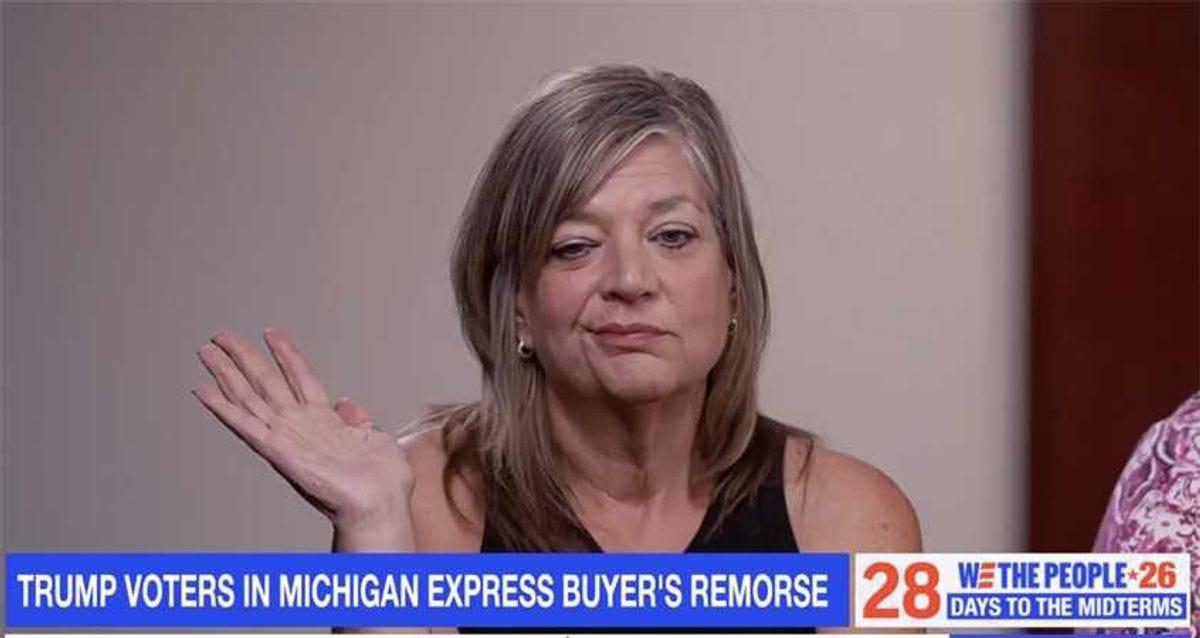
RawStory reports that five of ten conservative Michigan focus-group participants who voted for Donald Trump in 2024 said they planned to support Democratic Senate nominee Abdul El-Sayed over Republican Mike Rogers. One participant backed Rogers; four had not indicated a settled choice. The session aired on Tuesday, with 27 days reportedly remaining before the midterm election.
MS NOW analyst Elise Jordan described the participants as experiencing “buyer’s remorse” over Trump’s second administration. The excerpt says some were considering voting Democratic or staying home, but it does not identify their specific complaints or establish how representative they are of Michigan voters.
The headline outruns the evidence
Ten people are not “Trump voters” in any electorally predictive sense. They are ten selected participants in one focus group. Their answers may expose attitudes worth investigating, but they cannot establish a statewide revolt, quantify Republican defections, or forecast the Senate result.
RawStory converts a striking clip into a sweeping political narrative. That is weak framing. The consequential fact is narrower: among these participants, Rogers failed to inherit support automatically from voters who had previously chosen Trump.
Power is not remorse
“Buyer’s remorse” makes politics sound like a disappointing retail transaction. But voters do not return an administration for store credit. Elections transfer institutional power, and the consequences continue after some supporters reconsider their choice.
The participants retain agency in the Senate election: they can support El-Sayed, vote for Rogers, choose someone else, or abstain. Rogers and the Republican Party, meanwhile, control their own campaign strategy. If they cannot hold previously Republican voters, responsibility does not belong to the defectors for being insufficiently loyal.
Rogers faces an accountability problem
The clip suggests that party identification alone was not enough to secure Rogers’s support inside this group. Five participants preferred his Democratic opponent, while only one chose him. Jordan’s surprise reveals the operating assumption: voters who backed Trump should remain available to another Republican candidate.
That presumption treats citizens as party inventory. Rogers still has to persuade them. The report says he has work to do, but supplies no evidence about what he has offered these voters, how closely he has aligned himself with the administration, or why they rejected him. Without those facts, any confident explanation would be invention.
A warning sign, not a verdict
The focus group matters as evidence of possible coalition weakness, not as a miniature election. Disillusionment can reduce turnout, encourage ticket-switching, or disappear before ballots are cast. This excerpt cannot tell us which outcome will follow.
The larger pattern is the political press’s appetite for dramatic defection stories. A handful of uneasy voters becomes a verdict on a movement; a vivid reaction substitutes for representative data. The more serious question is not whether ten participants produced a compelling clip. It is whether governing power has created enough dissatisfaction to fracture Republican support—and this reporting, on its own, does not answer it.
Thanks to Raw Story
Source: Trump voters proclaim ‘buyer’s remorse’ as GOP nominee in key state gets the cold shoulder
This is a public episode. If you'd like to discuss this with other subscribers or get access to bonus episodes, visit paulstsmith.substack.com/subscribe