
SOBRE ESTE PODCAST 🔗
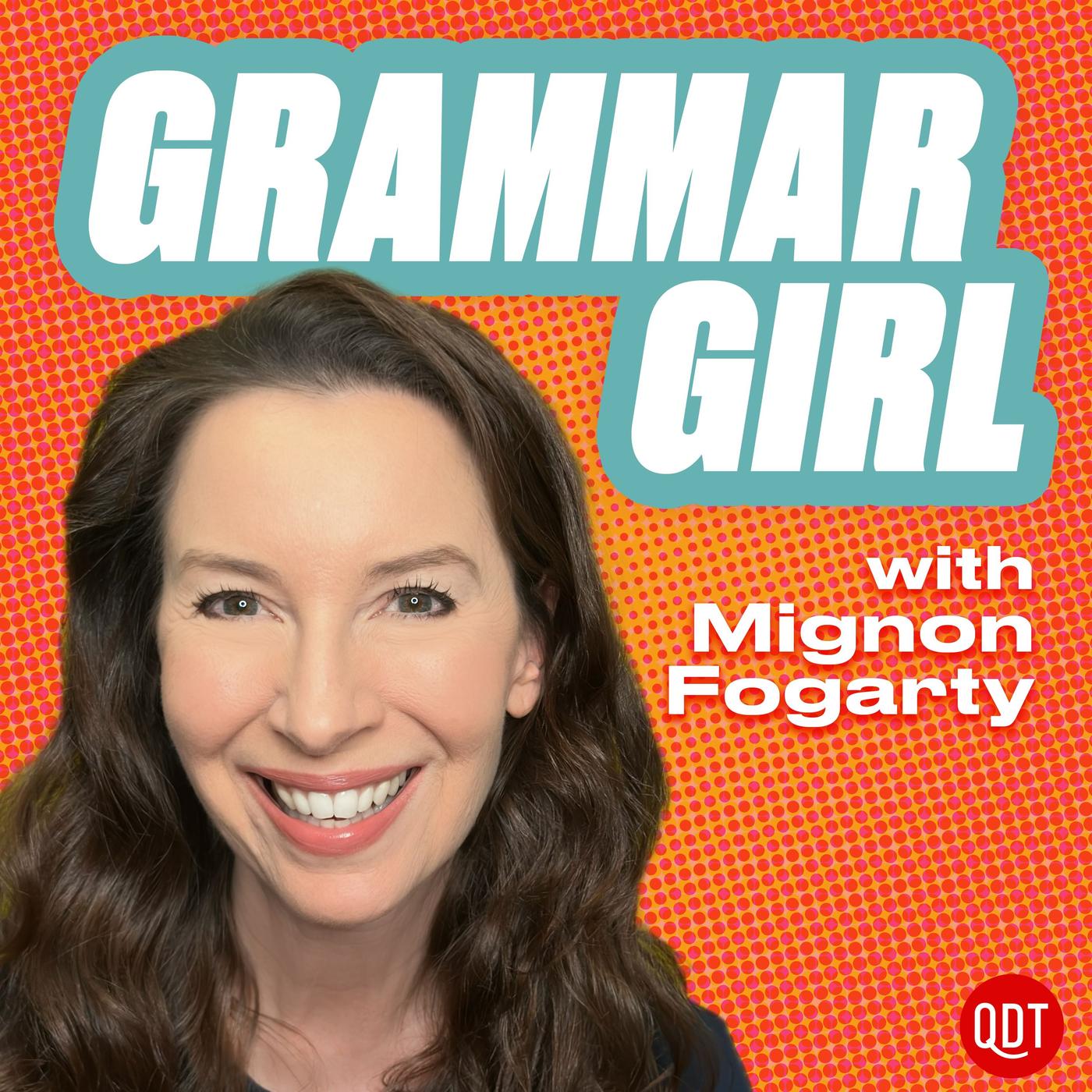
Five-time winner of Best Education Podcast in the Podcast Awards. Grammar Girl provides short, friendly tips to improve your writing and feed your love of the English language. Whether English is your first language or your second language, these grammar, punctuation, style, and business tips will make you a better and more successful writer. Grammar Girl is a Quick and Dirty Tips podcast.
Hosted on Acast. See acast.com/privacy for more information.
Apresentadores:
Frequência de atualização:
semiweekly
Duração média do áudio:
14 minutes
Entrevistas com convidados
Tem patrocinadores
Inglês
Estados Unidos da América
1079 episódios
desde 7 de Setembro de 2006
episodic
ÚLTIMO EPISÓDIO 🔗

1239. This week, we talk to Jess Zafarris, author of “Into the Words: An Etymologist’s Field Guide to Plants, Animals, and Nature,” about the stories behind the names of living things. We look at how Linnaeus’s Latin naming system works, why the American robin and the turkey got their names, and ho…
PESQUISAR EPISÓDIOS PASSADOS
Pesquisar episódios anteriores de Grammar Girl.
EPISÓDIOS ANTERIORES 🔗

1238. This week, we look at why a “scant cup” and a “heaping tablespoon” survived the push for exact measurements. Then, we look at the cornucopia: a goat’s horn from Greek mythology that became a symbol of Thanksgiving abundance.
A hearty thank you to the Keepers of the Commas one mysterious Immor…

1237. This week, we talk to Jeremy Butterfield, former editor in chief at Collins Dictionaries and author of “The Metaphor Zoo,” about why English loves animals. We look at how conceptual metaphors like “human is animal” shape what we say, why “the bee’s knees” had so many ridiculous cousins in the…

1236. In honor of Friday the 13th, we look at words about superstitions, including jinxes, theater curses, and the one phrase you don't say in a hospital.
The superstition segment was by Karen Lunde. Find her on igofirst.org.
A hearty thank-you to our Keepers of the Commas and one mysterious Immort…

1235. This week, we're celebrating the 20th anniversary of the "Grammar Girl" podcast with something I've wanted to do for years: our first-ever live game show! We originally streamed Grammarpalooza live on YouTube back in September, and now we're bringing all the wordplay, laughs, and fr…

1234. This week, we look at how small writing errors in proposed laws have cost millions of dollars and knocked whole measures off the ballot. Then, we look at the nautical origin of "batten down the hatches."
A hearty thank-you to our Keepers of the Commas and one mysterious Guardian of …

1233. This week, we talk to Laura Spinney, author of "Proto: How One Ancient Language Went Global." We look at how linguists reconstruct a language no one wrote down and why the ancient word for "wheel" is still debated. Then we look at how ancient DNA pointed to nomadic herders…

1232. This week, we look at four ordinary words — "hippocampus," "chimera," "behemoth," and "gargantuan" — that all started as the names of monsters. Then, we look at where sailors got the phrase "graveyard watch" and at the difference between a gra…

1231. This week, Valerie Fridland steps in for Mignon and sits down with linguist Laurel Brinton to talk about little words like “well,” “you know,” and “like.” They look at why “well” signals bad news, how “Beowulf” may open with the Old English version of “you know,” and why “prithee” disappeared…

1230. This week, the whole show is about familects, the words and phrases you only use with your family. We look at where they come from and what they do, how the same thing happens among friends and fans, and why borrowing someone else's insider words can backfire.
A hearty thank-you to our Keeper…
Aviso: O podcast e a arte incorporada nesta página são de QuickAndDirtyTips.com, que é propriedade de seu proprietário e não é afiliado ou endossado por Listen Notes, Inc.
MOTOR DE PESQUISA DE PODCAST
Pode usar nosso site para pesquisar podcasts3,837,211e episódios197,844,774por pessoas, lugares ou tópicos.

I have no special talent. I am only passionately curious, and
I listen to podcasts.
‐ Albert "Llamacorn" Einstein
PESQUISAR EPISÓDIOS PASSADOS
Pesquisar episódios anteriores de Grammar Girl.
RECLAMAR ESTE PODCAST
Why to claim podcasts?
If you are a podcaster, the best way to manage your podcasts on Listen Notes is by claiming your Listen Notes
podcast pages.
It is a great, free way to engage the podcast community and increase the visibility of your podcasts.
After claiming your Listen Notes podcast pages, you will be able to:
✓
Manually refresh the RSS feed to sync up
✓
Get a verified badge (
✓
) alongside with your podcast name on Listen Notes
✓
Post anúncios classificados for sponsorship,
guests, co-hosts,
cross-promotion...
✓
Respond to listener comments on Listen Notes
✓
Use speech-to-text techniques to transcribe your show and
edit transcripts
✓
Improve the presence of your podcasts, e.g., self-service
entrevista com podcaster...
✓
If you share your Listen Notes page and at-mention @ListenNotes
on X (formerly Twitter),
a nossa conta oficial no X (anteriormente Twitter) will retweet to promote
your show to our followers.
Coming soon:
◯ Self-service promotion on Listen Notes
◯ Track your podcast stats on Listen
Notes, e.g., listens, page
views...
◯ Manage episodes
EDITAR
Obrigado por ajudar a manter a base de dados dos podcasts atualizada.
