


ABOUT THIS EPISODE

BUFFALO, NY – September 1, 2026 – A new #review was published in Volume 17 of Oncotarget on August 28, 2026, titled “Emerging biomedical imaging applications of tumor-derived extracellular vesicles for premetastatic niche detection: Biological rationale, engineering strategies, and translational challenges.”
The review was led by first author Omkar Dhaygude, who is affiliated with Johns Hopkins University. Corresponding authors Franck Housseau and John Michel are affiliated with Johns Hopkins University, with Housseau also affiliated with the Cancer Research Center of Lille in France.
Extracellular vesicles (EVs) are membrane-enclosed particles released by cells that transport proteins, lipids, nucleic acids, metabolites, and other molecular cargo. In cancer, tumor-derived extracellular vesicles (TEVs) can influence the tumor microenvironment and distant tissues by promoting processes such as angiogenesis, extracellular matrix remodeling, inflammatory signaling, immune evasion, and stromal reprogramming.
Of particular interest is the role of TEVs in establishing premetastatic niches—biological environments in distant organs that become permissive to metastatic cells before overt tumors are detectable. TEVs can carry organ-specific molecular signals, and their surface molecules may influence which tissues they reach. For example, previous experimental research has linked the integrins α6β4 and α6β1 with lung tropism, providing a biological rationale for using TEVs to direct imaging probes toward metastasis-prone organs.
This possibility could address an important limitation of conventional cancer imaging. Computed tomography and other anatomical methods are designed primarily to detect established structural lesions, whereas premetastatic niches are characterized by earlier molecular and microenvironmental alterations. The authors therefore examine whether TEV-associated imaging could provide information about metastatic conditioning before conventional imaging can identify overt metastatic lesions.
Full press release - https://www.oncotarget.com/news/pr/tumor-derived-extracellular-vesicles-show-promise-for-earlier-detection-of-metastatic-risk/
DOI - https://doi.org/10.18632/oncotarget.28916
Correspondence to - Franck Housseau - fhousse1@jhmi.edu, and John Michel - jmiche14@jhmi.edu
Abstract video - https://www.youtube.com/watch?v=0zygNvj4_YY
Sign up for free Altmetric alerts about this article - https://oncotarget.altmetric.com/details/email_updates?id=10.18632%2Foncotarget.28916
Subscribe for free publication alerts from Oncotarget - https://www.oncotarget.com/subscribe/
Keywords - cancer, lung metastases, cancer imaging, theranostic, premetastatic niches, extra-cellular vesicles
To learn more about Oncotarget, please visit https://www.oncotarget.com and connect with us:
Facebook - https://www.facebook.com/Oncotarget/
X - https://twitter.com/oncotarget
Instagram - https://www.instagram.com/oncotargetjrnl/
YouTube - https://www.youtube.com/@OncotargetJournal
LinkedIn - https://www.linkedin.com/company/oncotarget
Pinterest - https://www.pinterest.com/oncotarget/
Reddit - https://www.reddit.com/user/Oncotarget/
Spotify - https://open.spotify.com/show/0gRwT6BqYWJzxzmjPJwtVh
MEDIA@IMPACTJOURNALS.COM
The review was led by first author Omkar Dhaygude, who is affiliated with Johns Hopkins University. Corresponding authors Franck Housseau and John Michel are affiliated with Johns Hopkins University, with Housseau also affiliated with the Cancer Research Center of Lille in France.
Extracellular vesicles (EVs) are membrane-enclosed particles released by cells that transport proteins, lipids, nucleic acids, metabolites, and other molecular cargo. In cancer, tumor-derived extracellular vesicles (TEVs) can influence the tumor microenvironment and distant tissues by promoting processes such as angiogenesis, extracellular matrix remodeling, inflammatory signaling, immune evasion, and stromal reprogramming.
Of particular interest is the role of TEVs in establishing premetastatic niches—biological environments in distant organs that become permissive to metastatic cells before overt tumors are detectable. TEVs can carry organ-specific molecular signals, and their surface molecules may influence which tissues they reach. For example, previous experimental research has linked the integrins α6β4 and α6β1 with lung tropism, providing a biological rationale for using TEVs to direct imaging probes toward metastasis-prone organs.
This possibility could address an important limitation of conventional cancer imaging. Computed tomography and other anatomical methods are designed primarily to detect established structural lesions, whereas premetastatic niches are characterized by earlier molecular and microenvironmental alterations. The authors therefore examine whether TEV-associated imaging could provide information about metastatic conditioning before conventional imaging can identify overt metastatic lesions.
Full press release - https://www.oncotarget.com/news/pr/tumor-derived-extracellular-vesicles-show-promise-for-earlier-detection-of-metastatic-risk/
DOI - https://doi.org/10.18632/oncotarget.28916
Correspondence to - Franck Housseau - fhousse1@jhmi.edu, and John Michel - jmiche14@jhmi.edu
Abstract video - https://www.youtube.com/watch?v=0zygNvj4_YY
Sign up for free Altmetric alerts about this article - https://oncotarget.altmetric.com/details/email_updates?id=10.18632%2Foncotarget.28916
Subscribe for free publication alerts from Oncotarget - https://www.oncotarget.com/subscribe/
Keywords - cancer, lung metastases, cancer imaging, theranostic, premetastatic niches, extra-cellular vesicles
To learn more about Oncotarget, please visit https://www.oncotarget.com and connect with us:
Facebook - https://www.facebook.com/Oncotarget/
X - https://twitter.com/oncotarget
Instagram - https://www.instagram.com/oncotargetjrnl/
YouTube - https://www.youtube.com/@OncotargetJournal
LinkedIn - https://www.linkedin.com/company/oncotarget
Pinterest - https://www.pinterest.com/oncotarget/
Reddit - https://www.reddit.com/user/Oncotarget/
Spotify - https://open.spotify.com/show/0gRwT6BqYWJzxzmjPJwtVh
MEDIA@IMPACTJOURNALS.COM
English
United States
TRANSCRIPT 🔗
Are you the producer of this podcast?
Add a podcast transcript
Need Audio-to-Text?
Transcribe with Listen411 in Just 60 Seconds
OTHER EPISODES IN THIS PODCAST
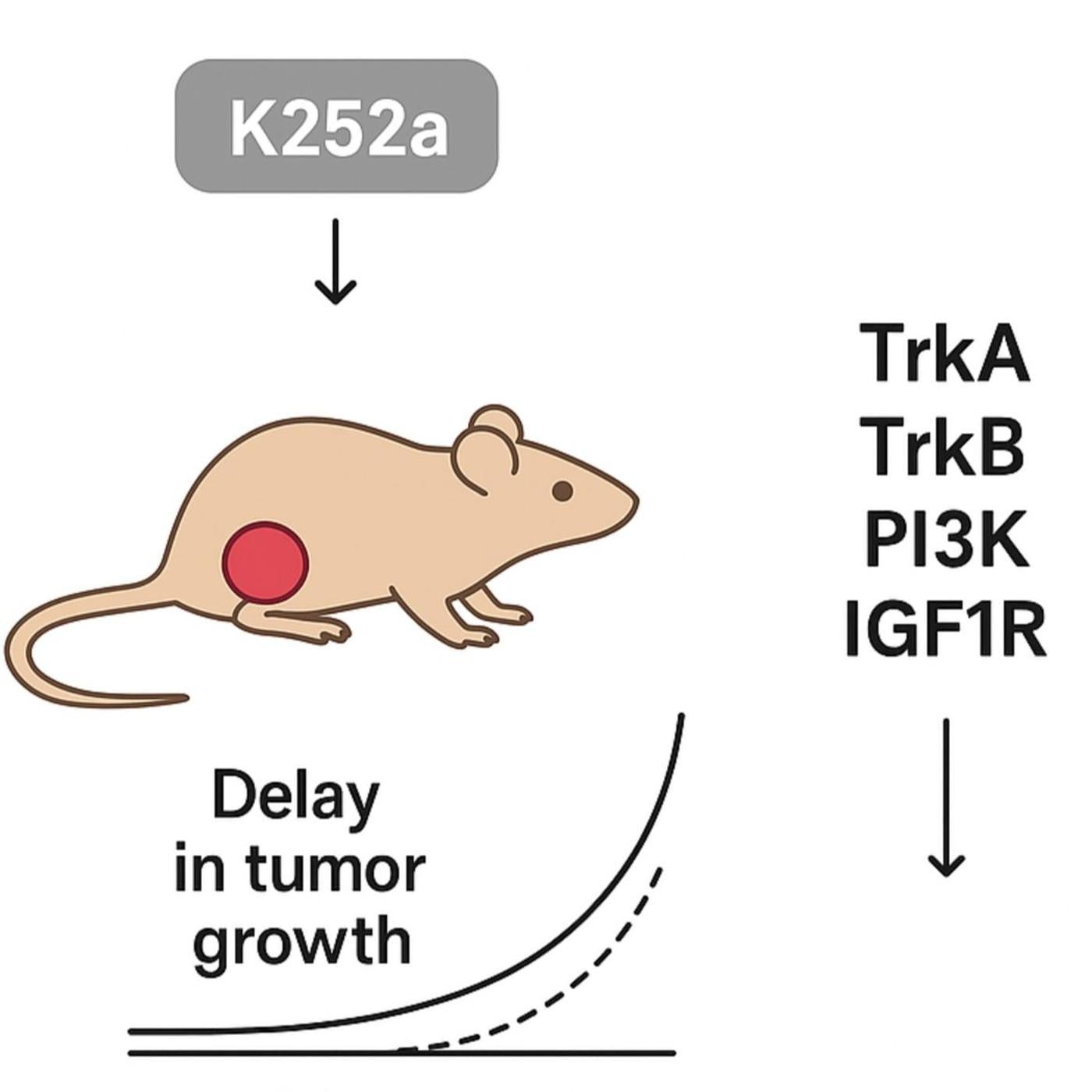
BUFFALO, NY – August 10, 2026 – A new #research paper was #published in Volume 17 of Oncotarget on August 7, 2026, titled “Delayed growth of SK-ES-1 Ewing sarcoma tumor xenografts is associated with reduced Trk and IGF1R pathway markers.”
The study was led by first author Bruna Almeida dos Santos …

BUFFALO, NY – August 25, 2026 – A new precision oncology paper was #published in Volume 17 of Oncotarget on August 14, 2026, titled “Systematic methodological flaws in DNA contamination assessment of mRNA vaccines: A critical analysis of Achs et al. (2025).”
The article was led by first and corres…
Pancreatic cancer remains one of the most difficult cancers to treat, in part because mutations in the KRAS gene are extraordinarily common in pancreatic ductal adenocarcinoma (PDAC). These mutations keep growth-promoting signals switched on, allowing cancer cells to proliferate and survive. Althou…

BUFFALO, NY – August 28, 2026 – A new #research paper was published in Volume 17 of Oncotarget on August 19, 2026, titled “Incidence of KRAS G12C mutations in genitourinary malignancies; emerging target in precision medicine.”
The study was led by first author Kelly Crane from the Department of Ur…

BUFFALO, NY – August 31, 2026 – A new #editorial was published in Volume 17 of Oncotarget on June 8, 2026, titled “Tumor infiltrating lymphocyte (TIL) therapy for treating the solid tumors: Challenges and future perspectives.”
The editorial was led by first and corresponding author Bhartendra Shar…
Disclaimer: The podcast and artwork embedded on this page are from Oncotarget Podcast, which is the property of its owner and not affiliated with or endorsed by Listen Notes, Inc.
EDIT
Thank you for helping to keep the podcast database up to date.
