
ABOUT THIS PODCAST 🔗
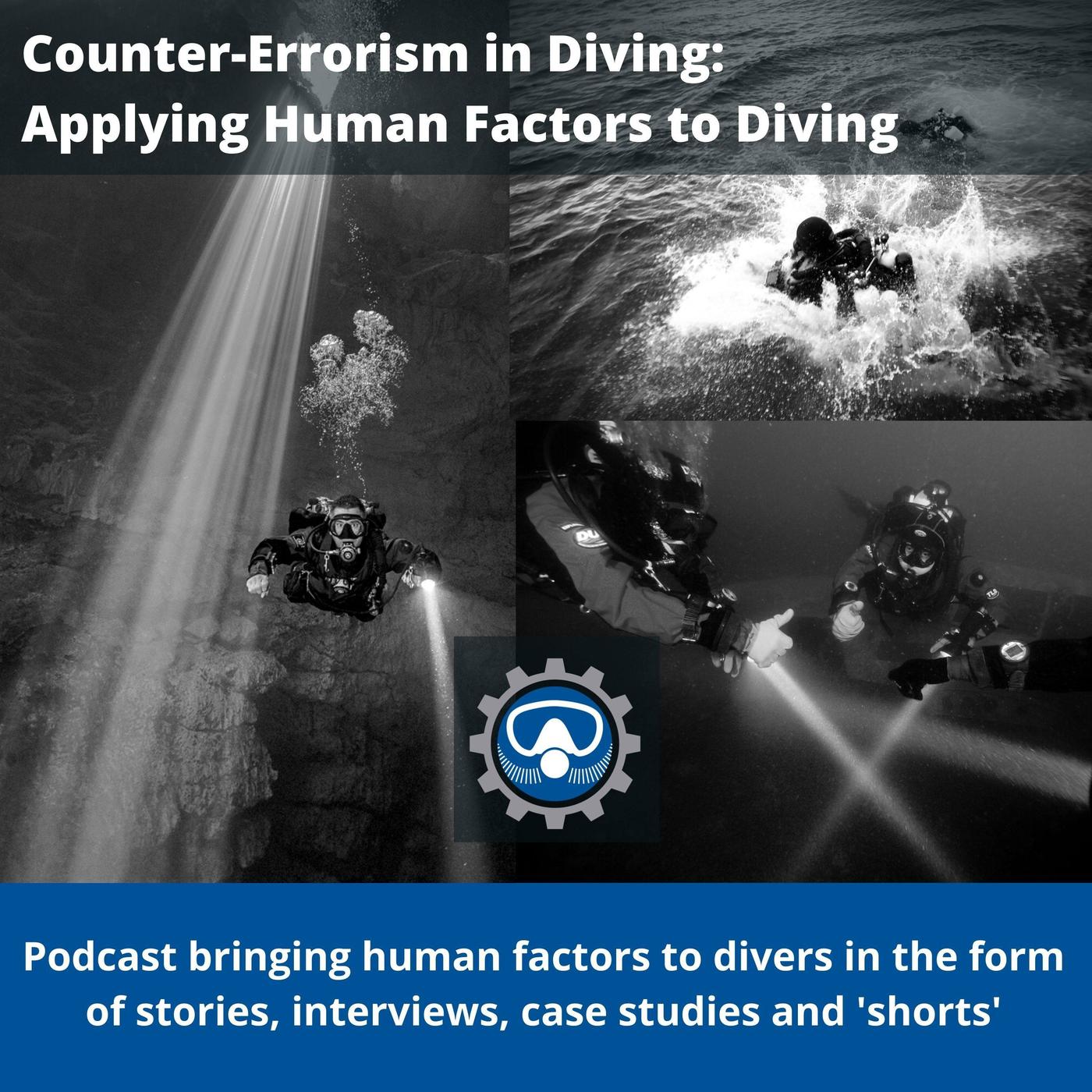
Human factors is a critical topic within the world of SCUBA diving, scientific diving, military diving, and commercial diving. This podcast is a mixture of interviews and 'shorts' which are audio versions of the weekly blog from The Human Diver.
Each month we will look to have at least one interview and one case study discussion where we look at an event in detail and how human factors and non-technical skills contributed (or prevented) it from happening in the manner it did.
Each month we will look to have at least one interview and one case study discussion where we look at an event in detail and how human factors and non-technical skills contributed (or prevented) it from happening in the manner it did.
Hosts:
Update frequency:
every 5 days
Average audio length:
10 minutes
Guest interviews
English
United States
317 episodes
since Oct. 1, 2023
episodic
LATEST EPISODE 🔗

This episode explores how social media shapes the way the diving community responds to serious incidents. When an accident happens, discussions can quickly move from sympathy to certainty, with people assigning blame and explaining what the victims or divers “should” have done before the facts are …
SEARCH PAST EPISODES
Search past episodes of Counter-Errorism in Diving: Applying Human Factors to Diving.
PREVIOUS EPISODES 🔗

When should a diver call off a dive, even when everything seems to be going well? Using the 1996 Everest disaster as a starting point, this episode explores why we often celebrate people who reach their goals while overlooking those who make the difficult decision to turn back. In diving, fatigue, …

This episode explores what diving insurance can—and cannot—do, drawing on insights from two highly experienced dive insurance underwriters. Insurance can help cover the financial consequences of an incident, but it does not make diving safer or prevent harm, and policies may have conditions that li…

In this episode, Brent Webb explores the idea that Human Factors should be more than a collection of concepts or courses—it can become the “operating system” of an organisation. Drawing on his experience running Scuba Adventures in Plano, Brent explains how psychological safety, Just Culture, syste…

In this episode, Connor Tate shares her experience of attending the Human Factors in Diving Conference while struggling with imposter syndrome as a researcher with limited diving experience. Despite understanding the science behind stress and decision-making, Connor discovers the difference between…

We explore how capable, motivated divers can gradually push beyond safe limits when their environment rewards risk-taking and treats near misses as successes. Using the story of a young technical diver who died after entering a strong current, alongside examples from aviation, we examine how normal…

This episode explores Human and Organizational Performance (HOP), an approach to safety that starts with the idea that people will always make mistakes, so we should focus on understanding why decisions made sense at the time rather than simply blaming individuals. Drawing on a workshop from the Hu…

This episode explores what really makes complex technical diving successful: not just helium, decompression and equipment, but the people using them. Using the recovery of the WWII B-24 Liberator Tulsamerican off the island of Vis as a case study, we look at how communication, teamwork, workload ma…

In this episode, Gareth Lock reflects on why improving diving safety requires more than telling people to follow the rules. Drawing on his experience in aviation, diving, and safety science, he explains why incidents are often blamed on individuals while the wider system escapes scrutiny. The discu…

This episode explores why experienced divers still die in situations that seem predictable, using the tragic 2026 Maldives cave accident as a starting point. It looks at how outcome bias, the normalisation of deviance, nitrogen narcosis, group dynamics, and silent drift can gradually erode safety m…
Disclaimer: The podcast and artwork embedded on this page are from Gareth Lock at The Human Diver, which is the property of its owner and not affiliated with or endorsed by Listen Notes, Inc.
PODCAST SEARCH ENGINE
You can use our website to search 3,828,217 podcasts and 196,395,170 episodes by people, places, or topics.

An investment in knowledge pays the best interest, so I listen to podcasts.
‐ Benjamin "Llamacorn" Franklin
SEARCH PAST EPISODES
Search past episodes of Counter-Errorism in Diving: Applying Human Factors to Diving.
CLAIM THIS PODCAST
Why to claim podcasts?
If you are a podcaster, the best way to manage your podcasts on Listen Notes is by claiming your Listen Notes
podcast pages.
It is a great, free way to engage the podcast community and increase the visibility of your podcasts.
After claiming your Listen Notes podcast pages, you will be able to:
✓
Manually refresh the RSS feed to sync up
✓
Get a verified badge (
✓
) alongside with your podcast name on Listen Notes
✓
Post classified ads for sponsorship,
guests, co-hosts,
cross-promotion...
✓
Respond to listener comments on Listen Notes
✓
Use speech-to-text techniques to transcribe your show and
edit transcripts
✓
Improve the presence of your podcasts, e.g., self-service
podcaster interview...
✓
If you share your Listen Notes page and at-mention @ListenNotes
on X (formerly Twitter),
our official X (formerly Twitter) account will retweet to promote
your show to our followers.
Coming soon:
◯ Self-service promotion on Listen Notes
◯ Track your podcast stats on Listen
Notes, e.g., listens, page
views...
◯ Manage episodes
EDIT
Thank you for helping to keep the podcast database up to date.
