

► Tell us about you and your podcast
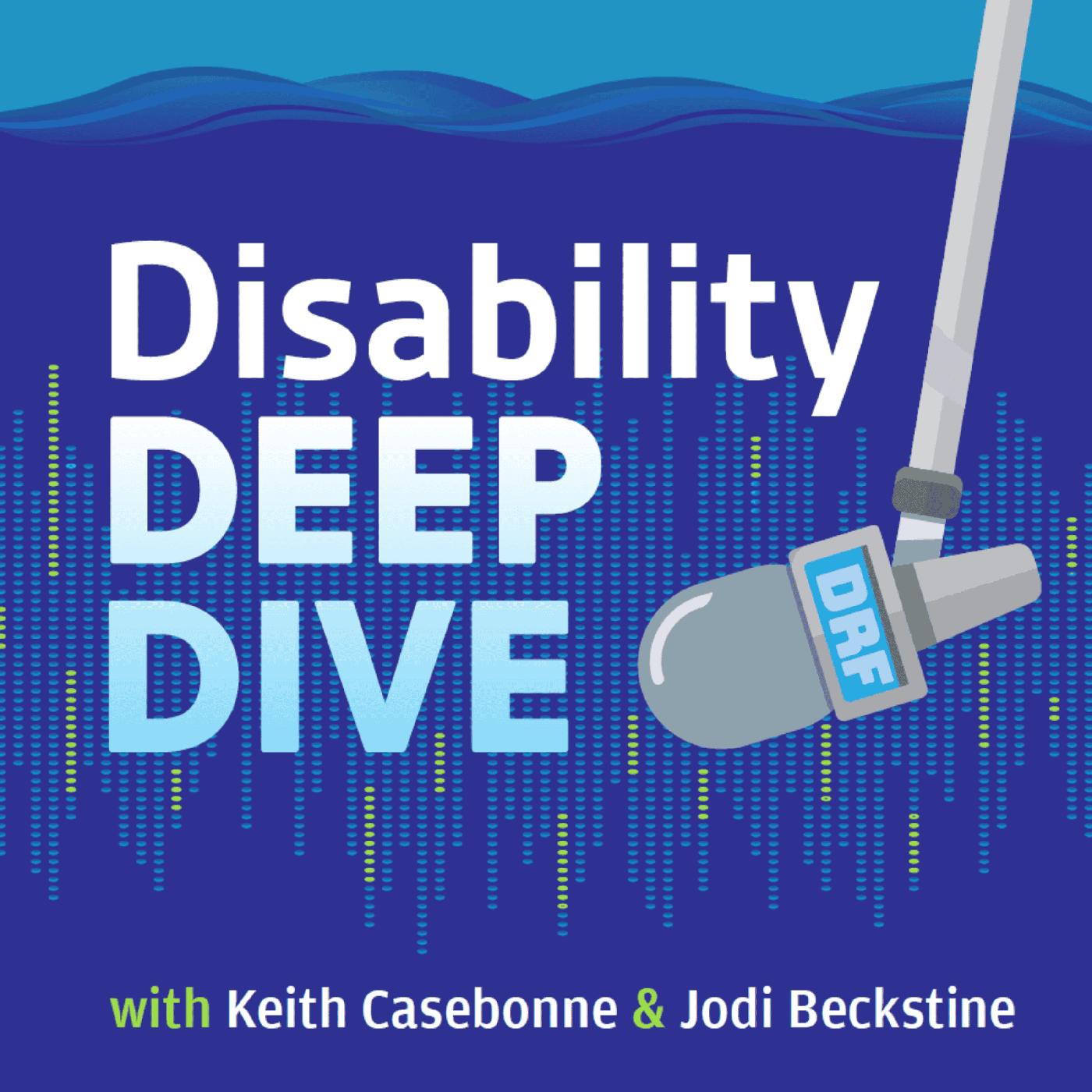
I’m Jodi, and I co-host Disability Deep Dive with Keith Casebonne as part of Disability Rights Florida. My background is in content, communications, and audience-centered storytelling, so a lot of my work lives at the intersection of accessibility, advocacy, and public conversation.
I’m Keith, and I co-host with Jodi Beckstine. I have close to three decades of experience in communications and technology. I focus on turning complex concepts into clear messages, building inclusive strategies, and creating accessible content—all rooted in the belief that effective communication can drive real change.
We both try to create conversations that are informed, welcoming, and honest, and podcasting is a great place to make that happen.
Disability Deep Dive is a bi-weekly interview-based podcast that centers the voices, stories, and perspectives of people with disabilities. We talk with advocates, creators, educators, leaders, and people with lived experience about disability through the lens of culture, media, policy, rights, identity, access, and everyday life. Our goal is not just to explain issues, but to explore how disability shapes the world and how the world responds in return.
Our listeners include people with disabilities, family members, advocates, educators, professionals, and anyone who wants a deeper understanding of disability beyond surface-level talking points. We try to make the show useful both for people already engaged in disability spaces and for listeners who are still learning but want to listen well and think more deeply.
► Why & how did you start this podcast?
In mid-2016, Disability Rights Florida was looking for an innovative way to reach people with disabilities to encourage them to vote in the November 2016 election. One idea was to create a podcast for that purpose, and others agreed that we should give it a try. So, on October 4th, the first episode of our podcast—then under the name “You First: The Disability Rights Florida Podcast” (or just “You First,” for short)—was released. Three episodes followed, all on voting-related topics, and all were released before election day. From there, we started talking about other disability-related topics, and our podcast took off. Over the years, the show's format has evolved, the guests have become more diverse, and even the name changed: in 2025, we rebranded to “Disability Deep Dive,” added a new “Deep Cut” segment, and haven’t looked back.
Podcasting made sense because it creates space for real conversation. It lets guests tell fuller stories, and it gives listeners time to sit with ideas instead of just scrolling past them in a social feed. We both listen to podcasts, and one of the things we each value most about the format is that it can make complex issues feel approachable without flattening them.
► How'd you find the time and funding to do this podcast?
We release episodes bi-weekly, and each episode takes a fair amount of coordination. Between guest outreach, prep materials, recording, editing, scheduling, promotional assets, and publishing, each episode can take anywhere from several hours to a couple of weeks of shared work, depending on the topic and production needs. The actual recording may be under an hour, but as usual, the part people hear is only the tip of the iceberg. Because the podcast is part of Disability Rights Florida, it fits into our broader communications and public education work rather than existing as a side hobby we fund personally. That structure helps a lot. We are able to build podcast production into our work responsibilities and content planning, which makes the time commitment more sustainable. This also enables us to purchase the equipment, software, and hosting we need.
► What do you gain from podcasting?
For us, the biggest gain is impact. Podcasting gives us a way to create deeper, more lasting conversations than we can usually have in short-form content. We get to learn directly from our guests, build relationships, highlight important issues, and create a record of conversations that matter.
Podcasting has also helped us each grow professionally. It has strengthened our interviewing, writing, and editorial skills, expanded our network, and made us better communicators. It has pushed us to think carefully about how to ask stronger questions, prepare more intentionally, and make complex issues clear without oversimplifying them.
Personally, one of the most rewarding parts is hearing from guests and listeners who felt seen, informed, or challenged in a meaningful way by an episode.
We have not had any sponsors at this point.
► How does your podcasting process look like?
Currently, we both use Shure SM7B microphones, Focusrite Vocaster interfaces, and Audio-Technica headphones. We record using Descript Rooms (previously we used SquadCast), and edit with Descript, along with Adobe Premiere, After Effects, and Photoshop.
We find guests in a lot of different ways, but it often starts with paying close attention to what people are already sharing online. We spend a lot of time on social media looking for stories that feel honest, timely, and meaningful, and then looking more closely at the people behind those stories. We’re especially drawn to people who are sharing their lives, their perspectives, and the issues that matter to them in a real and thoughtful way. Many of our guests are people or organizations we’ve been following since the start of the pandemic, so sometimes the outreach is the result of years of listening and learning first.
Our process usually starts with identifying themes, issues, or guests we think would bring something meaningful to our audience. From there, we do guest outreach, schedule the recording, develop a prep package, draft guiding questions, and think through the flow of the episode before we ever hit record.
We interview guests remotely, typically over Descript, which allows us to talk with people across different locations while keeping the process flexible and accessible. We also build in time for accommodations, tech checks, and any guest support needs ahead of the recording.
► How do you market your show?
We market the show through a mix of podcast platforms, YouTube, social media, website content, guest collaboration, and organizational communications. Because the show is connected to Disability Rights Florida, we are able to share episodes through established channels and reach audiences who already care about disability rights, access, and public education.
Our listeners find the show through podcast apps, YouTube, social media, our website, and cross-promotion from guests and partners. We do not rely on just one source. Instead, we try to meet people where they already are and make it easy for them to discover an episode in multiple formats.
The most useful marketing channels for us have been social media, short-form video or visual promo assets, guest tags and shares, and strong episode titles and descriptions that help people understand immediately why an episode matters. Clear positioning makes a big difference. If the title sounds vague, people scroll past it. Humanity’s attention span is now apparently held together with dental floss.
We also try to think beyond “promotion” in the narrow sense. Good marketing starts with a strong episode concept, a compelling guest, and framing that tells listeners why they should care.
► What advice would you share with aspiring (new) podcasters?
Start with clarity before you start with gear. You do not need the most expensive equipment to make a meaningful podcast, but you do need a clear sense of what your show is about, who it is for, and what will keep people coming back.
Over time, I’ve learned that consistency matters more than perfection, and that good preparation leads to better interviews. The more work you do ahead of time, the more relaxed and natural the conversation can be. I’ve also learned that accessibility needs to be built into the process from the start, not treated as an afterthought. And when your show has a strong identity, promotion becomes much easier because people can quickly understand what it offers.
Another thing that surprised me is how much work happens before and after the recording. So much of podcasting is in the planning, coordination, follow-up, publishing, graphics, transcripts, clips, captions, and promotion. The recording is the part people hear, but there is a lot of thoughtful work surrounding it that makes the final episode possible. The actual conversation may be the easiest part.
Helpful resources can include other interview podcasts you admire, creator communities, YouTube tutorials on editing and recording, and platform-specific guidance from your hosting service. But honestly, one of the best teachers is making the show, listening back, and improving one step at a time.
► Where can we learn more about you & your podcasts?
You can find Disability Deep Dive at https://disabilityrightsflorida.org/podcast, on all major podcast platforms, and on YouTube.
To learn more about Disability Rights Florida, visit https://disabilityrightsflorida.org/.
And you can find us on social media:
• Facebook: https://www.facebook.com/disabilityrightsflorida
• Twitter/X: https://twitter.com/DisabilityRtsFL
• Instagram: https://www.instagram.com/disabilityrightsfl/
• LinkedIn: https://www.linkedin.com/company/disability-rights-florida/
• YouTube: https://www.youtube.com/user/DisabilityRightsFL