
O TYM PODKAŚCIE 🔗
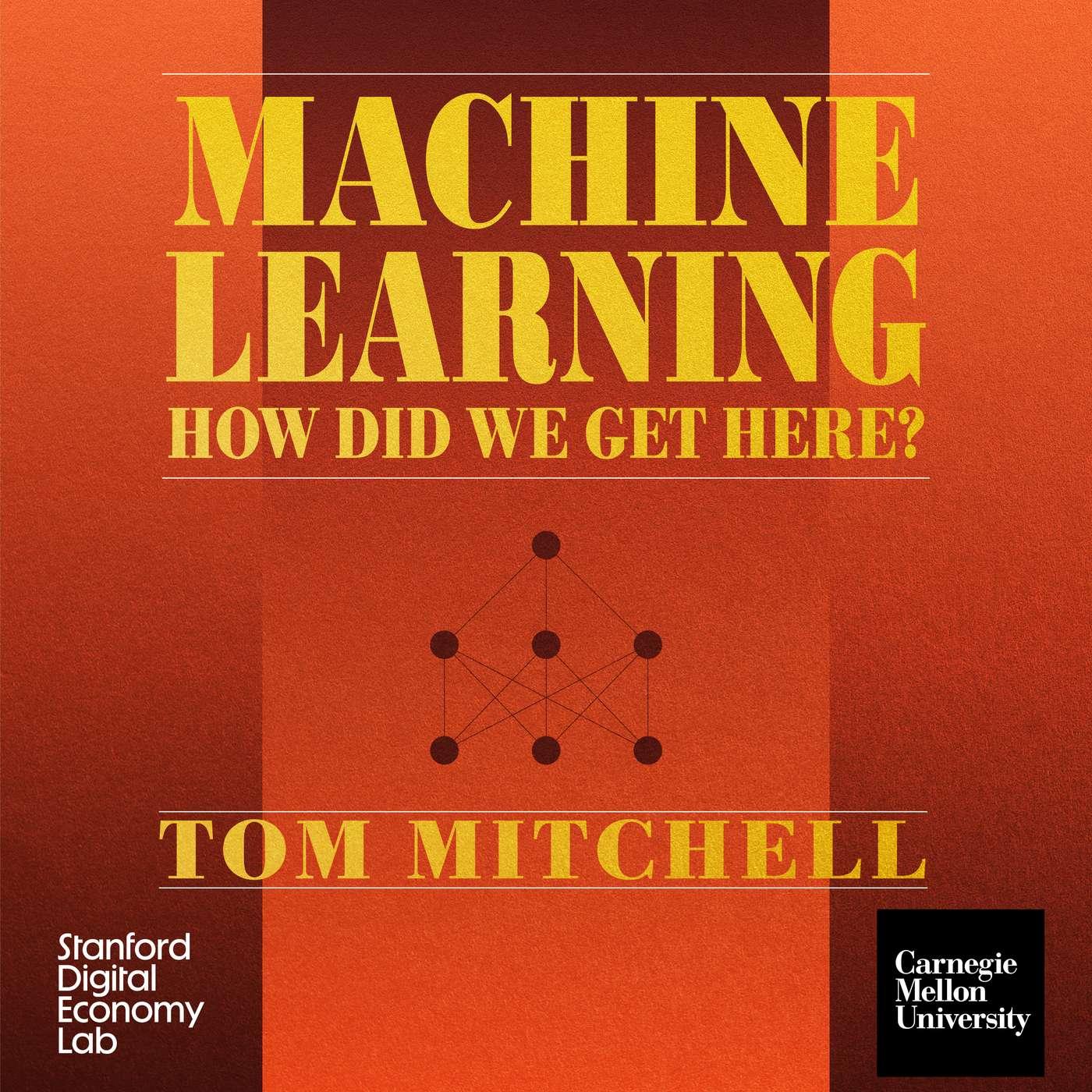
Tom Mitchell literally wrote the book on machine learning. In this series of candid conversations with his fellow pioneers, Tom traces the history of the field through the people who built it. Behind the tech are stories of passion, curiosity, and humanity.
Tom Mitchell is the University Founders Professor at Carnegie Mellon University, a Digital Fellow at the Stanford Digital Economy Lab, and the author of Machine Learning, a foundational textbook on the subject. This podcast is produced by the Stanford Digital Economy Lab.
Tom Mitchell is the University Founders Professor at Carnegie Mellon University, a Digital Fellow at the Stanford Digital Economy Lab, and the author of Machine Learning, a foundational textbook on the subject. This podcast is produced by the Stanford Digital Economy Lab.
Prowadzący:
Częstotliwość aktualizacji:
weekly
Średnia długość dźwięku:
46 minutes
Wywiady gościnne
Język angielski
Stany Zjednoczone
14 odcinków
od 23 lutego 2026
episodic
W TYM PODKAŚCIE 🔗
NAJNOWSZY ODCINEK 🔗
Tom sits down with Bruce Buchanan, a PhD Philosopher turned machine learning researcher. Bruce produced a key milestone for machine learning in the 1970s by creating the first program that discovered new symbolic knowledge publishable in a scientific journal.
Bruce has held professorships at the U…
WYSZUKAJ MINIONE ODCINKI
Wyszukaj minione odcinki Machine Learning: How Did We Get Here?.
POPRZEDNIE ODCINKI 🔗
Tom chats with John Laird, who has spent the past 40 years trying to build an AI agent that accomplishes the full range of human cognitive abilities, beginning with his 1980s PhD research on the SOAR model of human cognition with Allen Newell and Paul Rosenbloom.
John E. Laird received his Ph.D. fr…
Tom meets with Kai-Fu Lee, a pioneer in using machine learning to significantly advance speech recognition.
Kai-Fu, former president of Google China and now Chairman of Sinovation Ventures and CEO of 01.AI, has led speech, machine learning and AI efforts at several top firms, and is now one of the …
What is the relationship between neural network approaches in machine learning, and real neural networks in the brain? Today's guest Jay McClelland is a cognitive scientist who has spent decades studying this question.
Jay is Lucie Stern Professor of Psychology and (by Courtesy) of Linguistics and…
Tom interviews Daphne Koller, a Stanford professor turned serial entrepreneur. Daphne is widely known for her research at the intersection of machine learning and probabilistic reasoning.
Daphne is a member of the U.S. National Academy of Engineering, and is currently CEO of Insitro, a company at t…
Tom meets with Dr. Dean Pomerleau, who as a CMU PhD student in the 1980s was the first person to demonstrate that a neural network could be trained to automatically steer a self-driving vehicle.
Dean's results shocked the research community, and paved the way for decades of follow-on research leadi…
Tom sits down with Michael I. Jordan, Director of Rearch at Inria and Professor Emeritus of the Departments of EECS and Statistics, University of California, Berkeley. Michael has been a major contributor to machine learning, especially at the intersection of statistics and machine learning.
Michae…
What would a "theory" of machine learning tell us? In this episode Tom meets with the person who invented what is now the widely accepted definition of supervised machine learning: Turing Award recipient and Harvard Professor Leslie Valiant.
Leslie tells us how he got interested in the problem, hi…
Tom speaks with Ross Quinlan, whose algorithms C4.5 and ID3 helped establish decision trees as one of the most popular approaches in machine learning, and who founded RuleQuest Research, which accelerated the commercial adoption of machine learning.
Ross (published as "JR Quinlan") describes a sabb…
Tom interviews Rich Sutton, Research Scientist at Keen Technologies, Professor of Computing Science at the University of Alberta and co-winner of the 2024 ACM Turing Award for his foundational research on reinforcement learning.
Rich discusses why the common framing of machine learning as 'supervis…
Zastrzeżenie: Podcast i grafika osadzone na tej stronie pochodzą z Tom Mitchell | Stanford Digital Economy Lab | Carnegie Mellon University, który jest własnością jego właściciela i nie jest powiązany ani wspierany przez Listen Notes, Inc.
WYSZUKIWARKA PODCASTÓW
Możesz skorzystać z naszej strony internetowej, aby wyszukiwać podcasty3,821,016i odcinki195,314,008według osób, miejsc lub tematów.

If I have seen further than others, it is by listening to podcasts and standing upon the shoulders of
giants.
‐ Isaac "Llamacorn" Newton
WYSZUKAJ MINIONE ODCINKI
Wyszukaj minione odcinki Machine Learning: How Did We Get Here?.
ZGŁOŚ PRAWA DO TEGO PODCASTU
Why to claim podcasts?
If you are a podcaster, the best way to manage your podcasts on Listen Notes is by claiming your Listen Notes
podcast pages.
It is a great, free way to engage the podcast community and increase the visibility of your podcasts.
After claiming your Listen Notes podcast pages, you will be able to:
✓
Manually refresh the RSS feed to sync up
✓
Get a verified badge (
✓
) alongside with your podcast name on Listen Notes
✓
Post ogłoszenia drobne for sponsorship,
guests, co-hosts,
cross-promotion...
✓
Respond to listener comments on Listen Notes
✓
Use speech-to-text techniques to transcribe your show and
edit transcripts
✓
Improve the presence of your podcasts, e.g., self-service
wywiad z podcasterem...
✓
If you share your Listen Notes page and at-mention @ListenNotes
on X (formerly Twitter),
nasze oficjalne konto na X (dawniej Twitter) will retweet to promote
your show to our followers.
Coming soon:
◯ Self-service promotion on Listen Notes
◯ Track your podcast stats on Listen
Notes, e.g., listens, page
views...
◯ Manage episodes
EDYTUJ
Dziękujemy za pomoc w aktualizowaniu podcastowej bazy danych.
