


À PROPOS DE CET ÉPISODE
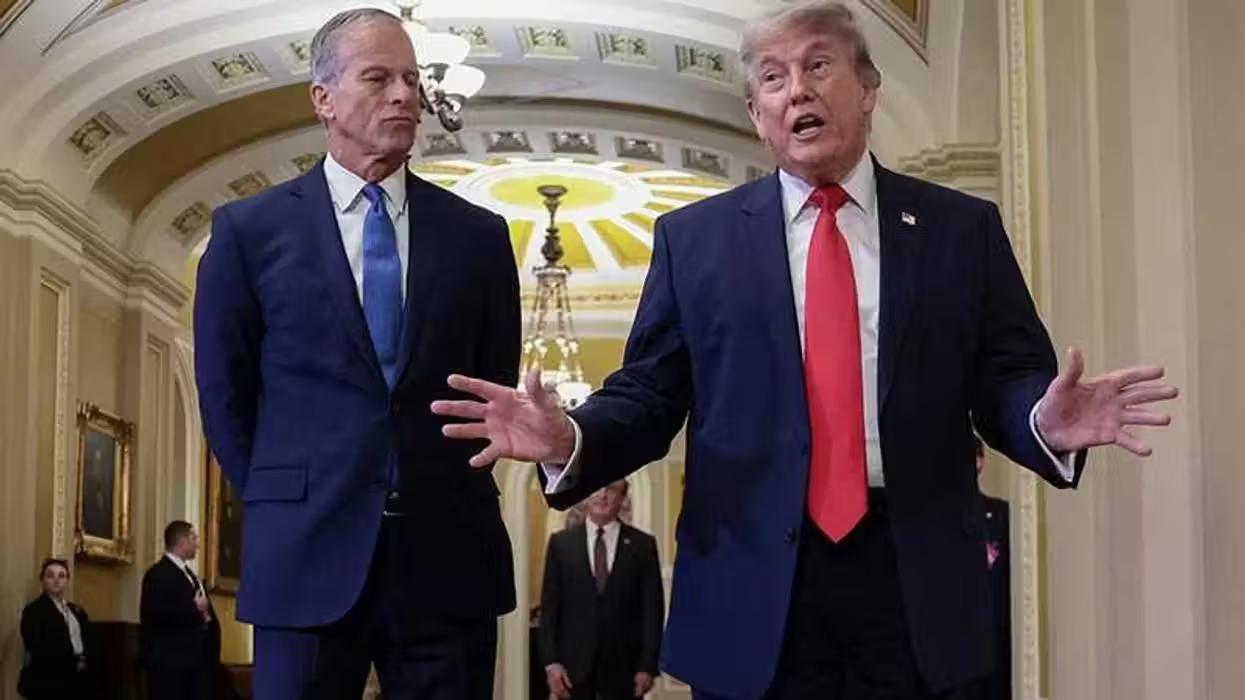
U.S. President Donald Trump speaks with the media while walking with Senate Majority Leader John Thune (R-SD), U.S. Capitol, in Washington, D.C., U.S., June 24, 2026. REUTERS/Evelyn Hockstein
The Tariff Bill Comes Due in Republican States
A Policy With an Author
Donald Trump imposed tariffs on Canada. The consequences described in the reporting are not diplomatic static or an unfortunate market reaction: Kansas could lose 1,200 jobs amid Trump’s threat against aircraft manufacturer Bombardier, Maine towns could pay thousands more for road salt, and businesses nationwide have already lost billions in Canadian tourism.
Those outcomes follow a presidential decision. Any account that centers the electoral discomfort of Republican senators risks obscuring the more important fact: workers, municipalities, and local businesses are absorbing costs imposed from Washington.
Help fuel the work. Independent analysis doesn’t fund itself:☕ Buy us a coffee
Dissent Without Defiance
Kansas Republicans Roger Marshall, Jerry Moran, and Ron Estes objected once the policy endangered jobs in their state. But their proposed remedy was not to break with Trump’s trade strategy. They asked him for exemptions.
That distinction matters. An exemption preserves the president’s power to inflict economic harm while allowing favored legislators to plead for local mercy. Marshall demonstrated the formula precisely: warn Trump about Wichita, endorse his manufacturing rationale, and hope the damage lands elsewhere. This is not opposition. It is an application for selective relief.
Collins Discovers the Price of Loyalty
Susan Collins presents herself as a leading opponent of Canadian tariffs, pointing to her Senate vote and her conversation with Trump’s trade representative. Yet the story also identifies her as a reliable Trump vote. Her predicament is therefore larger than one objection over road salt.
Collins wants voters to separate her from a policy produced by an administration she has repeatedly helped sustain. Her criticism may be genuine, but its practical weakness is the point: access without leverage becomes political theater. A senator who can describe the harm but cannot stop it offers constituents an eyewitness account of her own irrelevance.
Canada Is Not the Culprit
The tariffs’ immediate victims are easy to identify: Wichita workers, Maine towns, lumber and fishing interests, tourism businesses, and consumers facing higher costs. Canada does not control the American tariff schedule. Neither do the workers whose jobs are threatened or the municipalities buying road salt.
The weaker framing would treat this as “Trump’s battle with Canada” and then focus on which party benefits at the polls. That language turns a discretionary use of presidential power into a quarrel between equivalent sides. The evidence presented points elsewhere: Trump chose the tariffs, Republican allies enabled his administration, and communities dependent on cross-border commerce are paying for the performance.
Economic Pain as Political Discipline
Broad tariffs also create a useful hierarchy. The White House imposes the burden; exposed legislators seek exceptions; industries compete for protection; and the president decides who receives relief. Even if political favoritism is not established by the reporting, that structure invites dependence on executive discretion.
The rhetoric of restoring manufacturing cannot erase the jobs put at risk in an existing manufacturing center. Nor can nationalist branding recover billions lost when Canadian visitors cancel American trips. The policy’s advertised beneficiaries remain abstract. Its costs arrive as layoffs, depleted tourism revenue, and larger municipal invoices.
The System Protects the Decision-Makers
The larger pattern is familiar: concentrated power makes a sweeping decision, local officials discover predictable damage, and coverage converts material harm into campaign strategy. The central question becomes whether Republicans can distance themselves from Trump—not whether their continued accommodation made the policy politically possible.
That framing serves the people with power. Trump becomes a source of electoral turbulence rather than the author of the policy. Republican senators become trapped candidates rather than governing actors with records and choices. Workers and towns become scenery.
The scandal is not that tariffs have placed vulnerable Republicans “in a bind.” It is that those Republicans want credit for objecting to consequences while preserving allegiance to the authority producing them. Their bind is political. Everyone else gets the bill.
Thanks to Alter Net
Source: ‘Bad time’ for vulnerable Republicans as Trump puts key Senate seats in play
Systemic Error is a reader-supported publication. To receive new posts and support my work, consider becoming a free or paid subscriber.
We warned them.We told them.We shouted from the rooftops.We plead.We begged.They didn’t listen.Now, we all will suffer.Y’all know what to do, right?VOTE BLUE! 💙Vote as if your life — nay, our country — depend on it.Because, this time, and every time, it does.
This is a public episode. If you'd like to discuss this with other subscribers or get access to bonus episodes, visit paulstsmith.substack.com/subscribe


