
À PROPOS DE CET ÉPISODE

Two years ago this month a man came from nowhere to win the first round of a presidential election in a NATO state. I worked out how it was done before the intelligence services published the proof, thanks to Ioana. On Sunday night a man in Brazil won a fourth term by doing the same thing the other way round. Tonight is about the method, the Disinfolklore analytical method, which is the one I set out in Munich in February 2025. It is about who is running it against us, as they did in Romania, and who has now run it back in Brazil. And it is about what the machine has found this month inside Volya Radio. A community of volunteers there has run the method for the war every night for two years. They have no name for what they do.
One sentence first, so nobody mistakes the subject. Lula’s view of russia’s war on Ukraine is not mine, and it is not ours. Many of us have said so since 2023. Tonight is about method. The method works whoever holds it. That is the point.
Munich, February 2025
Here is what I said in Munich, to a Pirate Party audience at the Security Conference. The speech has since been viewed over a hundred thousand times. I repeat my own words because the case tonight rests on the dates.
I declared that we live in a Disinfolklore Universe. Disinfolklore is my word, coined on 13 February 2023, for disinformation that works the way folklore works. It carries archetypes, the old characters and story shapes we all learned before we could read. It uses them to move our moods, our motivations, our attitudes and our intentions. The energy a meme carries from those archetypes into your mind is what I call Mana. Look for the Mana in the meme. That was the mantra.
I said this was not a metaphor. The war for our attention is not like a war. It is the main battlespace of a war, and the kinetic battles in Kursk and Kherson feed it.
I said that the power to archetype belongs to all of us, and then I gave the catch. If you own the means of cultural production, the platforms through which memes are made, exchanged and distributed, then you can archetype at scale. You can re-encode minds at scale.
I said that community identity is wholly formed through story-telling. Herder asked the German tribes in 1777 to unite behind their folksongs. The Grimms, Wagner and Goethe answered. Ninety years later there was the first unified German state. russia knows this. MAGA knows this. They build community out of grievance, fear and memes.
And I said what was to be done. First, know that this is what is going on. Second, create your own archetypes and counter theirs with yours, in your own mind and in your own sphere of influence, however small, modest or humble. Engage in conscious memetic warfare according to rules of engagement, which I called the Code of Positive Trolls. Six tests. Generosity, Right, Patience, Mana, Focus, Insight. If your memes conform to those six tests, that is positive trolling. It is Infolklore. And then make a call. Don’t just stand there assaying, like everyone on Volya does a thousand times a day. We make a call. We adjudicate. We listen, we read the meme, we decide, and we respond accordingly.
That was the theory. Now the two elections.
One guy worked out the box: Romania, November 2024
On 24 November 2024 Romania voted in the first round of its presidential election. A man called Călin Georgescu came first with nearly 23 per cent. Three weeks earlier the polls had him under one per cent. He had no party, no structures in the country, and had declared zero campaign spending. He had been expelled from the far-right AUR in 2022 for calling the Iron Guard’s founder and the author of Romania’s Holocaust heroes. His content was a lost true Romania, before NATO and before the European Union. His biggest theme in the last two months was peace. Peace meant that Romania should stop supporting Ukraine so as not to be dragged into a war. Beside it ran the line that ninety per cent of Romania’s food is imported, which, he said, is a crime against the Romanian people.
On 26 November, two days after the vote and eight days before any document was declassified, I published how it was done. My sources were two Romanian newsrooms, a think tank, and the commentator Ioana, of this parish. Here is the mechanism, and I want you to hold it in your mind beside what happened in Brazil.
Georgescu did not rise through his own videos. He rose through other people’s. G4Media and Info Sud-Est found that his name had been planted, as a tag, in the comments under everything to do with the election. “Călin Georgescu.” “Călin Georgescu president.” “I vote for Călin Georgescu.” Under the posts of his rivals Elena Lasconi and Mircea Geoană. Sorry, Ioana, for murdering those names. Under the television stations’ posts about the polls. Under a PRO TV post about the candidates’ wealth. The same accounts turned up under all of them. And then the platform did the rest. On a Lasconi debate video with over 900,000 views, TikTok’s algorithm began offering the name “Călin Georgescu” in the search bar of the comment section. The video was not about him. On Lasconi’s own page, seventy comments carried his name and the search bar offered it again. On a video supporting her with two million views, TikTok’s “search related content” recommended him. The reporters explained why. TikTok’s algorithm associates a phrase with the search bar when it notices the phrase appearing a great many times in comments.
So anyone who opened TikTok’s search box in Romania that month found Georgescu, whoever they had gone looking for. Expert Forum counted the result. In September he had 31,000 followers. In November he had 154,000. The hashtag #calingeorgescu had generated 150 million views. Almost all of it ran through that one tag, which is not how real popularity behaves. Real traffic scatters across many tags, as George Simion’s did. His was obsessively generated around one. In the ten days before the vote he gained more visibility than Geoană had gained in eleven months. And Expert Forum drew the conclusion before the state did. “The winners of exploiting the viralisation algorithm,” they wrote, “are clearly the far-right candidates.”
On 4 December the president declassified the five documents the intelligence services had put before the defence council, and they confirmed it in detail. A network of 25,000 TikTok accounts went to full activity two weeks before the vote. Seven hundred and ninety-seven of them had been created in 2016. They sat at one per cent activity until 11 November 2024, when the whole network was switched on, like a light bulb. Every account had its own address, so that nobody could measure the network by the shared infrastructure that gives bot farms away. The coordination ran outside TikTok, on a Telegram channel created in June 2024. Its subscribers were given the predefined tags to post, #CG, #diaspora, #calingeorgescu. They were given strings of emoji to put beside the candidate’s name, chosen to exploit TikTok’s algorithm. They were told to screen-record videos and alter them so that the platform would read copies as original content. TikTok itself found 1,183 accounts using one tag in every clip. It found 83 accounts following the emoji-and-name pattern, which left 2,912 comments. Twenty-three per cent of those came from Georgescu’s own official account.
That was the first layer. The second layer was the one with a budget. More than a hundred influencers with eight million followers between them were paid to describe an ideal president without naming him. Then the comments under each of those videos did the naming. The influencers were fitted to the candidate afterwards, by the tag box. And TikTok, asked by the electoral authority to remove the unmarked material, blocked it in Romania for a day and then left it visible. It classified Georgescu’s political posts as entertainment and showed them without restriction. The other candidates’ content was filtered.
Two days before the second round, Donald’s own campaign chief from 2016, Brad Parscale, posted this, and I still have it. “It’s highly likely that Romania will be Great Again after next Sunday’s election. I’m eager to see what Campaign Nucleus achieves next. For Romanian media: I served as the Digital Director in 2016, Campaign Manager in 2020, and Campaign Nucleus helped power 2024.” A Romanian journalist had just reported that Parscale was about to land in Bucharest. Guess for whom. On 6 December the constitutional court annulled the election. I wrote that day about Brexit, Donald, and why Romania had been right to do it, unlike the UK or the United States, which did not have the courage, or were overly confident, and did not do what they should have done when they discovered election interference. I cited Chris Wylie’s evidence to the House of Commons about the Leave campaign. “You cannot call yourself someone who believes in British law and win by breaking British law in order to achieve that goal.”
Here is the thing I most want you to see. One guy worked it out. Not one guy on our side. One guy on theirs. Somebody sat down in 2024, read how TikTok’s recommendation engine turns repeated phrases into search suggestions, and built a campaign to feed it. Dormant accounts, unique addresses, a Telegram drill, emoji strings, screen-recorded copies, a tag that fits the influencer to the candidate after the fact. The intelligence service’s own words: the people behind it had a very good knowledge of TikTok’s security policies, and the know-how to circumvent them. Behind it, they wrote, was a very good digital marketing company. That is the search box role. Whoever learns how the box fills learns how to put their man in it.
The same box, worked the other way: Brazil, October 2026
Now Brazil, from Miquel Pellicer’s anatomy of Lula’s digital victory, a brilliant piece by a Spanish Catalan journalist that I rely on a lot in this analysis. Lula fought, he writes, “an unprecedented electoral battle on two simultaneous fronts”. One against the Bolsonaro dynasty. The other “in the invisible terrain of digital platforms, against the logics, biases and restrictions of the algorithms themselves, in particular those of Meta.”
When Brazilians typed the president’s name into Instagram’s search box, the system returned ghost accounts and irrelevant profiles. When they typed the name of his rival, Flávio Bolsonaro, it took them straight to the official account. The campaign’s advertising was held up in approval. Leaked internal messages showed Meta’s own engineers admitting the failures on Lula’s account. The same engineers were hunting for a matching fault on the other side to soften the scandal. Lula denounced Meta, at the gates of the second round, for interfering in the election.
So here is the bridge troll again. On the bridge at Stanytsia Luhanska between 2015 and 2018 I negotiated with the armed russian bridge trolls guarding their little rebel kingdom from the rest of civilisation. They did not build the bridge and they did not own the river. They were unlawfully occupying Ukraine. They sat at the one narrow place where everyone had to cross, and from there they decided who you were when you crossed. In Romania the narrow place was TikTok’s search bar, and russia’s man was carried into it by a drilled swarm. In Brazil the narrow place was Meta’s search box, and the incumbent was kept out of it by the box’s owner. Same box, two platforms, two years apart, worked two ways. That is the Munich sentence. Whoever owns the box archetypes at scale. And the first lesson of both elections is the same. A campaign that trusts the box has handed its archetyping to the box’s owner.
Lula’s people stopped trusting it. How they did that is the Lulaverse, and I will come to it. First the deeper layer, because the box only carries the archetype. Somebody has to hack the archetype first.
The shirt, and what Surkov told us
Georgescu’s content was a lost true Romania. For years the Bolsonaros had the Brazilian national football shirt and the green and yellow of the flag. They had tied the idea of homeland to their project. Neither is an accident. Taking a nation’s symbols and injecting your own project into them is the method, in every country where russia or MAGA operates. The far right everywhere has learned it from the same teacher.
The teacher has put it in writing. Vladislav Surkov was once deputy prime minister of the Ruschist Federation. He was picked in 1999 to design Putler’s political system and directed it for years. He is a theatre studies graduate acting the role of the man who runs russia. He later curated russia’s policy on Ukraine, and some say directed the snipers on the Maidan in February 2014, along with Paul Manafort, according to Manafort’s daughters. Which is to say, the occupation I lived inside. In an essay in early 2025 he wrote that russia had gone onto an information counter-offensive against the West. Its method, he wrote, was transferring the psychological concepts of the mental matrix and the archetypes of national consciousness into politics. These are his words. If we are going to understand what the russians do, we need to understand these words and what they mean. Most of the IR experts we read on Twitter do not know what the word archetype means. They would not use it. Yet they purport to comment on a war created by archetypes, from inside it, while the people doing it tell us in plain words what they are doing. That is the importance of work like this. In March 2025 he told L’Express that the system he built was democracy with a monarchical archetype. He added that serious American media had reported Donald’s team using his methods.
I have said it on this podcast before. In every country where russia operates, it dons the mask of patriotism. The AfD, Reform, the National Rally, Georgian Dream, Georgescu. All the so-called patriotic parties russia funds wear the costume of patriotism in the country they operate in, just as MAGA does. Surkov himself calls these surrogates fig leaves. Hack a country’s archetypes of national consciousness and you get a russia-directed fig leaf that waves that country’s own flag. How un-American is MAGA? Yet it purports to define what is American. That is Surkov’s reveal.
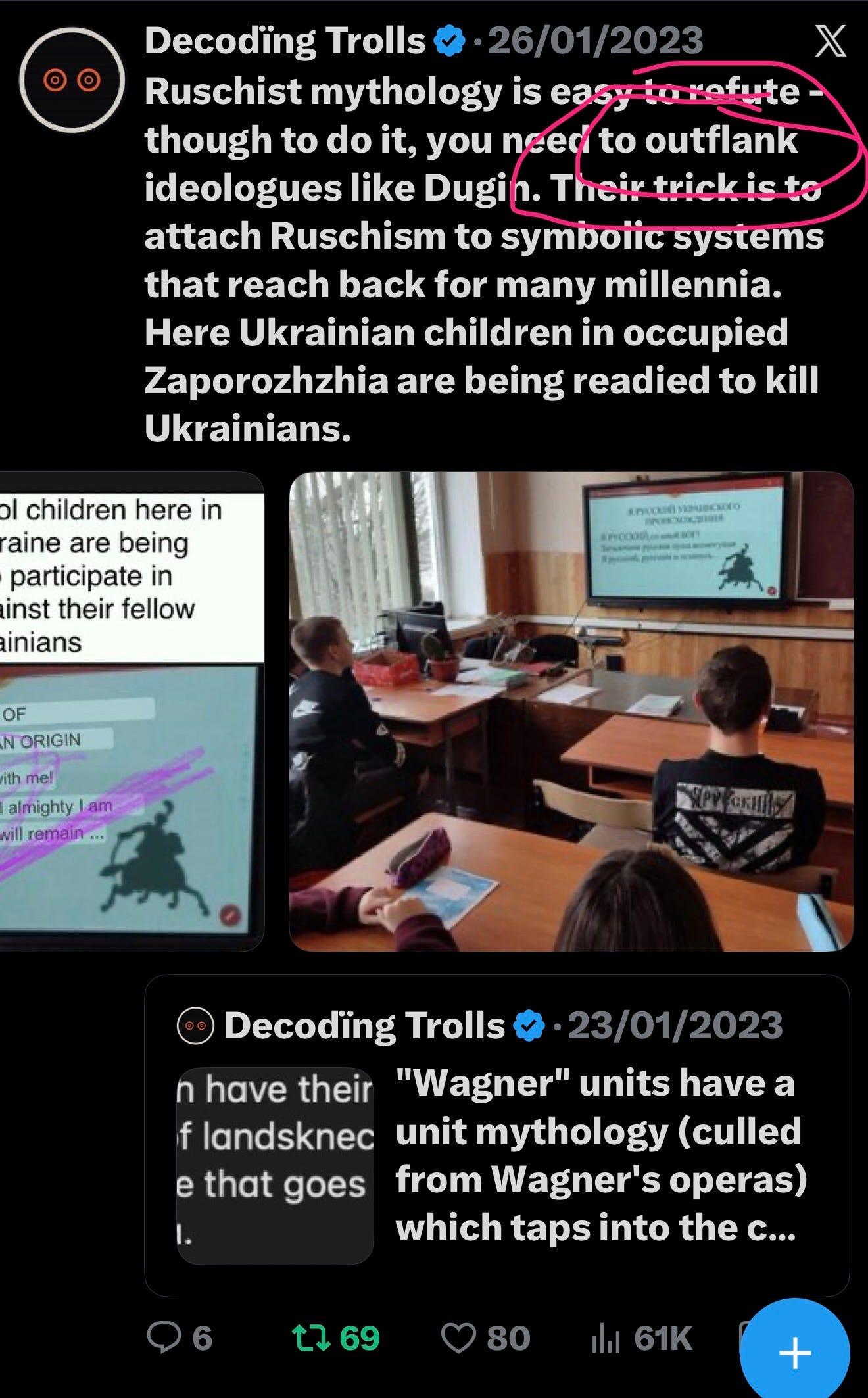
I watched this done at close quarters. In russia-occupied Luhansk the occupier did not arrive as a foreigner. It arrived wearing the Great Patriotic War, the grandfathers, the 9 May parades, the Donbas miner, every archetype of local pride it could find. It poured its own content into each one. Seven years of that, and people who had been Ukrainians, and will be Ukrainians again, were convinced their fellow Ukrainians across the Donets were the foreigners. The symbols stayed. What they meant was replaced from the inside. Think of the family members you have lost to MAGA. It is the same process.
Now look at Brazil through that lens. The green and yellow shirt is Brazil’s archetype of itself. Joy, skill, the whole country in one colour on a match day. The Bolsonaro project took the shirt and poured in moral panic, crusade, the apocalyptic enemy. Then it did the Surkov move. It tied the archetype of homeland to its own political project, so that anyone outside the project was outside the homeland. A foreigner across the Donets, an outsider, outer realm, a monster. Social justice became foreign. The gas cylinder became unpatriotic. Pellicer calls this a false dichotomy between patriotism and social justice, and it is not a rhetorical accident. It is the hack itself. The whole point of injecting your project into the national archetype is that opposing you then feels like opposing the nation. Georgescu’s TikTok ran on the same fuel, a lost true Romania that imports its food and fights other people’s wars. The AfD runs on a lost true Germany. MAGA on a lost true America.
What Lula’s people did was not to argue with the shirt. You cannot argue with a data-resistant archetype, a mental model that no amount of fact can shift. I said in Munich that identity is wholly a function of stories. The only answer to a captured archetype is to re-archetype it. They did exactly that. They put the shirt on. Millions of profiles and WhatsApp statuses went green and yellow, for the gas cylinder, for the price of food, for the university place. The homeland archetype was separated from the project that had colonised it and handed back to the people it belonged to. The shirt now carried social justice. The dichotomy fell because the hack that produced it was undone at the level where it was made, the archetype, not the argument.
That is the layer most commentary on Brazil will miss. It will say Lula reclaimed patriotism. What he reclaimed was an archetype of national consciousness that Surkov’s method had captured. And the method of recapture is the one I set out in Munich. Know that it is going on. Then forge your own, in the same colours.
The Lulaverse
So how did they do it in practice? Pellicer’s sentence first, the one I want every campaign manager in America, in Europe and everywhere to write on a wall. Is CC here? I hope she is. “It took the Brazilian left years to understand an uncomfortable truth: you can’t win a street fight on the Internet with university professor manners.”
He describes the old way. The far right releases a hoax at dawn, that the churches will be closed or the family destroyed. The Workers’ Party convenes meetings, consults its lawyers and publishes, at night, a three-page statement in a language nobody outside the headquarters understands. “By then, the lie had already entered the phones of fifteen million families and shaped the panic of half the country.”
I said in Munich that some people speak of disinformation as if it happens to other people. As if only stupid people fall for trolls. Be certain those people are easy marks. The three-page statement is what that attitude looks like as a campaign. It speaks down from a pulpit to people it has already decided are fools. Pellicer says the campaign had to stop “giving moral lessons from a pulpit and start playing with the same rules that govern the internet: wild speed, shameless humor and zero bureaucracy.”
From that need, he writes, was born the Lulaverse. Listen to the name. In Munich I spoke of how Druidey Don memes a Disinfolklore Universe into being. He connects it to the Marvel Cinematic Universe. Leaders arrive in our minds already wearing superhero costumes. Lula’s people answered a universe with a universe. And they built theirs the opposite way round from Romania’s.
Romania’s swarm was drilled from a Telegram channel into TikTok. Twenty-five thousand accounts taking orders. A script to read, tags to post. Paid influencers who did not know whose name would be fitted to their video. The Lulaverse “opened the pantry doors”. The campaign uploaded whole folders to the network. Photographs, unedited audio, video cuts, the typefaces. Anyone could take them and do anything with them, “without asking permission or going through the filter of any party censor.” Pellicer calls this a renunciation of the monopoly of the message. Suddenly Lula’s image did not depend on a designer in a bunker in São Paulo. It depended on “an eighteen-year-old boy in a favela setting up a choreography on TikTok”, on an illustrator drawing satire, on a neighbour recording a message in local slang for the futsal group. The story “stopped smelling of a closed rally and began to circulate like what it really was: fresh content that a friend passes you and that makes you smile.”
That is Munich’s second instruction, done at national scale. The power to archetype belongs to all of us. The platform had taken it. The campaign handed it back, to ten million people. The Lula Army on WhatsApp gathered about ten million users in three weeks. Pellicer is careful, and so am I. Ten million accounts are not ten million voters. What they were was a distribution network the platform could not throttle. Through those groups came quick instructions. Share this status. Push this clip. React together to this post. He calls it a civic hack. While Meta hid the candidate from its own search box, millions of citizens’ phones flooded the networks from below.
Beside the joy there was mud, and he does not hide it. The deputy André Janones ran what Brazilians call cultural janonism.
Shaky live videos from a trembling phone. Emergency audios. Political suspense. He took the morning initiative, so Bolsonaro’s spokesmen spent each day denying things instead of setting the agenda. The Code has something to say about him, and I will come to it.
Then the memes. A video of Lula taking the ball off Neymar, the footballer who backed the ultra right, in a hard tackle. Made with artificial intelligence, and nobody pretended otherwise. Candidates dancing to the season’s songs. Scenes set inside children’s video games. Campaign songs as loop audio. Accounts built to carry the message into communities devoted to cooking, humour and sport, where election material never reaches. Television debates planned backwards from the clip. A sharp reply mattered more for its life on a phone than for the argument in the studio.
Now think of all those Donald memes that the foreign policy and think tank elite in Washington, London, Paris and New York post on Twitter. “Oh, look at this. Isn’t this outrageous? He has dressed himself as the Pope.” They are the granddad asking a grandchild what this TikTok thing is. They illustrate their own out-of-touchness. In the Lulaverse they did the same thing, but they did it for real.
And underneath all of it, the anchor. Pellicer is clear that the ingenuity never floated free. Every song and every joke “converged in a single emotional destiny: the daily life of the popular classes.” Inflation. The price of a gas cylinder. The difficulty of buying basic food. The memory of a time when working families could send a child to university.
NAFO got there first
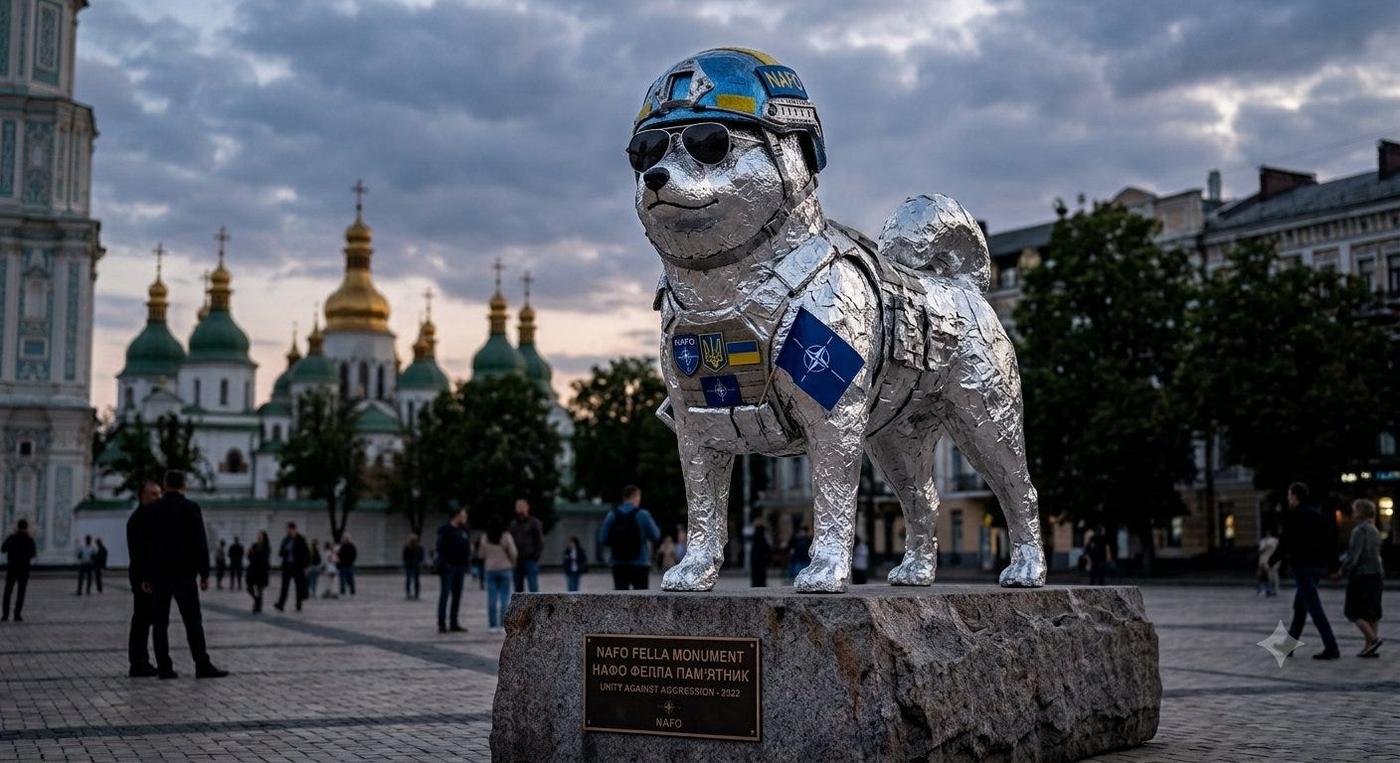
The Lulaverse has a direct ancestor, and it is in the Ukraine information space. NAFO is the North Atlantic Fella Organization. It was born in May 2022 out of a cartoon dog, the Fella. The artist Kama Kamilia drew it, and volunteers forge one for anyone who donates to Ukraine’s defenders. In June 2022 a russian ambassador in Vienna, Mikhail Ulyanov, lost his temper with one of the dogs and typed “You pronounced this nonsense, not me.” He had just conceded that russia’s whole case for the war was nonsense, to a cartoon. The Fellas have never let him forget it. Within a year there were at least a hundred thousand of them, members of Congress among them. Ukraine’s commander-in-chief wore a NAFO patch on his uniform. I wrote in June 2023 that NAFO was the greatest global Counter Disinfolklore operation ever, and the first decentralised one.
Look at what it is. Nobody owns it. Nobody approves a meme before it goes out. A Fella sees a russian lie and answers it with a joke, a receipt and a picture of a dog in a flak jacket. Ten thousand other Fellas pile in. Bonk. It raises money without handling it. By December 2024 the Fellas had delivered 529 trucks to Ukrainian units. One joint fundraiser with UNITED24 in 2024 passed nine hundred and fifty thousand dollars. It took the enemy’s most pompous figures, ambassadors, foreign ministers, the propagandist Simonyan, and made them ridiculous in their own replies. And it did all of this horizontally, the way Ukrainian civil society has always worked. Everyone knows someone who can help. In 2023 I called that Ukraine’s Good Enough decentralised defence system.
Now put that beside the Lulaverse. Open the pantry. No party censor. The eighteen-year-old in the favela. The jokes, the irony, the speed, the absurdity. Joy as a trench. Memes made by the folk themselves, many of them now with artificial intelligence. Pellicer has described NAFO’s method transplanted into an election campaign, and I do not think he knows it. And put both beside Romania. The Romanian swarm was the counterfeit of this. Twenty-five thousand accounts pretending to be a folk movement, with a Telegram channel for a brain and a South African agency for a wallet. The intelligence service’s phrase for what TikTok took it to be was a mass guerrilla political campaign of coordinated volunteers. It was the costume of NAFO on a state operation.
Which brings me to what those memes are, the Fellas’ and the Lulaverse’s alike. They are folklore. Not folklore-like. Folklore. Made by the folk, for the folk, with no author in charge. Varying from hand to hand the way a tale varies from teller to teller. Carrying archetypes everyone already owns. The loyal dog. The fool who shames the king. The old man who can still tackle the star. Nobody designed the Fella as a brand. It grew the way folklore grows, and it is still growing. A Fella drawn by hand in 2022, a Fella made with an AI tool in 2026, and a Fella painted on an armoured vehicle today for someone from the Volya crew are the same creature. They do the same work.
Folklore, then. And the question the Code asks is which kind. russia makes folklore too. The Polish mercenaries I was sent to look for in Luhansk were folklore. The crucified boy was folklore. A lost true Romania that imports ninety per cent of its food is folklore. That is Disinfolklore, folklore deployed against the Code, with the Mana running toward the aggressor and toward unright. The Fellas’ memes run the other way. They are deployed in observance of the Code, and that makes them Infolklore. Two lines separate Infolklore from ordinary folklore, and I set both down on 20 September. Where it makes a factual claim, the claim must be true. Folklore is free to be fable. Infolklore is not, once it claims a fact. And it stands on this plane, the plane of reality. Real people in real places on real dates. No switching between the real world and a fairy-tale one. You can make a meme in the fairy-tale world, but you do not carry it into the real one. A third line separates it from plain news. It carries a charge. Energy. Mana.
Apply the lines to a Fella. The dog itself claims nothing, so it is free to be fable. The caption under the dog claims a fact. A strike, a casualty count, an ambassador’s own words. The Fellas have learned the hard way to get it right, because a wrong caption is a gift to the other side. And the whole operation stands on this plane. Real ambassador. Real refinery. Real truck delivered to a real unit, with the photograph to prove it. The same three things make a Lulaverse meme Infolklore rather than campaign noise. Lula tackling Neymar claims nothing and is free to be fable. A meme about the gas cylinder claims a fact and must be true. And the whole thing is anchored in the gas cylinder, on this plane. And the same three lines are what the Romanian swarm fails. It claimed facts that were false. It stood on a mythical Romania. The folk it pretended to be were 797 accounts asleep since 2016.
What Volya already does
For the past two months a machine has been reading Volya Radio for its principles. Volya is a volunteer internet radio station. English-speaking supporters of Ukraine, inside the country and across the world, broadcasting about the war every day since October 2024. I present there myself, as I am doing right now. The reservoir the machine reads is 1,121 episodes, 26 million words, from October 2024 to August 2026. My own shows are kept out, so that what it finds is the community’s practice and never mine.
The reading runs month by month. Sixteen readers take a month of transcripts, cut into stretches of about two thousand words. They name every practice they find that honours the Code. Thirteen verifiers then try to destroy what the readers found. Only what survives goes into the book. The book is called The Principles of Infolklore. It is on its third edition, revised thirty times in a constant loop, the latest this morning. It runs twenty-four hours a day, seven days a week, through various models. Six months of Volya have been read so far, October 2024 to July 2025. Those six months yielded 166 candidate practices, each with its receipt, a verbatim quotation with its date and its show. The principles are grouped into nine families. Truth discipline. Law and legitimacy. Naming and renaming. The comic register. Death and dignity. Community as hearth. Generosity with receipts. The occupied voice, which is RIA Melitopol, the Ukrainian newsroom of an occupied city. And the practice in time.
Here is what the machine found that Volya already does, and watch how each one lines up with Brazil.
The audience is the newsroom. Volya’s hosts enrol the listeners. Named regulars hold the floor with their own expertise. Listeners’ coinages are harvested and credited by name. “Wanger” for Wagner, to subvert the russians’ use of Nazi tropes, is one I will always remember. Hosts invite listeners to take their slot. One host, December 2024: “If you’ve sick and tired of hearing me talk on this radio, either end the war in Ukraine or join as a volunteer and take my spots.” That is the open pantry. Volya opened it two years before Lula’s campaign did.
No fourth wall. Cats, bad backs, the wrong button pressed live on air, all left in and owned at once. “Oh crap! I hit the wrong button, Mockers. I’m sorry.” Nobody performs infallibility, so the facts carry the authority and the intimacy carries the trust. Pellicer’s “cooking live, uploading homemade videos to the subway” is this exactly. Human-sized hosts beat a designer in a bunker.
Partiality avowed, accuracy applied against interest. Volya declares its side and never pretends otherwise. Then it is hardest on claims that flatter its own side. June 2025, on a strike against russian bombers: “Now, 12 aircraft have been confirmed as fully destroyed. Nice. Although, even the Russians themselves claim more than that. But of course, satellite imagery, we can prove 12, so we’ve counted the 12.” The enemy claims more than Volya will claim. That is the truth line of Infolklore working in a community that wants to believe the bigger number.
Corrections instant, public and thanked. The machine read every correction in 7,631 segments of the control sample. Ninety genuine corrections. Ninety accepted. None resisted. “Correct me if I’m wrong” appears in seventy segments. I said this on air myself in September. We all keep each other right on it.
The joke sits on a checkable fact. March 2025, on russian economic statistics: “whenever Russia puts out statistics, be prepared because Russia lies. But the thing is, accounting works the same everywhere. Mathematics works the same in Russia as it does everywhere else.” Strip the laugh and a verifiable claim remains. This is the Neymar tackle with a fact under it.
Grief before the laugh. The comic register on Volya is declared, gated and dialled. On a morning after mass casualties the host restrains the ritual out loud. The loss is named first. The host asks the listeners’ leave before turning back to levity. “It’s another rough night in Ukraine. So I’m gonna do just a quick generic timestamp out of respect.” The machine measured it. The full obscene ritual runs on forty per cent of heavy nights against sixty-four per cent of other nights. It is a tendency and not an iron rule. It is the rule I would give any campaign that discovers joy as a trench.
The aggressor renamed, the victim’s names given care. Absurdistan for russia in 203 segments. Fake mayor. Pseudo-referendum. And on the other side, Ukrainian place names practised and celebrated. That is the green and yellow shirt. You take the naming back.
Generosity with receipts. The station handles no money. It vets causes by written charter, in person where it can. Named units. Unit costs read out. Delivery video closing the loop. The ask laddered down until it reaches the poorest listener with a retweet. Nobody shamed. The no-money rule was stated in fifteen separate episodes and broken in none of 1,603 fundraising segments. A campaign that wants ten million phones to trust it should study that.
The scene moved home. A host, November 2024: “If Mexico did the things to America that Russia’s doing day by day by day? I can tell you, they wouldn’t be talking about some tariffs.” Restage the aggressor’s act on the listener’s own lawn and let her measure it by what she would accept there. Lula’s anchor in the gas cylinder is the same move.
Keep the adversary’s phrase and reverse its referent. December 2024: “The realities on the ground don’t include giving up territory. Well, you know who needs to recognize the realities on the ground. America, Europe, and Russia.” The campaign kept the shirt. The host kept the phrase. Both turned it round.
The ordinary kept as resistance. July 2025. A host who had lived through a war elsewhere reads a report that Ukrainians still wait for the walk signal during air alerts. Her words: “what an act of resistance it is to lead a regular, normal life.” Infolklore on this plane. Real streets, real sirens.
Taking the pulse
One more thing from Pellicer, and it is the one I most want Volya and the Fellas to hear. He writes that the campaign won because it had “enough flexibility to listen to the pulse of the digital street”. Not more money. Not more control. The pulse, taken daily, and answered the same day.
We do this. All of us in the Ukraine information space do this, every morning, and most of us do it without noticing. You wake and open the phone. Within a few minutes you know the day’s main story and what the other side is trying to do with it. Not only the facts. The feeling of it. Where the lie is, who is pushing it, what archetype it is trying to install, and what the right answer is. Fact, ridicule, grief, a receipt, a dog. It is an intuitive, almost animal sense, and it has been trained by four years of doing it daily.
Take last week. Donald blames Ukraine for the price of oil. Not his unlawful war on Iran, which closed the Strait of Hormuz and sent the price up. Ukraine, for hitting the refineries that pay for the murder of its children. Nobody in our space needed a meeting. Nobody consulted a lawyer or drafted a three-page statement for the evening. By breakfast the Fellas had the receipts out, the dates of the Iran strikes against the price chart. Volya’s morning show had the sardonic version and the sober version, in the right order. The reversal was named for what it was, the aggressor’s harm hung on the victim. That is the oldest move in russian Disinfolklore and the one we have practised answering longest. By the time the line reached ordinary timelines it arrived already answered. We dominated that morning. We do most mornings.
That is the pulse. And it is the same sense, turned to defence, that the one guy in Romania turned to attack. He watched how the search bar filled and worked out how to fill it. We watch how the morning fills and work out how to answer it. Volya is very good at it, because a daily show that opens with the night’s booms and woes is a pulse-taking instrument by design. NAFO is very good at it. A hundred thousand people each watching one corner and swarming the worst thing they see is a nervous system. And our listeners are very good at it, which is why the nest fills before the host has finished reading the first story.
Here is my point. We do it unconsciously. Lula’s people did it consciously, as a method, and built a campaign around it. The Code asks us to do the same. This is Focus, the fifth element. Attention held on what matters that morning, and not on whatever the other side would rather we were looking at. Done unconsciously it is a habit. Done consciously it is a practice that can be taught, handed to the next volunteer, and measured. So I have asked the machine that reads Volya to look for it. Whether the morning shows take the pulse in a way a reader can see in the transcript. Whether the answer, fact and feeling together, lands the same day. Whether listeners bring the pulse to the host or the host to the listeners. If it is there, and I think it is, it becomes a principle of Infolklore with its receipts. Look for the pulse. Look for the Mana in the meme there in the morning. What is the story? Where are the stories? How do we counter them? That is what we are all doing by instinct every day. Then we can do on purpose, and better, what we have been doing by instinct.
MAGA’s men, and Trita
Now the people on the other side of the box, the dialogue box in TikTok, in Meta, in Instagram, because they are the same people in Bucharest and in Brasília. Brad Parscale ran Donald’s digital campaign in 2016. So the people who put Georgescu into Romania’s search bar and the people who put the rigged-election lie into Brazil’s phones are one network. It runs out of Mar-a-Lago as surely as the other one runs out of Moscow. Surkov’s archetypes of national consciousness, Parscale’s search box, and the Numen of Fernando Cerimedo, MAGA’s man in Latin America, whose consultancy is named for the Latin word for Mana. That is who was on the far side of the box on Sunday.
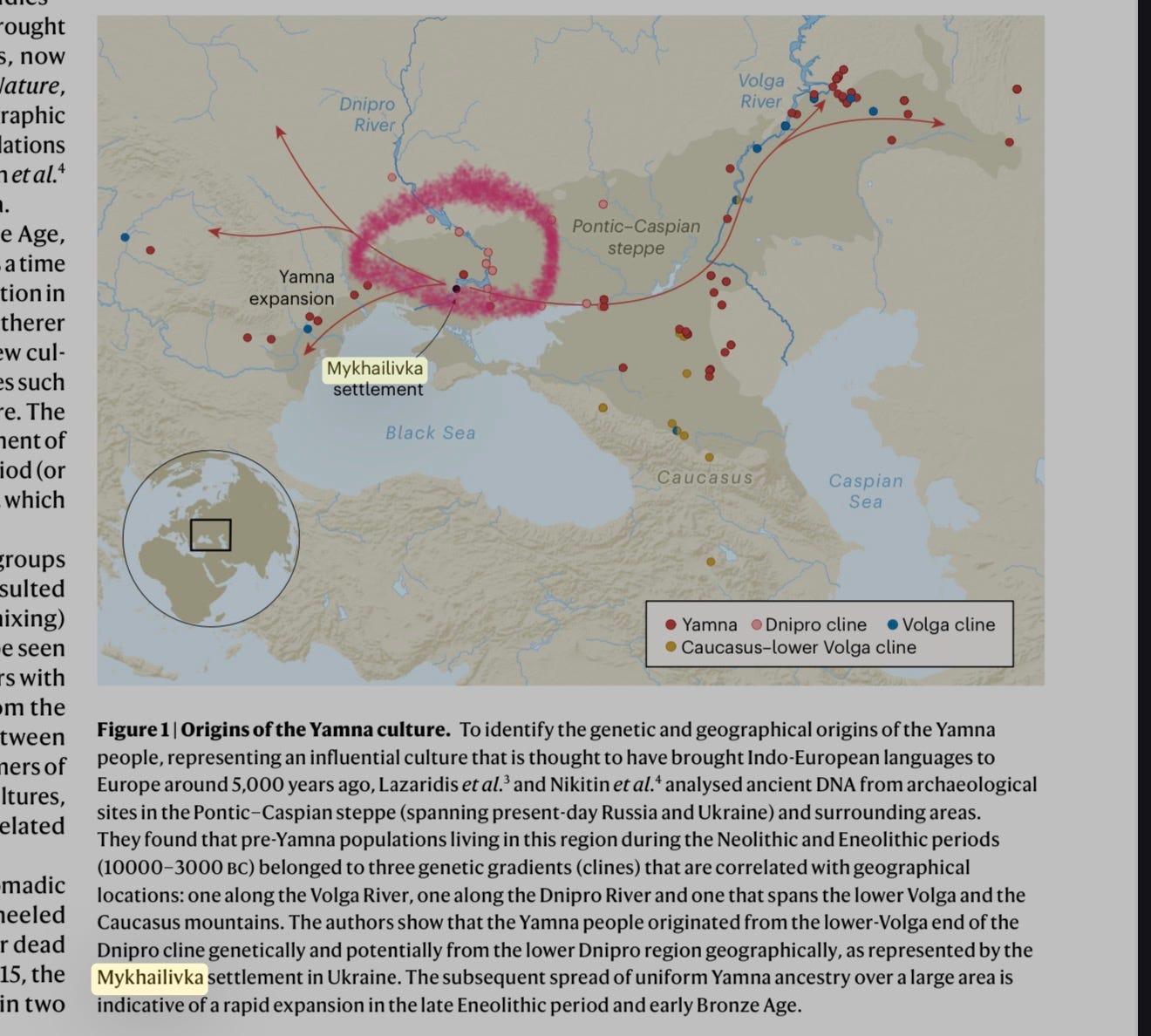
And this is where I want to end, with the oldest story our languages have kept. Bruce Lincoln reconstructed it in 1976 and called it the Indo-European cattle-raiding myth. Trita, the third man, has his cattle stolen by a three-headed serpent. He goes out, kills the serpent and brings the cattle home. In bringing them home he founds the order everything after him rests on. Thraetaona in Iran, Indra against Vritra in India, Thor against the serpent, Saint George, Beowulf. The Ukrainian trident is Trita’s mark. It is the charter of legitimacy in every culture that descends from the steppe by the Dnipro, every living Indo-European culture. Here is the thing I have added to it. Everyone claims to be Trita. Putler in February 2022 was recovering stolen cattle, by annihilating Ukraine. Donald recovers stolen cattle every morning, on behalf of a lost America that never existed. Georgescu was recovering a stolen Romania. The Bolsonaros were recovering a stolen Brazil, with the shirt on. The myth cannot tell you which Trita-claimant is the serpent in disguise. The Code can. Six tests. The one who wishes the cattle back by lying, by stealing the flag, by paying a swarm to counterfeit the folk, fails them.
On Sunday Lula was Trita. He took the shirt back from the serpent that had been wearing it. And he is not alone this week. Serbia, as we saw, went the same way. The Disinfolklore Universe exists to convince us that the far right’s victory is inevitable. That the box belongs to them. That the pulse of the digital street beats for them. It does not. It beat for the gas cylinder in Brazil, and for the gas tank in California, as it beat for the booms and woes in Kyiv every morning for four years. What it takes is skilful means. The phrase is upaya, Tsong Khapa’s word for a method fitted exactly to the person in front of you. It is what the six perfections, which became the Code of Positive Trolls, are for. Not the three-page statement. Not the pulpit. The pantry opened. The shirt put on. The pulse taken. The joke on a fact, the grief before the laugh. Every feeling given a job. The contempt kept for the serpent and never for the herd it has frightened.
Ten things for any campaign
For anyone who defends the post-war order against people who want it gone. That includes conservatives, liberals and greens who have been losing to the same machine. Here is what I take from Romania, Brazil, NAFO and Volya, read through the Code.
First. Know where you are. You are inside a Disinfolklore Universe and the platform is not neutral ground. The search box is the bridge. One guy on their side has already worked out how it fills. Plan on the assumption that the box will be worked against you, and build a propagation network of your own before you need it. Ten million phones beat one algorithm.
Second. Open the pantry. Give your people the raw material and the permission. A message that has to pass a party censor arrives at night, in a language nobody speaks, to a lie that landed at dawn. A message a friend passes you arrives with the friend’s trust attached.
Third. Archetype, do not brand. Branding puts a logo on a surface. Archetyping reaches the deep structures we carry from folklore. Ask what archetype of national consciousness your opponent has captured, and wear it. Take the shirt back.
Fourth. Take the pulse every morning, and answer the same day. The lie is in fifteen million phones by breakfast. Volya’s answer is prebunking. Name the coming fake before it is staged. Describe its likely shape. Hand your people the test that will expose it.
Fifth. Joy as a trench, but gated. Grief before the laugh. A campaign that keeps dancing on the day of a flood or a massacre loses in an hour what it built in a month.
Sixth. Make factual claims true. A meme of Lula tackling Neymar claims nothing. A meme about the price of a gas cylinder claims a fact. If that fact is wrong, the campaign has become the thing it is fighting. Fables are free. Claims are not.
Seventh. Route every emotion to an action. Rage, joy, fear, each with a task attached. An emotion left idle curdles into the malaise I spoke of in Munich. An emotion given a job becomes a movement.
Eighth. Contempt at conduct, never at the voter. Saturating the liars’ agenda so that they spend the day denying is fair play, and it is old Ukrainian practice. Mocking the people who voted for them is the three-page statement in another costume.
Ninth. Stand on this plane. Real prices, real streets, real dates. The opponent offers a lost true country. You offer the gas cylinder.
Tenth. The battlefield is mood. The Lulaverse was a mood campaign before it was a message campaign. It made people smile at their phones. That smile is Mana running the right way.
Positive trolling is no longer a theory I offered to a room in Munich. It is a practice with a measured record on two continents. The people running it against us have told us in their own words what they do. This is no time to despair. Or to keep trolls alive. Positive troll.
Get full access to Decoding Trolls at www.decodingtrolls.net/subscribe