

À PROPOS DE CET ÉPISODE
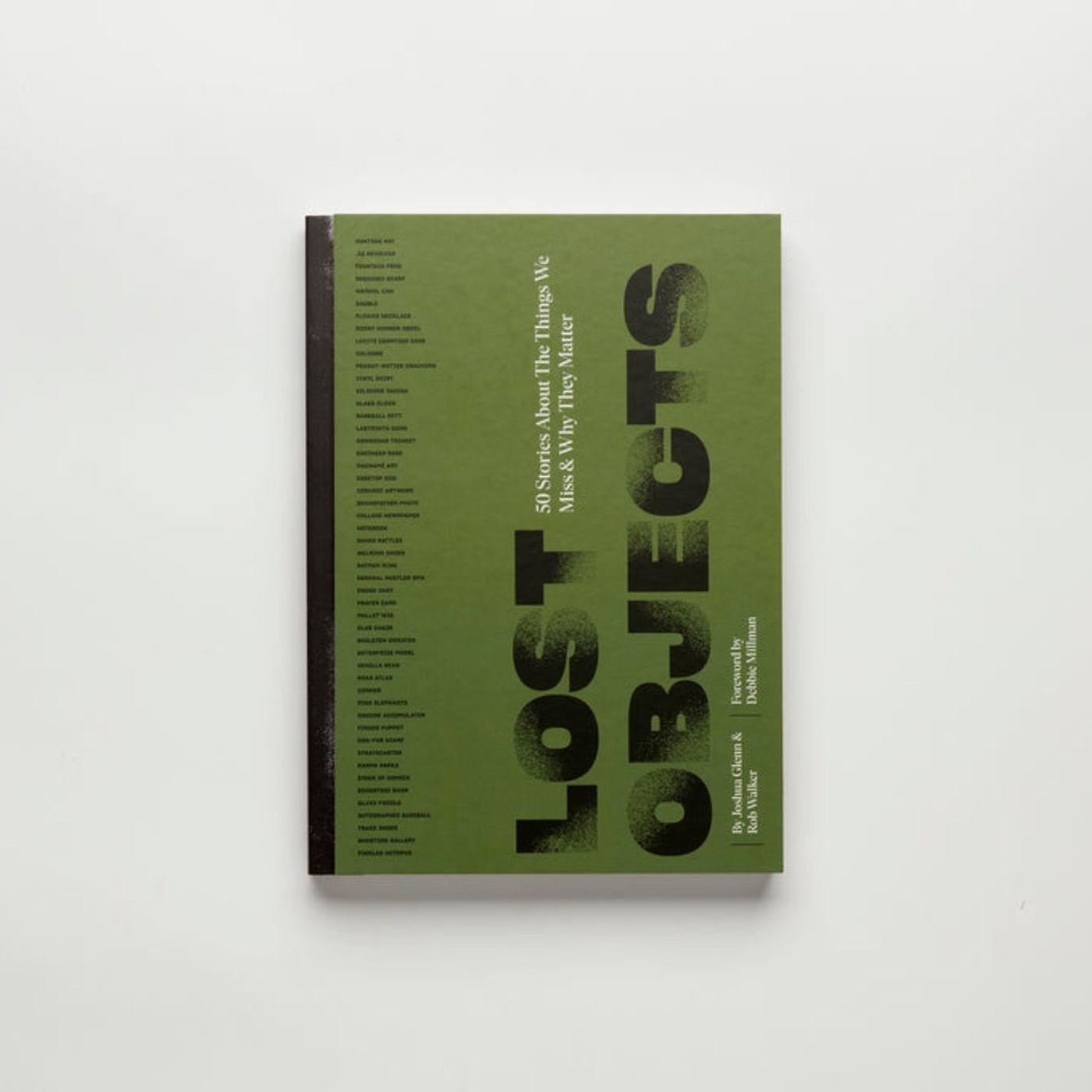
For Big Table episode 51, editors Joshua Glenn & Rob Walker discuss their latest book, Lost Objects: 50 Stories About the Things We Miss and Why They Matter.
Is there a “Rosebud” object in your past? A long-vanished thing that lingers in your memory—whether you want it to or not? As much as we may treasure the stuff we own, perhaps just as significant are the objects we have, in one way or another, lost. What is it about these bygone objects? Why do they continue to haunt us long after they’ve vanished from our lives?
In Lost Objects, editors Joshua Glenn and Rob Walker have gathered answers to those questions in the form of 50 true stories from a dazzling roster of writers, artists, thinkers, and storytellers, including Lucy Sante, Ben Katchor, Lydia Millet, Neil LaBute, Laura Lippman, Geoff Manaugh, Paola Antonelli, and Margaret Wertheim to name just a few. Each spins a unique narrative that tells a personal tale, and dives into the meaning of objects that remain present to us emotionally, even after they have physically disappeared.
While we may never recover this Rosebud, Lost Objects will teach us something new about why it mattered in the first place—and matters still.
For the readings this episode, two authors read their essays from the book: First up, Lucy Sante discusses her long lost club chair; and Mandy Keifez recounts her lost Orgone Accumulator.
Music by Languis
Anglais
États-Unis
DANS CET ÉPISODE
TRANSCRIPTION 🔗
Are you the producer of this podcast?
Add a podcast transcript
Need Audio-to-Text?
Transcribe with Listen411 in Just 60 Seconds
RECHERCHER LES ÉPISODES PASSÉS
Rechercher les épisodes précédents de Big Table.
AUTRES ÉPISODES DANS CE PODCAST
THE INTERVIEW:
After 100 books on design, Steven Heller has given us a coming-of-age memoir. The award-winning designer, writer, and former senior art director at the New York Times has included 100 color photographs in Growing Up Underground: A Memoir of Counterculture New York, a 224-page visuall…
It is fitting that Bruce Adams’s new book, the sardonically-titled You’re with Stupid: kranky, Chicago and the Reinvention of Indie Music, begins at Jim’s Grill off Irving Park Road in the Ravenswood neighborhood on the North Side: It was the first place I remember seeing a promotional poster for t…
Known best for her exuberant, often large-scale sculptural works celebrating the abundance and complexity of female desire, imagination, and creativity, Niki de Saint Phalle viewed making art as a ritual, a performance―a process connecting life to art. In this unconventional, illuminated biography,…
For Ingrid Rojas Contreras, magic runs in the family. Raised amid the political turmoil and violence of 1980s and ’90s Colombia, in a house bustling with her mother’s fortune-telling clients, not much surprised her as a child. Her maternal grandfather, Nono, was a renowned curandero–a community hea…
Darryl Pinckney arrived at Columbia University in New York City in the early 1970s and had the opportunity to enroll in Elizabeth Hardwick’s creative writing class at Barnard. It changed his life. When the semester was over, he continued to visit her, and he became close to both Hardwick and Barbar…
Avertissement: Le podcast et les illustrations intégrés sur cette page proviennent de J.C. Gabel, qui est la propriété de son propriétaire et n'est ni affilié ni approuvé par Listen Notes, Inc.
MODIFIER
Merci de nous avoir aidé à tenir la base de données de podcasts à jour.
