
TUNGKOL SA PODCAST NA ITO 🔗
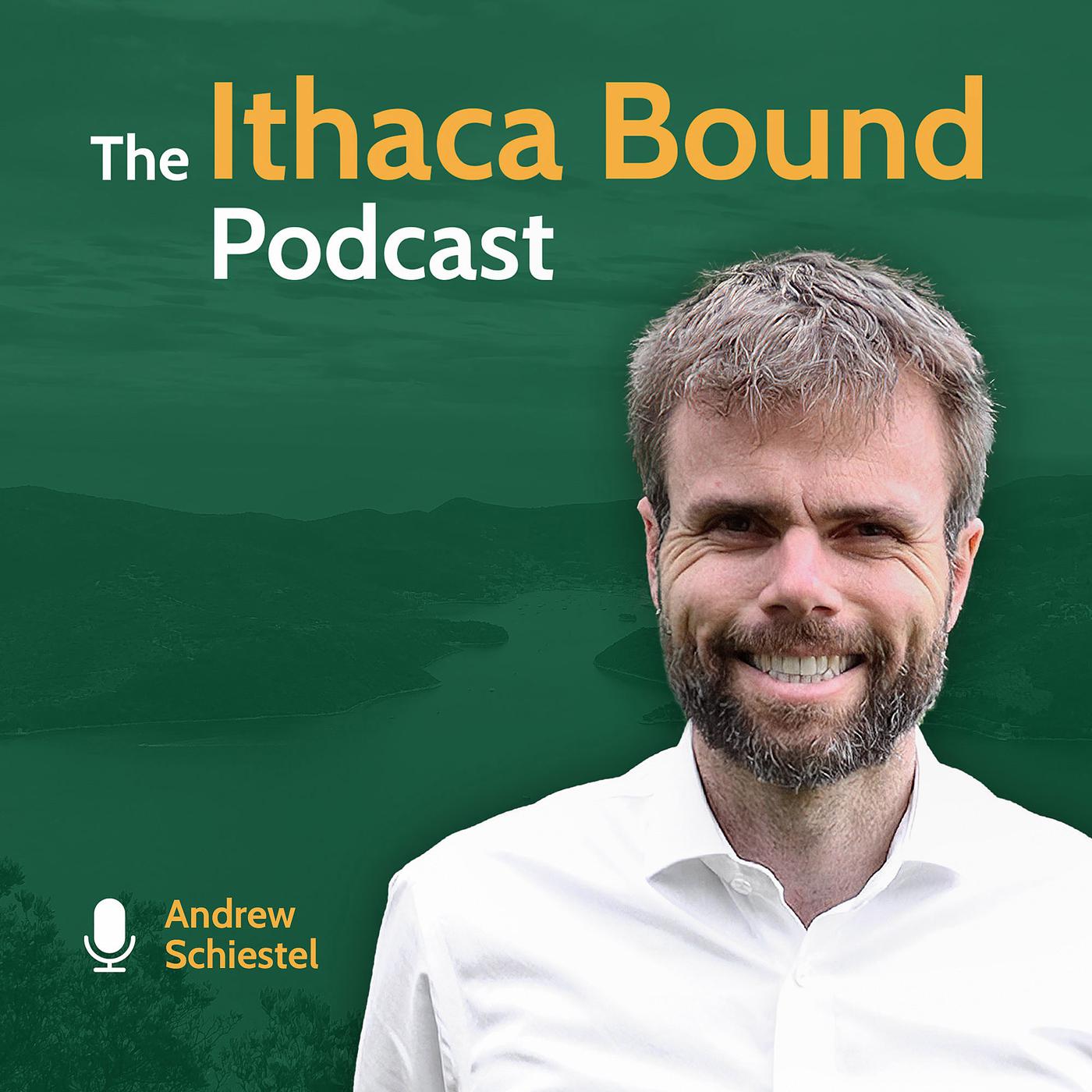
Ithaca Bound was a podcast hosted by Andrew Schiestel that explored history and mythology in the Mediterranean Basin. From March 22, 2021 to January 21, 2022, it published 188 episodes. Visit the new Ithaca Bound Video Series — youtube.com/ithacabound
Dalas ng pag-update:
every 5 days
Average na haba ng audio:
48 minutes
Ingles
Estados Unidos
188 yugto
mula noong March 22, 2021
episodic
AUDIENCE OF THIS PODCAST 🔗
~48.09% of listeners are from United States.
🇺🇸
US
48.09%
🇬🇷
GR
11.95%
🇬🇧
GB
10.43%
🇳🇿
NZ
5.59%
🇩🇪
DE
4.07%
🇦🇺
AU
3.30%
🇳🇱
NL
3.30%
🇧🇪
BE
1.78%
🇪🇸
ES
1.52%
🇵🇹
PT
1.27%
🇨🇭
CH
0.76%
🇮🇹
IT
0.76%
🇨🇦
CA
0.76%
🇸🇴
SO
0.76%
🇫🇮
FI
0.50%
🇩🇰
DK
0.50%
🇸🇨
SC
0.50%
🇧🇷
BR
0.50%
🇳🇴
NO
0.50%
🇹🇳
TN
0.50%
🇿🇦
ZA
0.50%
🇷🇴
RO
0.25%
🇪🇬
EG
0.25%
🇮🇪
IE
0.25%
🇯🇵
JP
0.25%
🇫🇷
FR
0.25%
🇩🇿
DZ
0.25%
🇭🇷
HR
0.25%
🇮🇩
ID
0.25%
Others
0.16%
* Data source: directly measured on Listen Notes. real-time
PINAKAHULING EPISODE 🔗
In the final series episode of the Ithaca Bound Podcast, Professor Ivana Petrovic, Department of Classics and Department Chair, University of Virginia, joins the show to explore what scholars know about the Greek pantheon.
I-SEARCH ANG MGA NAKARAANG EPISODE
I-search ang mga nakaraang episode ng Ithaca Bound.
MGA NAKARAANG EPISODE 🔗
Pottery in ancient Sparta was used for storage, shipping, communicating moral lessons, and more. Dr Adrien Delahaye, French School at Athens, joins the show to explore what scholars know about Spartan pottery in the Archaic and Classical periods.
Marseille is the oldest city in France but not the oldest French city. Professor Junko Takeda, Syracuse University, joins the show to speak about the period of time when Marseille became part of France.
In 1516, the Ottoman Empire took over the region of Syria from the Mamluk Empire. Professor Stefan Winter, Koç University & University of Quebec at Montreal, joins the show to discuss Ottoman Syria during the century.
Much happened in the 7th century during Umayyad’s prominence including two fitnas (commonly referred to as civil wars), printing coins, and the assembly of a navy. Dr. Antoine Borrut, University of Maryland, joins the show to discuss the caliphate's hegemony in the Mediterranean Basin in the 7th ce…
Classical Athens had a principles-based legal system that echoes in many legal systems today. Emeritus Professor Edward Harris, University of Durham, makes a return appearance on the show to discuss what court trials were like in the Classical Athenian period.
Classical Sparta functioned for years with a body of citizens who passed laws while co-existing with two contemporaneously sitting kings (a diarchy). Dr Philip Davies, University of Nottingham, joins the show to explain how government functioned in the Classical Spartan period.
Bronze Age Palaikastro on the Island of Crete remarkably persisted for over two millennia, and peculiarly, may never have had a palatial building. Carl Knappett, a professor and department chair at the University of Toronto, joins the show to share what's known about this ancient Minoan urban centr…
Pompeii became largely uninhabited in the fifth century and began a repopulation process in the fourth. Ivo van der Graaff, Associate Professor, University of New Hampshire, Durham, returns to the show to discuss what was occurring in Pompeii during the fifth and fourth centuries BCE.
The Abbasid Caliphate existed for hundreds of years longer than its Islamic predecessors. Dr Harry Munt, University of York, returns to the show to explain their reign and longevity.
Paunawa: Ang podcast at artwork na naka-embed sa page na ito ay mula sa Ithacabound.com, na pag-aari ng may-ari nito at hindi kaakibat o ineendorso ng Listen Notes, Inc.
SEARCH ENGINE NG PODCAST
Maaari mong gamitin ang aming website upang maghanap ng mga3,823,878na mga podcast at195,678,881na mga episode ayon sa mga tao, lugar, o paksa.

I have no special talent. I am only passionately curious, and
I listen to podcasts.
‐ Albert "Llamacorn" Einstein
I-SEARCH ANG MGA NAKARAANG EPISODE
I-search ang mga nakaraang episode ng Ithaca Bound.
ANGKININ ANG PODCAST NA ITO
Why to claim podcasts?
If you are a podcaster, the best way to manage your podcasts on Listen Notes is by claiming your Listen Notes
podcast pages.
It is a great, free way to engage the podcast community and increase the visibility of your podcasts.
After claiming your Listen Notes podcast pages, you will be able to:
✓
Manually refresh the RSS feed to sync up
✓
Get a verified badge (
✓
) alongside with your podcast name on Listen Notes
✓
Post mga classified ad for sponsorship,
guests, co-hosts,
cross-promotion...
✓
Respond to listener comments on Listen Notes
✓
Use speech-to-text techniques to transcribe your show and
edit transcripts
✓
Improve the presence of your podcasts, e.g., self-service
panayam sa podcaster...
✓
If you share your Listen Notes page and at-mention @ListenNotes
on X (formerly Twitter),
ang opisyal naming X (dating Twitter) account will retweet to promote
your show to our followers.
Coming soon:
◯ Self-service promotion on Listen Notes
◯ Track your podcast stats on Listen
Notes, e.g., listens, page
views...
◯ Manage episodes
I-EDIT
Salamat sa pagtulong na mapanatiling naka-update ang database ng podcast.
