
關於這一集
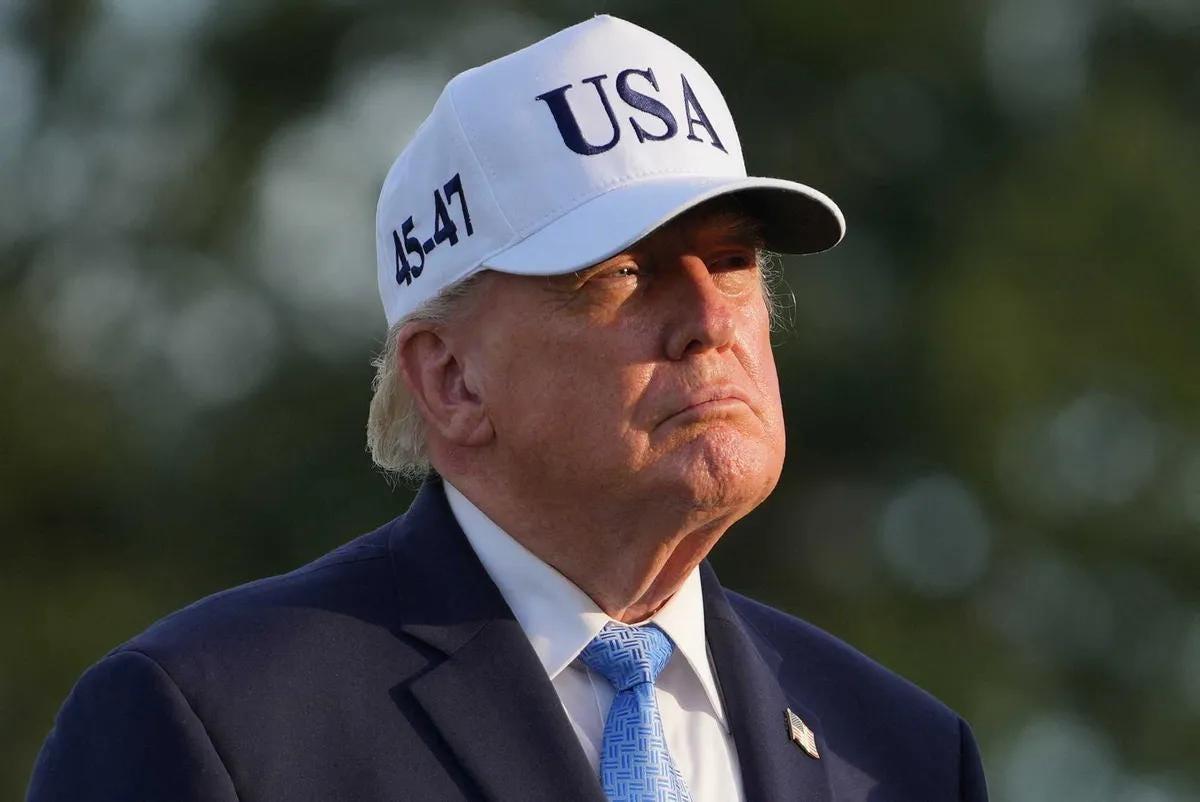
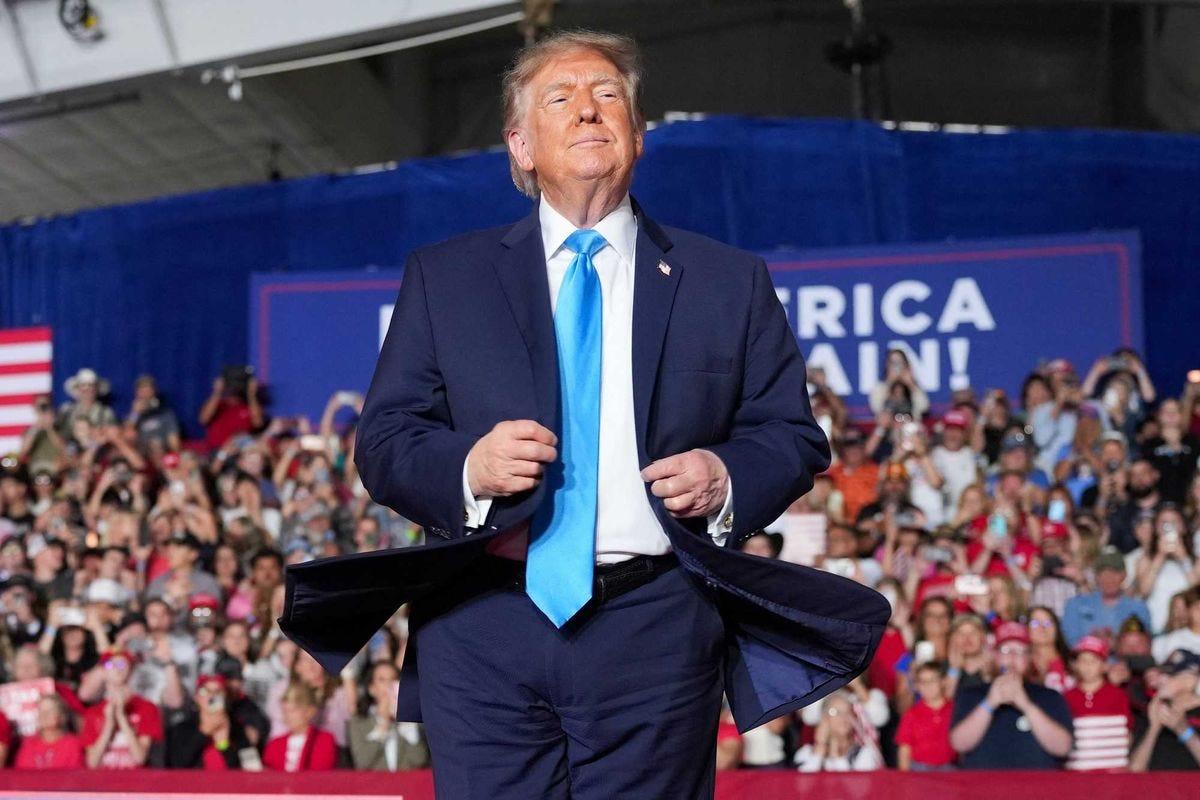
US President Donald Trump looks on as he attends the Presidents Cup golf tournament at Medinah Country Club, in Medinah Illinois, US, September 27, 2026. REUTERS/Nathan Howard
What happened
President Donald Trump’s reported midterm strategy is to promote corporate investment announcements as evidence that his administration created jobs. RawStory, citing The New York Times, reported that Trump announced Monday in the Oval Office that Mesabi Metallic plans to build a large steel mill in Iowa as part of an $18 billion investment. Trump said the project probably would not have proceeded under a “less friendly” administration.
The “monumental scandal” was not the mill itself, but the financial relationships surrounding it. According to the reporting, Mesabi Metallic previously paid Trump associate Jason Miller $240,000 a year to lobby, while Miller also received about $150,000 annually under a lobbying contract with the Indian government to attract the company’s business. Public Citizen co-president Robert Weissman called that arrangement scandalous. The article does not establish that the contracts were illegal, that Trump directed them, or that they caused the Iowa investment.
Help fuel the work. Independent analysis doesn’t fund itself:☕ Buy us a coffee
Iowa Gov. Kim Reynolds praised the proposed mill as transformative for the state and region. The reporting provided no job count, construction timetable, or evidence that the announced investment had already produced jobs.
Power owns the announcement
Trump controls the presidential platform and can place a private company’s proposal inside a White House political narrative. Mesabi Metallic controls whether the project is financed, built and operated. Reynolds can confer state-level legitimacy and potentially shape whatever public support follows.
Workers and voters control none of those decisions. Yet they are positioned as the grateful audience for benefits that remain prospective. That is the core power arrangement: public officials collect immediate political credit while the corporation retains control over delivery.
A promise is not a payroll
The framing converts an announced investment into a story about jobs already “created.” Those are not interchangeable facts. An $18 billion figure may sound concrete, but without a disclosed schedule, employment estimate or completed facility, it describes a plan rather than an economic result.
That distinction matters because political credit arrives at the press conference; accountability arrives years later, if at all. The administration gets the image of industrial revival before workers receive a paycheck.
The conflict question cannot be waved away
Miller’s reported contracts create an obvious influence question: how did a Trump associate come to be paid by both the company and the Indian government in connection with attracting that company’s business? The supplied reporting does not prove a corrupt exchange, so it cannot support declaring one.
But lack of proven criminality is not the same as lack of public concern. When access, lobbying money and presidential promotion converge around a politically valuable announcement, scrutiny is the minimum institutional response. Weissman’s remark identifies the normalization problem: relationships that would ordinarily trigger sustained examination risk becoming background noise.
Voters are not the responsible party
RawStory’s suggestion that these deals could help Republicans where voters are tiring of Trump places too much narrative weight on voter sentiment and too little on the officials manufacturing the sales pitch. Voters did not arrange the lobbying contracts, select the Oval Office backdrop or describe a proposed mill as proof of completed job creation.
The relevant agency belongs to Trump, his administration, the company and political allies such as Reynolds. Treating the episode chiefly as a question of whether skeptical voters can be won back obscures how institutional power turns private investment plans into publicly subsidized campaign material.
Government as political branding
The larger pattern is the conversion of governance into promotional theater: announce a large number, attach it to presidential favor, and bank the electoral benefit before the promised outcome can be measured. Corporate access becomes evidence of economic leadership; unresolved influence questions become incidental.
That system rewards spectacle over verification. The people with the most power define the success metric, claim victory at announcement and leave workers and communities holding the risk if the project delivers less than advertised.
Thanks to Raw Story
Source: Trump just revealed his midterm strategy hinges on a ‘monumental scandal’: report
Systemic Error is a reader-supported publication. To receive new posts and support my work, consider becoming a free or paid subscriber.
We warned them.We told them.We shouted from the rooftops.We plead.We begged.They didn’t listen.Now, we all will suffer.Y’all know what to do, right?VOTE BLUE! 💙Vote as if your life — nay, our country — depend on it.Because, this time, and every time, it does.
This is a public episode. If you'd like to discuss this with other subscribers or get access to bonus episodes, visit paulstsmith.substack.com/subscribe