


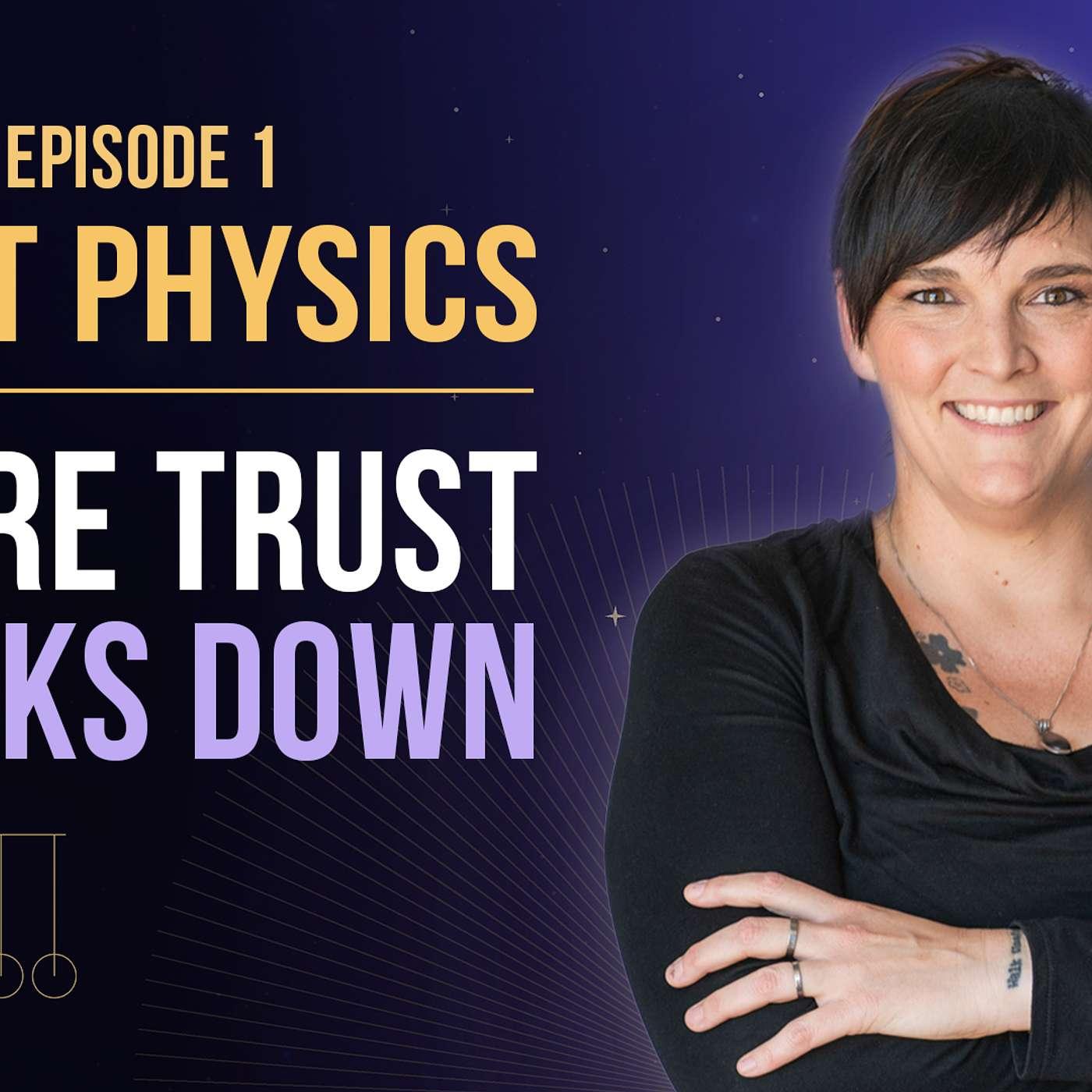
WEBVTT
00:00:00.160 --> 00:00:04.719
I think leadership is something that we really need to open up the umbrella of that term.
00:00:04.959 --> 00:00:08.560
We tend to think of leadership as meaning somebody who's a boss, right?
00:00:08.720 --> 00:00:11.119
Leadership is a work-related term.
00:00:11.359 --> 00:00:12.800
And I completely disagree.
00:00:12.960 --> 00:00:21.600
Leadership is for anyone who takes responsibility for their part in the relationships in their life.
00:00:27.280 --> 00:00:30.399
Welcome to Inside Conscience-Driven Leadership.
00:00:30.480 --> 00:00:31.920
I'm your host, Hannah Miller.
00:00:32.240 --> 00:00:37.119
And I am Julie Uber, co-conspirator and self-described CDL leader.
00:00:37.439 --> 00:00:38.079
Wonderful.
00:00:38.240 --> 00:00:38.880
I concur.
00:00:39.119 --> 00:00:46.399
Conscience-driven leaders are driven to their leadership by not by ambition, but by a sense of responsibility to the people they lead.
00:00:46.560 --> 00:00:53.200
They really care about clearing the obstacles out of the way so that people can do their best work and feel really purposeful in the work.
00:00:53.439 --> 00:00:53.600
Yeah.
00:00:53.679 --> 00:01:01.119
And this season we're going to be focusing on a really key aspect of this model, and that is trust physics.
00:01:01.600 --> 00:01:05.200
So trust physics are really an exciting aspect of it.
00:01:05.439 --> 00:01:09.040
And I know we're going to dive into some really specific aspects of that today, Hannah.
00:01:09.120 --> 00:01:12.560
Do you want to share a little bit about this episode and what our focus will be?
00:01:12.879 --> 00:01:13.359
Absolutely.
00:01:13.519 --> 00:01:33.200
So trust physics is the relational piece of conscience-driven leadership, which makes it a natural entry point, but also kind of the most important because as conscience-driven leaders, since we're driven by the relationships we have with people, how to do, how to do trust and accountability is really critical to making that happen.
00:01:33.359 --> 00:01:39.439
Trust physics is rooted in the subjects, honestly, that come up in my consulting and coaching practice on a daily basis.
00:01:39.680 --> 00:01:45.519
Since I wrote the book Trust Physics, literally every professional conversation I've had has included.
00:01:45.760 --> 00:01:50.239
Actually, I just wrote a book called Trust Physics, and there's a whole chapter on this topic.
00:01:50.319 --> 00:01:51.359
And it's not the same chapter.
00:01:51.439 --> 00:01:53.680
It's always a different chapter that I'm talking to clients about.
00:01:53.760 --> 00:01:59.519
But trust physics addresses the issues that I find leaders struggle with every single day.
00:01:59.760 --> 00:02:00.640
Yeah, fantastic.
00:02:00.799 --> 00:02:07.599
And I know today we're going to be talking about directness and integrity as key kind of contexts to this.
00:02:08.000 --> 00:02:18.479
And when I think about trust physics, the way that I think about it is it's how to hold people accountable in a way that drives relationships forward, not down.
00:02:19.120 --> 00:02:23.919
You know, how you show up honestly without breaking a relationship.
00:02:24.080 --> 00:02:27.919
And it's how we all stay whole in our connections with each other.
00:02:28.080 --> 00:02:32.879
You know, it's it's a way to make sure that your actions really speak louder than your intentions.
00:02:33.039 --> 00:02:34.080
Would you say that's true?
00:02:34.400 --> 00:02:39.280
I think maybe it's a way to make sure your actions are aligned with your intentions.
00:02:39.520 --> 00:02:40.400
Yeah, that makes sense.
00:02:40.719 --> 00:02:45.840
Actually, because uh I think we often our intentions are usually right.
00:02:46.000 --> 00:02:53.759
I think most intent people's intention is usually, you know, what they intend to happen and what actually happens is usually where the gap is.
00:02:53.840 --> 00:03:02.400
And so I think trust physics addresses how that gap opens up between what you wanted to happen and what actually happened.
00:03:02.719 --> 00:03:03.120
Totally.
00:03:03.280 --> 00:03:15.520
Because if you state your intentions, if you even get that far of even telling people what your intentions are, if your actions don't back that piece up, then you're not going to move forward in the way that you intended.
00:03:15.919 --> 00:03:16.560
Absolutely.
00:03:16.719 --> 00:03:31.039
Because if what you say you mean what you meant to do and what you did, if that those things aren't landing the same on someone, they aren't gonna believe e they they they're gonna believe your actions more than they believe what you say you meant or what you what you say you intended.
00:03:31.280 --> 00:03:32.319
Yeah, absolutely.
00:03:32.560 --> 00:03:38.479
And before we kind of jump into these kind of contextual ideas, um, who is this for?
00:03:38.639 --> 00:03:42.000
Who is a leader under this model that you're looking at, Hannah?
00:03:42.240 --> 00:03:43.520
That thank you for that question.
00:03:43.680 --> 00:03:49.199
Uh leader, I think leadership is something that we really need to open up the umbrella of that term.
00:03:49.360 --> 00:03:52.960
We tend to think of leadership as meaning somebody who's a boss, right?
00:03:53.120 --> 00:03:55.520
Leadership is a work-related term.
00:03:55.759 --> 00:03:57.199
And I completely disagree.
00:03:57.360 --> 00:04:07.360
Leadership is is for anyone who feels anyone who takes responsibility for their part in the relationships in their life.
00:04:07.520 --> 00:04:09.120
And those can be any relationships.
00:04:09.280 --> 00:04:19.360
Obviously, if you are a boss, if you're a CEO or an executive director or any kind of a team leader in your work, you have responsibility for the relationships of the people that you supervise.
00:04:19.600 --> 00:04:25.920
But we're friends and I take responsibility for my part of our relationship.
00:04:26.079 --> 00:04:28.959
And I know you take responsibility for your part of our relationship.
00:04:29.040 --> 00:04:30.800
That's what makes our friendship so great, right?
00:04:30.879 --> 00:04:33.360
Like when you get to work, CDLs love each other, right?
00:04:33.439 --> 00:04:37.519
Like we because we get we get the same vibe, we want the same things.
00:04:37.759 --> 00:04:49.040
But um, and that's that's the ideal, is you're when you have any relationship with somebody where they want to stay whole as a person and you want to stay whole as a person, it's really easy to respect boundaries.
00:04:49.199 --> 00:04:53.920
It's way harder when people don't know what wholeness looks like or feels like.
00:04:54.079 --> 00:05:05.360
It's harder when there are people who actively benefit from you not being whole and leading in those relationships is where things get really tricky, whether that's in the workplace, in a friendship, in your family, in your partnership.
00:05:05.439 --> 00:05:07.920
It can be, you know, it's any relationship that you're in.
00:05:08.079 --> 00:05:14.240
I think leaders are people who recognize their role in moving a relationship forward.
00:05:14.480 --> 00:05:15.120
That's beautiful.
00:05:15.279 --> 00:05:17.759
So anyone could be a leader no matter what.
00:05:18.000 --> 00:05:22.800
I think anyone who thinks relationships are important to them is probably a conscience-driven leader.
00:05:23.120 --> 00:05:24.800
Yeah, no, I I love that.
00:05:24.959 --> 00:05:31.199
And I agree with it because I think that sometimes leadership is just a piece of who you are.
00:05:31.680 --> 00:05:38.079
Uh, and I'm I yeah, I can only speak for myself and how that feels for me, but I know that there are other people that feel that way too.
00:05:38.240 --> 00:05:45.759
That leadership is just um an exciting way that you can impact the world together with other people.
00:05:46.079 --> 00:05:46.560
Absolutely.
00:05:46.720 --> 00:05:48.959
It's not a title, it's a state of being.
00:05:49.279 --> 00:05:49.680
Yeah.
00:05:49.839 --> 00:05:52.000
And I think it's important to clarify that.
00:05:52.160 --> 00:05:59.279
Uh recently, so I I run a nonprofit in science education in Tucson, Arizona called SARSEF.
00:05:59.439 --> 00:06:00.160
Um, I love it.
00:06:00.240 --> 00:06:01.279
I love my job.
00:06:01.519 --> 00:06:22.480
And um, something we did in our recent strategic planning is that we were intentional about creating a description of what we meant by leadership because we talk a lot about how everyone in the organization is a leader, whether it's of a project, of a function, or of entire um, you know, sections of the org.
00:06:22.639 --> 00:06:24.959
Like everyone is a leader in their own way.
00:06:25.120 --> 00:06:29.439
But something I noticed is that people were interpreting that differently.
00:06:29.680 --> 00:06:32.720
And talking about leadership meant a lot of different things.
00:06:32.800 --> 00:06:35.600
And it reminded me of this amazing book I read.
00:06:35.680 --> 00:06:38.879
It's called The Ancient Art of Thinking for Yourself.
00:06:39.279 --> 00:06:41.680
Uh, beautiful book, highly recommend.
00:06:41.839 --> 00:06:51.040
And a quote that I've pulled out from it is ideology floats through language like word clouds, which I think is so cool.
00:06:51.360 --> 00:06:52.480
I want to unpack that.
00:06:52.639 --> 00:06:56.879
Ideology floats through language like word clouds.
00:06:57.120 --> 00:07:00.639
I love that because I I encounter this all the time.
00:07:00.800 --> 00:07:07.040
Like people, there are these squishy words that people use in leadership that I could they drive me crazy.
00:07:07.279 --> 00:07:09.759
We're gonna talk about one of them today because it's integrity.
00:07:09.920 --> 00:07:12.319
But another one that makes me nuts is respect.
00:07:12.560 --> 00:07:13.360
Oh my God.
00:07:13.519 --> 00:07:15.519
Like respect, what do you mean by respect?
00:07:15.759 --> 00:07:21.839
Because respect what, respect how, what does respect mean to you versus another person?
00:07:21.920 --> 00:07:25.040
Like respect means a very different thing to every person.
00:07:25.199 --> 00:07:36.639
And I'm somebody who, like based on my talents, I'm really good at understanding what someone means to say and understanding what you words to use to so they hear what I mean to say.
00:07:36.800 --> 00:07:40.639
So for me, that translation is kind of natural and automatic.
00:07:40.800 --> 00:07:51.120
But I know for most people and a lot of my work revolves around translating what people are trying to say to each other because they just, they just butt heads all the time.
00:07:51.199 --> 00:08:00.720
And so ideology, I think there's a, I think we don't give enough credit to the ideology at work in our work and in our leadership, regardless of where that leadership is happening.
00:08:00.959 --> 00:08:18.879
And something that the book recommends is if there's something you're really diving into like leadership, find the definitions of that through time and see how it changes and think about what was happening in history when leadership was uh being someone that is an authority that tells everyone what's to do and they do it.
00:08:19.040 --> 00:08:29.279
You know, and that's not what we meant when we talked about leadership in SARS, but it is a part of the history of that word and the way that people understood their role in leadership.
00:08:29.439 --> 00:08:34.720
So getting a chance to come together and say, what do we mean as a leader was really important for us.
00:08:35.200 --> 00:08:35.840
Absolutely.
00:08:36.000 --> 00:08:38.159
I feel like, I feel like that's just true all the time.
00:08:38.320 --> 00:08:40.159
Like what do we mean by words?
00:08:40.320 --> 00:08:48.000
Because there's all of history and then there's our individual histories, and we're always bringing our own history into every conversation.
00:08:48.159 --> 00:08:52.159
And so, yeah, it's so important to know what we mean by these words.
00:08:52.480 --> 00:08:53.600
Yeah, absolutely.
00:08:53.759 --> 00:09:05.200
And I think that's something that would be cool for our listener to do too, is to really be mindful of what is their definition of leadership when they think of themselves as a leader, what does that mean to them personally?
00:09:05.360 --> 00:09:08.720
Because it's something different to them than it does maybe even to the two of us.
00:09:09.039 --> 00:09:09.519
Absolutely.
00:09:09.600 --> 00:09:10.879
And what could it mean?
00:09:10.960 --> 00:09:15.200
Like what does leadership mean based on your experience of external leaders?
00:09:15.440 --> 00:09:18.399
And what does it mean when you think of yourself as a leader?
00:09:18.559 --> 00:09:20.879
And are those definitions the same or are they different?
00:09:21.039 --> 00:09:24.000
Because you can be a different kind of leader than you've experienced.
00:09:24.159 --> 00:09:25.279
It's hard.
00:09:25.679 --> 00:09:38.639
There's something called a possibility model that I is a concept that I'm just obsessed with, which is that as humans, we have a really hard time imagining a future for ourselves that we have not seen someone else embodied.
00:09:39.120 --> 00:09:47.200
And so we need a possibility model in order to become the full the truest version of ourselves.
00:09:47.360 --> 00:09:56.559
And some of us grow up in families where the possibility models that we see in our lives are very aligned with who we are, and some of us don't.
00:09:56.879 --> 00:10:06.559
And you have to meet other people and you have to see other people who give you that potential destination so that you can imagine your own road there.
00:10:06.799 --> 00:10:20.000
Um, and so my hope, I guess, I guess I hope that we are creating a possibility model for some folks about what leadership can be, because in the world broadly, leadership often means something very different than what we're talking about, right?
00:10:20.080 --> 00:10:25.679
Like the current standard of leadership is not driven by conscience.
00:10:25.840 --> 00:10:27.039
It really isn't, right?
00:10:27.120 --> 00:10:32.159
The capitalist model of leadership is driven by revenue and profit.
00:10:32.480 --> 00:10:34.639
And that is not centering people.
00:10:34.799 --> 00:10:39.200
And conscience-driven leadership is very much an antidote to that.
00:10:39.279 --> 00:10:45.600
And it still leads to profit and sustainability in business, but that's not its primary goal.
00:10:45.759 --> 00:10:48.559
Its primary goal is the people who do the work.
00:10:48.799 --> 00:10:52.639
The outcome of investing in people is the success of the business.
00:10:52.879 --> 00:11:00.639
But and it actually isn't very effective to have a business that centers only profit because it does so at the cost of people.
00:11:00.799 --> 00:11:07.200
And that actually usually it often leads to bad business outcomes, but those are longer term.
00:11:07.279 --> 00:11:10.639
And when you focus on short-term revenue, you wind up really without conscience.
00:11:10.799 --> 00:11:16.960
And I think, and I hope our listeners can extrapolate on that because I think it's really prevalent in the world right now.
00:11:17.360 --> 00:11:17.840
I agree.
00:11:17.919 --> 00:11:24.720
And I think it it brings us back to the idea of trust and how people feel when they engage with you as a person or a business.
00:11:24.799 --> 00:11:45.519
And it's something I'm really excited about, how you've taken this that you've seen in the world and kind of given it language and given given it more shape so that people can really understand it, because then there is opportunity to build community with other people whose leadership is focused around relationships and others and making this world even better for everyone.
00:11:45.679 --> 00:11:56.559
And because finding each other is how we find others that we can bounce off of and see those examples and know that this is possible, even in this world that is so driven by revenue.
00:11:56.879 --> 00:11:57.279
Yeah.
00:11:57.519 --> 00:12:04.799
And one of the things about trust physics that I felt was important is we talk about trust in a very currency-based language, typically, right?
00:12:04.879 --> 00:12:10.159
We talk about I give you trust or you earn my trust or you broke my trust.
00:12:10.320 --> 00:12:16.399
Like all of the way we talk about trust as a feeling is actually very much like we talk about currency.
00:12:16.559 --> 00:12:27.120
And I think that that really damages our ability to build it and damages our ability to see how it erodes because it's not, it's not just a feeling and it's not just a currency.
00:12:27.200 --> 00:12:30.879
It's something, it's a it's structure, it's something that builds and erodes.
00:12:31.120 --> 00:12:36.960
And so that's why I was inspired to write this book and to think about trust like we think about physics.
00:12:37.120 --> 00:12:39.919
These are this is a thing that follows laws.
00:12:40.159 --> 00:12:43.519
You can learn the laws and use it to do amazing things, right?
00:12:43.600 --> 00:12:53.360
Like since physics was invented as a field, and the more we learn about physics, the more we're able to create bigger and better things and more and more sophisticated things in science.
00:12:53.519 --> 00:12:54.799
The same is true with trust.
00:12:54.879 --> 00:13:04.240
Like if we understand the operating system of it, we can interact with that operating system in ways that create magic and really great things.
00:13:04.559 --> 00:13:12.000
I feel like that's a great chance for us to jump into kind of directness and integrity, which seem like really important contexts for this.
00:13:12.159 --> 00:13:14.639
So uh maybe we can start with directness.
00:13:14.799 --> 00:13:16.799
Why does that matter in leadership?
00:13:17.120 --> 00:13:22.399
Directness matters in leadership because people don't know what you're thinking.
00:13:23.519 --> 00:13:31.519
It's a common human problem that we expect everyone around us to know what we're thinking because to us, we're thinking something extremely rational.
00:13:31.840 --> 00:13:39.600
And so obviously anyone could come to the same conclusion, but we forget that everybody's minds are full of all kinds of different things that we can't anticipate.
00:13:39.919 --> 00:13:43.600
I do want to clarify that directness does not equate with rudeness.
00:13:43.840 --> 00:13:48.080
I think we think as a culture that to be direct is rude and they're separate.
00:13:48.159 --> 00:13:50.000
You can be direct and not rude.
00:13:50.320 --> 00:13:55.360
A phrase that I I I dislike when people use is, well, I'm just telling it like it is.
00:13:55.519 --> 00:14:03.759
No, that's an excuse for you to be rude and harmful and to state what you think in a way that you know is gonna be damaging.
00:14:03.919 --> 00:14:07.440
And so that is not what we're talking about when we talk about directness here.
00:14:07.759 --> 00:14:13.200
I have a really negative response to the phrase devil's advocate.
00:14:13.440 --> 00:14:16.399
To me, there's a little bit of half-truth to that.
00:14:16.559 --> 00:14:21.440
This is clearly something that's in someone's mind that is maybe the thing that they don't want to say out loud.
00:14:21.519 --> 00:14:25.200
So they somehow, you know, just give it to the devil.
00:14:25.440 --> 00:14:29.120
And I think that instead we should just be having the hard conversations.
00:14:29.279 --> 00:14:36.080
It it almost makes it so it tries to shift that accountability from you to something more amorphous.
00:14:36.240 --> 00:14:43.279
And I think that just having those real conversations is going to be more valuable than saying, well, devil's advocate.
00:14:43.360 --> 00:14:44.159
This isn't me.
00:14:44.320 --> 00:14:46.000
This is an advocate to the devil.
00:14:46.159 --> 00:14:53.600
You know, and I feel like that that is a way that people try to be direct while nesting it into something that makes them less accountable.
00:14:53.919 --> 00:14:56.799
It's a way that people mask instead of having integrity.
00:14:56.879 --> 00:15:02.240
It's a way they they hide their their lack of wholeness in the situation.
00:15:02.320 --> 00:15:07.200
They're not willing, they're not willing to be accountable for their own thoughts and feelings and things they're about to say.
00:15:07.279 --> 00:15:09.679
So they're discarding that accountability.
00:15:09.759 --> 00:15:15.279
And accountability is really the central thing that conscience-driven leaders need.
00:15:15.440 --> 00:15:23.120
It's the it's the primary tool because alignment is what we need from our from the people we work with in conscience-driven leadership.
00:15:23.200 --> 00:15:31.120
You know, we we have to have alignment, so we're all moving in the same direction, but accountability is how we enforce that alignment or we insist on that alignment.
00:15:31.440 --> 00:15:42.720
And so anything that you do that dismisses your own accountability is damaging the relationship because you're not you're not owning what you really think.
00:15:42.960 --> 00:15:46.720
So it's my understanding there's a lot that we do instead of being direct.
00:15:46.879 --> 00:15:52.559
So there's this way that we mask directness, but there's also just us trying not to be direct.
00:15:52.799 --> 00:15:59.279
So um I uh the first thing I know that you talk about in your book is we just avoid.
00:15:59.440 --> 00:16:02.320
Do you have examples of that and like what you mean by that?
00:16:02.799 --> 00:16:03.039
Yeah.
00:16:03.200 --> 00:16:13.360
And I think what you're talking about masking is a way of avoiding, you know, like that's maybe we're trying, it's it's an attempt to be direct when we don't feel like we can.
00:16:13.759 --> 00:16:16.320
But there are lots of ways we avoid directness.
00:16:16.480 --> 00:16:18.960
We tend to think, oh, it's not worth it.
00:16:19.120 --> 00:16:23.519
Like, oh, it's gonna create great because we're afraid of accountability culturally.
00:16:23.679 --> 00:16:26.960
We don't know how to do it without damaging the relationship.
00:16:27.120 --> 00:16:30.960
And so, of course, we want to avoid it because we want to avoid damaging the relationship.
00:16:31.120 --> 00:16:35.120
And we wind up damaging the relationship by avoiding it.
00:16:35.279 --> 00:16:36.879
So we think, oh, it's not worth it.
00:16:37.039 --> 00:16:41.120
We think, oh, I'll just let this slide, they'll figure it out, I'll give them time, et cetera.
00:16:41.200 --> 00:16:52.000
It's just any way that you know that there's something that you, there's something you wish you could say or there's something you feel like needs to be said, and you find an excuse not to, that's avoiding.
00:16:52.320 --> 00:16:54.000
Yeah, and that makes sense.
00:16:54.240 --> 00:17:17.200
One that really resonated with me is being accommodating instead of being direct about what you need or uh how you see a situation, instead you're really focused on reading that room and knowing what the person on the other side of the booth uh wants to hear uh and needs to hear and kind of bending yourself to what that looks like.
00:17:17.359 --> 00:17:26.720
It may be to keep the peace, it may be to uh preserve the relationship, even though what you're really doing is degrading that relationship in the process.
00:17:27.039 --> 00:17:27.359
Right.
00:17:27.440 --> 00:17:29.519
Because right, it takes friction to grow.
00:17:29.680 --> 00:17:41.039
And so if you accommodate and you make everything easy for somebody and you don't show them where they're stepping outside the lines, you're robbing them of the ability to grow stronger.
00:17:41.359 --> 00:17:47.599
And I recognized my the way that I do that is I accommodate recently.
00:17:47.759 --> 00:17:51.119
I was on a very difficult hike with some friends.
00:17:51.359 --> 00:17:55.599
And it was one of those hikes that goes down the mountain and then back up.
00:17:55.759 --> 00:18:00.799
And so once you get to the bottom, uh, you have a long way to go to get to the car.
00:18:01.200 --> 00:18:13.200
And my mind immediately went to, okay, here I am, someone that just went through, you know, treatment of cancer, getting to know the drugs and how they impact my body.
00:18:13.440 --> 00:18:17.920
I'm I'm more tired than I normally was, but I'm also still very stubborn.
00:18:18.079 --> 00:18:23.119
And I also still very much love nature and I want to be out there on those trails.
00:18:23.359 --> 00:18:32.799
Uh, but once we started up that hill, I just kept thinking, like, oh my gosh, how do I make sure I'm accommodating everyone else on this trail?
00:18:33.039 --> 00:18:37.039
Like, how do I make sure that my group isn't being held back by me?
00:18:37.359 --> 00:18:41.599
And they were so good at showing me that that's not what it was.
00:18:41.759 --> 00:18:50.400
Like I was so grateful every time I needed to stop, they just stared out into the beautiful nature and made sure that I knew that it was okay.
00:18:50.720 --> 00:19:05.279
And knowing that I didn't have to try to accommodate at the expense of my body in this group was so special and felt like such an important leadership that I was like, oh my gosh, I'm gonna take so much away from this because I see patience in it.
00:19:05.519 --> 00:19:14.559
I see taking care of the group in a way that doesn't limit them necessarily because they're not there to rush a recent cancer patient up a mountain.
00:19:14.720 --> 00:19:16.319
That's not what they want to do.
00:19:16.720 --> 00:19:22.799
What they want to do is spend time with me and other friends and be in nature and look out and see the gorgeousness.
00:19:22.960 --> 00:19:32.000
But it took time for me to relax into myself and let myself be who I am because there are different cultures out on the trail.
00:19:32.079 --> 00:19:35.119
There are people that are like, no, we have to get to the car as fast as possible.
00:19:35.359 --> 00:19:39.680
And no, what these people said is the only rule is we have to get back to the car.
00:19:40.000 --> 00:19:42.079
Together and okay.
00:19:42.240 --> 00:19:48.160
Like we get back to the car and the goal is we get back to the get the car, we all feel good about the day.
00:19:48.319 --> 00:19:51.599
So you have a bunch of conscience-driven leaders as your friends what you're telling me.
00:19:52.640 --> 00:19:53.759
We're taking care of you.
00:19:53.839 --> 00:19:54.960
Yeah, so hard.
00:19:55.119 --> 00:19:57.279
Those of us conditioned female by the world, right?
00:19:57.359 --> 00:20:07.440
Like we have so much programming, even if we've worked really hard, even if you know, to overcome all of all of those feelings that we are not enough or that we need to sacrifice.
00:20:07.599 --> 00:20:14.480
I think conscience-driven leaders, because often are it's easy for us to sacrifice for other people and accommodate other people.
00:20:14.559 --> 00:20:15.440
Oh, we'll just help them.
00:20:15.599 --> 00:20:24.799
I think that's probably the easiest avoidance for conscience-driven leaders is oh, I'll just step in for them, I'll just help them out because we're we're we want to be helpful.
00:20:25.039 --> 00:20:26.960
And it's it's just not always helpful.
00:20:27.119 --> 00:20:34.640
Another way that we that we avoid directness, well, the outcome of avoiding directness is we explode, right?
00:20:35.359 --> 00:20:38.240
Like, I don't like I don't like being angry.
00:20:38.319 --> 00:20:39.440
I don't think you like being angry.
00:20:39.519 --> 00:20:40.960
I'm sure we both have examples.
00:20:41.119 --> 00:20:42.480
I'm exploding.
00:20:42.720 --> 00:20:51.519
I once, my poor technical director, I once threw both my notebook and my purse at my technical director because he just was not getting what I was talking about.
00:20:51.680 --> 00:20:53.359
In my defense, it was 4 a.m.
00:20:53.759 --> 00:20:57.359
We had been working 16-hour days for many weeks and we're about to open a show.
00:20:57.680 --> 00:21:03.920
But still, explosion happens when we haven't been communicating our frustration, right?
00:21:04.079 --> 00:21:06.720
Like avoiding eventually leads to frustration.
00:21:06.960 --> 00:21:16.640
Once you've started avoiding, you keep avoiding and then and it builds and builds and builds until we explode at somebody, and then it's completely out of proportion to the thing they just did.
00:21:16.880 --> 00:21:25.200
They don't understand what's happening, they don't they don't have the context in our mind that we have in our mind of all the times that we have not told them the truth.
00:21:25.519 --> 00:21:28.400
They just know that, like, oh, right now I made you mad.
00:21:28.480 --> 00:21:35.839
And it actually makes us seem inconsistent and scary, which is something I think we as conscious servant leaders really don't want to be.
00:21:36.079 --> 00:21:40.960
Yeah, I think I have examples too where it was more of an inner explosion.
00:21:43.519 --> 00:21:50.480
Where I like the other person maybe isn't even there, but I just go into a room and scream.
00:21:51.200 --> 00:21:52.799
What's wrong with this person?
00:21:52.960 --> 00:21:54.640
How come they don't understand?
00:21:55.440 --> 00:21:55.920
Right.
00:21:56.240 --> 00:21:57.519
Why are they such an idiot?
00:21:57.599 --> 00:22:02.319
Like we turn into all these judgments and Right, how does the relationship recover from that?
00:22:02.480 --> 00:22:04.880
Like damage has happened at that point.
00:22:05.119 --> 00:22:06.480
Yeah, absolutely.
00:22:06.960 --> 00:22:20.960
I think something else that we we do is we we use accountability as a punishment instead of something that can be a kind of long-term journey for a relationship and maintaining that relationship.
00:22:21.119 --> 00:22:27.200
Um, so when we weaponize accountability, uh, you know, it's something we do to people who've disappointed us.
00:22:27.279 --> 00:22:47.200
Um, and so then maybe they don't know what your expectations were, but and maybe they do, but that accountability is used as a hammer if they cross that line instead of using it as a conversation in a way to help them grow or a way to really clarify the relationship in deeper ways.
00:22:47.599 --> 00:22:47.839
Right.
00:22:48.000 --> 00:23:05.680
And um we'll get to this when we talk about accountability more, but you know, we've all experienced this kind of accountability, and it's why we're afraid to do it, because we think we've equated accountability with punishment because it's been used that way with us, where, well, I'm gonna hold you accountable because you can't do it yourself, right?
00:23:05.759 --> 00:23:08.880
Like that this this it's this moral judgment ultimately, right?
00:23:08.960 --> 00:23:18.079
Like we've we've turned accountability into something you either do or don't do, not something that's relational and a gift of helping somebody understand.
00:23:18.319 --> 00:23:24.880
And in trust physics, that's how we look at accountability is as something that is meant to help the relationship.
00:23:25.200 --> 00:23:28.400
But this punishment model is something we all know.
00:23:28.720 --> 00:23:29.920
We've all been there, right?
00:23:30.000 --> 00:23:34.799
We've all had those bosses or those reviews of like, well, you need, uh you're gonna need more accountability.
00:23:34.880 --> 00:23:38.160
So that means that I'm gonna, you know, and that leads into the next one.
00:23:38.319 --> 00:23:40.400
I'm gonna be more controlling now, right?
00:23:40.480 --> 00:23:42.880
Like you've proven that you're not trustworthy.
00:23:43.039 --> 00:23:45.440
So, right, again, worthy of trust.
00:23:45.759 --> 00:23:53.039
Not that trust is something that builds and and erodes or degrades, but as something that you're worth or not worth.
00:23:53.359 --> 00:23:57.680
We get this moral judgment, which is also an escape from accountability.
00:23:57.839 --> 00:24:04.880
Um, and and then we say, Oh, I'm not, I'm not gonna tell you what the real problem is and help you solve it.
00:24:05.039 --> 00:24:07.599
I'm gonna treat you like you're incapable.
00:24:07.920 --> 00:24:19.440
And, you know, and that it's a form of punishment to be controlling and to be to have this moral judgment about you as a person because you haven't fulfilled expectations that weren't named in the first place.
00:24:19.680 --> 00:24:27.599
So bringing us full circle on directness, directness is how we give people the opportunity to be successful.
00:24:27.759 --> 00:24:36.720
And if we don't give them that, they can't, they then they are doomed to fail unless they happen to just magically be someone who thinks a lot like us.
00:24:36.960 --> 00:24:37.200
Yeah.
00:24:37.359 --> 00:24:38.640
No, that makes a lot of sense.
00:24:38.799 --> 00:24:50.799
And something that I do at my organization in, and it's very genuine, it might sound a little cutesy, but it is it is very true to me is that I celebrate anytime someone brings me their mistake.
00:24:51.279 --> 00:24:57.200
Anytime they say, I goofed, this happened, I'm like, oh my gosh, you're human.
00:24:57.440 --> 00:24:58.720
That's amazing.
00:24:59.039 --> 00:25:03.920
And like we actually get to work through it now because mistakes are going to happen.
00:25:04.160 --> 00:25:16.640
And if we just take joy in the fact that we can talk to each other and share when these things happen and work through them together, then we come out of it a stronger team and a stronger organization.
00:25:16.880 --> 00:25:17.599
Absolutely.
00:25:17.839 --> 00:25:22.880
I I hope it's not terrible that I so often equate things to dogs and horses.
00:25:22.960 --> 00:25:26.079
But this reminds me a lot of the two golden retrievers that I used to have.
00:25:26.240 --> 00:25:29.839
And if you've ever known a golden retriever, you know they pick up everything in their mouth.
00:25:30.160 --> 00:25:34.240
And if when a dog picks up something they're not supposed to, you go, Oh my God, don't do that.
00:25:34.319 --> 00:25:35.039
No, no, no.
00:25:35.279 --> 00:25:36.079
What are they gonna do?
00:25:36.240 --> 00:25:37.519
They're gonna run away.
00:25:38.000 --> 00:25:50.880
So instead, from the time they were little bitty puppies, every time they picked up something they weren't supposed to have, a light bulb, you know, you know, socks that they were gonna eat, papers off the counter, whatever.
00:25:51.200 --> 00:25:54.319
Our immediate response was, thank you so much.
00:25:54.640 --> 00:25:56.400
Oh my god, you're such a good puppy.
00:25:56.480 --> 00:25:59.359
You put you did the thing you were designed to do.
00:25:59.519 --> 00:26:01.680
You picked this thing up in your mouth, aren't you so great?
00:26:01.759 --> 00:26:03.359
And they were like, I am so good.
00:26:03.519 --> 00:26:05.200
And they would come up and be all proud.
00:26:05.359 --> 00:26:09.039
And it got to the point where anything they picked up, they'd be like, Look what I have.
00:26:09.119 --> 00:26:10.799
Oh, wow, aren't you special?
00:26:10.960 --> 00:26:11.680
Thank you so much.
00:26:11.839 --> 00:26:14.400
I'm gonna take that light bulb before you die.
00:26:16.160 --> 00:26:23.920
But right, like I learned how to do most human interactions through dogs and horses, uh, mostly horses, but also lots of dogs.
00:26:24.079 --> 00:26:26.559
So it it always winds up tying together for me.
00:26:26.880 --> 00:26:30.240
Like, you can't things you can't do with animals, you shouldn't do with people.
00:26:30.400 --> 00:26:38.079
And it's amazing to me how often people do to humans things they would never do to an animal because it wouldn't work with an animal.
00:26:38.160 --> 00:26:40.480
And you know what humans are animals.
00:26:42.720 --> 00:26:44.319
Animals with language.
00:26:44.480 --> 00:26:45.599
Yeah, that's all we are.
00:26:45.759 --> 00:26:48.960
So we just have more opportunity to misunderstand each other.
00:26:49.200 --> 00:26:49.839
Yep.
00:26:50.240 --> 00:26:51.359
Absolutely.
00:26:51.519 --> 00:26:56.720
Um, I think that kind of brings us to how integrity kind of goes into this too.
00:26:57.200 --> 00:26:57.599
I do.
00:26:57.680 --> 00:26:58.799
I think we're I think we're there.
00:26:58.960 --> 00:27:02.559
Integrity is our next important concept.
00:27:02.960 --> 00:27:03.440
Yeah.
00:27:03.680 --> 00:27:12.079
Um, I feel like it really matters in leadership uh because it's when expectations are both named and upheld.
00:27:12.319 --> 00:27:18.720
Um, you can see the whole system of people and processes and what they're supposed to be doing.
00:27:18.960 --> 00:27:24.079
And that's all both out loud and truly being upheld.
00:27:24.400 --> 00:27:29.039
And it's something, it's a word we tend to use, you see it on a lot of value statements without a definition.
00:27:29.200 --> 00:27:35.279
And so I this is something that because clients are always like, well, integrity is important to us, and it'd be like, okay, what do we mean by integrity?
00:27:35.440 --> 00:27:39.599
And they're like, uh, you say you do what you say you'll do.
00:27:39.680 --> 00:27:41.599
I'm like, well, yeah, that's certainly part of it.
00:27:41.920 --> 00:27:52.240
But the root word, the root word of integrity is integer, which if you remember math, you may or may not, is it means entire, it means a whole number, right?
00:27:52.400 --> 00:27:55.759
And so integrity means wholeness.
00:27:55.920 --> 00:27:57.759
It is about doing what you say you'll do.
00:27:58.000 --> 00:28:07.359
There's a phrase my dad has that's always in my head, which is say what you mean, mean what you say, don't say it mean, which is kind of uh, you know, that's the shorthand version of this.
00:28:07.599 --> 00:28:09.039
How is harder, right?
00:28:09.119 --> 00:28:13.119
Like uh you can say that and then also be confusing.
00:28:13.279 --> 00:28:19.200
Um, so I think it's clarity is important and checking to make sure you're understood is an important caveat to that.
00:28:19.359 --> 00:28:26.160
Um, but yeah, integrity does mean following through on what you say you'll do, but it also means being consistent.
00:28:26.240 --> 00:28:49.119
It means, and in order to be consistent, you have to be yourself because the less yourself you are or the less whole you are, the harder it is to be consistent in, you know, because having integrity as a leader, a lot of that means, you know, your staff, your team knows if they make a mistake, they're gonna come to you and you're gonna be like, oh, we're gonna do a dance now.
00:28:49.359 --> 00:28:55.680
So they're not afraid because you've taught them that over time over time through your consistency.
00:28:55.759 --> 00:29:07.200
And you probably told them that at first they didn't believe you because lots of people say they're gonna do one thing, and then when the actual thing happens that causes an emotional reaction, a very different version comes out.
00:29:07.359 --> 00:29:16.240
So yeah, integrity is as much about knowing yourself really authentically, so you can remain whole in your relationships with other people.
00:29:16.480 --> 00:29:17.440
I think that's beautiful.
00:29:17.519 --> 00:29:31.200
And I can see how these two concepts really are important to each other because when you're direct about who you are and what you expect, it can lead to greater integrity within a system and within a relationship.
00:29:31.440 --> 00:29:32.559
Would you say that's true?
00:29:32.960 --> 00:29:33.519
Absolutely.
00:29:33.680 --> 00:29:43.759
And when you have integrity and you have that wholeness and you know yourself, it is much easier to be direct because you're not afraid that you will lose part of yourself in the communication.
00:29:43.920 --> 00:29:54.799
You and you know that any of the things that you could do instead that to avoid or control or punish or accommodate is actually damaging your integrity.
00:29:55.279 --> 00:30:00.400
Because when there's a problem, if you have integrity, you have to say something.
00:30:00.799 --> 00:30:04.240
That is what the other person needs in order for them to be whole.
00:30:04.480 --> 00:30:13.759
And if you have integrity, you want everyone you're in relationship to also be whole and have the opportunity to respond to the reality of the situation.
00:30:14.000 --> 00:30:14.240
Yeah.
00:30:14.319 --> 00:30:24.960
And I think that feels like a kind of brimming excitement to me because it feels like we're truly doing the work together in creating the world we want.
00:30:25.119 --> 00:30:34.079
Because once we're whole and we can come together and be honest about uh problems we see coming up on the horizon, it just becomes part of that great work that we're doing.
00:30:34.160 --> 00:30:36.000
And I think that's really exciting.
00:30:36.960 --> 00:30:41.519
Well, and you because you know the people you're dealing with are whole, you that's resilience too.
00:30:41.599 --> 00:30:49.519
You're not worried that you're going, that they're gonna misinterpret something that you say because if they do, they'll be curious, they'll ask you about it.
00:30:49.759 --> 00:30:59.039
One of the things that I say in the book that I I really love as an image for this is that when we talk about a bridge having integrity, we're not we're not talking about the bridge doing what it says it does.
00:30:59.119 --> 00:31:04.079
We're talking about every piece of the bridge being in the place it's supposed to be so that the bridge does not collapse.
00:31:04.319 --> 00:31:09.279
And so integrity allows things to be strong and not collapse.
00:31:09.519 --> 00:31:10.160
That's beautiful.
00:31:10.319 --> 00:31:13.279
And I think it's a good image for us to to wrap on.
00:31:13.359 --> 00:31:14.079
What do you think?
00:31:14.319 --> 00:31:15.599
I think it's great.
00:31:15.839 --> 00:31:17.759
This has been a super fun conversation.
00:31:17.839 --> 00:31:21.920
I need to give props to Julie for helping structure our conversation.
00:31:22.079 --> 00:31:32.319
So you'll notice that our second season is going to be a little bit more coherent, and that is entirely due to your brilliant self-startingness to be like, hey, I want to structure this.
00:31:32.400 --> 00:31:33.440
How does that sound?
00:31:33.680 --> 00:31:35.039
Flippin' fantastic.
00:31:35.279 --> 00:31:36.079
Thank you.
00:31:36.559 --> 00:31:43.599
Well, and that takes a lot of trust for you to let me take the incredible work you're doing and build a structure that I see within it.
00:31:43.759 --> 00:31:47.119
So I, you know, to wrap us up, I want to have our thank yous.
00:31:47.200 --> 00:31:51.039
And it's a big thank you to you for letting me be on this fun adventure.
00:31:51.200 --> 00:31:52.480
I really am enjoying it.
00:31:52.559 --> 00:31:53.680
I'm excited for it.
00:31:54.240 --> 00:31:55.359
Thank you for being on this journey.
00:31:55.440 --> 00:31:58.640
It really helps me so much to have the reflection of it.
00:31:58.880 --> 00:32:03.680
So we could go on in the Mutual Admiration Society, I think, for longer than the podcast.
00:32:03.759 --> 00:32:08.640
So I will move on to also thank everyone who collaborated on the Trust Physics book.
00:32:08.720 --> 00:32:12.240
There were many people who read and offered suggestions and feedback.
00:32:12.400 --> 00:32:13.440
And I thank you all.
00:32:13.599 --> 00:32:16.480
I want to thank Anna Miller, our amazing podcast producer.
00:32:16.640 --> 00:32:18.000
She is not my alter ego.
00:32:18.160 --> 00:32:21.039
It is a real person whose name just happens to match mine.
00:32:21.200 --> 00:32:27.440
And also, of course, thank you to the audience for listening to us because us talking to each other is fun.
00:32:27.599 --> 00:32:30.480
Us talking to each other with you listening is even more fun.
00:32:30.720 --> 00:32:35.119
You can find us on our website, conscience drivenleadership.com.
00:32:35.359 --> 00:32:38.880
Uh, and there's a lot more information there about trust physics.
00:32:38.960 --> 00:32:40.799
You can get the book on trust physics on the website.
00:32:41.039 --> 00:32:42.160
We will catch you next time.
00:32:42.400 --> 00:32:42.960
Can't wait.
00:32:43.119 --> 00:32:43.920
See you soon.
00:32:44.160 --> 00:32:44.640
Bye.
00:32:44.799 --> 00:32:45.359
Bye.
