
关于这一集
As TAVR moves into younger patients, the first implant is no longer just about getting a good result today, it may determine every future option.
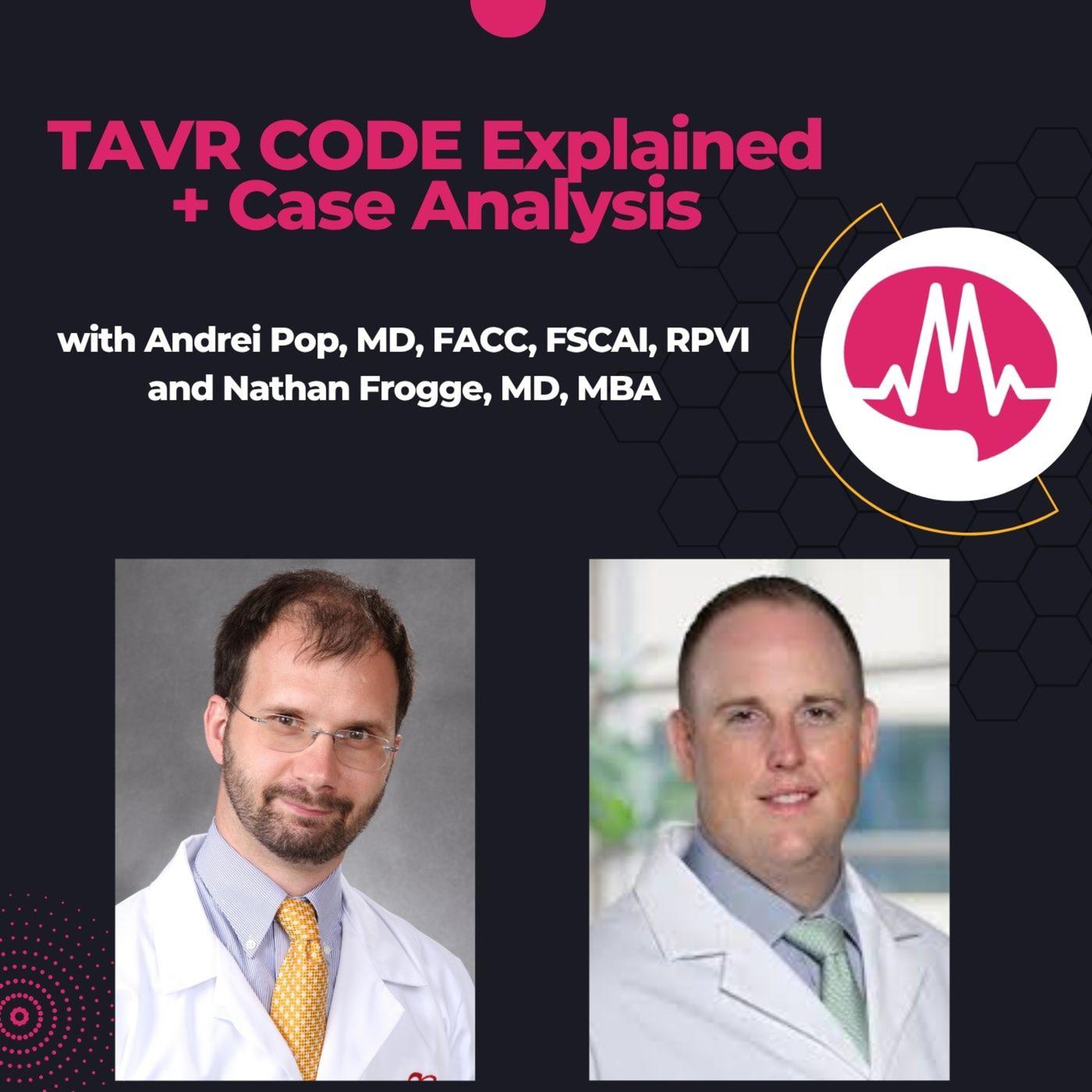
In this MurmurMD discussion, Dr. Nathan Frogge and Dr. Andrei Pop review the concept of optimizing the index TAVR implant, using the CODE framework: coaxiality, orientation, depth, and expansion.
The conversation is a candid look at where TAVR technique is headed, and where the evidence still has gaps. They discuss whether the field is standardizing true best practice or simply codifying expert opinion, how much optimization is worth pursuing, and when a technically “suboptimal” result may actually be the safest choice for the patient.
The discussion covers commissural alignment, coronary access, cusp overlap, implant depth, pacemaker risk, valve expansion, pre- and post-dilatation, underexpansion, TAV-in-TAV planning, and a practical case example showing how these tradeoffs come together in real time.
KEY TOPICS
• Why the index TAVR implant matters more as patients live longer
• CODE framework: coaxiality, orientation, depth, and expansion
• Limits of consensus guidance and the need for better data
• Minimalist TAVR vs “perfectionist” TAVR
• Commissural alignment and future coronary access
• Implant depth, pacemaker risk, and redo TAVR options
• Cusp overlap and radiolucent-line techniques
• Pre-dilatation and post-dilatation tradeoffs
• Underexpansion, pinwheeling, HALT, and valve durability
• TAV-in-TAV and lifetime management planning
• Case example: balancing valve size, calcium, coronary access, and pacemaker risk
🔔 Subscribe for more insights from interventional experts and real-world program builders.
📱 Download the app: https://apps.apple.com/app/apple-store/id1586692687
📺 Follow us on YouTube: https://www.youtube.com/channel/UCfrLYhAhliQ2ZvXinkDCZvA
CHAPTERS
00:00 – Introduction: optimizing the index TAVR implant
01:44 – CODE framework: coaxiality, orientation, depth, and expansion
03:57 – Consensus vs data: how much do we really know?
06:15 – Why optimization always involves tradeoffs
09:02 – Minimalist vs perfectionist TAVR
15:39 – CODE recommendations and operator concerns
18:53 – Implant depth, pacemakers, and redo TAVR planning
23:20 – Pre-dilatation, post-dilatation, and expansion
30:16 – Cusp overlap, radiolucent line, and deployment technique
39:32 – Valve clinic planning and future redo scenarios
42:03 – Underexpansion, double tap, and durability concerns
52:49 – Case example: sizing, calcium, and high implant strategy
1:03:27 – The need for more predictable TAVR deployment
1:05:03 – Final thoughts on volume, data, and lifelong planning
#TAVR #StructuralHeart #AorticStenosis #TAVRinTAVR #RedoTAVR #ValveDurability #CuspOverlap #CommissuralAlignment #LifetimeManagement #InterventionalCardiology #MurmurMD