

Stephanie Drury: This is the first time we've spoken. Right. Really. I've followed you on Instagram for a little while and I'm so intrigued by your story. you use the word deconstruction a lot. So when we were messaging the other day, I was like, You would be perfect because I'm just getting this started. Because when I well, I'm I'm super Gen X and when I first started deconstructing, I had zero resources, like no support. The internet was kinda new, you know. So I started a blog on blog spot called Stuff Christian Culture Likes and it really took off in in the way that my God, there's so many people that are needing this kind of resource and it's just not there. So I'm just so glad that now it has a name, you know, it has a term deconstruction and more and more people are just getting strength and realizing I think most importantly realizing you're not insane for questioning these things that were like held so with utmost gravity, right? We were raised with them and so I'm just like you would be super perfect guests because I love everything you say. I love your music. I love what about what you were telling me about this platform you're creating. it's just going to I really think it saves lives. I really appreciate that. No, I'm so excited. It's so funny. back when I don't know, it was maybe like around mid summer or so. I kinda like a little bit after I had really actually started building a little bit of a platform, I had a friend message me, be like, Did you know that this blog shared you on Facebook? Because she like followed your blog. And like I've I've kind of followed it from afar for a while too. And I was just like, my gosh, like that felt like I was like, I guess I've kind of made it. If Stephanie's sharing my stuff, then That was like my first indicator that things are going in the right direction. that's that's very sweet. I get I mean, I haven't been diagnosed with anything manic adjacent, but I feel like I get in manic phases where I'm like, retreat, retweet, repost. god, this so good. And like I feel like people can tell, Stephanie's on a tear again 'cause I'm like my story is like stuck going that just like people are Same really awesome thing. So I I often say to people, like, if you ever want to know what I'm working through in therapy, like just pay attention to like what I'm posting about. There's usually like a relationship where I'm like, hmm, I'm unpacking this. I think I'm gonna take some time to talk about it. And I can totally relate to the up and down. Yeah. Yes. And then like the fact I even feel ashamed, like, they're gonna clock me as a crazy lady, you know, is is part of what keeps you quiet. Is I'll know they're gonna think I'm nuts. but yeah, when I started therapy, it was exactly twenty one years ago because my daughter's twenty-one and my son's twenty-four. And I realized that every conversation I was having with my mom, I was just like in puddle on the floor, and my three-year-old is like patting me, going, It's okay, mommy, don't cry. And I'm like, shit, I'm creating a little codependent. I need to get some help. And I We were going to a Presbyterian church at the time. I was very Southern Baptist, evangelical sort of thing, but this church actually had a really good resource for there's a school here called the Seattle School of Theology and Psychology. This guy named Dan Allender founded it. And a lot of people don't he's definitely a believer. a lot of people have issues with certain stuff he says, but I in I I have been extremely helped by the fact that he knows what spiritual abuse is and how he's the first person I ever saw talk about the manipulation that can can exist within a Christian framework. So I got a therapist who had been trained under him and I really think it saved me. Absolutely. And so I started sub Christian culture like some process like I was trying to dis distinguish from the culture around modern Christianity and actual ancient Christianity 'cause They don't have anything to do with each other. Right. Yeah, absolutely. and you have a huge ministry background. I just want to know everything about first of all, where are you from? You have you sound Canadian to me, but what do I know? I'm from Texas. I always find it's funny when people can clock me as Canadian because like I don't think of myself as having like a huge Canadian accent. but yeah, I am from Right, yeah, yeah. I try to I try to avoid those words as much as possible. No, don't, yeah. no, I'm just I try to avoid saying lawyer. I can't say lawyer. I just like it's it really pains me. Like that's one word I can't let go of now that I live in. Yeah, yeah. That's so funny. Yeah, no, I so I am from Canada. I grew up I'm so right now I'm located in the Niagara region. in a in a town called or a city called Saint Catharines. but I kind of have lived all over Ontario. Just kind of various spots in the GTA. and so it has been like really interesting over this past year because the majority of the people that I have connected with have been stateside. And so it's been interesting to like notice gaps between like my experience versus like the difference of Christian culture in the states. Whereas like there's definitely echoes of that in Canada. Like Canada does definitely take a lot of cues from from American Christian culture. But it it is it's like a whole nother beast. It seems more ingrained into the culture itself, more so than it does in Canada. I I can see that. My husband went to he got his MDIB from Regent in Vancouver. Yes, yes. His best friend he met there and it's it's so interesting to me. I was like the Christian culture here is a little bit more polite Canadian, you know, like watered what stereotype of Canadian would be like a little bit reserved, a little bit polite, like they're not gonna ev evangelize at you directly. No, no. Yeah, yeah, which is which is nice but also a little more insidious, you know, because you can't see it as clearly. But when they do I'm insidious is a word that I use frequently to talk about what the influence of Christian culture is like in Canada. Because it's harder to spot. And I think for a lot of people, when it comes to, you know, if there's catalyzing moments that lead to their deconstruction, for example, like there's not often like one moment to be cited or one experience or relationship. Because like me personally, I had a a relatively positive church experience as a child. But as I got older and I would I would notice things, especially once I started going to therapy and unpacking things. I would be like, it's so weird that I think this way about that thing, because I don't ever remember a sermon explicitly saying those words. And you realize that it's actually like the the quieter behind the scenes Christian it's like it's the conferences, it's the media, it's the books, it's it's all of those things where you're constantly internalized internalizing those little messages. Rather than like that one moment where you're like, that's where shit hit the fan. sorry, I can say I can say shit on Please. Okay. Fuck yeah. Just say whatever you want. Amazing. So I I mean, I don't know. It's my podcast. Yeah, yeah. We're like, we actually don't know yet if you can say that. We're we're gonna find out. We'll find out, right? Right. So I mean I sent you a a big slew questions. I'm ca because I'm very tangential, I found out that I'm a triple Aquarius. I don't know if that means anything to you. It means a little bit to me. My experience in astrology is very limited. But I'm getting there. I'm looking Yeah. Well, so my sun and my moon and my Mercury, which is how I communicate, those are all in Aquarius. Okay. In they're all in the twelfth house. Which means like very like I'm very I think about death all the time, you know, like like it's hard for me to I'm always It made sense to realize it because I'm like, no wonder I'm always trying to s to look normal. I'm just trying to fit you know, I feel like I'm in a alien in a skin suit kind thing. but my rising is Pisces. So and that's like so that's why I'm like, no wonder I'm so emotional. And like I will tear up like talking about something like like Twinkie, you know, and I'm like that's that's not very Aquarious of me. So now anyway, I think it's really I'm I don't know that much 'cause there's way too much to know, but it's been helpful. So as as foresight to what we're gonna talk about, we're probably gonna talk about death a couple of times and there might be some tears. I mean, spoiler, this is the whole reason that I've been h hosting this show so we can prepare for our deaths and you know, near death experiences. who's been on the other side who's seen a little glimpse. So I love talking about death. When I'm at a party, I can't do small talk anymore. It's the worst. I'll find the one person who looks like they could handle that conversation. And we'll just get into it. I love it. See? I mean, thank you. Okay, I knew I liked you. So my first question I had for you, this is very broad, but what belief systems did you grow up with? So I grew up, I kind of mentioned my church experience was actually a relatively positive one. I grew up Christian Reformed. I don't know how strong the presence of CRC so I'm not actually Dutch. my my dad is was a pastor in the CRC. but he was actually raised united and went to seminary when he was about thirty or so, kind of a little later in life. and that's how we started in the CRC. When I got married, I ended up attending a Pentecostal church and began pursuing the credentialing process in the Pentecostal tradition. And I didn't get far because I was just like, I don't, I don't think Even if I wanted to get credentialed, I don't think anyone would credential me. Like there's things that I just I can't sign. You couldn't sign off on at the end. I couldn't sign off on them. and so I sp I still spent a couple years and I and I still that was my first time working in ministry. It was like a little community church kind of in the country. It's a lovely community, very strong emphasis on community. Like I'll say this, like This is in Ontario? This was in Ontario, yeah. this was kind of in the Hamilton area, which is about an hour or so west of Toronto. and like even that like that church, good, good positive experiences, very like engaged in the community, serving the community, very aware of the needs of the neighborhood. I from there got involved in a church planting network in what was then known as the Brethren in Christ is now known as Be in Christ, which is what the meeting house was a part of. if Yeah, yeah, yeah. Exactly. like a very Anabaptist roots. That my first experience with the Anabaptists. And finding Anabaptist theology at the time for me was like, I didn't even realize I was Anabaptist, but this is for sure what I am. Very heavy and emphasis on things like simplicity, pacifism, simple living. the way they read scriptures through the lens of Jesus. So all of the way they they interpret the Bible is reading it through the passages, life and teachings and ministry of Jesus and kind of allowing that to inform the I just got chills. Yeah. Yeah. and that was always kind of the way that made sense to me. and part of me I think did a little bit of that intuitively even before I knew how to name that. So when I found the Anabaptists, I was really like, yeah, no no. I you know, I I grew up because I always grew up seeing the behind the scenes of ministry. I was raised with almost this like, I saw behind the curtain. Like, even if I wasn't skeptical of it yet, like there was it there wasn't that same I I could see how performative it was. I was on stage from the age of 12 strumming a guitar. So like I I could understand like what we were doing on stage and how that was. Different from what I was seeing behind the scenes and hearing people talk about ministry from behind the scenes. And so I I wouldn't say I grew up cynical, but there was always this like understanding that we were doing a thing. and so when I found the Anabaptists, it was like, this is this is lovely. This feels like this helps me make sense of of my experience a little bit. Like less performative. Yeah. Reflective. Well, and even like, yeah, you mentioned Quakers. like hearing the stories about Quaker churches who had no paid staff. I've always you know, like I so my time shocking to me when I first heard about that as a Isn't that crazy? I'm like, they can do that? How do they do that? I know. Well, and and for me, like a big part of what I remember from my time in the church planting world was like it felt very cutting edge because the network I was a part of was very much championing bivocational ministry or even volunteer led ministry. And so there was two years of my ministry journey where I fundraised like I think s like I mean I don't think it was quite sev it might have been like s 50 or 60% of my salary. Like like that was kind of like built into The future of the church was understanding if the church wants to play a role moving forward. And part of it I think was because in Canada, like we don't have access to like there's not many mega churches in Canada because there just isn't a market for it. Like they can't keep their doors open. it was partially for out of necessity, but for me personally, it actually was like part of this like vision casting for like, what if we could imagine the church where the pastor is not actually reliant on the congregation to fund their salary. and that was always a compelling idea to me because what I would see over again and again, like I even even now where I don't really use the label Christian for myself anymore, I don't think Christian I don't think the cr the Christian spirituality is not bad. I just think when it gets tied to power is I think when we run into all ti all kinds of problems. you know, I I I don't think religion in and of itself is bad inherently. I think that the way that it gets wielded by those in power is where we run into some problems. I have a spiritual director who see which is in the kind of episcopal tradition. Catholic church, you know, Episcopals will have something called spiritual direction. she's kind of a Episcopalian Buddhist mashup, elderly, you know. But anyway, she's she does consulting for the certain church here in Seattle, and she goes, You need to try if you if you ever want to go back to church, you should try this one because I can't tell where the power lies. Yeah, yeah. I'm like, that's intriguing. I love it. It's very good, right? 'Cause that's people like have a very net you know, they'll say net religion is awful. And I'm like, Yes, because of the power dynamics. It inherently has a power dynamic. It it's someone telling someone else what to do and you fall in the line and that's but if there if it was truly egalitarian, then there wouldn't be a problem. Right, right, yeah. As with everything, right? Absolutely. Yeah. so when did you begin to question these core beliefs? How old would you say you were? So I feel like my deconstruction journey is a little bit unique. in the sense that I kind of separate it into two different deconstructions. The first deconstruction probably happened when I was twenty, twenty-one, and I was going into seminary. And specifically like I separate it into like knowing and being. And my deconstruction related to related to knowing happened when, you know, 'cause I already indicated I I kinda grew up in this like I I could see behind the curtain. There wasn't a lot for me to undo intellectually. Like I I got to seminary and was writing papers in my first first couple courses about trying to find extra biblical evidence for Solomon's kingdom and realizing like you can't. Like there's not there's really not much. Like You never knew that. Yeah, like it and and so you know, I was experiencing that. the seminary I went to is a Baptist seminary with the CBOQ. here in Ontario, McMaster Divinity College. And I actually had a great experience there. but that was happening and simultaneously, you know, I I have a good strong core group of friends that I we've bit we we were in high school bands together. We're still very good friends. And and within that group of friends we actually had two two of our friends passed away unrelated within the course of a year. one was because of a car accident and one was complications from cancer that he had had in childhood. Kind of at the same time, one of my mentors that I would have had in high school and kind of right up until that time, who taught me everything that I knew up until that point about leading worship and you know inspired me to get into ministry, is now in jail for possession of child pornography. And so like I saw behind the curtain, I was like experiencing like incredible tragedy. Yeah. and My erosion, like there was such an erosion of trust in the system that was happening at such a young age. and it was really fascinating to me to be in seminary at that time because it I I was in seminary and I just started at this church planting network that was kind of even founded on catering to those who were we were using the phrase disenfranchised. This would have been in the year 2013 or 14. So like deconstruction wasn't really a buzzword in Christian circles yet. And so we were a church for the disenfranchised and disillusioned. And thing questioning your faith was like kind of like that was 90% of our people. everyone would already had this like allergy to evangelicalism and anything that even sniffed a little bit like it. So, you know, that that was kind of like that was my early twenties where I felt very well supported to hold on to my faith if that's what I had. Chosen, like to be able to say, well, like actually, here's how I think scripture can address what you're experiencing. Here's how, here's a theological framework for you to process the pain that you're you're experiencing. and so, like, even in my later years of ministry, like that, that's how I got into it. And so I got into it with this like expectation that, like, hey, we know a bunch of this is bullshit, right? And like, we can do better. And so I was always seen as like this young optimist on whatever ministry team I was on. and eventually I I burnt out with some, you know, some unrelated things unrelated to deconstruction. and I made some choices that ultimately led me out of ministry. but the last several years have been less about like knowing or intellectual deconstruction and more of like a being. Where I'm like, yeah, like I, you know, intellectually, I I've known that I'm not a piece of shit. Why do why do I feel in my body like I'm a piece of shit? Like, and so and then having to unpack and try and understand, like, where does that come from? And that's kind of what five points of Calvinism in the Reformed. Yeah. It's like I've never held on to those beliefs strongly, certainly not for the last 10 years. But I'm still noticing the impact of how they've shown up in my life. especially, you know, as I've started to go through transition and the shame that can come along with that and the internalized transphobia and misogyny and all that shit. And these aren't beliefs that I hold or apply to other people. But all of a sudden, when it comes to myself, I'm like, my gosh. Yeah. Yes, insidious. How that got in there. We can't name how. quite that got in there. That's right. That's right. Yeah. So I have a I want to talk to you about how gender played into this for you. Did and then this is alongside this question where that I have this this feels in tandem a little bit. Were there any emotions that you noticed were punished while you were coming up in the church? it wasn't as much what was punished It was noticing what was celebrated. So because I had great role models, great leaders, like I, you know, there's ev even now in the anger and grief that I hold, I'm not looking back and blaming any person. I'm I'm blaming a system that rewards certain types of emotions or behaviors. So for me, even like Part of coming to terms with my gender identity was realizing that like the only times that I would feel like I was advancing in my ministry or my career was when I was displaying like traditionally masculine traits. And that didn't feel like me, but I was being rewarded for it. And so, you know, I would continue to perform in this way to receive that. that that affirmation and just feeling farther and farther from myself. that being said, like I did receive feedback when I started preaching that I needed to be less vulnerable. I needed to demonstrate more like parental authority in order to be taken seriously as a leader in my church. and and it was just like moments like that where I was like, not only do I disagree with that from like you know a theological ministry perspective, That also just doesn't feel like me. the pla the times where I felt the most alive in who I am and in my work are actually when I'm being the most vulnerable. And so yeah, like it it was it was actually kind of interesting that being within the system of evangelicalism that does tend to reward male whiteness was partially what helped me come to terms with the fact that I'm not that thing. Okay, as you've been talking, the sun is coming out here in Seattle. And I've just noticed this. It just feels like what you're saying is shedding light. You know, you're like calling in the light. Yeah, that was a beautiful moment. I just think that you're saying something that's resonant with the truth about leadership is the vulnerability. Like Jesus wasn't authoritarian. No. Jesus was fucking vulnerable. Yeah. He's a man of sorrow, acquainted with grief. do you know what someone commented on my I literally read this comment this morning. Someone commented on one of my Instagram comment sections. They were like, Jesus wasn't political. It's like, what Bible? Are we reading the same thing? Like Jesus was anti every type of authoritarian system. And that's why they killed him. That's why they killed him. And so yeah, it was always interesting to kind of to notice the ways that the church really, really only knows. How to succeed when it mimics these authoritarian, top down, hierarchical bullshit systems. it makes sense because Jesus was like, they'll hate you because of me. They will you know, he called all this. So it just makes sense. It's just so meta It's so it's so painful. I love I love Jesus. I don't go around calling myself a Christian. I pray the rosary every day. I did not grow up I grew up to be afraid of Catholics, but I just I have such a connection with Mary. And and I love saying I love everything I know about Jesus. And it's just the culture around him that's been completely poisoned. Yeah. Yeah. Yeah, no, it's it it's beautiful to be able to reclaim some of that language. Which is like I mean, I I view that a lot of the time as like that that is what feels like my role in the spaces that I take up is like similar to you, like there's there is religious language. Like I it you know, I'm not just I don't just put it on when I'm on Instagram. Like if you're gonna talk to me about spirituality, I'm like this is the language that I know and understand. This is the these are the symbols that I have used to understand God and the divine. And I have figured out a way to reconcile that language for myself in a way that doesn't feel harmful. And you know, I can't remember who I heard say that first, but I I remember hearing someone say, like, why would I start over with like Buddhism and just like begin again? Like it's A lot of people do. They want to No, no, please interrupt me because I will tend to just talk and talk and talk. So same. As long as you're watching the time, I'm not watching the time. I'm not I'm not watching the time. I don't care. I actually love that energy. Yeah. Okay. Perfect. I okay. My next question, these kind of segue into each other. And and I I need to get a better way of printing this up. I have this on my desktop and I'm all what outcomes were you told that you might get in the long term if you did not live according to if you did not abide by the rules? You just spoke to that a little bit with the way you didn't get any overt feedback in the form of seeing anyone punished for it, but instead rewarded. Yeah. No, it I mean that makes me think of a a couple of different things. Like I feel like the one was the the messaging always Growing up, especially, you know, I growing up socialized a male, like it was always if you look at porn, you're never gonna have healthy relationships in your life. that was always like the the fear literally of quote of God would be put in you to be like you know, not not figure out how to develop a healthy sexuality, but like here are the behaviors to avoid so that you can have a healthy marriage in your life later on. So I always remember that being like that that just feels like that sticks out. But I've on a more macro level, I believed the lie that if you just did the right things, it would solve your problems. you know Formula, yes. I love a formula. of course, yeah. I I mean I I was I was always incredibly anxious as a kid. And I didn't have the language for it. You know, I experienced dysphoria from the time that I was like a teenager. And again, I didn't have the language for what that was. and the way that I would mitigate these symptoms wasn't by treating anxiety and dysphoria. It was it was about like, well, just pray harder and just read your Bible more. Like I and so every decision that I made, down to like my career, the age I got married, like I got married at age twenty, you know, I Did not know what I wanted to do. And so I literally just went to school. And then I still didn't know what I wanted to do once I graduated my undergrad studying religion and theology. And so I was like, well, I guess I'll just go into seminary. Like who starts a master's program without a reason to do it? Like that's insanity to me. A lot of dudes. Yeah, yeah, right. Just go to therapy. It'll it'll actually be cheaper. Do anything to avoid therapy. And yeah, I mean like my whole life felt like w was was just believing that maybe I would feel better if I just did XYZ if I just you know prayed hard pray hard prayed harder worshipped louder. You know, I was a worship leader, right? So it was always like you know you were a leader. It was a way you could be a leader and be not vulnerable because that wasn't getting rewarded. Okay, with the dysphoria, that must have been terrifying. to have no language for no example, I assume. It like th there's no place to put those feelings. and you definitely you know that this is gonna result in complete ostracization if I come yeah. Come out with it, you know, try to be vulnerable, which has already been clear that that's gonna get punished. So I'm just I'm just thinking of how isolating that must have been on top of everything else. Yeah, I mean I I got really good at living in a compartmentalized way. Like it was like there was this like I always joke that did you go to Acquire of the Fire? Like was that No, I heard about I heard it I was very familiar with yeah with the sound. So Acquire of the Fire did come to Canada. and here very close to me now, like in Hamilton, Ontario, I would go to Acquire of the Fire and it was just an example of one of the several Conferences, I loved conferences. and I would always go up for the altar calls. and it was always I'd always have this moment in my head where I'd look at the other kids and I'd be like, I guarantee you we're not going up for the same thing. You know what I mean? Like my goodness, yeah. Because in my head I was like, I feel so guilty that I just wish I was a girl. Like and that that's like so sinful for me to think and say out loud to anyone. And so, you know Every opportunity I would get, I would just like I'd confess. But it was very much this like compartmentalized part of myself that did not really enter any other part of my life. and so yeah, it was it was terrifying, but also like Like because I because I didn't name it. Like I didn't even hear the word transgender till I was probably like twenty-five. like did was that an epiphany for you? Did that realizing there was a name for it? Yes. I'm just saying that continue your thought. I'm sorry. Yeah, no, I'm embarrassing all over the place here. No, no, I I I love this. Yes, yes, because the first indication that I had That like this was a real thing was I would I would secretly get jealous of trans people. Like I Because they could be honest or or or present. Totally. Yeah. You're like they have enough support to yeah. Yeah. But it was always like, but that can't be for me. And and it's worth it's worth the it's worth noting. Like, you know, I became a dad because I'm still dad. by the time I was, I think I was twenty seven or twenty eight. And you know, at this point, like today, I've been married for fourteen years and when I started transitioning, I was married for twelve years. Like I ha I had a life. and and very established in a and I was a leader in the church. And so it wasn't just this thing. So much at stake. So much at stake. So much at stake. And so it it just felt like this thing that was for someone else. Like in another like in another life. that maybe could have been me, but not in this life. And so yeah, there was there was a big part of like I I I couldn't even I couldn't even entertain that thought. until like it it literally there was one day where I was so burnt out because, you know, I was I was a worship pastor at the last church I worked at throughout COVID. And, you know, so we transitioned to online church and Did all the shit and my workload doubled and tripled and never slowed down from 2020 to 2024. or 2023, sorry. And so I was like so burnt out. I was like losing hair. I was just like gaining weight, and I was so unwell. and I just like I couldn't avoid the question anymore. And I remember making a deal with myself internally, just being like, okay, I'm going on a walk. And I'm gonna allow myself 30 minutes to contemplate what would it feel like if I was transgender. And I gave myself 30 minutes and then I was like, fuck. Like I came back and I was like, I like I can't, I can't entertain a reality where I haven't had that that conversation with myself. and so I don't know. At this point, I've literally lost track of your question. I don't even know if I'm answering Yeah, too. No, this is because that whatever question it was, it was supposed to go here. Right, right. No, but yeah, it's I think you asked you were asking me about what dysphoria felt like as a teenager. And and because it was something I didn't know any trans people, I didn't even really know any gay people. Like I went to Christian grade school and Christian high school. So there was a couple kids I know that I've gone to high school with now have later come out as queer. And looking back, I'm like, of course they were queer. but like at the time you wouldn't we wouldn't have had any language for that because it wasn't like, this person is out and proud and living their life. And you know, there was n there was nothing like that in in my spheres of relationship. And so I just had this like embarrassing question that I wrestled with and just wondered why I never felt comfortable With myself. Hmm. Wow. Wow. Wow. Wow. I I just I keep thinking of how strong the impact is of you seeing what was rewarded and the stuff that i I think that it's it's huge to not see things get punished and I've I've noticed this in the family I married into. They don't give feedback if it's something to disapprove of, you know? But like there's effusiveness over something that they do. My husband is also a preacher's good. And I'm just like, I've just been sitting with that because it's been harder to name what feels not right about that situation. And I'm just like it's the silence. You know, I someone said, my friend who's a therapist. She's super wise and gifted and all that and a survivor of the most horrible stuff. And She's incredible. She's she said that neglect is even worse than over abuse because it's denying your personhood. And it's harder to name because nothing happened. Yes. You can't go and say they did this because they didn't do it, you know? And so we gaslight ourselves into thinking like it's not as bad as what that person has experienced or that documentary that I watched or And so we don't see cer certain things as spiritual abuse. And it's partially why spiritual abuse specifically is hard to name. because it shows up sometimes in the absence of something rather than as the result of an action. Yeah. Yeah. So I have this question here. this is kind of a non sequitur, but it also ties in with what we have just been saying. What are some messy things that you've become aware of that you now have the opportunity to face willingly? yeah. I I mean, there there's there's some low hanging fruit here for me, I think. Like yeah, those moments of knowing. Where Growing up reformed, the way that you are brought into membership is through the catechism, through your ability to memorize and respond to certain questions. Like it's literally like a little textbook you get with questions and answers and and you go through the profession of faith in order to participate in the sacraments like Lord's Supper and and be able to vote on things in the church and to participate in church life, you have to know. And so I always grew up with this sense of like, you can't do or say something if you can't defend it. Because again, it was like that was never explicitly said, but there is this emphasis on like if you don't know your shit, then you have no business talking about it. And I would say that that is one of those like silent ways I was raised to not trust myself. I was always looking for proof that I was trans. until I realized like the fact that I wanted to be trans was actually a good enough clue in and of itself. and so I think that like my my ability to let go of some of that need, that thirst for knowledge that I would have felt is like just i the absence of that drive has given me the ability to be so much more honest with myself about things like gender, about things like realizing that I actually don't like working at a church. You know? And but but like you have to I I I felt like I needed to prove why I why it was a good reason for me to not work out of church until I realized like Because They're gonna require a catechism booklet of reasons to support it. And it's not good enough just to say, I intuit this. Yeah. Yeah. I would say I yeah, I I mean I would say beyond that, like Like messy things that I've become aware of, like I w something I've been thinking about a lot recently actually, has been like just because of deconstructed, it doesn't automatically make me a good person. Like I think deconstructed the notion that you think that you're a good person. Right, yeah. Like I like I I think a lot of us go through this. We identify harmful beliefs and we deconstruct them and now we feel morally superior, right? Like, you know, and and it's easy, I think, when we when we begin to do this to like we we deconstruct the belief, but we don't always deconstruct the system. And so that's one hundred percent a problem. Yes. And so even even with myself, like this person who f has felt the need to prove my beliefs for my entire life, like guess what it's really easy for me to do is to all of a sudden put down this like the mantle of defending Christianity and pick up the mantle of like fighting for trans rights, you know? And of course that's a that's a good, noble, worthy cause. but it's amazing how how my brain and the way that I process information and want to convey that to people, I'm like, it's so easy to tip back into like that fundamentalist behavior of like doing the same thing with different values. because I like I like I know a lot of progressive churches who like would even call themselves like queer, affirming, or welcoming, and they still behave exactly like a fundamentalist church just with updated values. dude. And so it's like it's heartbreaking when you see that. Yeah. Because it's really hard even like to be not just calling you dude like as the royal dude. I just say no to everybody. I'll start saying hoser. Yeah, you're gonna get canceled before this podcast even gets off the shocking. Third third guest and I'm just kidding. no no, that's totally fine. yeah, it's it's easy to kinda like Especially when you're participating in those churches, I think for Christians who are newer to the a deconstruction conversation, you think you find a community that feels safe, right? Because you're like, well, they like gay people. And so then to be confronted with, Well, what if what if this church actually is just the same thing repackaged, rebranded? Like that's a scary conversation because it forces you to get at the root of the issue rather than just be like, it's not actually just about what they believe. What you believe is never the problem because you five years from now, you're gonna believe something different. So the whole point of deconstructing isn't to arrive at this set of perfect beliefs because I'm gonna think I'm a piece of shit five years like five years from now, I'm gonna look back on me now and think I'm a piece of shit for believing something about some random thing that I didn't know. The point isn't what you believe, it's how you hold the beliefs and so many progressive circles even focus more on holding the right beliefs rather than focusing on how they hold the beliefs, which I think is like when you get into dangerous t territory. And I don't have an answer for that 'cause but that is the messy thing. Yes. No. And that's why it's messy, 'cause we don't have an answer for that. I I'm hoping and I'm fifty one now, I'm able to have more grace for myself in all those phases past than I've ever been able to have. So that's a very good thing. about getting older. just letting go. 'Cause 'cause we treat others the way we treat ourselves. just the inner voice. even if we don't realize that we're holding ourselves to these standards, sometimes it's too painful to realize. So that's why we project them onto other people. And also like as you deconstruct just one piece and it starts for us with religion, you're gonna the dominoes start to fall. And then, you know, it moves into Gender, what do I believe as far as you know, politically, inter interacting with my family, just all these little things. It's not just one. it's really, really interesting part of it. It's like this you just started, you lit a match and you threw it on a gas can, you didn't know it and it'll affect every area of your life. But a whole the framework of fundamentalism is something I'm really interested in because about ten years ago. I was interacting online, this is on Twitter, with these women who were younger than me, so they're a little more woke and I was all like, you know, mm, Gen X and you know, kind of resistant to the concepts. but I w the way that they were presenting certain things to me, I was realizing like I feel like I'm back in fundamentalism, although they are being they're presenting very far left concepts. And I started calling them fund of feminists. Because my God it was ex it felt exactly like dealing with some mean person in the church. You know, there was no grace for a learning curve. There was no it was just it was just very angry and isolating. It felt like bullying in a lot of ways. and I'm like, I'm sure I've done that. And so it's been really helpful to to see. I mean, and it was good to to run across this and ha and make a little name for it 'cause I'm like, w how am I doing this? Yeah, yeah, yeah. Because it makes sense. Like going back to the grace for ourselves, we grew up with catechism booklets. We grew up with frameworks. So this is how we're gonna s you it's our lens, and we're just what we're trying to do is deconstruct that lens and have something more gracious and fluid that allows for our humanity 'cause so that we don't have to be little robots. Right. Yeah. And you know, the end goal the end goal isn't to feel like you've arrived and gotten it all right. The end goal is to live in a way where you're not living like this with your hands closed. But you're like, you're just kind of holding it all loosely. Like my favorite. Why can't we just be? Yeah, my my my favorite words these days are are or phrases are like maybe for now. You know, like it doesn't mean that there's nothing that we can know, but I think there's so much that we can't really know. and so. With the information available to me right now, I believe this for now. Because it's so beautiful. Yeah, like 'cause I hope that if I'm presented with new information that that you know, challenges my framework, that I'm gonna be open to that in a way that allows me to move forward. Cause I think the point is to move forward. it's not to like be like, well, I'm like in my mid thirties and I deconstructed, so when I'm eighty, this is like I'm still gonna f believe the same things that I do now. Like that sounds so boring to me, honestly. Like yeah, I I I I think that the whole point of spiritual I there's so many I mean, there's so many ways that you could compare it to like a fitness journey, for example. Like no one is like, I'm trying to reach this level of fitness so that I can stop working out. It's like nothing. my God, you're right. The whole point is like you go talk to an Olympic athlete or anyone who, you know, is really serious about their fitness, like they haven't like stopped going to the gym because they're like, Well I got a six pack now. You know what I mean? Like you actually have to keep you have to keep going. Like the that's that's the point. The the point of being I I'm I'm triggering myself right now because this was all the language that we use to talk about spiritual growth. But again, it's the language that we're Yeah, yeah, for sure. but but yeah, it's the the point is forward motion. It's not to arrive at certainty. Yeah. So my next question is how does uncertainty feel for you these days? And I think you just named it. It just feels like being and realizing we're not we're human. We're not these robots being in programmed and set on a course. I mean, that's why it's so creepy to talk to someone who's really in indoctrinated because you just realize like it's like talking to a bot. I've realized this. Like they don't have anything to say, they have no new concepts. If you ask them how they are, great. And that's like there's only one answer. Yep. Yep. I I literally just you know, half an hour before we hopped on this call, I I literally just posted a reel this morning that was talking about the difference between conviction and discomfort and how sometimes when you're engaging with someone, as soon as they say, Well, this like this is my conviction, and the Holy Spirit's convicting me of this, like it shuts down all conversation. And I find this a lot in dialogues that I have with people because sometimes people will will say like, well, you know, like I like when I experien when I'm when I encounter a queer person, like I feel convicted that what they're doing is wrong. And I'm like, no, you feel discomfort because you live in a Christian bubble. and the lack of curiosity that you have means that you feel that discomfort. And you just get to name it as conviction. And so now you get to feel morally superior because, well, look how convicted I am because of how strong my faith is. And you don't actually have to challenge that discomfort and be like, why am I feeling that? And is that feeling leading me more towards love? Or is it causing me to draw back and protect my own certainty? And so when it comes to how I navigate uncertainty now, it would be the shift in I no longer have. feel the need to put a bow on things. I no longer feel the need to like like I remember I I I would used to like if I ever said a statement that felt like it was like, careful, you're a little bit out of the bounds of orthodoxy, like I'd feel the need to self correct, even in my head. Just to be like, you know, maybe there is no God. And I'd be like, but of course. And I'd feel the need to like, you know, defend that somehow. Which just resulted in this like very uncurious way of living and just being like, I'm policing my thoughts. I'm policing my language and I'm policing my feelings. And now I just the I like that that doesn't exist for me the way that it used to. now I'm much more comfortable just letting things be, you know, and just asking questions. I might never get the answers. I I This is I I'm I'm always really hesitant to label myself in any way because so many people will come on to my page and be like, Are you a Christian or not? And what they wanna know is people say mean stuff to you and it really pisses me off that you're hilarious with them. Yeah, yeah. That happens for sure too. no, but people wanna know if I'm Christian because I think that we have this desire to be like, Is your belief safe? Like Are you going to challenge me to go beyond orthodoxy? and so I usually hesitate to self-define on my platform for that reason. But if I was to use a definition or a title, someone recently said they were a Christian agnostic. And I found that to be a very fascinating and compelling way of understanding the the Christian faith. because like we've talked about, like I use that symbol set, I use those religious terms to to explain my life experience. But ultimately I do land in the like, but there's no way any of us can know. and so that feels like a a freeing way that I can say I'm a Christian. Yeah, I don't know. I don't know if I'm gonna regret like that's gonna become like a sound bite where people are like, that's what you are. Now I know. I don't give a shit though. Because I know, yeah because it might be different emotionally. Yeah. And my estr I'm yeah, menopause has like really done a number, obviously, on estrogen production which production production. Production, yeah. Yeah, which hurts your pronunciation. Hurts your memory. And it's also estrogen is the people pleasing hormone. And when that tanks, a whole new world opens up. Right, right, right. Whereas I used to get a lot of people saying, Well, what are your beliefs? I'm like, why do you need to know? Like what what's going on within you that you would really need to know that? I'm like, I'm curious myself in a way, but also I can't describe you why this makes sense to me. I can't tell you why I love Jesus, why I love Mary, how they've made themselves real to me, how I have believed in past life regression. I you know, I there's just so much out there. How could we possibly know? And I don't think it actually made me a saner, healthier, happier person to put everything in a little box and think I had all the answers. But you can control boxes. It's the same reason why so many of us were allowed to l pick anything off the shelf, any C D off the shelf from the Christian bookstore. We we didn't It was all safe in that box. It was all safe in that box. And so so many of us weren't taught to evaluate ideas, media, art on its merit. We were taught to evaluate it on its safety. Did this fall in that safe category? Online. Focus on the families, plugged in online. little Check boxes. This is how many times they said the F word. So I was like I was in college. I was like twenty when Pulp Fiction came out. You were probably not born yet. But I remember like being like, I can't wait for the plugged in review of this. And they're like four hundred and sixty nine uses of the F word. And by that point I'm like, these motherfuckers don't get it. Like how they they cannot enjoy a piece of art. This is you know, they they're not boring. First of all, how old how old do you think I am? I would I would I'm gonna say thirty. You vibe like solid thirty. Is that okay? I'm turning thirty five this year, so that is okay. Okay. Okay, good. Because like thirties the thirties were fantastic and I want to go back to them, so yeah. No no no yeah, it's you're in a sweet spot. I yeah, I I I do feel like starting estrogen does reverse the aging process a little bit. So I do feel like very androgynous when it comes to age and everyone gives me a different number. So that I feel very lucky because of that. But no, it's yeah, I remember I remember my parents would read those reviews plugged in online. That's like such a deep cut of like, no, you can't go see that one. I can't go to that because James Dobson said Yeah. my gosh. Yeah. that's that's so wrong. Like and and so I like to go look up, you know, movies that they review and like it takes a lot of effort, but I think it's worth it to like pull out my favorite parts of it and then like screenshot and then post them every so often. That's it's so it's like parody. It's like how can you how have you erased yourself so deeply that you are cutting down to like other objectional content. Man is seen drinking wine, you know, that kind of thing. It's just We we say in our house, my kid is eight and in our house we have a no bad words rule. Like no word is a bad word. We don't assign moral value to words, but we can use words rudely. And so it's n it's a messy it gets messy sometimes. That's really cool. But that invites conversation. Yeah, and and like it it invites conversation I don't want my kid to turn eighteen and be like doesn't know how to curse well. Yeah, like you need y that's a that's a good skill to have in life. It's a life skill. And yeah, like I I I don't want my kid to feel nervous to talk to me about anything. and so we we don't correct we don't correct the language, but if They're using it in a way that's not age appropriate. Like, that's when the conversation comes. Like, if you stub your toe and you say, damn it, I'm not gonna be like, you shouldn't have said that. It's like, no, because when you stub your toe, sometimes the only thing that's gonna make you feel better is saying, damn it. Like, and the use of that word is not morally good or bad. It just is a word. I think it was a C. S. Lewis quote that said those I used to I used to say all the time, those those who swear often ruin it for those of us who swear seldom. and that that used to be I used to believe that. I swear much more often now. Right. but that makes me think of Jerry Seinfeld saying that the F word is like a Ferrari and that it's flashy or no wait, is a Corvette. Right. The F word is a Corvette because it's like cheap and flashy. Right, right. Which I think was good as for for the idea of comedy, whatever his purposes were. Not I'm not defending Jerry Seinfeld on anything, but I to to C. S. Lewis's point, I think that that's interesting. Yeah, like there's a there's a there's a good there's certain people who just they s they swear great, you know? Really well. I remember tweeting at the bus stop before the pandemic, going, I hate being up this early, having to listen to high schoolers practice cussing. my gosh. that's so funny. Yeah. And sometimes honestly, sometimes that's what it feels like in our household a little bit, but but again, that's that's actually. We're gonna watch two thousand one to the Space House and I you know, just whatever we liked. We kind of foisted our our taste on them. Because they're really lucky that they had us as parents 'cause we've really good taste and everything. I just feel like it was our duty, like here's how you're going to internalize you're gonna digest what we like and then you You're gonna watch pulp fiction. And now they're yeah, yeah, yeah. and what's funny about that is they tell me now, they're like it's seen as a red flag if a guy likes pulp fiction. It's like a toxic thing. It's a Gen Z or deal, but it's probably like right up there with Fight Club. I think that that's another Another red flag. Yeah, yeah. also Neutral Milk Hotel is supposed to be a red flag if a guy likes that band 'cause they're supposed to be like rapey, like smooth like like kinda like, Hey girl, I like neutral milk hotel. So that's rather poignant. and all of this is making me think of when we found when our son was in high school and we found a vape pen in his room and it was weed. It wasn't, you know. It wasn't like nicotine or flavor. And I was like, you know, my Pisces rising is like, what the no. And David, his Capricorn rising, he's like, okay, well no, we'll we're gonna talk with them about this. And they were it when he came home from school, they were talking in his room for like five or six hours. Like the door was open and I was going in and out, but they just had this calm conversation for a really long time. I fell asleep. and the next morning he goes to school, he comes back and he goes, Well, all my friends found you know, I told them my mom found my dad pin and they go, Did they take it away from you? And he goes, No, they talked with me about it all night and they go, Your parents are so white. That's so funny. But he goes, I I'm the only one of my friends that's never been grounded and I wish you would ground me because I feel left out and we're like, Well, why would we ground you? Because we we took with him about like Yeah do you feel you may you know, you put yourself in a dangerous when you came home late or you were with these peop you know, we just and he goes, Now I can't do anything wrong without like feeling really guilty about it. And this is because you never grounded me. I wish you just grounded me. Which I think is great feedback. I I'm good with it. Yeah, that's that's actually that is fascinating. I mean, yeah, that's the the reality is is like for those of us who are now parenting after deconstructing, like that's its own beast to navigate because the impulse is to want to hand them what we left off. Like here's where I am. It's like I remember encountering this like when it comes to like my kid wanting to read Bible stories. and you want to be like, let me help you understand a nuanced reading of the Bible. And it's like, that's not helpful. Like I think Richard Rohr talks about that in his book Falling Upwards. It's like you you can't avoid the the building of the first half of your life. Like, because you're you're going to hit midlife and you have then you have the opportunity to unpack that, to begin to be like, what what did I build and how do I want to like look at that? you know, you don't say to a three year old, well, when they say, is lying wrong? You don't be like, well, it depends. Let's have an ethical discussion. You're like, no, you say lying is wrong because at that stage of life, that's what they can understand. And as they grow up, then they begin to ask questions. And the question is, I think as a parent, is like, are you able to create an environment that invites those conversations rather than repels them? Yes, because the Amy Grant said something recently. You don't understand how obsessed I was with Amy Grant. And when I was in junior high school, my best friend Natalie Lane and I had like a scrapbook of all her stuff and like I I took piano for like twelve I majored in piano performance for three semesters and I like every s everything, all of her songbooks. Like I'm just upset. Like I flew to Kansas City to see a Christmas show like a couple of years ago. Anyway, but Amy Grant, like I find her so deep spiritually, you wouldn't think, you know, but she's like Dolly Parton, like a spiritual giant. Yeah. And she was saying what I'm trying to get at is that she was talking about like someone she really respects, like Waylon Jennings or some someone like that is like he's like there's five phrases you need to know. Like, how can I help you? Like is a big thing with kids, you know, in all relationships, but I think she was talking about this in the context of parenting. How can I help you? And then like there's something else that had like four word a phrase with four words, three words, two words, and and the one with one word was we. Like it's about we, staying in a relationship. Like that is the most important thing. Yeah. So like then these estrangements, no contact, low contact, that's that's having to go on. It's very necessary for people to survive. It and and the boomers don't understand that and they're mad because they're entitled and they think that the rules shouldn't apply to them, right? But that's because they are foregoing we. They are getting off on the rules that they made in their catechism not applying to them. And not that anyone needs a free pass because people need to be held accountable for shitty actions. But it's probably because that's what they were taught, right? Like 100%. There was no week. They didn't deconstruct. They and they never deconstructed. Yeah, and and yeah, I I keep hearing people talk about And and Gen X is included in this, but I I hear it said most often probably about millennials, just about the generation of cycle breakers just not taking that shit anymore from from the previous generation. and yeah, I mean I I can't tell you how many people I know who are navigating this with their parents or their families. And on one hand it's heartbreaking, and on the other hand I'm Me and my me and my partner say quite frequently to one another, like, we're gonna fuck up as parents. Yeah. But our kid is never gonna wonder if they can trust us or if if we love them or, you know, like there's certain things that we know we're getting right. Yeah, I don't know. It's it's it's so helpful to know going in, I'm gonna screw this up. And and also it's okay, it's not the end of the relationship. Like Judah, my our son, when he was little, he'd say, Mommy always apologizes. And that just like warmed my heart because my parents never apologize to me. Yeah. And they still won't. And I don't that's why we don't speak. Well, it was their decision. I was disowned by them, but we went no contact with my in laws. It's very interesting and It's a it's a huge mitzvah, it turns out that I'm able it 'cause it incited the cycle breaking with my kids and now I can like reach out, like, my god, this is a a huge widespread thing. So Yeah, yeah. I mean just talking with you is so cathartic. It's like being in a hot tub. Okay. Just feels healing. I honestly wish I would know someone gets it now. Right? That sounds great. That's all ever wanna do. Just does just quit Do you take baths every day? Are you a bath person? I'm not. I'm not. I no, I I Sometimes I tr I I go, maybe maybe that'll change and I try it again and I just get bored. I try it again. I don't think that you i I don't think you should have to work at it. Right. It lands for you or it doesn't. Trust me, you shouldn't have to convince yourself. You would know if you're a bath person or not. no, I I also like I just run really hot, so I just feel hot. I can do hot tubs, surprisingly, but Mm-hmm. It's a very Canadian thing. I just remember that about going to visit the hotel. No, actually, you know what? That I that does feel more Canadian, because obviously of our our climate especially in Ontario, like your husband went to Regent. Out west, like everything is like even their winters are like so much more mild. Mild. By the time you get to Vancouver. the way I said that I know was Canadian. Right. I said Vancouver really But in Ontario, like we have the Great Lakes and the lake effect just means that we get incredibly humid summers and terrifyingly cold winters. And it's just like seasons though. Damp. I know. Yeah, I do. Like I I've been in L I've spent enough time in LA to first I hated it and then I'm like, okay, I can see why people like it. And then I'm like, I'm starting to get creeped out that there's no seasons here. It is beautiful. That's so fair. In in theory, but my kids were, you know, born raised in Seattle. They don't like it when it's sunny out for too many days in a row. Right, right, right. They're like, I miss the clouds. I kind of get that. Like I so my heritage is not Dutch being reformed, but actually my mother was raised in Scotland. So my god. Yeah, I I if I could live in any So she's Scot she has a Scottish accent? She doesn't because she moved when she was about twelve. I think she immigrated. my grandfather did. he was lovely and he had a Scottish accent, but that's the one word I can say. Sorry, what was that? He from So I Married an Axe Murderer or or whatever. Yeah, yeah, yeah. Yeah. I could do that climate though. Yeah, I know it I know it's so rainy, but I don't know. We visited there last fall because our daughters was in design school in Edinburgh and I'd never been over there. And I'm like, I feel like this solidifies my past life suspicions because I feel like I've been here before. I feel like I'm home and the climate was so close to Seattle that people, you know, will say, How can you live in Seattle with the rain? I'm like, I like it because it's like permission to stay inside and be lazy and don't become like sad and brooding. Yeah. Like I like that. Twelfth house. Yeah, yeah. Right. I don't know what that means about my astrology chart, but like what when I like being sad, what is that? or do you know the Enneagram very well? I was a pastor in the mid 2010s. Of course I do. I here's get this. So you'd think I was. Okay. I remember attending a conference, because remember, I love conferences in Nashville. And I remember seeing Ian Cron speak at that conference, and he made a comment. He was like, Well, here in Nashville. We got a bunch of threes masquerading around as fours. Whoa. Because that's a great description of Nashville. And I was like, my God. I I was like, I was a f I was like, I'm a four through and through. That was actually I mean, not to credit the Enneagram with my deconstruction out of ministry and coming out as trans, but like that was like the beginning of like me being like, wait a second, am I actually being honest when I fill up this type of like self-reflective material and realizing like I'm a three through and through. In fact, I'm a three with such a high two wing that I could maybe even be a two. Okay, well there's the sad piece. Right. Wait, d I the the the sad comes from twos or fours. Twos. Twos and fours. getting Well fours or fours, we're we're okay, so I'm a four. Like I've tested, you know, I don't even just test. I hung out with enough therapists for a while in the twenty tens that they're like diagnosed me and I'm like, yeah, I can't deny that. But I I find it to be the most embarrassing sign because it's just dramatic and like I can't I can't not have an emotional response. Like I wish I was more chill. I I just am like I feel so fucking much. Yeah. It w all the time. And I'm always trying to hold back and not be a fire hose of emotion and just like mow people down and alienate everyone. I'm that's another thing about whatever my internal monologue has always been since childhood. It's like, okay, doing this is not rewarded. Let's pull it back a little bit. And but then I'm not being true to myself. And my daughter's like, just be yourself, you know, just just go ahead and be emotional. And I'm like, I do you want that? Do you seriously want that? So let's be careful what we wish for here. Let's be careful what we wish for. But as a four, like I denigrate to a two when I'm not In healthy space. Right. Yeah. So I I take on the w the worst qualities of a two, which is ruminating, self pity. Right. wanting to help and then being resentful when my helping isn't, you know, appreciated correctly. So Yeah. Yeah. Yeah. Okay. So there's some sa a sad piece in there, but I my son thinks I have a three wing. Okay. My husband thinks I have a five wing, but my son thinks I have a three wing 'cause I I love lists. Right. Like getting shit done. I have just so many things I want to do all the time because I feel so deeply. Well yeah, and I I mean from what I this is hilarious by the way to go back into this. I haven't thought about the Enneagram in years. But like yeah, I from what I understand you do have elements of both wings. so that it would it would make sense that you can have some five and and some three. What's w how does the three present for you? What's what do you think is th more three about you than a four? yeah, I would say that because I f as so as a songwriter, as an artist, like there was a I would get frustrated in projects that I was working on with people because I would be like, Well just write it like this. That's gonna be more marketable. And they'd be like And they'd be like, What no? Like that's a terrible reason to do something. And then I'd and then I would just secretly criticize them for just I like i i i the it's i I would say in working relationships, that's where I saw it manifest the most. But there's layers to it for me too, right? Obviously, cause like my gender being a performance and like the I the idea of wearing masks was like such a powerful analogy to me to be like, my God, I do do that. And there's obviously a part of that is r that has been related to my gender identity. but it's why I feel like even though I wasn't able to name the dysphoria as a teenager, it didn't stop me from actually like being successful and convincing. even though I was living someone else's life, you know? I had no problem being like, well, it's fine, I'll just do this thing and just wear this mask for a while. and so then when I came out, I actually remember that I this was this was like very much like growth as an Enneagram three, but I very much remember actually going through this phase where I was like, I feel like I'm experiencing vulnerability in my friendships for the first time. Cause I was realizing that like in terms of the way that I had built friendships and relationships in my life, like I was always wearing masks. and it was like actually a very scary experience to be like here's what it feels like to actually be fully honest with a friend. And that's not really something that I had had before. and so I have a lot of really, really strong relationships and friendships in my life now because of that season. But but yeah, look I mean, looking back it's easy to see my my threeness as it manifested in all those ways. Yeah, the performance piece is so sad, but also it might have helped save you to be able to compartmentalize. Absolutely it did. Yeah. Well, I mean, yeah. I mean, there's a I've described it as survivor's guilt, which is maybe not great use of the word. I don't know. But like I think about the fact that like I got to live 32 years as like the most privileged demographic. You know, like attaining multiple degrees. I own my home, I have a biological child. I have a marriage that's lasted 14 years. And it's like, if me at 16 knew then what I know now, I don't know that I'd have any of those things. Like, you know, the stakes in in some ways the stakes were higher, but with how I came out on the other end, I go like, what do I do with this privilege? That's like like that's what motivates me a lot of times to just like keep showing up online because I'm like. One, I remember when I started transitioning, it was so hard for me to find people whose story I could see myself in. and so part of me is like, I I think visibility and represent representation is important for that reason. but yeah, there's also this other part of me that's like You know, I was taught as a young white male. I was given every leadership opportunity. I was taken into every cohort, you know, educational opportunities, scholarships, like I got all that stuff. And that's why I now know how to communicate and research and put an argument together and because I learned how to do all those things. And so You know, sometimes people will even say to me, like, well, I think if more trans people were just as well spoken as you, maybe people would listen. And I'm like, the only reason you like the way I talk is because I was taught to speak as a white straight male. White straight male. And so like, you know, part part of me goes like You sure are well spoken for pr presenting as a woman. That's what they just told you. my god. And yeah, it it's like now I I go, what do I do with this? And it feels in a weird way like I'm paying penance now, where I'm like, I got to benefit from this system, you know? in some ways, yes, the cost was high to come out and leave ministry. And in and in some ways we didn't know what was gonna happen. Like so it was huge. It it was huge. But once I passed that initial stage, like I need you to know, and it's partially because of where I live, like in Canada, specifically in like southwestern Ontario, like I You're not in buttfuck, Texas, where you really have to fear for your life. And like the amount of love and support that I receive I don't think I ever would have imagined that. And so I go, I'm so grateful for that. What do I do with that? Like how do I how do I r wrestle with the fact that I feel like I kind of got to have my cake and eat it too? And I don't know. It feels like one of the ways that I can do that. So tell me a little bit more about this platform you're creating. We texted about it just a little bit, but you were saying that you want to move into a more kind of visual space with your music. Yeah. I mean it there's some there's some music. There's some just like I would say that when I started posting and started gaining some traction online, I was being a bit of a little shit. Like I was Were you acting out? Kind of. It was sticking it to the man. Yeah. I mean, like I I I was in ministry for ten years and every every year June would come around and I'd kind of just be like, I couldn't really be as vocal as I wanted to be. Even though I was in these some sometimes even progressive communities, there's still a sense as a pastor where you're like representing the views of the church. even if you're not like the lead pastor. And so you're just kind of nuanced and a little bit more subdued about it, and you can't really get away from that. And all of a sudden, after I had dealt with all this grief of saying, I'm done with ministry, I you know, I've built my entire life around this mask of the pastor, as the one who is wise and has it all together and has it all figured out and has an answer for everything because I was trained to by the catechism. And I had grieved that version of myself and You know, I heard someone say recently, like, I kicked the coffin down the river and it kept coming back. That's how that's how I had this season where it was like I was I was grieving this old version of myself, but I didn't know how to make sense of my story. And I was like, wait, it's June. And, you know, I'd been affirming since probably like twenty twelve and like affirming of believing that the Bible absolutely makes room for queer relationships, trans people, gender diverse people, that there's a way to read scripture to allow for that if that is what you want. so like that wasn't that wasn't new to me when I started posting. But I was like, what if for Pride Month I just did this bit where I like pretended to be a pastor again and just kind of said like, hey, if you need this June, if you need a pastor to say the words to you that like God loves you. And if you are a Christian, here's a way that you can reconcile your biblical interpret your your biblical interpretation with your queerness, then like let me play that role for you. And so like it felt like a bit to me. And it was kind of like a bit of like, ha ha ha, this is funny, and now I can just be outspoken about this. And then it just kind of like exploded. and I think like mid-month, all of a sudden I went from like I was I was literally running an account. My my my Instagram handle is at JBricks underscore art because it's literally the account that I used to sell watercolor paintings from. Like that's what it used to be. And I did that for like four or five years. I had like five or six thousand followers, and it was just like that's how I promoted my work and had a little side hustle while I was burning out in ministry. And then I started posting, and all of a sudden mid-month I had like twenty thousand people show up. I was like, this is crazy. I had like influencers that I had followed for years, like yourself included. Like all of a sudden I'm like, holy shit, like, why is my stuff getting shared by this person and this person and this person? And all of a sudden, like just like DMing people that I'm like, I've been following you for years and now you're following me this crazy. And you know, I'm like rounding the corner on like a hundred thousand people following me on Instagram now, which is like as a three, it's like I want to like that that That means the world to me, but I know it's all bullshit numbers and metrics and it doesn't actually mean anything. But there was a real impact of like DMs I would get from people being like, Hey, I'm the parent of a queer kid and we have been lost and you know, excommunicated from our church community, and your teachings have been like a breath of fresh air. Like I had people that month literally be like, I was gonna end my life this month, and then I found your account. And I'm not like and so it was just like this crazy thing where all of a sudden I was being given this like quote second chance with ministry, which isn't even something I was pursuing. I was just being a little shit. exactly. But then yeah, I as my platform has built, like that inevitably attracts a lot of people who want to fight in my comment section. And so on the one hand, like there's There's been some like taking of my power back to like literally, I don't know, just respond to people in the most outrageous ways. And that's how a lot of my platform actually has been built is like people will find me because I'll do like a funny clap back reel. And people respond well to that. And the algorithms respond very well to rage. and so it's kind of interesting now being in this place where What started as me sharing some insights has now all of a sudden turned into like when I don't do those clapback reels, my metrics tank. And I go, like, what type of community am I actually creating on these algorithm-based platforms? And I'm so, so grateful for the people that I have met and kept in contact with, and even getting the chance to like come and talk to people like yourself. Like that's so lovely. But I I I'm trying to move a little bit from like Content that focuses on stoking that rage, that those emotional responses that are elicited from that type of content. And just I'm moving to some longer form stuff. So I'm, you know, I'm I'm kind of some of it is like podcast format, some of it's like monologue, some of it's like music and art related. And, you know, I've started this YouTube channel. where I'm working with a local filmmaker and we're just doing some really cool stuff. And I'm I'm really excited about it because I feel like sometimes people will find me and they'll send me these messages and they'll be like, what's next? Where do I go? And I feel like Instagram is like lovely because it allows me to find people, but I'm looking to do something that feels a little bit bigger that I can invite someone into and be like, hey, look, this isn't gonna be a thing that is going to give you the answers. But like When we started this conversation, you had mentioned I can't remember if this was like at the beginning of the podcast or if we were saying this in DMs, but just like even part of the reason that you wanted to start the podcast was because you want to create more spaces, because of how lonely it can be when you do begin to deconstruct those beliefs. Because for so many people, it wasn't just about deconstructing belief, it was actually about like losing everything. The way you think, the relationships you have. your marching orders, like it was like your entire life's purpose, you just lost. And it's like the loneliest feeling in the world to find yourself in a place to be like, okay, I got out. That was a really hard part, but now what? And when I'm alone, it's worse off than where I was. Yeah. Yeah. And so I think that yeah the the nuance of like I don't see myself as trying to offer up like a belief system. Like I'm not I'm not trying to convince anyone of anything. But I have noticed that when I just start being honest about like how I have processed questions in my life, that people go, my gosh, like I'm so glad that I found you. And so I'm just like, well then I then w then I just my life's work becomes like, can I create more spaces and rooms to do that for people? To put my shit on display so that people go like, hey, well I can say to them, like, hey, while you're figuring this out, just like take a break here for a bit. Just know that like you're not crazy. It's gonna be okay. You're gonna get through it. But those especially in those initial moments, like it's it's a dark place. It can be very lonely and isolating. And I think that the answer isn't people be like, you should create your own church. I'm like, you don't get it. You're right. That's not the point. The point is We were taught to be codependent on church and we need to learn how to th this sounds like I'm being tough love and and I'm just that's not it, but we all need to learn how to grow up. We we've all been like teenagers who are like dependent on their we never graduated past that stage where you're like still kind of dependent. Encouraged to trust ourselves. Yeah. Back to the the codependent on church, not being able to trust your intuition, looking for a reason to consider the fact you could be trans. You know, any of that stuff. We second guess ourselves. I s I second guess myself all the time. me too. My therapist is like, lean into doing what you want. Your impulses are good. Your instincts are good. I'm like, I'm gonna start saying that to my kids. Yeah. They can get it in their little tapes, a neuroplasticity. Like you can change it. Thank God you can change. Yeah. It's just more work the older you get. Yeah. But it is funny because even like as much as I've been through, like I'll still catch myself in old thought patterns all the time. And I'll be like, I thought I was done with that. And it goes back to the fitness thing. It's like, no no, you just have to keep doing it. It it maybe gets easier to identify it and to make that choice, but like, yeah, it's I don't know. I miss the certainty sometimes. I miss the certainty. It felt so awesome. Being right feels awesome. Being right feels so good. Yeah. That yeah, it was it was so simple. I don't know if it was easier, but it was simpler. Yeah. I'm trying to recreate. I'm trying to be very simple. I'm constantly, this is very three-wing of me, I guess, making like lists of how to be simple. Just like you know, I'm just like breathe, be. Yeah. Just like just one word. What's my word today? I j I gotta boil it down because I will go down the wormhole and stress myself out trying to be simple. That's kinda hilarious. my God. Speaking of Linz, you were saying a little bit earlier about like you identify with a Christian tradition in such a way that that's how you felt. your spiritual language is kind of Christian. And my friend, my friend's boyfriend was she a few years ago, she's Can can Paul stay with you? He's going to a Buddhist, I think it was a Buddhist Apassana retreat of discernment where he's going to sit and chant with the monks for 10 days to figure out something, you know, he's looking for guidance. And crazy Paul grew up in a Christian tradition. And so he was awesome to talk to because after the retreat, you know, he's staying with us and we were driving him to the airport and he was sort of telling us about how he goes, I felt I reached the point of enlightenment. And for me it looked like Jesus coming and talking to me. And I can't I actually can't remember what Jesus said to him, but when he told the monks about it, they said, Okay, that was a very Christian experience that you had. You did achieve this a certain type of enlightenment. And of course, because of how you grew up, it would be through a Christian lens. Yeah. And I thought that was so gracious of them to be like, No, you didn't do it right because you didn't see the Buddha. I think I always credit Alan Watts with This analogy, but truthfully I always hear Pete Holmes talk about it on his podcast, and I think he attributes it to Alan Watts. I should probably look it up before I keep saying it, places where I'm spreading this information. But he I I believe Alan Watts references something like we're all looking at the same sky through different windows. Yeah. And like I love that idea. I've heard it also said like like the same wind is blowing Our different sales or something like that. Like it's just this idea that like it's how narcissistic is it to think that like as Christians there's some sort of like claim on spiritual experience. Like As being the only one, the right way. It's it's it's crazy. Like to me, religious language is meant to help us make sense of our experience. It wasn't a box for us to figure out how to fill. It was to be like, here's You know that feeling you like that feeling of love that you get? You know grief. Hey, you know these emotions? It's like these are all very human ways that we experience the world. And religion, spirituality offers us language to process and make sense of those experiences. But I think what happens is when we hear that process, like when we under when we experience You know, how how historically different people have made sense of grief and love and joy and peace, we go the point is to fit in that language. The point is to build my life around that language rather than to be like, pay attention to what's going on around you and what language helps you understand that experience. Like, even when it comes to the methodologies of how we learn and understand and take new information, like a belie b build our belief systems. you know, there's all types of analogies of like how people will be like, it's like a stool where each leg is about you know, you have scripture and you have the Holy Spirit and you have church tradition and kind of y the these are kind of the the different ways that we go about understanding God and what and how God speaks in revelation. and I heard Richard Rohr say once on a podcast where it's actually more like a tricycle where the different wheels represent like different things, but the but the front wheel always represents your experience because you experienced life before you ever had religious language to make sense of that experience. Whereas like other traditions might understand it as like you have you have your life experience, you also have the church tradition that you've been handed. You also have your understanding of scripture. And they and they make the claim that like all of these things are equal, or even that s like sola scriptura, that that scripture actually precedes those other two things. and Richard Rohr says, like, that's impossible. Like you you breathed a breath before you knew how to read. Like and so all of our experiences Predate all of the other ways that we come to understand truth. And to me, that is religious experience, right? It's like, or the sorry, that is religious language. It is saying, like, it's not about fitting a mold, it's not about fitting an ideology. It's about saying, like, hey, those incredibly human experiences that you go through every single day. Here's here's how spirituality can help you understand those things. Does that make sense? I feel like that was like the longest ramble. It's beautiful. And I I wanna I don't wanna finish it by talking over it really quick. I wanna I was I've had this is how much therapy I've had. I'm like comfortable with long silences. Yeah, yeah. But I guess that doesn't work so well on in podcast form all the time. People are like it's a really good podcast, but there were some silences that they forgot to edit out. You know, change the name to Dead Air with stuff. my gosh. That's actually great. so Richard Rohr, I remember him saying that that no like language can't even approximate spirituality. It's just ridiculous. And you know, he he o of course says that v very well in a lot of ways, but you know, whatever spiritual language we have can't even come close to to what it's it's about. So all these are just little fumblings of us trying to try and communicate with each other. about this mystical stuff we're having. And then he also, I think, is the one who made me understand that the the Hebrew word for God Yahweh was based on the breath. Like you breathe in is how he did it. And I'm just like whether or not you believe in God, that's very beautiful in the in hu h humanity from a humanity framework. We are all in community and we're all part of humanity and breathing the same air and We can't do this without without community. Yeah. Yeah. Absolutely. Yeah. Everything we're talking about is in deconstruction especially is is unique. You we were harmed. You know, relationship is is how we were harmed and it's how we're gonna heal. Yeah. Yeah. It's it is like the medium is the message. Like it's like, you silly people, God is literally in Your breath, the thing that is sustaining you and keeping you alive. It is not an external entity to be understood and confined in our boxes of language. It's like it could like in some ways you go, it couldn't actually be more plain. that's beautiful. I think it comes down to b you know. It's scary to be human. It's scary to not know the answers. And so we're we're too scared to say that's th the ineffable. We can't name that. We can't define it. So it it doesn't make sense to me. So it's not real. That and and it's harder to control. It's harder to control it. Yeah. You can't clarify it. You can't package that and you can't grow a ministry and scale it across multiple locations. It's like nope. Very unmarketable. It's very unmarketable. Yeah. You know, Jesus was not very marketable. Right. And and yet look at look at what happened when they tried to market him. Someone's listening to this, they're like, I'm gonna find a way. I'm gonna find a way to market him. Yeah. And now we have the current administration here in the States. so it sounds like you've had a lot of really good therapy. And people ask me all the time, like, how do I find a good therapist? I'm fuck if I know, because I have had a lot of not good therapy, but I've been very lucky to find a few good therapists. And I have a sub stack where I just talk about being disowned and my deconstruction process. And it's like, you know, it's behind a paywall. It's five bucks a month just for people who feel really isolated. I'm like, you know, yeah. Yeah. Hopefully that's affordable. Because also if you find a good therapist, you I can't freaking afford like seven dollars a minute, which is what I broke it down to. It's like how much my best therapist Cost which is wonderful because she was worth so much more than that. And that's like not sustainable. So I I'd like to hear about what your process has been finding a good therapist. I've been through multiple therapists. yeah, I mean I've been married since I was twenty, so I never had to go through dating as an adult. but I imagine it feels similar. I don't know, it I maybe that's horribly insensitive to say and anyone who isn't currently in a relationship is Currently cursing out of their breath. But like there is a They need apps for therapists and swipe on them and stuff. Right. no, I yeah, I I it feels like it's it's tough to find a new therapist because you feel like you're starting over. There's so much context to offer. I think what helped me is understanding the more I could identify the problem I was facing. The more efficient my therapy is. So, like, as a people pleaser, they'd sit down and be like, How are you? And I'd be like, I'm good. And it'd be like Did you do a comedy routine for the first few minutes? Yeah, like we're doing this like small talk. And I'm like, no, this person's not trying to be my friend. You don't have to win them over. Like, you know, I'll I'll be much more intentional about jotting down like I'm struggling to do this thing in my life. Even if it's like, I don't know what the what's happening, but I don't feel good. Like some sort of like actual directive to say, like, here's here's how I'd like to make use of our time. and I found that that that has been helpful. I've also found it helpful to let go of the expectation that like I'm gonna find a therapist that's gonna take me to my grave, like like that it's okay to like have a specific therapist for a season that's gonna help you with that specific thing, and then be like, It's okay to 'cause I I've also been guilty of going to therapists past an expiration date. And I'm like, I'll go like six months into therapy when I'm like, that wasn't helpful. And I knew that six months ago, but I just kept going because I felt like obligated or I yeah, it's it's recognizing I mean, I wanna be everyone's friend. So like recognizing that my therapist is not my friend is actually like helpful. I still can't I still don't understand that. I don't That you don't understand wanting to be everyone's friend or I mean I get it. But I like I'm like I don't see how my therapist can't be my friend. Like I'm mad that we can't hang out. even though I know why. For sure. Absolutely. so yeah, I I haven't found like my my forever therapist yet. And I I might not, but like That's probably a good thing because like you said, there's seasons, you know, you cannot grow a therapist for sure. Yeah. To use this the spiritual language, seasons. Absolutely, yeah. I'm gonna be intentional in this season. Right. you can edit this part out, but I just have to make a comment that in about ten minutes I I I probably got a sign off. Okay. No, that I'm very glad you said something because I'm Which I'm sad about because I actually could could keep going, but I know. I w no, we we won't edit any of this out because I think it's fun just to have conversation. Like as if people are in the room. But yeah, like I said, we're we're janky and DIY around here. Right, right, right. Well, in in in the spirit of jankiness, I my appointment is literally I have a laser appointment. I've been doing laser for the last like thirteen months or so. I'm like thirteen sessions in. So Yeah, how's how's it treating ya? It's not very intrigued. Yeah, it's actually not bad. I feel like I think everyone has a really different experience 'cause some people will be like, laser on the face is absolutely horrible. It hasn't been terrible for me. and it's been pretty effective. There's still like a little bit. it's just I have some stubborn areas. but also like I'm pretty like I've been tattooed a bunch. I'm a tattoo artist. And so like pain is not like I'm used to sitting in a chair and feeling pain. And so I part part of me wonders if that plays into like my perception of the level of pain. You're used to it, yeah. Yeah. Like she's like, like it's she uses like this one Apparently it's a type of laser technology that is supposed to be like less painful. And she'll like apologize. She's like, Could you feel that? I'm like, Yeah. And she's like, I'm so sorry, I'll turn down. I'm like, No, like fucking get that that patch of hair gone. Like I don't care. I've had my stomach tattooed. Like I I don't I don't care if I feel a little bit of zapping for ten seconds. so but she's she's she's fun. We we we we have a good time. Together. It was like I was terrified to start with. Yeah. Yeah. With your tattoo experience. But I mean I'm sure it's so liberating. You don't have to shave every day. Well, I do still shave every day. Or do you? But I really only have to shave like right around my chin. I wasn't scared because of the pain. I was scared because thirteen months ago I was like very new to everything and I don't know. I just always I always felt like this like like people were just gonna be like, What are you doing here? You know? there's this there's this thing as a trans person, especially when you're early on in transition, which I mean, I am still pretty early on, but like especially in those like early, early days where like you just really feel like an imposter wherever you are. and you feel like everyone knows. And there's this weird thing where you're kind of like like People see you and even if they're okay with you being there, they do this like mental math where they explain why you might want that. And all of a sudden, like you're like, you're thinking about the fact that I'm trans. Which which feels like this weird disclosure of like this intimate thing that I've processed for myself, but like you know that strangers are kind of being like They're evaluating. Hey, you're shopping for clothes in the women's section and you don't look like a woman and so, you must be now I get it and you know it's kind of this weird you can probably almost hear that. yeah happened in their heads. Yeah. That's gotta be a whole new gauntlet to run. You just have to as a three, you really have to die to what other people think of you. Die to self. You have to die to self. And there's the religious life. To die to what other people think. Okay, and f so do you have five minutes? I have five minutes. Can we run through the f the fun questions at the end? That like brought the counteract the Enneag lightning round. trying to offset my Enneagram for rolling around in the muck. But so I I sent you a Taco Bell question. It's so ubiquitous here in the States and then I realized, I don't know what Taco Bell's presence is north of the border. do you have a Taco Bell order? I don't really have a Taco Bell order. I I don't mind feelings. I don't mind okay. Taco Bell is rarely the thing that I'll choose. My equivalent and I am actually curious how McDonald's plays into the American fast food psyche, because for me the the like indulgent like when I want a burger, I don't go to McDonald's. But if I want McDonald's, I'm gonna go to McDonald's. Does that make sense? Fries. Right. Okay, yeah. And I feel like for me it's like it's a it's a McDouble. I recently got my kid to try a McDouble recently and Their mind was blown. They've always been chicken nuggets. And I was like, You should try a McDouble and so now sometimes when I pick them up from school, it's like that's what we're stopping for on the way back. The McDouble is slept on. It is. Hardly anyone knows about that thing. it's amazing. It is. It's got mayonnaise on it. I you Canadians like mayonnaise. It's polarizing here. But I love it. That's so fair. I didn't know mayonnaise was polarizing. But it is a very people are very Americans are very offended by seeing people eat mayonnaise on their fries. That's crazy. I they will talk about it. Because mayonnaise mix mixed with mustard and ketchup is actually incredible. It's so good. Do you know what I actually do a lot? I'm gonna make all your American listeners so angry. I What I love doing is I mix mayo with sriracha. It's so good. I'm gonna try that. It's so good. Okay. This is I'm learning great things. Every person I have on, I'm getting so much fast food information. Okay, my next question is what's what's your regular coff coffee order? Okay, it it's c it's contextual because if if we're just like if we're sitting down and chatting, it's gonna be black coffee. but if we're like gonna go do something fun, like for going thrifting. Like I'm getting a sweet iced drink, for sure. Like iced coffee, iced latte. So it's always contextual. But like for me, every morning I'm just black coffee. Black coffee. Another Canadian thing. Yeah. I don't know anyone in the states. It just does all the Canadians I know like black coffee in the morning. that's so fascinating. I I don't mean to type you all that you know of course and similar there are a few through lines. May I recommend for thrifting an iced hazelnut oat milk lots? You may. You may. That sounds good. Okay. Try just I might get that on my way l to my laser appointment. goodie. Okay. do you look at your screen time or would you just rather not know? So as a content creator now, it's a scary place. So I do actually look at it. because I don't know. I I I've always been like that. Like I I I need to know because it's a bit of a It helps me understand how I'm feeling. It's like, why am I so stressed? because I have this much screen time. And then I can draw those connections and it helps me navigate that in in a helpful way. I love that. That's that's such a nice reframing of getting that information. Yeah. It's not morally bad. It's just information. No, see, exactly. And that's why we would hesitate to look at it because we would judge ourselves. You feel guilty like that. You put a new lens on that. do you have a favorite movie? My favorite movie is either. It depends on who's asking. If you're asking my four wing, I'm gonna say the Truman Show. But if you're if you're asking my Enneagram three, I'll say the Devil Ears Prada. So those are my two answers too. Both solid. Yep. De Devil Wars Product 2 coming out. I'm very excited to have it marked in my calendar. I can't get enough of the pictures of them on the street. You know, all the beginning of the filming. I'm like, do you have a favorite album? I my favorite band of all time is The War on Drugs. And one of their more recent records, I don't live here anymore, is my favorite record. Yeah. that album. I love that you've re referenced something that I know. I love that you know that album. I feel like I was worried that I was gonna feel pretentious coming on and being like everyone's gonna be like, what the fuck? No, everyone no, I was actually this is like ten years ago and when my Mark Driscoll stuff, like I was on the cover of some some alt weekly here at the Seattle Weekly, because of my fake Driscoll Twitter account, which he got taken down. But anyway, this woman goes, I know I know who you are and and what you did to Mark Driscoll is terrible. And and I said, You look a lot like Kurt Weil 'cause she did my gosh. We didn't mean to like make a gender statement. I'm just like, my goodness, she like Kirkwild's hair. that and that felt very good to me because I was able to like diffuse that. Okay. do you have a favorite Beatles song? Do you have feelings about the Beatles? I like the way you reframed that for me. I I don't have I respect the Beatles. I never went through a Beatles phase. It was like a as a songwriter, it's like, I don't know, the Beatles to me I feel like context is so important. Understanding what they did for music is important because you have to understand what the music industry was like before the Beatles. And so I feel like growing up in the mid two thousands, it was hard for me to listen to the Beatles because contextually their music just didn't resonate with me in the way It's generational. It's generational, yeah. Like But I but I I appreciate them, but I feel like any song that I named a I'd probably say like let it be and every Beatles fan will be like, Yeah, of course it is like I know the judgment of the community. Yeah, yeah. okay, last question. Is there a specific something in the movie that makes you laugh the same amount? No matter how many times you see it? I literally I'm so bad at this. I feel like I know information. But I'm l but I'm literally on the spot right now being like my mind goes blank sometimes with questions like this. Being like, have I ever seen a funny movie in my life? And that's how I feel right now? I don't know. I think I feel like when I think of funny media, I think less of movies and I think more of shows. Like I love a rest of development. If you put on a rest of development for me, it's like I will I will laugh. And even more so, I will laugh at people quoting movies more than I will laugh at the movie themselves. It's like if you show me Anchorman, I'm never gonna laugh at that movie. But like the millennial kid in me, if you quote Anchorman, I'm probably gonna think it's hilarious. And I'm gonna feel guilty that I thought it was hilarious. Yeah. Arrested. Yeah, all of that is all the worst. The quoting. Those those movies all they're good for is quoting. All they're good for is quoting. But Okay, thank you so much for spending time with me. Go get lasered and yeah, text me if there's anything about this that you want to You're like, I don't know. Do I wanna leave that in? Or just let me if you're I don't think I said anything that I'll regret. I'll probably just be like, Why was my mouth so dry? Why am I smacking my lips so much? Like it'll be that type of shit. You're like, Why was I touching my hair so much? so, anyways, if you can edit all of that out, go through all of that. Yeah, just like we go back to the non video platform. I that'd make me a lot more comfortable. But This has been so lovely. Thank you so so much for having me on. Selfishly, I was just excited to like chat with you and the fact that we got to do a podcast too just felt fun. Same. Thank you. I love you. You too. Bye. Bye.
关于这一集
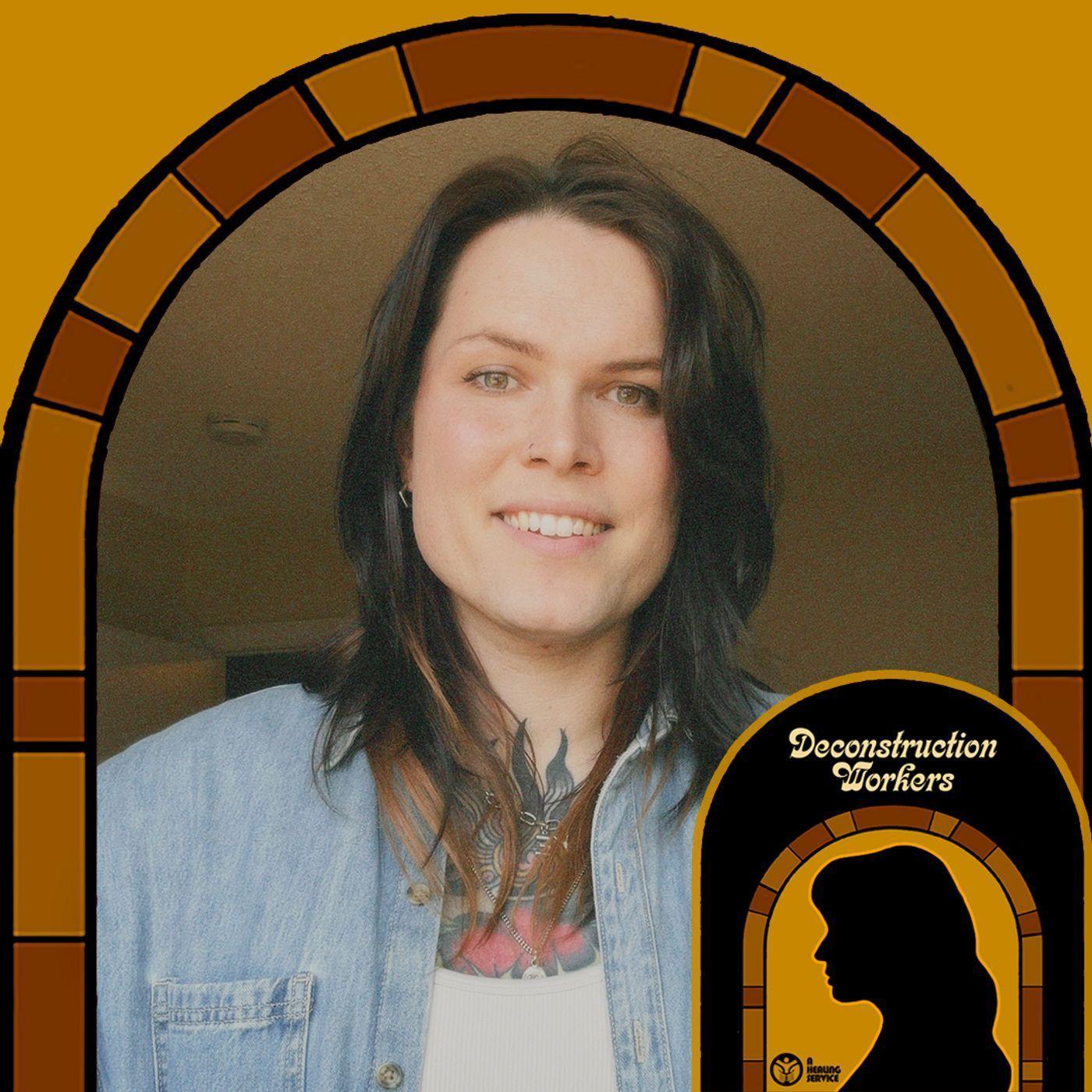
Jaye Brix is a writer,musician and trans femme ex-pastor who explores art, tattoos, healing and spirituality.
#exvangelical #expastor #deconstruction #transgender #nonbinary
英语
美国
少儿不宜
文字稿 🔗
免责声明: 本页面嵌入的播客和封面图片来自 Stephanie Drury,归其所有者所有,与 Listen Notes, Inc. 无关联,也未获得 Listen Notes, Inc. 背书。
