
# Isru Chag
Các tập podcast hàng đầu
Đã cập nhật:
isru chag (Hebrew: אסרו חג, lit. 'Bind [the] Festival') refers to the day after each of the Three Pilgrimage Festivals in Judaism: Passover, Shavuot and Sukkot.
The phrase originates from the verse in Psalms 118:27, which states, "Bind the festival offering with cords to the corners of the altar." According to the Talmud:
With regard to anyone who establishes an addition [issur] to the Festival on the day after the Festival by eating and drinking, the verse ascribes him credit as though he built an altar and sacrificed an offering upon it, as it is stated: “Add [isru] to the Festival with fattened animals [ba’avotim] until the horns of the altar.”
In a responsum to a community that had inquired as to the rationale behind the observance of isru chag, Yosef Hayyim (1832–1909) cited Isaac Luria (1534–1572), the founder of Lurianic Kabbalah, to the effect that Jews connect the day after the holiday to the holiday itself due to the remaining “light” of the holiday: in other words, so that the sanctity of the holiday will be extended.
== Rabbinic authorities cite observances ==
Adding a degree of festivity to the day as a practice has further been codified in Ashkenazic communities, as Moses Isserles (1520–1572) has stated in his glosses on the Shulchan Aruch in the section Orach Chayim:
And we have the custom to eat and drink a little more on the day after the holiday – and that is the day known as "bind the festival."
Yisrael Meir Kagan (1838–1933) ruled that the minhag (custom) is to generally forbid fasting on isru chag, except in instances when as a result of great distress the community synagogue decrees it.
Hayom Yom: The 23rd Day of Nissan, Isru Chag

leaving Acharon Shel Pesach. higher than world and falling into world
Kinus Torah On Isru Chag

Kinus Torah
Upon the Rebbe’s initiative, in the 1950’s, the Kinus Torah wasfounded. It takes place on Isru Chag (the day after) Simchas Torah, Peach and Shvuos. Many Rabbonim (including non-Chabad) and Roshei Yeshiva address the audience on topics of the Talmud and Halacha.
At the Yom Tov Farbr…
Isru Chag, Priestly Blessings, and Faith Through Adversity

Explore the ongoing inspiration of Isru Chag after Shavuos, the deeper meaning of the priestly blessing in Parshas Naso, and stories of faith and resilience from Rabbi Akiva to Holocaust survivors. Discover how Torah study and spiritual practices bring protection, satisfaction, and enduring strengt…
Hayom Yom: The 8th Day of Sivan, Isru Chag
The world is a mixture. one has free choice
Hayom Yom: The 24th Day of Tishrei, Isru Chag
The unique quality of a Farbrengen, its format etc
More Isru Chag

Rabbi Kanefsky examines the sources indicating why we don't recite Tachanun on the day after yom tov.
The Month of Tishre 75
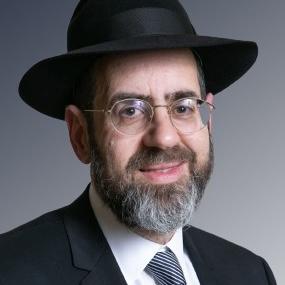
Welcome back to our daily dose of bitachon . This will be, be'ezrat Hashem , the final class in the series we began on Rosh Chodesh Tammuz, which has taken us through the months of mourning, comfort, teshuvah , joy, and finally winding down with Isru Chag. The coming month has no holidays, which is…
Pesach

The Why of Judaism, episode 15: Pesach. The month of Nissan is a time of joy, marked by the absence of Tachanun, a practice rooted in the festive inauguration of the Mishkan on the first of Nissan and the subsequent twelve days of offerings by the princes of the tribes. This celebratory spirit exte…

CÔNG CỤ TÌM KIẾM PODCAST
Bạn có thể sử dụng trang web của chúng tôi để tìm kiếm các podcast3,836,404và các tập197,655,354theo người, địa điểm hoặc chủ đề.

If I have seen further than others, it is by listening to podcasts and standing upon the shoulders of
giants.
‐ Isaac "Llamacorn" Newton
CHỈNH SỬA
Cảm ơn bạn đã giúp cơ sở dữ liệu podcast luôn cập nhật.
