WEBVTT
00:00:00.320 -->
00:00:08.000The peculiar thing about this church, it was actually burned down by the suffragettes in the 19th century, which is incredible.
00:00:08.560 -->
00:00:12.640So it was rebuilt as a mix of wood and stone.
00:00:12.720 -->
00:00:15.519So it has this very interesting acoustic inside it.
00:00:15.759 -->
00:00:19.120There were definitely years where I've written like 100 trucks.
00:00:19.359 -->
00:00:19.839Definitely.
00:00:20.320 -->
00:00:23.039And then it went down big time.
00:00:23.760 -->
00:00:30.879But if I could manage to get, you know, like uh two albums per year that are like very good quality, I'd be super happy with that.
00:00:30.960 -->
00:00:32.560And that's what I'm working towards.
00:00:32.799 -->
00:00:35.200People think the bigger the number, the better writer you are.
00:00:35.359 -->
00:00:36.079That's such a crack.
00:00:36.159 -->
00:00:39.920Yeah, that's you don't need to write a hundred tracks.
00:00:40.000 -->
00:00:44.399It's a diminishing returns thing, and also you just it's hard to enjoy.
00:00:56.719 -->
00:00:57.759David Tobin.
00:00:58.079 -->
00:00:58.640There he is.
00:00:58.799 -->
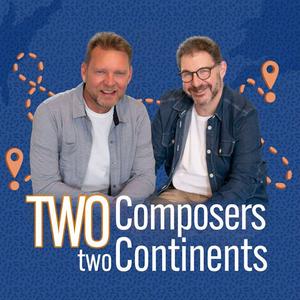
00:01:03.439This is a podcast about our lives making music together and the people we meet along the way.
00:01:03.679 -->
00:01:11.680You can find us at Two Composers Two Continents with the number two on YouTube, TikTok, Facebook, and all audio podcast platforms.
00:01:11.840 -->
00:01:17.599Sign up to our newsletter and get info on the latest episodes released every second Thursday.
00:01:17.840 -->
00:01:20.480Please like and subscribe and feel free to leave a comment.
00:01:20.799 -->
00:01:22.719Yeah, we've got a guest, Jeffrey.
00:01:22.959 -->
00:01:26.239We've got Alessandro Mastroianni.
00:01:26.959 -->
00:01:27.200Hello.
00:01:27.599 -->
00:01:30.480I've said that with an Italian accent and it's not intentional.
00:01:30.560 -->
00:01:31.760I just don't know how to say it.
00:01:32.000 -->
00:01:33.760How rude any other way.
00:01:34.159 -->
00:01:35.920Well, it's Italian, so Mascam isn't it.
00:01:36.400 -->
00:01:36.719There you go.
00:01:37.040 -->
00:01:46.719Well, I'll let it I'm gonna I'm gonna get for for those people who are not familiar, and how dare you if you're not, but I'm just uh gonna give a little background on on uh all things you.
00:01:47.040 -->
00:02:15.919Um so um we've got uh Alessandro, who is uh a sound designer, a composer, founder of Sonora Cinematic, which is a virtual instrument company, uh, but also in addition to this, uh Berkeley College alumnus like me, so uh something in common there, and uh written and scored multiple film and TV projects, uh worked for Bleeding Fingers, uh the Hans Simmer company, who I th I saw in the news today opened a London office.
00:02:16.000 -->
00:02:18.240Is that I did too, yeah.
00:02:18.319 -->
00:02:20.240I didn't know that, but yeah, that's right.
00:02:20.800 -->
00:02:21.199Amazing.
00:02:21.360 -->
00:02:28.719Uh and also most importantly, a connoisseur of Peppa Pig, because I keep up to date with your with your Facebook feed.
00:02:28.879 -->
00:02:37.599And yeah, I and for those of people who don't know what we're talking about, apparently there was some episode where he was talking about a synthesizer.
00:02:37.759 -->
00:02:39.360And I was shocked, yes.
00:02:39.599 -->
00:02:40.400Yes, yeah.
00:02:40.960 -->
00:02:42.800As you said, it was like a documentary.
00:02:42.960 -->
00:02:44.240Yeah, pretty amazing.
00:02:44.560 -->
00:02:45.599So, anyway, welcome.
00:02:45.759 -->
00:02:46.879It's great to have you on.
00:02:47.199 -->
00:02:48.479Thank you so much for having me.
00:02:48.960 -->
00:02:51.599And we've briefly we've recently been on your podcast as well.
00:02:51.680 -->
00:02:55.439We should mention uh uh the uh sound diaries.
00:02:55.520 -->
00:02:55.919Is that right?
00:02:56.159 -->
00:02:56.800Sound diaries?
00:02:57.120 -->
00:03:11.039Yes, the sound diaries is called the coffee edition because it was sort of a continuation of um a blog that I had on uh on LinkedIn, uh, which was called uh The Sound Diaries without the Coffee Edition.
00:03:11.199 -->
00:03:16.960Um and I was kind of uh getting bored of doing it on my own, basically just writing articles.
00:03:17.120 -->
00:03:27.759I thought this would be a lot more fun if you could have the same thing uh as a recorder conversation with friends while having coffee, and so it kind of turned into a podcast.
00:03:27.840 -->
00:03:29.039Yeah, yeah, loving it.
00:03:29.680 -->
00:03:36.719So uh we were we were in the middle of a discussion off-air, and we said, This is nuts, this is interesting, let's turn it on.
00:03:36.879 -->
00:03:41.520So uh you were recording yesterday, you were telling us, let's let's start this over.
00:03:41.680 -->
00:03:42.639Where were you recording?
00:03:42.719 -->
00:03:44.400What was the what was the deal?
00:03:45.599 -->
00:04:04.159So I lived in uh in Edinburgh in the UK uh for now seven years, and last summer I moved outside of the uh of the city in a in a in a small town that is on the uh on the on the east coast, uh just on the on the sea, which is very very nice.
00:04:04.400 -->
00:04:13.759And I I cycled across a fantastic looking church, uh, and I cycled um uh over it like a few a few times.
00:04:13.840 -->
00:04:17.439I was like, this would be a bet is an incredible place to record.
00:04:17.519 -->
00:04:29.040Yeah, and they started like getting interested in it and um trying to kind of like find out who the owner is because it's clearly not being used as a as a church, right?
00:04:29.600 -->
00:04:42.160And and I kind of went through um a few steps and we managed to uh well we did two visits in there to make sure that it was suitable, there were like no insurance issues and stuff like that.
00:04:42.720 -->
00:05:10.800And I got permission to record in there for two days in a row, and um I was I was telling um you both that when you when you find a new space to record, which happened to me a few times, you you don't want to invest a lot of time in it because you don't know how much uh the stuff is usable because it's not a recording studio, so you don't know if you're gonna have issues with you know anything from electricals to awful background noises and stuff like that.
00:05:10.959 -->
00:05:29.839So we did a little recording session where we recorded three uh instruments which I don't want to uh I don't want to share, but uh we recorded a few a few different sources as a test recording, but uh I'm sure they're gonna become um fully sampled instruments because oh okay, because they are really interesting.
00:05:29.920 -->
00:05:30.240Yeah.
00:05:30.560 -->
00:05:33.439I I was gonna ask you, is this a record like a music recording?
00:05:33.519 -->
00:05:42.879But this is for the virtual instrument for the No no, it is this was uh for a virtual instrument, but I'm hoping to do also musical recordings in there because the acoustic is incredible.
00:05:43.040 -->
00:06:01.920Basically, um the the peculiar thing about this church, which was the the foundation are from the 12th century, so it's very old church, and it was um it was actually burned down by the suffragettes in the 19th century, which is incredible.
00:06:02.079 -->
00:06:28.319Wow, yeah, like very interesting um bit of history there, and so all the wooden parts of the church were burnt down, and all the uh parts that are made in in stone were preserved, so it was rebuilt as a mix of wood and um and stone, so it has this very interesting acoustic inside it and is a very large environment, it has a huge a huge reverb.
00:06:28.480 -->
00:06:38.240So, yeah, we just I was gonna ask you about the reverb actually because I saw again because I'm been largely stalking you on on social media, I saw the IR recording.
00:06:38.319 -->
00:06:42.879I shared it with Jeff where you were you were recording an IR from in there, and I wanted to ask you about that.
00:06:43.040 -->
00:06:46.720So So an IR for people who don't know is an impulse response.
00:06:47.120 -->
00:06:49.040You use it to create reverbs.
00:06:49.439 -->
00:07:00.000So imagine the best way to describe for me is rather than it being a reverb, it's actually a genuine space, it's the sound of that specific place that you're in.
00:07:00.639 -->
00:07:05.040Is that I I mean obviously I don't want you to divulge anything, it's for an upcoming project.
00:07:05.279 -->
00:07:08.560Do you use that separately or once you record that?
00:07:08.720 -->
00:07:14.720Because I understood you were recording it with like a sine wave, like a filter sweeping woo kind of noise.
00:07:15.040 -->
00:07:15.360Yeah.
00:07:15.600 -->
00:07:17.040Using a binaural mic?
00:07:17.120 -->
00:07:20.000Is that right that you were using uh using an ambisonics mic.
00:07:20.240 -->
00:07:21.199Ambisonics mic.
00:07:21.519 -->
00:07:27.439And do you use this as a standalone thing or or to integrate into a product?
00:07:27.759 -->
00:07:29.120It's it's a mix of things.
00:07:29.279 -->
00:07:34.000I mean, again, this was this is not the typical recording session that they do.
00:07:34.240 -->
00:07:40.560Uh it's it was very much about studying the space and testing and trying things out.
00:07:40.800 -->
00:07:43.279So um an impulse response.
00:07:43.360 -->
00:07:50.000I I do grab a lot of impulse responses and I love grabbing them in ambisonics because of the flexibility that it gives you.
00:07:50.160 -->
00:08:20.319Um, the the purpose of that can be anything from creating your own um space to um so basically using it in a creative way, um, but also more simply to uh sort of get a sense of what a space sounds like, so that if you mix things that were not recorded in that space, you can maybe derereverb them a little bit and put them into that space.
00:08:20.560 -->
00:08:22.000That's lots of uses.
00:08:22.480 -->
00:08:38.879And we we grabbed three different impulse responses um yesterday, uh, one from the central nave, then one about 15 meters back, and one closer to the altar, which is the bed which is all uh made in uh in stone.
00:08:39.039 -->
00:08:43.200And I I go I I recorded in many different places.
00:08:43.360 -->
00:08:50.399I love listening to spaces around me, and I never quite heard a space that sounded as interesting and that as that.
00:08:50.480 -->
00:08:51.679So it's quite cool.
00:08:51.840 -->
00:09:36.879And if there there is a pipe organ in there, and we which which me and my wife were like having a bit of fun playing there, and we thought like it's such a shame that I they and I mean obviously there might have been, I'm sure there were um technical reasons for why it was placed there, but it basically it's such a shame that the that the pipes weren't placed in the stone bit, but uh which is behind the altar or like on a balcony on top where you normally find pipes in a church, but they were placed to the to the right in a smaller in a smaller area, uh which didn't sound as epic as it would have somewhere else, but still interesting nonetheless.
00:09:37.120 -->
00:09:38.080Yeah, how interesting.
00:09:38.159 -->
00:09:41.440And you mentioned that they tuned the pipe organ for you.
00:09:41.919 -->
00:09:44.080Yeah, I didn't even know that was a thing that had to happen.
00:09:44.240 -->
00:09:48.000I thought once the the pipes are made, they're tuned.
00:09:48.159 -->
00:10:05.279How does it you you know yeah, I I know nothing um about about I mean I know a little I I do know, I mean what I know about organ, uh the organ is what I studied in like composition and stuff like that.
00:10:05.679 -->
00:10:06.320Yeah, yeah.
00:10:06.559 -->
00:10:09.919Uh but I think you don't know how to make it.
00:10:10.080 -->
00:10:11.360I don't know who we could ask, Jeffrey.
00:10:11.440 -->
00:10:21.279We've got another guest coming on later in the year who is another a fellow Italian oh wow, Chevetta, who happens to have been the organist in the Vatican.
00:10:21.759 -->
00:10:28.240Oh wow, so I have a amongst many other things, and he does a mean Cockney accent, but we'll we'll leave it till later in the year.
00:10:29.279 -->
00:10:33.600I have a feeling he's gonna know the answer to this, so uh this one.
00:10:33.919 -->
00:10:46.879Yeah, I know like I don't even come from a um very religious background or anything like that, so I don't even yeah, it's something that for me is in the um is in the orchest belongs to the orchestration books, so to speak.
00:10:46.960 -->
00:10:50.799But but it's a very interesting uh world, isn't it?
00:10:50.960 -->
00:10:55.919And it's such an cool instrument, it's just like fantastic instrument, yeah.
00:10:56.240 -->
00:10:56.879So let's talk.
00:10:57.120 -->
00:10:57.759Oh, you go, Jeff.
00:10:58.000 -->
00:10:58.399Go ahead, Dave.
00:10:58.480 -->
00:11:00.159Oh, I was just gonna say, so this is interesting.
00:11:00.320 -->
00:11:05.759I mean, uh you are you went to school for composition, you went to Berkeley, obviously you're a writer.
00:11:06.000 -->
00:11:18.720Regardless of what kind of music you were you were into or are into writing now, which is mostly like seems like sound design stuff, how did that morph into creating the library and just getting into the sounds?
00:11:18.879 -->
00:11:24.639Was that, you know, was that just something you were you fell into, or did you always feel like, wow, this is the coolest sound.
00:11:24.720 -->
00:11:26.080I wish I could make something like that.
00:11:27.919 -->
00:11:32.879Yeah, I mean, it's for me, it's always very hard to answer this question.
00:11:32.960 -->
00:11:50.159And I even like notably I get asked this I did a lot, um, a couple of guest lectures at Berkeley on sound design, and a lot of students um that are in their like you know, early 20s or stuff like that, they're like trying to figure out what they're gonna do.
00:11:50.320 -->
00:12:26.799They they ask me a lot, like you know, you do did so many things is so foreign to them because the advice that you that you get when you're studying, which by the way is a great advice, it's a fantastic advice, which is the to kind of figure out what you can bring to the table and focus on that and specialize on that, which again is great advice, uh, which is one that that I didn't follow, not because I didn't want to follow it, but because my career sort of like naturally evolved into uh into this this sort of thing.
00:12:26.960 -->
00:12:40.159I just uh the the way it happened is that uh when I finished Berkeley, which now was 14 years ago or 13 years ago, uh I I started doing a lot of writing.
00:12:40.399 -->
00:12:58.960Um and uh I was doing like did like a pretty big TV show in Italy as a composer, and then I did some feature films and I did a lot of production library, which I'm sure that compared to YouTube is like a tiny, tiny amount, but uh about more than the average than the average person.
00:12:59.360 -->
00:13:06.240Um and yeah, a good friend of mine got asked by a company to do some custom sounds.
00:13:06.399 -->
00:13:22.000This was like a big music house that had like a big um tech company as a client, and they wanted some custom sounds for their team of composers to use, and yet no interest in the gig, um, no time for it.
00:13:22.159 -->
00:13:23.840I said, Do you want do you want to take it?
00:13:24.159 -->
00:13:26.320But apart from that, yeah, yeah.
00:13:26.960 -->
00:13:38.879And yeah, and uh I did it uh kind of improvising the whole thing because um I mean I had had a pretty traditional music education that far.
00:13:39.200 -->
00:13:53.279Even though I did, I mean, I guess the like the seed was planted at Berkeley already because we did a lot of like more uh electronic music, and yes, and you know, yeah, you know, those kind of classes in synthesis and stuff like that.
00:13:54.000 -->
00:14:01.840We also had Eduardo Tarilonte as a guest speaker who uh was pretty uh influential for me.
00:14:01.919 -->
00:14:18.559That the the lecture that we did is like um he he owned he he makes sample libraries for for best service and uh and yeah, he kind of told us about this world of making sample libraries and programming scenes and that kind of stuff.
00:14:18.720 -->
00:14:25.200But it's not something that to the moment when it all began when it bloomed, yeah.
00:14:25.279 -->
00:14:38.559But but you know, like I had that interest, like I yeah, I I was more interested in the concept of making your own sounds for your own music rather than turning it into a thing.
00:14:38.720 -->
00:14:47.919But then with this first gig that I did, um I kind of very naturally started to get some more of the same work.
00:14:48.480 -->
00:15:16.720This company hired me for five or six other projects after this, after that, and then other composers that were related to that started to commission me um custom work, which could be anything from a folder of wave files for you know, like the more maybe trailer composers that want like custom booms and pushes and stingers and that kind of that kind of stuff.
00:15:16.799 -->
00:15:50.799I had a lot of customers in the advertising world, I did that that kind of a lot of customers in the video game uh scoring world to eventually um then um companies that other sampling companies started hiring me to record stuff and uh synthesizer companies started to hire me to do sort of like factory banks and and stuff like that, and then eventually in 2021 or very late 2020, really, I started Sonora Cinematic and they kind of evolved into this.
00:15:50.879 -->
00:15:51.200Yeah.
00:15:51.519 -->
00:16:11.759Wow So when you were doing the when you were in the beginning d making these sounds, booms and whatever, just to get really technical for a second, were you were you just using were you recording stuff and manipulating it in your computer and then just creating some a different boom than obviously that's in someone else's library?
00:16:11.919 -->
00:16:13.120Or were you going places?
00:16:13.440 -->
00:16:16.799I mean, how did it how did that first begin for you?
00:16:16.960 -->
00:16:20.480Because I think that's an interesting really interesting.
00:16:20.799 -->
00:16:26.320Yeah, so I I mean now I'm in a studio full of gear at the time at the beginning.
00:16:26.399 -->
00:16:27.919I didn't obviously.
00:16:28.080 -->
00:16:30.960Um it was very, very natural.
00:16:31.120 -->
00:16:45.600On the very first project, the the product that the company that the tech company was uh was selling uh was used as as part of the music creation project uh process.
00:16:45.759 -->
00:16:53.600Um so that was kind of you know provided to me and and it was a lot of in the box processing, right?
00:16:53.759 -->
00:16:56.159Um, which doesn't necessarily mean just plugins.
00:16:56.399 -->
00:17:06.960I um another thing that I got very much into was using uh Max MSP, which is sort of like a visual programming language used by a lot of experimental musicians.
00:17:07.119 -->
00:17:23.920I did a lot of processing in the box that way, and then I sort of gradually started buying microphones and got into recording basically me banging on stuff and in a laundry basket or yeah, anything, right?
00:17:24.240 -->
00:17:29.039So making noises that don't pre-exist rather than manipulating other people, yeah.
00:17:29.200 -->
00:17:36.400But but a lot of these works was was also uh in fact, the vast majority probably was a lot of recording real instruments.
00:17:36.480 -->
00:17:43.359Uh it wasn't in a recording studio, it wasn't as um esoteric as you as you might think.
00:17:43.440 -->
00:17:56.000Uh it was more about you know working with um cellist and see what could can be done on the on the cello that that you know doesn't necessarily be in an orchestral setting sort of thing.
00:17:56.160 -->
00:18:00.000Yeah, so I've got it interesting because we we did it just real quickly, baby.
00:18:00.240 -->
00:18:03.519We did the album recently called Off Grid with Paul Clarvis.
00:18:04.079 -->
00:18:21.279And this was this was the first time that I really felt like we delved into the sort of the sound design kind of stuff where we essentially we were recording real instruments and we went to his percussion studio and he was banging on stuff and playing things and we just took them back and you know made new sounds with them.
00:18:21.759 -->
00:18:24.720Two octaves lower and four octaves faster and up lower.
00:18:25.039 -->
00:18:27.039Yeah, and you know, all kinds of different stuff.
00:18:27.119 -->
00:18:39.839And I find it so fascinating that I felt as pleased artistically just doing that as I did, as I do composing anything.
00:18:40.319 -->
00:18:49.200Do you feel like you're even even with your your your libraries and your instruments to me, even each one of those sounds feels like art to me.
00:18:49.519 -->
00:18:49.759You know?
00:18:50.400 -->
00:18:53.440You just press a key and it it makes this incredible sound.
00:18:54.000 -->
00:18:59.200Do you feel like you're an artist in that way, creating these sounds?
00:19:00.000 -->
00:19:03.200I I mean it's certainly a creative output for me.
00:19:03.359 -->
00:19:21.839Like I decided very, very early on when I got into this um this business that I wasn't going to um make libraries that were uh that helped you create better mock-ups, so to speak.
00:19:22.079 -->
00:19:28.400Uh you know, like I had no interest in making a perfectly playable brass library.
00:19:28.559 -->
00:19:32.880Not because I don't appreciate that, but because uh because of two things.
00:19:33.039 -->
00:19:39.279The first thing is that I think that there are people already in the business that are making an incredible job with that.
00:19:39.440 -->
00:19:50.400And I know that I'm not I have nothing to offer to improve on what you know performance samples or cinematic studio series are are doing.
00:19:50.640 -->
00:20:03.359And the other is that I think we have been for uh for a few years now uh in the realm of diminishing return in the in that field of the of the sampling world.
00:20:03.519 -->
00:20:12.960And for me, it's always been about sort of finding the line where the sounds are interesting but but still very usable.
00:20:13.119 -->
00:20:15.279That is for me always the the challenge.
00:20:15.519 -->
00:20:21.119Yeah, you know, so they're still playable, it's not like you're exactly playing, but yeah, yeah.
00:20:21.279 -->
00:20:24.319Like I mean, I always struggle uh a lot.
00:20:24.559 -->
00:20:39.759Um well if you're like you know, talking of like you know orchestral libraries, for example, I always struggled with uh, for example, sonokinetic libraries, which I think they are beautifully sounding, fantastic.
00:20:39.920 -->
00:20:48.240Yeah, yet every time I try to use one, uh this is like for who doesn't know, it's like there's a lot of like phrase-based sampling.
00:20:48.559 -->
00:20:57.920I always spend more time like bending it to my needs than uh than you know making something with it.
00:20:58.000 -->
00:21:05.200And and but that that is not not a problem of sonokinetic, it's a problem with the way I write music, right?
00:21:05.440 -->
00:21:19.920Like I still need to be in control, and for me it's very much about you know making a sound that kind of maybe challenges the way you write or makes you think in a slightly different way, or like inspires you to get to.
00:21:20.400 -->
00:21:29.440But even on the even on the libraries, like I I've previously used the the company Fable Sounds to make like uh back in the day.
00:21:29.519 -->
00:21:37.839I bought I was one of the very first people to buy a library called Broadway Big Band back when it cost thousands and thousands of dollars, it was insane.
00:21:38.400 -->
00:21:46.480And I remember having to print out key switch lists, and even to now, I was using it on a project recently.
00:21:46.640 -->
00:21:51.119I can't work out, I need a sound and I can't find it.
00:21:51.359 -->
00:21:53.359And yeah, is it this?
00:21:53.440 -->
00:21:59.759And you just end up randomly pressing a bunch of keys and trying to find things, but yeah, the usability of the sound.
00:22:00.640 -->
00:22:05.279Can vastly change the creative process because you end up saying, Well, what can this do?
00:22:05.440 -->
00:22:06.880Rather than what do I want to do?
00:22:06.960 -->
00:22:07.119Right.
00:22:07.279 -->
00:22:07.920What can this do?
00:22:08.079 -->
00:22:09.039Well, I'll do that then.
00:22:09.200 -->
00:22:09.680Right, yeah.
00:22:10.000 -->
00:22:11.039Which is always a shame.
00:22:11.119 -->
00:22:13.759But I wanted to touch on something else with you, if I may.
00:22:13.920 -->
00:22:30.799Um, one of my gigs in our, you know, you say um do what you're good at, and one of the things that has become part of my gig within our gig is in doing a lot of the practical kind of planning stages of stuff.
00:22:31.039 -->
00:22:31.359Yeah.
00:22:31.519 -->
00:22:36.480And this is the unsexiest part of the world with music, but I sure is.
00:22:36.799 -->
00:22:39.920I would imagine in your world is a big thing.
00:22:40.079 -->
00:22:43.119If you're planning a library, so I have no clue.
00:22:43.279 -->
00:22:44.640I've always been really interested.
00:22:44.720 -->
00:22:51.519So you're gonna record Aria or vocals, one of the vocalscapes things, or one of the cello libraries.
00:22:51.759 -->
00:22:53.440How do you plan these sessions?
00:22:53.519 -->
00:22:55.440How do you how much do you say in advance?
00:22:55.599 -->
00:23:03.519Okay, here's a piece of music, we're gonna record this, or I'm just gonna throw shit at the wall and see what happens, or what how how do you plan this?
00:23:03.839 -->
00:23:05.200How does that happen?
00:23:06.880 -->
00:23:20.240It varies vastly on uh on the project simply because um it depends a lot on who you're working with in terms of who the musician is, uh or who the musicians are.
00:23:20.400 -->
00:23:49.119Like if I'm if I'm like if I'm sampling a string section or with Poyes' channels, like just one channel is like any sort of musician that has a orchestral background or is used to the sort of you know three hours recording session in the studio, you just plan it exactly like you would plan a recording session to record a musical track.
00:23:49.279 -->
00:23:57.680We have scores, we have a protool session with markers, with pre-count, and every musician gets a part.
00:23:58.240 -->
00:24:02.000Uh, and so in that way is not different at all.
00:24:02.160 -->
00:24:06.160Uh, and it's very important to do this, even if sampling.
00:24:06.319 -->
00:24:22.480I mean, my libraries are not a lot of like you know, four bars of middle C plate, sustain, but you know, even when is that you just write them all down because you need to have references in the score, and you would you also have a conductor, by the way.
00:24:22.720 -->
00:24:34.240You think you might not need one if you if you record it, but but yeah, I mean absolutely if you're like we recorded a a string library that is coming out next week, actually.
00:24:34.400 -->
00:24:44.960Um so it might be already out by the time this uh this uh and uh we recorded uh 10 musicians in different in different sections.
00:24:45.200 -->
00:24:55.119Um it's a chamber string library, so even uh when a section has like three musicians, you you you need a conductor to help yourself for the attack and all that.
00:24:55.200 -->
00:25:00.319So are you are you recording so you were saying that they have parts?
00:25:00.559 -->
00:25:00.960Yes.
00:25:01.200 -->
00:25:22.240I know from some discussions uh in the past with Jasper Blanc at performance samples, yeah, that he's not if he wants a middle C or he wants something, he's not getting them to play the part doesn't say middle C and then arrest and then another middle C, and then he's getting them to play pieces of music and he's then taking those out of it.
00:25:22.720 -->
00:25:23.920What's your approach to that?
00:25:24.000 -->
00:25:25.680Is it a those?
00:25:26.160 -->
00:25:29.119That is a very just a blank approach, which I love.
00:25:29.359 -->
00:25:35.279Uh uh no, uh I mean we uh we did something completely different uh in this string library.
00:25:35.519 -->
00:25:38.480Basically, the the library is gonna be called movemental strings.
00:25:39.359 -->
00:26:02.799And the idea behind this specific library is um that when you do a lot of um when you write underscore, for example, uh, or any sort of music that is more ambient or whatever you're writing music that is more in the background, with strings you end up writing a lot of single lines, uh of sustained um lines.
00:26:03.119 -->
00:26:08.160And and you always have the trouble uh that basically these lines sound very static.
00:26:08.240 -->
00:26:46.319So the idea with movimento strings is that there are ways where you get um we we wrote uh lines so that they kind of move ever so slightly, and we did recorded a few articulations that that that help with this and that go from things like free Boeing, which is the Stokovsky um approach to string playing, where where instead of the synchronized Boeing, all musicians rebow freely, so you get this sort of like more blurry sound to um dynamic um changes in dynamic within the same notes.
00:26:46.480 -->
00:27:00.559So, for example, you have the single components of the of the string section to do small crescendo and the crescendos uh into each other, so you get this sort of like moving line to other things like that.
00:27:00.720 -->
00:27:12.799So for for to record something like this, you um the it is similar to uh what Jasper does uh in that it's very much uh it's all written down.
00:27:12.880 -->
00:27:24.319So there are all the crescendos written down, all the crescendas written down, all the dynamic, and then we isolate the bit of samples that we need uh that we need to um to do this.
00:27:24.559 -->
00:27:33.279Um and yeah, uh for uh for a lot of the libraries that we do, uh it's it's a very it's a very similar approach, yeah.
00:27:33.680 -->
00:27:35.519Well, I mean uh it makes sense.
00:27:35.759 -->
00:27:36.799Time is money, right?
00:27:36.880 -->
00:27:41.119I mean you can't have a studio and then just spend half time explaining to people what the hell you want to do.
00:27:41.200 -->
00:27:41.680You need to do that.
00:27:41.920 -->
00:27:42.559Exactly, yeah.
00:27:42.640 -->
00:27:51.200And and then obviously, but the the there are times where where you know the musician um doesn't come from that sort of background.
00:27:52.000 -->
00:27:59.200And uh you know, you it's just a lot more it's just a lot more free, but it's still structure.
00:27:59.279 -->
00:28:08.559You still need you know, maybe it doesn't have the parts, it doesn't have you know that, but but it's still very much structured, and you know what you need to get recorded.
00:28:08.799 -->
00:28:13.680And we try to leave always a bit of free time to do some experiments because that was my other question.
00:28:13.920 -->
00:28:17.359You ever get a what the hell, why don't we try this moment?
00:28:18.079 -->
00:28:19.279Yeah, yeah, absolutely.
00:28:19.440 -->
00:28:30.880I mean, uh there are libraries that start and end in this studio, and so I obviously have all the time in the world, and at that point it's the whole thing is an experiment, and some of it comes out.
00:28:31.680 -->
00:28:40.319Uh but uh but yeah, if we're if we are paying a studio, um even if it's not a massive scoring stage, we did we did two libraries last year.
00:28:40.480 -->
00:28:49.920We recorded in a very nice studio in Glasgow, uh which certainly doesn't cost like a store a scoring stage, but it's still you know a couple of things.
00:28:50.720 -->
00:28:54.720Yeah, yeah, it's still money, and you know, and the musicians' money as well.
00:28:54.880 -->
00:29:06.400And um, you know, it's it still fascinates me because I still um I can't even imagine thinking about well, I'm gonna make a library, I'm gonna make an instrument.
00:29:06.559 -->
00:29:07.680What do I want it to be?
00:29:07.839 -->
00:29:15.119And I know it will it obviously comes organically from something else, but even just thinking about okay, I I have this idea, how do I make it?
00:29:15.200 -->
00:29:19.759I know I'm gonna go in the studio to get this, but this is what I'm gonna need to put it together.
00:29:19.839 -->
00:29:22.960It's like a totally different level.
00:29:23.119 -->
00:29:23.920Yeah, absolutely.
00:29:24.319 -->
00:29:25.839There's so many elements to it.
00:29:25.920 -->
00:29:44.160I mean, not least of which we should touch on where the inspiration comes from for you know, what am I even gonna make, but also just the practical of of the GUI and all of the other things that that's the other the other thing because I mean I'm very visually driven when I'm using a library.
00:29:44.319 -->
00:29:48.640I mean, some of them I know we've given Jasper, I'm gonna ask him for some money off something.
00:29:49.759 -->
00:29:53.200We're mentioning a bunch of that stuff, but I mean that has no GUI, none.
00:29:53.359 -->
00:29:56.960I mean, well, it kind of does, but he's not in the least bit interested in that.
00:29:57.119 -->
00:30:04.880So, but some of yours are very visually beautiful, and you know, you kind of you're moving things around and it's very hands-on.
00:30:05.440 -->
00:30:06.559Are you designing those?
00:30:06.720 -->
00:30:09.359Is that um it depends?
00:30:09.599 -->
00:30:28.880Um, I I design some of those um more often is me sort of like sketching things out on Figma, which is a program that you use for that sort of stuff, and then give it giving it to like an artist um that takes care of implementing that.
00:30:29.039 -->
00:30:31.440I I designed the workflow a lot.
00:30:31.680 -->
00:30:40.319Um then obviously there is like now we are we are kind of like branching out into creating uh products for soundbox other than for contact.
00:30:40.400 -->
00:30:50.559And well, that was gonna be another discussion in a minute, but yeah, yeah, and soundbox it's a lot more simpler uh in that it the there is virtually no customization that you can do.
00:30:50.640 -->
00:30:52.480It's a lot more about the samples.
00:30:52.559 -->
00:31:00.960Uh you just put like a background image and that's it, and so there isn't much to design there, it's it's more about for now.
00:31:01.039 -->
00:31:02.079Yes, absolutely.
00:31:02.240 -->
00:31:04.720Um, so yeah, it kind of it kind of depends.
00:31:04.960 -->
00:31:16.480Um the we did uh on products uh verticale would be a good example, which is like uh um uh a piano library that we did.
00:31:16.880 -->
00:31:28.640Um the the interface is hand-drawn uh by uh by an Edinburgh artist who literally took a pencil and drew all the piano and stuff, and then we digitalized that.
00:31:28.799 -->
00:31:29.599So neat.
00:31:29.680 -->
00:31:31.359Yeah, we have a bit of fun with that.
00:31:31.440 -->
00:31:31.759Yeah.
00:31:32.480 -->
00:32:08.160So the the soundbox move, um this uh well, I'm gonna ask you, but just for those people that don't know, uh a little while before recording here, there were uh there's been news stories about native instruments having having uh financial issues, and I don't want to go into it too much because I don't know enough, but I do know that that having talked to a couple of other library manufacturers, those people who have put a lot of money and time and effort into creating things for contact, yes, have been looking at other outlets maybe in case there are issues.
00:32:08.400 -->
00:32:12.559Is this the reason to sound for soundbox or you were there anyway?
00:32:12.880 -->
00:32:16.079We we went there before uh the the news.
00:32:16.160 -->
00:32:27.759We started with Soundbox by um porting, I say porting, but they were never one-to-one ports because they can't be because they're completely different platforms.
00:32:28.000 -->
00:32:33.440But we uh ported um one of our libraries is called uh Panorama Guitars.
00:32:33.839 -->
00:32:35.039Yeah, I have it.
00:32:35.839 -->
00:32:36.720Thank you very much.
00:32:36.880 -->
00:32:53.920And we made uh a port for Sandbots called post rock guitars, and again, they have different names because they're no one-to-one ports, they're just like very different products, but they use the same samples, but obviously the sample is only half of the product, the other is the implementation.
00:32:54.160 -->
00:32:58.880And we started experimenting with that and uh it did very well for us.
00:32:58.960 -->
00:33:13.359Uh, there are things that I appreciate in sandbox, and it's also a very different market, um, even though I think they aim at become at catching some other areas of the market, but but yeah, sandbox.
00:33:13.440 -->
00:33:18.480The the good thing about sandbox is that there is nothing to program, so to speak.
00:33:18.640 -->
00:33:26.960There is no code to be written, there is no uh fancy you know behavior to uh to customize.
00:33:27.200 -->
00:34:06.400And in on one hand, that means that is that is limited as a product, on the other hand, it means that if you have a good sample base and all you care is about you know having a way to play back cool samples, then in that way it's actually excellent for the end user because I'm able to offer that at a much lower price because I have lower lower expenses in producing it, and uh and yeah, it's just like a very kind of like nuts and bolt kind of way to offer a product for these work in AU as well as VST as well as blah blah blah blah.
00:34:06.559 -->
00:34:08.079I mean, I haven't I haven't tried.
00:34:08.639 -->
00:34:21.840And the cool thing about sandbox is that it well uh it's not particularly interesting to me, but a lot of our customers are iPad users, and um and soundbox, yeah, and soundbox uh works on on iPad, which is great.
00:34:21.920 -->
00:34:22.559Yeah.
00:34:23.360 -->
00:34:28.960Uh what's uh this uh try it's come on, let's do a sentence here, Jeffrey.
00:34:29.280 -->
00:34:29.920You can do it.
00:34:30.079 -->
00:34:30.960I believe in you.
00:34:31.199 -->
00:34:59.679So people are writing cues and writing music on on iPads, is that yeah, so uh yeah, I mean there there is a whole movement there which I haven't been uh well uh so I never written a TV queue on iPad, but I have uh used, for example, the iPad um on uh live performances, uh and and it's a very cool device uh to do that.
00:34:59.920 -->
00:35:04.320But there are people that use the iPad to make full cues.
00:35:04.639 -->
00:35:14.400Now I doubt you'll be using you'll be creating a full big band arrangement uh or a full orchestral piece on on the iPad.
00:35:14.719 -->
00:35:20.079But but you know, uh smaller track counts you can absolutely do.
00:35:20.400 -->
00:35:22.800Yeah, you see you say you say that we did.
00:35:23.039 -->
00:35:27.440Um we nearly released it, but not quite back in the day.
00:35:27.599 -->
00:35:35.039In the early days, uh David Hearn, who created this this amazing tool called StaffPad, which is still around.
00:35:35.599 -->
00:35:38.639I have a massive I am a massive Staff pad user and love it.
00:35:38.719 -->
00:35:38.880Yeah.
00:35:39.119 -->
00:35:49.760Well, I know David quite well, and we sat and had a coffee and we talked about it, and we got to a point where we wrote something, and I was sat in my garden and we wrote a whole album.
00:35:50.559 -->
00:35:53.119Just it was uh note by note, yeah.
00:35:53.280 -->
00:36:00.880Yeah, just wrote it out but on an iPad, but it got to a point where it was quite close sound-wise to say we could release this.
00:36:01.199 -->
00:36:01.599That's right.
00:36:01.679 -->
00:36:03.920Yeah, then we didn't, then we recorded it live.
00:36:04.159 -->
00:36:05.199But it was close.
00:36:05.760 -->
00:36:08.320I I love I I love Staff Bad.
00:36:08.480 -->
00:36:27.679Uh the um uh two or three of the at least a couple of tracks that I wrote for Bleeding Fingers, um the library, the music library, I I wrote entirely for stuff on Staff Bud and then exported the MIDI and kind of remade it.
00:36:27.840 -->
00:36:38.639Um and then there is also some live musicians, but but yeah, the like I love stuff, but stuff yeah, but but soundbox for iPad is a bit of a different approach.
00:36:38.719 -->
00:36:44.639So stuffpad is more you would use it you know as opposed as a doll.
00:36:44.880 -->
00:36:58.800It's more like rather than inputting music on a piano roll, you you you literally write it down, whereas right whereas the uh users are using soundbox on digital audio workstation on the iPad.
00:36:59.199 -->
00:37:14.320So they're taking logic or yes, or or Q Base or whatever, and using it on there, and there is like a whole subset of musicians that do that, and a lot of our newest customers come come from the iPad world, which was a new thing for me as well.
00:37:14.400 -->
00:37:17.920But it's it's cool that they have that platform available to them, yeah.
00:37:18.079 -->
00:37:27.840Yeah, that's that powerful as well that you could just take a thing and just well, I mean, really the new iPads like the iPad Pros are geez, it's it's a computer.
00:37:27.920 -->
00:37:28.320I mean, really.
00:37:28.559 -->
00:37:29.119Yeah, absolutely.
00:37:29.280 -->
00:37:29.840Yeah, yeah.
00:37:30.000 -->
00:37:31.280So interesting.
00:37:31.440 -->
00:37:31.599Wow.
00:37:31.760 -->
00:37:38.559So how do you uh how much of your time is sound designing and creating these instruments these days?
00:37:38.719 -->
00:37:40.880Do you do you get a lot of writing time these days?
00:37:41.280 -->
00:37:42.639Yeah, it's it's challenging.
00:37:42.800 -->
00:37:59.519I mean, there there was the a couple of years ago, like 2023, 2024, was very, very focused on kind of like building Sonora Cinematic and and and things got very challenging for my writing career.
00:37:59.679 -->
00:38:23.039Uh and and yeah, and it was very was very and is very sad for me because uh I mean I did I don't want to say I neglected relationships in that realm because that sounds like I let some and someone's down and they're but it's more like you know I didn't keep nurturing contacts and relationships in that in that environment.
00:38:23.280 -->
00:38:26.239Um you can't you can't do everything all of the time.
00:38:26.480 -->
00:38:27.760I mean that's just impossible.
00:38:28.079 -->
00:38:32.000I I mean when you when you know when you start a business, you need to focus on it.
00:38:32.079 -->
00:38:35.760There is absolutely yeah, you're too busy being successful.
00:38:36.719 -->
00:38:41.679Well, I don't I don't know about that, but but definitely is yeah, you know, definitely it's a thing.
00:38:41.840 -->
00:38:56.559Uh then um around you know mid last year or something like that, we um I I got a lot better at sort of like outsourcing and delegating, and now we have a little team in place, and now I'm I'm getting back into it.
00:38:56.719 -->
00:39:14.400Uh I think now I probably do it's still not where I'd like it to be, but I I I think now I'm probably 40% of my time on Sonora Cinematic, another 30% of my time on like custom sound design, and maybe another 30% on on writing, which isn't great.
00:39:14.559 -->
00:39:47.679I mean, ideally, I want to get to a point where you know I am I do only what I'm good at for Sonora Cinematic, which is sort of like being uh I don't know, this sounds grandiose, but maybe yeah, no, well, no, some sort of like creative director, like I still want Sonora Cinematic to be a personal endeavor for me, like uh you know, like uh another output of my uh of my creativity or whatever, but but without doing a lot of the you don't know the groundwork, yeah.
00:39:47.840 -->
00:39:53.679Yeah, which which I still do, even though like we we have a team I'm pretty happy with now.
00:39:53.760 -->
00:39:57.519But you know, like I I do definitely I'm doing more writing now.
00:39:57.760 -->
00:40:05.840Um I I I took on a library library album um just a couple of weeks ago, which I haven't done for a couple of years.
00:40:05.920 -->
00:40:09.199So hopefully the publisher will get something at yeah.
00:40:09.599 -->
00:40:11.519Uh big some stage.
00:40:11.760 -->
00:40:12.400Yeah, yeah.
00:40:12.480 -->
00:40:17.840I mean it's crazy because like I l I used to write easily, you know.
00:40:18.239 -->
00:40:23.760I mean, I hate putting numbers to this thing because it sounds like the more you write, the better you are, and it's not like that.
00:40:24.000 -->
00:40:32.880But you know, but but I used you know I certainly wrote you know maybe 150 trucks per year or something like 100 trucks per year.
00:40:33.119 -->
00:40:35.119Yeah, I mean there was time wow, yeah.
00:40:35.199 -->
00:40:47.039I there was like when I was like a full-time uh writer, I used no 150, no, but like there were definitely years where I where I've written like 100 trucks, definitely.
00:40:47.519 -->
00:40:50.800And then it went down big time, yeah.
00:40:51.599 -->
00:40:58.000And and and also didn't like when I was writing 100 trucks per year because you know the quality, yeah, it's a lot.
00:40:58.159 -->
00:41:07.280But but if I could manage to get you know like uh two albums per year that are like very good quality, I'd be super happy with that, and that's what I'm working towards.
00:41:07.360 -->
00:41:07.599Yeah.
00:41:07.840 -->
00:41:13.440Well yeah, isn't it funny how it's so interesting because I've never heard anyone say that.
00:41:13.599 -->
00:41:17.599Like people think the more, the bigger the number, the better writer you are.
00:41:18.000 -->
00:41:19.599But that is that's such a crock, yeah.
00:41:19.679 -->
00:41:22.800That's it's very interesting because I probably the opposite.
00:41:23.119 -->
00:41:30.800Yeah, I'm on a I I I don't know if you're on this group, Jeff, but the the composer's guide to library music, we've talked about this group before.
00:41:31.519 -->
00:41:43.920Um and one of our friends who's on there, Mark Petrie, who writes also for Audio Network, like we do, who's a great trailer writer, but does other things too, and he really has a bug up his ass about that.
00:41:44.159 -->
00:41:49.039It's like you don't need to write a hundred tracks a year, you don't.
00:41:49.280 -->
00:41:59.280You need to be more focused with your writing and write what you enjoy because otherwise, yeah, it's a diminishing returns thing, and also you just it's hard to enjoy.
00:41:59.679 -->
00:42:28.239I also think that is like specifically uh you know not useful at all in the current climate when you're competing with like I'm I don't want to get into AI and stuff, but you know, there is that thing where where you know there is absolutely zero point in writing music that is the same quality that uh that that an AI will be will be will be doing very soon.
00:42:28.559 -->
00:42:34.239Yeah, it becomes generative what you're doing, as you say, and it's not it's not uh yeah, yeah, yeah.
00:42:34.400 -->
00:42:36.719That's great, that's good advice right there.
00:42:36.960 -->
00:42:37.199Yeah.
00:42:37.679 -->
00:42:38.880Well, this has been amazing.
00:42:39.039 -->
00:42:44.000I think uh we probably could do round two, three, four, and five, but but this is great.
00:42:44.079 -->
00:42:48.559And and we're hoping to see you again on on coffee edition very, very soon.
00:42:48.800 -->
00:42:50.079Yeah, absolutely, absolutely.
00:42:50.400 -->
00:42:51.360We're recording cool.
00:42:51.519 -->
00:42:51.679Yes.
00:42:51.920 -->
00:42:53.199Thank you so much for this, Alessandra.
00:42:54.239 -->
00:42:54.400Brilliant.
00:42:54.719 -->
00:42:55.199The great work.
00:42:55.360 -->
00:42:56.480Love the sounds, man.
00:42:56.639 -->
00:42:56.960Love them.
00:42:57.119 -->
00:42:57.360Yeah.
00:42:57.599 -->
00:42:58.239Thank you so much.
00:42:58.559 -->
00:43:00.000Here, until the next time.
00:43:00.239 -->
00:43:01.360Yeah, bye everyone.