


BU BÖLÜM HAKKINDA
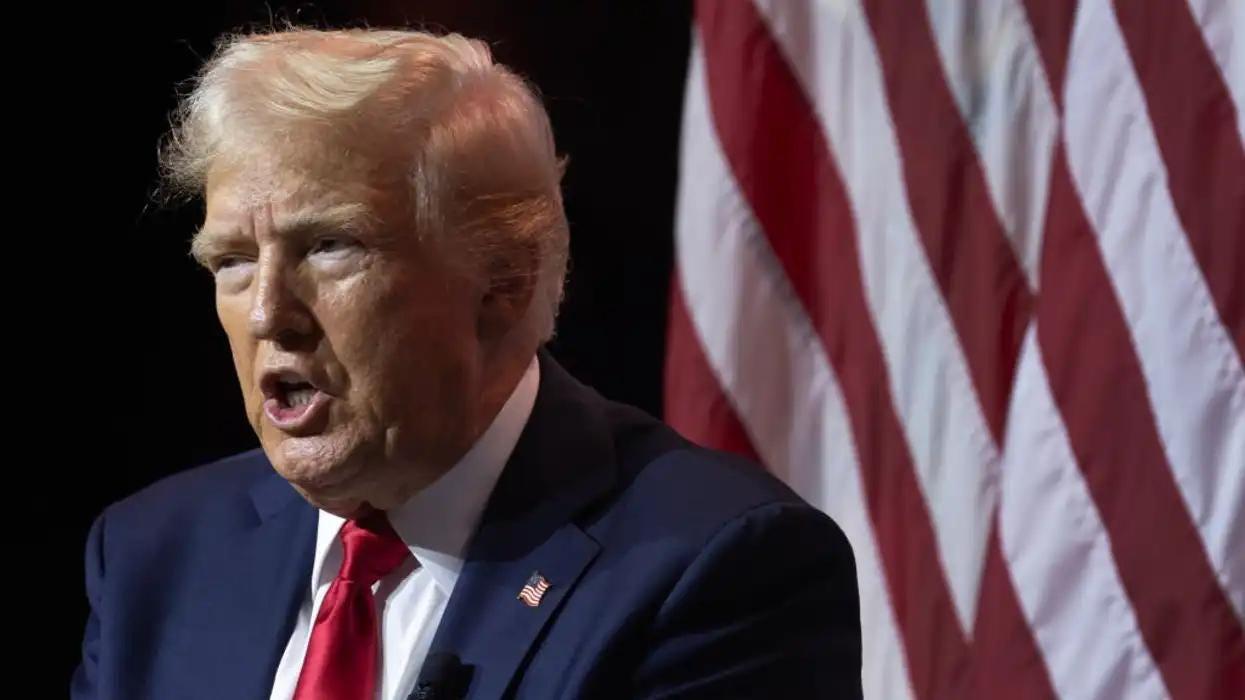
(Photo by Scott Olson/Getty Images)
Trump Is Accelerating a Collapse He Did Not Create
The “Yawn” Is Policy
Donald Trump’s dismissal of affordable-housing legislation as a “yawn” is not merely another vulgar presidential aside. It accurately describes his administration’s governing choice: leave housing to developers chasing the highest returns, impose tariffs that raise construction costs, and offer no coordinated public response as ownership slips beyond the reach of younger and lower-income Americans.
That choice has identifiable beneficiaries. Developers build expensive housing because wealthy buyers produce larger profits. Banks collect interest from increasingly costly mortgages. Existing property owners gain from scarcity. Renters absorb the consequence. Calling this a market outcome disguises the government’s role in preserving the rules that produce it.
Help fuel the work. Independent analysis doesn’t fund itself:☕ Buy us a coffee
The Republican Party has the institutional power to intervene and declines to use it. Trump’s indifference is therefore consequential, but it is not solitary. His party enables the policy, while private capital decides what gets built and for whom. The result is not governmental absence. It is government protection of profitable scarcity.
Tariffs Send the Bill Downward
Trump’s trade policy is sold as national strength, but the reported mechanism is painfully ordinary: tariffs make imported materials more expensive, alienate trading partners, and give those partners reasons to redirect commerce elsewhere. Canadian lumber and energy do not vanish when Washington becomes hostile. Canada finds other customers.
American workers and tenants then pay through higher construction, heating, transportation, and rental costs. The administration creates the disruption; corporations transmit the costs; ordinary households receive the invoice.
Describing this as America “cutting itself off” risks making an executive decision sound like a natural retreat. Trump is using presidential power to coerce trading partners. Those countries are responding strategically, not irrationally. The damage arises from a deliberate policy whose architects expect domestic consumers to endure the fallout.
Cronyism Wearing Market Rhetoric
The supposed contradiction between Trump’s housing policy and his industrial policy is only a contradiction if Republican rhetoric is taken seriously. Housing is left to the market when intervention might help renters. Government ownership, subsidies, or influence become acceptable when favored corporations stand to benefit.
That is not principled support for free enterprise. It is selective state power: passivity for social need, activism for connected capital.
The interview points to government investment in Intel and unusually close ties between the state and major technology companies. Those details suggest a system in which political discretion increasingly determines which firms receive protection. The state has not withdrawn from the economy. It has become more openly available to powerful insiders.
The Personality Story Conceals the Structure
The source article’s claim that Trump has “permanently destroyed” the working class and America’s global standing outruns its own evidence. Wolff explicitly argues that the erosion of American supremacy largely predates Trump. Trump is an accelerant, not the sole author.
That distinction matters because personalized blame can become a form of political misdirection. If one man supposedly destroyed an otherwise functional order, removing him appears sufficient. But the interview describes something larger: decades of rising inequality, profit-driven housing scarcity, imperial overreach, dependence on unequal global arrangements, and a political establishment unable to acknowledge changed conditions.
Trump owns his decisions. Republicans own their support. But Democratic leaders are not absolved by appearing less erratic. Wolff’s criticism of Chuck Schumer and other establishment figures identifies a broader institutional cowardice: leaders continue speaking as though the United States retains uncontested power because admitting decline would expose how little their governing assumptions can explain.
Decline Managed as Punishment
The larger pattern is an elite response to diminishing power. Abroad, the United States applies coercion to countries increasingly able to resist it. At home, political leaders shift the cost of that failed coercion onto renters, workers, and consumers. When supremacy cannot be restored, hardship is presented as patriotism, market discipline, or unavoidable adjustment.
Trump makes this arrangement unusually crude. He boasts about domination, treats public need as tedious, and uses state power selectively for political and corporate advantage. But the system beneath him is older: wealth determines investment, concentrated power escapes accountability, and national decline is managed by making less powerful people pay for it.
The central failure is not that American elites misunderstand what is happening. It is that acknowledging the structure would implicate them. So they preserve the fiction of temporary disorder while the country becomes more unequal at home, more isolated abroad, and more dependent on coercion to maintain privileges it can no longer secure through consent.
Thanks to Alter Net
Source: Left behind and bleeding out: Top scholar warns Trump’s damage is permanent
Systemic Error is a reader-supported publication. To receive new posts and support my work, consider becoming a free or paid subscriber.
We warned them.We told them.We shouted from the rooftops.We plead.We begged.They didn’t listen.Now, we all will suffer.Y’all know what to do, right?VOTE BLUE! 💙Vote as if your life — nay, our country — depend on it.Because, this time, and every time, it does.
This is a public episode. If you'd like to discuss this with other subscribers or get access to bonus episodes, visit paulstsmith.substack.com/subscribe


