


BU BÖLÜM HAKKINDA
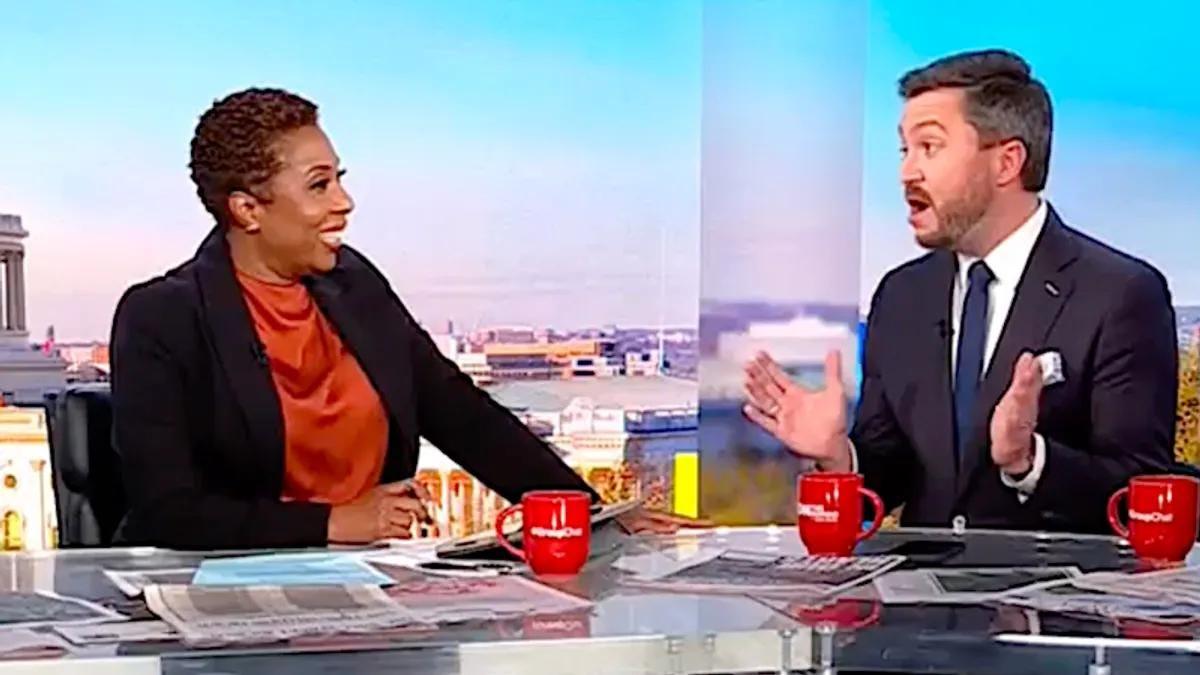
Audie Cornish and Terry Schilling/CNN
The $5,000 Promise Is Patronage Dressed as Populism
A Price Tag in Search of a Policy
Donald Trump’s proposed $5,000 payment to American voters is not presented here as part of a coherent economic program. It is a campaign promise with an estimated $1.3 trillion cost, issued while Republicans are again invoking a national debt approaching $40 trillion. The contradiction is not incidental. It exposes how quickly the party’s fiscal doctrine disappears when spending can serve Trump’s electoral interests.
Power Makes the Promise
The central actor is not an abstract “political system,” nor the economically anxious voters whom commentators may accuse of wanting a handout. Trump made the offer. Republican officials and advocates decide whether to resist it, rationalize it, or quietly abandon their stated commitments.
Help fuel the work. Independent analysis doesn’t fund itself:☕ Buy us a coffee
Terry Schilling chose rationalization. Instead of defending the proposal on its actual terms, he supplied a theory Trump had not articulated: currency debasement, lost jobs, a “K-shaped economy,” and the supposed necessity of redistribution. Audie Cornish identified the maneuver precisely. Schilling was inventing an intellectual framework after the fact for a politician who had simply promised to distribute money.
Fiscal Conservatism as Stage Furniture
Republican concern about debt functions less like a governing principle than a weapon with selective deployment. It becomes urgent when spending can be blamed on Democrats and negotiable when Trump proposes a trillion-dollar electoral inducement.
Cornish’s joke about fiscal hawks periodically emerging from their caves lands because the hypocrisy is institutional, not merely personal. The same political coalition that condemned pandemic-era payments as inflationary can be expected to discover exceptions when its leader wants his name attached to the check.
This is not ideological evolution. It is submission disguised as policy flexibility.
The Inflation Argument Vanishes on Command
Lulu Garcia-Navarro highlighted the immediate policy contradiction: Republicans attacked Democratic relief spending as inflationary, yet Trump’s defenders are now expected to explain why another enormous cash distribution is prudent.
Schilling’s answer effectively conceded the point. Calling the proposal a “redistribution program” does not resolve its inflationary implications, identify a funding source, or explain why an untargeted payment would repair decades of offshoring. It merely swaps slogans until the original question disappears.
The jobs shipped overseas are real political terrain. In this exchange, however, they function as cover for a proposal that offers no described mechanism for restoring them. Economic injury becomes a rhetorical permission slip for whatever Trump announces next.
Buying Support, Then Calling It Strategy
Garcia-Navarro’s blunt description—money offered for votes—cuts through the manufactured complexity. Based on the account provided, the payment is not tied to industrial investment, public services, worker bargaining power, or any durable change in economic structure. The benefit is immediate, personalized, and politically legible; the cost is dispersed across the federal balance sheet and the wider economy.
That is patronage logic at national scale: use public resources to create private gratitude toward the leader. The weaker actors—the voters navigating inflation and inequality—will predictably be mocked as greedy or gullible. But they do not control federal spending or manufacture campaign promises. Political leaders do.
Loyalty Is the Governing Doctrine
The larger pattern is the collapse of professed ideology under personalized power. Debt restraint, inflation anxiety, hostility to redistribution, and opposition to “socialism” remain useful Republican messages only until Trump contradicts them. Then loyalists are tasked with converting impulse into doctrine.
Schilling’s performance reveals how that system sustains itself. The leader announces. Surrogates retrofit. Institutions accommodate. Voters absorb the consequences. What looks like policy confusion is better understood as hierarchy: consistency is optional for the person with power and mandatory only for those expected to defend him.
Thanks to Raw Story
Source: ‘He doesn’t say that!’ CNN host cackles as conservative tries to defend Trump’s promise
Systemic Error is a reader-supported publication. To receive new posts and support my work, consider becoming a free or paid subscriber.
We warned them.We told them.We shouted from the rooftops.We plead.We begged.They didn’t listen.Now, we all will suffer.Y’all know what to do, right?VOTE BLUE! 💙Vote as if your life — nay, our country — depend on it.Because, this time, and every time, it does.
This is a public episode. If you'd like to discuss this with other subscribers or get access to bonus episodes, visit paulstsmith.substack.com/subscribe


