


WEBVTT
00:00:39.600 --> 00:00:46.000
Welcome back, folks, to episode 160 of the Running Man Self-Regulation Skills Project Podcast with me, your host, Dr.
00:00:46.159 --> 00:00:53.679
Armando Dominguez, PhD in health psychology, licensed professional counselor, and an adjunct professor at a local community college.
00:00:53.840 --> 00:01:12.079
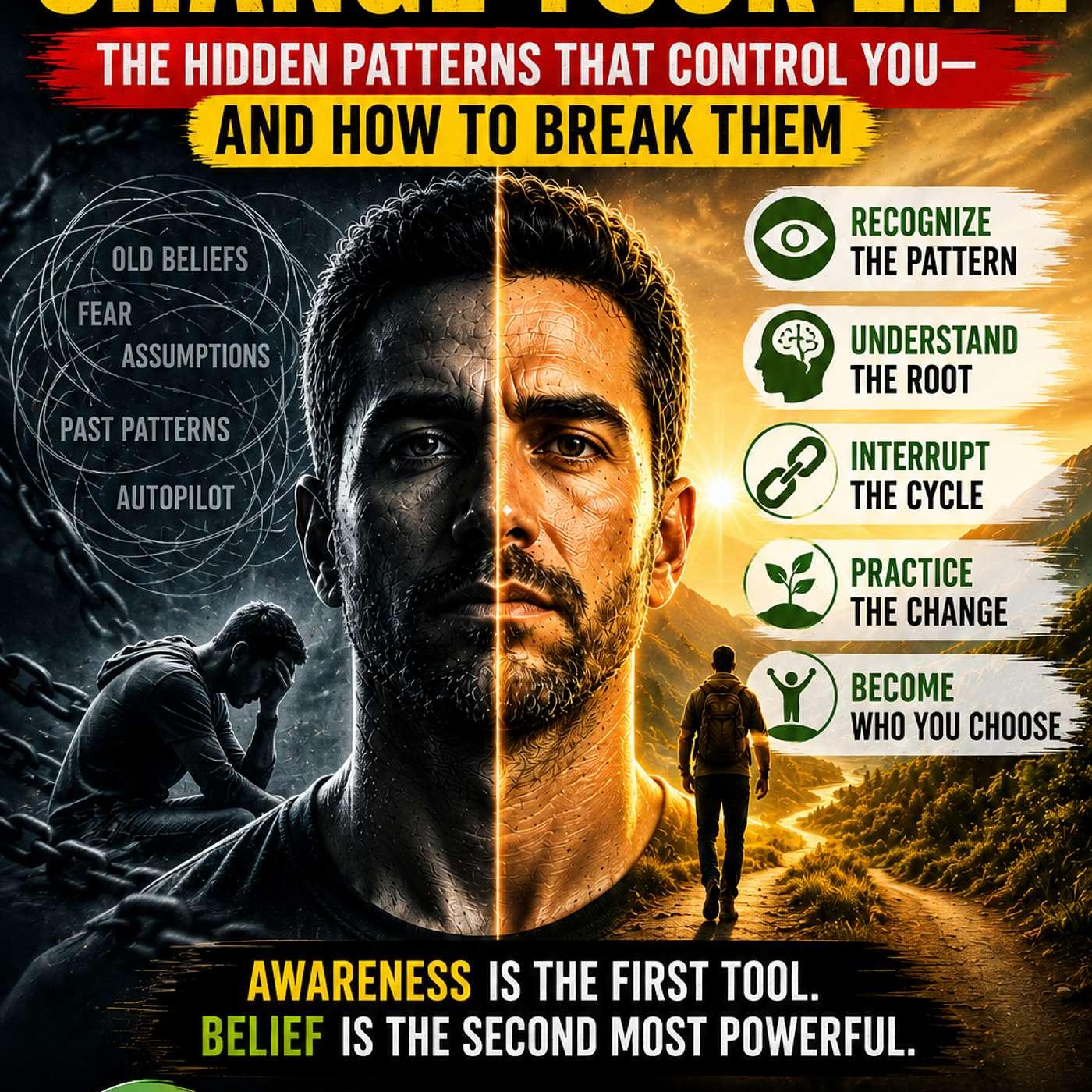
And what we're going to be discussing today is going to be pattern breaking behavior and also pattern recognition, the media honey as of late that everybody likes to think they're really particularly good at, and we all are to a degree, but also how this relates to belief structures that create change and transform.
00:01:12.480 --> 00:01:14.799
And we will move the discussion in that direction.
00:01:15.040 --> 00:01:25.519
So to start the discussion, the reason I said things the way I did, I was being cheeky, is that we all tend to believe ourselves to be a little more skilled at things that we are supposedly good at.
00:01:25.760 --> 00:01:35.359
Pattern recognition is one that is not necessarily a skill built over time, even though you can sharpen it uh with experience, but we all kind of have.
00:01:35.599 --> 00:01:43.040
This is something that's an old program that is within our subconscious programming that protects us and keeps us safe.
00:01:43.200 --> 00:02:10.319
There was a book that I'd read a number of uh months back, actually last year, having to do with the fact that often whenever we are confronted with patterns that are very complex, that it awakens aspects of us that may or may not have had to do when, in the evolutionary sense, we were more arboreal in nature, meaning that we're hanging out in trees and surrounded by leaves and being able to differentiate a leaf from something that was edible, an insect, for instance.
00:02:10.560 --> 00:02:12.960
We also know that there are arboreal snakes.
00:02:13.039 --> 00:02:14.560
Snakes climb trees.
00:02:14.800 --> 00:02:34.639
And if we were hiding up in trees, we have to be able to recognize when they were hanging out in trees before we got on that tree, so to speak, and be able to tell when the pattern of leaves was no longer a pattern of leaves, but rather a pattern resembling leaves that may or may not be putting my hand on uh a snake that could be venomous and potentially dangerous to us.
00:02:34.879 --> 00:02:51.680
So there are some things that are very deep within us that have to do with recognizing patterns to help alleviate uh the ourselves of a dangerous environment by not being there too, uh, by being able to recognize where it's at and also determining um evasive action is necessary.
00:02:51.919 --> 00:02:58.879
So the reason this is the beginning of the discussion is because many patterns that we pay attention to are behaviors.
00:02:59.039 --> 00:03:07.120
We tend to really focus on what uh the internet and books are talking about most right now, and that's recognition of pattern behaviors.
00:03:07.360 --> 00:03:14.960
Now, everything that we do in a life, it doesn't matter who you are, at some point we get to living our lives and we repeat things.
00:03:15.120 --> 00:03:20.800
Not because we're boring or we have nothing else, it's just that by nature we're expedient.
00:03:21.039 --> 00:03:25.280
We don't like to waste energy on things that are absolutely new for too long.
00:03:25.520 --> 00:03:38.639
We can have fun and go to Disney and jump around in the bouncy house, and it can be just a really good time, but you still get mentally exhausted and emotionally and physically exhausted as you would if you were doing day-to-day activity.
00:03:38.800 --> 00:03:47.840
But if something is day-to-day activity that is repetitious, such as his work, uh doing paperwork or working at a warehouse or caring for children, that's chaos.
00:03:47.919 --> 00:03:55.280
That may not be particularly repetitive in all areas, but there are some repetitions of behaviors that you consider regular, consistent, and expected.
00:03:55.439 --> 00:03:58.240
So there's a measure of prediction that arises from that.
00:03:58.560 --> 00:04:02.960
Now, why pattern break in behavior are we going to be talking about today?
00:04:03.199 --> 00:04:05.759
The reason is not all patterns are healthy, of course.
00:04:05.919 --> 00:04:38.319
And whenever we look at, for instance, addiction, I teach the addiction science courses at uh the community college that I teach at, and I love teaching those because there's so much that is about not only behavioral pattern, but also thought pattern, belief pattern, and pattern of expectation and prediction that is closely tied to the addictive substance or behavior that is an addiction or an obsessive compulsion, for instance, that is underlying, and we don't always think about that when we discuss those things that are addictive to us.
00:04:38.560 --> 00:04:45.759
And uh I will give us a very distinct and I'm not gonna say healthy, but really common, for instance, and that would be breakfast.
00:04:45.920 --> 00:04:59.040
Whenever we eat breakfast, what are the things that we've been taught since uh Kellogg came up with the cereal that was able to get soaked in cold milk and eaten that way or warmed for that matter, whenever oatmeal was the institution?
00:04:59.279 --> 00:05:02.560
Well, part of it is that they added sugar to some of these things.
00:05:02.879 --> 00:05:06.639
Sweet cereal made kids eat easier.
00:05:06.800 --> 00:05:10.959
That means that parents didn't have to struggle to get their kids to eat their oatmeal, so to speak.
00:05:11.120 --> 00:05:21.040
And um whenever they were taking in their grains and oats and fiber that were necessary, that would uh actually create increase better health and temperance, according to Kellogg, among other things.
00:05:21.279 --> 00:05:26.000
But the idea was this, you know, we were able to get our daily vitamins and the health thing was the deal.
00:05:26.240 --> 00:05:28.000
At least that's what was being marketed to us.
00:05:28.079 --> 00:05:29.759
It was much more nefarious than that.
00:05:30.000 --> 00:05:54.160
But the repetition of the daily familial expectation during an in early industrial society, when we started growing in industry and mechanistic things in the late 1800s and 1900s, we started seeing people moving toward cities where the work was away from rural communities, where there was still a lot of flexibility in not only how one ate, but what one ate, and um also what one did throughout the day.
00:05:54.319 --> 00:06:08.480
And um not nearly as patterned or regular, especially if there was a paycheck involved, where there was a very expected pay rate, a very expected pay time, and a very expected uh output in the sense of what you could buy with what you'd earned.
00:06:08.720 --> 00:06:16.079
So we have a lot of patterns going on here that start to have these beliefs of expectation, in many cases, prediction as well.
00:06:16.319 --> 00:06:20.319
And there's some substance to it in the sense that we are getting a payoff.
00:06:20.480 --> 00:06:24.480
At some point there's dopamine, and I'm gonna do this because I'm getting payoff and getting fed.
00:06:24.560 --> 00:06:30.959
I have a house now, I have children in a car and uh significant other, and therefore we are living the life.
00:06:31.199 --> 00:06:38.240
But we have enough people out there within the city that we're all doing very similar things with their own i idiosyncrasies, of course.
00:06:38.399 --> 00:06:41.680
But the thing is, you know, culture is part of it that plays into it.
00:06:41.839 --> 00:06:43.279
But most everyone eats.
00:06:43.519 --> 00:06:52.480
Most everyone came to work at a certain time if they were working in industry and they ate, they brought their lunch, and they would dress a certain way, wear certain equipment.
00:06:52.800 --> 00:06:59.199
And inadvertently we started seeing that there are other people that are similar to us, regardless of where they came from.
00:06:59.360 --> 00:07:05.519
They would dress like us, they would wear hard hats like us and in work attire and do work similar to what we were doing.
00:07:05.759 --> 00:07:20.720
And it became an ingrained thing in that subconsciously we often will consider that like acceptance into the tribe, so to speak, whenever we're simpler cave people a long time ago living on the plains, hoping for the best and living through the worst in many cases.
00:07:20.959 --> 00:07:32.240
But the idea is this we have suggestions from our environment where we're at, that we immerse ourselves into industry to provide for family and that sort of thing.
00:07:32.399 --> 00:07:51.759
And those are important things to really take into consideration because those are the things that underlying that uh is a belief driven by what it is that my payoff may have been initially, and they evolve over the time, but the evolution isn't always that the idea or the motivation gets sophisticated, it just gets practiced.
00:07:51.920 --> 00:07:54.399
And back to the idea of expediency.
00:07:54.720 --> 00:07:56.879
We are not energy wasters.
00:07:57.120 --> 00:08:07.600
So if you get very familiar with a pattern, we lose less energy and we use less energy in doing those things because we become expedient, we become very efficient.
00:08:07.759 --> 00:08:30.800
Just like whenever we sit too long, uh our legs start to get a little weaker and our glutes get weaker, and we have back issues, but we get really, really expressively good um at doing things with our hands, computer work, reading, writing, that sort of thing at a desk that to the detriment of our body, our body no longer is trying to build muscle because we're not flexing those things walking over uneven terrain.
00:08:31.040 --> 00:08:49.120
Instead, we're seated in a chair and we become very efficient at that, and our body starts to change and shift and mold to that environment that I'm in most frequently without my consciously thinking about it in the sense I'm choosing to let my legs atrophy, for instance, and that's an extreme because I need to make money doing this.
00:08:49.200 --> 00:08:53.759
But then we have the the payout in the sense that we start having physical maladies because of that.
00:08:53.919 --> 00:09:07.759
The pay is good, but the environment is not conducive to having a healthy, mobile body, and that's where we start having to see these health behaviors to where we have to get up uh at least once or twice every hour to make sure you shake your legs out, walk around a little bit if you can, if the work allows it.
00:09:08.000 --> 00:09:13.279
But in the same sense, whenever you're doing any kind of production work, you don't have that luxury.
00:09:13.440 --> 00:09:20.320
You have to sit for extended hours, and you see the body types change over time because of being seated, because of being standing.
00:09:20.399 --> 00:09:24.320
There's morphology involved, which means basically change of the body structure.
00:09:24.480 --> 00:09:29.679
And not unlike that, we become efficient at doing what we do, but inefficient at other things.
00:09:30.000 --> 00:09:34.320
So other areas in our lives, as far as activity goes, fall away.
00:09:34.480 --> 00:09:44.960
The same thing that happens to us when we behave a certain way, uh believe a certain way, there are other areas of our life in our beliefs and our thinking that tend to fall away if we underuse them.
00:09:45.200 --> 00:09:56.320
So the important thing about this pattern breaking that we're talking about and pattern recognition as far as behavior, we're going to look at, well, what do I have to do to change behaviors that are, let's say, unhealthy?
00:09:56.480 --> 00:10:00.960
My Running Man book is about the resiliency in the face of fight-flight.
00:10:01.200 --> 00:10:05.679
And the idea of change can be very uncomfortable to someone.
00:10:05.840 --> 00:10:12.639
It doesn't mean you're changing your identity or who you are, who you like, or what you do, or how you vote for that matter.
00:10:12.879 --> 00:10:25.840
But the focus of my book is about paying attention to the arousal and the vigilance that arises as a result of something that might come up that I'm not prepared for, I didn't expect, or it's incredibly novel.
00:10:26.080 --> 00:10:36.480
Now, whenever I said those things, those three things by default, if we weren't expecting them, and the heart rate goes up and breathing changes and it's like we're exercising, we're burning more fuel.
00:10:36.720 --> 00:10:40.639
We have become inefficient because now we're dealing with an unknown.
00:10:40.799 --> 00:10:43.279
We're dealing with variables we didn't expect.
00:10:43.440 --> 00:10:53.519
And the expected, no matter how expected it may be, uh, if something unexpected occurs, we become inefficient because we have to deal with more information.
00:10:53.679 --> 00:11:02.399
And it may be something we're familiar with, but because of the pattern in which we're moving, we become inefficient to respond to those things because we're out of practice, so to speak.
00:11:02.559 --> 00:11:08.399
But then there are those things that are literally out of left field, out of alien Roswell, New Mexico.
00:11:08.480 --> 00:11:16.720
Sorry, guys in New Mexico, not knocking y'all, but just saying, since the story's there, I'm gonna use it, um, that is like falling out of the sky, and wow, we've got aliens now.
00:11:16.799 --> 00:11:17.840
What do we do with this?
00:11:18.000 --> 00:11:28.879
And I'm using that as a paradigm because often that's kind of the response we get, and people might over-respond, underrespond, get freaked out, and get stuck in, I don't know what to do with this.
00:11:29.120 --> 00:11:32.559
And we we become inefficient problem solvers.
00:11:32.720 --> 00:11:37.759
And that means that our ability to recognize patterns has gone out the window.
00:11:38.000 --> 00:11:42.159
What we're recognizing is something that does not conform to pattern.
00:11:42.320 --> 00:11:45.279
And not every pattern that we do is a behavior.
00:11:45.440 --> 00:12:00.000
Sometimes we have patterns of thinking that are beliefs that drive us, and we have these assumptions that often give us the answers to how to go about going a direction and being actively problem solving in a more successful way.
00:12:00.159 --> 00:12:03.759
So, not unlike a map, you have a compass rose that always points north.
00:12:03.919 --> 00:12:19.440
And the important thing is here is that many of our assumptions are that they're not the end product, and they won't promise where we're gonna wind up, so to speak, but it points us in the direction of where our problem solving must occur for us to get to where our goal is that we may be envisioning.
00:12:19.600 --> 00:12:32.240
And this is the part I want us to pay attention to, the envisioning, because there is a visual quality to the beliefs that we develop, and the beliefs that we develop over time are usually born of experience, which means we have a visual reference.
00:12:32.399 --> 00:12:43.360
Unless one is born congenitally blind, we have perceptual reference, what we hear, see, taste, touch, smell, in addition to just sight, but largely visual amongst the largest percentage of the population.
00:12:43.600 --> 00:12:47.759
And we need to keep it in that context because I'm not knocking on people that are without sight.
00:12:47.919 --> 00:12:55.919
What I'm pointing out is that if you do have sight, you fall within the largest contingent of humans that perceive visual first at a distance.
00:12:56.080 --> 00:13:02.960
And that's where many of our assumptions and pattern recognition beh of behavior uh become ingrained in us.
00:13:03.039 --> 00:13:04.799
We start recognizing by sight.
00:13:04.960 --> 00:13:09.600
So vicariously, we learn by watching patterns, and hey, I want to do that.
00:13:09.679 --> 00:13:14.480
And that desire to have that skill, we start to follow along and mimic and mirror those things.
00:13:14.639 --> 00:13:15.919
That's a visual thing.
00:13:16.240 --> 00:13:22.480
So once again, not harping on any uh group out there that is uh limited in sight.
00:13:22.559 --> 00:13:24.000
I used to work as an optician.
00:13:24.080 --> 00:13:30.879
I have a great deal of respect for those people that do struggle with such things, and um used to make glasses and contacts for a living.
00:13:31.039 --> 00:13:36.240
And um I got a great deal of insight into people that are sightless or struggle with limited sight.
00:13:36.480 --> 00:13:51.039
So that being said, uh my caveat is this you know, we have to be careful in how we speak, yes, but this isn't something that is 100% um applicable to every human on earth, but to those people that are largely all human, that's a large percentage still.
00:13:51.200 --> 00:14:04.879
Um so therefore, this is a very useful model as far as the running man model I provide for dealing with stress, because it affects how we think, what we expect, and how we recognize and pattern, but also what we believe dynamically.
00:14:05.120 --> 00:14:10.480
So this model applies from the least aroused and least vigilant to where I'm most comfy.
00:14:10.639 --> 00:14:12.720
I'm not in the bouncy house getting overly excited.
00:14:12.799 --> 00:14:24.159
I'm sitting down, maybe drinking coffee and reading a newspaper, if anyone still does that in the physical sense, and also just being able to kind of think uh slowly and perceive and ponder.
00:14:24.240 --> 00:14:54.080
And this is where we are at our safety is resting and digesting, maybe even making uh common ground with somebody across a coffee table or at a coffee place, just hanging out and enjoying discussion, where there's the least amount of environmental threat to the gradation and along the continuum to more threat, more stress, more things happening, maybe not dangerous, but a lot of chaos, people moving in and out of the Starbucks, for instance, and then all of a sudden it's like no longer fun to drink coffee and I can't talk, it's so noisy we can't hear each other.
00:14:54.240 --> 00:15:02.159
And then to the point where there's an absolute disruption, maybe there's, for instance, a car wreck outside of the Starbucks and it gets everyone's attention and everyone is in shock.
00:15:02.399 --> 00:15:23.120
So I've just given you kind of a hopefully nothing like this will happen anytime soon, uh, a gradation along the continuum of the least amount of vigilance and stress to a higher level to wherever there's a lot of novelty and unknown to the point of, wow, there's something dangerous going on outside or something happened that is threatening uh car wreck once again.
00:15:23.360 --> 00:15:26.720
And uh understand that this model applies for a reason.
00:15:26.960 --> 00:15:42.559
And what I want to do is point out that um pattern breaking relative to an addiction, for instance, and I do take addiction science on closing the loop here, is that we often get stuck in looking at the behavior on the outside.
00:15:42.799 --> 00:15:49.840
This person's using amphetamines, this person's using alcohol, this person is shopping, and shopping to excess.
00:15:49.919 --> 00:15:56.159
Nothing wrong with shopping in particular, we have to go and do stuff, but whenever it's excess and compromises your life, that's a problem too.
00:15:56.399 --> 00:16:09.759
And other types of addictions are probably a little less uh a little less comfortable to talk about because they're very personalized, but there's also this sense of stigma wherever there's a quality of judgment and lots of shame tied to this.
00:16:10.000 --> 00:16:12.720
Shame and guilt are the two things that we hear most about.
00:16:12.879 --> 00:16:21.039
Shame is something that indicates to us that as part of the group that we are not meeting the expectations and values of those around us.
00:16:21.279 --> 00:16:28.720
And this will put some people in higher alert when I say that, and I say it on purpose, not because what I'm saying is that we should all conform.
00:16:28.960 --> 00:16:31.840
It's just that when we're growing up, we're part of the social scheme.
00:16:32.080 --> 00:16:36.000
Even people that break rules and laws know what the rules and laws are.
00:16:36.080 --> 00:16:45.919
They're just choosing not to follow them in many cases, sometimes out of necessity, sometimes just because they'd rather do that than earn a living, and I'm gonna steal instead from someone else, for instance.
00:16:46.000 --> 00:16:50.320
And that's uh an example, but not an example that covers all, but it makes sense.
00:16:50.480 --> 00:17:08.720
And we have to pay attention to the fact that when we're younger, the patterns of behaviors we pick up from our caregivers, if they're particularly rough with us, or let's say their uh emotional regulation needed some help, then we become very, very unable to really connect and trust people.
00:17:08.880 --> 00:17:10.960
That means when I trust people, I get hurt.
00:17:11.119 --> 00:17:16.559
When I trust people, things hurt, or maybe I can't trust people when they want to get close.
00:17:16.720 --> 00:17:24.960
And whenever some people do show kindness and actual genuine care, that it's hard to connect with them because we're expecting the other shoe to drop.
00:17:25.119 --> 00:17:34.720
We have by our experience learned patterns of behavior that in my experience indicated pain, loss, shame, suffering, belittling, humiliation, this sort of thing.
00:17:34.880 --> 00:17:41.279
And therefore, my interactions with other people are very guarded and careful, and it's hard for it even for me to make connections.
00:17:41.519 --> 00:17:43.759
And uh that can be problematic long term.
00:17:44.000 --> 00:17:45.759
Notice the things that I was mentioning.
00:17:45.839 --> 00:17:50.559
These are all patterns that are recognized that in behavior we have to make sense of.
00:17:50.720 --> 00:17:52.799
But we're talking about pattern-breaking behavior.
00:17:52.960 --> 00:18:07.839
What are the patterns that I need to break so I can release myself from those things that I practiced and habituated to, and most of it I didn't want to become skilled at, but I had to as a result or as a necessity to get the things I needed, for instance.
00:18:08.079 --> 00:18:15.519
And um these things, whenever I start to stop them and question and realize that that's not me.
00:18:15.759 --> 00:18:17.920
Those are the things that I did when things were dangerous.
00:18:18.000 --> 00:18:27.039
But now that you're older and you get to choose to be who it is you want to be and how you want to be, just because you release those patterns doesn't mean you're releasing or losing yourself.
00:18:27.279 --> 00:18:30.640
What you're losing are the things that you may associate with self.
00:18:30.880 --> 00:18:45.039
And the podcast that I did the other day, I believe it was episode 159, that talks about how many times we tend to confuse our level of chronic stress um as part of the constituent of what we call self.
00:18:45.279 --> 00:18:54.400
Not only how I respond to it, but also I'm my mo most authentic self whenever I'm around this level of chronic stress or chronic stress.
00:18:54.559 --> 00:18:55.920
Oh yeah, I get excited.
00:18:56.000 --> 00:19:08.559
Well, we confuse our excitement for normal, and that may not be normal, it just may be the chronic uh what I call normal that occurs in my life that's not healthy, for instance, but it's also not good.
00:19:08.799 --> 00:19:28.240
But then we start losing who it is that we consider ourselves or who I identify as as far as me, not necessarily the clothes I put on, but rather the the mental nature of myself that I consider and recognize as me, and um being able to separate that by realizing that I am not my stress, I am not my stress response.
00:19:28.400 --> 00:19:32.559
Now, these are the reasons that I respond that way, gets us to a point where we can change.
00:19:32.640 --> 00:19:35.519
It doesn't mean you will change, but let's say you want to.
00:19:35.759 --> 00:19:39.759
Self-regulatory skill is about creating transformation and change in the long term.
00:19:39.920 --> 00:19:50.240
And how do we do that so it sticks, so the change stays, the transformation stays, is the question that we're answering, and that I've been answering with this podcast for three years now.
00:19:50.400 --> 00:20:03.519
And that is that by regulating the level of stress that we experience, the level of vigilance, whatever changes and patterns that we do that we want to instill, we have to one, be in a safe space to condition that.
00:20:03.759 --> 00:20:08.319
We also have to repeat that means we've got to gain skill by doing this over and over.
00:20:08.559 --> 00:20:21.440
And you don't have to do it 30 or 40 times in a row, but rather practicing it mindfully and choosing to do this, and over time it becomes the preferred behavior and preferred state, and therefore we get more skilled at it.
00:20:21.519 --> 00:20:27.839
The more skilled you become, the more likely we are to be able to maybe not break the pattern, but change the pattern.
00:20:28.000 --> 00:20:33.759
Because that pattern of behavior existed for a reason and it served a purpose, and it's not going to get erased and go away.
00:20:33.839 --> 00:20:45.839
But if you practice the one that you prefer more frequently, the other one that I don't like may be the weaker pattern that's still going to be there, but it's not going to be the one that leads in.
00:20:46.000 --> 00:20:55.119
It's not going to be the response that I I want that's going to be driving, but rather the one that I choose to be driving, and that's going to be the one that I develop.
00:20:55.279 --> 00:20:59.519
Now, what is going to be a good way to break pattern?
00:20:59.839 --> 00:21:09.119
One of the first things is recognition, and I've been kind of speaking it as we're going through this, getting to this point, and that's kind of how our thought pattern should be to be able to ask questions.
00:21:09.279 --> 00:21:11.279
Recognize, okay, is this just thinking?
00:21:11.359 --> 00:21:12.160
Is it beliefs?
00:21:12.319 --> 00:21:13.359
Where did I get this?
00:21:13.519 --> 00:21:15.920
And how much does my environment influence me?
00:21:16.000 --> 00:21:17.440
Is it the people that I'm around?
00:21:17.599 --> 00:21:32.240
We're talking about industry and the industrial revolution, where people started acting and looking and dressing a certain way because they moved into areas that required them to dress a certain way for safety, steel toe uh boots and metal hats and whatnot to protect their noggins.
00:21:32.400 --> 00:21:40.079
And um, these things are necessities, as are behaviors to that are necessary to be able to live the lives uh that we live.
00:21:40.319 --> 00:21:44.880
So pattern recognition, the things that are recognized whenever people get stressed.
00:21:45.119 --> 00:21:51.119
Often this is closely tied to people calling these things triggers that start those behaviors or patterns.
00:21:51.279 --> 00:21:54.799
And the term trigger makes it sound almost like it's a medical thing.
00:21:54.880 --> 00:21:59.759
It's not, it's just a recognition of a pattern that's triggering, in quotes, the pattern being.
00:22:00.079 --> 00:22:04.960
Behavior that I use to help me alleviate the discomfort that may arise because certain things are going on.
00:22:05.119 --> 00:22:07.440
And this may sound like I'm going around in circles.
00:22:07.599 --> 00:22:08.079
I am.
00:22:08.240 --> 00:22:18.000
And it's one continuous circle of recognizing what's going on, what's happening to me, what's drawing that out of me, or what's pushing that out of me, if you will.
00:22:18.160 --> 00:22:19.839
And often it's environment.
00:22:20.000 --> 00:22:23.920
And many times the environment doesn't have to be triggering anything on the outside.
00:22:24.000 --> 00:22:26.640
And this is where we go and step into the power of belief.
00:22:26.799 --> 00:22:38.160
Often it can be my own thoughts whenever I am at the least level of stress, whenever I have the most time to think, that I start to worry and and think and loop on things.
00:22:38.240 --> 00:22:41.359
This is called rumination about things that aren't happening.
00:22:41.440 --> 00:22:44.799
And it's almost like we're preparing for a game that isn't happening.
00:22:44.960 --> 00:22:50.319
But it's one thing that we can say that we've experienced stress in the past, and we don't want to hurt like that again.
00:22:50.480 --> 00:23:00.960
So if our body's telling me, yeah, you're vulnerable because you're not engaged or you're not trying to stay busy or you're not giving yourself busy work and then you're doing some wrong, that's a shame thing.
00:23:01.200 --> 00:23:02.000
That's a shame thing.
00:23:02.079 --> 00:23:04.640
We start feeling guilty because we feel like we're not doing enough.
00:23:04.799 --> 00:23:12.240
And you don't have to be overloading yourself and burdening yourself with tasks and skill building to be able to say, I'm a better person.
00:23:12.319 --> 00:23:16.960
That has nothing to do with the value of you as a human of being a good person.
00:23:17.119 --> 00:23:19.279
You can develop some really heinous skills.
00:23:19.359 --> 00:23:21.920
It's not going to make you a nice person because you're doing that.
00:23:22.079 --> 00:23:24.160
So what we're trying to do is keep things in context.
00:23:24.240 --> 00:23:30.240
Those things that I repeat the most are the things that I tend to become more effective at doing and become efficient.
00:23:30.480 --> 00:23:46.799
Now, the power of belief, this is something that's really often underlauded, but plays a really big part in what it is that we call behavioral change and addiction development and also the breaking of patterns that keep us addicted, so to speak.
00:23:47.039 --> 00:23:49.920
And often that is the visual aspect.
00:23:50.160 --> 00:23:53.839
Now, whenever we recall, we're going to go back to my favorite lemon.
00:23:54.000 --> 00:24:18.000
And uh, whenever you think about a lemon or remember a lemon or eating something sour, tasting something good that makes you salivate, we have dropped pituitary hormone as a result of a flash of a memory that is visual, that's from our occipital region that before it even gets to our higher cognitive process or executive function, the prefrontal cortex, has already elicited a physical response that made me salivate.
00:24:18.160 --> 00:24:20.799
I have gustaceation, my stomach starts to growl.
00:24:20.960 --> 00:24:25.759
And these are real effects based on our body believing what it is that we just thought or brought up.
00:24:26.000 --> 00:24:30.240
We didn't have to convince ourselves to tell us you need to believe this or I believe this to be.
00:24:30.480 --> 00:24:35.680
We didn't have to inculcate ourselves and take ourselves to to church, school on Sundays to develop this.
00:24:35.839 --> 00:24:38.000
This just came as a result of a thought.
00:24:38.160 --> 00:24:46.559
And I say this in question because yes, it is because of a thought, a visual thought, not even a discrete I'm reading this out of a book thought.
00:24:46.720 --> 00:24:49.599
And yet it's compelling enough for our body to respond.
00:24:49.759 --> 00:25:06.640
And belief is just as much physiologically born as it is from the higher executive function aspect, and it's much faster than our executive function because that's our probably our secondary system, as Daniel Kahneman calls it in his uh book, Thinking Fast, Thinking Slow.
00:25:06.799 --> 00:25:13.039
And um the first level of thought is one that has to do with organismic survival.
00:25:13.119 --> 00:25:20.640
So visualization is like that pattern recognition of snake pattern that says that's not a leaf, that's not food, and I better get out of this tree.
00:25:20.880 --> 00:25:22.640
And uh, it's a very deep thing.
00:25:22.880 --> 00:25:32.400
But that's also why many times we tend to believe things based on what they look like versus what's actually happening, because that's actually telling us to get out of there.
00:25:32.480 --> 00:25:40.079
This doesn't feel safe, it doesn't feel good before I can ever say the words or make sense of the words to say the statement I don't feel good, in quotes.
00:25:40.400 --> 00:25:42.000
So this is an important thing.
00:25:42.160 --> 00:25:51.359
Now there's a couple of exercises that I'd like you to participate in with me, and um, this is one that uh came out of a book by uh Robert Stone.
00:25:51.440 --> 00:25:54.480
He was a silver mine graduate from the 1970s.
00:25:54.720 --> 00:26:02.160
And basically, if you ever have an issue, let's say, with somebody and you keep ruminating, this is an alternate to rumination.
00:26:02.240 --> 00:26:06.240
This is one wherever you're rewriting the history before it happens.
00:26:06.480 --> 00:26:21.759
And much of this is very subconsciously driven because you're doing what it is that you would prefer to be able to do versus, and this is not something you want to do in an evil sense where you see yourself doing bad things to people, that's not helpful because then you're ingraining more of the negativity.
00:26:21.839 --> 00:26:42.559
And what we want to do is break the pattern of discomfort, break the pattern of aggression or of being hurt, and rather speaking in one's mind in a very rational, reasonable sense, so that way you're not only pro-social, but proactive in the sense that before this happens, that you're going to be able to see this person as a human being.
00:26:42.799 --> 00:26:44.640
So this is the exercise.
00:26:44.799 --> 00:26:48.000
And what we're going to do is just call this the throne, okay?
00:26:48.240 --> 00:26:52.799
And uh there's a little stage in front of you, and I want you to imagine yourself seated in the throne.
00:26:52.880 --> 00:26:58.720
You don't have to see yourself as an observer from the side, and it's all golden and all uh overly over adorned.
00:26:58.799 --> 00:27:06.880
You can just be in a throne, a huge supportive chair where you feel comfortable and you feel solid, you feel grounded, but you also feel safe in it.
00:27:06.960 --> 00:27:11.359
You're not surrounded by cages or separated by plexiglass or anything like this.
00:27:11.519 --> 00:27:12.720
You're just seated.
00:27:12.960 --> 00:27:28.720
But you have a position of authority, and you're in a cushiony seat that is comfy, and you have your arms on the arms of the chair, you have your seat seated in this in the chair, and you have the back supported, so you have a very comfortable position and you breathe.
00:27:28.880 --> 00:27:33.200
What I want you to do is imagine yourself there and there's a stage in front of you.
00:27:33.440 --> 00:27:54.640
And in that stage is a little circular stage, and I'm gonna say this on purpose, kind of like a pole dancer if you've ever been to one of those places or seen them in in the movies wherever you have one person but there's no pole involved, but you have a person literally on an individual circular stage, about eight feet around, and they're standing on it, and they're under a set of lights.
00:27:54.799 --> 00:28:01.039
Now imagine yourself shining a light on this individual, not on their face, but from above, so it's a gentle lighting.
00:28:01.200 --> 00:28:53.680
So if you have, let's say, a color of pink and you associate that with kindness, love, gentility, and you've had trouble with the person that you've been, let's say, at odds with or just not emotionally engaged with in a way that you would consider healthy, see them there, not saying anything, not doing anything, just standing, and then see them shining, rather, the light shining on top of them and down above and around them, just enveloping them, and you just basically talking to them and tell them, hey, I don't like arguing, I don't like how this is going, and just have them there listening, not being persnickety or making faces, not responding, just very neutral faced, wherever there's nothing that's interrupting your message and letting them know that you want to be kind, you want to care, but you can't be taking damage or acting in this way because it makes me feel bad and I don't want to do this anymore.
00:28:53.759 --> 00:28:55.759
I would much rather be at peace.
00:28:55.920 --> 00:28:59.680
And if sign of peace for you is a color blue, you can shine blue.
00:28:59.759 --> 00:29:01.920
Uh, I like the color blue, that works better for me.
00:29:02.000 --> 00:29:06.960
But if pink is better for you where there's that loving kindness instead, then this is something that can help.
00:29:07.119 --> 00:29:07.920
So just see that.
00:29:08.000 --> 00:29:18.000
And once you're able to visualize it and you in your mind are able to talk to them, and even if you have your eyes closed and you're talking to them uh with your mouth out loud, that's okay.
00:29:18.160 --> 00:29:26.079
You can do this with your eyes half open, just kind of half liminally uh visual, but at the same time still half looking at your world outside.
00:29:26.240 --> 00:29:28.559
If you feel safer that way, that's okay too.
00:29:28.799 --> 00:29:51.759
But the idea is see them, the people that you may have contention with, and see that pink light, or blue light in my case, and not the Kmart special, but rather just beautiful uh sapphire light to me is uh lovely and comforting, uh, that will cool your jets in a sense wherever when you see them, you do not become reactive, but instead you're choosing to shine light that is comforting and comfortable and warm.
00:29:52.000 --> 00:30:33.519
And uh this is something that I've not only used, I've been using this since age 14 or 15, but I've seen great effects because often how I arrive subconsciously makes a big difference because often I would start responding in a way, and this is a semi-hyp hypnotic tool, my use, and it's not deep, my you don't have to go into deep trance to do this, but uh the effect is very real, very palpable because people respond differently to you, because your fear reactivity goes down, your fear signaling goes down, and they tend to respond less to that because they're no longer in the predator mode, but rather they they respond in a way that is more blunted, so to speak, and they may not even engage with you because, well, there's no fun in that anymore.
00:30:33.680 --> 00:30:39.599
And um, I've seen that effect work many times whenever I was in the military, whenever I was in junior high and high school.
00:30:39.680 --> 00:30:51.599
And at first I thought, wow, that's magic, when in real reality it worked very magically in the sense that the response was very real and measurable, but also it was all me, how I arrived, our presence.
00:30:51.759 --> 00:30:53.920
My running man model talks about how we arrive.
00:30:54.079 --> 00:30:56.400
Our nervous system is what people run into.
00:30:56.640 --> 00:31:05.440
Whenever people see our our individual space and they're in it where they can talk to us, they've already started responding to our nervous system before words ever exchange.
00:31:05.599 --> 00:31:07.680
So it's a very powerful thing.
00:31:08.240 --> 00:31:13.759
Another exercise, uh other than the one with the stage we just did right now, is called the cave.
00:31:13.920 --> 00:31:15.200
This is something I will credit Dr.
00:31:15.519 --> 00:31:16.079
the late Dr.
00:31:16.160 --> 00:31:22.079
Glenn Morris with in his book Path Notes of an American Ninja Master, and he calls it Damo's Cave.
00:31:22.160 --> 00:31:31.039
Damo was the patriarch that brought Buddhism over the mountains and from the Himalayas into China and actually taught the Shaolin monks to meditate.
00:31:31.359 --> 00:31:32.960
So therefore he named it after that.
00:31:33.039 --> 00:31:42.720
And it's a fine old tradition, but it's one of the finer uh visualizations that's more in-depth that lets you work out the details and the discomforts that you can't do out in this world.
00:31:42.880 --> 00:31:47.920
And it doesn't mean harming or hurting people in your mind, but rather allowing yourself to be creative.
00:31:48.000 --> 00:31:53.680
You can use this tool to create things, and I've used it to find things to work on.
00:31:53.759 --> 00:32:01.279
I've used it in the sense wherever, you know, I have a pool in that cave where I sit in and it's like a bubbling warm pool, and it's helped me heal faster.
00:32:01.440 --> 00:32:08.000
How it works, I can only tell you is that it it uh works with my subconscious mind, and my body does what I tell it to do.
00:32:08.160 --> 00:32:13.279
And sometimes what I tell it to do aren't so much words, but rather the pictures, because it's very simple.
00:32:13.440 --> 00:32:43.440
There's an aspect of us that's always going to be like a child, and it's taking care of that inner child and many of our patterns of behavior that we follow, predictive patterns we learn very young, before we're age three, before we start developing a true sense of uh the beginnings of ego, and being able to speak to our body in the visual sense, in the non-linguistic way, we start talking to it in the the way that it starts making sense of the world by the very first thing that we do, and that's where we start encoding visually.
00:32:43.599 --> 00:32:46.319
So we talk to it through the visual code in our visualization.
00:32:46.480 --> 00:32:57.359
We see ourselves in the cave, it's something we climb up to, for instance, and then we have it set up like in mind the Star Trek, you know, uh captain's chair that I have my first mate and the assistant there.
00:32:57.519 --> 00:33:00.160
And I have a huge screen where I can visualize and see things.
00:33:00.240 --> 00:33:18.880
I have a dojo that I train in, and also have a place where I can go out into expanse and walk out in nature, and you can work stuff out that's uh really kind of fun and imaginative and even um a little uh fantasy-esque in the sense that you can interact with people and put things in there that are comic book like just for fun.
00:33:19.200 --> 00:33:21.359
Sometimes you can go there for a little mental break.
00:33:21.519 --> 00:33:30.160
I used to do this whenever I was working at a retail establishment, and I had literally an hour for lunch, but I would always take my homework with me.
00:33:30.319 --> 00:33:34.799
I would be doing statistics homework, and I would take a book, a science fiction book to read.
00:33:34.880 --> 00:33:36.720
And I always gave myself three options.
00:33:36.799 --> 00:33:43.599
Whenever I'm done, I can either read my science fiction for fun, I would enjoy things that way, that was payoff, or I could take a quick nap.
00:33:43.759 --> 00:33:56.720
Sometimes I needed that, or sometimes I would meditate, and sometimes whenever I would meditate, I call this meditation, um, I would go to the cave and I would go in there and just allow myself to go be there and explore around and go places and things in my own mind.
00:33:56.880 --> 00:34:08.159
And that imagination release was so refreshing that when I got back to work, it was like, wow, it's like I not only had a nap, but I went somewhere and I got some fun payoff, so I felt good.
00:34:08.400 --> 00:34:10.320
So it may seem a childish thing.
00:34:10.480 --> 00:34:12.000
Don't you take it as that?
00:34:12.239 --> 00:34:30.800
This is a very powerful tradition, but it's also one that is not mystical in the sense that mumbo jumbo magic stuff, but rather allowing your mind to work itself in a way that is fun, that is intelligent, but that can also be creative and bring about opportunities to think and do things.
00:34:31.039 --> 00:34:40.079
Many of the things that I do in my life have gone through a visualization process where I can envision, and it's not this formal thing, it's a very comfy flowing thing.
00:34:40.239 --> 00:34:50.880
And when you can flow within this state where you're visualizing, you are building belief at the physiological level where your body responds to what it believes to be true.
00:34:51.119 --> 00:35:01.599
Our body responds to things just like when somebody in the negative sense gossips and someone comes in, hey, somebody said this, that, and whatever, and they have that emotional content involved with it.
00:35:01.760 --> 00:35:07.920
We tend to very quickly respond to that in the environmental, oh, I need to pay attention to this sense.
00:35:08.159 --> 00:35:23.119
And what if it's a lie, whatever it's incorrect, whatever's inaccurate, we still responded because there's a measure of belief that occurs, a working belief that occurs, that you didn't have to decide to believe, but there was definitely some contagion going on and we caught it without choosing to.
00:35:23.280 --> 00:35:28.880
We just did because our body responded to what might be survival orientation and it wasn't.
00:35:29.119 --> 00:35:34.639
But yet whenever we have that kind of car salesman response, it can be problematic.
00:35:34.880 --> 00:35:57.119
So if you want to be able to change things in your life, sometimes seeing the things that you're doing and why you're doing them requires a belief pattern that is supportive of what you want to do, seeing yourself as you are, seeing yourself devoid of the labels and the names and the shame and the guilt and the stigma that is involved with, let's say, an addiction or behaviors that are shameful or guilt driving within me.
00:35:57.360 --> 00:36:06.239
Seeing myself arrive authentically and is whole and is without all those other trappings that we tend to associate with identity and just loving ourselves.
00:36:06.320 --> 00:36:10.320
Sometimes you need to see yourself on that pedestal and direct love at yourself.
00:36:10.480 --> 00:36:11.920
And there's nothing wrong with that.
00:36:12.159 --> 00:36:14.639
It's hard to say, but you don't have to say it out loud.
00:36:14.800 --> 00:36:17.599
It's hard to do, but you don't have to do it where people can see it.
00:36:17.760 --> 00:36:21.199
But it's hard to be loved because sometimes we feel undeserving.
00:36:21.360 --> 00:36:38.000
But one of the things that we do is also shut ourselves off, not from the love and kindness that people extend to us, but what we can extend to ourselves because we should be able to help others if you're in the mindset of wanting to help others, not from what we have, but rather from our overflow, from our extra.
00:36:38.159 --> 00:36:39.199
Make sure you're full.
00:36:39.360 --> 00:36:45.039
Feel yourself, love yourself, always be willing to say, I love you, I am sorry, please forgive me and thank you.
00:36:45.119 --> 00:36:45.920
And that's from uh Dr.
00:36:46.000 --> 00:36:47.199
Joe Vitali and Dr.
00:36:47.280 --> 00:36:49.920
Hugh Lynn's um Zero Limits book.
00:36:50.000 --> 00:36:50.960
You need to go find that.
00:36:51.039 --> 00:36:52.239
It's an amazing thing.
00:36:52.480 --> 00:37:03.519
But uh, I've gotten so much mileage out of that, but it transforms you, it changes you, but it also can heal you in the very mental sense, in the sense that how you think, the patterns become better.
00:37:03.679 --> 00:37:23.920
But also you start to respect yourself because you value yourself as the individual that you are and recognize the value that you have as a human being, and then finally you learn to love yourself in the sense that you see yourself as deserving the love that you give, not only to what other people receive from you, but what also you give to yourself because you recognize that value.
00:37:24.159 --> 00:37:26.960
So you become different and transformed in that sense.
00:37:27.119 --> 00:37:29.119
So that's a whole lot and a little bit.
00:37:29.280 --> 00:37:43.679
We started with pattern break and pattern recognition, but we didn't do it in a shattering, dangerous kung fu sense, but instead we did it in a in a very smooth sense by teaching a little bit about belief building and two visualization exercises that are useful.
00:37:43.840 --> 00:37:45.920
And uh, I would encourage you to go find Dr.
00:37:46.000 --> 00:37:48.880
Glenn Morris's book and the Damos Cave Exercise.
00:37:49.039 --> 00:37:50.000
I mean, you may want to do it.
00:37:50.079 --> 00:37:52.639
It's really fun if you like doing things that are fun.
00:37:52.800 --> 00:38:12.000
And it doesn't require you to see in 3D Disney graphic kind of depth and color, because it get work worked gets worked out in our mind at some level, but the intention is the important part and the attention to the feel that you have that's gonna make the biggest difference in not only what you change, but how long that change stays.
00:38:12.239 --> 00:38:14.239
And that's gonna be it for today.
00:38:14.320 --> 00:38:23.360
I do want to encourage you to go to Amazon and patronize them and get my book, The Running Man, Resiliency in the Face of Fight or Flight.
00:38:23.519 --> 00:38:25.360
There's much there that is incredibly useful.
00:38:25.519 --> 00:38:30.800
Each one of those chapters is a standalone chapter, but it relates to everything else, and it's very easy to read.
00:38:30.880 --> 00:38:37.519
It's not jargon-heavy, and it's not visualization, it's not belief this, and then you get that type of thing.
00:38:37.599 --> 00:38:48.079
It is practical, useful what stress looks like, what I feel like, what I think like when I'm in the middle of it, to be able to identify the symptoms of the stress I experience, to be able to create the change that I want.
00:38:48.159 --> 00:38:54.800
And that's regulation of self so I can choose and keep my choices mine whenever I'm in stressful environments.
00:38:55.039 --> 00:39:01.679
So once again, if you have um any opportunity, please go to YouTube and patronize my challenge.
00:39:01.760 --> 00:39:05.840
I've gotten my challenge because I've got, and I call the challenge, that's my Freudian slip.
00:39:05.920 --> 00:39:07.760
It's been a challenge getting past 117.
00:39:07.840 --> 00:39:09.840
I have two extra subscribers.
00:39:09.920 --> 00:39:10.480
Thank you.
00:39:10.719 --> 00:39:12.639
And uh, we're past 117.
00:39:12.960 --> 00:39:15.280
That has been 117 for the last six months.
00:39:15.360 --> 00:39:18.000
I have more viewers, but nobody was subscribing.
00:39:18.159 --> 00:39:20.559
Please like, subscribe, and share.
00:39:20.719 --> 00:39:25.199
And I'm available on all um platforms for this podcast.
00:39:25.440 --> 00:39:30.880
And um this is going to be available on iTunes, Spotify, iHeartRadio, Amazon Music.
00:39:31.039 --> 00:39:32.239
Please share it with people.
00:39:32.400 --> 00:39:39.519
It's making a difference, it's made a difference with many people that have alleviated much stress, and I really try to be as educational and useful as possible.
00:39:39.679 --> 00:39:46.960
And if you have any questions of me, please send it to the email at running man get skills project at gmail.
00:39:47.039 --> 00:39:48.079
I'd love to hear from you.
00:39:48.239 --> 00:39:48.800
Take care.
00:39:49.039 --> 00:40:29.440
Walk well, I think.
