

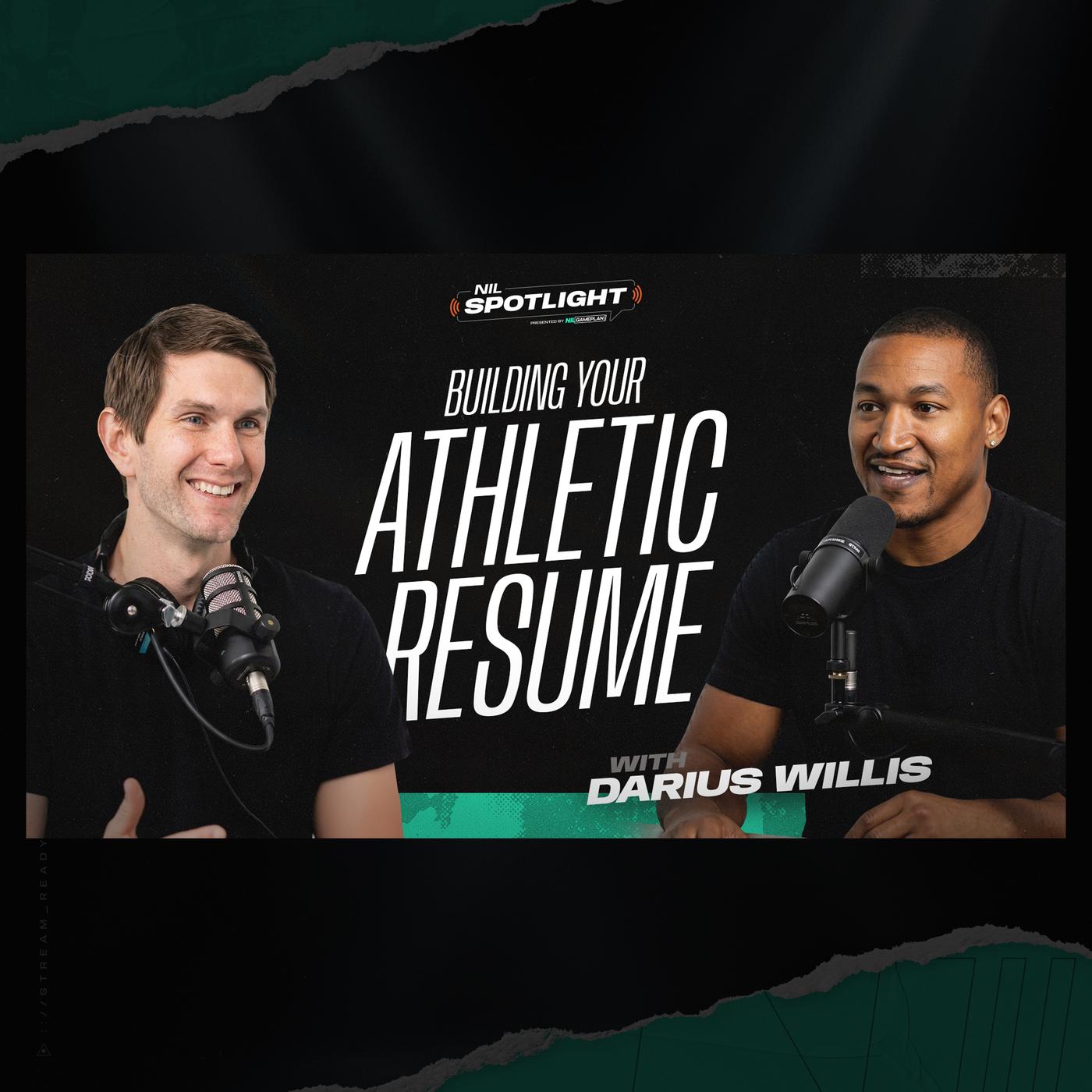
Brian Davidson: Today's guest is Darius Willis, former standout running back at Indiana University and now founder of Scout Sync, a platform focused on helping athletes, families, and coaches navigate the recruiting process more efficiently. Darius will live the journey firsthand from being recruited as an athlete to now building technology and systems to help the next generation gain exposure and make smarter decisions and better understand this evolving world of both recruiting and now NIL. Darius, thanks for joining the show. Well, Darius, it's been amazing. Where can we send people to find out more about you and Scout Sync?
Darius Willis: If you look forward to reach out to me directly, you'll find me on LinkedIn visit scoutsync.com to find any more information about us.
Brian Davidson: amazing. Thanks for coming on NIL Spotlight, brought to you by NIL Gameplan.
Darius Willis: Thank you so much for having me. Yeah, thanks for having me. Pleasure to be here.
Brian Davidson: Awesome. Well, I thought we start with a little bit of a rewind. Can you start to walk us through your recruiting story?
Darius Willis: ⁓ man, I'd say. ⁓ It probably started in middle school, doing all the sports I did and having a lot of ⁓ from multiple high schools. I would say the high school recruiting journey. ⁓ if we're talking about college specifically, my year, ⁓ actually very first college visit was the University of Tennessee. I actually went the day that Peyton Manning, they retired his jersey. And it was, ⁓ my eyes were set big on being in college sports. recruiting journey was ⁓ traveled so much I had so many ⁓ many conversations with so many people that never thought I'll be able to get to talk to be able to see so many athletes
Ashley Stiffler: Today's episode is brought to you by NIL Game Plan and Athlete Guard. If you're a student athlete or a sports parent, NIL Game Plan is built for you and protection is part of that game plan. Student athletes give everything they've got from practices to tournaments day in and day out. Athlete Guard gives NIL Game Plan families added injury protection and more importantly, peace of mind when the unexpected happens. Included with your NIL Game Plan membership,
Darius Willis: I think I had, man, at that time in those days it was a lot of mail. I had piles and piles ⁓ letters and invitations from freshmen, sophomore, junior, senior year, just of paperwork. But I say it was ⁓ it was easy to make a decision. It was not easy going through all that. But was a lot of fun of being able to be especially the first ⁓ athlete in my family our first person in my
Ashley Stiffler: Athlete Guard provides up to $10,000 per injury for eligible accident medical expenses, covering care following sports-related injuries, including rehab and covered surgeries, with no accident medical deductible. Athlete Guard is underwritten by Mutual of Omaha Insurance Company and administered by Hub International. For more information and to see full coverage details, please visit nilgameplan.com today.
Darius Willis: family to go to college and have that opportunity.
Brian Davidson: And what advantage did that give you starting so early, literally in middle school, starting to go through the recruiting process and then going through it all over again through the college experience.
Darius Willis: Yeah, I think I was able to see the competitive nature see that. I am sought after, I belong here. I am one of the best here in the area or in the country. And it gave me an ⁓ extra and boost to be to go out there and compete against anyone in school. didn't care who or anybody in college. ⁓ I didn't really who. But to have that experience ⁓ early through the to be able to those travels, ⁓ which were long. In cases, we drove a lot of places. So actually, I would say prepared me for all the traveling that I would have to do in college.
Brian Davidson: You told me a pretty funny and unique story about being in the very first Under Armour All-American Bowl. How was that experience?
Darius Willis: ⁓ man, was awesome. yes, we were the very first one that year and that team was loaded. ⁓ At that time, it ⁓ funny because I had already made my commitment, but I still had every college there trying to get me to decommit ⁓ go to their university. But it was a great blast. I think we were there maybe a week or so down in Orlando and it was just a blessing opportunity to go compete with some of the best athletes in the country. ⁓ think we had Julio Jones ⁓ our squad and ⁓ had AJ Green and ⁓ Hill. And ⁓ think that first experience of ⁓ the fun of being around so many great, ⁓ people. We had a blast, especially because it was around bowl season. But then also, I think the competitive because we were playing a lot of video games, getting the hang out. But it gave me a great perspective on one, the D-line are fast because man at that All-American game boy were those D-line movement so it showed me the talent the talent that I would be competing against at the college level.
Brian Davidson: Well, you've now experienced recruiting on both sides, both as a player, but now as a founder. What's the biggest thing that families misunderstand about the recruiting process today?
Darius Willis: That ⁓ a never-ending story. If think you got it figured out you don't. think a lot of times families ⁓ You'll get told a lot of things coaches and you got to understand that coaches lie. They're to get you to come the school at whatever cost because their jobs are on the line too. And so a of the times there's not a lot of transparency from the coaching side and to your families because they want to tell you what you want to hear ⁓ but not what you need to know. And so I think that a lot of families get that misconstrued and athletes are taken advantage of in that case, especially families that haven't been through the process, especially when mine ⁓ had been through that process. And so if they're seeing that and going through that for the first time, ⁓ you need to have guidance around you of people who ⁓ can shape and mentor you on that process.
Brian Davidson: Speaking of that process and that part of that process, what problems that process did you try to solve ⁓ when you started ScotsHack?
Darius Willis: Yeah, for me in Scouts Inc. it was definitely that connection, exposure, the ability to seeing athletes have an opportunity. even before the platform was it was showcasing. We were showcasing in ways that athletes can have opportunities globally, not just here ⁓ domestically the US, but we were having to establish in our global footprint. ⁓ But be able to support athletes from Sweden, Switzerland, Germany, ⁓ Asia. Africa of all parts, that was true definition to show that the pain is real globally that we can make, ⁓ can help along this process. And so that was something ⁓ initially as a former athlete, I wanted to make sure that athletes had opportunity because not everybody does. There's so talent out there, but there's not lot of access to it.
Brian Davidson: Speaking of taking advantage of that opportunity, take advantage of it, you can't make mistakes along the way. What are the biggest mistakes you see athletes making when they're trying to get discovered?
Darius Willis: Uh-huh. Well, there's so many. try to touch on a few going about that. ⁓ ⁓ a big one. I think one of the things I see ⁓ that athletes are not proactive.
Brian Davidson: Loaded question.
Darius Willis: ⁓ I think it's great to have, you you see a lot of recruiting services that, you know, say they're to place the athlete and their families pay for that, which is a lot of times a big mistake. I think a lot of the athletes are not proactive enough. And so if you're paying for one of those recruiting services to do your work, you're not the one building that relationship with the coach. And that the coach says you're going to be the one there, not that recruiting. ⁓ provider of these services or your family. And so they want to get to know you. So you have to be proactive in the day-to-day email context, building those relationships. It's okay to be told no. It's okay to be ignored. because there's thousands and thousands of opportunities. And I think everyone sees, like, if I don't get an offer from Division I, it's like, ⁓ then I don't want to go anywhere else. But there's great football at every level. And a lot of athletes miss, think that they're not going to get exposed if they go to NAIA or go to Juco for a year or two. That's not true. going to get discovered. If you got the talent, you do your work, your discipline, you're going to get discovered. But I'll say the biggest one is proactive.
Brian Davidson: We just talked about some recruiting services generally, but there's so many different platforms and services out there. What makes Scout Sync unique?
Darius Willis: I think for us, it's definitely making it easier and transparent. Not only are we connecting the parent, the athlete, the coach, and now in today's world, we've got to connect the agent. But we have combined an ecosystem to where everybody has a voice and everybody can connect within the same system. A lot the times that coach you won't have access to or that agent, we make that much easier.
Brian Davidson: Well, you just mentioned agents, so let's pivot slightly to NIL. How has the NIL conversation changed between athletes and schools at the high school level?
Darius Willis: at the high school level. ⁓ my goodness. It makes me want to rewind my clock to go back. But what I see now, especially as you got a lot of states who have adopted this NIL thing, now that puts more pressure on the athletic department. That gives them and their coaches more work to do. And also they have to be involved in some of those discussions around the agent, because now the agent is there early. Youth used to be about development and focus, and now it's a pure business. this model for these athletes. So at the high school level, ⁓ agents are in these conversations early, more so than ⁓ when was used to back in the college at the professional ranks. And so that the agents are there, it's important what I see now is helping guidance on the ⁓ financial literacy. ⁓ these agents taking advantage at times, because parents are not don't understand and athletes don't understand. So having the proper counsel is definitely important.
Brian Davidson: Well, you just said in this on financial literacy and a little bit earlier you mentioned that you're the first person in your family to be lucky enough to go to college. Can you talk about that dynamic a little bit that a lot of times the parent certainly doesn't have that financial literacy to help guide their student athlete and they're forced to look for outside guidance.
Darius Willis: Mm-hmm. Yes, that is definitely true and I would say it's definitely higher and I would say and say African-American communities where they don't have a lot of the education and so that is something that is super true and I think that it's important now to have guardrails in place to make sure that these families are being educated early on if their athletes are looking to go to play collegiate at the collegiate level and so from my experience we didn't have a lot of guidance we didn't have a lot of structure it was just go go go and travel and see what happens happens to make the best out of it. We were fortunate in our case to end up at IU where we were ground at great core, but I think that's not the case for everyone.
Brian Davidson: and just put your pundit hat on. Do you think NIL is creating more opportunity overall or is it just creating more pressure and confusion for families?
Darius Willis: would say both. It's both in a way. It can be positive ⁓ negative, especially looking at or predominately that's coming from lower income situations like myself don't have access a lot of things. And so for a lot of families, a meal ticket. For a lot of athletes who are hungry and driven, that's a meal ticket to be able to sign and money to provide for your family ⁓ first and foremost. And I think athletes need to understand their value. And I think in ways that we can continue to help and support in that with how that evolves, but there are so many challenges ⁓ are still coming up because there's not as lot of regulation. ⁓ think there still needs to be regulation and structure around it, although we allow it.
Brian Davidson: Speaking of value and regulation, a big part of that is social media following. How do you think a high school athlete should approach social media and building a following base ⁓ trying to stay private ⁓ keeping their high school life ⁓ and focused on what matters?
Darius Willis: Yeah, I think it definitely has to depend on their focus. It's like when we... ⁓ building out our system, looked at the different types of athletes. There's athletes that just want to play high school ball, and that's fine. They want to go on and get a job and a career or something other than sports. And there's a large athlete population that has the dream and the vision. They can go play college sports, and maybe that might happen and may not. And then there's some that might play internationally or play locally for a club. And we got the, what is it, the Fisher's Freight or something like that, which is another channel. them. So I think the biggest thing is understanding the athletes that are in the different focus groups and to that the athletes that are focused on collegiate level. It ⁓ is to have these values. on the social media side, ⁓ think that the athletes, ⁓ is important ⁓ they build a brand early. Definitely is very key, but it has to understand which athlete focused they are. If they're looking at collegiate and professional opportunities, ⁓ it is to build a brand. If they are not, then it's okay. They don't have to worry about the social media ⁓ and the and access.
Brian Davidson: Okay, talking about different groups of athletes, a big part of athletes that are overlooked in the world, whether it be an international student and or maybe a non-revenue sport. How does Scout Sync help solve that problem?
Darius Willis: So we incorporate, we are Sport Agnostic One. We're globally, there's not a place we can't go and there's not a place we don't look to help. And so when we started this out in ⁓ old Switzerland, we had athletes from so many parts of ⁓ Europe different parts of Asia and Africa. ⁓ And what we wanted to see right away is how we can support them meaningfully and create impact. And that's something that mission, I'm driven on the impact side and how we can truly unlock these opportunities. ⁓ are so many companies or systems where you can go create a profile. ⁓ What we tell in these athletes not only is it just your profile, it's your resume, but we are developing you. We are giving you the access and the resources ⁓ you can go and create your own journey and path. ⁓ longer being hidden, no longer ⁓ gate locked ⁓ not having the money and things to support ⁓ initiatives. We are creating true impact globally for these athletes. And I think that's different than what others do.
Brian Davidson: Daris, what's the biggest lesson that you've learned in this journey building Sportsync?
Darius Willis: I think, ⁓ man, being an entrepreneur is not easy. ⁓ me it's been great to see even ⁓ transition growth ⁓ an athlete to a coach. ⁓
Brian Davidson: I can relate.
Darius Willis: to a business person and now in this phase of developing and trying to so many around the world. Each ⁓ stage my process has allowed me to grow to another level each time and I learn so much every day. But then that ⁓ I can so many people brings me so joy and that's why I love doing what I'm doing every day.
Brian Davidson: Okay, let's wrap with this. So looking ahead in these next few years, let's say two, three, four, five years, what do think the future of recruiting at NIL starts to look like? How does that relationship change over time?
Darius Willis: Two to three years from now, huh? I'm thinking, well, I'm hoping we have more structure and guidance. ⁓ think we'll have to have more support, like I said, around the parents and the athletes learning. It's require more work from athletic departments. ⁓ provide these resources, whether in the off season, before school and summer school to start having these speaking arrangements so they can hear from whether ⁓ certified agents or ⁓ around the NIL space or ⁓ like that. think having that good counseling and structure early on is critical. I think you will still see high values continue to rise because colleges are going to find many revenue models their own system ⁓ continue to adopt and pull money in for their athletes. So you will see a bigger push around women in sports and also a recalibration around the Title IX. And I think a lot of that still gets lost and not truly shared transparently. So I would see more opportunities around women in sports ⁓ and diversification globally. and definitely having more opportunities for international athletes to get the same piece of the pie that American athletes get for the NIL because they are just recruited and have to do the same work. So I think that will change as well.
