
BU BÖLÜM HAKKINDA
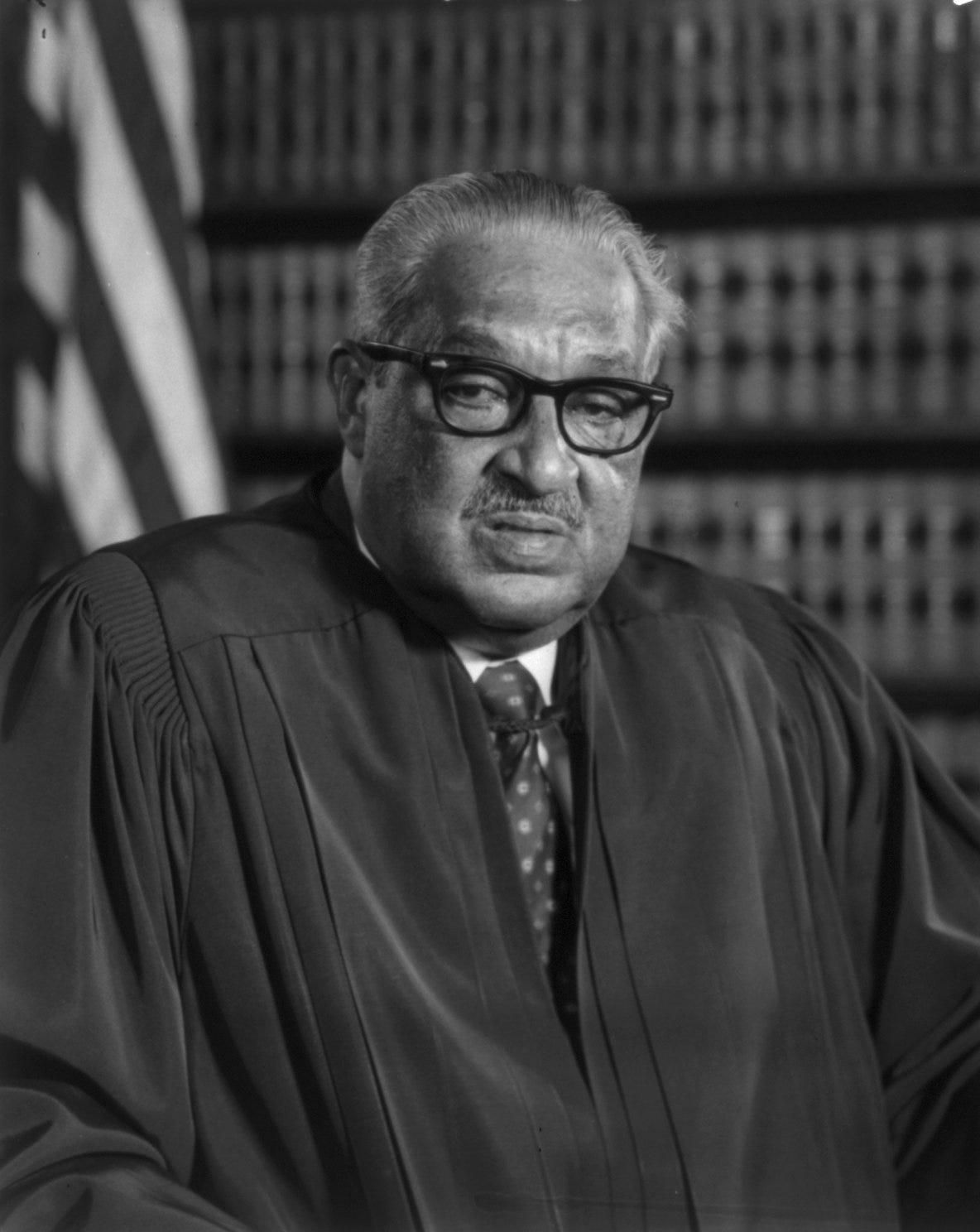
This Day in Legal History: Thurgood Marshall Joins the Court
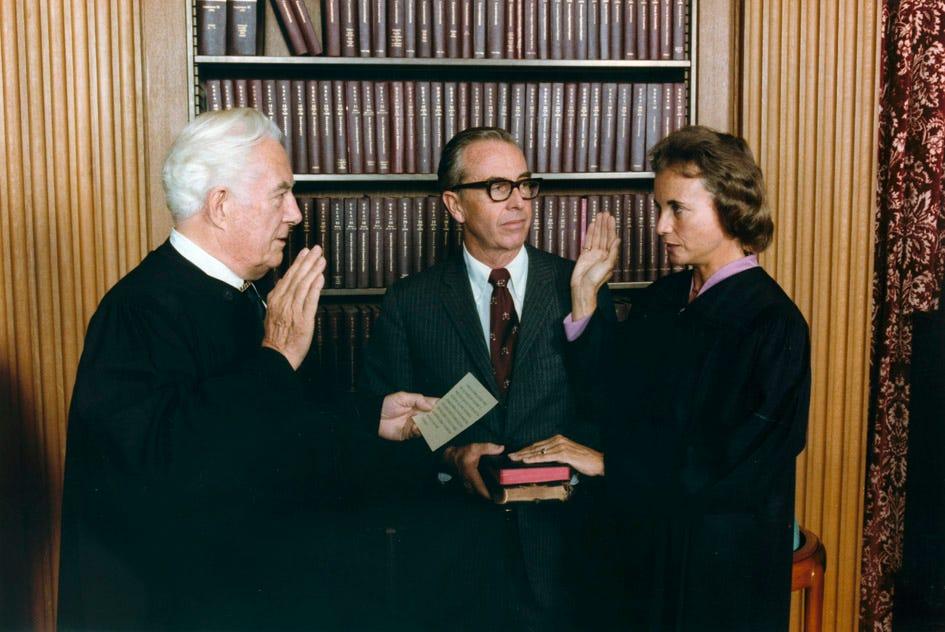
On October 2, 1967, Chief Justice Earl Warren swore in Thurgood Marshall as an associate justice of the Supreme Court, the first Black justice in the Court’s history. President Lyndon Johnson had nominated him to replace Justice Tom Clark, and the Senate confirmed him that August by a vote of 69 to 11.
Marshall arrived at the Court having already changed it from the other side of the bench. As chief counsel of the NAACP Legal Defense and Educational Fund, he argued 32 cases before the Supreme Court and won 29 of them, including Brown v. Board of Education. He had also served as a federal appeals judge and as Solicitor General. Few justices have come to the Court with a record of argument that shaped as much of the law they were about to apply.
In nearly 24 years on the Court, Marshall was a consistent voice for equal protection and for the rights of criminal defendants. He was also among the Court’s most persistent opponents of capital punishment. In Furman v. Georgia in 1972 he concluded the death penalty was unconstitutional in all circumstances, and after the Court allowed executions to resume he dissented from death sentences for the rest of his tenure. That position is worth recalling today, because our first story is about what happens when the state’s attempt to carry out a death sentence fails.
We have an update on the story we covered yesterday. Tennessee Governor Bill Lee has called the failed execution of Christa Pike “a tragedy,” saying no one wanted it to happen and that it was “deeply disturbing” that it happened in his state. As a reminder, Pike was convicted of the 1995 murder of a fellow Job Corps student, committed when Pike was 18. On Wednesday night, after the Supreme Court lifted a last-minute stay, officials administered two doses of pentobarbital. She lost consciousness but kept a steady heartbeat, and she was taken to a hospital for emergency treatment. Lee has suspended the remaining execution scheduled for this year and ordered a third-party review. The new detail is that, according to reporting from JURIST and the Washington Post, this is the second botched execution in Tennessee this year. That matters legally. Under Baze v. Rees and Glossip v. Gross, an inmate challenging an execution method generally has to show a substantial risk of severe pain and identify a feasible alternative. Courts have often treated a single mishap as an isolated accident that doesn’t prove the method is unconstitutional. Two failures in one year is harder to call isolated, and it gives lawyers for other death-row prisoners evidence that the state’s protocol itself is unreliable.
Tennessee has been here before: in 2022, Governor Lee paused executions after the state was found not to have properly tested its lethal-injection drugs. For Pike herself, the hardest question remains whether the state may try again. The 1947 case of Louisiana ex rel. Francis v. Resweber allowed a second attempt after a failed electrocution, but that was a narrow, divided decision from a very different era. Pike’s lawyers will argue a second attempt would be cruel and unusual, and they’ll keep pressing the claim that evidence of her childhood abuse was never properly considered at sentencing. Expect the third-party review, and whatever it finds about the drugs and procedures, to be central evidence in that litigation.
Tennessee governor calls failed Christa Pike execution a ‘tragedy’ | Reuters · JURIST · Washington Post
A federal judge in Miami has held that the 1996 federal law making it a crime for noncitizens to vote in federal elections is unconstitutional. Two weeks ago we covered the novel defense strategy behind this: several noncitizens charged under the law argued that Congress never had the power to pass it. At that point one Miami judge had rejected the argument. Now U.S. District Judge David Leibowitz has accepted it, dismissing the case against Chelsea Cox, a Jamaican national living in Florida charged with voting illegally in the 2020 election. His reasoning rests on the structure of the Constitution. Article I and the Seventeenth Amendment tie voter eligibility in federal elections to the qualifications each state sets for its own legislature. The Elections Clause gives Congress power over the “times, places and manner” of federal elections, but the Supreme Court said in Arizona v. Inter Tribal Council in 2013 that this doesn’t include power to set who is qualified to vote. On that view, deciding who may vote belongs to the states, and Congress can’t criminalize voting by people the Constitution leaves the states to regulate. The Justice Department’s answer, as we discussed, is that the law is really an exercise of Congress’s broad immigration power, not an election rule. Judge Leibowitz didn’t accept that framing. A few points of perspective. This appears to be the first time any federal court has found the 1996 law unconstitutional. The ruling binds only this case, and other judges, including one in the same courthouse, have gone the other way. Noncitizen voting remains illegal under the laws of essentially every state, so this doesn’t make it lawful; it questions whether the federal government can prosecute it. But the Justice Department has charged at least 60 people under this statute since January 2025, and about 45 cases are pending. Every defense lawyer in those cases now has a written federal opinion to cite. An appeal to the Eleventh Circuit seems very likely, and with judges already split, this could reach the Supreme Court.
US judge finds law criminalizing noncitizen voting unconstitutional | Reuters · Al Jazeera · GV Wire
And finally, the penalty phase of New Mexico’s case against Meta, which we covered on Monday after a Santa Fe jury found the company misled the state’s residents about Facebook’s data practices in the Cambridge Analytica case. The jury found more than 43 million violations of New Mexico’s Unfair Practices Act. The statute allows up to $5,000 per violation, which puts the theoretical maximum at about $219 billion. At a hearing Thursday, New Mexico asked Judge Francis Mathew to order Meta to pay between $35 billion and $40 billion. The state’s lawyer noted that an award that size would be the largest verdict in American legal history. Meta called the request “astronomical” and asked the judge to cap the penalty at $3.45 billion. So the judge is choosing somewhere in a range that spans more than a factor of ten. This is the legal problem I flagged on Monday: per-violation penalties were written with individual transactions in mind, and they produce enormous numbers when multiplied across a whole state’s population of users. The judge has discretion under the statute, and he’ll likely weigh things like how deliberate the deception was, how long it lasted, Meta’s ability to pay, and what amount would actually deter. There’s also a constitutional ceiling in the background. The Eighth Amendment’s Excessive Fines Clause applies to civil penalties paid to the government, and the Supreme Court held in Timbs v. Indiana in 2019 that it binds the states. A penalty grossly disproportionate to the offense can be struck down, and Meta will almost certainly make that argument on appeal if the number is large. Judge Mathew says he expects to rule later this month. Whatever he decides will be watched closely by every state attorney general with a consumer-protection case against a tech platform, because it’ll show how far these statutes can be pushed.
New Mexico wants Meta to pay up to $40 billion in penalties after data privacy trial | Reuters · Bloomberg Law · Law360
This is a public episode. If you'd like to discuss this with other subscribers or get access to bonus episodes, visit www.minimumcomp.com/subscribe