
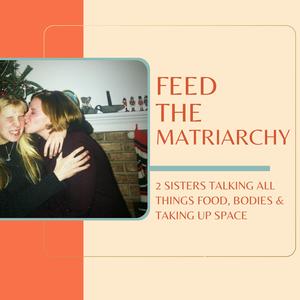

Johanna: Welcome to Feed the Matriarchy. We're sisters, moms, and women who spent way too many years trying to shrink ourselves, physically, emotionally, and spiritually. Now, we're done. Each week we sit down with women from all walks of life to talk about food, body image, mental health, and what it really means to take up space in a world that's told us to take up less. We're getting real about how patriarchy has shaped the way we live in our bodies and how we're taking that space back. Together we'll unlearn the lies of diet culture, talk about what it means to nourish ourselves both in body and in soul. and explore how caring for ourselves and claiming our space is a radical act of resistance. This isn't a podcast about shrinking. It's about expanding. So let's feed the matriarchy. Welcome to Feed the Matriarchy. We have I always say I'm so excited for our guest. I am super, super, super excited for our guest. I've known Rachel for quite a while now. but I'm not just excited to talk to you, Rachel. I am like I'm honored and I'm ecstatic to be talking to you at this time. When I know that we need not just me, not just
Rachel: Yeah.
Johanna: Heather, but like we as a a matriarchy collective need to be talking to you right now and need to be talking about our topic today.
Rachel: Yeah. Well thank you for saying that. You don't need to say that, but thank you.
Johanna: Well, no. I mean I and I really mean it. but bef
Heather: Yeah, but
Rachel: Okay. Well I also really admire you.
Heather: she does need to say it a little.
Rachel: I also really admire you and all of the work that you
Johanna: thank you.
Rachel: do. So it's very mutual.
Johanna: Thank you.
Heather: Yeah.
Johanna: Thank you. Thank you. and I'm also here with Heather. So she is she is she is joining us today.
Heather: Yep, always present. Present.
Rachel: Love Heather.
Johanna: I I did jump in just to Rachel though. Let's just jump to I jumped in right away to Rachel Creighton.
Heather: It's good. It's all good. Yeah.
Rachel: Ha ha
Johanna: so for those of you who don't know, and Rachel, I'm gonna read your bio and then we're gonna jump into questions. Rachel Creighton is the founder and executive director of the Wild Fly Flower Collective, a nonprofit organization specializing in community care for women. Now you guys know why we need this topic today. Now you guys know why we need this topic today.
Rachel: Mm-hmm. Mm-hmm.
Johanna: by providing support through connection, healing, and personal growth, named Best Wellness Community by Philadelphia magazine, the Wildflower
Heather: That's great.
Johanna: Collective is inspired by Rachel's own personal journey journey through postpartum depression and provides local women and mothers access to dedicated resources, professional partnerships, curated programming, and events. We need this.
Rachel: So weird hearing that out loud, like someone actually saying that out loud. I'm like, did I do that? Are we doing that?
Johanna: Yeah, yeah. Yeah yeah yeah you did.
Heather: We're like, I'm really cool. That's awesome. That's great.
Johanna: Y Yeah, you are really fucking cool.
Rachel: Just it's just like I I'm d this is a new like, you know, it's new for me,
Heather: Yeah.
Rachel: at least the nonprofit world and being a founder
Heather: Yeah.
Rachel: of something. So I'm getting used to it, you know, I'm trying
Johanna: Yeah. Yeah.
Heather: That's great.
Rachel: to get used to it, so
Johanna: You're getting into
Heather: That's great.
Johanna: your stride. well, you
Rachel: Yeah.
Johanna: are a really big fucking deal and you are somebody that
Rachel: Okay. Relax.
Johanna: you're like settle down, Johanna. Settle down. I
Rachel: Relax.
Heather: you
Johanna: mean, you've had like whole news programs come out and come into your space and video
Heather: That's cool.
Johanna: and do interviews about what you're doing with the Wildflower Collective. So don't downplay it. Don't downplay it.
Rachel: Which has been crazy. Okay. I'm just saying e everything that has happened, I have to say to you, has been shocking for me, for the women behind the scenes who are helping me, which are really just like other mom friends who are in it with me and have believed in this from the get-go. And I'm like, yo, I need help. So you
Johanna: Mm-hmm.
Rachel: guys gotta, you know, buckle up and join the ride. But it has been really cool to see like how organically this
Johanna: Mm-hmm.
Rachel: has kind of all happened. Like I don't have a PR person. I don't even know where to start with that. So like just the fact that
Johanna: Mm. Yeah, I don't either, so yeah.
Rachel: we yeah, just the fact that we have been covered and featured as much
Johanna: Mm.
Rachel: as we have so far is not something, you know, that I take lately. And I
Johanna: Mm.
Rachel: am just, you know, always amazed by and, you know, game
Johanna: Yeah.
Rachel: for, obviously, to get the word out about what we're doing and
Johanna: Yeah.
Rachel: just trying to keep spread the messaging, you know. So
Johanna: Yeah. Well you it's the matriarchy in action. Like you have like a group of like your friends, your mom friends coming together and you've created a space and we're gonna talk a lot more about that now, where women can come together and you're offer offering services, you're offering support, you're offering you're offering a I I wanna call it a safe haven. For it is for new moms. I mean, I it is for new moms, and we're gonna talk about your postpartum journey, but it's also for women throughout their life, because you're doing you have
Rachel: Mm-hmm.
Johanna: I mean, I was just like sort of revisiting all that, you're doing workshops on perimenopause and menopause. I mean, you're bringing in therapists, yay therapy. We know that I I'm a therapist, I love it. Like
Rachel: Yep. Yep.
Johanna: you're you're bringing in the support that women need into our local community.
Rachel: And I have to say, like to that point of supporting new moms, or you know, we have a perimenopause and menopause to support group. When we started this, and I know we'll get into it more, I had no idea where this was heading. I had no idea
Heather: Hmm.
Johanna: Mm. Mm-hmm. Mm-hmm.
Rachel: what clientele was gonna be coming in, what demographic
Johanna: Mm.
Rachel: was gonna be coming in. It really just genuinely was me sharing my story and trying to help women, probably in my you know, age range, I would say, moms
Johanna: Mm.
Rachel: in their 30s, you know, who are
Johanna: Mm.
Rachel: kind of like in the thick of it. But very quickly, I met you and other women
Johanna: Yeah.
Rachel: in the community who were very aligned with the mission of kind of like what I was trying to create. And
Johanna: Mm.
Rachel: it's been so cool to see the range of women from really
Johanna: Mm.
Rachel: young women who are just kind of experiencing mental
Johanna: Mm-hmm.
Rachel: health struggles initially and want to better themselves to grandmothers who are coming
Johanna: Yeah.
Rachel: in and sharing their wisdom and
Johanna: Yeah.
Rachel: who are like, I wish we had this, you know? So that
Johanna: Yeah.
Rachel: part has been really cool to see. And again, had no idea that it was gonna go that way, but we're kind of just
Johanna: Yeah.
Rachel: evolving and going with it. So
Johanna: Yeah, I'm gonna say it again, like it's it is the matriarchy in action. It's like the the grandmothers coming in and taking care
Rachel: Yeah. Mm-hmm.
Johanna: of like the new moms who are just like, I'm at a loss for what to do or I'm
Rachel: Yeah.
Johanna: struggling with perimatal mental health issues and you know, like
Rachel: Yeah.
Johanna: you're you're really creating that that space that you needed. Rachel, can you can you tell us a little bit about your story? Because I know you're pretty open about that and I know that your story really informed what you did with the Wildflower Collective. Can you tell us a little bit about your your experience with postpartum depression?
Rachel: Yeah. So I I have three kids. my oldest is seven, seven year old boy, and I have five year old boy girl twins. And
Johanna: Mm.
Rachel: I struggled with mental health issues, I would say, for my whole life. I wasn't officially
Johanna: Mm-hmm.
Rachel: diagnosed with anxiety or depression until I was a junior in college. And you know, it was a very pivotal moment in my life.
Johanna: Mm.
Rachel: Finally getting help for issues I think I had suspected were going on for some time. I went to Notre Dame. It's the most magical place on earth. It's my favorite place, but it is
Johanna: Gets a shout out to Notre Dame.
Rachel: it is very cold, it is very depressing in the winter,
Johanna: Hm.
Rachel: and I was a student athlete there. It was a lot of high pressure, and I really experienced depression and seasonal depression for the first time, and it really flipped my life upside down. so I say that because when I got pregnant with my first, I was very anxious and worried that I was gonna get PPD. You know, it was just like, well,
Johanna: Yeah.
Rachel: I I have a history of anxiety and depression and panic attacks. Of course I'm probably gonna get PPD as well.
Heather: Hmm.
Rachel: And I did it. I went through, you know, the typical baby blues. I definitely had some PPA and
Heather: Right. Yep.
Rachel: undiagnosed OCD tendencies, but I was very pleasantly surprised that I didn't have the experience that I thought I was gonna have.
Heather: Right.
Rachel: fast forward to the twins. And
Heather: Mmm.
Rachel: PPD rocked me.
Heather: Hmm.
Rachel: I do give context to the story because I think it's important to note this was during COVID. This was during the winter we had
Heather: Right.
Rachel: Three kids under the age of 21 months. we were pretty much like in and out of lockdown. I
Heather: It's just so hard.
Johanna: No, that's so hard. Yeah.
Rachel: contracted COVID. This was pre vaccines. And I think at the time they said, you know, there's like a asterisk 1% chance of pregnant women who get COVID will have complications. Like I was at 1% and
Johanna: Mm.
Rachel: was admitted to the hospital, hazmat suit, the whole thing, which, you know, I I've shared before, probably not publicly, but All to say, it was a very traumatic experience. And then I
Johanna: Yeah, yeah.
Rachel: had the twins and they were in the NICU, and you just go into survival mode. I mean, that's what it was. It was my husband and I in survival mode with our village, people in masks, you know, just doing the best we can. And that's what it was for months. It was just months of survival. And
Johanna: Yeah.
Heather: Mm.
Rachel: I thought I was okay.
Johanna: Mm.
Rachel: Until Things started getting too serious that
Johanna: Mm.
Rachel: I realized this was not normal behavior. I think my
Johanna: Mm.
Rachel: experience having again a history, a knowledge base of what anxiety and depression looks like worked to my advantage.
Johanna: Yeah. Yeah. Yeah.
Rachel: Cause I knew I needed to ask for help. But the flip side of it was it was so severe and got so severe that I was almost out of control.
Johanna: Yeah. Yeah.
Rachel: as well. I don't know if that makes sense. So there was part of me that was like, something's wrong. This isn't normal. I think I need help. I'm scaring myself.
Johanna: Yeah, yeah.
Heather: Hmm.
Rachel: But then also the other side of it where I'd have these conversations with like my husband and my mom, who were pretty much with me, you know, all the time, because I needed someone with me all at all times, you know, were talking to me. And I was just Not making sense. You know, I was completely
Johanna: Mm.
Rachel: blinded by depression, where the things
Johanna: Yeah.
Rachel: I was saying, they were like, What are you? Who are you? Like, what are you talking about? You know?
Johanna: Yeah, like where is this coming from? Yeah.
Rachel: So it was a very intense, very scary time. And what I typically say when I share my story is for me, my first, I would say, diagnosable signs was rage. And that was something that
Johanna: Mm.
Heather: Hmm
Rachel: really took me off guard because I thought something's wrong with me. Why am
Heather: Mmm.
Johanna: Mm, mm-hmm.
Rachel: I such an is this what it's like to be a mom of three? This must just be what it's like. You're
Heather: Hmm.
Rachel: just on edge and angry and overstimulated and, you know,
Johanna: Yeah.
Rachel: is this my life now? You know? Like this is
Johanna: Yeah.
Rachel: this must be what it is. But the rage that I was experiencing was again scaring. It was scaring me. So honestly
Johanna: Mm, mm-hmm.
Rachel: I was very lucky that I had the support at home. But I also had doctors who, when I vocalized this, were immediately like, no, this is not good. This
Heather: Yeah, they heard, yeah.
Rachel: is a sign of postpartum depression. And I was like, It is. And they're like, Yep. And they believed me. My therapist, who I've had for over a decade, was like immediately like, we needed to do multiple sessions. And everyone kind of like jumped in really quick, but
Johanna: Hmm. That's powerful.
Rachel: it was. And I say this all the time too now with the Wildflower Collective. It's like I had the support. I had
Johanna: Yeah.
Rachel: the doctors who believed me and supported me. I had the therapists. I had the village. How many women I've met who don't have that?
Johanna: Yeah.
Rachel: It's alarming,
Heather: Yeah.
Rachel: you know? So
Johanna: Yeah.
Rachel: but even though I did get help and was treated, it was a really, really rough road. Recovery that
Johanna: Yeah.
Rachel: I again am open about that I almost didn't make it through because of
Johanna: Mm.
Rachel: how severe the episode of depression was. and I look honestly like at my life now almost like a timeline, a spectrum of before and after PPD, because
Johanna: Mm-hmm.
Rachel: it just flipped my whole perspective on everything.
Johanna: Mm, mm.
Rachel: I say often it is The absolute worst thing I've ever gone through. It's something I would never ever want to wish on anyone.
Johanna: Mm.
Rachel: But I also believe there's a reason I went through it. And there is some silver lining in all of it. I think
Heather: Hmm.
Rachel: that's what this is now, the Wildflower Collective, and
Johanna: Yeah. Yeah.
Rachel: pushing me towards what I believe is part of my calling. again, wouldn't want to go through it again. But,
Johanna: Yeah, yeah.
Heather: Hmm.
Rachel: you know.
Johanna: But y but now on the other side, yeah.
Rachel: So I do wanna make no but on the other side of it, you know, I can look back now that I am healed, as healed as I can be, you know, never really leaves you.
Heather: you
Johanna: Yeah.
Rachel: to know that I was very lucky. And again inspired afterward to be like, I got a new lease on life. Like I almost didn't make it through this.
Heather: Hmm.
Rachel: You know, and then met other people who I had learned, you know, women who didn't make it through the other side of PPD and
Johanna: Mm, mm-hmm.
Rachel: just started to become very passionate about it. And was like, why are we not talking about this? I feel like mental
Johanna: Mm-hmm.
Rachel: health And Johanna, I don't know if you'll agree with this or Heather, but like, you know, it's become very buzzy over the last few years, like, you know, being more
Johanna: Yeah.
Rachel: vocal, athletes being more vocal about their mental health and anxiety. But when it comes to perinatal and postpartum health and talking about what goes on in a mom's brain and
Heather: Yup. Yup.
Rachel: the thoughts that you have, I feel like there is such a stigma.
Johanna: Thousand percent.
Rachel: as we're seeing now play out as well.
Johanna: Yeah.
Rachel: Which was why I was very secluded and private during this whole time, because my husband and I were, admittedly, scared of what would happen if I really said aloud
Johanna: Yep. Yep. Yep.
Rachel: the things that I was thinking and talking about doing. You know? it's
Heather: Yeah.
Johanna: Yeah. Yeah.
Rachel: still really hard for me to say that. Like it makes me sick thinking about it, but
Johanna: Yeah. Yeah. Yeah. Yeah.
Rachel: It's the truth. Like, I was afraid, and my husband was afraid to like do we go to the hospital and say what Rachel's been saying and what I found her doing? Because
Johanna: Hmm. Yeah, yeah.
Rachel: there's such a stigma associated with this, you know? So
Heather: Yeah.
Johanna: Thousand percent.
Rachel: I think, you know, what's good is we are talking about it more now. You know, I think
Johanna: Yes.
Rachel: that's again at the end of the day, we're here. So I'm thrilled. I've just kind of been like, I've been saying this for a while, you know? So Yeah. So
Johanna: Yeah, you're like, This is what I've been preaching. Yeah. Well and 'cause when you say it, a w another woman and that's why I thank you for sharing your story with us and with our listeners. Cause when you say it, another woman isn't alone. When you say it, another woman knows that she is not alone if she's feeling those things and thinking those
Rachel: Yeah.
Johanna: things. And she's not alone and thinking like, What's wrong with me? Am I you know, is something is wrong with me? Like I I I am I I
Rachel: Mm-hmm.
Johanna: am bad, I am not okay, rather than thinking like, I need help, you know?
Heather: I think a lot of people believe that it's like some kind of heightened depression or heightened anxiety or whatever,
Rachel: Yeah.
Heather: right? So they sort of think,
Johanna: Mm.
Heather: yeah, well, of course you're sad, no one's sleeping. And the
Johanna: Mm.
Heather: baby's consuming
Rachel: Right.
Heather: you. And I think I haven't. I haven't gone through this personally, but I remember myself saying something like that. After I had
Rachel: Mm-hmm.
Heather: my kid, I had a very similar experience to you, Rachel, when you had your first child, right? And so that was my
Rachel: Yeah.
Heather: experience, I won. And after I had my kid, I remember thinking, well, of course, are depressed and sad, this is really hard. Like, I'm not sleeping
Rachel: Right. Right.
Heather: at all, I'm not, and then I had a friend who'd actually gone through real postpartum depression and I didn't know it. She didn't tell me until later.
Johanna: Hm.
Rachel: Yeah.
Heather: But she pulled me aside and she was like, you have no idea what you're talking about. She was like, this is not the baby blues. OK, it's not like mommy's
Rachel: Yeah, yeah, yeah. Like sorry. Yeah.
Johanna: Mm-hmm. Yeah.
Heather: tired. That's not what's happening here. And she said, you're
Johanna: Yeah, yeah.
Heather: in such a mental state that you honestly,
Rachel: Mm-hmm.
Heather: for her, it was like, I honestly think maybe my baby and my entire family would be better off if I were dead. And I really believe that. I really believe the best thing. that I could do for my family would be to kill myself. And she's like,
Rachel: Hundred percent.
Johanna: Mm.
Heather: until you have really grappled with that thought actually
Rachel: Mm-hmm.
Heather: entering your head, and
Johanna: Mm.
Heather: fortunately like you, she was aware enough, pulled back from the edge enough to go, whoa,
Rachel: Yeah.
Heather: whoa,
Johanna: Mm-hmm.
Heather: and to tell somebody and to get help for it, right?
Johanna: Mm-hmm.
Heather: And so I think
Rachel: Yeah, and
Heather: it's, it's, it's under, like people need to understand that. That's different. And that's something that's in your brain. You don't, there's an element of like, you know, you don't, you're not, can't talk yourself out of it. You're not gonna, you're not gonna white-knuckle postpartum
Rachel: Yeah. I couldn't Yeah.
Johanna: No, yeah.
Heather: depression. Right? Yeah.
Rachel: Hundred percent. And I I'm in my bedroom right now and I can remember vividly. There's a lot I don't remember because I think of just trauma. but
Johanna: Hm. Yeah, yeah.
Heather: Mmm. Yeah.
Rachel: there are a lot of memories that stick out, you know, and one I remember sitting on this bed with my husband and just telling him and I fully believed it. Like I believed it to my core that Killing myself was the best option for everyone. And he was like, are we allowed to curse? Are we allowed to curse on here? He was like, he was like,
Heather: Right. Yes, that's exactly what my friend said she felt. Yeah, we swear all the time. I'm like a sailor. Yeah.
Johanna: Mm. Mm-hmm. Yeah, please please curse. We c we curse. Yeah.
Rachel: what the fuck are you talking about? You know, like what are you talking
Johanna: Yeah, yeah, yeah.
Rachel: about? And I was like, Yeah, I mean, I I truly believe that. I was like, there can be nothing worse than this. This is the darkest, deepest, darkest pit, the only
Johanna: Yeah.
Rachel: escape. Is to die. So that's what I should do. And he and like talking, like talking about, like
Johanna: Yeah.
Heather: You guys would be better without me, right?
Rachel: literally talking about it as if it was matter of fact. Like,
Heather: Right.
Johanna: Mm.
Rachel: I mean, I cried and I I I always say, I, when you look at the lists of symptoms for postpartum depression, I checked off every frickin' box. Like, I mean, rage
Heather: you
Johanna: Yeah, yeah, yeah.
Rachel: was probably again the first big red flag that I will never forget my mom was like Rachel. What is going no no no no no like you need to come
Heather: What's going on?
Johanna: Like where is this coming from? Yeah, yeah.
Rachel: here, come back here, like this is this is not okay. Like I'm here, you know, like again, scaring myself into to things that I I was saying and doing. And but I but I went through everything else, you know, the insomnia and the hysteria and deep, deep, debilitating sadness where, you know, I I had those moments where I I just Literally physically could not get out of bed. I had to be like lifted
Johanna: Yeah.
Rachel: to get out of bed. And but in those moments that I just mentioned where I had these suicidal ideations, it was truly like I wasn't sitting there crying. I was truly sitting there like, this is real. This is a
Johanna: Yeah.
Rachel: matter of fact. Like one plus one equals two. This is what I should do, you know? And I think. And that's a whole other topic, you know, what I dealt with with my my husband. But like, you know, you hear that and it's frightening, you know, because
Johanna: Yeah.
Rachel: there was really, I mean, there were things he was saying to me to try to help me, but I needed a major intervention. Like I could not, Heather, like you said, white knuckle this. Like, and what I realized and I say often was it wasn't until the medication. started really working that I realized like I'll I woke up one morning and it wasn't like I woke up and like stretched and was like, you know, I'm back. Yeah. Like it wasn't like that. I mean I woke
Heather: Yeah, right. It's sunshine.
Johanna: Birds chirping. Yeah. Yeah. Yeah.
Rachel: up and I was like, huh things aren't that bad this morning. You know? Like
Johanna: Yeah, it's not as dark. Yeah.
Rachel: and I don't know how to describe it, but the only way was like I Could feel like my brain just like quieted a little, you know? Like things had just toned down and it clicked that the thing I was missing was an actual chemical treatment to rebalance me, you know? And like
Johanna: Yes. Yep. Yeah.
Rachel: that for me. When that happened, I had been doing the therapy. I had done other interventions, you know. And obviously this was years a few years ago. So there's been a lot of changes in terms of like therapeutic treatments and new medications. And I wonder what if this was now, what I would have done, you know, or how I would have been
Johanna: Yeah.
Rachel: treated and may have been treated differently. But
Johanna: Yeah.
Rachel: it really wasn't until I had the medication really working that. I realized okay, this was not me. Like this was
Heather: Yep.
Rachel: a chemical imbalance
Heather: Yes.
Rachel: and It's very it was very hard to. I mean, I still deal with shame. That's something I struggle with, like just
Heather: Yeah. Right.
Johanna: Mm.
Rachel: years later. It's just moments of shame. But going back to that, reminding myself that Getting myself rebalanced and recalibrated, that
Heather: Mm-hmm. Mm-hmm.
Rachel: that was the major difference,
Johanna: Mm-hmm.
Rachel: it makes it easier for me to not have that guilt of
Johanna: Mm-hmm.
Rachel: this was my fault. You know, this
Johanna: Yeah. And
Rachel: was something I did, or something that I caused, you know, or I I don't know. I yeah.
Heather: Or you couldn't control it, right? It's like, you why couldn't I, like you have the same spiral of why couldn't have I controlled myself, right? You know, yeah, but it's bullshit, yeah. Right. Yeah, you were not there. Yep. Yep.
Rachel: It literally honestly reminds me of like like a ho like it was like a host had taken over. Like something had taken over me. That was not me. I was not there, you know?
Johanna: Yeah. Yeah.
Rachel: And I I can't go down that road sometimes because it's like sometimes my own therapist will be like, Well, let's sit with that. I'm like, do we need to sit with this? I don't like I'm like I don't know if I wanna go back down
Heather: you
Johanna: You're like no sitting with this today. No thank you. Yeah.
Heather: Yeah.
Rachel: open Pandora's box and go down that road, but
Johanna: Yeah.
Rachel: you know, I do sometimes wonder like what what could have been, you know, it's hard not to, you know, and
Heather: Here's what I think is really powerful about your story. Sorry, Joe, let me just jump in one more time. So you talk,
Johanna: Yep, no, go for
Heather: I love this because you're being really transparent and vulnerable. saying, look, this is a shame issue too. But man, you have claimed that shame. You've claimed that space because you've used it now to speak into the life of other women.
Johanna: Yep. Yeah.
Rachel: Thank you. Thank you, Heather.
Heather: So you take that shame, you take that vulnerability, you take that. Difficult space that you're in I'm thinking about my friend which is why I'm deary-eyed because she's
Rachel: Yeah.
Heather: been through the wringer But and you say I'm not gonna hide away. I'm not gonna go back. I got my medication I'm gonna take that and I'm gonna let other women know hey this happens
Johanna: Yeah.
Heather: this happens. It happened to me, it can happen to you. I want you
Rachel: Yeah.
Heather: to know what you're sitting with, what's going on, and that it's not your fault. And there's a way out, there's a way forward. And so to take
Rachel: Mm-hmm.
Heather: that shame and not just put it away and put it in a corner, but to claim it and to transform it, that's what I see you've done. And that's so powerful. Yep.
Rachel: Thank you. Thank you. I
Johanna: Yeah. And that's Wildflower Collective. Yeah, that's what you've done. You've created a non profit.
Rachel: really I really appreciate you saying that. Thank you. And I th I mean I carry your friend in my heart because when you meet these women, I mean I've met other survivors of PPD and I've met other women who are going through the ringer right now. And It's a club you don't want to be part of. Again,
Heather: Right.
Johanna: Yeah.
Rachel: it's not, it's not something, again, I would ever want to wish on anybody. But
Heather: Yeah.
Rachel: I would be lying if I said I still didn't struggle with that shame. But what
Heather: Yep.
Johanna: Yeah.
Rachel: has been healing for me is that is
Heather: Yep.
Rachel: putting trying to take and channel whatever it was that I experienced and being like, This had to have happened for a reason. I don't and if it truly was to like help one person. Then that's what it was. And I should note too, and this goes just so back to like everything that you guys are doing with this podcast and amplifying just such important messaging. Is like I had women in my corner who
Johanna: Mm.
Rachel: were showing up for me and were like, you think this is crazy? You should hear what I, you know, this is what I, you know, like, guess what? And I and I was like,
Johanna: Yeah. Yeah. Yeah. This is like what I was feeling. Yeah.
Heather: Right, right, yeah.
Rachel: What you like and and it was so because I'm like you and they're like yeah and then when I started sharing this, so many people were like I I'll never forget it like one of my personal posts. I I can't I think it was like a person I put on my Instagram, and people were like, What the fu like you you know I I maybe just shocked, shocked. They were
Johanna: Yeah, like shocked, shocked. Yeah.
Heather: Hmm, yep.
Rachel: like, you of all people, like
Heather: Right.
Johanna: Yeah.
Heather: Yep.
Johanna: Yeah.
Rachel: Generally, like bigger personality, like like to make jokes, you know, just like very
Johanna: Yeah. Yeah.
Heather: Yeah.
Rachel: passionate person. And they're like, you did what or thought what? Like that can't be the Rachel we know.
Heather: Yeah.
Johanna: Yeah, yeah.
Rachel: And I was like, no, it was. And if it can happen to me, it can happen. And guess
Heather: Yes. Yep.
Johanna: Yeah.
Rachel: what? It probably is happening to people you know. And you don't even realize, you know? So
Johanna: Yep. Yeah. Yep. Yeah.
Heather: Yes. Yes. Yes.
Rachel: not that I was like getting on this like. Soapbox and being like, you need to be ready and you need to like, you know, keep your eyes open for who's out there s suffering. But I started to realize, and with my I have a photography business and I work a lot with newborns and maternity clients and
Johanna: Yeah, yeah.
Rachel: families, and I'm in these homes, like fresh,
Johanna: Mm. Mm-hmm.
Rachel: freshly postpartum clients. And the more conversations I was having with these women, and the more I started sharing about mine, my story. They started opening up to me about stuff
Johanna: Yeah.
Rachel: they've experienced or thoughts that they were having. And I was like, this is like an untapped territory, you know? And
Johanna: Mm. Mm-hmm.
Heather: Mm-hmm.
Rachel: I also felt like, okay, I got I got through this, I got to the other side. Going back to my photography business with my fru not free time, but if I'm gonna work and put it toward put my time, my limited time towards something that I'm passionate
Heather: Mm-hmm.
Rachel: about. it needs to have more meaning than just taking pretty photos for people. I mean, honestly, like that's
Johanna: Yeah.
Rachel: kind of what it was. It was like I'm gonna use this photography business to launch this passion project and see what happens,
Heather: Yeah, it's amazing.
Rachel: you know? And I I have
Johanna: Yeah, I love that.
Rachel: to be honest with you. I I truly had no idea like where this was gonna
Johanna: Mm.
Rachel: go. And I had days where I was like, what the fuck am I doing? Days even now. Like Yeah.
Johanna: Yeah, look what did I what did I start on? Yeah. Well, you just became a non profit not too long ago, yeah. Like you're you're what are you doing? Yeah. Yeah.
Heather: Yeah.
Rachel: I I know like day and like days even now. I don't know. I still don't know. Like days like today where I'm like, what am I doing? You know, like and
Johanna: Yeah, yeah.
Heather: Yeah.
Rachel: but I think that's that's part of it is like just continuing to share the real shit
Heather: Yep.
Johanna: Yeah.
Rachel: and try to build community and I think that's like what has been so healing for me. And rewarding is not only like seeing women that we've helped because I've shared my story, but seeing like the beauty that's come of it. I it sounds like really cliche and corny, probably,
Johanna: Yeah. The hope. The hope.
Heather: Yep.
Rachel: but like there's like so much hope that is coming
Johanna: Hope. Yeah.
Rachel: from it, you know? Like it's really fucking dark. Don't get me wrong. Like there have been times in our space where shit's gotten really dark. And I tell people that because, you know.
Johanna: Yeah, yeah.
Rachel: This stuff is no joke, you know? And and again, it's not just PPD. There's other things that women are dealing with and sharing and
Johanna: Yeah, yeah.
Rachel: struggling with. And to see that other women can just believe that they are not alone. Cause when you are in
Heather: Yes.
Rachel: that, when you are in that darkness, I again cannot stress enough. I believe that a hundred percent. I was like, there is no one else who will understand this. I am one of
Johanna: Yeah, yeah.
Rachel: one.
Johanna: Yep. It's so it's so overpowering. It's so overpowering.
Rachel: I it it's so overpowering. It's so overwhelming. And it can be inescapable. I mean, that's truly, you know, how it felt to me.
Johanna: Yeah. What you felt.
Rachel: It felt like this is my forever now. You know, this is just my life now. And I can't live
Johanna: Yeah, yeah. Yeah.
Rachel: like this, you know? So it really was a lot of other women who
Johanna: You want women to know. Yeah.
Rachel: went through this before me, who were my own neighbors. And again, I I was not naive to it because I have a history of this. Like I, I had talked about my anxiety and stuff prior to this,
Heather: Mm-mm.
Rachel: but this was a different level of depression and a different
Heather: yeah, exactly.
Johanna: Yeah.
Rachel: illness, cause that's what it is, that I had ever experienced.
Johanna: Yep. Yeah.
Heather: Yes.
Rachel: Like, I thought I knew depression.
Johanna: No, yeah. This was this
Heather: Mm-mm.
Johanna: and that's that's what was so scary and jarring with it, but
Rachel: Yeah.
Johanna: that's also what like what what what made it consume you because then you felt really alone in it again. And i th
Rachel: Yes.
Johanna: that's why I'm so excited to have you sharing your story for anyone listening. Like it is not just you, you were not alone in it. And Rachel, what I love about Wildflower Collective is that you've created a space for other women to be able to not be alone in it and to be honest about it.
Heather: Yes, exactly.
Johanna: Where do you think where if you you in in your in your dreams, in your visions, what like what is Wildflower Collective doing five years from now? What are you able to do with this space? You don't have to know. Just give it give us g
Rachel: I don't know. I know. I know.
Heather: You're like, I don't know.
Rachel: No, I know. I I don't know. I mean s yeah, so someone asked me that actually recently.
Heather: It's a job interview.
Rachel: And I think to me, it goes the reach, I hope, just goes beyond our local community. And I I
Johanna: Mm.
Rachel: say that because it already has behind the scenes. I admittedly don't
Johanna: Yeah, it has, yeah.
Rachel: share a lot on social media in terms of what we've dealt with behind the scenes for privacy purposes for some women,
Johanna: Yeah.
Heather: Yeah.
Rachel: who may not want their stories shared. And I always try to, you know, respect that. But I have women reaching out from across the country who have somehow stumbled upon my page or, you know, watch one of my reels or something and reach out to me directly. And I know that if it's reaching them,
Johanna: Yeah.
Rachel: That they're struggling with something states away. Again, this is so important beyond just here. I initially
Johanna: Yeah.
Rachel: started this within our community because I love our community. And as a mom of three, this Delco, I can't believe I'm from New York originally. So just the fact that I'm even here right now and consider myself like a member
Johanna: Shout out to Delco. Shout Delco. Yeah.
Heather: Nice. Yes. Yes.
Rachel: of Delco is hilarious.
Johanna: Love it. Yeah. Yeah. Yeah. Yeah. Yeah. Yeah.
Rachel: And my husband like jokes that I'm more Delko than him, which I'm like, yeah, I am. So get over it. But
Heather: I love that.
Rachel: I did it because it really was just What I could control, right? I mean, it was
Johanna: Yeah.
Rachel: approachable. I it had to be with access to my kids. I needed to start it small because again, I didn't really know what I was doing. I was like, I just have these ideas
Johanna: Yeah.
Rachel: and I'm gonna just kind of throw it out there and see what happens. And honestly, a lot of it was just things that I needed or things that I enjoyed or liked that I felt passionate about and was like,
Johanna: Yeah.
Rachel: I'm gonna just Put this out there and see if there's anyone else who likes this too.
Johanna: Yeah. Yeah.
Rachel: and quickly started realizing, you know, there's a lot more women here who are craving this. And again, I do think there is
Johanna: There's a need.
Rachel: something with the timeliness of this, with like coming off of COVID,
Johanna: Mm.
Rachel: again. Just the conversations around mental health, matrescence, all of these
Heather: Yes.
Rachel: things that the timing was like kismet, truly. And
Johanna: Yeah.
Rachel: I think it naturally grew because of that because we were meeting a need, true in-person community that we had not had for so long.
Johanna: Yeah.
Rachel: and intimate, you know, not just like these big grand kind of trendy events.
Johanna: Mm.
Rachel: I really tried to create something that felt safe and intimate and warm,
Johanna: Mm.
Rachel: replicating what I was given when I was struggling. And I think Think women gravitated toward it because that had been missing, you know, for
Johanna: Thousand percent, yeah. Yeah.
Rachel: so long. And something that we say now with our with our nonprofit is, you know, what's your specialty? And I truly believe what I've learned over the last few years, it's community care. I mean, I always say this. Like,
Johanna: Mm.
Rachel: I am not a licensed psychologist or therapist or social worker. that is not who I am. I can't give you medical advice, but I've can help you find community and I can help you find resources and
Johanna: Yep. Yep.
Rachel: I can help you find other women who are going through the same shit or just like minded women who you may hit it off with, you know. And that's also been a
Heather: Mm-hmm.
Rachel: really cool thing that we've
Johanna: Yeah.
Rachel: seen too is through our workshops and events and programming, a lot of women who are coming seeking the same things and leave, exchanging phone numbers, becoming friends
Johanna: Yeah.
Rachel: and that's
Heather: Mm-hmm.
Rachel: been an amazing. part of it, you know? Something
Heather: That's great.
Rachel: I didn't anticipate happening, but has happened, you know? So
Heather: Yeah.
Johanna: Yeah. Women need community. Yeah, you've created
Rachel: Yeah.
Johanna: community. That's and that's been like what what you what you experienced when you were in the deepest, darkest places, what you needed was that community and what you've created is that community. You've brought women together
Rachel: And
Johanna: in that way.
Rachel: I want to say this too. There was something in this community where I realized, as not just a woman, but as a mother, there was only so much certain people could understand. Like my husband could only understand so much. He could only
Heather: Exactly.
Johanna: Mm.
Rachel: support me to a certain extent. There was
Johanna: Mm.
Rachel: part of it that he was just never going to understand. And that's not
Heather: Mm-hmm.
Johanna: Mm.
Rachel: his fault.
Heather: It's okay. Yep. Yeah.
Johanna: Mm-hmm.
Rachel: It took me time to get there. You know.
Johanna: That wasn't an original like beginning thought you're like that it wasn't his fault. But now
Heather: Mr. Doe.
Johanna: now you can say that. Yeah.
Rachel: Yeah. Well, you know, I mean, it rocked our marriage, and he knows I've said that and and he's an ally,
Heather: Yeah. Yeah.
Johanna: Yeah, yeah, yeah.
Rachel: like a fierce ally of what we're doing, and I could not be doing any of this without him and his support
Johanna: Yeah.
Heather: Yep.
Rachel: because he believes in it as much as I do. But I realized through this that like there are only certain people and their women and mothers who can understand what I am feeling. And that
Heather: Yeah.
Rachel: is what has been so powerful when we have these events or fireside chats or just programming in our space. The like audible, like mm-hmm, and yeses. I know. Like, like it is
Johanna: Well, I mean, we're doing it this whole podcast. We're like, Mhm, yep, yeah, yeah.
Rachel: so powerful that you can
Johanna: Yeah.
Rachel: almost finish someone's sentence because you're
Johanna: Mm-hmm.
Rachel: like, God, I have fucking felt that too, you know? Or I know exactly
Johanna: Yeah, yeah.
Rachel: what you're talking about. And it's been very empowering to lean into that.
Johanna: Mm-hmm.
Rachel: And I think there is yeah, just there's a power in it, there's a magic in it. And I don't know, I just I think it's really cool, you know? So
Johanna: Beautiful. Yeah. One of my questions was actually I I wanted to and you already I love it 'cause you already went there. Like what do you think what do you think happens for women when they're able to be in a space and you know, like I'm not trying to completely like s be negative towards the men, but I think there is something really special when we can create a space that's just for women. When we get the men out of the room and you and you come, what do you think women get from a space like that that they don't get if if if they don't have that carved out for themselves?
Rachel: Yeah, I mean, I think there is just there is a security and sense of safety that some women
Johanna: Yeah. Yep.
Rachel: feel they receive by having that.
Johanna: Mm-hmm.
Rachel: I've had some people say to me, You're doing yourself a disservice as a business by not opening up more programming or opening your doors to men. And I I say all the time, that's not what this is. That doors open. I mean, we're very
Johanna: Yeah.
Rachel: inclusive.
Johanna: Yeah, yeah, yeah.
Rachel: but I think part of the appeal for women is that this is a space that didn't really exist. I say often, we're not
Johanna: Yeah.
Rachel: a we work, we're not a coffee shop, we're not a play space, you know, we're
Johanna: Yeah.
Rachel: not a therapy office. We truly are a community space where you can come in. And most women who do come in come in for they say it's for one reason, and then We get to talking and it's usually they're there
Johanna: Yeah.
Rachel: because something else is going on and they are
Heather: Yep.
Johanna: Yeah.
Rachel: looking for either support or they're just looking to talk to someone. And
Heather: Yeah.
Johanna: Yeah.
Rachel: I think again, if we didn't have the female focused mission, I don't know if we'd be able to create what we've created. With that said, there
Johanna: That's safety. Yeah.
Rachel: are Some amazing male practitioners who I've been reaching
Johanna: Sure.
Rachel: as our network has expanded. There is
Johanna: Yeah.
Rachel: programming that we are designing to make sure that partners are being as educated. Again, with what my husband
Johanna: Mm.
Rachel: and I went through. Again, he is very passionate about
Heather: Right. Yep.
Rachel: this. He's become someone that if we know a couple is struggling where a mom is really having a hard time postpartum, my husband has now become someone who's like, here's my phone number, call me. I'm happy to talk through. W with your husband again, because if you know, he and
Heather: Yeah.
Johanna: Love that. Yeah. Yeah.
Rachel: I think There is opportunities where We are again making sure our reach expands to that. But I also think that Partners, men could see the benefits of what we've created because their women
Johanna: Yeah, yeah.
Rachel: are leaving our programming.
Johanna: Mm-hmm.
Rachel: Bettering themselves, you know? And who doesn't want that? You know, like who doesn't
Heather: Yeah.
Johanna: Yeah. Carving out that space. Yep. Yeah, a thousand percent.
Heather: Yeah. Yeah.
Rachel: want your own wife or partner? Feeling better about who they are, you know? So
Heather: Yeah.
Johanna: Yeah.
Rachel: I I really try to be intentional again. The nature of the conversations that do come into our space, it really lends itself to be female focused so that way
Heather: Mm.
Rachel: women can open up more honestly
Johanna: Yep.
Rachel: and candidly.
Johanna: And feel and feel together. Yeah.
Heather: So this
Rachel: Yeah.
Heather: is also really interesting to me, like creating this space, creating a space for women can be honest, can be open, can share with each other, to create sort of that safety around that parenthood, motherhood, parenthood is so hard. It's so hard. And I remember a piece of advice I got when I was just starting out. Again, it was just so hard for me and I wasn't dealing with
Rachel: Yeah.
Heather: all this other thing. It was still just so hard. And somebody said to me,
Rachel: Yeah, it's hard no matter what.
Heather: it's hard to put it's hard period. And then you add this layer that's just like explodes it. But
Rachel: Yeah. Yeah.
Heather: Somebody said to me, don't go online late at night into the mommy blogs because it's like, you know, you ask a question and you'll get so demoralized. I think this was actually when a Johanna's friend who had a kid before me and she was like, don't read those mommy, don't go into those forums.
Johanna: yeah. Yeah. Well I think she got annihilated in a in a mommy blog one time. One time, yeah.
Heather: She got annihilated for asking
Rachel: Yeah.
Heather: a question and being confused and not knowing what to do.
Rachel: Yeah.
Heather: whoever was in that forum, whatever it was, 16 years ago, just ripped her to pieces. And I think what's powerful here is that this isn't You know, and I'm not saying that online space doesn't have its place, but this isn't like this is a space where you're saying like these are conditions that we're meeting, you know, when we show up here together and that
Johanna: Yeah.
Heather: we are committed
Rachel: Yeah.
Heather: to holding each other up. in the eight like right now this week, it's like Oreo gate. Right. You guys have like heard about the Oreo gate. It's like it's
Rachel: Yeah. my god, Oreo Great.
Johanna: the Oreo gate. Oreo gate. that one. Yeah.
Rachel: It's so
Heather: in Australia and you're like, we're not doing that. We're not going to do that. We're going to come together in
Rachel: my god. I know. Like come on. Yeah.
Heather: a space, we're going to acknowledge that parenthood is hard, that motherhood is hard. And we're going to figure out ways to lift each other up and to support each other and to be present
Johanna: Support each other. Yeah.
Heather: for each other and to be a community support for each other.
Rachel: And I think sometimes, like you say, you know, that's just making me think about when we have women come through our doors and they'll I always say you never know someone's story. And I'm always shocked.
Johanna: Yeah, yeah.
Rachel: I'm like, you you know, I meet someone once, twice, they end up coming to our community hours or programming, and then the fifth time they're like, by the way, this is their backstory. And I'm like, what? Like, you went through what? You he did what? And you know, like all these.
Johanna: What yeah, yeah, yeah, yeah. Yeah. Yeah,
Heather: Yeah.
Johanna: yeah.
Rachel: And I think again, there is something to be said about being able to be at a at a place and where you're you don't feel judged. And I this Oreo Gate thing you're talking about, we say all the time, like you
Heather: Yeah. Yeah. my God.
Johanna: Yes. Yeah.
Rachel: come in here, there's I however you feed your baby, however you parent, gentle parenting,
Johanna: Yeah. Yeah.
Rachel: whatever, like we are not here to judge you. We're not here. We're
Johanna: Mm mm.
Rachel: really just here to help you and listen and
Heather: Yes, that's right.
Johanna: Yep. Reduce the shame. Reduce the shame, right? Yep.
Rachel: Figure out ways, reduce the shame and to help you grow, however that may be. Because and I say this all the time too, people here, they're like, my God, you have twins or you have, you know, three under two and all the things. And yes, it was crazy. I'm not gonna sugarcoat it. It was insane. But I still say that transition from zero to
Heather: Right.
Johanna: Yes.
Rachel: one rocked me in a sen like there there's nothing like that, you know, going from zero to
Johanna: Yeah. Yeah, yeah.
Heather: Matressence.
Rachel: one. Metrustance, like there is truly
Johanna: Vitrescents, yeah.
Rachel: nothing like that experience where I was like,
Heather: Yeah.
Rachel: what in the what is this? Like, this is who I am now? Like, you know, and
Johanna: Yeah. Yeah. Yep. Yeah.
Rachel: I see it all the time with newborn clients, you know, first-time parents, and there's just something again that we experience that is so jarring. And I look back and I'm like, I wish I did this, or I wish I didn't do that. And The more and more I've talked about it with women in our space and just through like again our programming and stuff, it's like, I don't know if I could have, honestly, because it was so fucking hard. Like it was so
Johanna: Yeah, yeah, yeah. You were in it. Yeah.
Rachel: I was in it, you know, you're really in it. And I coulda, woulda, shoulda, and all those things. Like, I don't know if it would have been possible because it really is so transformative in so many ways. And I
Johanna: Yeah. Yeah.
Heather: Yeah.
Rachel: say to those like clients or moms all the time, like, when I call out. all the things that they are dealing with, they're like, wait, that is a lot. I'm like, Yeah, no shit. You're you're dealing with like same with, you know, you know, like stop being so hard on yourself. Yeah, like stop being so
Johanna: Yeah, yeah, yeah. Yeah, yeah. And you're in it. You're doing all of that. Like give yourself I mean, you're thinking about compassion. Compassion.
Rachel: hard on yourself. But I get it because that was me too. And that is still me sometimes,
Johanna: Yeah.
Rachel: you know, where I'm like, I'm not doing this and that and I could be better at this. And it's like, well, did you take a second
Johanna: Yeah, yeah.
Rachel: and think about all the things that you're handling and how fucking hard motherhood and parenthood is? Like
Johanna: Yeah, yeah, yeah, yeah.
Rachel: It is hard, you know? So we always try to at least with when people come into like into our into us, into our space,
Johanna: Yeah yeah yeah.
Heather: Yep.
Rachel: like it feels like a warm hug, you know? Someone said to us recently,
Johanna: Yeah. Yeah.
Rachel: like and again, I did not when I created this, I did not mean truly for this to be some
Johanna: Mm-hmm.
Rachel: kind of like brick and mortar. Entity, you know, where
Johanna: Yeah.
Rachel: people are like, what is the wildfire collective? And they're like, it's a space. And I'm like, well, to me, it's more than a space, you know, it's a community.
Johanna: Yeah.
Rachel: And now what's nice is I can say, like, we're actually a nonprofit organization, you know, that
Johanna: Yeah, yeah.
Rachel: does X, Y, and Z. But I think part of the magic is in the brick and mortar piece of it, like the actual physical
Johanna: Yeah, yeah.
Rachel: space, because when women come into it, they do say there's either this sense of like a They can breathe,
Johanna: Yeah.
Rachel: or they feel like, well, me or my friend Melissa or Francine who helps us run it, like one of us is probably gonna give you a hug. Like that's probably
Johanna: Mm-hmm.
Rachel: gonna happen at some point. but there is this sense of feeling like you are taken care of in a way that you don't necessarily get when you are stuck at home, or
Johanna: Yeah.
Rachel: as I say, when I would do my endless trips to Target and you know, all just being seen. And being able to Do what you want to do. Be how you
Johanna: In a space.
Rachel: want to be in a space. Like if you need to cry, you can cry. If you need a laugh, if you need event, like you can just
Johanna: Yeah.
Rachel: take your, you know, you're take the guard down and just, you know, be. True, that's what we say. Just be, you know?
Johanna: Yeah. Yeah. Yeah.
Rachel: and it depends on the day. Depends on the moon cycles. Where's the joke?
Johanna: Yeah, yeah, yeah.
Rachel: We're like, depends on what's going on in this crazy world, the news and whatever, but You know, you're either gonna laugh, you're gonna cry, you're gonna feel better, you know. You can do both, we do all of it. I mean,
Johanna: Do both laugh and cry? Yeah.
Rachel: that's how you heal, right? I mean that you have to. So we've really like leaned into that. Thank you.
Johanna: Yeah. Creating a space for healing. Also, your space is beautiful. Like I don't know our if our I mean, chances are our listeners probably have not seen it because we have listeners from all over the country and the world.
Rachel: Yeah, Oliver, yeah.
Heather: Mm-hmm.
Johanna: Yeah, but your space is gorgeous. So it's like the artist, the photographer, and you like I
Rachel: Thank you. Thank you.
Johanna: people may not know this. I did my book launch in your space so many years ago. Yeah. Yeah. Yeah.
Rachel: You did. And that was in my original, that was in my OG, little tiny. I was thinking about this before we agreed to do, like we're setting up the podcast. I was
Johanna: Mm-hmm.
Rachel: thinking back to that because I have to tell you that I don't want to get really emo here, but that event was. I have the chills. I still have the chills. Was transformative for me. That Convinced me to go in the direction that I did. Because prior to that,
Johanna: I love that.
Rachel: no, I'm serious. Prior to that, I had been again dabbling in all different things and programming,
Johanna: Yeah.
Rachel: but having all of the women in that room and you reading from your book and
Johanna: Yeah.
Rachel: the energy that was in that space, it's still like again, I have the chills. It stands out to me. And I was
Heather: That's great. Yeah.
Johanna: It was so amazing.
Rachel: like, this is it. Whatever this is, this is what. I need to keep going with. And it's truly what guides me now when we create programming and things.
Johanna: Yeah.
Rachel: I try, I always say this like I try to be very, very intentional about what we offer and what we bring into the space. one, because of time and energy purposes. Like we're
Johanna: Yeah, yeah.
Rachel: very limited in terms of like I joke a lot on one and a half woman show with the stuff that we're doing, but as we're growing, we're getting more and more
Johanna: Yeah.
Rachel: help. But you know. There is something so magical and powerful when you get women in a room and someone like you, when
Johanna: Yeah, yeah, it was.
Rachel: you were reading that night, I mean it was just like it was so moving. It was incredible and
Johanna: Yeah. And then we put the wildflower theme together and I was like, my God, I'm in a space that's called wildflower collecting,
Rachel: Yes.
Johanna: reading a part of my book that talks about if you think you're just growing I thought I was growing weeds. And you know, I'm not a very good gardener. I thought I was growing weeds and I kept working and I kept working. Yeah. But y y
Rachel: Yeah. Yeah, either by the way, either am I. Yeah. No.
Heather: Mm-hmm.
Johanna: you at least make beautiful things. I don't know if I make yeah, I'm not an artist is what I mean. Yeah. Yeah. Yeah.
Rachel: Yeah. Well wildflowers are resilient. You don't really have to do anything, you know? You just yeah.
Johanna: Yeah, so it's the it's the beauty of the space. And and so my my the
Rachel: Yeah. Yeah.
Johanna: book the part of the book I was reading is like keep at it because maybe maybe it they're not weeds, maybe they're wildflowers 'cause I had accidentally
Heather: Yeah.
Rachel: Yeah.
Johanna: grown wildflowers in my garden and they were beautiful after I kept
Rachel: Yeah, yeah.
Johanna: like watering. And I like, it's not weeds and I like I yeah.
Rachel: And I listen, I'm a big believer in signs. Again, if you know me, I'm pretty woo-woo about this stuff. but I remember
Johanna: Yeah. Love it.
Rachel: that happening, and more and more things like that have happened with just like little winks from the universe and things where I'm like, okay, this is keep just keep doing it. Keep moving
Heather: That's great.
Rachel: forward and keep trying, you know? So, and not everything, you know,
Johanna: Women need this.
Rachel: you know, yeah, they do. And we do the best, we do the best we can. I always say. To myself when I have my own moments of doubt that creep in, inevitably, as a founder of something, as someone who is sharing stuff that is very vulnerable. Every time I click posts on social media, I'm like, you know, it it's it's yes,
Johanna: Mm-hmm. Mm-hmm. Mm-hmm. It's a very vulnerable experience. Exposure again and again. Yeah.
Rachel: you know, it's it's I sometimes just post and like put my phone down. And
Johanna: Yeah.
Rachel: I remind myself. it's helping one more person. It's more than we were doing before. It that's what
Johanna: Yep. Yeah.
Rachel: matters, you know? So kind of this like ripple effect, you know? So I do remind myself of that when
Johanna: Yeah. And you are. Well, and you are you're you you mentioned l a little bit ago, well, before that we started the podcast, you were talking about fundraising because you have s you are you're like moving into another level right now. Can you tell
Rachel: Yeah.
Johanna: us a little bit what about what your fundraising? I want our listeners to know that because I I I mean, I I've I I wanted you to come on the podcast 'cause I've like love your mission. I'm already, but I I believe that anyone listening right now is also like, we know this mission, we love this mission, we need this mission. So tell us more about what your fundraising Like four in the future.
Rachel: Yeah, thank you. well as you know, an official nonprofit, we we need funding to
Johanna: Yeah.
Rachel: continue doing what we are doing. Admittedly,
Johanna: For the programming.
Rachel: this all of this has been happening because of my photography business. And as it has grown,
Johanna: Mm, mm.
Rachel: I have obviously come to quickly realize that if we want to do more, we need to be able To have more resources, to have funding. And
Johanna: Mm. Mm-hmm.
Rachel: people kept telling me, they're like, you're kind of already running a nonprofit without the formality of it. So, you know,
Johanna: Yeah, yeah.
Rachel: let's get aboard together. You know, we have a lawyer. The last six to eight months has been very intense behind the scenes for me, just building this out. And what the fundraising is for is not only for the space, right? Because the space lends itself to our programming. That again, we feel is very healing and empowering. We have free support groups that we host between mom's mental health support groups, a perimenopause and menopause support group. We have a breast cancer support group launching this fall. so
Johanna: it's exciting.
Rachel: we ha yeah, so we have support groups that are all run voluntarily by
Johanna: Yeah.
Rachel: professionals for women in the, you know, overarching community. We also have the brick and mortar space for programming and events that Whether it's professional development or, you know, it's healing,
Johanna: Johanna's book launch.
Rachel: Johanna's book launch, you know, again, things that are aligned with our mission. But what
Johanna: Yeah. Yeah, yeah, yeah.
Rachel: I am really excited about, honestly, more than anything, is this fund funding will go towards building out our network where we can actually financially support women who are in crisis and who are struggling.
Johanna: Yeah, yeah, that's beautiful.
Rachel: I've not shared this publicly, but behind the scenes, I have helped fund some, not many, but a few women what we could afford,
Johanna: Mm.
Rachel: through monies that we've raised through TWC, before it was a nonprofit, to cover
Johanna: Yeah.
Rachel: costs of psychiatric care therapy for women who just couldn't afford it. maybe
Johanna: Yeah.
Rachel: they were in the postpartum trenches and you know. d weren't they were, you know, not getting paid from their job. And
Johanna: Yeah.
Rachel: when I hear that, I'm like, you can't not seek care because you don't like I I I can't hear that and not do something. So it's hard for me.
Johanna: Yeah. Yeah, you're like well and 'cause you 'cause you know, you know you know what care meant for you. Yeah, yeah.
Rachel: Yes, I know
Heather: Do you
Rachel: how un I know how instrumental it was for me and how like urgent, you know, there's a sense of urgency
Johanna: Yeah.
Heather: Yeah
Rachel: for it. So to me, it was becoming it was getting to a point where we were like, okay, again, there there is this need. I'm I'm recognizing this need. What could we do if we had more funding? And and it's not just women who are in crisis, right? Like there are women who Have overcome challenges who are looking for ways to continue healing or to grow
Johanna: Mm.
Rachel: as they figure out who they are again, you know, like as they
Johanna: Yep. Yeah.
Rachel: try to reclaim their identity. And
Johanna: Yeah.
Rachel: that is something that we're also very passionate about, aside from you know, the mental health piece of all this. There's also women who are trying to rebuild themselves and
Johanna: Yeah, yeah.
Rachel: I think that is part of this pillar we're calling, you know, sharing support is it's not just the mental health resources where we have therapists like you, Johanna, who we can refer out to people who come in, because
Johanna: Yeah. Yeah.
Rachel: that is a lot of the times what happens. Someone will come in. We have volunteer staff who is there. None of us are paid at this point. who, if someone is looking for a resource, we can say, we know X, and Z. These three people would be great versus you go Googling and looking for someone or going on a Facebook group and saying, vet you know, vetting through all of these comments. We kind of have built this internal trusted community favorites, I would say, of practitioners that we know we
Johanna: Yeah. Yeah.
Rachel: trust and care care for clients. and we can help you get access to those people directly because we have a direct line to them. So that has also
Johanna: Yep. Yeah.
Rachel: been something that when we are thinking about fundraising, it's being able to partner, you know, with these practitioners, with these
Johanna: Yeah.
Rachel: professionals, and getting women the support that they need. And if that means covering the costs for them in whatever way we can,
Johanna: It's such an amazing message. Yeah.
Rachel: you know, like that's I don't I don't I don't want money to be the reason that someone couldn't get the care that they needed. And what we've learned is that. Oftentimes it is, you know? So again, I was very lucky that wasn't an issue for us. the last thing that I want is to know someone could have gotten care that they so desperately needed, but finances were a barrier, you know?
Heather: Right. Yep.
Rachel: And the hope is that
Johanna: Yeah. Yeah.
Rachel: with this fundraising, it allows us to continue doing what we are doing, expand it. And also start this support piece that I've done informally, privately, but actually make it a core piece of our nonprofit, where we can offer sponsorships and things for women again who may not be able to afford some of the care that they need.
Heather: Right, yep, that's great. That's
Johanna: Yeah.
Heather: good.
Johanna: It's so important. and it's so important and timely right now. I mean it it's it's it always has been, but right now I feel like women are it's it's a co it's a topic of conversation that women are that are women are
Rachel: Yeah.
Johanna: having more and more and that the society is having more and more about how moms and and women need need need more support than what they're given. yeah, postpartum but throughout their lifespan too. This has been amazing, Rachel. Thank you for your work. Thank you for talking to us about it.
Rachel: Yeah. Yeah. Yeah. Thank you. Yeah, thank you. Thank you.
Johanna: All right, I'm gonna close out with our question. We ask everybody, basically it was
Rachel: Mm-hmm.
Johanna: your whole podcast episodes, but I'm still gonna ask you,
Rachel: Yeah.
Johanna: what did you have to unlearn in order to stop shrinking in your life and start taking up more space? And we're also talking about expanding this season. What are you what are what did you learn to expand?
Rachel: So I think this question is so interesting because there's so many ways you can go with it, but something that has been really hard for me to unlearn, but I have been unlearning it, is this idea that in order to achieve more, do more, get more, I need to push myself more. And
Johanna: Mm.
Rachel: I mentioned I'm a former athlete
Heather: Mm-hmm.
Rachel: years ago. Very long time ago. But that athlete mentality has always been in me about like go, go, go, push, push, push that I'm not doing enough.
Johanna: Mm.
Rachel: I've felt that way as a mom.
Johanna: Yeah.
Rachel: It's definitely carried over into motherhood. It's carried over into the Wildflower Collective, feeling like I am just approaching burnout and I have to do
Johanna: Mm-hmm.
Rachel: more. I have to have more coffee. I have to just
Johanna: Mm-hmm.
Rachel: Keep going. I'm not doing enough. And what I've come to realize, and a lot of it was after my PPD experience, was like, no, you need
Johanna: Mm.
Rachel: to slow down. And
Johanna: I was gonna say the fuck down. Slow the fuck down. Yeah, yeah, yeah. Yeah.
Rachel: Literally, like that has been something that I've actually come to realize the more I take the time to rest and to
Johanna: Yeah. Yeah.
Rachel: slow down. And I'm talking like literally scheduling naps. Like instead of
Johanna: Yep. Yeah.
Rachel: being like, okay, I have I have an hour, I'm exhausted, and I need to power through and get X, Y, and Z done. It's listening to my body and being like, you need to take a
Johanna: Take the break.
Rachel: fucking nap. And you need
Johanna: I love it. Yep.
Rachel: Like, seriously, like you need to zone out, watch your episode of something, go sit in a sauna, like, go just fucking relax. You know,
Johanna: Yeah. Yep. Yep.
Rachel: that has been so hard for me because it feels counterintuitive, right? Like, no,
Johanna: Yeah.
Rachel: then you're not getting anything done. You're being lazy. You're not
Johanna: Yeah.
Rachel: pushing yourself hard enough. And what I've found is that I'm actually more productive when
Johanna: Yep. You take the break.
Rachel: I actually Prioritize the breaks. And so many people have actually
Johanna: Yeah.
Rachel: said this to me in the last few months. They've been like, You are building this thing, and you're gonna
Johanna: Yeah.
Rachel: really have to take care of yourself. And of course, I'm like, Yeah, yeah, yeah, I will, I will, I will, you know, until
Johanna: Yeah.
Rachel: I hit an inevitable breaking point where my nervous system is shot
Johanna: Yeah. Yep.
Rachel: and I've learned the hard way that, like, no, we're not going down that
Johanna: You have to take the break.
Rachel: road again.
Johanna: Yep.
Rachel: I know what the effects
Heather: Yeah.
Rachel: of massive stress can do to my body. And I need to if I want to to
Johanna: Take a break.
Rachel: get if I want to get where I want to get as a mom, as a founder, you know, whatever
Johanna: Mm.
Rachel: it is, I I need to slow down. Even though it doesn't
Heather: Yep.
Johanna: Take a break.
Rachel: make sense in your brain, it doesn't make sense. You're like, you're slowing down to speed up, but it does. Yeah.
Johanna: But it does. Yep. But it does. And you inadvertently happened on a theme that we are in in our season where multiple guests and people have said to us, I had to learn to pull back in order to figure out how to expand. Or Heather and I had just been talking about burnout.
Rachel: Yeah.
Heather: Yep, we've said it ourselves.
Johanna: Yeah, we said it ourselves. So you are you are I mean, the whole episode has been like Yeah. Yeah. It's been it's been perfect. But
Heather: It's perfect close out for the unknot. Yeah. That's good.
Rachel: Well I'm glad I'm glad I'm not alone. Yeah.
Johanna: No, I think it's what some women are learning, how to pull back in order to give like the yes to what really fits for you and what ra how rest is actually productive. And I
Heather: Yep. And what you need.
Johanna: think your whole space is one big place for rest. So I'm gonna put all the links,
Rachel: Yeah. Yeah, we're trying.
Johanna: listeners, the links for the Wildflower Collective, for Rachel's social media, like you know, everybody, this is this is a space that we women need and it's a space that's safe. So check
Heather: Yeah.
Rachel: Thank you.
Johanna: her out, check out her organization, her nonprofit now. And Rachel, thank you so much for sharing your story with
Rachel: Yes, our non profit.
Heather: Thank you. Thanks for being here.
Rachel: Thank you for having me. You guys are doing the incr
Johanna: This has been so powerful.
Rachel: you're doing the incredible work. Thank you for honoring
Heather: mutual.
Rachel: and amplifying the voices that need to be amplified right now. So thank you. Absolutely.
Heather: mutual. good.
Johanna: Absolutely. Absolutely. All right, till next time, guys.
Johanna Kulp: Hey, thanks for listening to Feed the Matriarchy. If today's episode sparked something in you, subscribe, leave a review, and share it with someone who's ready to take up more space. You can follow along on Instagram at Feed the Matriarchy Collective for more conversations, resources, and sister-style real talk. Until next week, stay hungry for truth, compassion, and liberation.
Rachel: Yeah.
Johanna: Heather, but like we as a a matriarchy collective need to be talking to you right now and need to be talking about our topic today.
Rachel: Yeah. Well thank you for saying that. You don't need to say that, but thank you.
Johanna: Well, no. I mean I and I really mean it. but bef
Heather: Yeah, but
Rachel: Okay. Well I also really admire you.
Heather: she does need to say it a little.
Rachel: I also really admire you and all of the work that you
Johanna: thank you.
Rachel: do. So it's very mutual.
Johanna: Thank you.
Heather: Yeah.
Johanna: Thank you. Thank you. and I'm also here with Heather. So she is she is she is joining us today.
Heather: Yep, always present. Present.
Rachel: Love Heather.
Johanna: I I did jump in just to Rachel though. Let's just jump to I jumped in right away to Rachel Creighton.
Heather: It's good. It's all good. Yeah.
Rachel: Ha ha
Johanna: so for those of you who don't know, and Rachel, I'm gonna read your bio and then we're gonna jump into questions. Rachel Creighton is the founder and executive director of the Wild Fly Flower Collective, a nonprofit organization specializing in community care for women. Now you guys know why we need this topic today. Now you guys know why we need this topic today.
Rachel: Mm-hmm. Mm-hmm.
Johanna: by providing support through connection, healing, and personal growth, named Best Wellness Community by Philadelphia magazine, the Wildflower
Heather: That's great.
Johanna: Collective is inspired by Rachel's own personal journey journey through postpartum depression and provides local women and mothers access to dedicated resources, professional partnerships, curated programming, and events. We need this.
Rachel: So weird hearing that out loud, like someone actually saying that out loud. I'm like, did I do that? Are we doing that?
Johanna: Yeah, yeah. Yeah yeah yeah you did.
Heather: We're like, I'm really cool. That's awesome. That's great.
Johanna: Y Yeah, you are really fucking cool.
Rachel: Just it's just like I I'm d this is a new like, you know, it's new for me,
Heather: Yeah.
Rachel: at least the nonprofit world and being a founder
Heather: Yeah.
Rachel: of something. So I'm getting used to it, you know, I'm trying
Johanna: Yeah. Yeah.
Heather: That's great.
Rachel: to get used to it, so
Johanna: You're getting into
Heather: That's great.
Johanna: your stride. well, you
Rachel: Yeah.
Johanna: are a really big fucking deal and you are somebody that
Rachel: Okay. Relax.
Johanna: you're like settle down, Johanna. Settle down. I
Rachel: Relax.
Heather: you
Johanna: mean, you've had like whole news programs come out and come into your space and video
Heather: That's cool.
Johanna: and do interviews about what you're doing with the Wildflower Collective. So don't downplay it. Don't downplay it.
Rachel: Which has been crazy. Okay. I'm just saying e everything that has happened, I have to say to you, has been shocking for me, for the women behind the scenes who are helping me, which are really just like other mom friends who are in it with me and have believed in this from the get-go. And I'm like, yo, I need help. So you
Johanna: Mm-hmm.
Rachel: guys gotta, you know, buckle up and join the ride. But it has been really cool to see like how organically this
Johanna: Mm-hmm.
Rachel: has kind of all happened. Like I don't have a PR person. I don't even know where to start with that. So like just the fact that
Johanna: Mm. Yeah, I don't either, so yeah.
Rachel: we yeah, just the fact that we have been covered and featured as much
Johanna: Mm.
Rachel: as we have so far is not something, you know, that I take lately. And I
Johanna: Mm.
Rachel: am just, you know, always amazed by and, you know, game
Johanna: Yeah.
Rachel: for, obviously, to get the word out about what we're doing and
Johanna: Yeah.
Rachel: just trying to keep spread the messaging, you know. So
Johanna: Yeah. Well you it's the matriarchy in action. Like you have like a group of like your friends, your mom friends coming together and you've created a space and we're gonna talk a lot more about that now, where women can come together and you're offer offering services, you're offering support, you're offering you're offering a I I wanna call it a safe haven. For it is for new moms. I mean, I it is for new moms, and we're gonna talk about your postpartum journey, but it's also for women throughout their life, because you're doing you have
Rachel: Mm-hmm.
Johanna: I mean, I was just like sort of revisiting all that, you're doing workshops on perimenopause and menopause. I mean, you're bringing in therapists, yay therapy. We know that I I'm a therapist, I love it. Like
Rachel: Yep. Yep.
Johanna: you're you're bringing in the support that women need into our local community.
Rachel: And I have to say, like to that point of supporting new moms, or you know, we have a perimenopause and menopause to support group. When we started this, and I know we'll get into it more, I had no idea where this was heading. I had no idea
Heather: Hmm.
Johanna: Mm. Mm-hmm. Mm-hmm.
Rachel: what clientele was gonna be coming in, what demographic
Johanna: Mm.
Rachel: was gonna be coming in. It really just genuinely was me sharing my story and trying to help women, probably in my you know, age range, I would say, moms
Johanna: Mm.
Rachel: in their 30s, you know, who are
Johanna: Mm.
Rachel: kind of like in the thick of it. But very quickly, I met you and other women
Johanna: Yeah.
Rachel: in the community who were very aligned with the mission of kind of like what I was trying to create. And
Johanna: Mm.
Rachel: it's been so cool to see the range of women from really
Johanna: Mm.
Rachel: young women who are just kind of experiencing mental
Johanna: Mm-hmm.
Rachel: health struggles initially and want to better themselves to grandmothers who are coming
Johanna: Yeah.
Rachel: in and sharing their wisdom and
Johanna: Yeah.
Rachel: who are like, I wish we had this, you know? So that
Johanna: Yeah.
Rachel: part has been really cool to see. And again, had no idea that it was gonna go that way, but we're kind of just
Johanna: Yeah.
Rachel: evolving and going with it. So
Johanna: Yeah, I'm gonna say it again, like it's it is the matriarchy in action. It's like the the grandmothers coming in and taking care
Rachel: Yeah. Mm-hmm.
Johanna: of like the new moms who are just like, I'm at a loss for what to do or I'm
Rachel: Yeah.
Johanna: struggling with perimatal mental health issues and you know, like
Rachel: Yeah.
Johanna: you're you're really creating that that space that you needed. Rachel, can you can you tell us a little bit about your story? Because I know you're pretty open about that and I know that your story really informed what you did with the Wildflower Collective. Can you tell us a little bit about your your experience with postpartum depression?
Rachel: Yeah. So I I have three kids. my oldest is seven, seven year old boy, and I have five year old boy girl twins. And
Johanna: Mm.
Rachel: I struggled with mental health issues, I would say, for my whole life. I wasn't officially
Johanna: Mm-hmm.
Rachel: diagnosed with anxiety or depression until I was a junior in college. And you know, it was a very pivotal moment in my life.
Johanna: Mm.
Rachel: Finally getting help for issues I think I had suspected were going on for some time. I went to Notre Dame. It's the most magical place on earth. It's my favorite place, but it is
Johanna: Gets a shout out to Notre Dame.
Rachel: it is very cold, it is very depressing in the winter,
Johanna: Hm.
Rachel: and I was a student athlete there. It was a lot of high pressure, and I really experienced depression and seasonal depression for the first time, and it really flipped my life upside down. so I say that because when I got pregnant with my first, I was very anxious and worried that I was gonna get PPD. You know, it was just like, well,
Johanna: Yeah.
Rachel: I I have a history of anxiety and depression and panic attacks. Of course I'm probably gonna get PPD as well.
Heather: Hmm.
Rachel: And I did it. I went through, you know, the typical baby blues. I definitely had some PPA and
Heather: Right. Yep.
Rachel: undiagnosed OCD tendencies, but I was very pleasantly surprised that I didn't have the experience that I thought I was gonna have.
Heather: Right.
Rachel: fast forward to the twins. And
Heather: Mmm.
Rachel: PPD rocked me.
Heather: Hmm.
Rachel: I do give context to the story because I think it's important to note this was during COVID. This was during the winter we had
Heather: Right.
Rachel: Three kids under the age of 21 months. we were pretty much like in and out of lockdown. I
Heather: It's just so hard.
Johanna: No, that's so hard. Yeah.
Rachel: contracted COVID. This was pre vaccines. And I think at the time they said, you know, there's like a asterisk 1% chance of pregnant women who get COVID will have complications. Like I was at 1% and
Johanna: Mm.
Rachel: was admitted to the hospital, hazmat suit, the whole thing, which, you know, I I've shared before, probably not publicly, but All to say, it was a very traumatic experience. And then I
Johanna: Yeah, yeah.
Rachel: had the twins and they were in the NICU, and you just go into survival mode. I mean, that's what it was. It was my husband and I in survival mode with our village, people in masks, you know, just doing the best we can. And that's what it was for months. It was just months of survival. And
Johanna: Yeah.
Heather: Mm.
Rachel: I thought I was okay.
Johanna: Mm.
Rachel: Until Things started getting too serious that
Johanna: Mm.
Rachel: I realized this was not normal behavior. I think my
Johanna: Mm.
Rachel: experience having again a history, a knowledge base of what anxiety and depression looks like worked to my advantage.
Johanna: Yeah. Yeah. Yeah.
Rachel: Cause I knew I needed to ask for help. But the flip side of it was it was so severe and got so severe that I was almost out of control.
Johanna: Yeah. Yeah.
Rachel: as well. I don't know if that makes sense. So there was part of me that was like, something's wrong. This isn't normal. I think I need help. I'm scaring myself.
Johanna: Yeah, yeah.
Heather: Hmm.
Rachel: But then also the other side of it where I'd have these conversations with like my husband and my mom, who were pretty much with me, you know, all the time, because I needed someone with me all at all times, you know, were talking to me. And I was just Not making sense. You know, I was completely
Johanna: Mm.
Rachel: blinded by depression, where the things
Johanna: Yeah.
Rachel: I was saying, they were like, What are you? Who are you? Like, what are you talking about? You know?
Johanna: Yeah, like where is this coming from? Yeah.
Rachel: So it was a very intense, very scary time. And what I typically say when I share my story is for me, my first, I would say, diagnosable signs was rage. And that was something that
Johanna: Mm.
Heather: Hmm
Rachel: really took me off guard because I thought something's wrong with me. Why am
Heather: Mmm.
Johanna: Mm, mm-hmm.
Rachel: I such an is this what it's like to be a mom of three? This must just be what it's like. You're
Heather: Hmm.
Rachel: just on edge and angry and overstimulated and, you know,
Johanna: Yeah.
Rachel: is this my life now? You know? Like this is
Johanna: Yeah.
Rachel: this must be what it is. But the rage that I was experiencing was again scaring. It was scaring me. So honestly
Johanna: Mm, mm-hmm.
Rachel: I was very lucky that I had the support at home. But I also had doctors who, when I vocalized this, were immediately like, no, this is not good. This
Heather: Yeah, they heard, yeah.
Rachel: is a sign of postpartum depression. And I was like, It is. And they're like, Yep. And they believed me. My therapist, who I've had for over a decade, was like immediately like, we needed to do multiple sessions. And everyone kind of like jumped in really quick, but
Johanna: Hmm. That's powerful.
Rachel: it was. And I say this all the time too now with the Wildflower Collective. It's like I had the support. I had
Johanna: Yeah.
Rachel: the doctors who believed me and supported me. I had the therapists. I had the village. How many women I've met who don't have that?
Johanna: Yeah.
Rachel: It's alarming,
Heather: Yeah.
Rachel: you know? So
Johanna: Yeah.
Rachel: but even though I did get help and was treated, it was a really, really rough road. Recovery that
Johanna: Yeah.
Rachel: I again am open about that I almost didn't make it through because of
Johanna: Mm.
Rachel: how severe the episode of depression was. and I look honestly like at my life now almost like a timeline, a spectrum of before and after PPD, because
Johanna: Mm-hmm.
Rachel: it just flipped my whole perspective on everything.
Johanna: Mm, mm.
Rachel: I say often it is The absolute worst thing I've ever gone through. It's something I would never ever want to wish on anyone.
Johanna: Mm.
Rachel: But I also believe there's a reason I went through it. And there is some silver lining in all of it. I think
Heather: Hmm.
Rachel: that's what this is now, the Wildflower Collective, and
Johanna: Yeah. Yeah.
Rachel: pushing me towards what I believe is part of my calling. again, wouldn't want to go through it again. But,
Johanna: Yeah, yeah.
Heather: Hmm.
Rachel: you know.
Johanna: But y but now on the other side, yeah.
Rachel: So I do wanna make no but on the other side of it, you know, I can look back now that I am healed, as healed as I can be, you know, never really leaves you.
Heather: you
Johanna: Yeah.
Rachel: to know that I was very lucky. And again inspired afterward to be like, I got a new lease on life. Like I almost didn't make it through this.
Heather: Hmm.
Rachel: You know, and then met other people who I had learned, you know, women who didn't make it through the other side of PPD and
Johanna: Mm, mm-hmm.
Rachel: just started to become very passionate about it. And was like, why are we not talking about this? I feel like mental
Johanna: Mm-hmm.
Rachel: health And Johanna, I don't know if you'll agree with this or Heather, but like, you know, it's become very buzzy over the last few years, like, you know, being more
Johanna: Yeah.
Rachel: vocal, athletes being more vocal about their mental health and anxiety. But when it comes to perinatal and postpartum health and talking about what goes on in a mom's brain and
Heather: Yup. Yup.
Rachel: the thoughts that you have, I feel like there is such a stigma.
Johanna: Thousand percent.
Rachel: as we're seeing now play out as well.
Johanna: Yeah.
Rachel: Which was why I was very secluded and private during this whole time, because my husband and I were, admittedly, scared of what would happen if I really said aloud
Johanna: Yep. Yep. Yep.
Rachel: the things that I was thinking and talking about doing. You know? it's
Heather: Yeah.
Johanna: Yeah. Yeah.
Rachel: still really hard for me to say that. Like it makes me sick thinking about it, but
Johanna: Yeah. Yeah. Yeah. Yeah.
Rachel: It's the truth. Like, I was afraid, and my husband was afraid to like do we go to the hospital and say what Rachel's been saying and what I found her doing? Because
Johanna: Hmm. Yeah, yeah.
Rachel: there's such a stigma associated with this, you know? So
Heather: Yeah.
Johanna: Thousand percent.
Rachel: I think, you know, what's good is we are talking about it more now. You know, I think
Johanna: Yes.
Rachel: that's again at the end of the day, we're here. So I'm thrilled. I've just kind of been like, I've been saying this for a while, you know? So Yeah. So
Johanna: Yeah, you're like, This is what I've been preaching. Yeah. Well and 'cause when you say it, a w another woman and that's why I thank you for sharing your story with us and with our listeners. Cause when you say it, another woman isn't alone. When you say it, another woman knows that she is not alone if she's feeling those things and thinking those
Rachel: Yeah.
Johanna: things. And she's not alone and thinking like, What's wrong with me? Am I you know, is something is wrong with me? Like I I I am I I
Rachel: Mm-hmm.
Johanna: am bad, I am not okay, rather than thinking like, I need help, you know?
Heather: I think a lot of people believe that it's like some kind of heightened depression or heightened anxiety or whatever,
Rachel: Yeah.
Heather: right? So they sort of think,
Johanna: Mm.
Heather: yeah, well, of course you're sad, no one's sleeping. And the
Johanna: Mm.
Heather: baby's consuming
Rachel: Right.
Heather: you. And I think I haven't. I haven't gone through this personally, but I remember myself saying something like that. After I had
Rachel: Mm-hmm.
Heather: my kid, I had a very similar experience to you, Rachel, when you had your first child, right? And so that was my
Rachel: Yeah.
Heather: experience, I won. And after I had my kid, I remember thinking, well, of course, are depressed and sad, this is really hard. Like, I'm not sleeping
Rachel: Right. Right.
Heather: at all, I'm not, and then I had a friend who'd actually gone through real postpartum depression and I didn't know it. She didn't tell me until later.
Johanna: Hm.
Rachel: Yeah.
Heather: But she pulled me aside and she was like, you have no idea what you're talking about. She was like, this is not the baby blues. OK, it's not like mommy's
Rachel: Yeah, yeah, yeah. Like sorry. Yeah.
Johanna: Mm-hmm. Yeah.
Heather: tired. That's not what's happening here. And she said, you're
Johanna: Yeah, yeah.
Heather: in such a mental state that you honestly,
Rachel: Mm-hmm.
Heather: for her, it was like, I honestly think maybe my baby and my entire family would be better off if I were dead. And I really believe that. I really believe the best thing. that I could do for my family would be to kill myself. And she's like,
Rachel: Hundred percent.
Johanna: Mm.
Heather: until you have really grappled with that thought actually
Rachel: Mm-hmm.
Heather: entering your head, and
Johanna: Mm.
Heather: fortunately like you, she was aware enough, pulled back from the edge enough to go, whoa,
Rachel: Yeah.
Heather: whoa,
Johanna: Mm-hmm.
Heather: and to tell somebody and to get help for it, right?
Johanna: Mm-hmm.
Heather: And so I think
Rachel: Yeah, and
Heather: it's, it's, it's under, like people need to understand that. That's different. And that's something that's in your brain. You don't, there's an element of like, you know, you don't, you're not, can't talk yourself out of it. You're not gonna, you're not gonna white-knuckle postpartum
Rachel: Yeah. I couldn't Yeah.
Johanna: No, yeah.
Heather: depression. Right? Yeah.
Rachel: Hundred percent. And I I'm in my bedroom right now and I can remember vividly. There's a lot I don't remember because I think of just trauma. but
Johanna: Hm. Yeah, yeah.
Heather: Mmm. Yeah.
Rachel: there are a lot of memories that stick out, you know, and one I remember sitting on this bed with my husband and just telling him and I fully believed it. Like I believed it to my core that Killing myself was the best option for everyone. And he was like, are we allowed to curse? Are we allowed to curse on here? He was like, he was like,
Heather: Right. Yes, that's exactly what my friend said she felt. Yeah, we swear all the time. I'm like a sailor. Yeah.
Johanna: Mm. Mm-hmm. Yeah, please please curse. We c we curse. Yeah.
Rachel: what the fuck are you talking about? You know, like what are you talking
Johanna: Yeah, yeah, yeah.
Rachel: about? And I was like, Yeah, I mean, I I truly believe that. I was like, there can be nothing worse than this. This is the darkest, deepest, darkest pit, the only
Johanna: Yeah.
Rachel: escape. Is to die. So that's what I should do. And he and like talking, like talking about, like
Johanna: Yeah.
Heather: You guys would be better without me, right?
Rachel: literally talking about it as if it was matter of fact. Like,
Heather: Right.
Johanna: Mm.
Rachel: I mean, I cried and I I I always say, I, when you look at the lists of symptoms for postpartum depression, I checked off every frickin' box. Like, I mean, rage
Heather: you
Johanna: Yeah, yeah, yeah.
Rachel: was probably again the first big red flag that I will never forget my mom was like Rachel. What is going no no no no no like you need to come
Heather: What's going on?
Johanna: Like where is this coming from? Yeah, yeah.
Rachel: here, come back here, like this is this is not okay. Like I'm here, you know, like again, scaring myself into to things that I I was saying and doing. And but I but I went through everything else, you know, the insomnia and the hysteria and deep, deep, debilitating sadness where, you know, I I had those moments where I I just Literally physically could not get out of bed. I had to be like lifted
Johanna: Yeah.
Rachel: to get out of bed. And but in those moments that I just mentioned where I had these suicidal ideations, it was truly like I wasn't sitting there crying. I was truly sitting there like, this is real. This is a
Johanna: Yeah.
Rachel: matter of fact. Like one plus one equals two. This is what I should do, you know? And I think. And that's a whole other topic, you know, what I dealt with with my my husband. But like, you know, you hear that and it's frightening, you know, because
Johanna: Yeah.
Rachel: there was really, I mean, there were things he was saying to me to try to help me, but I needed a major intervention. Like I could not, Heather, like you said, white knuckle this. Like, and what I realized and I say often was it wasn't until the medication. started really working that I realized like I'll I woke up one morning and it wasn't like I woke up and like stretched and was like, you know, I'm back. Yeah. Like it wasn't like that. I mean I woke
Heather: Yeah, right. It's sunshine.
Johanna: Birds chirping. Yeah. Yeah. Yeah.
Rachel: up and I was like, huh things aren't that bad this morning. You know? Like
Johanna: Yeah, it's not as dark. Yeah.
Rachel: and I don't know how to describe it, but the only way was like I Could feel like my brain just like quieted a little, you know? Like things had just toned down and it clicked that the thing I was missing was an actual chemical treatment to rebalance me, you know? And like
Johanna: Yes. Yep. Yeah.
Rachel: that for me. When that happened, I had been doing the therapy. I had done other interventions, you know. And obviously this was years a few years ago. So there's been a lot of changes in terms of like therapeutic treatments and new medications. And I wonder what if this was now, what I would have done, you know, or how I would have been
Johanna: Yeah.
Rachel: treated and may have been treated differently. But
Johanna: Yeah.
Rachel: it really wasn't until I had the medication really working that. I realized okay, this was not me. Like this was
Heather: Yep.
Rachel: a chemical imbalance
Heather: Yes.
Rachel: and It's very it was very hard to. I mean, I still deal with shame. That's something I struggle with, like just
Heather: Yeah. Right.
Johanna: Mm.
Rachel: years later. It's just moments of shame. But going back to that, reminding myself that Getting myself rebalanced and recalibrated, that
Heather: Mm-hmm. Mm-hmm.
Rachel: that was the major difference,
Johanna: Mm-hmm.
Rachel: it makes it easier for me to not have that guilt of
Johanna: Mm-hmm.
Rachel: this was my fault. You know, this
Johanna: Yeah. And
Rachel: was something I did, or something that I caused, you know, or I I don't know. I yeah.
Heather: Or you couldn't control it, right? It's like, you why couldn't I, like you have the same spiral of why couldn't have I controlled myself, right? You know, yeah, but it's bullshit, yeah. Right. Yeah, you were not there. Yep. Yep.
Rachel: It literally honestly reminds me of like like a ho like it was like a host had taken over. Like something had taken over me. That was not me. I was not there, you know?
Johanna: Yeah. Yeah.
Rachel: And I I can't go down that road sometimes because it's like sometimes my own therapist will be like, Well, let's sit with that. I'm like, do we need to sit with this? I don't like I'm like I don't know if I wanna go back down
Heather: you
Johanna: You're like no sitting with this today. No thank you. Yeah.
Heather: Yeah.
Rachel: open Pandora's box and go down that road, but
Johanna: Yeah.
Rachel: you know, I do sometimes wonder like what what could have been, you know, it's hard not to, you know, and
Heather: Here's what I think is really powerful about your story. Sorry, Joe, let me just jump in one more time. So you talk,
Johanna: Yep, no, go for
Heather: I love this because you're being really transparent and vulnerable. saying, look, this is a shame issue too. But man, you have claimed that shame. You've claimed that space because you've used it now to speak into the life of other women.
Johanna: Yep. Yeah.
Rachel: Thank you. Thank you, Heather.
Heather: So you take that shame, you take that vulnerability, you take that. Difficult space that you're in I'm thinking about my friend which is why I'm deary-eyed because she's
Rachel: Yeah.
Heather: been through the wringer But and you say I'm not gonna hide away. I'm not gonna go back. I got my medication I'm gonna take that and I'm gonna let other women know hey this happens
Johanna: Yeah.
Heather: this happens. It happened to me, it can happen to you. I want you
Rachel: Yeah.
Heather: to know what you're sitting with, what's going on, and that it's not your fault. And there's a way out, there's a way forward. And so to take
Rachel: Mm-hmm.
Heather: that shame and not just put it away and put it in a corner, but to claim it and to transform it, that's what I see you've done. And that's so powerful. Yep.
Rachel: Thank you. Thank you. I
Johanna: Yeah. And that's Wildflower Collective. Yeah, that's what you've done. You've created a non profit.
Rachel: really I really appreciate you saying that. Thank you. And I th I mean I carry your friend in my heart because when you meet these women, I mean I've met other survivors of PPD and I've met other women who are going through the ringer right now. And It's a club you don't want to be part of. Again,
Heather: Right.
Johanna: Yeah.
Rachel: it's not, it's not something, again, I would ever want to wish on anybody. But
Heather: Yeah.
Rachel: I would be lying if I said I still didn't struggle with that shame. But what
Heather: Yep.
Johanna: Yeah.
Rachel: has been healing for me is that is
Heather: Yep.
Rachel: putting trying to take and channel whatever it was that I experienced and being like, This had to have happened for a reason. I don't and if it truly was to like help one person. Then that's what it was. And I should note too, and this goes just so back to like everything that you guys are doing with this podcast and amplifying just such important messaging. Is like I had women in my corner who
Johanna: Mm.
Rachel: were showing up for me and were like, you think this is crazy? You should hear what I, you know, this is what I, you know, like, guess what? And I and I was like,
Johanna: Yeah. Yeah. Yeah. This is like what I was feeling. Yeah.
Heather: Right, right, yeah.
Rachel: What you like and and it was so because I'm like you and they're like yeah and then when I started sharing this, so many people were like I I'll never forget it like one of my personal posts. I I can't I think it was like a person I put on my Instagram, and people were like, What the fu like you you know I I maybe just shocked, shocked. They were
Johanna: Yeah, like shocked, shocked. Yeah.
Heather: Hmm, yep.
Rachel: like, you of all people, like
Heather: Right.
Johanna: Yeah.
Heather: Yep.
Johanna: Yeah.
Rachel: Generally, like bigger personality, like like to make jokes, you know, just like very
Johanna: Yeah. Yeah.
Heather: Yeah.
Rachel: passionate person. And they're like, you did what or thought what? Like that can't be the Rachel we know.
Heather: Yeah.
Johanna: Yeah, yeah.
Rachel: And I was like, no, it was. And if it can happen to me, it can happen. And guess
Heather: Yes. Yep.
Johanna: Yeah.
Rachel: what? It probably is happening to people you know. And you don't even realize, you know? So
Johanna: Yep. Yeah. Yep. Yeah.
Heather: Yes. Yes. Yes.
Rachel: not that I was like getting on this like. Soapbox and being like, you need to be ready and you need to like, you know, keep your eyes open for who's out there s suffering. But I started to realize, and with my I have a photography business and I work a lot with newborns and maternity clients and
Johanna: Yeah, yeah.
Rachel: families, and I'm in these homes, like fresh,
Johanna: Mm. Mm-hmm.
Rachel: freshly postpartum clients. And the more conversations I was having with these women, and the more I started sharing about mine, my story. They started opening up to me about stuff
Johanna: Yeah.
Rachel: they've experienced or thoughts that they were having. And I was like, this is like an untapped territory, you know? And
Johanna: Mm. Mm-hmm.
Heather: Mm-hmm.
Rachel: I also felt like, okay, I got I got through this, I got to the other side. Going back to my photography business with my fru not free time, but if I'm gonna work and put it toward put my time, my limited time towards something that I'm passionate
Heather: Mm-hmm.
Rachel: about. it needs to have more meaning than just taking pretty photos for people. I mean, honestly, like that's
Johanna: Yeah.
Rachel: kind of what it was. It was like I'm gonna use this photography business to launch this passion project and see what happens,
Heather: Yeah, it's amazing.
Rachel: you know? And I I have
Johanna: Yeah, I love that.
Rachel: to be honest with you. I I truly had no idea like where this was gonna
Johanna: Mm.
Rachel: go. And I had days where I was like, what the fuck am I doing? Days even now. Like Yeah.
Johanna: Yeah, look what did I what did I start on? Yeah. Well, you just became a non profit not too long ago, yeah. Like you're you're what are you doing? Yeah. Yeah.
Heather: Yeah.
Rachel: I I know like day and like days even now. I don't know. I still don't know. Like days like today where I'm like, what am I doing? You know, like and
Johanna: Yeah, yeah.
Heather: Yeah.
Rachel: but I think that's that's part of it is like just continuing to share the real shit
Heather: Yep.
Johanna: Yeah.
Rachel: and try to build community and I think that's like what has been so healing for me. And rewarding is not only like seeing women that we've helped because I've shared my story, but seeing like the beauty that's come of it. I it sounds like really cliche and corny, probably,
Johanna: Yeah. The hope. The hope.
Heather: Yep.
Rachel: but like there's like so much hope that is coming
Johanna: Hope. Yeah.
Rachel: from it, you know? Like it's really fucking dark. Don't get me wrong. Like there have been times in our space where shit's gotten really dark. And I tell people that because, you know.
Johanna: Yeah, yeah.
Rachel: This stuff is no joke, you know? And and again, it's not just PPD. There's other things that women are dealing with and sharing and
Johanna: Yeah, yeah.
Rachel: struggling with. And to see that other women can just believe that they are not alone. Cause when you are in
Heather: Yes.
Rachel: that, when you are in that darkness, I again cannot stress enough. I believe that a hundred percent. I was like, there is no one else who will understand this. I am one of
Johanna: Yeah, yeah.
Rachel: one.
Johanna: Yep. It's so it's so overpowering. It's so overpowering.
Rachel: I it it's so overpowering. It's so overwhelming. And it can be inescapable. I mean, that's truly, you know, how it felt to me.
Johanna: Yeah. What you felt.
Rachel: It felt like this is my forever now. You know, this is just my life now. And I can't live
Johanna: Yeah, yeah. Yeah.
Rachel: like this, you know? So it really was a lot of other women who
Johanna: You want women to know. Yeah.
Rachel: went through this before me, who were my own neighbors. And again, I I was not naive to it because I have a history of this. Like I, I had talked about my anxiety and stuff prior to this,
Heather: Mm-mm.
Rachel: but this was a different level of depression and a different
Heather: yeah, exactly.
Johanna: Yeah.
Rachel: illness, cause that's what it is, that I had ever experienced.
Johanna: Yep. Yeah.
Heather: Yes.
Rachel: Like, I thought I knew depression.
Johanna: No, yeah. This was this
Heather: Mm-mm.
Johanna: and that's that's what was so scary and jarring with it, but
Rachel: Yeah.
Johanna: that's also what like what what what made it consume you because then you felt really alone in it again. And i th
Rachel: Yes.
Johanna: that's why I'm so excited to have you sharing your story for anyone listening. Like it is not just you, you were not alone in it. And Rachel, what I love about Wildflower Collective is that you've created a space for other women to be able to not be alone in it and to be honest about it.
Heather: Yes, exactly.
Johanna: Where do you think where if you you in in your in your dreams, in your visions, what like what is Wildflower Collective doing five years from now? What are you able to do with this space? You don't have to know. Just give it give us g
Rachel: I don't know. I know. I know.
Heather: You're like, I don't know.
Rachel: No, I know. I I don't know. I mean s yeah, so someone asked me that actually recently.
Heather: It's a job interview.
Rachel: And I think to me, it goes the reach, I hope, just goes beyond our local community. And I I
Johanna: Mm.
Rachel: say that because it already has behind the scenes. I admittedly don't
Johanna: Yeah, it has, yeah.
Rachel: share a lot on social media in terms of what we've dealt with behind the scenes for privacy purposes for some women,
Johanna: Yeah.
Heather: Yeah.
Rachel: who may not want their stories shared. And I always try to, you know, respect that. But I have women reaching out from across the country who have somehow stumbled upon my page or, you know, watch one of my reels or something and reach out to me directly. And I know that if it's reaching them,
Johanna: Yeah.
Rachel: That they're struggling with something states away. Again, this is so important beyond just here. I initially
Johanna: Yeah.
Rachel: started this within our community because I love our community. And as a mom of three, this Delco, I can't believe I'm from New York originally. So just the fact that I'm even here right now and consider myself like a member
Johanna: Shout out to Delco. Shout Delco. Yeah.
Heather: Nice. Yes. Yes.
Rachel: of Delco is hilarious.
Johanna: Love it. Yeah. Yeah. Yeah. Yeah. Yeah. Yeah.
Rachel: And my husband like jokes that I'm more Delko than him, which I'm like, yeah, I am. So get over it. But
Heather: I love that.
Rachel: I did it because it really was just What I could control, right? I mean, it was
Johanna: Yeah.
Rachel: approachable. I it had to be with access to my kids. I needed to start it small because again, I didn't really know what I was doing. I was like, I just have these ideas
Johanna: Yeah.
Rachel: and I'm gonna just kind of throw it out there and see what happens. And honestly, a lot of it was just things that I needed or things that I enjoyed or liked that I felt passionate about and was like,
Johanna: Yeah.
Rachel: I'm gonna just Put this out there and see if there's anyone else who likes this too.
Johanna: Yeah. Yeah.
Rachel: and quickly started realizing, you know, there's a lot more women here who are craving this. And again, I do think there is
Johanna: There's a need.
Rachel: something with the timeliness of this, with like coming off of COVID,
Johanna: Mm.
Rachel: again. Just the conversations around mental health, matrescence, all of these
Heather: Yes.
Rachel: things that the timing was like kismet, truly. And
Johanna: Yeah.
Rachel: I think it naturally grew because of that because we were meeting a need, true in-person community that we had not had for so long.
Johanna: Yeah.
Rachel: and intimate, you know, not just like these big grand kind of trendy events.
Johanna: Mm.
Rachel: I really tried to create something that felt safe and intimate and warm,
Johanna: Mm.
Rachel: replicating what I was given when I was struggling. And I think Think women gravitated toward it because that had been missing, you know, for
Johanna: Thousand percent, yeah. Yeah.
Rachel: so long. And something that we say now with our with our nonprofit is, you know, what's your specialty? And I truly believe what I've learned over the last few years, it's community care. I mean, I always say this. Like,
Johanna: Mm.
Rachel: I am not a licensed psychologist or therapist or social worker. that is not who I am. I can't give you medical advice, but I've can help you find community and I can help you find resources and
Johanna: Yep. Yep.
Rachel: I can help you find other women who are going through the same shit or just like minded women who you may hit it off with, you know. And that's also been a
Heather: Mm-hmm.
Rachel: really cool thing that we've
Johanna: Yeah.
Rachel: seen too is through our workshops and events and programming, a lot of women who are coming seeking the same things and leave, exchanging phone numbers, becoming friends
Johanna: Yeah.
Rachel: and that's
Heather: Mm-hmm.
Rachel: been an amazing. part of it, you know? Something
Heather: That's great.
Rachel: I didn't anticipate happening, but has happened, you know? So
Heather: Yeah.
Johanna: Yeah. Women need community. Yeah, you've created
Rachel: Yeah.
Johanna: community. That's and that's been like what what you what you experienced when you were in the deepest, darkest places, what you needed was that community and what you've created is that community. You've brought women together
Rachel: And
Johanna: in that way.
Rachel: I want to say this too. There was something in this community where I realized, as not just a woman, but as a mother, there was only so much certain people could understand. Like my husband could only understand so much. He could only
Heather: Exactly.
Johanna: Mm.
Rachel: support me to a certain extent. There was
Johanna: Mm.
Rachel: part of it that he was just never going to understand. And that's not
Heather: Mm-hmm.
Johanna: Mm.
Rachel: his fault.
Heather: It's okay. Yep. Yeah.
Johanna: Mm-hmm.
Rachel: It took me time to get there. You know.
Johanna: That wasn't an original like beginning thought you're like that it wasn't his fault. But now
Heather: Mr. Doe.
Johanna: now you can say that. Yeah.
Rachel: Yeah. Well, you know, I mean, it rocked our marriage, and he knows I've said that and and he's an ally,
Heather: Yeah. Yeah.
Johanna: Yeah, yeah, yeah.
Rachel: like a fierce ally of what we're doing, and I could not be doing any of this without him and his support
Johanna: Yeah.
Heather: Yep.
Rachel: because he believes in it as much as I do. But I realized through this that like there are only certain people and their women and mothers who can understand what I am feeling. And that
Heather: Yeah.
Rachel: is what has been so powerful when we have these events or fireside chats or just programming in our space. The like audible, like mm-hmm, and yeses. I know. Like, like it is
Johanna: Well, I mean, we're doing it this whole podcast. We're like, Mhm, yep, yeah, yeah.
Rachel: so powerful that you can
Johanna: Yeah.
Rachel: almost finish someone's sentence because you're
Johanna: Mm-hmm.
Rachel: like, God, I have fucking felt that too, you know? Or I know exactly
Johanna: Yeah, yeah.
Rachel: what you're talking about. And it's been very empowering to lean into that.
Johanna: Mm-hmm.
Rachel: And I think there is yeah, just there's a power in it, there's a magic in it. And I don't know, I just I think it's really cool, you know? So
Johanna: Beautiful. Yeah. One of my questions was actually I I wanted to and you already I love it 'cause you already went there. Like what do you think what do you think happens for women when they're able to be in a space and you know, like I'm not trying to completely like s be negative towards the men, but I think there is something really special when we can create a space that's just for women. When we get the men out of the room and you and you come, what do you think women get from a space like that that they don't get if if if they don't have that carved out for themselves?
Rachel: Yeah, I mean, I think there is just there is a security and sense of safety that some women
Johanna: Yeah. Yep.
Rachel: feel they receive by having that.
Johanna: Mm-hmm.
Rachel: I've had some people say to me, You're doing yourself a disservice as a business by not opening up more programming or opening your doors to men. And I I say all the time, that's not what this is. That doors open. I mean, we're very
Johanna: Yeah.
Rachel: inclusive.
Johanna: Yeah, yeah, yeah.
Rachel: but I think part of the appeal for women is that this is a space that didn't really exist. I say often, we're not
Johanna: Yeah.
Rachel: a we work, we're not a coffee shop, we're not a play space, you know, we're
Johanna: Yeah.
Rachel: not a therapy office. We truly are a community space where you can come in. And most women who do come in come in for they say it's for one reason, and then We get to talking and it's usually they're there
Johanna: Yeah.
Rachel: because something else is going on and they are
Heather: Yep.
Johanna: Yeah.
Rachel: looking for either support or they're just looking to talk to someone. And
Heather: Yeah.
Johanna: Yeah.
Rachel: I think again, if we didn't have the female focused mission, I don't know if we'd be able to create what we've created. With that said, there
Johanna: That's safety. Yeah.
Rachel: are Some amazing male practitioners who I've been reaching
Johanna: Sure.
Rachel: as our network has expanded. There is
Johanna: Yeah.
Rachel: programming that we are designing to make sure that partners are being as educated. Again, with what my husband
Johanna: Mm.
Rachel: and I went through. Again, he is very passionate about
Heather: Right. Yep.
Rachel: this. He's become someone that if we know a couple is struggling where a mom is really having a hard time postpartum, my husband has now become someone who's like, here's my phone number, call me. I'm happy to talk through. W with your husband again, because if you know, he and
Heather: Yeah.
Johanna: Love that. Yeah. Yeah.
Rachel: I think There is opportunities where We are again making sure our reach expands to that. But I also think that Partners, men could see the benefits of what we've created because their women
Johanna: Yeah, yeah.
Rachel: are leaving our programming.
Johanna: Mm-hmm.
Rachel: Bettering themselves, you know? And who doesn't want that? You know, like who doesn't
Heather: Yeah.
Johanna: Yeah. Carving out that space. Yep. Yeah, a thousand percent.
Heather: Yeah. Yeah.
Rachel: want your own wife or partner? Feeling better about who they are, you know? So
Heather: Yeah.
Johanna: Yeah.
Rachel: I I really try to be intentional again. The nature of the conversations that do come into our space, it really lends itself to be female focused so that way
Heather: Mm.
Rachel: women can open up more honestly
Johanna: Yep.
Rachel: and candidly.
Johanna: And feel and feel together. Yeah.
Heather: So this
Rachel: Yeah.
Heather: is also really interesting to me, like creating this space, creating a space for women can be honest, can be open, can share with each other, to create sort of that safety around that parenthood, motherhood, parenthood is so hard. It's so hard. And I remember a piece of advice I got when I was just starting out. Again, it was just so hard for me and I wasn't dealing with
Rachel: Yeah.
Heather: all this other thing. It was still just so hard. And somebody said to me,
Rachel: Yeah, it's hard no matter what.
Heather: it's hard to put it's hard period. And then you add this layer that's just like explodes it. But
Rachel: Yeah. Yeah.
Heather: Somebody said to me, don't go online late at night into the mommy blogs because it's like, you know, you ask a question and you'll get so demoralized. I think this was actually when a Johanna's friend who had a kid before me and she was like, don't read those mommy, don't go into those forums.
Johanna: yeah. Yeah. Well I think she got annihilated in a in a mommy blog one time. One time, yeah.
Heather: She got annihilated for asking
Rachel: Yeah.
Heather: a question and being confused and not knowing what to do.
Rachel: Yeah.
Heather: whoever was in that forum, whatever it was, 16 years ago, just ripped her to pieces. And I think what's powerful here is that this isn't You know, and I'm not saying that online space doesn't have its place, but this isn't like this is a space where you're saying like these are conditions that we're meeting, you know, when we show up here together and that
Johanna: Yeah.
Heather: we are committed
Rachel: Yeah.
Heather: to holding each other up. in the eight like right now this week, it's like Oreo gate. Right. You guys have like heard about the Oreo gate. It's like it's
Rachel: Yeah. my god, Oreo Great.
Johanna: the Oreo gate. Oreo gate. that one. Yeah.
Rachel: It's so
Heather: in Australia and you're like, we're not doing that. We're not going to do that. We're going to come together in
Rachel: my god. I know. Like come on. Yeah.
Heather: a space, we're going to acknowledge that parenthood is hard, that motherhood is hard. And we're going to figure out ways to lift each other up and to support each other and to be present
Johanna: Support each other. Yeah.
Heather: for each other and to be a community support for each other.
Rachel: And I think sometimes, like you say, you know, that's just making me think about when we have women come through our doors and they'll I always say you never know someone's story. And I'm always shocked.
Johanna: Yeah, yeah.
Rachel: I'm like, you you know, I meet someone once, twice, they end up coming to our community hours or programming, and then the fifth time they're like, by the way, this is their backstory. And I'm like, what? Like, you went through what? You he did what? And you know, like all these.
Johanna: What yeah, yeah, yeah, yeah. Yeah. Yeah,
Heather: Yeah.
Johanna: yeah.
Rachel: And I think again, there is something to be said about being able to be at a at a place and where you're you don't feel judged. And I this Oreo Gate thing you're talking about, we say all the time, like you
Heather: Yeah. Yeah. my God.
Johanna: Yes. Yeah.
Rachel: come in here, there's I however you feed your baby, however you parent, gentle parenting,
Johanna: Yeah. Yeah.
Rachel: whatever, like we are not here to judge you. We're not here. We're
Johanna: Mm mm.
Rachel: really just here to help you and listen and
Heather: Yes, that's right.
Johanna: Yep. Reduce the shame. Reduce the shame, right? Yep.
Rachel: Figure out ways, reduce the shame and to help you grow, however that may be. Because and I say this all the time too, people here, they're like, my God, you have twins or you have, you know, three under two and all the things. And yes, it was crazy. I'm not gonna sugarcoat it. It was insane. But I still say that transition from zero to
Heather: Right.
Johanna: Yes.
Rachel: one rocked me in a sen like there there's nothing like that, you know, going from zero to
Johanna: Yeah. Yeah, yeah.
Heather: Matressence.
Rachel: one. Metrustance, like there is truly
Johanna: Vitrescents, yeah.
Rachel: nothing like that experience where I was like,
Heather: Yeah.
Rachel: what in the what is this? Like, this is who I am now? Like, you know, and
Johanna: Yeah. Yeah. Yep. Yeah.
Rachel: I see it all the time with newborn clients, you know, first-time parents, and there's just something again that we experience that is so jarring. And I look back and I'm like, I wish I did this, or I wish I didn't do that. And The more and more I've talked about it with women in our space and just through like again our programming and stuff, it's like, I don't know if I could have, honestly, because it was so fucking hard. Like it was so
Johanna: Yeah, yeah, yeah. You were in it. Yeah.
Rachel: I was in it, you know, you're really in it. And I coulda, woulda, shoulda, and all those things. Like, I don't know if it would have been possible because it really is so transformative in so many ways. And I
Johanna: Yeah. Yeah.
Heather: Yeah.
Rachel: say to those like clients or moms all the time, like, when I call out. all the things that they are dealing with, they're like, wait, that is a lot. I'm like, Yeah, no shit. You're you're dealing with like same with, you know, you know, like stop being so hard on yourself. Yeah, like stop being so
Johanna: Yeah, yeah, yeah. Yeah, yeah. And you're in it. You're doing all of that. Like give yourself I mean, you're thinking about compassion. Compassion.
Rachel: hard on yourself. But I get it because that was me too. And that is still me sometimes,
Johanna: Yeah.
Rachel: you know, where I'm like, I'm not doing this and that and I could be better at this. And it's like, well, did you take a second
Johanna: Yeah, yeah.
Rachel: and think about all the things that you're handling and how fucking hard motherhood and parenthood is? Like
Johanna: Yeah, yeah, yeah, yeah.
Rachel: It is hard, you know? So we always try to at least with when people come into like into our into us, into our space,
Johanna: Yeah yeah yeah.
Heather: Yep.
Rachel: like it feels like a warm hug, you know? Someone said to us recently,
Johanna: Yeah. Yeah.
Rachel: like and again, I did not when I created this, I did not mean truly for this to be some
Johanna: Mm-hmm.
Rachel: kind of like brick and mortar. Entity, you know, where
Johanna: Yeah.
Rachel: people are like, what is the wildfire collective? And they're like, it's a space. And I'm like, well, to me, it's more than a space, you know, it's a community.
Johanna: Yeah.
Rachel: And now what's nice is I can say, like, we're actually a nonprofit organization, you know, that
Johanna: Yeah, yeah.
Rachel: does X, Y, and Z. But I think part of the magic is in the brick and mortar piece of it, like the actual physical
Johanna: Yeah, yeah.
Rachel: space, because when women come into it, they do say there's either this sense of like a They can breathe,
Johanna: Yeah.
Rachel: or they feel like, well, me or my friend Melissa or Francine who helps us run it, like one of us is probably gonna give you a hug. Like that's probably
Johanna: Mm-hmm.
Rachel: gonna happen at some point. but there is this sense of feeling like you are taken care of in a way that you don't necessarily get when you are stuck at home, or
Johanna: Yeah.
Rachel: as I say, when I would do my endless trips to Target and you know, all just being seen. And being able to Do what you want to do. Be how you
Johanna: In a space.
Rachel: want to be in a space. Like if you need to cry, you can cry. If you need a laugh, if you need event, like you can just
Johanna: Yeah.
Rachel: take your, you know, you're take the guard down and just, you know, be. True, that's what we say. Just be, you know?
Johanna: Yeah. Yeah. Yeah.
Rachel: and it depends on the day. Depends on the moon cycles. Where's the joke?
Johanna: Yeah, yeah, yeah.
Rachel: We're like, depends on what's going on in this crazy world, the news and whatever, but You know, you're either gonna laugh, you're gonna cry, you're gonna feel better, you know. You can do both, we do all of it. I mean,
Johanna: Do both laugh and cry? Yeah.
Rachel: that's how you heal, right? I mean that you have to. So we've really like leaned into that. Thank you.
Johanna: Yeah. Creating a space for healing. Also, your space is beautiful. Like I don't know our if our I mean, chances are our listeners probably have not seen it because we have listeners from all over the country and the world.
Rachel: Yeah, Oliver, yeah.
Heather: Mm-hmm.
Johanna: Yeah, but your space is gorgeous. So it's like the artist, the photographer, and you like I
Rachel: Thank you. Thank you.
Johanna: people may not know this. I did my book launch in your space so many years ago. Yeah. Yeah. Yeah.
Rachel: You did. And that was in my original, that was in my OG, little tiny. I was thinking about this before we agreed to do, like we're setting up the podcast. I was
Johanna: Mm-hmm.
Rachel: thinking back to that because I have to tell you that I don't want to get really emo here, but that event was. I have the chills. I still have the chills. Was transformative for me. That Convinced me to go in the direction that I did. Because prior to that,
Johanna: I love that.
Rachel: no, I'm serious. Prior to that, I had been again dabbling in all different things and programming,
Johanna: Yeah.
Rachel: but having all of the women in that room and you reading from your book and
Johanna: Yeah.
Rachel: the energy that was in that space, it's still like again, I have the chills. It stands out to me. And I was
Heather: That's great. Yeah.
Johanna: It was so amazing.
Rachel: like, this is it. Whatever this is, this is what. I need to keep going with. And it's truly what guides me now when we create programming and things.
Johanna: Yeah.
Rachel: I try, I always say this like I try to be very, very intentional about what we offer and what we bring into the space. one, because of time and energy purposes. Like we're
Johanna: Yeah, yeah.
Rachel: very limited in terms of like I joke a lot on one and a half woman show with the stuff that we're doing, but as we're growing, we're getting more and more
Johanna: Yeah.
Rachel: help. But you know. There is something so magical and powerful when you get women in a room and someone like you, when
Johanna: Yeah, yeah, it was.
Rachel: you were reading that night, I mean it was just like it was so moving. It was incredible and
Johanna: Yeah. And then we put the wildflower theme together and I was like, my God, I'm in a space that's called wildflower collecting,
Rachel: Yes.
Johanna: reading a part of my book that talks about if you think you're just growing I thought I was growing weeds. And you know, I'm not a very good gardener. I thought I was growing weeds and I kept working and I kept working. Yeah. But y y
Rachel: Yeah. Yeah, either by the way, either am I. Yeah. No.
Heather: Mm-hmm.
Johanna: you at least make beautiful things. I don't know if I make yeah, I'm not an artist is what I mean. Yeah. Yeah. Yeah.
Rachel: Yeah. Well wildflowers are resilient. You don't really have to do anything, you know? You just yeah.
Johanna: Yeah, so it's the it's the beauty of the space. And and so my my the
Rachel: Yeah. Yeah.
Johanna: book the part of the book I was reading is like keep at it because maybe maybe it they're not weeds, maybe they're wildflowers 'cause I had accidentally
Heather: Yeah.
Rachel: Yeah.
Johanna: grown wildflowers in my garden and they were beautiful after I kept
Rachel: Yeah, yeah.
Johanna: like watering. And I like, it's not weeds and I like I yeah.
Rachel: And I listen, I'm a big believer in signs. Again, if you know me, I'm pretty woo-woo about this stuff. but I remember
Johanna: Yeah. Love it.
Rachel: that happening, and more and more things like that have happened with just like little winks from the universe and things where I'm like, okay, this is keep just keep doing it. Keep moving
Heather: That's great.
Rachel: forward and keep trying, you know? So, and not everything, you know,
Johanna: Women need this.
Rachel: you know, yeah, they do. And we do the best, we do the best we can. I always say. To myself when I have my own moments of doubt that creep in, inevitably, as a founder of something, as someone who is sharing stuff that is very vulnerable. Every time I click posts on social media, I'm like, you know, it it's it's yes,
Johanna: Mm-hmm. Mm-hmm. Mm-hmm. It's a very vulnerable experience. Exposure again and again. Yeah.
Rachel: you know, it's it's I sometimes just post and like put my phone down. And
Johanna: Yeah.
Rachel: I remind myself. it's helping one more person. It's more than we were doing before. It that's what
Johanna: Yep. Yeah.
Rachel: matters, you know? So kind of this like ripple effect, you know? So I do remind myself of that when
Johanna: Yeah. And you are. Well, and you are you're you you mentioned l a little bit ago, well, before that we started the podcast, you were talking about fundraising because you have s you are you're like moving into another level right now. Can you tell
Rachel: Yeah.
Johanna: us a little bit what about what your fundraising? I want our listeners to know that because I I I mean, I I've I I wanted you to come on the podcast 'cause I've like love your mission. I'm already, but I I believe that anyone listening right now is also like, we know this mission, we love this mission, we need this mission. So tell us more about what your fundraising Like four in the future.
Rachel: Yeah, thank you. well as you know, an official nonprofit, we we need funding to
Johanna: Yeah.
Rachel: continue doing what we are doing. Admittedly,
Johanna: For the programming.
Rachel: this all of this has been happening because of my photography business. And as it has grown,
Johanna: Mm, mm.
Rachel: I have obviously come to quickly realize that if we want to do more, we need to be able To have more resources, to have funding. And
Johanna: Mm. Mm-hmm.
Rachel: people kept telling me, they're like, you're kind of already running a nonprofit without the formality of it. So, you know,
Johanna: Yeah, yeah.
Rachel: let's get aboard together. You know, we have a lawyer. The last six to eight months has been very intense behind the scenes for me, just building this out. And what the fundraising is for is not only for the space, right? Because the space lends itself to our programming. That again, we feel is very healing and empowering. We have free support groups that we host between mom's mental health support groups, a perimenopause and menopause support group. We have a breast cancer support group launching this fall. so
Johanna: it's exciting.
Rachel: we ha yeah, so we have support groups that are all run voluntarily by
Johanna: Yeah.
Rachel: professionals for women in the, you know, overarching community. We also have the brick and mortar space for programming and events that Whether it's professional development or, you know, it's healing,
Johanna: Johanna's book launch.
Rachel: Johanna's book launch, you know, again, things that are aligned with our mission. But what
Johanna: Yeah. Yeah, yeah, yeah.
Rachel: I am really excited about, honestly, more than anything, is this fund funding will go towards building out our network where we can actually financially support women who are in crisis and who are struggling.
Johanna: Yeah, yeah, that's beautiful.
Rachel: I've not shared this publicly, but behind the scenes, I have helped fund some, not many, but a few women what we could afford,
Johanna: Mm.
Rachel: through monies that we've raised through TWC, before it was a nonprofit, to cover
Johanna: Yeah.
Rachel: costs of psychiatric care therapy for women who just couldn't afford it. maybe
Johanna: Yeah.
Rachel: they were in the postpartum trenches and you know. d weren't they were, you know, not getting paid from their job. And
Johanna: Yeah.
Rachel: when I hear that, I'm like, you can't not seek care because you don't like I I I can't hear that and not do something. So it's hard for me.
Johanna: Yeah. Yeah, you're like well and 'cause you 'cause you know, you know you know what care meant for you. Yeah, yeah.
Rachel: Yes, I know
Heather: Do you
Rachel: how un I know how instrumental it was for me and how like urgent, you know, there's a sense of urgency
Johanna: Yeah.
Heather: Yeah
Rachel: for it. So to me, it was becoming it was getting to a point where we were like, okay, again, there there is this need. I'm I'm recognizing this need. What could we do if we had more funding? And and it's not just women who are in crisis, right? Like there are women who Have overcome challenges who are looking for ways to continue healing or to grow
Johanna: Mm.
Rachel: as they figure out who they are again, you know, like as they
Johanna: Yep. Yeah.
Rachel: try to reclaim their identity. And
Johanna: Yeah.
Rachel: that is something that we're also very passionate about, aside from you know, the mental health piece of all this. There's also women who are trying to rebuild themselves and
Johanna: Yeah, yeah.
Rachel: I think that is part of this pillar we're calling, you know, sharing support is it's not just the mental health resources where we have therapists like you, Johanna, who we can refer out to people who come in, because
Johanna: Yeah. Yeah.
Rachel: that is a lot of the times what happens. Someone will come in. We have volunteer staff who is there. None of us are paid at this point. who, if someone is looking for a resource, we can say, we know X, and Z. These three people would be great versus you go Googling and looking for someone or going on a Facebook group and saying, vet you know, vetting through all of these comments. We kind of have built this internal trusted community favorites, I would say, of practitioners that we know we
Johanna: Yeah. Yeah.
Rachel: trust and care care for clients. and we can help you get access to those people directly because we have a direct line to them. So that has also
Johanna: Yep. Yeah.
Rachel: been something that when we are thinking about fundraising, it's being able to partner, you know, with these practitioners, with these
Johanna: Yeah.
Rachel: professionals, and getting women the support that they need. And if that means covering the costs for them in whatever way we can,
Johanna: It's such an amazing message. Yeah.
Rachel: you know, like that's I don't I don't I don't want money to be the reason that someone couldn't get the care that they needed. And what we've learned is that. Oftentimes it is, you know? So again, I was very lucky that wasn't an issue for us. the last thing that I want is to know someone could have gotten care that they so desperately needed, but finances were a barrier, you know?
Heather: Right. Yep.
Rachel: And the hope is that
Johanna: Yeah. Yeah.
Rachel: with this fundraising, it allows us to continue doing what we are doing, expand it. And also start this support piece that I've done informally, privately, but actually make it a core piece of our nonprofit, where we can offer sponsorships and things for women again who may not be able to afford some of the care that they need.
Heather: Right, yep, that's great. That's
Johanna: Yeah.
Heather: good.
Johanna: It's so important. and it's so important and timely right now. I mean it it's it's it always has been, but right now I feel like women are it's it's a co it's a topic of conversation that women are that are women are
Rachel: Yeah.
Johanna: having more and more and that the society is having more and more about how moms and and women need need need more support than what they're given. yeah, postpartum but throughout their lifespan too. This has been amazing, Rachel. Thank you for your work. Thank you for talking to us about it.
Rachel: Yeah. Yeah. Yeah. Thank you. Yeah, thank you. Thank you.
Johanna: All right, I'm gonna close out with our question. We ask everybody, basically it was
Rachel: Mm-hmm.
Johanna: your whole podcast episodes, but I'm still gonna ask you,
Rachel: Yeah.
Johanna: what did you have to unlearn in order to stop shrinking in your life and start taking up more space? And we're also talking about expanding this season. What are you what are what did you learn to expand?
Rachel: So I think this question is so interesting because there's so many ways you can go with it, but something that has been really hard for me to unlearn, but I have been unlearning it, is this idea that in order to achieve more, do more, get more, I need to push myself more. And
Johanna: Mm.
Rachel: I mentioned I'm a former athlete
Heather: Mm-hmm.
Rachel: years ago. Very long time ago. But that athlete mentality has always been in me about like go, go, go, push, push, push that I'm not doing enough.
Johanna: Mm.
Rachel: I've felt that way as a mom.
Johanna: Yeah.
Rachel: It's definitely carried over into motherhood. It's carried over into the Wildflower Collective, feeling like I am just approaching burnout and I have to do
Johanna: Mm-hmm.
Rachel: more. I have to have more coffee. I have to just
Johanna: Mm-hmm.
Rachel: Keep going. I'm not doing enough. And what I've come to realize, and a lot of it was after my PPD experience, was like, no, you need
Johanna: Mm.
Rachel: to slow down. And
Johanna: I was gonna say the fuck down. Slow the fuck down. Yeah, yeah, yeah. Yeah.
Rachel: Literally, like that has been something that I've actually come to realize the more I take the time to rest and to
Johanna: Yeah. Yeah.
Rachel: slow down. And I'm talking like literally scheduling naps. Like instead of
Johanna: Yep. Yeah.
Rachel: being like, okay, I have I have an hour, I'm exhausted, and I need to power through and get X, Y, and Z done. It's listening to my body and being like, you need to take a
Johanna: Take the break.
Rachel: fucking nap. And you need
Johanna: I love it. Yep.
Rachel: Like, seriously, like you need to zone out, watch your episode of something, go sit in a sauna, like, go just fucking relax. You know,
Johanna: Yeah. Yep. Yep.
Rachel: that has been so hard for me because it feels counterintuitive, right? Like, no,
Johanna: Yeah.
Rachel: then you're not getting anything done. You're being lazy. You're not
Johanna: Yeah.
Rachel: pushing yourself hard enough. And what I've found is that I'm actually more productive when
Johanna: Yep. You take the break.
Rachel: I actually Prioritize the breaks. And so many people have actually
Johanna: Yeah.
Rachel: said this to me in the last few months. They've been like, You are building this thing, and you're gonna
Johanna: Yeah.
Rachel: really have to take care of yourself. And of course, I'm like, Yeah, yeah, yeah, I will, I will, I will, you know, until
Johanna: Yeah.
Rachel: I hit an inevitable breaking point where my nervous system is shot
Johanna: Yeah. Yep.
Rachel: and I've learned the hard way that, like, no, we're not going down that
Johanna: You have to take the break.
Rachel: road again.
Johanna: Yep.
Rachel: I know what the effects
Heather: Yeah.
Rachel: of massive stress can do to my body. And I need to if I want to to
Johanna: Take a break.
Rachel: get if I want to get where I want to get as a mom, as a founder, you know, whatever
Johanna: Mm.
Rachel: it is, I I need to slow down. Even though it doesn't
Heather: Yep.
Johanna: Take a break.
Rachel: make sense in your brain, it doesn't make sense. You're like, you're slowing down to speed up, but it does. Yeah.
Johanna: But it does. Yep. But it does. And you inadvertently happened on a theme that we are in in our season where multiple guests and people have said to us, I had to learn to pull back in order to figure out how to expand. Or Heather and I had just been talking about burnout.
Rachel: Yeah.
Heather: Yep, we've said it ourselves.
Johanna: Yeah, we said it ourselves. So you are you are I mean, the whole episode has been like Yeah. Yeah. It's been it's been perfect. But
Heather: It's perfect close out for the unknot. Yeah. That's good.
Rachel: Well I'm glad I'm glad I'm not alone. Yeah.
Johanna: No, I think it's what some women are learning, how to pull back in order to give like the yes to what really fits for you and what ra how rest is actually productive. And I
Heather: Yep. And what you need.
Johanna: think your whole space is one big place for rest. So I'm gonna put all the links,
Rachel: Yeah. Yeah, we're trying.
Johanna: listeners, the links for the Wildflower Collective, for Rachel's social media, like you know, everybody, this is this is a space that we women need and it's a space that's safe. So check
Heather: Yeah.
Rachel: Thank you.
Johanna: her out, check out her organization, her nonprofit now. And Rachel, thank you so much for sharing your story with
Rachel: Yes, our non profit.
Heather: Thank you. Thanks for being here.
Rachel: Thank you for having me. You guys are doing the incr
Johanna: This has been so powerful.
Rachel: you're doing the incredible work. Thank you for honoring
Heather: mutual.
Rachel: and amplifying the voices that need to be amplified right now. So thank you. Absolutely.
Heather: mutual. good.
Johanna: Absolutely. Absolutely. All right, till next time, guys.
Johanna Kulp: Hey, thanks for listening to Feed the Matriarchy. If today's episode sparked something in you, subscribe, leave a review, and share it with someone who's ready to take up more space. You can follow along on Instagram at Feed the Matriarchy Collective for more conversations, resources, and sister-style real talk. Until next week, stay hungry for truth, compassion, and liberation.
