

Conrad Weaver (00:28.297)
Well, Jason, welcome to the First Responder Leadership Podcast. as you know, it's a brand new show. We're excited to talk about leadership and I'm ta excited to talk with you about leadership. So welcome.
jason (00:28.408)
Very cool, very cool. Yeah, I appreciate that.
Okay, okay, sounds good. All right.
jason (00:44.002)
No problem.
jason (00:56.536)
Thank you, Conrad. Thank you for having me. It's a privilege.
Conrad Weaver (00:58.997)
So you spent years in the fire service and you speak and write about leadership and and about generational patterns. and so I wanna know what was the turning point for you that made this your mission?
jason (01:02.04)
Yes, sir.
jason (01:16.43)
We're going deep right away, No, absolutely. My mission began truthfully with separation, divorce, and the understanding that I had to figure out why my life was where it was at.
Conrad Weaver (01:17.633)
Just plunging in, baby.
jason (01:42.602)
during that time I started listening to podcasts, reading books, lot of the leadership ones with Jaco and Goggins and stuff like that, you know, or John C. Maxwell to have a variety and stuff. And I think the biggest thing that I took from those at that time was ownership and owning where I was at saying, I'm here. This is not anybody else's fault. Why am I here?
Conrad Weaver (01:50.665)
Mm-hmm. Yeah. Yep.
Conrad Weaver (02:01.194)
Hm.
Mm-hmm.
Conrad Weaver (02:09.268)
Mm. Mm-hmm.
jason (02:11.212)
What caused me to come to this point? So while delving into leadership stuff, which is a passion of mine because of my career in the fire service, I started thinking about my childhood with divorce. I started doing therapy. I started going weekly and diving into that stuff and understanding and realizing that
Conrad Weaver (02:32.32)
Mm-hmm.
jason (02:41.652)
My patterns, my blueprint, our operating system of how we go about life is inherited. We don't realize that. We don't understand that. Our leadership skills, our coping skills, how we love, how we communicate, that's built when we're younger. I've always, I found it fascinating that
Conrad Weaver (02:53.952)
Mm.
Conrad Weaver (02:58.378)
Mm-hmm.
jason (03:10.764)
I started to realize that the fire service doesn't, didn't, well, it didn't create my bad patterns. It exposed my patterns. It showed me and to the rest of the people surrounding me to my, not only in the firehouse at home, what my bad patterns were. And until it's in my book, Carrying the Fire, until I was
Conrad Weaver (03:22.378)
Sure. Hmm. Hmm.
Conrad Weaver (03:34.335)
Mm-hmm.
jason (03:41.184)
in that condo by myself, one bedroom condo. I had left my home. I had my son half the time, but one bedroom, we shared a bedroom. I was sitting on the couch. He was quietly sleeping in the bedroom. And I had three things that I on the mirror. And it was our three rules that we live by, my son and I in my condo. And it was be kind.
never judge and learn to forgive. And while sitting on that couch, I had realized I wasn't being kind to myself. I wasn't being kind to a lot of people around me. I was very judgmental of myself. And I mean, I think that file falls in line with when you start rabbit holeing and start overthinking. That's I mean, that's part of depression. And then
Conrad Weaver (04:37.545)
Mm-hmm.
jason (04:40.44)
forgiving myself in that moment. That was my personal rock bottom. So I had to at some point from there move forward and learn to forgive myself and I couldn't do that until I looked into that mirror and looked at that person and said, hey man, we have to be better. We have to figure out a better way to live life. And from there,
Conrad Weaver (05:06.847)
Mm-hmm.
jason (05:10.292)
as I started to heal, which to anybody listening, that is, that doesn't just happen and it stops. That's an ongoing thing that you have to keep at, you know? And it's a process and I'm, I'm proud to be a part of that process now in my own life. Because I'm remarried. I have stepchildren and unfortunately those old patterns
Conrad Weaver (05:20.508)
Mm. Mm-hmm. It's a process, right?
jason (05:39.246)
they'll creep right back in. And if I'm not working it myself, then I'm going to inflict all that pain and trauma from my past onto people who weren't even a part of it. So that's where it comes into, that's where I like to bring it into the leadership part of it is because there's so many members in our first responder field, shift work, EMS, nurses.
police officers, firefighters, leaders, and, and our communities that I feel face these same things, right? And those bad traits that we have, the, the silence, the hypervigilance, the, what we like to call, what do we say? Well, our field, we're type a, we're type a, we're controlling. These are all things that were a part of a blueprint that
I don't want to say that all of us, but many of us have some sort of trauma in our childhoods that come out later in life. But in our fields, it rewards us because those things make us better at our jobs. But then we fall short when we go home. So my mission is completely 100 % to help others realize their capability and their leadership skills.
Conrad Weaver (06:49.866)
Mm-hmm. Mm-hmm. Mm-hmm.
jason (07:07.03)
or so they have so much more potential if they understand that they take leadership and bring it home and do it at home be for me as a man be the father be the the spouse be the son still to my parents whom I'm talking about patterns but you know those are patterns they gave me if my parents had instruction book an instruction book and they didn't follow it hey man then they're at fault but they're parents
Conrad Weaver (07:13.552)
Mm-hmm. Mm-hmm.
Conrad Weaver (07:36.049)
Mm-hmm. Yeah.
jason (07:38.006)
And I understand Conrad that my son and I hope he does it. I hope he reads this book and I hope my son one day Jack looks and goes, hey man, my dad could have done better at this. So I'm gonna do it better for my kid.
Conrad Weaver (07:52.043)
Hmm. Isn't that what a good leader does in his organ his or her organization? You know, if they've come through an agency and they've had bad leaders and now they're moving into that leadership position, shouldn't it behoove them to I'm gonna do things better than the last team did?
jason (07:59.872)
You would hope, yeah.
jason (08:14.798)
I would say yes, 100%. But unfortunately, I think a lot of the times we see the pattern of repetition. And if you have a negative leader, you're going to hear the words, well, I had to do it. No, absolutely not. But I think that starts with changing that culture to doing what you just mentioned.
Conrad Weaver (08:24.384)
Mm.
Conrad Weaver (08:33.098)
Mm-hmm.
jason (08:43.948)
That's empowering and teaching these younger members to feel that, sense of leadership and power moving forward. Because if it's a negative environment, which I love my department, I think we all have some culture struggles when major generational gaps change. And I went through that with mine because when I got hired, they were all old salty dogs, great guys. I love them. It just was a different.
time in a different generation of leadership. I mean, we can go into that and I'm pretty sure you're well versed on it with the whole World War II. The vets coming in and great leaders didn't have managerial skills. And then we pushed too hard on managerial skills. Yeah. And then, I mean, you see that with bad blueprint, pardon my language, bad blueprints is micromanagement.
Conrad Weaver (09:22.634)
Yep. Yep. Mm-hmm.
Conrad Weaver (09:28.832)
It was a command and control structure. Yeah. Yeah.
Conrad Weaver (09:41.448)
Mm.
jason (09:41.634)
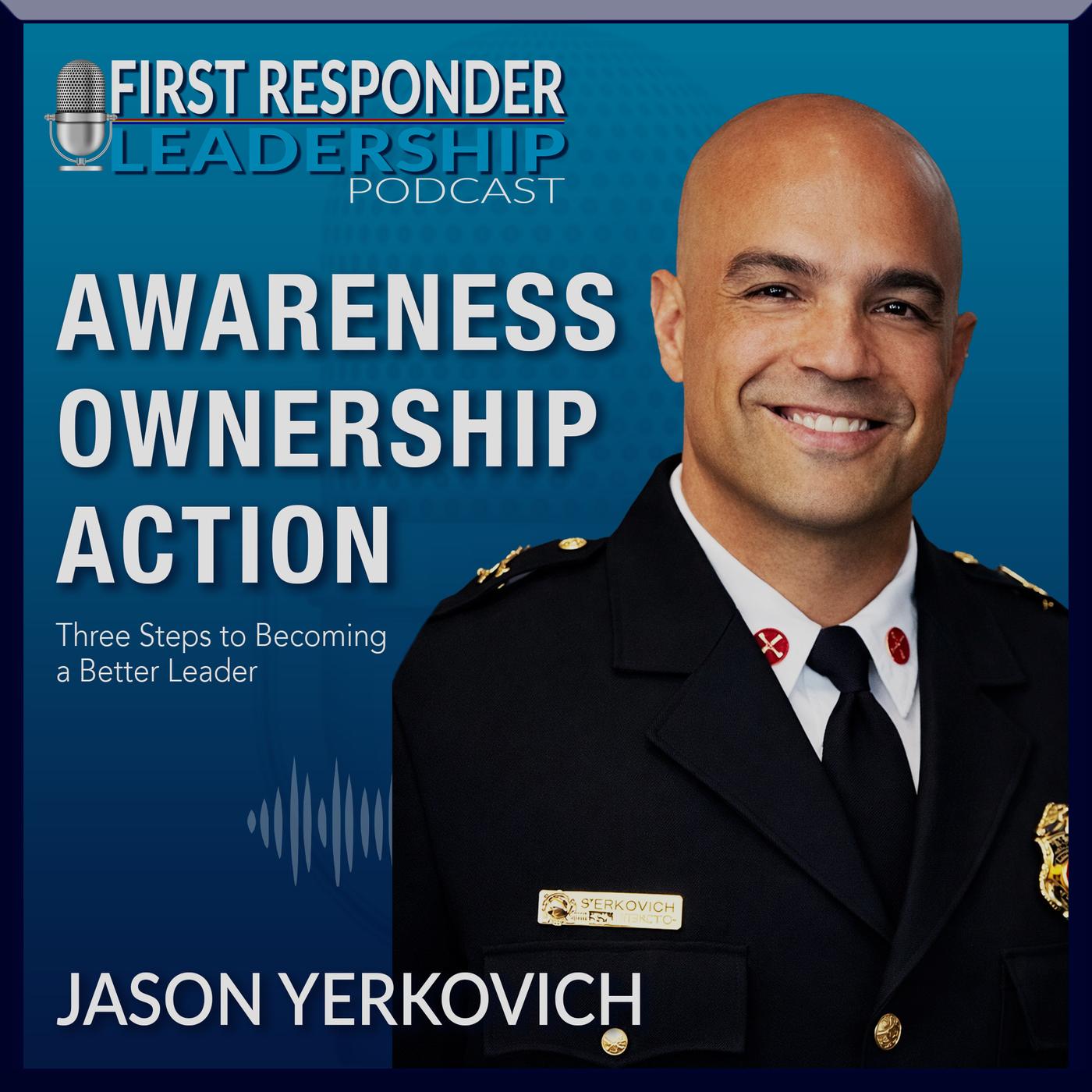
That's a part of that hyper-village-ence of bad traits that come out into your leadership. So my whole point with leadership, and I know I hope I'm not rambling for people, is the fact that we can improve our leadership skills by understanding who we are. And once you understand, yeah, once you understand who you are, it's awareness is number one. Two is acknowledgement, or I say ownership.
Conrad Weaver (09:48.714)
Good.
Conrad Weaver (09:59.979)
Hmm. Boy, that's so important.
Conrad Weaver (10:06.804)
Mm-hmm.
Conrad Weaver (10:10.856)
Mm-hmm. Mm-hmm.
jason (10:10.87)
and three is action. And once you do that and you understand it, but awareness is that awareness and ownership part is a, that's a struggle for a lot of people. And I stress to people to understand that if you become aware of negative patterns that you're operating with in your own internal tactics, you're not insulting.
Conrad Weaver (10:23.872)
Mm-hmm.
jason (10:41.282)
your childhood. You're not insulting your parents. That's the wrong way to look at it. Because if you look at it that way, you're not going to improve. And if you're not going to take those steps to move forward, then how are you going to help build other leaders after you? Because that's the most important thing in our field. Make it better for the next person.
Conrad Weaver (10:52.149)
Mm-hmm.
Conrad Weaver (11:05.416)
Yeah. So have you done any work with the ACES score?
jason (11:09.836)
I have not. I have not, no. I've heard of it, but I have not. I haven't done... Yes, yes, yeah.
Conrad Weaver (11:10.912)
Are you familiar with that?
Mm-hmm. It's the adverse childhood experiences score. And I think that is a it's a great example of looking at your past and looking at, you know, your deep dark past to see what those patterns, you know, what what you're doing today can be imp impacted, in influenced by those experiences that happened in your past.
jason (11:34.882)
Yeah. Yeah. But I think we also need to be careful with saying, deep or dark or stuff like that, because they don't have to be right. At least to our perception, they might be childhood wise. So I didn't mean to try to correct or anything. but you know what I mean? Like, cause I think that's what kind of pushes some of, at least the men in our field away of, I didn't have that. I didn't face that, you know,
Conrad Weaver (11:45.524)
Sure. Yeah. Yeah.
Conrad Weaver (11:52.49)
No.
Conrad Weaver (11:59.797)
Mm, mm-hmm.
Mm-hmm.
jason (12:04.906)
suck it up, toughen up. That's how I was raised. My mom was militant. My mom was, she was an amazing human being. She still is. God bless her soul. She's suffering from dementia. But she was tough. I didn't have an option. My father worked at a factory six days a week, 10 to 12 hours a day, a hundred degrees plus in the winter. So the summers, can't imagine. I grew up old school and
Conrad Weaver (12:06.602)
Right.
jason (12:35.124)
my leadership skills started at home because my mother was militant and tough and my dad was quiet. He liked seeing people thrive. So I took things from both. But those negative parts are just things that I acknowledge now. I don't dwell on them. I love my folks. You know, I was blessed. I'm blessed. But as a leader,
Conrad Weaver (13:02.528)
Mm-hmm.
jason (13:05.986)
I think the biggest step that we can take truly is understanding how we operate. Because if we don't, you are going to continue to bring those negative skills as a leader, and you're going to keep going forward, and you're not going to understand that you are. I think that's the problem is the lack of self-awareness for some people.
And if they take the time to do that, I'm telling you, you're going to have leaders everywhere. And that's what you want. My crew, I'm blessed. have an amazing crew. Goldshift at Bridgiu, they're passionate. They're guys who I've taken a lesson in my career from one of the older guys, my mentor.
one of my mentors who passed away, but I would watch him at 50 something years old on that phone, calling station two before he hung up. He'd be like, I love you. And I'm like, I don't know if he's messing with these guys or no, he means it. He, he genuinely means it. I think he's messing with them too, cause he liked making them uncomfortable, but lo and behold, it's 12 years later.
I took that to heart thinking that's pretty cool. And now my guys say it to each other, we say it to each other. I mean, if I'm going to go into a burning building with you and risk my life with you and for you, I better damn love you. And don't get me wrong people, we'll go in for anybody, that's what we do. But that passion.
Conrad Weaver (14:49.298)
Yeah, for sure. Yeah.
Conrad Weaver (14:54.718)
Right. There's something special about being there for each other too.
jason (15:00.31)
Yes, yes. We are... it's supposed to be a brotherhood, sisterhood, and that's family. I...
Conrad Weaver (15:09.716)
Does that extend to when you're off duty?
jason (15:15.342)
I think, so if I think about the fire service of the past and now, residency really helped that with that outside of the firehouse. Unfortunately, we do not get together as much as we probably should, but we're also in the era of 48s, 72s, 96s, you know.
Conrad Weaver (15:26.986)
Mm, mm-hmm.
jason (15:45.556)
I would much rather have our occasional get togethers where there's intent behind it and intention and we're truly present with each other than my members not concentrating on going home to their families and being the leader at home that they need to be. Because in our life and in our careers, the lack of sleep, the excessive hours, the trauma and the things that we see
Conrad Weaver (15:58.913)
Mm-hmm.
Mm-hmm.
jason (16:16.724)
we do not have time. There's not enough time for us. So when you go home, number one priority absolutely should be a learn decompression, learn techniques and habits to be healthier, whether it's exercising therapy, whatever helps you decompress. My best friend here with my podcast, WeGolf.
Conrad Weaver (16:35.072)
Mm-hmm.
jason (16:44.674)
Golfing is one of my great decompressions. I love it. But if we don't do those things, we are going to fall so short at home. And that's where to bring it all back to what we were talking about before. That's where one of my big and most confusing things in my life was the turning point. Why am I succeeding at work? Why am I?
getting promoted, why are things going so well there, but at home, they're not. How, what's going on? Well, I hit that rock bottom, I examined my blueprint, my patterns and understand that those negative traits helped me excel at work. Not at home, you know, but it's never too late. And that's the beauty of it. That's the beauty of life for me.
Conrad Weaver (17:39.424)
Do you think it's easier to lead a team than it is to lead yourself?
jason (17:43.86)
Absolutely. 100%. 100%. I will...
I will take a member. I will put him under my wing. I will support them. I will love them. I I tell these guys all the time I my goal and I know for a fact it will happen. If you put in the work, you're going to be better than me. You're going to be a better boss. You're a leader. You're going to be. That's the goal. My goal is not to walk out of there going, look what Jay did. I could care less about that. That's not what it's about.
It's about serving people and with leadership, that's my style is servant leadership. I think it's the most beautiful form of leadership. I think if you
Conrad Weaver (18:26.922)
Mm-hmm.
Conrad Weaver (18:31.678)
Is that something that's common or not so much in the fire service?
jason (18:40.62)
I don't think it's as common right now. I think it has a potential to become more relevant from the circles that I'm around and the people I talk to, the officers, the lieutenants, and the battalion chiefs that I know from neighboring departments. We have a lot. I mean, the potential is through the roof. The understanding and the awareness of these members are
They're fantastic. But I will with my platform, my socials and my book, and that will be that's in the works with my notes and writing right now for a book about my passion for servant leadership. Because I don't know, ever since I started listening to and reading John C. Maxwell, it just makes sense to me to get the most out of people.
And it's not that's not the intent is I'm gonna get what I can out of you. It's to make them thrive. You know, when you make someone excel and make someone or not make someone help them get to success. I'm a big believer in karma. Good things are going to happen for everybody around, you know.
Conrad Weaver (19:44.49)
Yeah.
Conrad Weaver (19:50.666)
Mm-hmm.
Conrad Weaver (19:57.313)
Mm-hmm. Well, I think I think as Maxwell who says, you know, when or or or maybe someone in his his s his circle says when leaders get better, everybody gets better.
jason (20:08.682)
Absolutely. Absolutely.
Conrad Weaver (20:10.312)
And when you are lifting people up and adding value to them, it adds value to the whole team.
jason (20:15.928)
Yes. that's, that's in the whole essence of my life. That's the blueprint that I want in my fire service is what I can take from home. I'm going to, I tell my, my members all the time, listen, do I love you as much as my son? No. Do I care about you as much as my son? I really truly guys, I do. I really do. Because
I'm not going to be put in this position and take it lightly to the fact that
jason (20:50.226)
I'm going to enjoy or feel a sense of success without everybody else. No, because the only reason I sit where I'm at or the rank that I'm at is because of everybody who helped build me up. think Jason didn't get anywhere by himself. Absolutely not. had leaders, had, barn bosses, had partners, I had members, I had teammates that all
help get me where I'm at. And if it wasn't for them, I wouldn't be where I'm at. You know?
Conrad Weaver (21:24.352)
Mm-hmm. What are some bad leadership habits or experiences that have been passed on through the fire service from generation to generation? What are some of those things that maybe could be different?
jason (21:41.11)
Well, referencing what we did earlier, just we lightly touched on it. But the transition from the World War Two vets, the Vietnam vets, those guys that came in and were thrusted upon them to be leaders because they were thrown into situations where you have no other option. So when they came home, and side note, anybody who's in the military, if
you're seeking and you're looking for teammates and you're looking for a camaraderie that you're missing, the fire service is a great spot to be. We benefit from you. But when they came back and they were thrust in, they were outstanding leaders. But when you have some great leaders sometimes, maybe the administration part and that management aspect wasn't that great. So
Conrad Weaver (22:40.609)
Mm-hmm.
jason (22:41.708)
All of a sudden you have our classes are now focused on management. So now we're creating bosses. So I think we had a time span there where we didn't do it on purpose, but we might've created some micromanagement issues. I would say that that's been the biggest struggle when I came up. I'm also, what do you call it? Zennial. So I'm Gen X and millennial. So I do have
Conrad Weaver (22:46.508)
Mm-hmm.
Mm-hmm.
Conrad Weaver (22:58.912)
Hmm. Hmm.
jason (23:12.064)
Ironically in my position, I do have problems with authority. when I have members that do, I have empathy. I feel it. I get it. So I use those feelings to relate to them. But yeah, I would say micromanagement in the end all be all is something that should be avoided at all costs. You will lose members and you will lose their faith in you faster than anything.
Conrad Weaver (23:41.836)
you
jason (23:42.2)
can't do it, you gotta trust him.
Conrad Weaver (23:45.196)
I think it's Simon Sinek who says that a leader is, or a boss is someone who is in charge and leadership is not being in charge. Leadership is taking care of those in your charge.
jason (24:02.414)
I mean, you can't say it better than that quote. His quotes, he's got so many of them, but you can't say it better than that quote. That quote is unbelievable. And it truly is the essence of what our goal should be as leaders. I'll say it, and I post quotes every day when I work on my door. But one of my true feelings that I have deep down,
Conrad Weaver (24:06.838)
Yeah, he does.
Conrad Weaver (24:16.713)
Mm-hmm.
jason (24:31.99)
in my life and it's not just the fire service. It's if I'm enjoying success, you're going to sit down at the table and you're eating with me. I'm serving you. Let's go. You know, but I think that also stems back now that I'm just thinking of this. I think that stems back from my background in football too. You know, if one, one piece of that, that cog in that machine,
messes up, everybody goes down and I was raised on that. And I'm going to do another plug here. Athletes, if you are going into the work world and you are seeking a locker room environment with teammates and people who the essence is team, you'd be great in the fire service too. And I hate to do these plugs.
Conrad Weaver (25:02.195)
Mm-hmm.
jason (25:28.834)
But the reality is for some reason, we're short right now. I don't get it.
Conrad Weaver (25:33.056)
Yeah. And it takes, and for, especially in the fire service, it takes athletes to do the work that you guys do. You got to be strong. You got to be healthy. got to, you got, you got some crazy stuff you have to do.
jason (25:42.741)
Absolutely.
Absolutely. Yeah, no, I joke around a lot because my circle outside of the fire service is I know plenty of coaches, ex-athletes, I don't call them ex-athletes, athletes. But I always express that. like, man, if I could just do a tour of high schools and colleges and just express the need of
that physical strength and ability and that there's a career out there that a lot of people don't know about. I didn't know about it till I was 25 or 26 and then I changed careers and it's been a blessing ever since.
Conrad Weaver (26:19.564)
Mm-hmm.
Conrad Weaver (26:29.516)
So I think you've said that leadership starts with awareness and accountability. Which of these is harder for most people?
jason (26:34.296)
Mm-hmm.
jason (26:38.475)
or accountability.
Conrad Weaver (26:40.672)
Bye.
jason (26:41.61)
Ownership. Because I think people can get to being aware, but it's easier to brush it under the rug and say, I'm fine. I'm fine. How many times do we hear that? And not only in life, but in first responders careers? I'm fine. You know, the things we see, you okay? I'm fine. Until we crack that door completely open, it's cracked open until we bust that door completely open.
for people to feel comfortable to say, you know what, I'm not fine. And that's honestly would change my life. At one point, I wasn't fine. And I'll be honest, if I don't keep following the path of continued awareness and ownership, I'm not gonna be fine. And I have a son, a wife, stepkids, and my parents and my friends in my community.
I gotta be fine. And I'm gonna be fine because I am taking healthy routes. And that's what we need more people to do.
Conrad Weaver (27:50.198)
So if someone finds themselves in an unhealthy environment and unhealthy culture, what can they do to change that within the organization if they're not like the leader in the organization?
jason (28:03.286)
Well, to that point, and you said it earlier, you don't have to be at the top to be a leader. Leaders are everywhere. Leaders are at the bottom, they're at the top, they're in the middle, they're everywhere. What would my key advice be? Patience. This is we live in a world where we want things right away. But changing a culture statistically, I think, takes a minimum of 10 years. So if you're going to
want to be a part of that organization and continue to be a part of that organization, you need to understand that it's going to take time. One of the greatest lessons I was taught by Battalion Chief in one of my officer classes, and it changed my whole outlook on my career, I was telling them about the issues I was having.
what we would call in class the dark ages, what felt like the dark ages in our organization. And I was complaining. I was...
whining about it, you know, in class and saying, well, what if this, what if that? And he goes, when you get to the point where you understand that the seeds you're planting, that shade's not meant for you, it's meant for the people after you, then you'll understand leadership. Ooh, that hit me like a ton of bricks. I went home, I could say I probably thought about that for weeks, not even talking about it with anyone.
just thinking about it, marinating, just, holy cow, that's the path forward for me. I'm not going to do anything but that. And then the servant leadership and all that stuff follows in my life after that, because I officer classes were just slightly before my life-changing stuff.
Conrad Weaver (30:00.108)
Mm-hmm.
Conrad Weaver (30:09.293)
What can people can a leader do to build trust with people who have been disappointed by previous leaders?
jason (30:22.254)
cliche answer here to start is just lead by example. I tell members all the time, you filled out a resume to get hired, but that's not your resume. Your resume starts when you walk through that door and people are taking notes. and they're going to take notes. Cause once you cross that line from blue shirt to officer, at least in the fire service, those notes are going to come right back out.
When you start requesting things that you never did and that you never took pride in, those people are going to say, I'm not going to use the middle finger, but that's what they're going to do behind your back. They're going to say, Nope. So if you lead by example, and then number two is my opinion, don't micromanage. You're there to support them. if you, whatever field you're in and my, our field, especially
Conrad Weaver (31:13.654)
Mm-hmm.
jason (31:20.926)
If you're going out to drill and train, you better train with them. Because if you stand there watching, why are they going to believe in you? So that's another form of example. But if you don't micromanage and you put a belief and you train together, training together makes the belief in your members for you. So I've said this on another podcast.
Conrad Weaver (31:27.702)
Hmm.
jason (31:50.081)
My guys know it.
I've changed a little bit culturally for our department that I don't go on the calls that they don't need me on. They don't need a shadow. If I have a young ACO or lieutenant acting company officer, I might go because they might need me or I can give some advice on my perspective. But other than that, how am I going to build trust in them if they're not doing the job? They have me looking over them.
Conrad Weaver (32:10.188)
you
jason (32:22.944)
And that goes to your question in regards to in my past. Yeah, that was something I'd always look over and go, I'm not doing that in the future. I can't do that because it just aggravates you and then you don't they don't believe in you. You know.
Conrad Weaver (32:37.44)
That sounds like humility. Is that important thing in leadership?
jason (32:43.074)
Yeah, absolutely. Absolutely. think if you have humility, it gives you the ability to have empathy. And empathy is a huge thing. mean, empathy is a part of servant leadership. And empathy is not something that we're taught to have, especially as boys growing up. I know in my generation, they might be doing it now, but that's a hard thing, unfortunately, to try to teach the
Conrad Weaver (32:54.934)
Mm-hmm.
jason (33:12.364)
the generational men who were raised with just be tough, be tough. Man, you can be tough and be empathetic. To me, that's a fact. I struggle sometimes thinking and watching people who lack that because...
In our career, we're also paramedics. And let me tell you something, if you don't have empathy as a medic, get out of my firehouse. It just doesn't work. doesn't go in and in.
Conrad Weaver (33:44.257)
Mm-hmm.
Conrad Weaver (33:53.067)
Mm-hmm.
jason (33:55.758)
And then I think with the final part to that for me with my members and not micromanaging, having humility is just be open. Just be honest. It's huge. It's huge. You'll get a lot of respect when people know that you're honest with them because they can trust you. You know, it's just like a relationship outside of the job. And truly,
Conrad Weaver (34:12.076)
Mm-hmm.
jason (34:24.694)
My reels lately and my socials lately have been talking to that point that if you're going to be a great communicator at home, it's going to happen at the firehouse. If you do it at the firehouse, it's going to happen at home because then it becomes you and that's who you are. You know.
Conrad Weaver (34:42.664)
not this split personality that so many people live a life that way. Yeah.
jason (34:45.282)
Yeah, I've lived that life. Yeah. Yeah. I think a lot of first responders unfortunately do. but that's, that's, that's what this is for. That's what these conversations are for. So people truly understand that it's okay to, acknowledge these things and to say, you know what? We can do better. There's nothing wrong with wanting to do better. You could still go to that firehouse.
Conrad Weaver (34:50.796)
Mm-hmm.
jason (35:14.86)
You can hit the gym. You can be the bad buff mama jamma, right? You can train and be the best at the job. Have no fear. Be a tough man, tough woman. And still at the end of the day, have an empathetic heart and appreciation for your crew. Love them. Go home and do the same thing for your family.
It's got to encompass your whole life.
Conrad Weaver (35:41.942)
What are some of the, yeah. What are some of the habits that you have established that make the biggest difference for you in both your leadership at the firehouse and your leadership at home?
jason (35:54.862)
that would be first and foremost is for me therapy with my wife. I'm remarried. I know I've had, we've actually had a friend.
who said they're like, they're newly married. What do they need therapy for? Well, let me tell you something, remarried, you're bringing in those blueprints and those old patterns. So that kind of gave me the even hyper focus on understanding that.
therapy and talking and conversations is meant just for you to understand. And the more you're willing to understand, the more you're eventually going to start creating your new pattern for either work or your partner. And I had to do that, and I'll be honest, I had to do that with full force passion after...
I wasn't going at it 100 % with my wife Jessica now. And it wasn't fair to her, and it wasn't fair to me. So I would say therapy number one for me is a great aspect. Exercise, I love. For me personally, wintertime, cold time, I rock. Summertime, I'll do a
The runs have become jogs. The jog sometimes walks and that's okay. In my field, gotta, physicality is a huge thing, but physicality and being physical is just that entrance way for your brain to get healthier too. It's not just about being physical. Those traits and qualities that you end up getting that benefit from being physical are gonna be beneficial to your brain.
Conrad Weaver (37:57.324)
Mm-hmm.
jason (37:57.486)
And then just healthy habits eating eating cleaner and better. I'm blessed Jess. Thank you. She's the best cook on the planet so healthy habits, you know because
I know it's cliche. It's first responder world. The bad habits were our go-tos. You know, don't talk. Go have a drink with the guys. You'll be fine. Compartmentalize, tuck it away. Little do we know those things are just sitting there waiting, festering, and waiting for, they're waiting to come out. And unfortunately, they're, they might come out at the firehouse, but if they come out at home, shame on us.
Conrad Weaver (38:31.723)
Mm-hmm.
Conrad Weaver (38:43.5)
What do you do to recharge emotionally, maybe after a particularly tough shift and so that you don't carry that home with you?
jason (38:54.466)
Yeah, I have about a 45, 55 minute drive home. I make sure that it's a purposeful drive. It's not just driving. So I can be aware to try to decompress. I know the car is not the best time to do it or the best outlet, but it is an outlet.
Luckily, I'm blessed now with Jess and I that with our therapy and talking, she does understand being in this world and this, a fire wife that I feel comfortable enough now in my life to say, babe, I'm off. It has nothing to do with you. It has nothing to do with home. I'm off. I just need a moment. So honesty is a huge thing.
And then if Jess is working or if she's out at the gym, I'm going to the golf course, my friend. I'm going to the golf course and I'm gonna grab the pole cart and I'm gonna walk it. I'm gonna play 18 and two and a half hours by myself right after work and get my car and just feel a lot better. But yeah, man, talking, shooting.
Conrad Weaver (40:00.31)
Yeah.
Conrad Weaver (40:06.156)
Mm.
Conrad Weaver (40:14.508)
Mm-hmm.
jason (40:19.224)
shooting text to your guys on the shift. Like if you can have that open relationship, it's good. And that's another thing I think people need to understand is.
Conrad Weaver (40:25.206)
Mm-hmm.
jason (40:30.978)
I think there's a misunderstanding that when you get to the officer level, like there's this fine line, like you can't be the friendships or have the friendships that you had before. And that's totally wrong. You know, and, but at the same time, you have to respect when they have their own text threads and you're not on it. It's nothing against you. It's okay.
Conrad Weaver (40:57.91)
Mm-hmm.
jason (41:00.738)
They need their space from you because you are their boss. You know, but you can still be friends with them.
I wouldn't have it any other way. I want to be friends with them because I want to make sure that they know that my checking up on them, my understanding that they're going through, they're going through things in their own personal lives. And if you're a leader that cares, you're going to know that. them even saying a word, you'll just be aware of it. I'm able now, shoot a text, come in my office. Everything OK? No? They say no? OK.
I know there's something wrong, but when the time comes, they know with how I lead that my door is open and they're more than welcome to come in. I've experienced that many a time. Cried it out, hugged it out.
Conrad Weaver (41:48.321)
Hmm.
jason (41:56.268)
That's the world we need for people.
Conrad Weaver (41:58.028)
What's one conversation that every leader needs to have with their crew?
jason (42:06.879)
I it's one of my favorite quotes ever. It's not about you.
I don't want to, mean, you could tack on to that, get over yourself if you make it about you, but it's not about you. It's, it's literally about outside those four walls. It's about the community we serve inside these four walls. You can't forget that that service doesn't stop and you got to serve each other. Right? This is, this isn't the rat race. This isn't, we are going to compete.
to elevate and promote and stuff like that. I get that. But if you promote and I didn't, congratulations. That's awesome. What can we make you, what can we do to help you become the leader that we need? Because at the end of the day, it's 24 hours, 48 hours, 72 hours. I mean, we have a third of our life together.
So supporting each other is a lot better than stabbing each other behind the back and going that route, which unfortunately as a brother sisterhood, that's like a brother sister relationship. And I'm not gonna pretend like that doesn't happen, it does. But when we can minimize that stuff and reduce it, I think then we're better overall as crews.
Conrad Weaver (43:41.942)
So I want to do something, I'm gonna do a little lightning round here. So just quick answers. So the first one is leadership is.
jason (43:45.538)
Okay, all right. All right.
jason (43:51.736)
serving.
Conrad Weaver (43:53.324)
Courage is.
jason (43:56.094)
jeez.
jason (44:01.55)
The ability to, courage is the ability to be humble. And yeah, I'll move on to the next one, because that one, that's a strong one.
Conrad Weaver (44:10.572)
Mm.
Conrad Weaver (44:15.488)
Yeah, I like that. wellness is.
jason (44:20.15)
Wellness is taking care of yourself and everyone else around you. But you got to take care of yourself.
Conrad Weaver (44:23.756)
The best leader ever worked for.
jason (44:29.513)
Oof.
Man.
I'm gonna say this because it's been throughout my whole life. I am spiritual. I'm not.
uber religious, but I am very spiritual and from my childhood till now, when I think of servitude, or not servitude, servanship and being a servant, it was Jesus. Literally. That's his whole message is to serve others. And man, when I think about that story and how much it influenced me in my childhood and still to this day,
You don't have to be someone who goes to church all the time or anything to understand what his servantship was all about. And it's kind of a beautiful thing.
Conrad Weaver (45:31.904)
Mm-hmm. Yeah. So, so last one for the lightning round. One leadership book everyone should read.
jason (45:39.726)
Ooooo
Conrad Weaver (45:46.924)
other than yours.
jason (45:48.374)
Well, I appreciate that.
I'm a sucker for Goggin's book just because it hit the right nerves for me. It hit the right motivation for me because I think more so than anything for Goggin's message and how he approaches things, that's not fully me, but I embraced so much of that raw, raw just like...
get over it be tough, cuz I can embrace that too and I do love that part. just, yeah, I gotta say Can't Hurt Me was my favorite book.
Conrad Weaver (46:38.028)
So as you wrap up here, I want you to think about this. if every firefighter, police officer, dispatcher, EMT, first responder listening today remembered one sentence from our conversation, what would it, what would it be?
jason (46:53.004)
Be aware, learn awareness of yourself so you can take care of yourself. That's not being selfish, that's being healthier. And your members, whomever you're leading, they're going to benefit from that too. And so is your family.
Conrad Weaver (47:08.286)
Mm hmm. Did did you back when you wrote your book? I how did that impact you?
jason (47:16.386)
Wow, easy. This is an easy one. Accountability. I can't put that out there and live a false life. When I put that out there, it felt like a challenge to myself saying, if you're going to truly believe this, you want to put it out there? You better live it, And I feel that I have. There might be times where
Just like anybody in life, I struggle. But I know when I look at this thing, that's my plug right there. When I look at that, I know, hey Jay, you didn't get this far to only come this far, you know.
Conrad Weaver (48:00.439)
So final question, you say we don't have to become the prisoners of the patterns we inherited. So can you share a time when you realized you were repeating a pattern in your own life and what it took to break it?
jason (48:15.906)
Yeah, I can say this is uncomfortable as it makes me to say it. My pattern of silence and distancing myself from people. I did it at work going through my divorce. I watched it growing up with my father and my mother. I did it in my past relationships.
And the part that's hard for me to say is I started doing it again to my wife now. And not now, a little back. But if I didn't...
allow myself to be aware and acknowledge and have ownership of it. I'm just repeating and I'm going to fall into the same patterns that I've lived. So that would be my prison. But luckily I have the key and I am the sheriff of my own brain. I dictate how my future is going to go in that sense. And
My blueprint now is something that's a continued process. I take pride and enjoy doing stuff like this and I'm completely honored to be here to hopefully one person will watch this and will help change their life for the better.
Conrad Weaver (49:48.682)
Yeah. So where can people find you?
jason (49:52.182)
They can find me on all my socials are on Instagram, TikTok, Facebook. It's Jason Yerkovich, author. I am also doing an upcoming podcast. There you go. Built Not Inherited. It is a podcast based on everything. Leadership, families, patterns. It's...
Conrad Weaver (50:10.156)
All right.
jason (50:22.4)
It's going to be a fun show where people are going to feel comfortable and well, at least I'm hoping, feeling comfortable and the intent of our goal is to help people by sharing our stories because we're all in this together. Nobody's getting out. We're all in this together. So why not share to help pick others up? My best friend here, he's a producer. His name is Jack Daly.
He's going to be the, in my opinion, he would deny this, but he's the backbone with everything here, with the relationship that we've had since we were kids. And I think that will come off to people to make it warm and biting and say, hey man, this is for family. This is for friends. This what we want to do. We just want to help everyone. So look for that built, not inherited. That'll be a podcast coming out. The book's carrying the fire. Break the pattern, lead with purpose.
Just truly humbled to be here. You exude kindness and I appreciate that very much. I like your socials. I like your reels. They're very calming and I keep doing what you're doing because I appreciate it a lot. Yeah, absolutely.
Conrad Weaver (51:35.596)
Thank you. Well, Jason, thank you just for taking time to be on the program today. I really appreciate it. And it's great to connect and thank you for your wisdom and sharing it with our audience. And let's go out there and make a difference in the world.
jason (51:41.112)
Thank you.
jason (51:49.354)
Absolutely. Thank you. Have a great day.
