


เกี่ยวกับตอนนี้
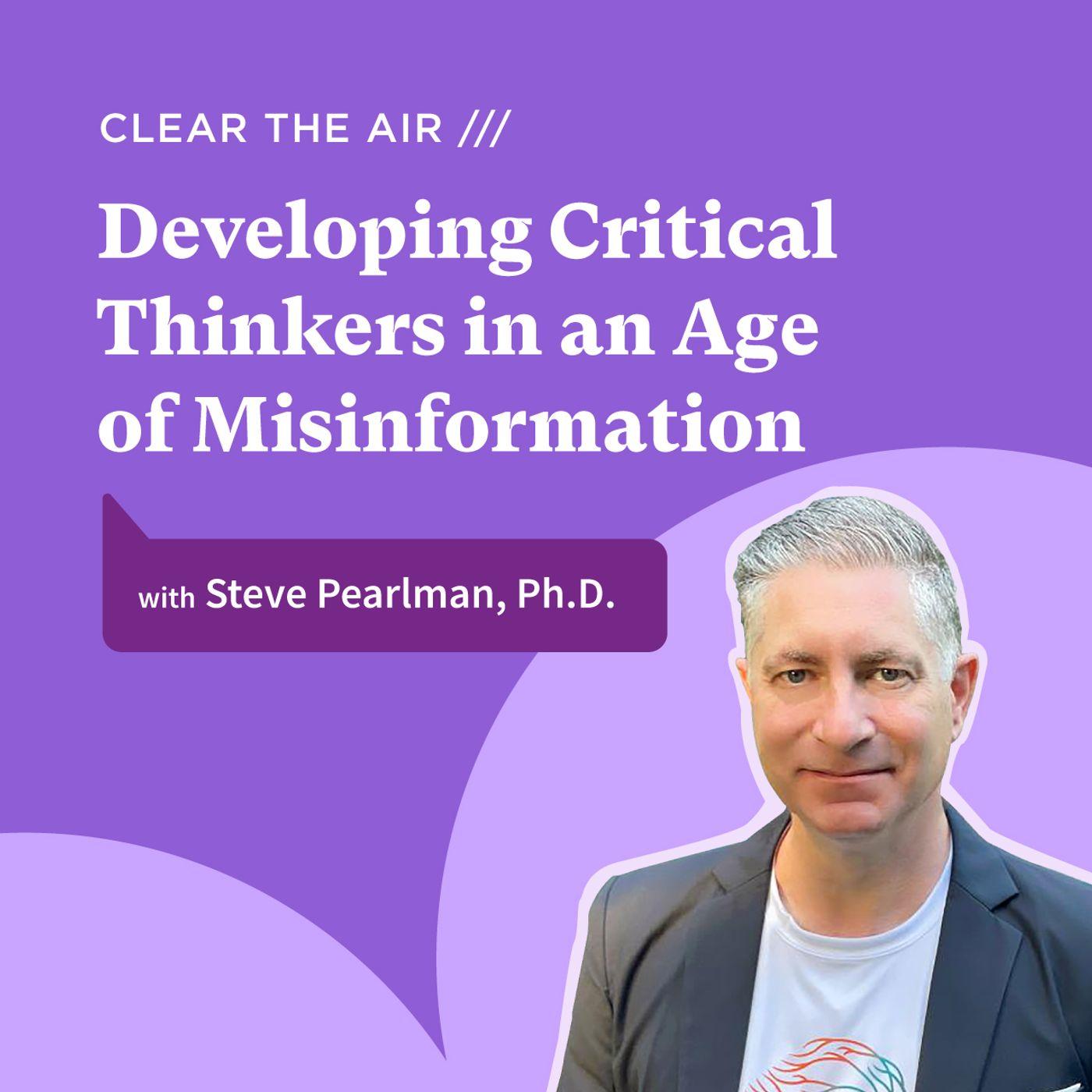
In an age overwhelmed by information, opinion, and polarization, the ability to think critically isn't just useful, it's essential. In this episode, we will learn how we can develop strategies to think critically and make smarter decisions, what it means to challenge assumptions, expose common thinking traps, and offer immediately usable strategies for clearer, more effective reasoning in everyday life.
Steve’s biography:
Steve Pearlman, Ph.D., is arguably the world’s foremost critical thinking expert. After founding the United States’ first academic department solely focused on researching critical thinking and how to teach people to do it, Steve subsequently shared his methods at educational institutions, conferences, and businesses. He is frequently featured in national and international media, and he’s the author of America’s Critical Thinking Crisis: The Failure and Promise of Education.
In this episode, we dive deep into answering the following thorny questions:
00:00 – Introduction
02:00 – Steve’s journey to becoming an expert in critical thinking
04:00 – Critical thinking definition and how it is taught
07:00 – What are default modes of how our brain functions
10:00 – How to maintain critical thinking when there is an overload of information
12:30 – How to assess whether a source of information is credible
15:00 – How to ask the right question when you don’t know what you don’t know
17:15 – Why reassessing the information and refining your initial question is key in critical thinking
18:00 – Why critical thinking does not always need to take a lot of time
19:30 – How to teach kids critical thinking by prioritising reasoning over authority (parenting example)
25:30 – Why intellectual humility is the solution when two people are in disagreement
29:30 – How to deal with someone who is rejecting reason and facts due to polarization in politics
33:10 – Is it possible to maintain critical thinking in the context of time pressures
35:15 – What training programs are available to develop critical thinking skills
37:20 – Example of how leaders remove critical thinking at meetings
39:45 – Example of how leaders can create an environment that fosters critical thinking
42:35 – Can people maintain critical thinking when experiencing burnout
45:30 – What resources are available to move from threat to a challenge that you can meet
48:20 – How to deal with a person who is not receptive to your thinking
51:10 – Why asking questions can cause someone to become defensive
53:20 – Ways to foster critical thinking in virtual meetings
55:15 – How to assess if someone has critical thinking skills
57:45 – How to constructively handle naysayers in discussions
59:50 – One tip to develop critical thinking skills
01:00:55 – What is Steve’s one wellbeing practice
Learn more about the Critical Thinking Institute:
https://www.thectinstitute.com/
Learn more about Clearhead
https://www.myclearhead.com/
ภาษาอังกฤษ
สหรัฐอเมริกา
ในตอนนี้
สำเนาบทสนทนา 🔗
Are you the producer of this podcast?
Add a podcast transcript
Need Audio-to-Text?
Transcribe with Listen411 in Just 60 Seconds
ตอนอื่นๆ ใน PODCAST นี้

For most of us, pain subsides fairly quickly as we recover from injury. For some, however, pain persists, making it challenging to return to our normal, full-functioning capacity. In some cases, chronic pain may develop due to stress, or even for unexplained reasons. However, due to the stigma and …

Despite living in a world filled with freedom, convenience, and choice, many of us still feel unhappy, lonely, and unfulfilled. Why is that, and what can evolutionary psychology teach us about who we are, where we come from, and what makes us happy? This episode explores how our most basic psycholo…

Family relationships can be some of the most supportive parts of our lives, but can be incredibly challenging when they are toxic. In this episode, we dive into what toxic family members really look like, and what to do about it. If you ever wanted to find a way forward when your relationships have…
Psychosocial hazards are now recognised as one of the most significant and complex risks facing modern workplaces, but what do they actually look like in practice, and how can organisations address them in meaningful, effective ways? In this webinar, we unpack real-world case studies and discuss ho…

Trauma can take many forms, from single shocking events affecting a whole community to deeply personal experiences that unfold over time during childhood. We’ll explore how different types of trauma, such as traumatic brain injury, post-traumatic stress disorder (PTSD), and more can negatively impa…
ข้อสงวนสิทธิ์: พอดแคสต์และอาร์ตเวิร์คที่ฝังอยู่ในหน้านี้มาจาก Clearhead ซึ่งเป็นทรัพย์สินของเจ้าของและไม่มีส่วนเกี่ยวข้องหรือรับรองโดย Listen Notes, Inc.
