

เกี่ยวกับตอนนี้

In Episode 1, I mentioned a competitive analysis I ran in thirty minutes that would have taken two weeks. A global network analysis — fifty-plus competitor locations, fifteen manufacturing hubs, proximity calculations, coverage gaps, and a full action plan for leadership.
I never finished that story.
The output wasn't a report. It was a functioning Node.js application with an interactive map my team still uses today. Google Antigravity didn't just run an analysis. It built a tool.
In this episode, I break down exactly how that happened — and why Google Antigravity produces results that most agentic AI tools can't match. We cover the three capabilities that make it different: its multi-agent architecture, its deep Google ecosystem integration, and its best-in-class browser control — including the audit trail that lets you review every browser session after the fact.
We also get into vibe coding — why Google Antigravity is my preferred environment for building knowledge worker applications, and what it means that non-technical professionals can now describe a dashboard or internal tool and have it built in a single session.
Plus: the Handoff Test — a simple three-question framework for knowing when Google Antigravity is the right tool to reach for, and when something else is a better fit.
What you'll learn:
- Why Google Antigravity was built as a developer IDE — and why that matters for knowledge workers
- How multi-agent parallel execution works and why it produces results in minutes that would otherwise take days
- What browser control actually means, and why the audit trail separates Google Antigravity from every other tool doing it
- How to vibe code a production-quality knowledge worker application without writing a single line of code
- The Handoff Test: three questions that tell you when to reach for Google Antigravity
AI Transformation Lab is hosted by Chris Bradley, CMO at Veritiv — a practitioner-focused series for leaders navigating the shift from generative to agentic AI.
ภาษาอังกฤษ
สหรัฐอเมริกา
สำเนาบทสนทนา 🔗
Are you the producer of this podcast?
Add a podcast transcript
Need Audio-to-Text?
Transcribe with Listen411 in Just 60 Seconds
ตอนอื่นๆ ใน PODCAST นี้
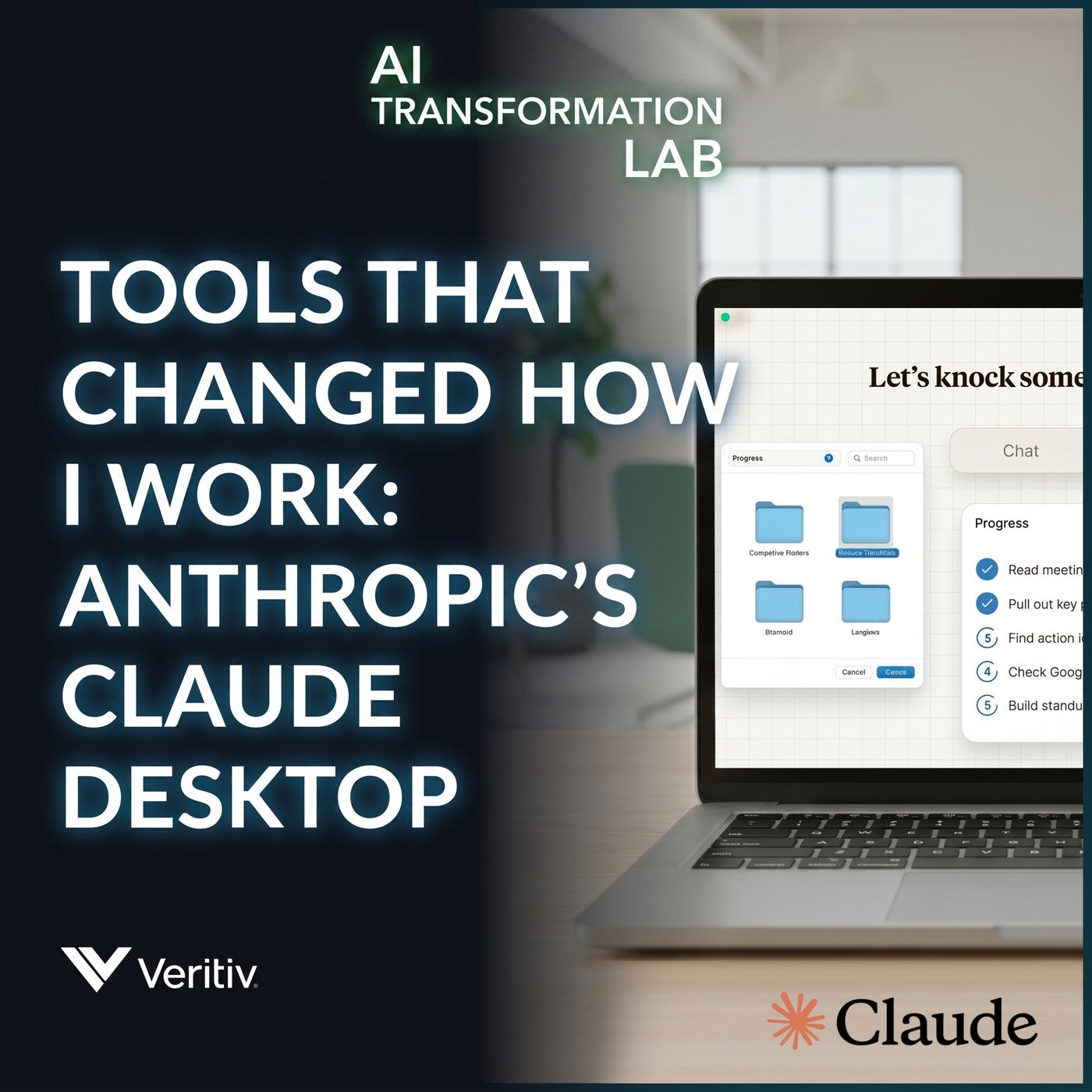
The big three AI labs are all building superapps — but each is packaging them differently. Google blurs everything together inside Antigravity. OpenAI is consolidating into Codex. Anthropic took a third path: three distinct surfaces inside one Claude desktop app — Chat, Cowork, and Code.
In this ep…

On April 16th, OpenAI shipped a capability expansion that turned Codex from a coding tool into a true agentic super app. Computer use, in-app browser, GPT Image 2.0, persistent memory, and a plugin ecosystem of ninety-plus integrations — layered on top of the desktop release from February.
The prac…
Four years of ChatGPT history. Two years of Claude projects. Custom instructions, saved memories, accumulated context built up across thousands of conversations. And then a new harness ships — Cowork, Claude Code, Codex — and suddenly the question isn't which AI do I use. It's how do I move what I'…
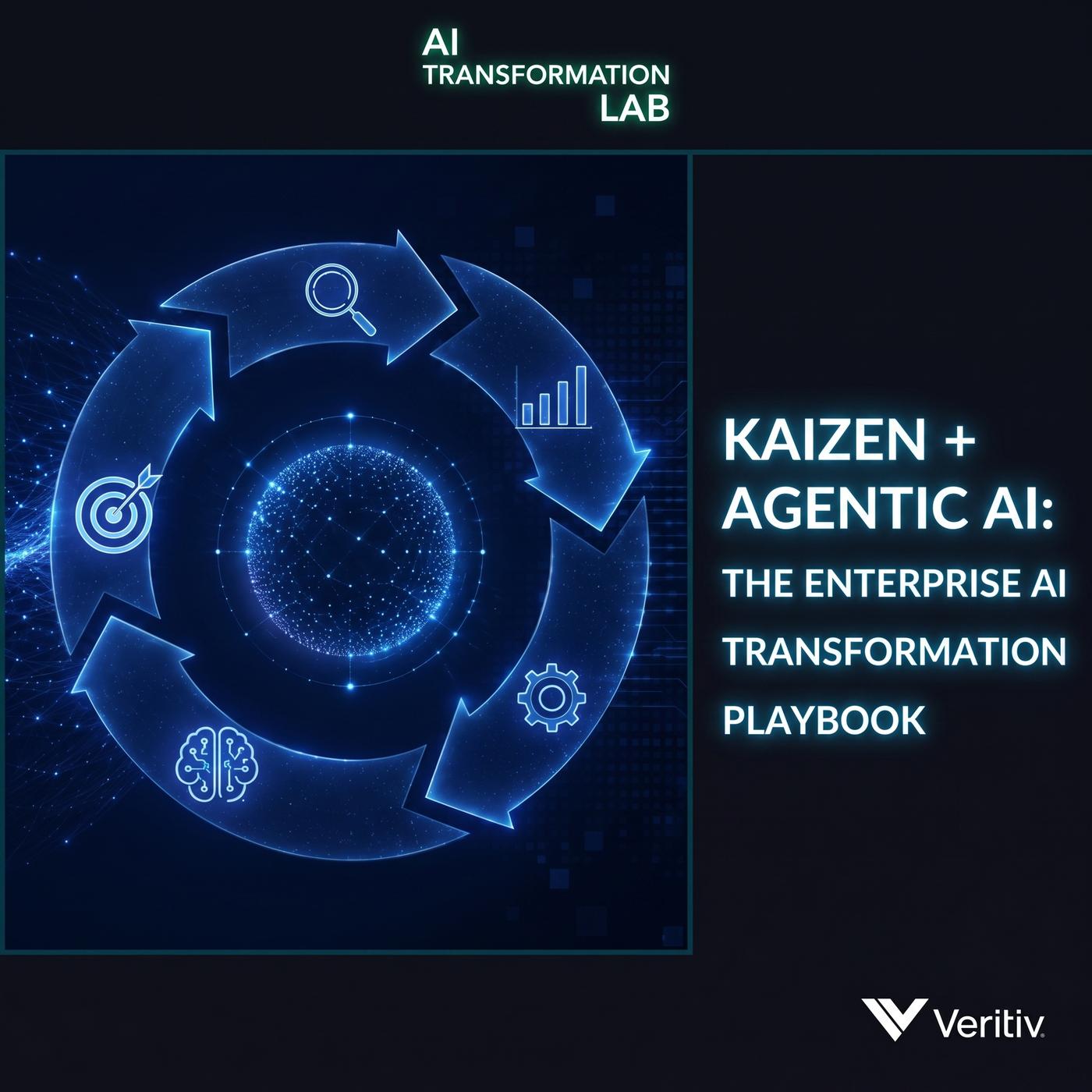
AI won't fix a broken process — it just helps you run it faster. That's the trap most organizations are walking into: pointing powerful agents at workflows that were never worth doing in the first place, and cementing the waste in place.
In this episode, Chris Bradley makes the case that Continuous…
ข้อสงวนสิทธิ์: พอดแคสต์และอาร์ตเวิร์คที่ฝังอยู่ในหน้านี้มาจาก Veritiv ซึ่งเป็นทรัพย์สินของเจ้าของและไม่มีส่วนเกี่ยวข้องหรือรับรองโดย Listen Notes, Inc.
