
OM DETTA AVSNITT

What if the marketing message you believe will work is not actually the message your customers care about?
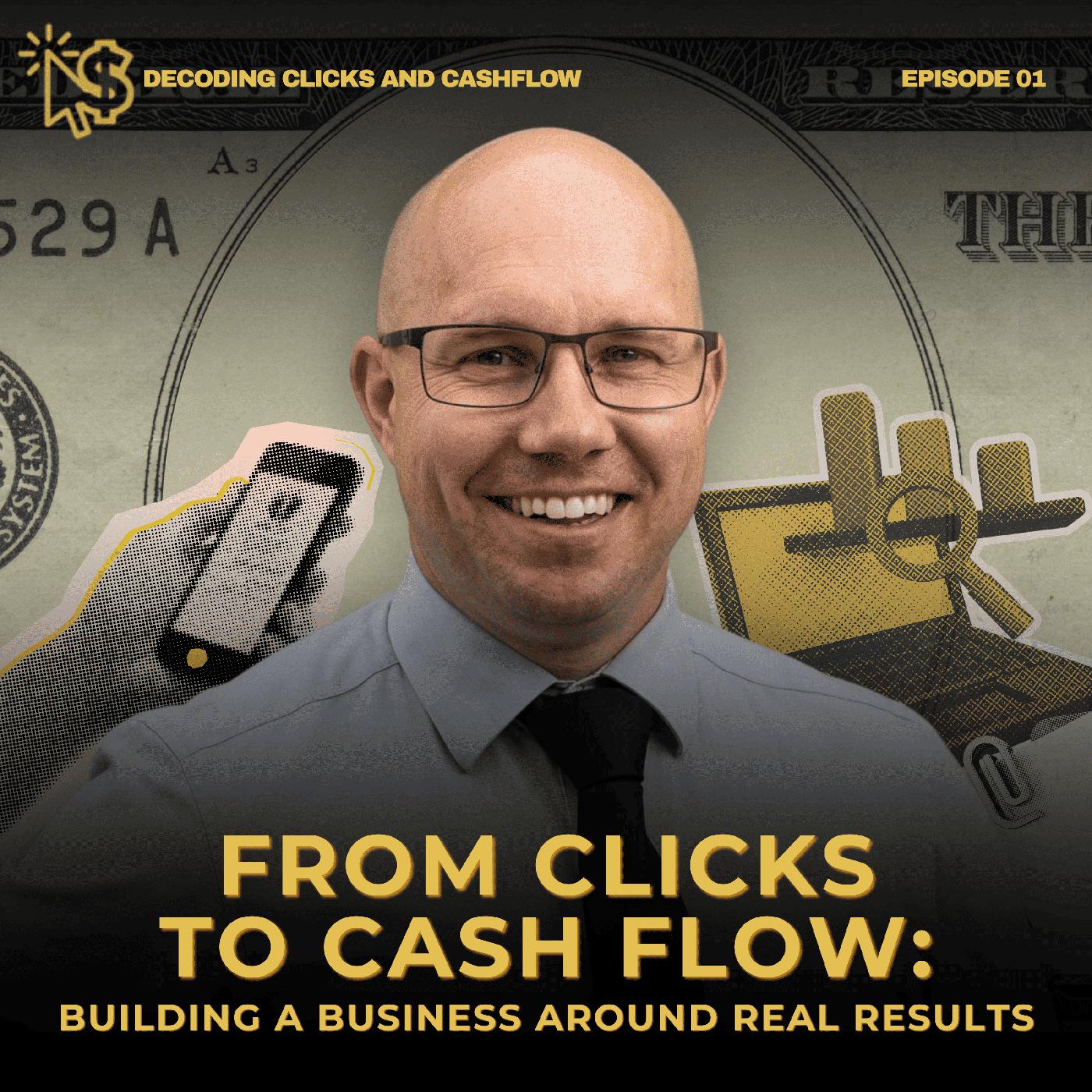
In this episode of Decoding Clicks and Cashflow Podcast, Tanner Holt sits down with Kim Pomares, CEO of Mendability, for a practical conversation about marketing data, customer research, testing, messaging, client acquisition, neurological development, entrepreneurship, and why business owners should pay attention to what customers actually do instead of relying only on assumptions.
Kim explains how data has played an important role in the growth of Mendability. When he joined the family business, the program had evidence behind it and many positive stories, but Kim knew stronger clinical data would be important if the company wanted to move beyond being viewed mainly as a last resort. Over time, Mendability completed clinical studies that gave the company stronger data about its approach.
But having strong research did not automatically solve the marketing problem.
Kim explains that one of the biggest challenges was learning how to communicate Mendability's message in a way that people would understand and respond to. Instead of simply asking customers what they wanted, the company began testing different messages and watching what people actually clicked, viewed, and engaged with.
The conversation explores why business owners can easily fall into the "curse of knowledge." Because they understand their products so well, they may assume customers think about the problem in the same way they do. Kim explains why real customer behavior can reveal something completely different.
In this episode, you'll discover:
-
Why customer behavior can be more useful than simply asking people what they prefer
-
How testing can help business owners challenge their own assumptions
-
Why statistical confidence matters when making marketing decisions
-
How small changes in words, images, and offers can affect customer response
-
Why a kitchen renovation test produced an unexpected winning image
-
How Kim tested different marketing messages for Mendability
-
Why clinical study results were not always the strongest marketing message
-
How messaging around time became important in Mendability's marketing
-
Why "The Six Week Proof" became the title of a Mendability webinar
-
How businesses can test different parts of the customer journey
-
Why warm audiences and cold traffic can respond differently
-
How inexpensive early tests can help identify ideas worth testing further
-
Why focus groups and hypothetical questions can produce misleading answers
-
How website behavior and heat maps can reveal what customers actually care about
-
Why businesses should keep testing even after finding a profitable baseline
Kim also shares an example from a friend who worked on high-end kitchen renovations. His friend believed professional photographs of completed kitchens would perform best in advertising because they showed the quality of his work. But when they tested different images, including finished kitchens, photos of the owner working, and pictures of quotes, the results surprised them.
The strongest group was the pictures of quotes. Kim explains that the quote images received about a 6 percent click-through rate, compared with about 4 percent for the finished kitchens and roughly 2.5 to 3 percent for pictures of the owner. The test became another reminder that what a business owner believes customers want to see may not match what customers actually respond to.
Kim also discusses how Mendability tested its own marketing. The company explored different customer pains, messages, educational formats, webinar titles, offers, and calls to action. One important finding was that messages connected to time strongly resonated with the audience. That testing eventually helped shape a webinar called The Six Week Proof.
Rather than rebuilding everything whenever something stops performing, Kim and Tanner discuss the value of creating a strong baseline and then continuing to test new ideas against it. Kim explains that having tested pieces across the customer journey helped him develop what he describes as a numbers-based client acquisition system.
The conversation also explores Mendability itself and how its approach differs from therapies that focus mainly on skills and drills. Kim explains that Mendability focuses on strengthening neurological function so the brain can become stronger, faster, more adaptable, and more resilient. The company primarily works with parents of children with autism, while Kim also discusses research and possible applications involving other neurological conditions.
Kim also opens up about the path that brought him into the family business. Early in life, he was interested in becoming a doctor or researcher and wanted to make a difference in the world. After spending time in Eastern Europe, his direction changed. He later studied graphic design, started a successful graphic design company, and eventually agreed to help his mother as her clinic grew.
At first, Kim was not convinced that his mother's approach could work as well as she believed. After becoming more involved, however, he saw the need for stronger clinical evidence and helped move the company toward a more data-based approach.
His interest in numbers started much earlier. Kim recalls programming games on his graphing calculator in high school, including a lottery-style game and another game involving angles, force, and hitting a target. Today, that same interest in testing, numbers, and problem-solving continues to influence how he approaches both Mendability and marketing.
Kim also discusses delegation and why outsourcing does not mean business owners should completely remove themselves from the work. His experience taught him that owners still need to understand what is happening and remain involved in protecting the direction of the business.
His message throughout the conversation is clear: business owners should test their assumptions, watch what customers actually do, and use real data to build a marketing system they can improve over time.
If you're a business owner, marketer, service provider, or entrepreneur looking to better understand your customers, improve your messaging, test ideas before making large investments, and build a more reliable client acquisition system, this episode provides practical lessons you can apply.
🎙️ Listen to the full episode and discover how testing customer behavior, challenging your assumptions, and following the data can help you build marketing that connects with the people you want to reach.
#Entrepreneurship #DigitalMarketing #BusinessGrowth #MarketingData #CustomerResearch #MarketingStrategy #ConversionOptimization #ABTesting #ClientAcquisition #Mendability
UTSKRIFT 🔗
SÖK TIDIGARE AVSNITT
ANDRA EPISODER I DENNA PODCAST