


OM DETTA AVSNITT
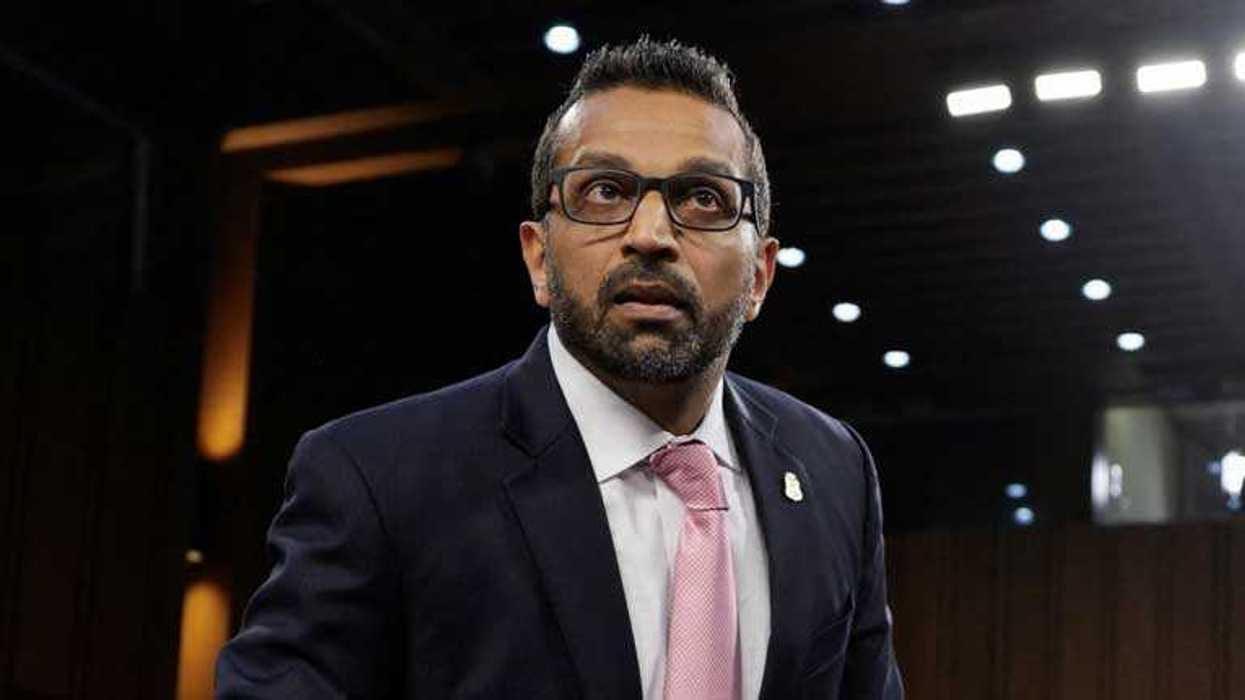
What happened
AlterNet reports that the FBI is confronting two separate crises: internal turmoil over the removal of two veteran counterterrorism supervisors and a breach exposing tens of thousands of personnel files. Deputy Director Andrew Bailey resigned after the personnel dispute, but the reporting does not establish why he left or whether he opposed the removals.
Michael Burgwald and Courtland Rae were reassigned after challenging an order to investigate harassing calls to conservative podcaster Katie Miller, whose husband, Stephen Miller, is a White House deputy. The agents reportedly concluded that the calls neither met the legal threshold for an FBI investigation nor involved terrorism. CNN, as cited by AlterNet, reported that the White House and senior FBI officials accused the pair of obstructing investigations into serious threats and decided to remove them. Patel, the Millers and the White House denied responsibility or knowledge, while Patel reportedly expressed dissatisfaction with the Washington Field Office’s handling of the matter.
Separately, AlterNet reports that a hacking group called ShinyHunters obtained personally identifiable information about current and former FBI personnel. The group said it sought withdrawal of an FBI advisory targeting it and claimed it never intended to publish the data. The FBI was reportedly still determining how the breach occurred and what information had been taken; the article provides no evidence that the hackers released the broader cache or carried out their stated deadline.
Power chose the priority
The decisive hierarchy is not obscure. Kash Patel leads the FBI. Senior bureau officials control assignments and resources. The White House sits above an executive-branch agency whose leadership serves under the president. Burgwald and Rae could assess whether a complaint met investigative standards, but they could not protect their own positions after reaching an unwelcome conclusion.
That distinction matters because the dispute was not simply an office disagreement. According to the reporting, experienced counterterrorism officials applied a legal threshold and found the Miller complaints insufficient. They were then removed from counterterrorism leadership while politically connected complainants received attention from the bureau’s upper ranks.
The exact official who signed the reassignment order remains disputed. Institutional responsibility does not disappear with a missing signature. Senior leadership reportedly wanted the agents out, the agents lost their posts, and Patel headed the organization in which it happened. A bureaucracy cannot invoke its own chain of command when demanding obedience and then pretend decisions emerge spontaneously when accountability arrives.
A private grievance became a federal priority
Harassment can be serious, and the Millers were entitled to report conduct they regarded as threatening. They were not entitled to have political proximity replace the FBI’s legal standards. The relevant question was whether the reported conduct justified federal investigation and had a terrorism nexus. The supervisors reportedly said it did not.
Their reassignment sends a blunt signal down the hierarchy: professional judgment is tolerated only when it produces the result favored by powerful people. That is how selective enforcement takes root—not necessarily through a written order to persecute enemies, but through punishment that teaches officials which conclusions are safe.
The article also reports earlier resistance from career agents to using bureau resources against critical neighborhood flyers targeting Stephen Miller. If accurate, that episode reinforces the same concern: criticism, protest activity and criminal threats were being pressed into one politically useful category. Erasing those distinctions gives connected officials privileged access to coercive state power.
The accountability gap
AlterNet is strongest when it identifies the collision between political demands and investigative standards. It is weaker when it bundles Bailey’s resignation, the personnel dispute, the cyberattack, staffing reductions and Iranian sanctions evasion into one implied chain of causation without establishing each link.
Bailey’s timing may invite suspicion, but timing is not proof. The article says he clashed with Patel and resigned after the reassignments; it also concedes that his position on those removals is unknown. Likewise, the breach is plainly a grave institutional failure if the reported scope is accurate, but the story does not establish that personnel cuts caused it.
That looseness misdirects attention from the case the evidence can support. The problem does not need speculative connective tissue. FBI leaders reportedly devoted high-level attention to complaints from a White House official’s family, veteran supervisors were displaced after resisting, and responsibility for the decision became something every powerful participant denied possessing. That is already an indictment of governance.
Politicization has an opportunity cost
Every agent redirected toward a politically favored complaint is an agent unavailable for another assignment. AlterNet places that dispute beside reduced counterterrorism capacity, reassignment of personnel to immigration enforcement and a breach potentially valuable to foreign intelligence services. The article does not quantify the operational tradeoffs, but the governing choice is visible: leadership determines which risks receive personnel, urgency and protection.
The breach exposes the consequence of distorted priorities in unusually concrete terms. Current and former agents—and potentially their families—may face danger because sensitive personnel information escaped the bureau’s control. ShinyHunters’ assurance that it did not intend to publish the material is not a security guarantee. Once an outside group possesses the records, the FBI no longer controls their use.
Meanwhile, a Senate Democratic report cited by AlterNet found that 84 percent of 846 sanctioned crypto wallets linked to Iran dealt exclusively or nearly exclusively in U.S.-backed stablecoins. That finding does not prove a particular FBI failure, but it illustrates the scale of work competing for federal attention while leadership becomes absorbed in politically charged personal complaints.
The system protects proximity
The larger pattern is not bureaucratic confusion. It is asymmetry. Politically connected people can push their grievances upward until senior officials respond. Career personnel who insist on evidentiary and jurisdictional limits bear the professional risk. When the result becomes embarrassing, authority fragments into denials.
That structure rewards pliability and punishes restraint. It also leaves the public with the worst combination: an FBI potentially more responsive to presidential allies and less capable of protecting its own personnel. The systemic error is not that nobody knows who has power. It is that those who have it can exercise it through an institution, then hide behind the institution when consequences follow.
Thanks to Alter Net
Source: Inside the FBI’s biggest nightmare yet
This is a public episode. If you'd like to discuss this with other subscribers or get access to bonus episodes, visit paulstsmith.substack.com/subscribe


