

00:00:14
S1: This is studio One with Sam Rickard and Lizzy Eastham on Vision Australia Radio.
00:00:25
S2: Hello, I'm Sam and I'm Lizzy and this is studio One, your weekly look at life through a different lens here on Vision Australia Radio.
00:00:31
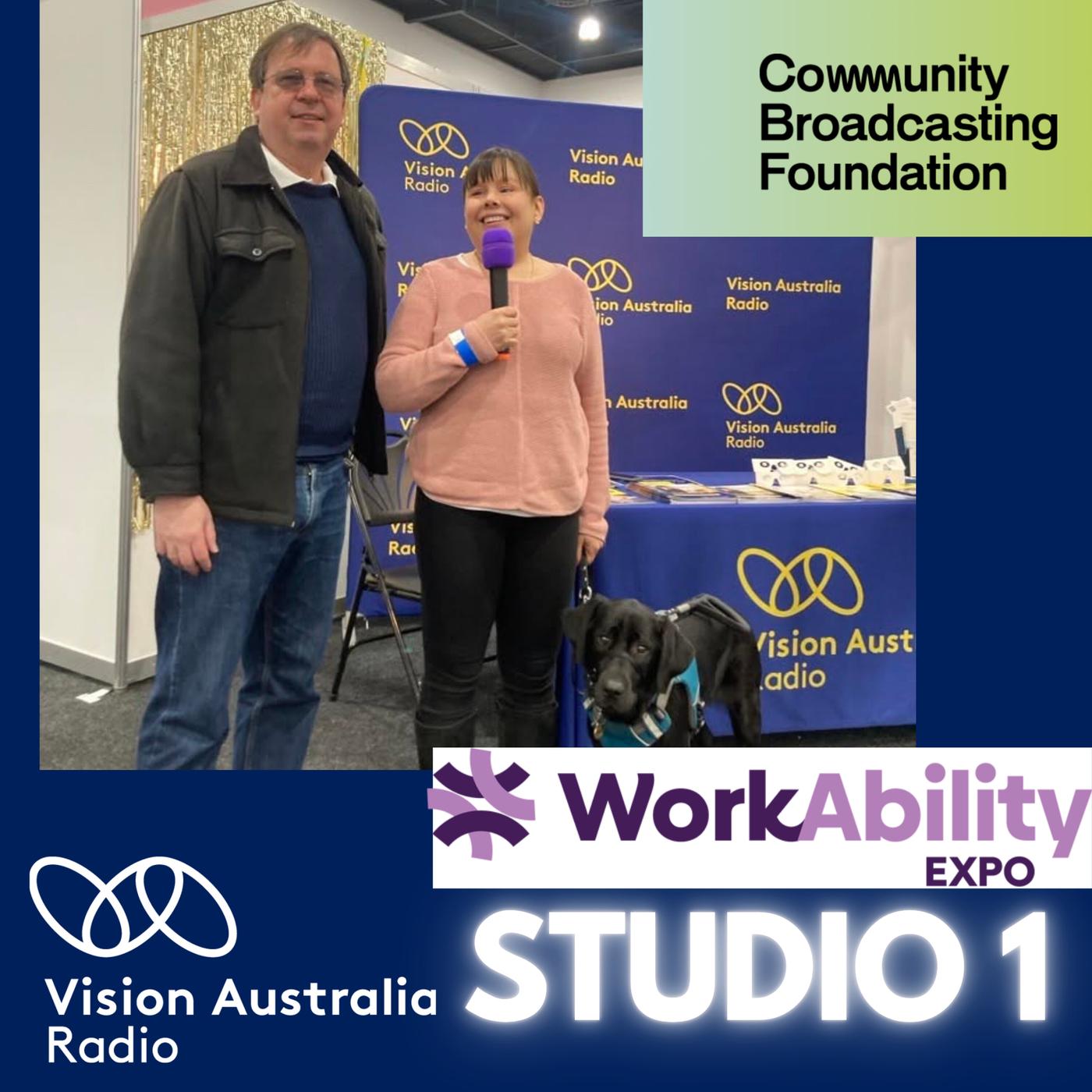
S3: This week we're out and about again, this time at the Workability Expo at the Adelaide Showgrounds.
00:00:36
S2: Some of our interviews include disability employment assistance providers, assisted housing, and a brief look at a little known genetic condition.
00:00:44
S3: As we always say at this point, please do get in touch with the show, whether you have experience of any of the issues covered on this week's episode of Studio One, or if you think there's something we should be talking about, you never know. Your story and insight may help someone who's dealing with something similar.
00:00:59
S2: You can email us Studio one at vision australia.org. That's studio number one at vision australia.org. Or perhaps you may want to join our WhatsApp group. Just simply follow the links in the podcast notes. Hello, Lizzy. I think you said that you were about to purchase a microwave last time we caught up one one that was very similar to the one we saw last week.
00:01:23
S3: Yeah. So Stephen and I actually, uh, Steven's a member at an auction house in Hindmarsh here down in Adelaide. And, um, there was a cobalt speech master microwave that was pretty much brand new. It was in its box. All the packaging was still whole. And basically the way it works is the highest bidder gets it. So a microwave that normally costs 450 bucks, we got for 70.
00:01:49
S2: That sounds like a great, great deal. So how's the thing settling in? How are you enjoying your new microwave?
00:01:54
S3: Well, herein lies the problem, Sam.
00:01:58
S2: Oh, dear. So it sounds like it's going to be serious.
00:02:01
S3: It is. We got it home and we set up the clock. I experimented with all the buttons to find out what they do. It talks. Basically, it looks good. From the outside, things are running well. Mhm. Then comes the first test. We put the, um, dog food that we cook in batches. We put a batch in for the girls for the dinner for that night. And, uh, we started the microwave. Yep. Lo and behold, the cooling fan doesn't work, so our microwave blows up.
00:02:33
S2: Wow. Okay. That's exciting.
00:02:34
S3: Yeah. At the moment, it's at a microwave service specialist. I never knew those things existed, and we haven't heard anything back. And it got taken last Wednesday, so it's not looking good for the, uh, the cobalt speech master, uh, that we purchased. And, you know, we've got some interesting conspiracy theories as to why things worked out the way they did. But yeah, basically that's I had a talking microwave for all of 12 minutes.
00:03:01
S2: And it talked that it worked, but it just the microwave bit didn't quite work.
00:03:05
S3: Oh no, the microwave bit worked very well. The girl's dog food was piping hot and needed to be put in the fridge for ten minutes to cool down.
00:03:12
S2: Oh, okay.
00:03:12
S3: It's just the cooling fan.
00:03:14
S2: Right? Okay. All right. So I think this is going to be a saga. So I look forward to hearing from what about what happens next? In the meantime, we're off to yet another expo. Anything that stood out to you? Um, on our little jaunt over to the Adelaide Showgrounds.
00:03:31
S3: Well, um, apart from how great the food at the cafeteria smelled. Yes. I actually didn't know anything about fragile X, which is the very little known condition, genetic condition that you alluded to in the intro. And so that interview with the Liz Jewel from fragile X Australia was very enlightening to me. I didn't know anything about it. And I also, I'd have to say that talking to the people at my ndic were great as well, because while you were interviewing Ibrahim, I got waylaid by his offsider who was completely interested in my seeing eye dog, Mackenzie.
00:04:11
S2: Well, um, I found the actual passion from some of the disability employment assistance organisations to be quite interesting. In fact, um, just because my experience previously with looking for work had people that had essentially checked out of the whole thing. Um, they often didn't know much about my disability or anything like that. And the people that we spoke to seemed to be quite passionate about not just finding work for people like ourselves, but for keeping them in work, which I think is really quite refreshing.
00:04:44
S3: Yeah. I think the Disability Employment Assistance Service, as it were, has come a long way in the last 10 to 15 years.
00:04:51
S2: One could only hope, could have only only got better. In the meantime, how about we head off to the Workability Expo?
00:05:01
S4: I am at a stand where it says a beneficent. And who am I talking to? Yeah. My name is Mark. I'm the NDIS manager for beneficent. Okay, what do you guys do? So we specialise in helping people who are on NDIS plan to find and keep a job. We can work with. We can work with school leavers who are transitioning into the workforce or any age bracket. And do you concentrate on any particular disability in general, or are you like a cover all as if you've got an NDIS plan? We'll have you. Yeah, we pretty much cover it all. We work one on one with people. We tailor our supports to their individual needs, their goals and their interests, and then we work with the labour market to try and find some supportive employers who can help people find and keep a job. There are always two barriers to people with a disability getting work. One is the workforce itself, but also there's the person who's looking for work. Which do you find the most challenging? Well, that is a good question. I think it's a combination of both. So we work with people with their capacity. So whatever they're able to do. Uh, and we then go and look for supportive employers. There's a lot of great employers out there who are willing to give people a go. Uh, some of them aren't as informed as we'd like them to be. So one of the things we do is we try and inform the employers about how they can support someone with a disability. Uh, and as a result, we're trying to reduce that disability employment gap that we have in our society. People with a disability are great workers. Um, it's just a matter of finding the right niche for them. Uh, and that's one of the things that we work hard to do is just find that niche that they can fit. So what is your background.
00:06:37
S2: In the disability sector? I mean, what sort of brought you here where we are now?
00:06:41
S4: Uh, well, my background is, uh, beneficent work with injury, illness, and disability. Uh, so we help people who have what we call a restriction in their capacity of one way or another. Uh, our staff range from, uh, allied health professionals, physiotherapists, occupational therapists, rehab counselors, uh, myself. I'm an adult educator. We also have some other educators. So we combine our resources and our, um, our, I guess, our expertise together to offer a, a broad ranging service that can cover health services, educational services and employment services. And we're all registered with the Career Development Association of Australia as well. So we're career practitioners, uh, and focus heavily on just helping people find suitable work. There was a quote I heard.
00:07:24
S2: Once that one of the benefits of, um, banging your head against the wall is that you may actually break through it. Have there been any occasions where you've actually managed to break through that wall?
00:07:35
S4: Yes, yes. I think persistence, uh, is great. We, we just approach employers a lot. Um, that's, that's probably the brick wall that we hit a lot is, um, it's easier for employers, uh, to just find able bodied people because they don't have to think too much or do too much. Uh, but with a little bit of persistence, uh, we've helped to educate some employers to see the benefits of hiring someone with a disability. So yeah, so that would be an example of just persistence is banging your head against that wall.
00:08:04
S2: Well, I mean, the funny thing is sometimes, I mean, the idea is that some employers have is that, yes, we have to work a little bit harder. But I mean, speaking from my point of view, often I bring my own solutions with me. And that's that would be similar for a lot of your other clients as well, wouldn't it.
00:08:20
S4: For someone with a disability to bring the solutions to the employer? I think so, particularly for mature aged people, for younger people transitioning out of school, not so much because they're still learning how to manage their disability. The parents are also helping the kids manage that. So that's where we come in as we can work with our our customers and our clients to understand as much as we can and then do that talking for them with the employer and, and bring those solutions to the employer.
00:08:47
S2: Do you have an example of like a major success story? We don't have to name names or anything like that, but is there anything that stands out to you where you're sort of close your eyes and you think, okay, this is a success story that we can quite happily boast about.
00:08:59
S4: Uh, yeah. Yeah, several come to mind. So a lot of young people come through us. Some of the success stories include, uh, helping, uh, young kids manage some of those key soft skills. So how to manage their time, get up in the morning, get ready, think about packing things for lunch. So we do a lot of work around that. Uh, and then we've moved some younger people into sort of volunteering placements to help them build their capacity and get used to being around employers. And then that set them up to then go and talk to an employer and, uh, in their own words, say that they're able to do things, they turn up on time, they're prepared to undertake instructions and moving them into, well, if I can name some bigger employers, Hungry jacks are really good for that stuff. I can think of target and some of those other big employers, uh, where they have, they have the HR capabilities to provide support. Uh, but it's usually a journey for those younger people through a couple of steps into employment.
00:09:55
S2: Well, that's kind of the thing, isn't it? You have expectation on on both sides. And often a lot of us don't think about that. When you're leaving school. You don't know what expectations you have when you actually turning up to work every day.
00:10:09
S4: Oh that's right. That's one of the big things we do with the younger cohort is help to teach them the soft skills, what to expect when they turn up to work, how to follow instructions, how to communicate effectively, and even things like how to understand a payslip or what super is or tax and all of those things. So we stick with the younger people once they're in work and help them with that transition until they feel capable of managing themselves. And then we slowly, slowly move back from them.
00:10:33
S2: Okay. Thank you so much for talking to us. You're very welcome. Have a good day.
00:10:40
S3: Hello. So can you introduce yourself and what organization you are from? Yep.
00:10:44
S5: Um, hi, my name is Ella. I work with Avenue and we're an SDA provider SDA.
00:10:49
S3: So just for our listeners that aren't aware, what is SDA.
00:10:52
S5: XDA stands for Specialist Disability Accommodation. So where the bricks and mortar of the home essentially.
00:10:58
S3: So basically you build houses, correct?
00:11:01
S5: Yeah. Correct. So we will partner with um, an investor and then a developer to build the homes. And then we'll manage it after and then assist the participants to moving into the homes.
00:11:10
S3: So how long have you been working with Avenue?
00:11:13
S5: I started with Avenue back in October. I moved here from Sydney, uh, about a year ago. So yeah, I started with them in October.
00:11:21
S3: Amazing. So talk us through the process from beginning to end of like, how does an investor know that they want to build a house for SDA? And yeah, what's the process? How does that all get started?
00:11:32
S5: Well, in terms of the, um, investors and everything, so will our company will reach out to the investors and partner with them. But for the participant side, we will, um, receive an inquiry. And then we'll typically do a tour of the home if it's up and running, if it's not still in the construction stage, and then we'll do a tour, we'll go through the process, check what the SDA funding is that they have, go through a transition period where we line up everything, get the OT allied health involved, and then yeah, assist with the move in. So it's pretty, pretty simple from our end. I would say we've got yeah, pretty easy from us.
00:12:07
S2: We've got a lot of, uh, nice little brochures in front of us here. Now what sort of modifications we'd be looking at for modified um accommodation.
00:12:14
S5: Yeah. So. Well the homes, SDA they're specifically built for to have the modifications in it. So they'll have the our homes which are built to high physical support which is the high standard. They will have the provisions for the ceiling hoist door automations, blind automation, things like that. So that's already in place. And then it also comes with the wider door frames, all those specs that are essentially in line with the SDA guidelines. So we have to build our homes to those guidelines.
00:12:39
S3: So one of the biggest things, uh, that we've come across in, in our, uh, radio show, I suppose, is that, um, there are a lot of people in SDA who are forced to share accommodation, and I guess that you would do shared homes, but do you have options for people who wish to live by themselves independently?
00:12:58
S5: Yeah, we sure do. So we have some apartments which are single occupancy, and then we do have a few villas which are attached to a home. So that will be single occupancy as well. But yeah, we do have some shared options and then a few single occupancy as well. It's a bit of a mix.
00:13:14
S3: It's brilliant. Well, thank you so much for speaking with us today.
00:13:18
S5: No problem. Thanks for interviewing me. Appreciate it.
00:13:22
S2: Who am I talking to and what is this stand?
00:13:25
S6: Good morning. My name is Josh. I am the director of Youth Services at Youth Options. We are a not for profit that works with young people, including young people on the NDIS in our capacity building and educational and employment readiness services.
00:13:41
S2: A more simple way. What does that actually mean? So, um, what do you kind of do?
00:13:46
S6: Great question. So we help young people to get themselves ready for more independent living, particularly independent living, supported by employment in some fashion. And we do that by experiential learning in our youth centre in Sturt Street. So we've got a number of programs where young people can have a go to try and learn new skills, be it in our workshop with woodworking or welding projects. They could do QA for game testing, the quality assurance process for new computer games, and that's something we offer as well. We help young people get their driver's licence if that's in their NDIS goal. We've got some horticultural skills being developed in our garden squad, cooking skills developed in our cooking program, coffee and hospitality skills in our barista program. So we have a little bit going on.
00:14:31
S2: Sort of like TAFE plus in a way.
00:14:32
S6: Yeah, except the model is more individualized and wraparound support rather than sitting in a classroom and be pressured towards that formal accreditation. We are a pathways provider into those sorts of experiences, helping to develop confidence and capacity beforehand.
00:14:49
S2: So we go out nationally. Do is this just a program that operates in South Australia, or do you operate anywhere else in Australia?
00:14:55
S6: At present we are South Australian, not for profit and we are South Australian, but we operate out of two sites here in Adelaide. The first is our largest site in Sturt Street in the CBD, but we also have expanded to the northern suburbs and we're based in a council youth centre co-located with the city of Salisbury also.
00:15:12
S2: So if anyone wants to get involved, I mean, what sort of disability groups do you deal with in general?
00:15:17
S6: Well, we are particularly focused on capacity building. So in terms of personal care and physical disability, our therapeutic supports, that's not really our wheelhouse. So a lot of the young people who come to us may be living with ASD. They may be living with learning difficulties, intellectual difficulties, and we are working to support those types of young people with youth options.
00:15:41
S2: So often people like to talk about results. Is there anything, any particular people out there who you might stand out? We don't have to name names or anything like that, but maybe an example of someone who has gone through the system, as it were and is a success story.
00:15:54
S6: Yeah, I've got actually quite a few, but I'll just stick with the top three in my mind. The first are the 37 young people. We've assisted to get their driver's license and increase their movements towards independence and being able to have supportive employment. Um, I would say that we have a couple of participants through our Garden Squad program, which is connected with the City of Adelaide horticulture team. They work to support that program as well. We have started those young people, built their confidence and skill level, carried them through, and now they are working for the city of Adelaide in that paid capacity. And just on Friday, a couple of days or yesterday, actually, we finished off the week by going to one of our young people graduating from their CERT two in Commercial Cookery course after starting in our kitchens at youth auctions.
00:16:38
S3: So how young are the participants when they start coming through use options. What age range are we talking?
00:16:45
S6: It's a great question. So generally we work with young people from about the age of 15 up to about the age of 30. There are a few exceptions. We do have 140 year old hanging around because they just love it so much, and we love working with them as well.
00:16:59
S2: I'll tell you what, I'd like her assistance getting a driver's license, wouldn't you, Lizzie?
00:17:02
S3: Yeah, absolutely. Yep. 100%. Maybe you guys can help us out.
00:17:07
S6: Ah, fantastic. Well, you're welcome to lodge an expression of interest with our website, uh, youth options.org.au. Or look us up on the web. There'll be contact details there as well.
00:17:17
S2: I think we're a bit far gone for that one. But anyway, thank you so much.
00:17:21
S6: Thank you.
00:17:25
S3: Sorry. Uh, firstly, can you introduce yourself and what organization you work for? Yeah. Thank you.
00:17:31
S7: So my name's Liz. Liz Jewell and I work as the family counsellor for fragile X Association.
00:17:37
S3: So what is fragile X? You were just explaining it to us before. Yeah. So fragile.
00:17:41
S7: X is a genetically inherited condition. It affects both males and females. People can be either carriers or have fragile X syndrome. It's tested via a blood test or a cheek swab and affects people. There's lots of variabilities with fragile X. So we say once you've met one person with fragile X syndrome, you met one person with fragile X syndrome because of the variability.
00:18:04
S3: I think that's like all disabilities, isn't it? Like it affects people differently. Absolutely.
00:18:09
S7: And and there's other things that obviously impact, um, people isn't there like the environment, um, the family that they're brought up in all those sorts of things impact someone's personality. But I guess the most important thing to know about fragile X is the, is its presentation. So it presents similar to autism, but people can actually have autism and fragile X. Um, but people generally have or they have autistic traits. It's what we say. So people who have the syndrome can have intellectual disability, uh, sensory sensitivities, low muscle tone, very similar to autism in its presentation.
00:18:46
S3: So what does fragile X Australia do? What services do you provide to your community?
00:18:51
S7: So we provide a peer support. We provide counselling, we provide information and support. So we have a smorgasbord of webinars and podcasts available for people to listen to and watch. I work as the family counsellor, so I provide counselling via the telephone or on Zoom or in person. And with the peer support sessions, I group people parents, for example, according to the age and stage of their children, or whether there's a particular issue that they want to talk about. Um, so I host those online. They're very small curated groups. And the beauty about those groups, of course, is that people can join regardless of where they live. Um, we're Australia wide as an organization so people can join from the comfort of their own home or their workplace or wherever they might be.
00:19:41
S3: Lovely. How long has fragile X Australia been in existence for? Do you know? Yeah.
00:19:46
S7: It's, uh, let's see. We're over sort of coming up to 36 years now. I think as a charity, we're a registered charity, so we don't get any government funding. So we've been in existence for a long time, and it was actually a group of parents who had the experience of living with fragile X, who originally set up the association.
00:20:03
S3: Amazing. And what brings you to the Workability Expo?
00:20:06
S7: Well, we're here really to raise awareness because a lot of people haven't heard of fragile X as a condition. So we really want people to be aware that it exists and how people are impacted, and for them to know that people can be either carriers or have the syndrome. So carriers are also affected. Women who are carriers, for example, can go through early menopause and, um, experience some anxiety and depression. Um, so we like people to kind of know and be aware, and particularly because it's a genetically inherited condition, we want people to be aware that it exists within their family.
00:20:41
S3: Thank you. Well, thank you so much for talking to us. We hope you enjoy the rest of your day here. Oh, thank you so much.
00:20:46
S7: For having me. It's been a pleasure. Thank you.
00:20:52
S2: Oh, and look who you've come across. It's Jason Gibbs. Hey, Sam. Hi, Lizzy. How are you both? Oh. All right, so you have a stall here as well? You've been sitting here very lonely all by yourself. Considering that vision, Australia's only presence in Adelaide is the radio station. Yes. We're kind of lucky in a way that our Vision Australia Radio is the presence of Vision Australia in Adelaide, because we can be a little bit more, a little bit more flexible in how we go about things, I'd say. Yeah. So you have here what might be as close as we can get to an accessible digital radio, maybe. Tell us about that. Yeah. That's what we're here for. Um, over the two days. Sam. So if they're trying to promote the various ways in which people can access Vision Australia, Radio Adelaide and of course, our national network, wherever they are. So on display today, we've got a rather affordable digital radio that was purchased from Good Guys in Ireland over here a couple of nights ago, and it's for $69. Um, and I, you know, you're absolutely right, getting accessible Dab+ radios can be expensive. And, uh, you know, it's sometimes you need a funding stream to get them. So there are some tricky things to navigate. But if you've got the support of, uh, perhaps, uh, someone in the family or a support worker or even just calling Vision Australia to, you know, lend on us for a bit of help. This particular device is quite easy to, uh, maneuver. It's USB powered, it's got batteries in case you want to take it along and, you know, have things a little bit more portable. All I did was click on the button. It searched automatically, pressed backwards twice to get to the radio at the end, and I held down the preset button, locked it in. And now every time I turn this radio on and press one, It's good to go. And Vision Australia Radio is there. So that's one option. Yeah. Well we're sort of lucky. We're sort of at the end of the alphabet. So um we could be in trouble if we have Xander radio or zebra radio or something like that. That's the thing. Yeah. And I mean this, this radio in particular, uh, as soon as I turn it on, it went to ABC Adelaide, which is obviously the first, uh, at the start of the list and we're at the end of the list. So it wasn't too hard to get to. People don't know where they've heard this voice before. You're at the start and end of every podcast. Why not listen to us everywhere? Okay, I'm standing at Lightmass Studios. Who am I talking to?
00:23:03
S5: I'm Daniel, I'm Daniel K, one of the connection specialists at Lightmass Studios.
00:23:07
S2: Okay, what do you guys do? So we are actually.
00:23:10
S5: An independent gaming studio. We've been making video games for almost 20 years. We're based out of, um, Strathmore, Victoria, and when we're not building games, we also run Australia's largest online social gaming community for gamers with living with a disability.
00:23:24
S2: How would that differ from just your normal gaming community?
00:23:27
S5: That's a good question. So often we find when we're dealing with gamers, their families are concerned with who they're playing with, people not being the safest groups to join, people not being who they say they are when they're, when their loved ones are playing online. We offer a fully supervised, closed community space where somebody can join with supervision. People are who they say they are, and really, we exist as a as a bridge between somebody who has a love of games, but who also wants to work on their social skill development as well. Make some new friends.
00:23:59
S2: That is more important.
00:24:00
S5: Than some people think, and it doesn't.
00:24:01
S2: Necessarily cover people with intellectual disability.
00:24:04
S5: Absolutely. So there's two types of people that approach us those living with an intellectual disability and those living with a physical disability. Also, not to forget the people that are just, you know, living with debilitating loneliness as well. That's a major concern that we see time and time again.
00:24:18
S2: How big is the community got to now?
00:24:20
S5: I think in the last six years, we've had just over 3000 NDIS participants come and coming over of all ages through our program.
00:24:27
S2: All right. And so what came to us, um, supported through the group.
00:24:30
S5: So think of us as like a glorified matchmaking service. I ask you how old you are. Um, I ask you what device you came on and what your favorite games are, and then all I'm doing is just matching your gaming criteria with other people who match that same selection criteria as well. So we don't actually gatekeep or determine what games they can and can't play. We just ask you what you've got installed currently on your device. What's a multiplayer game that you love playing and connect you to? Sometimes upwards of 20 people playing the same game as you?
00:24:57
S2: Is there any response to that question that has ever surprised you? Any game that you've gone, whoa.
00:25:03
S5: Yeah, yeah, I get some. I get some older gamers. Um, I actually had a gentleman come past the booth here yesterday at the expo, and he was in his early 60s and he was playing a lot of mobile games, Candy crush and, and, and the other popular games on mobile, we can offer.
00:25:18
S2: Alternatives to mobile and tablet based games, but typically for people that want to play more immersive games on computer and on console. All right, so your Call of Duty and, uh, that kind of thing. There you go. Now you're starting to get warmer. Call of duty Fortnite. Minecraft. It depends. What I try and do is I try and get a gauge of how old that person is, the younger kids. So our cutoff is a minimum age of six. Those kids typically between the ages of six and 12, they love to play their Fortnite, the Minecraft, Roblox. We don't offer Roblox, but we know that it's a big popular one out there. The older kids love their Call of Duty. As you said, they love Fortnite. They love playing a bit more action packed, uh, a little bit more violent topic trend games. As you would expect. Everyone's different things have come a long way since doom when I used to play, uh, one of the classic games Castle Wolfenstein was. That's where it all happened. That's where bragging rights were created. Exactly, exactly. You also said you actually are in the game development market. I mean, would there be any games we'd know? Absolutely. One of our most famous games that actually put us on the map was a recent game that we created called Infinity Wars. So Infinity Wars is a free to play game on steam. and what it is. It's a, it's a, it's a digital card based trading game, very similar to Magic the Gathering without the pay to win element in there as well. Very popular game. So how would you finance that game? Or is it through advertising or is it just how the goodness of your hearts. So we started that. It was actually a, um, a fully funded Kickstarter project initially when it got off the ground. And we received a tremendous result after our backers helped us realize our dream, we launched that game. And so the way that we basically monetize that is we within the game, we have, um, like microtransactions, if someone, somebody wants to customize their deck of cards and animate them in different ways to the, the standard deck, they can do that as well. Otherwise it's free to play. All right.
00:27:01
S8: So if anyone wants to find out more or talk to you guys in particular, what would they do?
00:27:06
S2: Great question. So they can reach us on our website, which is www.uh.com.au. They can find our information there. They can also request a free trial game session for any, uh, member of their family interested in looking at our community. Um, they can book a consultation with us. Takes a couple of minutes over the phone. All they need to do is just have a person willing to make new friends. And we can offer a safe platform where they can access that, I presume. Also, if we, um, type nightmare into a platform like steam or something like that, we'd be able to find your product. Yes, absolutely. Yeah. Or Infinity War specifically, you could find that one game that I just mentioned for sure. Oh, thanks for having us. Chat with us. You for having me.
00:27:45
S3: So can you introduce yourself and what organization you're from?
00:27:49
S2: So my name's Kieran and I work for APM, uh, Employment services.
00:27:53
S3: Fantastic. So what sort of services does APM provide?
00:27:57
S2: So with Inclusive Employment Australia we help people with disability injury or diagnosed illness find work. So that can be helping them put together a resume, helping them develop those interview skills, getting them involved in voluntary work. So then we can find them ongoing employment and support them while they're in that employment.
00:28:15
S3: Fantastic. And what's the sort of youngest sort of cohorts that you see coming through the program?
00:28:20
S2: Well, we support people who are leaving school, so anyone over the age of 14 who's eligible to join the workforce we can support.
00:28:28
S3: Fantastic. So does that mean that you go out to schools and do a lot of things with school aged kids in the school environment?
00:28:35
S2: Yeah, we try to reach out to schools and build relationships with them. So people who are leaving school have an easier pathway to find employment and have the supports they need.
00:28:44
S3: So as far as, um, the biggest barriers to helping people with disabilities to get employment, what do you think in your opinion, are the biggest barriers that that we face?
00:28:54
S2: I guess the biggest barriers is just giving them that initial opportunity and understanding that it may take them a little bit longer than your other than, than another employee to learn the necessary skills of a job. But we offer things like wage subsidies, which pay part of their wages to give allowance for them to have that extra time to develop the necessary skills.
00:29:15
S3: So if a person with a disability comes to you and they need a specific piece of technology or assistive technology to be able to do their job, do you help them in acquiring that as well?
00:29:27
S2: Yep. Part of our funding is providing them the equipment and skills they need. So yeah, that can be providing equipment or enrolling them in courses. And we also go out to workplaces and make accommodations and set up the work environment. So it's safe and accessible for them if necessary.
00:29:43
S3: Fantastic. So how long have you been working at APM and what is your role?
00:29:48
S2: So I've been working with APM for five months and I'm an employment consultant, so I meet face to face, one on one with individuals looking for work and help build them a job plan so that they can find a job.
00:29:59
S3: Fantastic. So why do you think it is so important for people with disabilities to learn the skills and and get employment?
00:30:07
S2: Basically, I think employment is important for everyone to build that connection with community, to develop purpose in life. And, you know, sometimes people need a little bit extra support to get there.
00:30:19
S3: It's interesting actually. Um, the reason I asked that question is we were speaking to, uh, Emma Benson, who was from the Disability Advocacy Network in Australia, and we were talking about the latest NDIS reforms. And one of the things she said was that people with disabilities aren't just a burden on society, but they're also contributors. So I guess these services are really important so that accessible and equitable employment can be maintained by people with disability. Right?
00:30:47
S2: Yeah, definitely. And it helps people build self-esteem knowing that they can contribute to society. And, um, yeah, we help them take that step.
00:30:55
S3: Fantastic. Well, uh, thank you for speaking with me today.
00:30:59
S2: Yeah, it's been great speaking with you and thank you for your time.
00:31:05
S9: Okay. We are at a stand. That's what's the name of this one? It's, uh. How would you pronounce that?
00:31:11
S10: My India. I see.
00:31:12
S9: INDICYNDIC. Okay, so maybe tell us who you are and what you do.
00:31:17
S10: Okay. I'm Ibrahim. I'm here like, uh, the founder of my India. I see we do Syrians, the respite homes. We have a specialized disability, uh, support coordinators as well as able to speak different languages like Greek, Italian, Arabic, Spanish, and more.
00:31:35
S9: So you've catered to the multicultural disability and aged care market?
00:31:39
S10: Yes, yes we are. We are actually trying to serve the whole community in Australia. And Australia is a multicultural country, so we love it.
00:31:48
S9: That would be actually rather important, especially for older people who would like, prefer probably to speak to people in their first language.
00:31:54
S10: Yeah. That's why we are hiring people from different backgrounds. Like we just hire someone speaking Mandarin as well because we have people, they are desperate to speak Mandarin.
00:32:05
S9: Yeah. I mean, only, um, something like one third of the population of the planet speaks Mandarin, isn't it? Yes. Yes. So you provide accommodation services, do the the um housing itself or just the services that's connected to it.
00:32:17
S10: We do like if you are a sell, we do sell as a service. If you are a, we just do the housing for the SDA because a conflict of interest. So we don't try to do both. But yeah, for a sell client. Yeah, we do all the support.
00:32:33
S9: And what sort of disability groups are we looking at here?
00:32:36
S10: Um, oh, we, we don't have a specific group. We work with everything because we do group activity as well for, uh, cults and youth.
00:32:44
S9: Okay. So we're more talking perhaps intellectual and physical disabilities though.
00:32:48
S10: Yeah. We work with intellectual, physical, mental. We don't have any problem with a specific diagnosis, so we go with everything.
00:32:56
S9: All right. What's the best thing about doing what you do?
00:32:59
S10: Oh, um, actually, for myself, uh, I used to be a civil engineer. I quit, and then I started to study social science Counselling. I'm now in my last year as a psychologist, so I love the area, so I see it as a big vision for me for the future.
00:33:16
S9: Engineering and the disability community is a lovely mixture I find. I find engineers have a beautiful idea of disability because you're problem solvers and this is our life as well, is we have to solve our own problems. I mean, so do you find the same thing that that that the engineering background helps to educate what you do?
00:33:36
S10: Uh, actually, you know, like the first time I heard about like having an actual community for disability, it was in Australia and it was inspiring for me to have this stuff. Yeah. Engineering is helping me to organize and think differently, but at the same time, the actual country gives me the ability to look to this area different in total.
00:33:59
S9: Well, anyway, thank you for having a chat with us.
00:34:01
S10: Thank you. You're welcome. It was a pleasure talking to you.
00:34:06
S3: All right. Well, can you introduce yourself and what organization you work for?
00:34:12
S11: My name is Leah Curtis and I'm the peer support program lead. And I work for See Differently with the Royal Society for the blind.
00:34:22
S3: Are the peer support program. I believe that's the same program that I was part of the co-design committee for in 2024. Explain to us what the Peer Support program aims to achieve.
00:34:33
S11: Hi, Lucy. Yes, it's wonderful that you're part of that co-design process because I think it's really achieving what it was meant to achieve. So what we're doing is we are linking in people who have lost a fair bit of their vision. It's really deteriorated, or they have heard from their ophthalmologists or eye specialists that from a medical perspective, there's nothing more that can be done to improve their vision, but they are still needing to live the rest of their lives. You know, whether it be working, uh, there might be carers, they, you know, they haven't been able now to drive. So it affects every part of their life. And being part of our peer support programme, we support people to get the best life possible to live to their full potential, remain as independent as possible, and still get on with their lives. So it's really important. Everyone in the peer support programme, the people in my team, we are all legally blind and we are all at the point where we have been through that journey, but without the help of a peer support programme. So we're trying to support people who find themselves in that situation, to come out of it down the track where their confidence has increased, Their resilience has increased and they are able to advocate for themselves moving forward. We have had a lot of interest in the program. We've had probably around 170 referrals since we first started in February 2025. That's when the program actually hit the ground and we are getting lots of referrals. People don't have to be referred by anyone in particular. There is no wrong door for referral. So you can refer yourself. Family can refer, a professional can refer you like an optometrist or ophthalmologist, your GP, anyone. So it doesn't matter. There is no cost to join the program. And what I do is I speak to everyone that's been referred. And after that conversation, if the person feels that they would benefit from the program. I connect them with one of the people in my team, a peer support worker, but we discuss who is available and what the person is actually looking for so that I can do the best match possible. The appointments are over the phone, so people don't need to be seeking transport to attend an appointment and have to ask someone to come with them so they can be in their own home in a comfortable situation, and they can have more regular appointments if they need it. Not having to seek people out to take them to appointments. So it's been working really, really well and we've had such good feedback. Many people have said it's changed my life. Having participated in the peer support programme.
00:37:53
S9: When you were developing the programme, did you draw inspiration from any other programmes anywhere else in Australia?
00:37:58
S3: No, I think the whole idea was that it was going to be the first of its kind, because it's people with lived experience of vision loss. Yes. And other people in with services that they don't necessarily know about.
00:38:10
S11: Yes. I think we're quite unique with our team, given that everyone in the team, including myself, is the lead, are all legally blind and have all had a lived experience. So I think that makes a big difference to, to the success of the programme and the value that we can bring to someone's life.
00:38:31
S3: Fantastic. So what sort of services do you think your participants with? How do you help them to put their lives back together, as it were?
00:38:40
S11: Everybody's situation is different. So we tailor what we do to each individual. But for example, I'll give you some examples. So maybe someone is in a work situation and their day to day life at work is becoming very difficult because of their vision loss. And they might be, um, concerned about losing their job because they can't do their work how they used to. So maybe it's difficult to even approach the employer or their manager to say, I'm really having trouble with this. And they don't want to draw attention to themselves, but they're really struggling. So we can link someone like that. Um, you know, there's a lot of consultation going on, but the best thing for them is to get their workplace assessed so that they can, can continue to work because financially they need to, they also may need some sort of aid so that they don't, um, say trip and fall because now their vision is not so good. So even getting to work can be really difficult because if you trip and fall well, your independence is affected straight away.
00:39:58
S9: Not to mention your confidence.
00:39:59
S11: And your confidence. Yes, your confidence is really rocked. And also those people may also need to be linking in with NDIS, which is a very long process and complicated. So we support people through that process as well.
00:40:14
S3: Fantastic. Well, thank you so much for speaking with us today and enjoy the rest of your day at the Expo.
00:40:19
S11: Thank you so much, Lizzy. Lovely speaking with you.
00:40:23
S12: That's a wrap for this week. A big thank you to Jason for helping us to set things up and all the contributors from the Adelaide Disability Expo.
00:40:31
S3: And of course, thank you for listening. That includes our listeners on the Reading Radio Network and wherever you might be listening to us from, you can find a podcast to this program on Apple, Spotify, Google, or your favourite podcast platform next week.
00:40:44
S12: Anton Foe from the European Blind Union joins us from all the way across the other side of the world.
00:40:49
S3: We discussed the EU's response to the European Commission's omnibus initiative.
00:40:54
S12: But between now and then, please do get in touch with the show, whether you have experience of any of the issues covered on this week's episode of Studio One, or if you think there's something we should be talking about. You never know. Your story and insight might help somebody else who is dealing with something similar.
00:41:08
S3: You can contact us via email at studio 1@vision.org. That's studio number one at vision australia.org. Or of course, you can find us on Facebook or Instagram by searching for VA Radio Network.
00:41:21
S1: Studio one was produced in the Adelaide Studios of Vision Australia Radio. This show was made possible with the help of the Community Broadcasting Foundation. Find out more@kbf.org.au.
00:41:35
S3: You gotta love the guys from Youth Options. They actually did it.
00:41:40
S12: Yeah, we've got our driver's licenses.
00:41:43
S3: Let's go.
S1: This is studio One with Sam Rickard and Lizzy Eastham on Vision Australia Radio.
00:00:25
S2: Hello, I'm Sam and I'm Lizzy and this is studio One, your weekly look at life through a different lens here on Vision Australia Radio.
00:00:31
S3: This week we're out and about again, this time at the Workability Expo at the Adelaide Showgrounds.
00:00:36
S2: Some of our interviews include disability employment assistance providers, assisted housing, and a brief look at a little known genetic condition.
00:00:44
S3: As we always say at this point, please do get in touch with the show, whether you have experience of any of the issues covered on this week's episode of Studio One, or if you think there's something we should be talking about, you never know. Your story and insight may help someone who's dealing with something similar.
00:00:59
S2: You can email us Studio one at vision australia.org. That's studio number one at vision australia.org. Or perhaps you may want to join our WhatsApp group. Just simply follow the links in the podcast notes. Hello, Lizzy. I think you said that you were about to purchase a microwave last time we caught up one one that was very similar to the one we saw last week.
00:01:23
S3: Yeah. So Stephen and I actually, uh, Steven's a member at an auction house in Hindmarsh here down in Adelaide. And, um, there was a cobalt speech master microwave that was pretty much brand new. It was in its box. All the packaging was still whole. And basically the way it works is the highest bidder gets it. So a microwave that normally costs 450 bucks, we got for 70.
00:01:49
S2: That sounds like a great, great deal. So how's the thing settling in? How are you enjoying your new microwave?
00:01:54
S3: Well, herein lies the problem, Sam.
00:01:58
S2: Oh, dear. So it sounds like it's going to be serious.
00:02:01
S3: It is. We got it home and we set up the clock. I experimented with all the buttons to find out what they do. It talks. Basically, it looks good. From the outside, things are running well. Mhm. Then comes the first test. We put the, um, dog food that we cook in batches. We put a batch in for the girls for the dinner for that night. And, uh, we started the microwave. Yep. Lo and behold, the cooling fan doesn't work, so our microwave blows up.
00:02:33
S2: Wow. Okay. That's exciting.
00:02:34
S3: Yeah. At the moment, it's at a microwave service specialist. I never knew those things existed, and we haven't heard anything back. And it got taken last Wednesday, so it's not looking good for the, uh, the cobalt speech master, uh, that we purchased. And, you know, we've got some interesting conspiracy theories as to why things worked out the way they did. But yeah, basically that's I had a talking microwave for all of 12 minutes.
00:03:01
S2: And it talked that it worked, but it just the microwave bit didn't quite work.
00:03:05
S3: Oh no, the microwave bit worked very well. The girl's dog food was piping hot and needed to be put in the fridge for ten minutes to cool down.
00:03:12
S2: Oh, okay.
00:03:12
S3: It's just the cooling fan.
00:03:14
S2: Right? Okay. All right. So I think this is going to be a saga. So I look forward to hearing from what about what happens next? In the meantime, we're off to yet another expo. Anything that stood out to you? Um, on our little jaunt over to the Adelaide Showgrounds.
00:03:31
S3: Well, um, apart from how great the food at the cafeteria smelled. Yes. I actually didn't know anything about fragile X, which is the very little known condition, genetic condition that you alluded to in the intro. And so that interview with the Liz Jewel from fragile X Australia was very enlightening to me. I didn't know anything about it. And I also, I'd have to say that talking to the people at my ndic were great as well, because while you were interviewing Ibrahim, I got waylaid by his offsider who was completely interested in my seeing eye dog, Mackenzie.
00:04:11
S2: Well, um, I found the actual passion from some of the disability employment assistance organisations to be quite interesting. In fact, um, just because my experience previously with looking for work had people that had essentially checked out of the whole thing. Um, they often didn't know much about my disability or anything like that. And the people that we spoke to seemed to be quite passionate about not just finding work for people like ourselves, but for keeping them in work, which I think is really quite refreshing.
00:04:44
S3: Yeah. I think the Disability Employment Assistance Service, as it were, has come a long way in the last 10 to 15 years.
00:04:51
S2: One could only hope, could have only only got better. In the meantime, how about we head off to the Workability Expo?
00:05:01
S4: I am at a stand where it says a beneficent. And who am I talking to? Yeah. My name is Mark. I'm the NDIS manager for beneficent. Okay, what do you guys do? So we specialise in helping people who are on NDIS plan to find and keep a job. We can work with. We can work with school leavers who are transitioning into the workforce or any age bracket. And do you concentrate on any particular disability in general, or are you like a cover all as if you've got an NDIS plan? We'll have you. Yeah, we pretty much cover it all. We work one on one with people. We tailor our supports to their individual needs, their goals and their interests, and then we work with the labour market to try and find some supportive employers who can help people find and keep a job. There are always two barriers to people with a disability getting work. One is the workforce itself, but also there's the person who's looking for work. Which do you find the most challenging? Well, that is a good question. I think it's a combination of both. So we work with people with their capacity. So whatever they're able to do. Uh, and we then go and look for supportive employers. There's a lot of great employers out there who are willing to give people a go. Uh, some of them aren't as informed as we'd like them to be. So one of the things we do is we try and inform the employers about how they can support someone with a disability. Uh, and as a result, we're trying to reduce that disability employment gap that we have in our society. People with a disability are great workers. Um, it's just a matter of finding the right niche for them. Uh, and that's one of the things that we work hard to do is just find that niche that they can fit. So what is your background.
00:06:37
S2: In the disability sector? I mean, what sort of brought you here where we are now?
00:06:41
S4: Uh, well, my background is, uh, beneficent work with injury, illness, and disability. Uh, so we help people who have what we call a restriction in their capacity of one way or another. Uh, our staff range from, uh, allied health professionals, physiotherapists, occupational therapists, rehab counselors, uh, myself. I'm an adult educator. We also have some other educators. So we combine our resources and our, um, our, I guess, our expertise together to offer a, a broad ranging service that can cover health services, educational services and employment services. And we're all registered with the Career Development Association of Australia as well. So we're career practitioners, uh, and focus heavily on just helping people find suitable work. There was a quote I heard.
00:07:24
S2: Once that one of the benefits of, um, banging your head against the wall is that you may actually break through it. Have there been any occasions where you've actually managed to break through that wall?
00:07:35
S4: Yes, yes. I think persistence, uh, is great. We, we just approach employers a lot. Um, that's, that's probably the brick wall that we hit a lot is, um, it's easier for employers, uh, to just find able bodied people because they don't have to think too much or do too much. Uh, but with a little bit of persistence, uh, we've helped to educate some employers to see the benefits of hiring someone with a disability. So yeah, so that would be an example of just persistence is banging your head against that wall.
00:08:04
S2: Well, I mean, the funny thing is sometimes, I mean, the idea is that some employers have is that, yes, we have to work a little bit harder. But I mean, speaking from my point of view, often I bring my own solutions with me. And that's that would be similar for a lot of your other clients as well, wouldn't it.
00:08:20
S4: For someone with a disability to bring the solutions to the employer? I think so, particularly for mature aged people, for younger people transitioning out of school, not so much because they're still learning how to manage their disability. The parents are also helping the kids manage that. So that's where we come in as we can work with our our customers and our clients to understand as much as we can and then do that talking for them with the employer and, and bring those solutions to the employer.
00:08:47
S2: Do you have an example of like a major success story? We don't have to name names or anything like that, but is there anything that stands out to you where you're sort of close your eyes and you think, okay, this is a success story that we can quite happily boast about.
00:08:59
S4: Uh, yeah. Yeah, several come to mind. So a lot of young people come through us. Some of the success stories include, uh, helping, uh, young kids manage some of those key soft skills. So how to manage their time, get up in the morning, get ready, think about packing things for lunch. So we do a lot of work around that. Uh, and then we've moved some younger people into sort of volunteering placements to help them build their capacity and get used to being around employers. And then that set them up to then go and talk to an employer and, uh, in their own words, say that they're able to do things, they turn up on time, they're prepared to undertake instructions and moving them into, well, if I can name some bigger employers, Hungry jacks are really good for that stuff. I can think of target and some of those other big employers, uh, where they have, they have the HR capabilities to provide support. Uh, but it's usually a journey for those younger people through a couple of steps into employment.
00:09:55
S2: Well, that's kind of the thing, isn't it? You have expectation on on both sides. And often a lot of us don't think about that. When you're leaving school. You don't know what expectations you have when you actually turning up to work every day.
00:10:09
S4: Oh that's right. That's one of the big things we do with the younger cohort is help to teach them the soft skills, what to expect when they turn up to work, how to follow instructions, how to communicate effectively, and even things like how to understand a payslip or what super is or tax and all of those things. So we stick with the younger people once they're in work and help them with that transition until they feel capable of managing themselves. And then we slowly, slowly move back from them.
00:10:33
S2: Okay. Thank you so much for talking to us. You're very welcome. Have a good day.
00:10:40
S3: Hello. So can you introduce yourself and what organization you are from? Yep.
00:10:44
S5: Um, hi, my name is Ella. I work with Avenue and we're an SDA provider SDA.
00:10:49
S3: So just for our listeners that aren't aware, what is SDA.
00:10:52
S5: XDA stands for Specialist Disability Accommodation. So where the bricks and mortar of the home essentially.
00:10:58
S3: So basically you build houses, correct?
00:11:01
S5: Yeah. Correct. So we will partner with um, an investor and then a developer to build the homes. And then we'll manage it after and then assist the participants to moving into the homes.
00:11:10
S3: So how long have you been working with Avenue?
00:11:13
S5: I started with Avenue back in October. I moved here from Sydney, uh, about a year ago. So yeah, I started with them in October.
00:11:21
S3: Amazing. So talk us through the process from beginning to end of like, how does an investor know that they want to build a house for SDA? And yeah, what's the process? How does that all get started?
00:11:32
S5: Well, in terms of the, um, investors and everything, so will our company will reach out to the investors and partner with them. But for the participant side, we will, um, receive an inquiry. And then we'll typically do a tour of the home if it's up and running, if it's not still in the construction stage, and then we'll do a tour, we'll go through the process, check what the SDA funding is that they have, go through a transition period where we line up everything, get the OT allied health involved, and then yeah, assist with the move in. So it's pretty, pretty simple from our end. I would say we've got yeah, pretty easy from us.
00:12:07
S2: We've got a lot of, uh, nice little brochures in front of us here. Now what sort of modifications we'd be looking at for modified um accommodation.
00:12:14
S5: Yeah. So. Well the homes, SDA they're specifically built for to have the modifications in it. So they'll have the our homes which are built to high physical support which is the high standard. They will have the provisions for the ceiling hoist door automations, blind automation, things like that. So that's already in place. And then it also comes with the wider door frames, all those specs that are essentially in line with the SDA guidelines. So we have to build our homes to those guidelines.
00:12:39
S3: So one of the biggest things, uh, that we've come across in, in our, uh, radio show, I suppose, is that, um, there are a lot of people in SDA who are forced to share accommodation, and I guess that you would do shared homes, but do you have options for people who wish to live by themselves independently?
00:12:58
S5: Yeah, we sure do. So we have some apartments which are single occupancy, and then we do have a few villas which are attached to a home. So that will be single occupancy as well. But yeah, we do have some shared options and then a few single occupancy as well. It's a bit of a mix.
00:13:14
S3: It's brilliant. Well, thank you so much for speaking with us today.
00:13:18
S5: No problem. Thanks for interviewing me. Appreciate it.
00:13:22
S2: Who am I talking to and what is this stand?
00:13:25
S6: Good morning. My name is Josh. I am the director of Youth Services at Youth Options. We are a not for profit that works with young people, including young people on the NDIS in our capacity building and educational and employment readiness services.
00:13:41
S2: A more simple way. What does that actually mean? So, um, what do you kind of do?
00:13:46
S6: Great question. So we help young people to get themselves ready for more independent living, particularly independent living, supported by employment in some fashion. And we do that by experiential learning in our youth centre in Sturt Street. So we've got a number of programs where young people can have a go to try and learn new skills, be it in our workshop with woodworking or welding projects. They could do QA for game testing, the quality assurance process for new computer games, and that's something we offer as well. We help young people get their driver's licence if that's in their NDIS goal. We've got some horticultural skills being developed in our garden squad, cooking skills developed in our cooking program, coffee and hospitality skills in our barista program. So we have a little bit going on.
00:14:31
S2: Sort of like TAFE plus in a way.
00:14:32
S6: Yeah, except the model is more individualized and wraparound support rather than sitting in a classroom and be pressured towards that formal accreditation. We are a pathways provider into those sorts of experiences, helping to develop confidence and capacity beforehand.
00:14:49
S2: So we go out nationally. Do is this just a program that operates in South Australia, or do you operate anywhere else in Australia?
00:14:55
S6: At present we are South Australian, not for profit and we are South Australian, but we operate out of two sites here in Adelaide. The first is our largest site in Sturt Street in the CBD, but we also have expanded to the northern suburbs and we're based in a council youth centre co-located with the city of Salisbury also.
00:15:12
S2: So if anyone wants to get involved, I mean, what sort of disability groups do you deal with in general?
00:15:17
S6: Well, we are particularly focused on capacity building. So in terms of personal care and physical disability, our therapeutic supports, that's not really our wheelhouse. So a lot of the young people who come to us may be living with ASD. They may be living with learning difficulties, intellectual difficulties, and we are working to support those types of young people with youth options.
00:15:41
S2: So often people like to talk about results. Is there anything, any particular people out there who you might stand out? We don't have to name names or anything like that, but maybe an example of someone who has gone through the system, as it were and is a success story.
00:15:54
S6: Yeah, I've got actually quite a few, but I'll just stick with the top three in my mind. The first are the 37 young people. We've assisted to get their driver's license and increase their movements towards independence and being able to have supportive employment. Um, I would say that we have a couple of participants through our Garden Squad program, which is connected with the City of Adelaide horticulture team. They work to support that program as well. We have started those young people, built their confidence and skill level, carried them through, and now they are working for the city of Adelaide in that paid capacity. And just on Friday, a couple of days or yesterday, actually, we finished off the week by going to one of our young people graduating from their CERT two in Commercial Cookery course after starting in our kitchens at youth auctions.
00:16:38
S3: So how young are the participants when they start coming through use options. What age range are we talking?
00:16:45
S6: It's a great question. So generally we work with young people from about the age of 15 up to about the age of 30. There are a few exceptions. We do have 140 year old hanging around because they just love it so much, and we love working with them as well.
00:16:59
S2: I'll tell you what, I'd like her assistance getting a driver's license, wouldn't you, Lizzie?
00:17:02
S3: Yeah, absolutely. Yep. 100%. Maybe you guys can help us out.
00:17:07
S6: Ah, fantastic. Well, you're welcome to lodge an expression of interest with our website, uh, youth options.org.au. Or look us up on the web. There'll be contact details there as well.
00:17:17
S2: I think we're a bit far gone for that one. But anyway, thank you so much.
00:17:21
S6: Thank you.
00:17:25
S3: Sorry. Uh, firstly, can you introduce yourself and what organization you work for? Yeah. Thank you.
00:17:31
S7: So my name's Liz. Liz Jewell and I work as the family counsellor for fragile X Association.
00:17:37
S3: So what is fragile X? You were just explaining it to us before. Yeah. So fragile.
00:17:41
S7: X is a genetically inherited condition. It affects both males and females. People can be either carriers or have fragile X syndrome. It's tested via a blood test or a cheek swab and affects people. There's lots of variabilities with fragile X. So we say once you've met one person with fragile X syndrome, you met one person with fragile X syndrome because of the variability.
00:18:04
S3: I think that's like all disabilities, isn't it? Like it affects people differently. Absolutely.
00:18:09
S7: And and there's other things that obviously impact, um, people isn't there like the environment, um, the family that they're brought up in all those sorts of things impact someone's personality. But I guess the most important thing to know about fragile X is the, is its presentation. So it presents similar to autism, but people can actually have autism and fragile X. Um, but people generally have or they have autistic traits. It's what we say. So people who have the syndrome can have intellectual disability, uh, sensory sensitivities, low muscle tone, very similar to autism in its presentation.
00:18:46
S3: So what does fragile X Australia do? What services do you provide to your community?
00:18:51
S7: So we provide a peer support. We provide counselling, we provide information and support. So we have a smorgasbord of webinars and podcasts available for people to listen to and watch. I work as the family counsellor, so I provide counselling via the telephone or on Zoom or in person. And with the peer support sessions, I group people parents, for example, according to the age and stage of their children, or whether there's a particular issue that they want to talk about. Um, so I host those online. They're very small curated groups. And the beauty about those groups, of course, is that people can join regardless of where they live. Um, we're Australia wide as an organization so people can join from the comfort of their own home or their workplace or wherever they might be.
00:19:41
S3: Lovely. How long has fragile X Australia been in existence for? Do you know? Yeah.
00:19:46
S7: It's, uh, let's see. We're over sort of coming up to 36 years now. I think as a charity, we're a registered charity, so we don't get any government funding. So we've been in existence for a long time, and it was actually a group of parents who had the experience of living with fragile X, who originally set up the association.
00:20:03
S3: Amazing. And what brings you to the Workability Expo?
00:20:06
S7: Well, we're here really to raise awareness because a lot of people haven't heard of fragile X as a condition. So we really want people to be aware that it exists and how people are impacted, and for them to know that people can be either carriers or have the syndrome. So carriers are also affected. Women who are carriers, for example, can go through early menopause and, um, experience some anxiety and depression. Um, so we like people to kind of know and be aware, and particularly because it's a genetically inherited condition, we want people to be aware that it exists within their family.
00:20:41
S3: Thank you. Well, thank you so much for talking to us. We hope you enjoy the rest of your day here. Oh, thank you so much.
00:20:46
S7: For having me. It's been a pleasure. Thank you.
00:20:52
S2: Oh, and look who you've come across. It's Jason Gibbs. Hey, Sam. Hi, Lizzy. How are you both? Oh. All right, so you have a stall here as well? You've been sitting here very lonely all by yourself. Considering that vision, Australia's only presence in Adelaide is the radio station. Yes. We're kind of lucky in a way that our Vision Australia Radio is the presence of Vision Australia in Adelaide, because we can be a little bit more, a little bit more flexible in how we go about things, I'd say. Yeah. So you have here what might be as close as we can get to an accessible digital radio, maybe. Tell us about that. Yeah. That's what we're here for. Um, over the two days. Sam. So if they're trying to promote the various ways in which people can access Vision Australia, Radio Adelaide and of course, our national network, wherever they are. So on display today, we've got a rather affordable digital radio that was purchased from Good Guys in Ireland over here a couple of nights ago, and it's for $69. Um, and I, you know, you're absolutely right, getting accessible Dab+ radios can be expensive. And, uh, you know, it's sometimes you need a funding stream to get them. So there are some tricky things to navigate. But if you've got the support of, uh, perhaps, uh, someone in the family or a support worker or even just calling Vision Australia to, you know, lend on us for a bit of help. This particular device is quite easy to, uh, maneuver. It's USB powered, it's got batteries in case you want to take it along and, you know, have things a little bit more portable. All I did was click on the button. It searched automatically, pressed backwards twice to get to the radio at the end, and I held down the preset button, locked it in. And now every time I turn this radio on and press one, It's good to go. And Vision Australia Radio is there. So that's one option. Yeah. Well we're sort of lucky. We're sort of at the end of the alphabet. So um we could be in trouble if we have Xander radio or zebra radio or something like that. That's the thing. Yeah. And I mean this, this radio in particular, uh, as soon as I turn it on, it went to ABC Adelaide, which is obviously the first, uh, at the start of the list and we're at the end of the list. So it wasn't too hard to get to. People don't know where they've heard this voice before. You're at the start and end of every podcast. Why not listen to us everywhere? Okay, I'm standing at Lightmass Studios. Who am I talking to?
00:23:03
S5: I'm Daniel, I'm Daniel K, one of the connection specialists at Lightmass Studios.
00:23:07
S2: Okay, what do you guys do? So we are actually.
00:23:10
S5: An independent gaming studio. We've been making video games for almost 20 years. We're based out of, um, Strathmore, Victoria, and when we're not building games, we also run Australia's largest online social gaming community for gamers with living with a disability.
00:23:24
S2: How would that differ from just your normal gaming community?
00:23:27
S5: That's a good question. So often we find when we're dealing with gamers, their families are concerned with who they're playing with, people not being the safest groups to join, people not being who they say they are when they're, when their loved ones are playing online. We offer a fully supervised, closed community space where somebody can join with supervision. People are who they say they are, and really, we exist as a as a bridge between somebody who has a love of games, but who also wants to work on their social skill development as well. Make some new friends.
00:23:59
S2: That is more important.
00:24:00
S5: Than some people think, and it doesn't.
00:24:01
S2: Necessarily cover people with intellectual disability.
00:24:04
S5: Absolutely. So there's two types of people that approach us those living with an intellectual disability and those living with a physical disability. Also, not to forget the people that are just, you know, living with debilitating loneliness as well. That's a major concern that we see time and time again.
00:24:18
S2: How big is the community got to now?
00:24:20
S5: I think in the last six years, we've had just over 3000 NDIS participants come and coming over of all ages through our program.
00:24:27
S2: All right. And so what came to us, um, supported through the group.
00:24:30
S5: So think of us as like a glorified matchmaking service. I ask you how old you are. Um, I ask you what device you came on and what your favorite games are, and then all I'm doing is just matching your gaming criteria with other people who match that same selection criteria as well. So we don't actually gatekeep or determine what games they can and can't play. We just ask you what you've got installed currently on your device. What's a multiplayer game that you love playing and connect you to? Sometimes upwards of 20 people playing the same game as you?
00:24:57
S2: Is there any response to that question that has ever surprised you? Any game that you've gone, whoa.
00:25:03
S5: Yeah, yeah, I get some. I get some older gamers. Um, I actually had a gentleman come past the booth here yesterday at the expo, and he was in his early 60s and he was playing a lot of mobile games, Candy crush and, and, and the other popular games on mobile, we can offer.
00:25:18
S2: Alternatives to mobile and tablet based games, but typically for people that want to play more immersive games on computer and on console. All right, so your Call of Duty and, uh, that kind of thing. There you go. Now you're starting to get warmer. Call of duty Fortnite. Minecraft. It depends. What I try and do is I try and get a gauge of how old that person is, the younger kids. So our cutoff is a minimum age of six. Those kids typically between the ages of six and 12, they love to play their Fortnite, the Minecraft, Roblox. We don't offer Roblox, but we know that it's a big popular one out there. The older kids love their Call of Duty. As you said, they love Fortnite. They love playing a bit more action packed, uh, a little bit more violent topic trend games. As you would expect. Everyone's different things have come a long way since doom when I used to play, uh, one of the classic games Castle Wolfenstein was. That's where it all happened. That's where bragging rights were created. Exactly, exactly. You also said you actually are in the game development market. I mean, would there be any games we'd know? Absolutely. One of our most famous games that actually put us on the map was a recent game that we created called Infinity Wars. So Infinity Wars is a free to play game on steam. and what it is. It's a, it's a, it's a digital card based trading game, very similar to Magic the Gathering without the pay to win element in there as well. Very popular game. So how would you finance that game? Or is it through advertising or is it just how the goodness of your hearts. So we started that. It was actually a, um, a fully funded Kickstarter project initially when it got off the ground. And we received a tremendous result after our backers helped us realize our dream, we launched that game. And so the way that we basically monetize that is we within the game, we have, um, like microtransactions, if someone, somebody wants to customize their deck of cards and animate them in different ways to the, the standard deck, they can do that as well. Otherwise it's free to play. All right.
00:27:01
S8: So if anyone wants to find out more or talk to you guys in particular, what would they do?
00:27:06
S2: Great question. So they can reach us on our website, which is www.uh.com.au. They can find our information there. They can also request a free trial game session for any, uh, member of their family interested in looking at our community. Um, they can book a consultation with us. Takes a couple of minutes over the phone. All they need to do is just have a person willing to make new friends. And we can offer a safe platform where they can access that, I presume. Also, if we, um, type nightmare into a platform like steam or something like that, we'd be able to find your product. Yes, absolutely. Yeah. Or Infinity War specifically, you could find that one game that I just mentioned for sure. Oh, thanks for having us. Chat with us. You for having me.
00:27:45
S3: So can you introduce yourself and what organization you're from?
00:27:49
S2: So my name's Kieran and I work for APM, uh, Employment services.
00:27:53
S3: Fantastic. So what sort of services does APM provide?
00:27:57
S2: So with Inclusive Employment Australia we help people with disability injury or diagnosed illness find work. So that can be helping them put together a resume, helping them develop those interview skills, getting them involved in voluntary work. So then we can find them ongoing employment and support them while they're in that employment.
00:28:15
S3: Fantastic. And what's the sort of youngest sort of cohorts that you see coming through the program?
00:28:20
S2: Well, we support people who are leaving school, so anyone over the age of 14 who's eligible to join the workforce we can support.
00:28:28
S3: Fantastic. So does that mean that you go out to schools and do a lot of things with school aged kids in the school environment?
00:28:35
S2: Yeah, we try to reach out to schools and build relationships with them. So people who are leaving school have an easier pathway to find employment and have the supports they need.
00:28:44
S3: So as far as, um, the biggest barriers to helping people with disabilities to get employment, what do you think in your opinion, are the biggest barriers that that we face?
00:28:54
S2: I guess the biggest barriers is just giving them that initial opportunity and understanding that it may take them a little bit longer than your other than, than another employee to learn the necessary skills of a job. But we offer things like wage subsidies, which pay part of their wages to give allowance for them to have that extra time to develop the necessary skills.
00:29:15
S3: So if a person with a disability comes to you and they need a specific piece of technology or assistive technology to be able to do their job, do you help them in acquiring that as well?
00:29:27
S2: Yep. Part of our funding is providing them the equipment and skills they need. So yeah, that can be providing equipment or enrolling them in courses. And we also go out to workplaces and make accommodations and set up the work environment. So it's safe and accessible for them if necessary.
00:29:43
S3: Fantastic. So how long have you been working at APM and what is your role?
00:29:48
S2: So I've been working with APM for five months and I'm an employment consultant, so I meet face to face, one on one with individuals looking for work and help build them a job plan so that they can find a job.
00:29:59
S3: Fantastic. So why do you think it is so important for people with disabilities to learn the skills and and get employment?
00:30:07
S2: Basically, I think employment is important for everyone to build that connection with community, to develop purpose in life. And, you know, sometimes people need a little bit extra support to get there.
00:30:19
S3: It's interesting actually. Um, the reason I asked that question is we were speaking to, uh, Emma Benson, who was from the Disability Advocacy Network in Australia, and we were talking about the latest NDIS reforms. And one of the things she said was that people with disabilities aren't just a burden on society, but they're also contributors. So I guess these services are really important so that accessible and equitable employment can be maintained by people with disability. Right?
00:30:47
S2: Yeah, definitely. And it helps people build self-esteem knowing that they can contribute to society. And, um, yeah, we help them take that step.
00:30:55
S3: Fantastic. Well, uh, thank you for speaking with me today.
00:30:59
S2: Yeah, it's been great speaking with you and thank you for your time.
00:31:05
S9: Okay. We are at a stand. That's what's the name of this one? It's, uh. How would you pronounce that?
00:31:11
S10: My India. I see.
00:31:12
S9: INDICYNDIC. Okay, so maybe tell us who you are and what you do.
00:31:17
S10: Okay. I'm Ibrahim. I'm here like, uh, the founder of my India. I see we do Syrians, the respite homes. We have a specialized disability, uh, support coordinators as well as able to speak different languages like Greek, Italian, Arabic, Spanish, and more.
00:31:35
S9: So you've catered to the multicultural disability and aged care market?
00:31:39
S10: Yes, yes we are. We are actually trying to serve the whole community in Australia. And Australia is a multicultural country, so we love it.
00:31:48
S9: That would be actually rather important, especially for older people who would like, prefer probably to speak to people in their first language.
00:31:54
S10: Yeah. That's why we are hiring people from different backgrounds. Like we just hire someone speaking Mandarin as well because we have people, they are desperate to speak Mandarin.
00:32:05
S9: Yeah. I mean, only, um, something like one third of the population of the planet speaks Mandarin, isn't it? Yes. Yes. So you provide accommodation services, do the the um housing itself or just the services that's connected to it.
00:32:17
S10: We do like if you are a sell, we do sell as a service. If you are a, we just do the housing for the SDA because a conflict of interest. So we don't try to do both. But yeah, for a sell client. Yeah, we do all the support.
00:32:33
S9: And what sort of disability groups are we looking at here?
00:32:36
S10: Um, oh, we, we don't have a specific group. We work with everything because we do group activity as well for, uh, cults and youth.
00:32:44
S9: Okay. So we're more talking perhaps intellectual and physical disabilities though.
00:32:48
S10: Yeah. We work with intellectual, physical, mental. We don't have any problem with a specific diagnosis, so we go with everything.
00:32:56
S9: All right. What's the best thing about doing what you do?
00:32:59
S10: Oh, um, actually, for myself, uh, I used to be a civil engineer. I quit, and then I started to study social science Counselling. I'm now in my last year as a psychologist, so I love the area, so I see it as a big vision for me for the future.
00:33:16
S9: Engineering and the disability community is a lovely mixture I find. I find engineers have a beautiful idea of disability because you're problem solvers and this is our life as well, is we have to solve our own problems. I mean, so do you find the same thing that that that the engineering background helps to educate what you do?
00:33:36
S10: Uh, actually, you know, like the first time I heard about like having an actual community for disability, it was in Australia and it was inspiring for me to have this stuff. Yeah. Engineering is helping me to organize and think differently, but at the same time, the actual country gives me the ability to look to this area different in total.
00:33:59
S9: Well, anyway, thank you for having a chat with us.
00:34:01
S10: Thank you. You're welcome. It was a pleasure talking to you.
00:34:06
S3: All right. Well, can you introduce yourself and what organization you work for?
00:34:12
S11: My name is Leah Curtis and I'm the peer support program lead. And I work for See Differently with the Royal Society for the blind.
00:34:22
S3: Are the peer support program. I believe that's the same program that I was part of the co-design committee for in 2024. Explain to us what the Peer Support program aims to achieve.
00:34:33
S11: Hi, Lucy. Yes, it's wonderful that you're part of that co-design process because I think it's really achieving what it was meant to achieve. So what we're doing is we are linking in people who have lost a fair bit of their vision. It's really deteriorated, or they have heard from their ophthalmologists or eye specialists that from a medical perspective, there's nothing more that can be done to improve their vision, but they are still needing to live the rest of their lives. You know, whether it be working, uh, there might be carers, they, you know, they haven't been able now to drive. So it affects every part of their life. And being part of our peer support programme, we support people to get the best life possible to live to their full potential, remain as independent as possible, and still get on with their lives. So it's really important. Everyone in the peer support programme, the people in my team, we are all legally blind and we are all at the point where we have been through that journey, but without the help of a peer support programme. So we're trying to support people who find themselves in that situation, to come out of it down the track where their confidence has increased, Their resilience has increased and they are able to advocate for themselves moving forward. We have had a lot of interest in the program. We've had probably around 170 referrals since we first started in February 2025. That's when the program actually hit the ground and we are getting lots of referrals. People don't have to be referred by anyone in particular. There is no wrong door for referral. So you can refer yourself. Family can refer, a professional can refer you like an optometrist or ophthalmologist, your GP, anyone. So it doesn't matter. There is no cost to join the program. And what I do is I speak to everyone that's been referred. And after that conversation, if the person feels that they would benefit from the program. I connect them with one of the people in my team, a peer support worker, but we discuss who is available and what the person is actually looking for so that I can do the best match possible. The appointments are over the phone, so people don't need to be seeking transport to attend an appointment and have to ask someone to come with them so they can be in their own home in a comfortable situation, and they can have more regular appointments if they need it. Not having to seek people out to take them to appointments. So it's been working really, really well and we've had such good feedback. Many people have said it's changed my life. Having participated in the peer support programme.
00:37:53
S9: When you were developing the programme, did you draw inspiration from any other programmes anywhere else in Australia?
00:37:58
S3: No, I think the whole idea was that it was going to be the first of its kind, because it's people with lived experience of vision loss. Yes. And other people in with services that they don't necessarily know about.
00:38:10
S11: Yes. I think we're quite unique with our team, given that everyone in the team, including myself, is the lead, are all legally blind and have all had a lived experience. So I think that makes a big difference to, to the success of the programme and the value that we can bring to someone's life.
00:38:31
S3: Fantastic. So what sort of services do you think your participants with? How do you help them to put their lives back together, as it were?
00:38:40
S11: Everybody's situation is different. So we tailor what we do to each individual. But for example, I'll give you some examples. So maybe someone is in a work situation and their day to day life at work is becoming very difficult because of their vision loss. And they might be, um, concerned about losing their job because they can't do their work how they used to. So maybe it's difficult to even approach the employer or their manager to say, I'm really having trouble with this. And they don't want to draw attention to themselves, but they're really struggling. So we can link someone like that. Um, you know, there's a lot of consultation going on, but the best thing for them is to get their workplace assessed so that they can, can continue to work because financially they need to, they also may need some sort of aid so that they don't, um, say trip and fall because now their vision is not so good. So even getting to work can be really difficult because if you trip and fall well, your independence is affected straight away.
00:39:58
S9: Not to mention your confidence.
00:39:59
S11: And your confidence. Yes, your confidence is really rocked. And also those people may also need to be linking in with NDIS, which is a very long process and complicated. So we support people through that process as well.
00:40:14
S3: Fantastic. Well, thank you so much for speaking with us today and enjoy the rest of your day at the Expo.
00:40:19
S11: Thank you so much, Lizzy. Lovely speaking with you.
00:40:23
S12: That's a wrap for this week. A big thank you to Jason for helping us to set things up and all the contributors from the Adelaide Disability Expo.
00:40:31
S3: And of course, thank you for listening. That includes our listeners on the Reading Radio Network and wherever you might be listening to us from, you can find a podcast to this program on Apple, Spotify, Google, or your favourite podcast platform next week.
00:40:44
S12: Anton Foe from the European Blind Union joins us from all the way across the other side of the world.
00:40:49
S3: We discussed the EU's response to the European Commission's omnibus initiative.
00:40:54
S12: But between now and then, please do get in touch with the show, whether you have experience of any of the issues covered on this week's episode of Studio One, or if you think there's something we should be talking about. You never know. Your story and insight might help somebody else who is dealing with something similar.
00:41:08
S3: You can contact us via email at studio 1@vision.org. That's studio number one at vision australia.org. Or of course, you can find us on Facebook or Instagram by searching for VA Radio Network.
00:41:21
S1: Studio one was produced in the Adelaide Studios of Vision Australia Radio. This show was made possible with the help of the Community Broadcasting Foundation. Find out more@kbf.org.au.
00:41:35
S3: You gotta love the guys from Youth Options. They actually did it.
00:41:40
S12: Yeah, we've got our driver's licenses.
00:41:43
S3: Let's go.
