


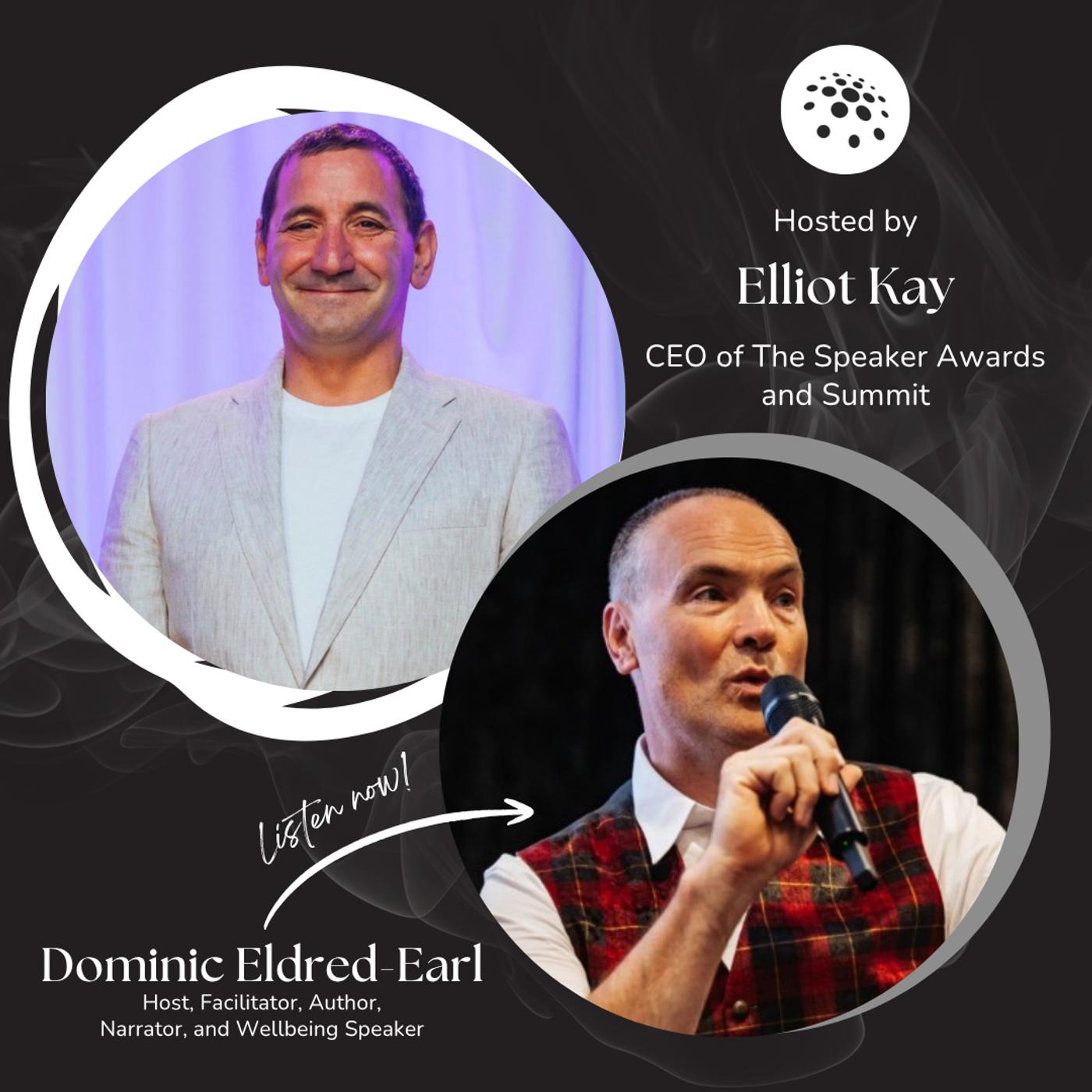
speaker-0: And welcome to Front Row, the podcast. We're very excited to have you here. But before we get going, please remember to like, subscribe and leave us a five star review. If you got value from this week's episode, we can't wait to share with you all the industry peers, all the industry experts, all around professional speaking. And we are super excited to welcome you to this week's episodes. Get your notepad ready, get your action steps lined up and let's tune in to this week's episode. And hello to everybody. Welcome back to the A &S From Road podcast. My name is Elliot Kaye and I'm the CEO and visionary behind the Speaker Awards and Speaker Summit. And I'm just going to throw out very briefly my normal spiel and say the Speaker Awards are open. Woohoo! So if you haven't put yourself forward yet, but you want to put yourself forward, go to thespeakerawards.com and start the process today. There's just one day over a month until the applications close. So we're excited to have your application. We've introduced two new categories. So join us. And today I'm even more excited than I was yesterday because today I get to interview Dominic and we're going to go deep. We're going to find out about his judging, why he chooses to be a judge, why he's come back for more. And of course, we're going to find out more about Dominic who's also an author, a speaker. He's a consultant. He's a mental health advocate. There's so much more to Dominic and I'm looking forward to unpacking that. So hello, in case you didn't remember, my name's Elliot Kay. and I am the visionary behind the Speaker Awards and Speaker Summit. It's our year five. It's party time. Let's go. Dominic, welcome to the ANS Podcast Show. Thank you for taking time out to be here. Even more time out because you had to time out last Thursday to be on the launch webinar. How are we doing today? Are we good? we good?
speaker-1: Yeah, I'm good. I'm good. In fact, I'm so good. I've decided to actually use my standing desk with me standing for the first time in well since Christmas. Spring has obviously arrived.
speaker-0: Wow. Clearly and you're taking a stand. See what did there. Thank you. I should be a comedian. should be a comedian. So this is year two or three for you as a judge.
speaker-1: Absolutely. This will be the ⁓ third one I think.
speaker-0: Third year, right, so and look, it's not that
speaker-1: Second year as a judge, but third year I've taken part.
speaker-0: That's right, because you came first as a panelist and third year taking part, second year as a judge. Look, you're a busy guy, right? You work with one of the biggest bureaus in Europe, in fact, I believe. ⁓ You've got a lot on your plate, yet you come back as a judge. Tell us what got you to come first place and then return for more.
speaker-1: Well, mean, first place, I don't know, should I admit that it was, know, Maria with the... could... Yeah, it's the old arm up the back, something. But no, actually, she didn't have to do it too hard, to be fair, because after having attended as a panelist that first year, when I came along, seeing the people who were there, talking to the people who were there, the enthusiasm, yeah, I wanted to get more involved. So when...
speaker-0: and admit that Maria twisted your arm.
speaker-1: when you asked if I'd like to be a judge, it was a bit of a no brainer really. I suppose I didn't quite appreciate how much work was involved in doing it, yeah, yeah, no, getting that first look at people submitting their entries was, it was interesting, it was interesting.
speaker-0: Good. Are we allowed to mention the bureau you work for? that allowed?
speaker-1: Yeah, I guess so. Yeah, I consult with the London Speaker Bureau, which according to the New York Times is the only global speaker bureau, given the fact that we've got more boots on the ground in more different countries than probably most, if not all of the other bureaus. So, yeah, have a good spread, which also means we get good exposure to people from all over the world, different speakers, different styles, different cultures, which is, you know, again, it adds to that interesting mix of finding out what is going on out there, which also means we get a lot of different views.
speaker-0: Brilliant. So in that respect then you see speakers day in day out, right? You you must be you get a lot of speakers approach you, you know Why then come back for another year to watch more speakers videos, you
speaker-1: I suppose one key thing to understand is how I've always defined the difference between a speaker agency and a speaker bureau.
speaker-0: I think that's good. Let's go there. Let's do it.
speaker-1: So a speaker agency tends to take on a limited, a limited, and when I say limited, it might be quite large, but they take on X number of speakers and then they actively go out and market those speakers to end clients and to other bureau and things like that. Whereas in a bureau kind of sits on the opposite approach. So whereas an agent is sort of push pushing the speakers out there, bureau works from the poolside. So we, a bureau, from my perception at least, is more focused on the clients. So we try and build a good client portfolio. We build good relationships with the clients so that we keep coming back, or they keep coming back rather, year on year for their events each year. And that puts us with a little bit of a quandary because if it's a host, then sometimes a client likes to use that same host year on year for the continuity and they get a good working relationship and all that sort of stuff. But when it comes to the keynote content, when it comes to the actual information, they always tend to prefer to have different people each year because they don't want to repeat with the same same person every year. So in that respect, we've got to be constantly finding good new talent that we can put in there across a whole broad range of subjects because as a bureau working with a client and looking at the fact that probably about half of the clients I work with are events companies. So they organize for a whole range of clients as well. We've, always covering a broad spectrum of topics, everything from geopolitics and economics all the way through to wellbeing and mental health, diversity, all of those sorts of things, know, sustainability, all of these things. So So having access to people who are coming in, who are putting themselves forward and can demonstrate that they have that ability to connect with an audience, it's almost a bit of a no brainer. mean, London Speaker Bureau is now involved with Thinkers 50 as well. So, so it's it's finding that that pool of talent, finding the new ideas, the fresh people and what's coming up, really. yeah. Speaker Awards offers a perfect place to do that. And the Speaker Summit is a great place for networking. So.
speaker-0: Brilliant. It's a win-win, right? Brilliant. And also because I'm well aware that obviously time is precious. So for you to come back and do it for second year and you to see the value, that means a lot to me as the vision behind it, right? So to hear it from your words is reassuring in a way for me that, you know, you're finding the value beyond just giving your time that you have access and you're able to then build relationship with. those speakers as well. can look, I see the speaker awards. I'd like to discuss things. And I think that's a really nice added value to this. We never promised that we never lead with that, but it's nice that it happens organically as well. Right. ⁓ that then when you see a speaker, like, look, I saw the speaker awards. I'd love to discuss you coming on the books as well. so tell us a little bit what you've seen that's done really well when you've seen entries come into the speaker awards. What are the ones that you're like, ⁓ they have something.
speaker-1: It's easier to say those who don't.
speaker-0: We can start there. Let's go there. Let's go there
speaker-1: Let's end on the positive. So, yeah, I mean, did see a number of entries last year where it was very evident they hadn't put in the effort to their entry. And when that is evident, then you've got to ask the question, well, how much do they actually care about it? And if they don't care about putting their effort into their entry, how much effort and care are they going to
speaker-0: Okay. Right.
speaker-1: give to your client if you book them for an event. So I would say if you're not going to put in the time, if you're not going to put in the effort, if you're not going to put in the care to your entry on the speaker awards, you would be better off not entering at all. However, if you can demonstrate that you read the questions and answer the questions rather than something else that you want to say.
speaker-0: Right. All
speaker-1: If you do want to upload a relevant video rather than just your showreel, because in a lot of the categories, it's not actually your showreel that needs to be uploaded. If you're entering a showreel category, yes, put your showreel there. If you're doing the best storyteller or speaker bookers choice or bookers choice, speaker bookers choice, either because choice or any of the others read what is required and pay attention because
speaker-0: Crazy, right?
speaker-1: As I say, if you're putting the effort into something that directly promotes you, then how much attention are you really going to put into listening to a client, into understanding their brief, into connecting with their audience, into leaving them feeling something different when they leave your talk? So, yeah, that's absolutely something that we look out for. And there are some very good ones. mean, don't get me wrong. There are some which immediately you can kind of pass by because they haven't paid attention at all. But when it came down to the final voting on some of the categories last year, it was so close. ⁓ mean, it wasn't a coin flip, but it almost felt like it got to the point of, it could be either of these two people. How do we decide?
speaker-0: Right. Right. That's where the scoring's important. That's where Lavalda looks at and she looks at all the like at some point we have to go right beyond this point. Everyone's cut in a sense because and it can be half a point or a point because otherwise we can end up with categories with like 25 and also that the margins are so tiny that sometimes it's like one and a half points between seventh and top, right? They get because like you mentioned is the standards getting higher and higher and the entries are getting high and I think people are taking it more seriously. therefore it can be, I can see that literally because we can see that in the marking you're saying well could be this one, it could be that one. That's why we do have the scoring in there that really helps us make that decision.
speaker-1: Absolutely, absolutely. I mean, obviously, year on year, the number of entries is increasing as well. And the variety, sort of, I think the international people are finding out about it more now and more of those are coming in as well. you know, as far as, know, Jazz Ampere Far, I mean, you know, she is a phenomenal person in her own right. Correct. Absolutely. You know.
speaker-0: Yes, we can.
speaker-1: top notch speaker she is blows it out of the park. ⁓ But apart from the fact that you've placed a limit that you can only enter three categories now.
speaker-0: Well, it was two, right? two, but we opened up for year five to three. Yeah. And actually it's indirectly because of jazz, we put the limit.
speaker-1: missed this too last year. Yes. Yeah. I mean, she just clean sweeped it one year because I mean, as I say, she is phenomenal. And yes, but there are also other phenomenal people out there and it's great. It's actually great that you have put the limit in so that more people can get the exposure.
speaker-0: Exactly, and we had to decide like what are we and the whole idea is to give people the platform to give people and if someone's always being Manchester City and just sweeping the board then people just won't enter they'll be like well why bother if I'm going to continuously lose out so that's why we entered we did change the application process at the only this year we three and we changed it to two if you want a category you can't re-enter that category so if you're highly commended you can That's why we changed that and once you're in the Hall of Fame, can't be I think three years you can't even apply so We did that to open like you say to give those people The opportunity to apply so yeah, she she is phenomenal and that's why she's in the Hall of Fame and She's one of two women actually when I interviewed her she pointed because am I the only woman? Well Ricky's in there. So no She's not about the times. Oh, yeah, think you are the only woman so we need more women in the fame but don't tell anyone.
speaker-1: Yeah, I mean, talking about women, very, very important to have more women putting themselves forward. Because, I mean, it's not I am finding more and more there is less of a diversity requirement in the speakers that I'm putting forward, or at least the companies I'm putting forward to are not asking as much necessarily for across the board, whether it's race, gender, whatever it may be. ⁓ However, I still feel personally that it is important that I can that I'm able to put forward a mixed portfolio of speakers into any proposal so that there is that variety to choose from and that I mean, it has been psychologically proven that, unfortunately, men are very willing to put themselves forward even when they're not ready. And women, on the other hand, will hold themselves back even when they are more than ready to do something. you know, I would say even if you're not on the fence, but thinking, ⁓ I'll do it next year or whatever. No, come on, step, put yourself forward, give it a go. And if nothing else, you will learn from the experience.
speaker-0: Let's do it.
speaker-1: So, but having said that, I'm fairly sure that in terms of sort of gender balance on the awards, it is leaning more towards the sort of female presenting side.
speaker-0: Yeah, well, we're very hot on inclusivity and diversity. ⁓ We're trying, we can always do better, I think. But yeah, we do a lot of women win the awards and a diverse range of women win the awards. And that's because they earned it, not because we're like, we need that person to win. It's because those are the people. But we do find, and that's what something that Jazz said, and she's always said that when she showed up in our room, she felt like she was, found her people, she found her tribe, she wasn't the only black woman in the room. I mean, she refers to Brown, you know, she found there was women, there was diverse women, was, you know, there's all transgenders, there was everything. And I think that's quite important to us. And I think we're very strong when we're deciding lineups, except for the summit, that we do look for a diverse range. You know, the VIP days are women and I'm a big champion, I want more women on stage, I want to see, you know, I feel they have a lot, obviously they have a lot to offer. And I think we still need to tilt. There's still a lot of white men on stage, middle age might win, and we need to improve that. And if I can do a tiny bit towards that, I will. So I think it's so important, as you mentioned.
speaker-1: Absolutely, absolutely. I mean, on the flip side of that, quite an interesting one is I know of at least two female speakers who will not take part in a panel if it is only women. They also recognise the importance of having that diversity, of having the balance across the sort of the panel and those sorts of things.
speaker-0: of man being on stage. Yeah, no, it's a balance, Yeah, we don't go too extreme either side. No men on stage. That's all I'm saying. I'm saying a balance of men on stage.
speaker-1: Close both ways, Middle-aged white males, you're out.
speaker-0: Yes, they get a bad rap, don't they?
speaker-1: They can do but at the end of the day when it comes to putting forward a proposal to a client I will put in the people who I feel are best for the brief And sometimes it is all balanced one way. Sometimes it's it is more mixed than others So I I just need to know Who those people are out there and that's to be honest that is where things can get a little bit complicated, especially working with various bureaus and especially somebody like the London Speaker Bureau who is so globally spread.
speaker-0: Yeah, is.
speaker-1: Even when we hear about great new talent and we put them into the database so that we can access them when we do searches and things, it can still take a very long time for knowledge of them to filter out to all of the consultants within the organization. I mean, you know, we have consultants, as I say, in UK, lot of different European countries, India, Malaysia, China, all over the place. So it's once someone's taken on, how do we find out about them? And I don't know, is it worth explaining the process? Through when I get a new brief, yeah.
speaker-0: Yeah, I think it'd be worthwhile Yeah, I think it's worth I think being insightful for love people because they probably have never heard what it looks like on the other side and of course I remember when we talk and you like look I can put you on the system, but that doesn't necessarily mean anything and I think it's worth understanding You know how it works for Bureau And it'd be a good education piece why do before you launch into that? I just want to point out what's really come across here is detail does matter How you show up to the awards does matter, you know, and I think people don't understand how it reflects on them. So you highlighting that has been absolutely brilliant. You know, if you're going to be this way for an award, what are you going to be like for five to 10 K client? It's like you're just off the list immediately. So please people watching this, whether on replay live on YouTube or you're listening to this, please pay attention, put some effort into your entry. Don't yeah. Do explain from your point, what happens when you do like Because I think a lot of people go, well it's a Golden Gate, I'm on a bureau, now they're come flooding in, yeah, all these bookings. No, not quite.
speaker-1: No, no, no, no, no. I mean, to give you an idea in a sort of any in any 12 month rolling period, we probably work with 10 % of the speakers who are listed on our internal database. And most of those are just a single time. So, yeah, getting listed on the bureau is doesn't doesn't guarantee anything. It's it if well, from Maria's book, the bookability formula, I mean, It is literally 1 % of those who we have listed who get booked continuously multiple times during a year.
speaker-0: I that's shocking for, I know that's that very well, but I bet that's shocking for some of the speakers out.
speaker-1: So how does the process work? Okay. Well, we get the briefing from client. Hopefully they give us enough detail to be able to put something reasonable together to start with. you know, dates, audiences, location, budgets, all those sorts of things, all those details we need before we can start putting things forward. Surprisingly clients do come with to us when they don't know.
speaker-0: What do want?
speaker-1: I have had a client come to me before and they've gone, we need to, I've been asked to organize a speaker for an event. Can you give me some ideas? Yeah. Okay. Can you give me any idea of where it's going to be? How much you've gotten? And they're like, well, no, it's the first time we've done this. So we've got no idea what we're doing. That's like, But then you can start talking to them obviously. you know, you say, okay, well, is 5,000 reasonable, 10,000, 100,000. And that's when they fall off the chair and you kind of. get the point that actually you do have an idea of what it is that you want. hopefully we get a brief that's reasonably well formed and from that the first place we'll go to is our heads because that's the easiest way to go is like who do I know who could fit in this brief. So that's where it's handy to have a bit of contact with speakers to keep updated with what they're doing but not too much because then they're annoying and then we won't use them.
speaker-0: Who jumps into my It's a balance.
speaker-1: So again, there's a bit of a balance there. So I would say if you're going to update a bureau, I would not do it more than once every six months unless there is something earth shattering, which really does need to get out there urgently about what you're doing. know, you've got a huge change in direction or something and you're not going to be talking about what you were talking about anymore, you need to let the bureau know because otherwise they're going to book you for stuff that's not relevant anymore.
speaker-0: Okay. Right.
speaker-1: But otherwise I would say once every six months is probably the sort of roughly the sweet spot for just keeping in mind, but not annoying. yeah, so we're going through the head and we're going, who do we know? We put in a bunch of people. Once we've done that, we will then go and search our internal database. So we've got keyword searches and filters and all these sorts of things that we can apply to the data.
speaker-0: Okay. I've been like in internal Google
speaker-1: Absolutely. Which is great. Apart from for those new people.
speaker-0: they will be at the bottom of the pile. ⁓
speaker-1: Absolutely, because certainly on our database, when we do a search, it lists the person with the latest event at the top. if you've got an event that's not happening for another six months, you'll stay at the top of that list until somebody who has an event that's in seven months comes along. But it also means that if you haven't had any events with the Bureau, you will appear below those who have had events going as far back as 2010, 2013. So, so you're way off the bottom of the list. So it is it is how to get up there. And the next point, the next step, I suppose, is the easiest place to get heard about. But however, there is a way to shortcut that getting up the list, of course. Cheers, if you're willing. ⁓ If you have a brief that comes in that you're you know, you'd like to share, if you pass it over to the bureau.
speaker-0: That's a long time. Here comes a hack people take note
speaker-1: then obviously they can negotiate on it and you will then appear nicely up that list. So you can consider it marketing spend or or whatever, or a bit of an investment to just increase your exposure when doing a search from just being the one person who knows about you to suddenly being 50, 60, 70 consultants who are doing the search about their global events. A little hack. ⁓ So, yeah.
speaker-0: There you go.
speaker-1: Then the only other place really to get known about it is essentially word of mouth. So what happens is if we've given a brief to our clients and they've come back and they're like, that's not quite right. Who else can you think of? And we're kind of out of things in our head. We've searched the list and we're not really sure who would fit. Then we'll post on our internal sort of blog intranet and say, yeah, I've got this brief. Who would you think of putting forward? And that's where a lot of the new names. sort of get put forward. That's where people like ⁓ Alex Atherton, ⁓ you know, I've mentioned him on there and he's been booked by other other speak other clients, other consultants have booked in for their clients because it's been shared on that sort of forum. So that is obviously quite slow. And then just to say that even if you don't hear from a bureau, that doesn't mean they're not putting you forward.
speaker-0: So I think
speaker-1: All it means is that you haven't made the shortlist for the client. So there's plenty of speakers. You each time I do a brief, I will put forward probably about five or six speakers. Right out of that, they might only choose one, two or three who they want to pencil a date with or have a talk with and all that sort of stuff. And until I actually hear that from the client, I don't go out to the speaker because otherwise we'd be reaching out to thousands of speakers every sort of month. and then cancelling them again. And this gets frustrating for everyone.
speaker-0: Yeah, yeah, I remember my years ago I used to work in modeling agency ⁓ not as a model clearly and I was in charge both the models and the dance division and I you always the dancers of I think they're very similar to speakers or actors and whenever they would always email in and then they'll be like surely I've put you forward for this and then I'd have to say well you didn't get it and that's just a horrible place to be. So in a way makes sense just not to say anything until you have something. Because you're holding people's dreams, ambitions, technically in your hands. It's up to them. But I know that feeling well of, so I understand why you don't let people know, ⁓ I've put you forward for a brief, you think you're doing a nice thing, but then you have to tell them when they don't get it. And that's not nice. So I hear you on that 100 %
speaker-1: Yeah, and I mean, typically clients will not tell us why they do or don't choose somebody. They just won't. And I mean, there's plenty of plenty of situations where you get ghosted as well. So you put forward a list of people you've been chatting and then suddenly the client just goes quiet and you get nothing because they've moved on. They're doing something else.
speaker-0: It just won't. Recently and that's where I thought I should really brought that to Dom There we go. I'm reminded to myself to do it So next time I'm bringing you the brief because I did I had some of these like that we were close We booked in the date to have the the final call to then contract ghosted ⁓
speaker-1: It doesn't
speaker-0: Even to bureaus people, even to bureaus.
speaker-1: Even to bureaus, yes. In fact, probably more so to bureaus. In some ways, bureaus are great because they've got the third party argument when it comes to negotiations. So it may well be that bureaus can negotiate you higher fees and that sort of thing because they're sort of one step removed. Whereas if the client is dealing directly with a speaker, there is a little bit more leverage that the client can potentially have to get the speaker on board and less.
speaker-0: Yeah, because
speaker-1: speaker is very good at maintaining their boundaries and going no this is my fee. ⁓ Which some are, especially those who are in that sort of mid-tier level, they're more flexible. I wouldn't say they're more flexible than they need to be, but they are often more flexible more quickly than they need to be. That makes sense.
speaker-0: don't hold their nerve for long enough. Yeah. Yeah. Me too. For you would be three to seven.
speaker-1: Um, yeah, that's probably accurate. I'd say yeah, averaging around 5k.
speaker-0: That's where I sit. So there we go. No, this is really insightful and thank you for this. So what's coming through is pay attention to detail as an entry, right? But also understand that how important it is to say front of mind and do it nicely versus annoyingly. So those are a couple of, and if you want the Bureau's attention, and I know a lot of speakers resent that, bring them a brief, right? They're like, I've done all the hard work. Why should I hand it over to Bureau? And I can just say that I actually now, being reminded by Dom that I wish I'd handed that brief over from, you know, it started last year because it would have taken a lot of a lot away, right? Which like you say, negotiate, negotiate down, not negotiate down preferably, but you could have taken all the kind of legwork away, the chasing, the this. And I think that's where, you know, if I, in hindsight, if even if you took 20 % walking away with three grand is a lot more than nothing. So, and I think speakers need to kind of understand that that You're a free service until it's time to get paid. You're not free at all. But that's what you're getting paid for, right? For the contract, for the negotiation, for the follow up, for the closing of the deal. And that's where think a lot of speakers, resent it. I've done all the work, I've done all the marketing. But actually you can take a lot of the headache away. And that's why you...
speaker-1: Yes, and we have quite a number of speakers who we work with who will pass over pretty much all of their incoming briefs because they don't want the hassle of having to manage the CRM side of stuff, if you like, with having to go back, with having to remember to contact the person, with having to chase up on everything. another... good thing with bureaus is because we have, especially people like the LSB, because we work with such a variety of organizations, and especially the bigger ones where they have an onboarding process for procurement and all that sort of stuff, which can be a right pain in the backside, you know, because we might already have been onboarded by them for another speaker, it just makes it so much easier. that's The other thing that we do is we always ensure that the fees have been collected before the event takes place. So, yes, we pay the speakers after the event because that's, you know, it's essentially, you know, we have a sort of an escrow like type account where, you know, the clients pay the money into that and we just hold it until after the event has taken place and then the speakers can get paid. ⁓
speaker-0: to show up.
speaker-1: hopefully with some efficiency after the event, rather than having to wait 60, 90, 120 days, whatever the sort of organization's standard policy is.
speaker-0: Yeah, they can pay a memory of telling a story and I think this is probably why again bureaus are handy that she'd booked um It's either her or someone who booked a speaker a very high fee. I think like 100 grand He had a heart attack um, and I think if she hadn't or if he wasn't able to do it Whoever booked them would have to like sell their house to refund that in a way the bureaus bring that security blanket um because You've got that escrow account should anything happen You can refine and then get it from the speaker, but it hasn't gone anywhere either right? So it sat there and no one's and I think she I remember telling that story thinking how harrowing that would have been That you have to sell your house to refund the company because the speaker had a heart attack Eventually, he did do it and no one had to do that. ⁓ but she tells that story. So it's quite interesting So some really advantages here. So before we move on from this you've been very insightful to help bureaus work and again, I highly suggest any speaker listen to this whether they're booked a lot or not because there's some insights. What would you say to people thinking to enter the Speaker Awards this year? What would grab, what would you love to see? What would make your life easy as a judge? You talked about attention to detail, but tell us more about like.
speaker-1: Yeah, there is answering the question, but it is the thing which I find really key in speakers that I'm looking at is I want to be able to connect with them on an emotional level. want to, I want to be able to feel their experience. I want them to be able to take me on a journey during their keynote, you know, to be able to, to tell me You know how things started, why things are applicable, how it affects me, how, how I can get some improvement in my life from what they are saying. Because at the end of the day, as much as you might like your story, you are not on that stage to tell your story. You are on that stage to improve the lives of the people in the audience. And some people forget that. Some people just get up there and they're like, ⁓ here's my story.
speaker-0: Look at me
speaker-1: And it's great. Yeah, you've done this thing, but you know, countless people have rode the ocean, countless people have climbed mountains, countless people have thrown themselves off buildings. You know, that doesn't make you special. What will make you special is your ability to make your audience feel things and then take action afterwards.
speaker-0: It's interesting because, um, Jeremy from the founder of JLA, when we gave him lifetime, he did talk like, were you there at the summit? And he kind of said the same thing, like, you know, I don't care that you've climbed a mountain with one hand. want to know something beyond that. The way he delivered it was a bit clunky, but in essence, what you're saying that there's got to be more to the story than what you've achieved, right? Achievement's great. But we need something else. need a humanistic connection. We need a why am I listening to you feel and that's what you'd be looking for for your categories, which will reveal shortly not to you, not here, but to you as the judges. but yes, that's what you're looking for, right? Something beyond I've won a medal, something beyond I, you know, survived.
speaker-1: Yeah, when I see the video, because I think all the categories have a video with them, I want to be able to feel like, ah, yeah, this person has something for me. This person can deliver something for me. Because at the end of the day, the speakers need to be able to give, as I say, they need to be able to give of themselves in such a way that the people who are in the audience can walk away with. with something for themselves, something that is relevant to them, something that affects their lives, something that will change something for them.
speaker-0: And they've only got five minutes to make that impression. So it's a real challenge, right? And feel free to say, you don't want to answer. How much of a video will you, how much of a, how much time would you give them that opportunity to keep your attention roughly?
speaker-1: I think there's that there is the the old statistic isn't it you've got to catch people in the first 10 seconds sort of thing and it's it's true I mean to in fairness when judging the awards will watch and read everything out of a curtain to the people who have entered now how much attention I give to it and how how actually tuned into it I am that is determined by how good they are kind of grabbing you in though in that first 10 seconds
speaker-0: amazing.
speaker-1: which is why I mean, I'm just going to drop in here in a showreel. Do not spend the first 30 seconds introducing yourself.
speaker-0: Right, yeah, because you've wasted that you've wasted 30 valuable seconds
speaker-1: Well, and it's not just that you have wasted that connection time until I know how you can benefit me and how I can benefit from what you have to say. I'm not interested. So it doesn't matter who you are, how many awards you've won, how much experience you've got in something until I know you are actually relevant to what I am trying to achieve, to what I am trying to deliver to my audience. Everything else is irrelevant. And once you've caught me in once you've given me a question as to, do you have this problem that you're trying to solve? And it is a problem that I'm trying to solve. So now I'm interested. That's something that I'm to pay attention to. And once you've hooked me in on that, then you can tell me more about you. Then you can tell me why you are the person who is qualified to help me with this problem. But yeah, most, most showreels waste that first 30 seconds on a
speaker-0: Right.
speaker-1: Yeah, I'm brilliant. Look, I've done that. I've done the other. And?
speaker-0: Yeah Especially when you see hundreds if not thousands, right? It just blends in it's just noise Ricky was saying yesterday when I interviewed them that some people put sales pitches in the middle of their In the entries. Have you seen that in your categories?
speaker-1: Yeah, yeah, they usually don't make it to the shortlist.
speaker-0: Well, there you go. You're hearing it. Who first and people no pitching, know grab connection make it clean and clear Entries so you've given it attention and make sure it matters to the category the other thing of course You probably see is people put videos like you say the show real when it's storytelling Well, that's not telling a story. That's your show real so yeah, so these are really really insightful things So thank you for that just to remind everybody listening to the ANS front row podcast with me Elliot and Dominic from Who's a consultant to a bureau from on the speaker bureau? He does more than that We're gonna start unpacking that in a minute if you like what you hear do go for it Dominic said now don't wait till you're ready Let's go. Let's get the entries in go to the speaker wards calm and get your entry and get started We've got over 40 entries started so far to date when you're listening to this Obviously we reach more than that when it comes near the time. There's 31 days from the day This is recorded. So get your entry in today. Don't delay. Hey, you like what I did that I rhyme so Thank you so much for all your insight into both bureaus and the awards and what you're looking for. So your journey. Yes. You want to add? Yes, please.
speaker-1: The sooner you enter, more chance you actually have of winning because every single year there are more entries. quality of entries is higher. so yeah, just just go for it. And at the end of the day, you can't do version two you until you've done version one you so. Yeah, but it happens. See what happens.
speaker-0: What we say is back yourself back yourself and enter The other reason I say getting early is because if you need to tweak anything you need to change anything You've given yourself that runway to make the tweaks if you leave it to the last minute and you've done something ⁓ you can't it closes 30th of april. That's it dorms slot iron bars Chained lock padlock you can't get in period doesn't matter what you offer us. You can't because we have to respect the process So dominic tell us a little bit you you Yes, you're consultant to London Speaker Bureau, right? But there's so much more. You're an author. You're a speaker yourself. You're the occasional coder, as you've put it. I believe you built a whole platform and that was sold. Tell us a little bit more about the person behind the judge. Tell us your journey into this space.
speaker-1: Gosh, journey into the space. Well, I suppose we could go back to school. mean, you know, love being in the school.
speaker-0: I was born in 1970.
speaker-1: Or name 19th... Yeah. Um, yes. So I have always been involved with events in some way or another really. So as I say, school, school plays, but then when I finished at uni, I started working with this little company called Macromedia, which unfortunately no longer exists because it was bought out by Adobe. But for those of you who grew up through the early years of the internet, I'm sure you remember Dreamweaver, Fireworks, Flash, sorts of things. those were Macromedia products. And actually here, here's why you just apply for stuff because I applied for a job with Macromedia as their European systems manager. So managing their network and IT infrastructure for all of their European offices. Absolutely no formal qualifications to do that whatsoever. I literally I had spent years just playing with computers, learning about networking through helping my parents set up the network for their business and that sort of stuff and doing home networks and those sorts of things. ⁓ And I applied for the job. And the reason I got the job is because my enthusiasm came across. Again, you know, when coming in for the awards, show your enthusiasm, show why you're keen for it. Why are you a speaker? That has to come across. ⁓ So, yeah, so show the passion for it. And basically the interview went OK. ⁓ The guy who was interviewing me did ask a bit about how to do some coding process. And I came up with an idea, which, achieved what the goal was. But then he also said to me, ⁓ you know, yeah, that that works. But, you know, it could have been done a different way in this and the other. And me being me, I actually went home, wrote up the code.
speaker-0: Yeah.
speaker-1: do it a different way than so. So that may be what gave me that got me the job. So so enthusiasm and not not sort of giving up on it, I suppose. But then so that was dealing with all the networks, which is not really event focused. But because I got all the networks working fine and this was on the days of ISDN, dial on demand networks from European offices back into the head office in the UK. ⁓
speaker-0: Wow. Yes. ⁓
speaker-1: Yeah, several 6am flights out to Paris because their network was working for
speaker-0: ⁓ no, no.
speaker-1: But once that was up and running, we were then taking on these new products because I joined before they bought out FutureWave Splash and the company that had owned what was prior to Dreamweaver and all that sort of stuff. But because I had this sort of self-taught coding background, I got involved with ⁓ Dreamweaver second line product support. And as part of that, What I had to do was I had to write training programs and I had to deliver training and workshops both to our frontline support, which was to a wonderful support company up in Scotland called Sykes. ⁓ And they did all Macromedia's frontline support in Europe, but I had to go and train them. And then we also ran user groups every year. We'd have a big user group and yeah, I'd get involved with presenting to the audience on that and. Then we did trade shows and things to show. Show off the products as well as I have been to Cannes Little stage in the sort of demonstration area, so that's that's a claim to fame there. So, yeah, so I did that for a while. Then I went and worked with my my parents for a number of years. And again, there I did a whole bunch of coding. I also wrote the training manuals for the software. I delivered the coaching for the software. The product is still available today. It's something called Clicker Pad, which is a credit card sized keypad where you can, you probably know Slido and all those sorts of things. Yeah. this, this comes before Slido. So it's, it's a credit card keypad that you put your questions into PowerPoint. You ask a question, they vote on the keypad results come up.
speaker-0: Yeah, maybe you're telling me about it. Yes, I remember. think I looked into it potentially for the summer, but we couldn't quite stretch the budget. I think I looked into it. Yes, I do.
speaker-1: Yes. Yeah. So but the great thing with these things is because it's a hardware keypad and not like Slido, people aren't going to their phones. not going out. Oh, I see. I've got a notification whilst I'm doing my voting. So so yeah, some in the room, which is great. But again, with that, there were some people, some clients that we had who didn't feel up to running the voting sessions themselves. So, you know, I'd end up to be able to actually sort of comparing and hosting the voting sessions, often on topics that I knew nothing about, which was always...
speaker-0: Which is very interesting, right? Yes
speaker-1: So, So where are we going with this? What was the original?
speaker-0: Just a little bit. Who's the person behind? you go with your parents and then you
speaker-1: So I was yeah, I was with them for 12 years until one morning my mum fired me with an email.
speaker-0: No way your mum fired you with an email. Sorry son you're fired or was it formal dear Dominic you're
speaker-1: No, yeah, I was kind of did on it. Yeah, don't worry about coming in for the rest of the month and please put keys back. So yeah, but there was obviously a lot more to it than that. Things things had we had different management styles, should we say? So yeah, it happens. It happens. It happens. But and it was good because it brought me into this world. So yeah.
speaker-0: Yeah, I'm sure. Fair enough. And then that's how you found yourself into did Maria give you your big Maria Franzoni for those you don't know is our ambassador. Did she kind of give you a leg up, so to speak?
speaker-1: Yes, well, yes, she did ⁓ via my ex-wife. my wife had worked at CSA. She then went to work at LSB and then our son was born ⁓ and she took some time out from that and she was she wasn't sure about going back to working with speakers again. But Maria kind of persuaded that Maria can be very persuasive. don't know.
speaker-0: Are you saying your friends only can be very persuasive? I've seen that. I know it's interesting Dom, like she must be because I've never seen it but I do know every time we've asked her to introduce or get someone involved they've got involved like she's a fantastic ambassador like and I don't I've never been privy to her persuasion but it clearly works because like ⁓ can you get this but yes and they're involved it's quite interesting really.
speaker-1: way so that I Well, I think she has those those key three things and that is she's known she's liked and she's trusted. Yeah. So beyond that, she doesn't I don't think she actually has to do that much more apart.
speaker-0: I don't think she does. And she's got a-
speaker-1: and say will you do this for me and people just tend to go yes.
speaker-0: I know it's quite amazing. We almost got a really big keynote speaker to close the summit But they couldn't do it the date they put after having lunch with her. She's like you want me to ask him Yeah, go for it. Yeah, fortunately not. So there we go So that's how you find yourself into LSB now since LSB London speaker bureau you are more like you speak yourself, right? You're also an author So tell us a little bit about your author
speaker-1: Yeah, this is this is a new a new project that I'm working on at the moment. And the first book came out at the beginning of March. The second one is going to come out at the beginning of May. The next one, July and then the next one, September. Next one, December. It's like putting it out there and committing to it. So, so yes.
speaker-0: Wow! You're a machine! take like two, three years between my books and you take two months. Crazy. You like to suffer. ⁓
speaker-1: Come. ADHD and kind of that sort of stuff. I get onto something. ⁓ Unfortunately, it also means that when I'm not focused on something, loads of other things can happen to distract me. ⁓ so, yeah, but I mean, the idea of the books came about actually from a newsletter that I'd seen from one of the speakers that I work with who mentioned something on YouTube that was similar to and it got me thinking about, well,
speaker-0: Okay.
speaker-1: A, how can I create a bit of a passive income? Because that'd be lovely. Because the speaker business, you might you might have noticed this. The speaker business is quite seasonal. I'll just let you into this. OK, just between you and me, we'll just keep it quiet. But it's not consistent throughout the year. Sure. Absolutely. So I thought, what can I do? And I and my again, you know, I've got to my ex for this.
speaker-0: Yep. Really?
speaker-1: She's been doing book narration for a number of years and does very well and gets awesome feedback from the authors that she works with and also from the people who listen to her books. ⁓ Can I put the name forward? please. narration name is Wendy Wolfson. Yeah, she mostly narrates fictional books. She's done a whole bunch of historical fiction. I know she's currently working on ⁓ a new book, which is
speaker-0: Yeah, go for it.
speaker-1: absolutely brilliant. mean, she did English at university and this book she's currently working on is phenomenal. ⁓ So if you check out Wendy Wolfson on Amazon, watch her and I think it's probably going to come out in the next two or three months. can't remember if called, but it is a really good book. ⁓ But back to my books, I wanted to create that passive income. Hopefully we should see it'll build over time. But I also wanted to do something that was useful. So the idea that I'd seen was to help people get into a better quality of sleep. Because sleep comes in two forms. There is duration of sleep and there is quality of sleep. And these are not the same thing. 10, 12 hours of sleep and still wake up. Absolutely not feeling it. So it's getting into that quality of sleep, which is important. So with the wellbeing work I've done over the last five years, I've sort of compiled these books around the idea of getting you into a deeper, better quality sleep quicker, helping you to get your nervous system back into regulation because the world we live in nowadays, it's so full of things demanding your attention. and coming at you from left, right and center. And that is continuously putting you into that fight and flight mode. Now, we're not that long out of caves. So our nervous system is still pretty much, you know, early homo sapien living in a cave. And yeah, we'd come out of the cave and it's those people who had a nervous system that could get distracted by things that would notice that.
speaker-0: continuous. Yep.
speaker-1: lion in the bushes who actually managed to survive. However, once you'd run away from that lion you'd either survived or you died and if you'd survived you would then have quite a good period of down regulation. You would have that period to recover, you would have that period where your body can get back into itself, it can do its cleaning out, it can fix itself up after having dealt with that stress.
speaker-0: Right.
speaker-1: But the world we live in nowadays, everything is just coming at you all the time. Whether it's emails, pings, phone calls, whatever it is. And our body does not know the difference between the lion in the bushes and the latest Facebook notification that pops up at you. So that's how it reacts. So the idea is return your nervous system to a more balanced place, which also helps with better quality sleep.
speaker-0: Yeah. Yeah, of course, because you have get brains calm. Calmness.
speaker-1: So yeah, and then the final sort of pillar to this thing is to help take us away from the dopamine seeking that we've kind of fallen into over the last decade or so, whereby we want affirmations from this, that and the other, and to return us to that place where we can actually do the day by day processes, those small little actions that need repeating in order to build up to something larger. though, to help with that focus. So, so yeah, the there is the book. The book does achieve what it's supposed to if you read it. However, the audiobook is so much more effective because you can stick it on when you're ready to go to sleep or to rest. Listen to it. Just drop off with it playing. Just leave it play all the way through and with the subconscious using various sort of techniques to to help to reinforce it. So the first one's on lighthouses.
speaker-0: My head.
speaker-1: That's an interesting one. So lighthouses. currently working on bridges about bridges. And then I'm to deviate a little bit for the third one, which is going to be quite an interesting one. It's going to be around fire. Now, not fire as in the thing that you use to heat things up, but fire as in FIRE or financial independence, retire early. Growing movement and all of us, you know, a lot of people looking for a quick fix on finances.
speaker-0: ⁓ okay.
speaker-1: And this actually brings us back, brings us back in from that dopamine hunting quick fix side of things and takes us into the actual slow regulated process of continual growth, compounding and all that sort of stuff. So that's that's going to be the third one. And then the reason I'm doing that one is because I've been involved with Rebel Finance for the last five years who run three. Almost every year. Yeah. It's 10 week online course they do every year, starts 2nd of June this year I think, all about finances and how to change your money mindset and get out of debt and save up and then be in a more financially secure position, which is great.
speaker-0: Wow! So you're busy. Busy busy. ⁓
speaker-1: Yeah. And then another switch in gear for the last book that I've got planned so far, the fourth book, which is going to be around microbiome.
speaker-0: Interesting. So you've got your work with London speaker Bureau. It's a small period, but you've got the speaker awards coming up. You've got your books to write. You speak yourself. And so what does Dom do for fun? ⁓
speaker-1: ⁓ I don't know, do we want the PG rated version?
speaker-0: Yes, please. Preferably. This is going to go to all our databases as well. So preferably, yes.
speaker-1: Well, yeah. So, yeah, things for fun. I do enjoy cycling. That is probably the basis of stuff. I recently got into bouldering as well.
speaker-0: Bouldering, okay. ⁓ yeah. No two people seem to be getting into that. Yeah, good good
speaker-1: Yeah, yeah, and I'm based in Bristol. So I have actually the last the last two, three speakers who I have met up with for a chat. We actually met at the bouldering gym and we've gone for a climb and then had a chat afterwards.
speaker-0: I love that. Those who sweat together work together. Someone told me that a long time ago. And I think it's true when you sweat together as a connection and you just see someone beyond the showing up and the kind of like the date face, right? You see the other side, the frustration, the heart, their abilities, you can support them, they can support you. So I get that. think that's a really great way, a very different way to kind of hold an interview. If you want to get to know a speaker, let's go climbing. I wouldn't go climbing because I don't like climbing. I watch you climb and cheer you on. and I have a coffee go go Dom woohoo! But wouldn't necessarily, but if you say let's go for a run I'd probably go for run so there's other things I would do.
speaker-1: Yeah, yeah, no, that's good fun. Yeah, I much prefer. Well, other speakers will attest to you, you know, I will. I much prefer to go for a walk and talk than just sit in a coffee shop and stuff.
speaker-0: Yeah, first time we met, that's what we did, right? We had a little walk around Bristol. We had a nice food from a food truck that was in the square. Yeah, do have good memory. My wife hates how good a memory I have. There you go. There's a little secret from my world. So I don't know about you and it might already been alluded to or you've answered this. Our kitchen table in our household. is the hub of everything. It's where my kids draw, it's where Emily and I talk about future, we talk about finances. It's kind of like the hub of our future happens at our kitchen table as well as cereal and milk spilled everywhere and kids drawing on it. And I kind of see it as the hub of our vision and our creativity. So I'm always asked all my guests, what's on their kitchen table? So what's on your kitchen table?
speaker-1: What's on my kitchen table? We've already mentioned the books. I won't go there again. I think I probably spent long enough talking about that. What's on my kitchen table? Well, short term, it's probably mostly focused around my kids. So, yeah, I've got a young kid who's started senior school and he's yeah, being there for him to help him is really important. But I am. planning beyond that as well. you know, sort of five, six years time, the plan is to, to be able to sort of sell up everything and just travel the world for a decade. Absolutely. Yeah. If that ago, get out there, experience more in terms of cultures and diversity and ways of being ways of living. so yeah. And also it's a, it's a good sort of hack.
speaker-0: Come a Nomad. Love it.
speaker-1: the early years of your pension really is if you can keep your living costs down for the first few years, your pension has got more chance of surviving till the end. So yeah, so that's probably looking at sort of south, the southern hemisphere. So South America, South Africa, India, sort of Asia, sort of Southern Asian places. Those are on the kitchen table for when the little one is off to university and no longer sort of in need of this.
speaker-0: Yeah, that's true. ⁓
speaker-1: hanging around so much.
speaker-0: Wow, that sounds exciting.
speaker-1: But yeah, my eldest wants to build a house somewhere to live. that will be an interesting project. ⁓ Fortunately, it's something I do have experience of because we built a house a few, gosh, must be about 14 years ago now we built a house, which was, was a needle in the haystack opportunity. It was ⁓ a plot with planning permission in 11 acres of woodland, which ⁓ doesn't turn up very often.
speaker-0: Definitely not.
speaker-1: So yes, and the house is still standing and the current owners do still like it.
speaker-0: ⁓ That's good news. Nothing's crumbled and it's so yeah, there's hope for your son then.
speaker-1: There is, yeah, yeah. So that's good. And then my middle kid, she's a trans girl. So lots going on in her world at the moment. Yeah. And yeah, trying to be there to support her and everything. So. And yeah, all. It's just on the table, really.
speaker-0: ⁓ yeah. Lots of stuff on your table. So I don't know where you'll eat, but you know, there's lots of stuff on your table. And I think that brings me nicely to kind of the question I love asking our guests before we start to wrap this up. You've given so much. So thank you for that. What's the one thing we should be talking about that we're not talking about?
speaker-1: I suppose not being talked about is the actually quite simple sort of idea that we can all win together. So we can lift each other up and all succeed. It's not a zero sum game. Somebody doesn't have to lose for you to win. Now, I was talking about the speaker awards here. you know, there is only one winner. However, through the whole experience and going through it together, especially if come to the summit as well, there is that networking, there is that camaraderie, there is that sharing, there is that ability for everybody to lift their game, for everybody to gain from experience, to learn something and to improve their lives as well as to pass on nuggets to those who are coming up behind them. And I think that that is something that really needs to be far more appreciated throughout the world as a whole really, is that you don't have to take something away from somebody to be able to gain something. ⁓ If we have the ability to move beyond personal greed, I would say, and to actually share and to understand that it can be better for everyone, then
speaker-0: Yeah.
speaker-1: that takes us to a whole different paradigm of being. ⁓
speaker-0: Is it because people find it easier to take than to earn?
speaker-1: ⁓ this is a good question.
speaker-0: in your opinion of the
speaker-1: Not necessarily. I would say it is more a problem with perception. It's more, it's more an issue that people get into their head a certain fixed idea that I can only do something a certain way. And because other people haven't shared with them ideas or visions as to what they could actually achieve, they feel stuck in that sort of paradigm. So I'll give you an example. I used to have a narrowboat on the canal. So I lived on it full time for two and a half years. And then at the end of the second lockdown after the big sea had gone, I moved my boat up to London and I spent the next two years with it on the Paddington arm of the Grand Union Canal. And everything was generally great.
speaker-0: Yes. Hiya.
speaker-1: Apart from one time where somebody broke into my boat and basically turned everything over, took a whole bunch of stuff and all that sort of stuff. In fact, it wasn't one person. was a group of three people. I got them on CCTV. Unfortunately, there was a spotlight next to the boat, so you only had shadows. You couldn't actually tell who they were. And you can deal with that in one or two ways. You can either be really upset about it and everything and
speaker-0: Alright See ya.
speaker-1: and that sort of stuff. yeah, initially I was upset. I was like, hey, you know, this is, you know, why does this happen to me sort of thing? And then I started thinking about it more and I was like, hold on a minute. I'm actually really fortunate. You know, I had my boat, I had my stuff that was on it. I could afford to replace most of what was on there without too much trouble. And
speaker-0: Yeah. Yeah.
speaker-1: And I have a way to create an income for myself. have a way to provide for myself without having to take from other people. But these people who come on my boat and taken my stuff, they'd obviously felt that that was their only way to do things in life. So, so, yeah, so I in some ways, actually, it was it was great to be able to sort of go through that process and reframe it. Yeah. So.
speaker-0: Yeah.
speaker-1: I think we need more of that in the world
speaker-0: Yeah, think well that's that's also acceptance and forgiveness and I think some of the challenge which and I hear you speak is a lot of us are taught not to take that lying down that it's not okay to be stolen from. have to get mine back. have to they should be punished right? should you should pursue. but if you go to iPhone and I everyone ends up blind and with no teeth right? So I think you're right. I just in your opinion wonder how much that kind of conditioning of you got to do to others or what's done to you don't take things lying down especially now in in the polarizing world we're in you're either on this side or that side how much that plays a part because something i talked with ricky yesterday when i interviewed them was an inability right now to discuss opposing opinions and to discuss ⁓ even if you really disagree with each other right and left right opposite sides I think the ability to talk about it has diminished. I'm not going to talk to you, Don, because you're on that side. That's that. I know you're dead to me. And how much of that plays into this issue of not being able to share and to lift each other up?
speaker-1: Absolutely, absolutely. 100 percent. it is and social media has not helped with that because it is such an echo chamber and the algorithms are written. I was I can't remember what I was listening to yesterday, but it was it was basically saying how people are so easily radicalized. Yes. They might start off with something that's only just slightly off center. But because of what YouTube, Facebook, TikTok, whatever it is social platform you're using, whatever it is, they are wanting to keep you on there. So they try and give you things that appeal to you. And they will. They know that, you know, there's a shock and awe sort of grab thing. they will see whereabouts you sit and then they will feed you more of that content, which is gradually getting more and more extreme. And I think it's been shown that in a really quite short period of time, it can move you way off, way off balance, way off to one side or the other. And then once you're there, it's just that echo chamber that keeps coming back to you again and again to reinforce your views. ⁓ And I think it was said about statistics at one time, you you will always be able to find some evidence to back up your beliefs.
speaker-0: Yeah, what you think and people are forming their beliefs based on opinion versus facts, which is always worrying. mean, fact can also be subjective, but like if it's a fact, it's a fact. But it's not only social media now, because there's been proven that even, you know, AI, chat, GBT, Gemini can be programmed to sway you to a certain way of thinking and being. And so that's even when you're chatting to chat, GBT and having a conversation, actually, they've been programmed to shift, you know, or influence what you're thinking and believing. And I think that's quite worrying because more more people are spending time with Chagy BT or talking to Gemini or talking to Claude, right? They're talking to them and these things are swaying them. And I remember someone saying they were doing it and they're talking to Chagy BT and I think they asked them something like, well, is there a God? once, I can't remember the answer they gave, but the answer they gave went, ⁓ That's an answer that's designed to sway me towards one way of thinking. Now whether that's because it felt like it knew that person well enough to give them the answer or whether they've been programmed, right? But it's still a worrying thing.
speaker-1: I mean, the thing you've got to remember is where does Jack GPT, where do all of the LLMs get their knowledge from? It is from the internet. there is so much polarizing stuff out there that it's not surprising. Yeah. And again, at the end of the day, it's designed to keep you on the platform. It is designed to give you a feedback that you feel is helpful to you.
speaker-0: Right, the end
speaker-1: Right. And so, yes, it will try and put across a point of view that aligns with yours unless you specifically tell it not to. The really useful thing is that if you go into, you can set up projects in chat GPT, if you're using Perplexity, you can set up spaces and various other things, but you can tell it to roast you. You can tell it to disagree with your point of view. You can tell it that you want
speaker-0: Right exactly.
speaker-1: balanced viewpoints on when you're talking to it. But you as a user have to go in and do that. And if you don't, then yeah, it will gradually side with you and it will push you further and further in one direction or another. Ben Gold is a great AI speaker who
speaker-0: You will be there at the summit. haven't announced the, so he's coming over for it. So he's going to do a session on it. absolutely. Yeah. Yeah. Bit like he did with the summit. He's going to pay off it very kindly. So do you me to come? Yeah, do it. Um, thank you, Ben gold. And so we haven't announced that yet. We want to get the awards out of the way and then we can re-announce everything. Um, so yeah, it's interesting. So yeah, if only we supported each other, lifted each other, you know, and also celebrated other people's successes. I think that's the other thing. Like we watch other people are by them.
speaker-1: nice
speaker-0: Then and then time. Why not me? And then that becomes I'm big. They're small or they're small. I'm big. We could all elevate each other. And I think that's a great message for you.
speaker-1: And that's where communication comes in, actually. And I was just gonna say that's where communication comes in. as speakers, would be great to practice this authentic communication. ⁓ Actually, yeah, let's let's throw it in there. There is a book which is called Polysecure. Okay. Yes, it is targeted at the polyamorous community. Yes, that is not.
speaker-0: So carry on.
speaker-1: the general philosophy of a lot of people, you know, there's monogamy, there's polyamory and there's there's a whole blend of things in between. This is the thing we're learning about the world is it's not as binary as we thought it was. There is a whole spectrum of things to discover out there. However, in polysecure, it goes through attachment theory, it goes through emotions, it goes through feelings, goes through communication. So as a book for anybody to help build relationships, both
speaker-0: open relationships. ⁓
speaker-1: internally within your close relationships, within your family, within your friends, within work colleagues and things. ⁓ It's a great book around communication. And so often we are told, you know, not to be vulnerable, not to show weakness, not to express your feelings. And then you've got people who are in a sort of similar place to where I am trying to get out of and working hard on, which is where you don't feel you're actually worthy of sharing stuff. You know, you don't think that it's your place to put how you are out into the world because, you know, other people shouldn't have to deal with that. You're there to help others. You're there to serve others and that sort of thing. So it is really difficult and important still to be able to have those authentic conversations. And if you practice having those as a speaker with people who are close to you, then that means that when you get up on stage, you can actually be more authentic and you can connect more with your audience, which from my point of view, I feel will make you a better speaker.
speaker-0: Great. And I think there's a lot of people that think like you. And I think it's important to express ourselves because the one way to depression is lack of expression. I think often there's sharing and then there's sharing, right? There's sharing because, I'm going through this and I would love some support or I'm sharing this to show that it's okay not to be okay. And then there's what would be, let's say, pity party sharing. And I think when you come from the first two, I find no one really, you know, will ever be like, ⁓ why do you share that? Or you get the odd person. I think when it's come from a place of, ⁓ poor me, that's often when they get the backlash. But I think it's important to express yourself regardless and find, if it's not online, it's fine that people that you can have a pity party with them, but you're having a pity party because the end goal is to lift each other, to feel better, not to dwell in it. And think, you know, I think everybody should have the right to express themselves. Everybody should be listened to. And the other thing, of course, is when someone like yourself expresses themselves, you don't have to be Yoda. You don't have to come up with wisdom. Sometimes you just want someone to listen and go, oh, thanks for telling me that. Right? Often I'll have, you know, I don't know about you, but I can be quite emotional. I can wake up most mornings quite emotional. I've got two young kids. Am I doing a good job? God job? Good job? See? Um, you know, hangs over me. Could I be, you know, am I, could I have handled that better? So I get very emotional, like I always feeling like, am I doing a good enough job? And sometimes I just say, look, here's how I'm feeling to Emily, my dear wife. And she'll just say, thanks, thanks for telling me. I don't need more than that. I just need it out. Right. And I think often people feel like they have to say something back and you don't. So I hope you keep expressing yourself, Dom, and you keep sharing what you need to share. Cause that's what matters. And it doesn't have to be online for the whole world to see. It can be. with a community, can be a WhatsApp group, whatever. I mean, WhatsApp, be careful because that's meta and they're grabbing everything. But that's another conversation, right? Find your platform to express yourself. Final words for people who are entering the Speak Awards this year.
speaker-1: Final words. As a reminder, really read the prompts, answer the prompts that are there rather than necessarily what you want to say in terms of videos, do one specifically for your entry. So make sure that your video is relevant to your entry. ⁓ Put out version one, even if you think you're not ready for it, just give it a go. Give it a try, see what happens and learn and enjoy yourself.
speaker-0: Yeah, have fun. Back yourself. Don, we'll put how to get in touch with you as well in the notes, but do you want to just give yourself a little plug where people can find out where can I find the books? Go, this is your moment.
speaker-1: Thank you. Yeah, I mean, in terms of finding me the easiest ways via LinkedIn. So just look up Dominic Eldred Earl. That's E-L-D-R-E-D hyphen E-A-R-L. There is, you Google Eldred Earl, there are only three of us in the world. Well, three that you'll find on Google anyway. So, yeah. And ⁓ if you're interested in the books, yeah, just you can head over to Amazon and again, just put in my name and it will come up.
speaker-0: ⁓ wow!
speaker-1: the books available on Kindle Unlimited. anyone who has a Kindle Unlimited subscription will have it. When the audio goes up, I'm hopefully going to be able to make it available sort of for free for people to listen on Audible as well. Otherwise you can obviously obtain a copy of it if you haven't got a subscription.
speaker-0: Thank you again for your insights, your wisdom, your knowledge, everything. Thank you for taking time out being here. It's time for you to back yourself people. Go onto speakerwards.com, put your entry in. And of course, if you got value from this, reach out to Dominic, say hello. He does build amazing relationships with the people, as long as you come from a right place. But get yourself in there, you've heard. Put the effort in, pay attention to detail, but back yourself more than anything. The speakerwards.com, as this has been recorded, there's 31 days to go. I know when you listen to this, go to speakerwards.com and put your entry in. name's L.A.K. till next time. I'll see you soon. Thank you for tuning into this week's Front Row Podcast. Remember to like, subscribe and comment it through your feedback that we grow. We hope you've taken lots of notes, benefited from the wisdom and are now going to turn everything into action. Remember to keep an eye out for our next episode of the Front Row Podcast and remember to like, subscribe and of course leave us a five star review. We look forward to connecting with you and hearing the progress of your journey in the professional speaking world. Tune in next time for the Front Row Podcast.
