

ОБ ЭТОМ ЭПИЗОДЕ
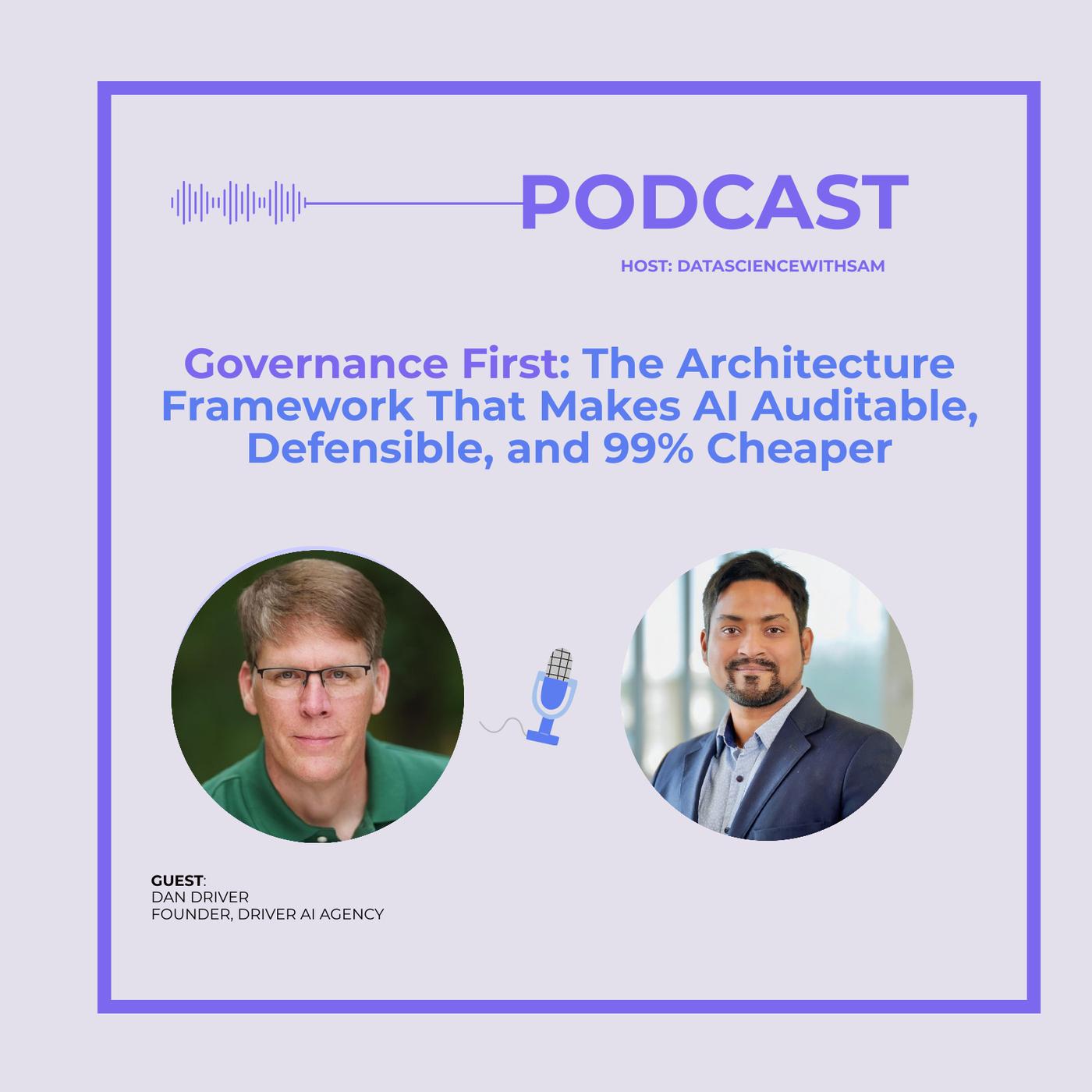
Most AI governance is a policy document that nobody enforces. And in high-stakes environments - legal, healthcare, finance - that gap between policy and architecture is where disasters happen. In this episode, Dan Driver, founder of Driver AI Agency, walks through exactly how he built CaseReady Intake AI: a legal AI system with governance baked into every architectural decision, zero hallucination risk by design, prompt injection blocked at the pipeline, and a single architectural choice that cut per-call compute costs by over 99%.Dan is not a lawyer. Not a developer by trade. He's a 25-year problem-solver with a Six Sigma and ISO background from DuPont, who navigated the EEOC employment discrimination process twice without an attorney - and then built the tool he needed. This is a technical governance conversation grounded in lived experience.▸ WHAT YOU'LL LEARN▪ What 'governance in motion' actually means: Dan's 10-page charter that every architectural decision is audited against — and how a pre-launch UPL (unlicensed practice of law) audit delayed his release by two weeks, and why that was the right call▪ Why governance can't just be a PDF: how banning AI without a governance framework only creates shadow IT and makes the risks invisible rather than eliminating them▪ How deterministic controls eliminate hallucination risk: Python-based Boolean filters and regex on the front and back end of the LLM pipeline mean the AI is never left alone with a surface that can create legal exposure▪ When NOT to use an LLM: date calculations, scope checks, and out-of-range warnings are all handled by deterministic Python — the LLM only handles what it's actually suited for▪ Prompt injection defence in practice: the final stage of CaseReady's pipeline is an AI check that validates whether the output makes sense against the charter — if someone tries to prompt it for legal advice, it fails by design▪ The 99% compute cost reduction: a Python pre-flight date check at the front door determines whether the case is in scope before a single LLM token is burned — if it's out of scope, the user is warned and asked to decide, without triggering the full pipeline▪ Why legal was the right proving ground: it's not about legal being Dan's background — it's that the ABA doesn't care how good your AI is, only whether you're practising law without a licence. That hard constraint forced every governance problem to surface immediately▪ Colorado SB 205: the AI governance framework Dan built toward — what it requires for high-risk AI in legal environments, and why even after recent softening, the requirements for high-stakes verticals haven't changed▪ What the minimum viable governance stack actually looks like: auditable decision trails (who made the decision, why, when), human-in-the-loop pull requests, charter-referenced testing on every deployment, and deterministic controls as hard walls rather than guardrails▪ Dan's advice for AI builders: guardrails aren't enough when stakes are high. You need hard walls. And the governance architecture that produces predictable, defensible, auditable outputs every single time is the only version that holds under regulatory scrutiny. ▸ STANDOUT QUOTES"Governance has to be more than a document. It has to be governance in motion.""The LLM is never left alone with a surface that can create legal exposure.""Guardrails aren't enough when you're dealing with legal. They have to be hard walls that it cannot cross.""It's not just what it produces — it'
английский
США
РАСШИФРОВКА 🔗
Are you the producer of this podcast?
Add a podcast transcript
Need Audio-to-Text?
Transcribe with Listen411 in Just 60 Seconds
ПОИСК ПРОШЛЫХ ЭПИЗОДОВ
Искать прошлые эпизоды Data Science With Sam.
ДРУГИЕ ЭПИЗОДЫ В ЭТОМ ПОДКАсте
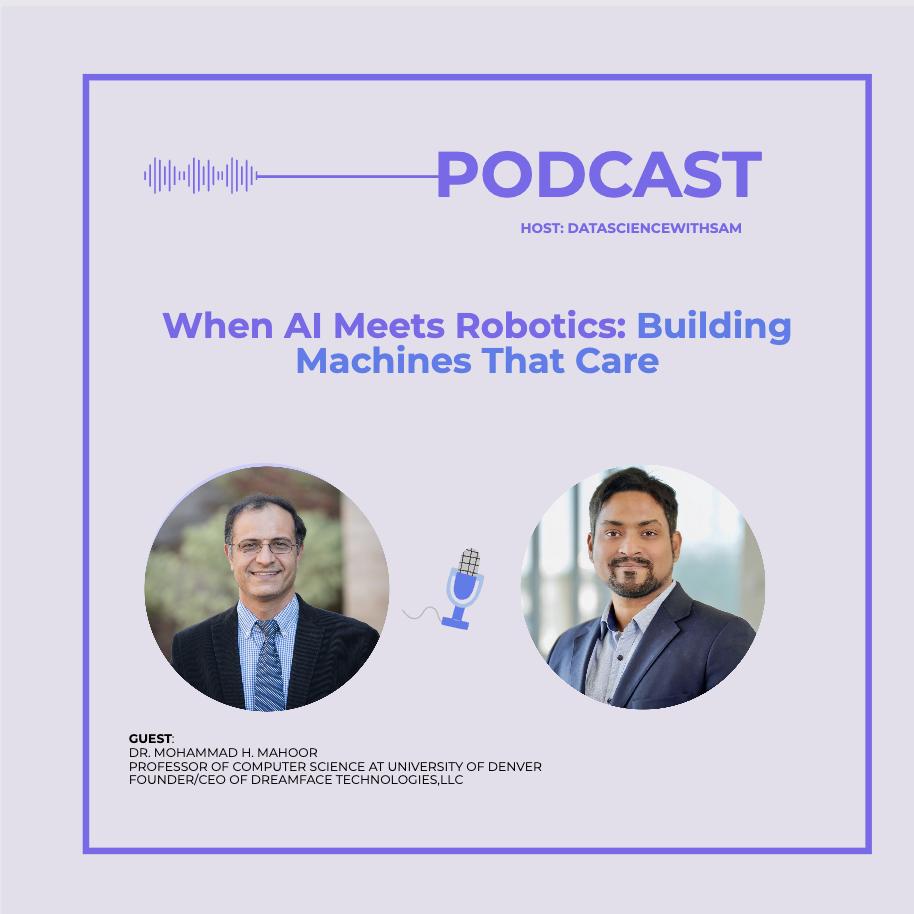
In this episode, Sam sat down with guest Dr. Mohammad explore what it actually takes to build emotional intelligence into a physical machine - from the technical layers of facial expression recognition and voice intonation analysis to the user experience decisions that matter most when your users a…
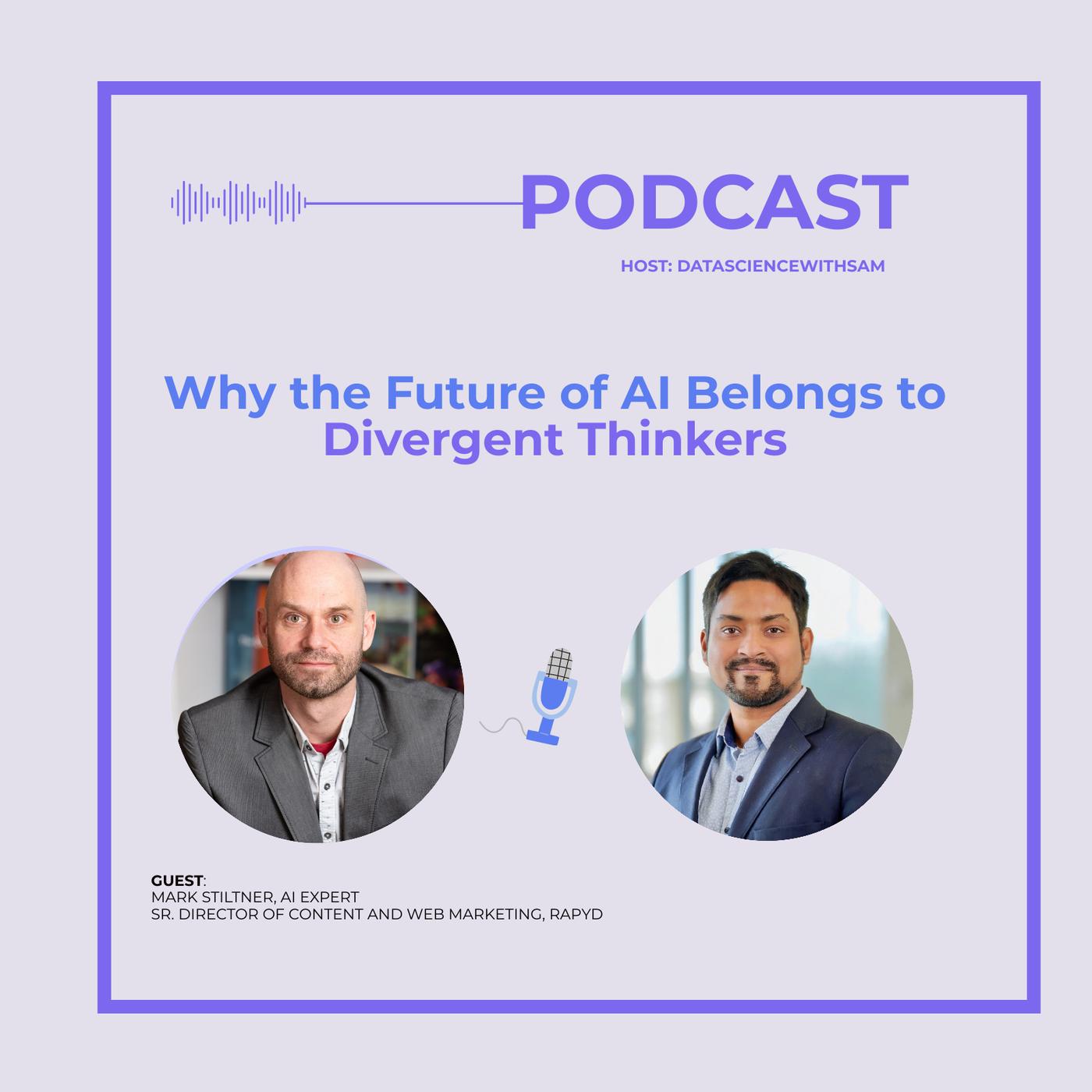
What if ADHD - penalised in classrooms and boardrooms for decades - is actually the competitive advantage in an AI-driven world? Palantir CEO Alex Karp said the future belongs to neurodivergent thinkers. The podcast guest Mark Stiltner has been living proof of that for years.Mark is Senior Director…
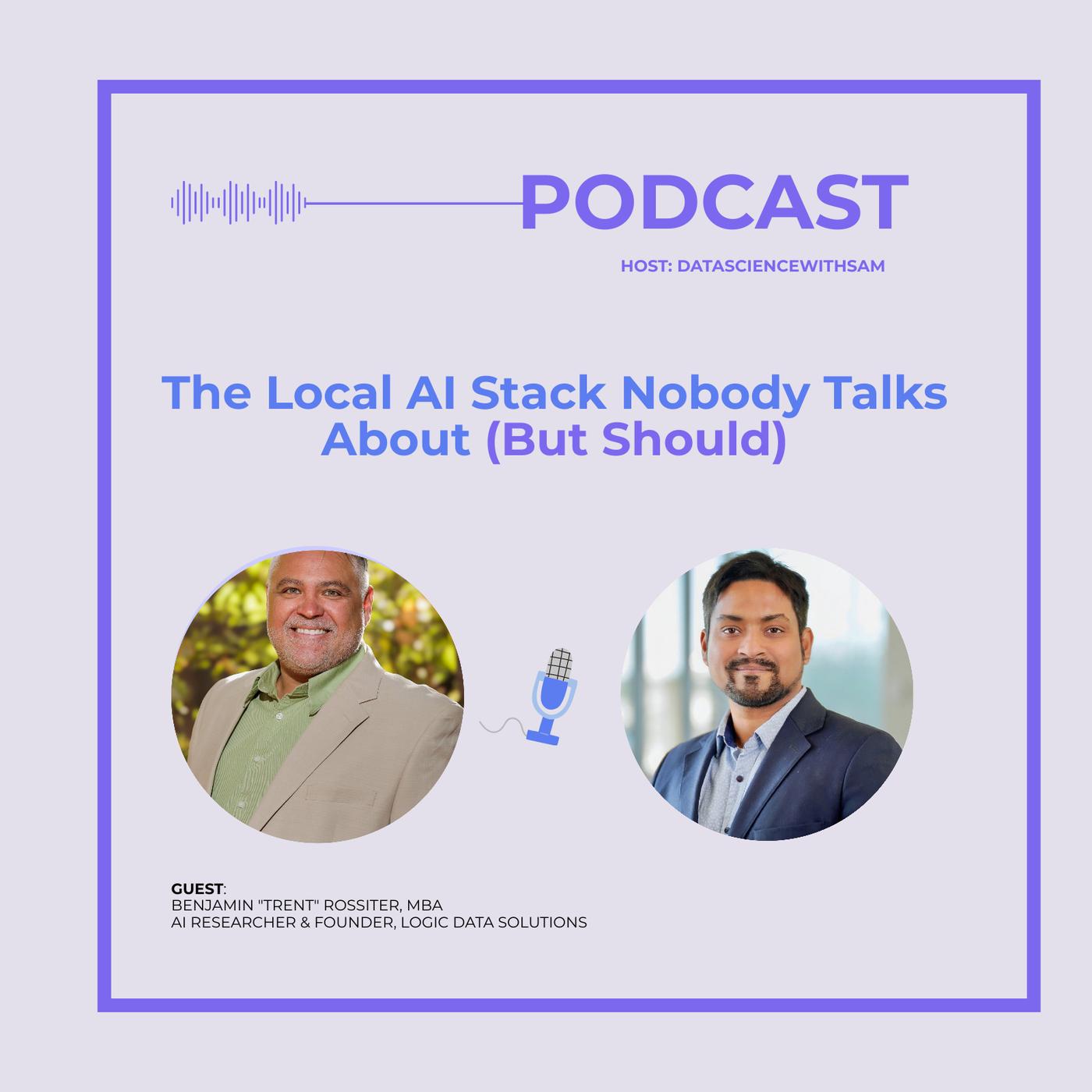
You want to run AI locally. You have questions: What hardware do I actually need? Which framework should I use? How much will this cost? What's the realistic performance?In this episode, Sam brings back Trent Rossiter, founder of Logical Data Solutions, for a practical walkthrough of building a pro…

74% of organizations hope to grow revenue through AI. Only 20% are actually doing it. That gap isn't a technology gap — it's a design gap. And today's guest has a name for what's missing: the reward signal.Alexander Liss is a Data and AI Scientist based in Denver, Colorado, with a 30-year career ac…
Отказ от ответственности: Подкаст и иллюстрации, встроенные в эту страницу, взяты из Soumava Dey, который является собственностью его владельца и не связан или не одобрен Listen Notes, Inc.
ИЗМЕНИТЬ
Спасибо, что помогаете поддерживать базу подкастов актуальной.
