
# Jay Cooke
Principais episódios de podcast
Atualizada:
Jason Cooke (August 10, 1821 – February 16, 1905) was an American financier who helped finance the Union war effort during the American Civil War and the postwar development of railroads in the northwestern United States. He is generally acknowledged as the first major investment banker in the United States and creator of the first wire house firm.
== Early life ==
Cooke was born at Sandusky, Ohio, the son of Eleutheros Cooke and Martha Carswell Cooke.
Hitting the Buffers: The 1873 railway bust that broke one of America’s greatest financiers
Every now and then a new technology comes along that changes everything – electricity, computers, potentially AI. In mid-19th-century America, that technology was the steam locomotive. It knitted the US economy together, driving the nation’s industrialisation during the Gilded Age. But along the wa…
Tyler Goodspeed on Challenging the Way Economists Look at Recessions

Tyler Goodspeed is the former chairman of the Council of Economic Advisors and is currently a chief economist in the private sector. In Tyler's first appearance on the podcast he discusses his new book highlighting a different way of looking at recessions, the challenge of breaking away from the h…
The 1873 Global Financial Meltdown that Cause 20 Years of Deflation and Destroyed 2 Empires

On May 9, 1873, as the Vienna Stock Exchange collapsed and thousands of speculators were wiped out in a single afternoon, young Salbert von Rothschild and two colleagues from the Schey and Goldschmidt banking families were nearly lynched on the floor of the exchange by infuriated stockjobbers and h…
Wall Street, Banks, and American Foreign Policy

Rothbard’s opening thesis: commercial bankers, engaged in fractional reserve credit, always teeter toward bankruptcy and reach for bailout, while investment bankers underwrite government bonds and profit from deficits. He traces the first great American investment bank—Jay Cooke’s—to a monopoly on …
Wall Street, Banks, and American Foreign Policy

Rothbard’s opening thesis: commercial bankers, engaged in fractional reserve credit, always teeter toward bankruptcy and reach for bailout, while investment bankers underwrite government bonds and profit from deficits. He traces the first great American investment bank—Jay Cooke’s—to a monopoly on …
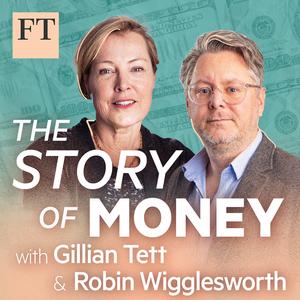
Episode 5 - The Story of Money

What actually is money? This new podcast from the Financial Times takes a historical view of this question which is crucial to understanding human civilisation and the world we live in today.
Robin Wigglesworth, who co-hosts the show with fellow FT journalist Gillian Tett, picks some of his favouri…
The Rail Revolution: Jay Cooke and the Northern Pacific (Part 4)

By 1869, the transcontinental railroad is finished, the Civil War debt is refinanced, and the business that made Jay Cooke reach the pinnacle of private banking in the US is disappearing. He had spent the war building something nobody had built before: a retail distribution machine that sold Union …
Robin Wigglesworth: Why Bonds Are Behind Every Financial Boom and Bust
Today’s guest on The Long View is Robin Wigglesworth. Robin is the editor of the Financial Times finance blog, Alphaville. He’s also the author of Trillions, which is the definitive book on the past, present, and future of passive investing. Robin’s joining us today to discuss his latest book, A Fa…
#100 Warren Buffett (The Snowball)
What I learned from reading The Snowball: Warren Buffett and the Business of Life by Alice Schroeder. ---- [0:01] What he was teaching were the lessons that had emerged from the unfolding of his own life [4:35] The dichotomy of Warren Buffett [9:20] Warren Buffett wants to be remembered as a teac…
How the Freedmen’s Bank Betrayed Black Americans: The $57 Million Scandal That Blamed Frederick Douglass
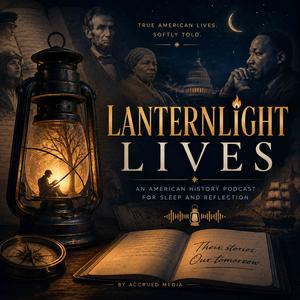
Explore the untold story of the Freedmen's Savings and Trust Company—America’s first bank for freed slaves—and its catastrophic collapse in this gripping episode of "Podcast." Discover how the institution, created after the Civil War with the promise of economic empowerment for newly freed African …
MOTOR DE PESQUISA DE PODCAST
Pode usar nosso site para pesquisar podcasts3,820,667e episódios195,268,746por pessoas, lugares ou tópicos.

I have no special talent. I am only passionately curious, and
I listen to podcasts.
‐ Albert "Llamacorn" Einstein
EDITAR
Obrigado por ajudar a manter a base de dados dos podcasts atualizada.
