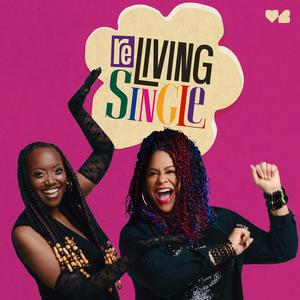

00:00:00
Speaker 1: Okay, so we know that Maxine Shaw is considered one of the best lawyer characters on TV, but there have been others. Let's start with Claire Huxtable. She was stylish. She was sharp. She made the law look luxurious. And you worked with her.
00:00:13
Speaker 2: Yes. She's slick. She's like a caramel pamphlet.
00:00:16
Speaker 1: She is. She is. And let's not forget Olivia Pope. She's chaotic, but iconic.
00:00:22
Speaker 2: Come on. Go, Kerry Washington. She was petite, but mighty. Now, see, listen, I've got to say, I'm more of an Annalise Keating. Kind of girl. You know, dark, dramatic.
00:00:31
Speaker 1: Viola Davis? Listen, woman king before there was a woman king.
00:00:35
Speaker 2: Oh, come on. She has a walk. Okay? She ambles hard.
00:00:39
Speaker 1: She does. She does. But none of them had the swag or the suits, the comebacks of Maxine Shaw, attorney at law. Hello?
00:00:46
Speaker 2: Come on now.
00:00:47
Speaker 1: Full court press, baby. That's episode seven, When the Gavel Met the Maverick.
00:01:13
Speaker 2: Hey, welcome back to Reliving Single, the official, unofficial Living Single rewatch podcast.
00:01:20
Speaker 1: Okay. This is when we finally get to meet the big dog in her own element, the master and the blaster.
00:01:26
Speaker 2: Come on, Maxine Shaw, attorney at law.
00:01:29
Speaker 1: Did you ever think that she would become such a big presence? I mean, people just revere her. They love her. They love Max. Yeah.
00:01:35
Speaker 2: Well, no, I mean, wait, listen, it was fun to play her. It felt very powerful. I mean, she had the wardrobe. It was super, super sexy. Thank you, Ceci. And the heels that towered over everyone and lifted my buttocks so wonderfully.
00:01:47
Speaker 1: I love when you put on your swagger and the walk was amazing. And you always say that your mother sent you to modeling school to help you out with your.
00:01:54
Speaker 2: Walk, right?
00:01:54
Speaker 1: Yeah, yeah.
00:01:55
Speaker 2: You know, we always talking about Viola Davis's walk, but I got a walk that was problematic for my mother, at least. I mean, when I was in eighth grade, I got an award for PE. And when I got up to accept it, She said it looked like I had gotten off of a horse. Oh, wow. Yeah. And when I showed her the pin, the first thing she said was, Erica, I was so embarrassed.
00:02:15
Speaker 3: Oh.
00:02:16
Speaker 2: My mom is like old school. She's like the great Sammy Jean.
00:02:18
Speaker 3: Yeah.
00:02:19
Speaker 2: Doesn't want her daughter looking like she's a cowboy.
00:02:22
Speaker 4: Okay.
00:02:22
Speaker 2: So she sent me to Black Glamour Modeling School.
00:02:28
Speaker 1: What's the number one thing you learned at Black Glamour Modeling School?
00:02:31
Speaker 2: Well, how to be glamorous and black, number one. But no, who got best walk? In the class?
00:02:38
Speaker 1: Ding, ding, ding, ding, ding, ding, ding.
00:02:41
Speaker 2: Come on, you throw me in the deep end. I may go down, but I'm going to fight my way back up, and then I'm going to be a good swimmer.
00:02:48
Speaker 5: I love it.
00:02:48
Speaker 2: Then I'm going to be a great swimmer. Then I'm going to win.
00:02:51
Speaker 1: I love it.
00:02:52
Speaker 2: And I did that in that modeling class. And I got to say, just the song that I would walk to?
00:02:57
Speaker 5: What?
00:02:57
Speaker 2: Tina Marie. Sweet, it was a kiss that just helped me captive in your sweet embrace. And I would walk.
00:03:04
Speaker 1: This is what they're teaching in modeling school?
00:03:06
Speaker 2: Yes.
00:03:06
Speaker 1: Tina Marie? You listen to Tina Marie's music?
00:03:08
Speaker 6: Wow.
00:03:09
Speaker 2: Tina Marie, and we would walk.
00:03:10
Speaker 4: So, yeah.
00:03:11
Speaker 2: So, thanks, Black Glamour.
00:03:12
Speaker 1: Thanks, Black Glamour. It's time for The Rewind, where we watch and relive Living Single with you. So it's now time for Living Single season one, episode seven, full court press. Khadijah gets into an accident with an older woman, owes $ 1, 500. She needs an attorney and enlists the help of her best friend, Max. Guest starring Montrose Hagen and Marcus Giamatti.
00:03:41
Speaker 2: Yeah, so can't wait to get into this one. Let's roll the clip.
00:03:44
Speaker 3: Guess I better call my insurance company.
00:03:47
Speaker 4: Now, Khadija, you don't want to do that. You don't want to deal with those slimy bloodsuckers. What you need is a lawyer. What was she driving?
00:03:54
Speaker 3: Oh, God, Max, I don't know.
00:03:55
Speaker 1: It all happened so fast.
00:03:57
Speaker 5: I think it was a late-model Cadillac Fleetwood Special Edition with special bumper trim and cruise control.
00:04:06
Speaker 2: An old biddy and a Cadillac?
00:04:09
Speaker 4: Sounds like there's justice to be served.
00:04:13
Speaker 2: Nice.
00:04:13
Speaker 1: We see that Khadijah was in an accident with an older woman. Regina and Max suggest that she sue. Khadijah wants to settle out of court. She's like, I don't want to go through all that.
00:04:22
Speaker 2: Yeah, but it's the same old story again. Khadijah needs help again. Max can help again, but Khadijah's pride won't allow her to accept the help.
00:04:30
Speaker 1: Again. Wow.
00:04:32
Speaker 2: So this is a lot of energy in this first scene.
00:04:34
Speaker 1: She comes in in this accident. We learn right away what's going on.
00:04:38
Speaker 2: Thank you. Because Sinclair tells them in like some sort of weird.
00:04:42
Speaker 1: Sound effects.
00:04:43
Speaker 2: It was like emoji-y before they were real.
00:04:46
Speaker 5: Then the other.
00:04:48
Speaker 1: Then we... Thank.
00:04:51
Speaker 4: Goodness.
00:04:55
Speaker 3: Khadija was driving. They had an accident, but nobody got hurt.
00:05:00
Speaker 1: How much do I love that Overton's been paying enough attention to her that he can speak Sinclair?
00:05:05
Speaker 2: He can speak Sinclair.
00:05:06
Speaker 1: He can speak Sinclairese.
00:05:07
Speaker 2: You know what? That's when you know that you're made for each other. Yeah. When you can do all that and they don't complain that they don't understand you.
00:05:13
Speaker 6: Right.
00:05:13
Speaker 2: They can read between the lines.
00:05:15
Speaker 1: He understands her.
00:05:16
Speaker 2: And he reads between all her lines.
00:05:17
Speaker 1: All the lines.
00:05:18
Speaker 2: That's what he.
00:05:18
Speaker 1: He's been really paying attention. And it says that he's been studying her to get to know her and to get in there.
00:05:25
Speaker 4: Right?
00:05:25
Speaker 1: You know, he's got this multi-year plan. So that's real speak. I love that. Also, Regine... You know, in the middle of the scene, she goes to take some sort of painkiller of some kind, like aspirin or Tylenol, whatever it is. And when she limps out of the room, like one of us could have gotten injured. You know, it's hysterical.
00:05:45
Speaker 2: She get ready to sue.
00:05:46
Speaker 1: Get ready, get ready.
00:05:47
Speaker 2: Yeah, yeah, yeah. Well, you know what? That wouldn't be unusual.
00:05:50
Speaker 5: No.
00:05:50
Speaker 2: Because sometimes when you get hit, people start to grab their back. They do. Yeah, limp and all sorts of stuff. So she get ready to work that.
00:05:58
Speaker 1: I love that you come in ready. I'm like, Max!
00:06:00
Speaker 2: Max!
00:06:05
Speaker 5: Must you scream out of the window like a no-class lowlife?
00:06:07
Speaker 1: Coming! The timing of this scene. So like you said, lots of energy, lots of comedy, and it played really well, and it still does. That lasts for a long time.
00:06:19
Speaker 2: Well, you know, they're lucky. They have an in-house lawyer with Max, which is great because, you know, black people have, you know, a tenuous relationship with the law because the law hasn't always worked for us. But Maxine Shaw is there. Right.
00:06:31
Speaker 3: Ready.
00:06:31
Speaker 2: Yeah.
00:06:32
Speaker 1: And like, come on, girl. Throw me in the game is what you're saying, really. Put her in, coach.
00:06:35
Speaker 2: Put her in, coach.
00:06:36
Speaker 1: Put her in.
00:06:37
Speaker 2: And so like a lot of people can already see that she's saying, I don't want to sue that old Lady, I don't want to do that. She's like, no, you know, something should happen, but at least allow me to be there. Right.
00:06:46
Speaker 1: And not just throw me in, coach, but it was really like, let me help my friend. Like, this could go really poorly for you. You know that you have me. Like, let me help you navigate this well. I'm the best person to do the job.
00:06:57
Speaker 2: Well, yeah, because most people do settle and it's encouraged. You know, it's cheap. Oh, sure. You know, it's quick. But I don't know if that's going to happen.
00:07:04
Speaker 1: We don't know. We're about to see, aren't we?
00:07:07
Speaker 2: We'll accept the settlement.
00:07:08
Speaker 3: You're making a wise choice.
00:07:10
Speaker 2: I always do. Things won't have to get ugly.
00:07:12
Speaker 4: Exactly.
00:07:12
Speaker 3: You don't have to suffer a nasty loss in court.
00:07:15
Speaker 2: Excuse me?
00:07:16
Speaker 3: I know how humiliating a crushing defeat can be.
00:07:19
Speaker 2: Well, I don't know personally, but I've heard. So you're saying I'd lose?
00:07:26
Speaker 3: Your words.
00:07:27
Speaker 1: Oh, no, no, no, no.
00:07:27
Speaker 2: I don't think so.
00:07:28
Speaker 4: My words are, keep your little $ 800.
00:07:30
Speaker 5: We're not settling. We're not?
00:07:32
Speaker 4: No.
00:07:32
Speaker 1: We'll see you in court.
00:07:39
Speaker 3: You do realize I've never lost a case.
00:07:42
Speaker 4: Well, it just so happens that I've never lost a case.
00:07:44
Speaker 3: Well, one of us is going to lose a case.
00:07:45
Speaker 2: I guess it's going to be you.
00:07:47
Speaker 4: Oh, you.
00:07:47
Speaker 2: You.
00:07:48
Speaker 5: You.
00:07:48
Speaker 2: You.
00:07:48
Speaker 3: You. You.
00:07:49
Speaker 4: You.
00:07:49
Speaker 3: You.
00:07:55
Speaker 1: Well, that didn't end very well, did it?
00:07:58
Speaker 2: Well, it depends on how you look at it. So Khadija and this older woman meet, but she brings a lawyer. Remember, she thought, oh, she's not going to bring a lawyer. But Khadija uses Max's expertise, and Khadija wants to settle, but Max got competitive, and now Max and Khadija are headed to court.
00:08:12
Speaker 1: Headed to court. Khadijah is underrepresented. She thinks that she's just going to, this is going to just be a short conversation. And by the way, shout out to the beautiful Montrose Hagen. Every role that I've ever seen her play, she's always very elegant and beautiful. And you have one lawyer. That's almost none. And so here we are in the thick of it.
00:08:32
Speaker 3: Yeah.
00:08:33
Speaker 2: And I think the core characteristic of Max is a huge... level of competition. She's very competitive. If you click that button or trigger her, then you just set it off. She's coming for you.
00:08:49
Speaker 1: And she's a winner. And so she's not afraid of the competition because she knows she's going to win. As a matter of fact, I've not lost a case. And he's like, neither have I. Neither have I.
00:08:57
Speaker 3: You, you, you, you, you, you.
00:08:58
Speaker 1: Like, oh no, I'm going to win.
00:08:59
Speaker 2: That's right. Right. She was fine to settle until he said, you know, too bad because if you would have come to court, you would have lost.
00:09:05
Speaker 1: Oh, so what now?
00:09:07
Speaker 2: Say what? Say what?
00:09:08
Speaker 6: Right.
00:09:08
Speaker 2: Would I? So that's not going to sit there, you know?
00:09:10
Speaker 1: Now, Khadijah didn't want to fight, but Max took it there. And so now we're there.
00:09:16
Speaker 2: And so can competitive be seen as aggressive? Like there's that angry black woman thing again.
00:09:22
Speaker 1: Listen, I think in this case, it's not angry. It's just competitive.
00:09:25
Speaker 2: Just call it what it is.
00:09:27
Speaker 1: And her way of being, her style, it didn't feel angry to me. It felt like, oh no, you saying I can't do this? Oh, watch me do this. Yeah.
00:09:34
Speaker 2: But you know, and we'll talk about this more, but I think every time a woman sort of asserts herself, It does throw people off. I get that. I get that. I guess that's when people get called bitches and all these other things.
00:09:47
Speaker 6: Right.
00:09:47
Speaker 1: That's a long conversation to have. It really is. In this case, it's so funny how within the culture, we can read when it's really angry and really aggressive and when it's passionate. And I think there are times when we're just being passionate and it's read as something else and because it's threatening to them, whoever they are.
00:10:07
Speaker 4: Yeah.
00:10:07
Speaker 2: Yeah. But did she act? Did Max act in the best interest of her client, Khadijah? Or did she suddenly tap into her own selfish, you know, games?
00:10:18
Speaker 1: What do you think? What do you think?
00:10:20
Speaker 2: She did not act in the best interest of Khadijah. No. Because even if you disagree with your client, you have to do what they say.
00:10:29
Speaker 3: Right.
00:10:30
Speaker 2: But she could not separate those.
00:10:31
Speaker 1: She could not in that moment.
00:10:33
Speaker 2: Yeah. And so now Khadijah's on the hook.
00:10:35
Speaker 4: Right.
00:10:36
Speaker 2: Because if it's also, remember, that puts her at risk. If you lose the case, you owe.
00:10:41
Speaker 1: That's right. That's right. Yeah. That's right.
00:10:44
Speaker 2: Yeah.
00:10:44
Speaker 1: Ooh, what would have happened? Well, we don't know what happened.
00:10:46
Speaker 2: She could lose or damage the friendship.
00:10:47
Speaker 1: Right.
00:10:48
Speaker 2: You just lose the case.
00:10:50
Speaker 1: You lost everything.
00:10:51
Speaker 2: Yeah. Ooh.
00:10:51
Speaker 1: You could lose everything.
00:10:52
Speaker 2: You could lose everything. Wow.
00:10:54
Speaker 1: But in that moment, she wasn't thinking of the risk.
00:10:56
Speaker 2: No. No. Let's see what goes on. What if we lose, Max?
00:11:02
Speaker 6: Lose....
00:11:05
Speaker 2: Khadija, I am Maxine Shaw, attorney at law. I lose weight. I lose patience.
00:11:12
Speaker 4: If you keep working my nerves, I may lose my mind, but I do not lose cases.
00:11:17
Speaker 2: So you just get your butt used.
00:11:18
Speaker 4: To leather because you're coming home from court in a Lexus.
00:11:24
Speaker 1: You're coming home from court in a Lexus. That's great writing. Great, great writing.
00:11:30
Speaker 2: So they're arguing and they're bickering now because she has not done what Khadija wanted. She has to contemplate, you know, what if you lose? And she says that to Max and Max is like, lose? Right.
00:11:42
Speaker 1: That's not going to happen. Like, I got us into this and I'm going to win in the end. She's clear about that and certain about that.
00:11:49
Speaker 2: That's right. The mythology of the Maxine Shaw character is partly because of her great surety of self. And it's funny because later on, we start to see cracks again. in it.
00:12:04
Speaker 1: There comes the conflict that we need to see. We need to see the vulnerability to make her a whole character. And what I love about this episode is this, and I didn't realize this until we started re-watching this. This is the first time that you say Maxine Shaw, attorney at law.
00:12:20
Speaker 2: Yeah.
00:12:21
Speaker 1: And how did that feel to take that line on? Because you're still getting to know who this character is. How did it feel to wear that?
00:12:28
Speaker 2: You know, in your ear, Maxine Shaw, attorney at law, it So, I mean, in a way, you want to say it because it's fun to say it. And frankly, again, I am leaning very heavily on the fact that I am a preacher's daughter. One thing is that preachers and the Kojic pastor, and I'm not trying to be disrespectful, is they're selling God. And God don't lose. You hear me?
00:12:51
Speaker 3: True, true, true.
00:12:52
Speaker 2: So if you come into court with me, you know, you got the backing of that kind of like power behind you and inside of Maxine Shaw's character. is, you know, Erica Alexander's surety that if, you know, if God be with you, nothing can be against you. Okay, okay. So, there you see.
00:13:10
Speaker 1: Boom, shakalaka.
00:13:11
Speaker 2: Hallelujah. All right, Regine, let's go over your testimony. Again.
00:13:14
Speaker 1: No, no, no, that's it.
00:13:16
Speaker 5: It's one o'clock in the morning.
00:13:18
Speaker 1: Enough is enough.
00:13:19
Speaker 4: I'm sorry, but we have a court date tomorrow, and you guys are nowhere near to being prepared. These answers have to become second nature. Peabody's going to bombard you with questions.
00:13:25
Speaker 2: Like, how many lanes were in the road? What was the exact time of day?
00:13:29
Speaker 1: I don't know.
00:13:30
Speaker 5: Exactly how fast were you traveling? 27.5 miles an hour. Well within the legal speed limit, but fast enough to injure a spleen.
00:13:41
Speaker 2: Okay.
00:13:42
Speaker 1: Maybe she's ready. But the rest of you need work.
00:13:46
Speaker 5: I'm going to bed.
00:13:47
Speaker 2: No, wait. You have to go over the diagram at the intersection. Exhibit A, day three.
00:13:51
Speaker 5: Have you lost your ever-loving mind? I do not want to grow old doing this. I'm taking the 800 and I'm out. Well, if you want to settle, do it your damn self.
00:14:04
Speaker 2: So there's Maxine Shaw trying to get her clients and her witnesses all on one page and prepared for court. And they're doing a horrible job because they're tired.
00:14:15
Speaker 1: She's grilling them. Them getting them ready, which is powerful, which is great.
00:14:18
Speaker 2: That's why she wins. We're seeing why she wins now. But they can't take the heat. They want to get out the kitchen.
00:14:24
Speaker 1: My favorite line in that scene is, okay, maybe she's ready, but the rest of you is.
00:14:28
Speaker 2: Right.
00:14:30
Speaker 6: Yeah.
00:14:31
Speaker 2: So, you know, I admire that. Because I think people don't really realize that if you can do it, it ain't bragging if you can do it. But we're also seeing that it's not just bragging. She's willing to do the work.
00:14:42
Speaker 1: She's doing the work. And not getting paid for it.
00:14:44
Speaker 2: Putting them through their paces. Not getting paid for it, but wanting, again, to advance her own interest in winning. And this is what gets her in trouble. And finally she starts bragging, saying, hey. You know, this dude's going to drag this out. Peabody is going to drag it out. But guess what? Week one, week two, week three, week four. And then Nakiji said, wait a minute.
00:15:00
Speaker 1: That's enough. That's enough.
00:15:01
Speaker 2: You trip it. Straight up. I'm going to settle and I'm going to represent myself.
00:15:04
Speaker 1: Okay. Then you're on your own. That's just horrible, though. She's got charts and graphs. Everything.
00:15:09
Speaker 2: But here's the other thing she's demanding. Y'all have to tell the truth.
00:15:13
Speaker 1: Oh, yes.
00:15:14
Speaker 2: Get acquainted with the truth. We're going to win this the right way. Right, right, right. So she's, you know, not willing to take any shortcuts. And now she's lost a client. Yeah. And perhaps a friend. Aw. Let's see what goes on.
00:15:30
Speaker 1: What happens next?
00:15:31
Speaker 2: So what are we talking about here, Your Honor? A simple car accident?
00:15:34
Speaker 1: No, I think not.
00:15:36
Speaker 2: That Jeep was my client's.
00:15:38
Speaker 4: Only means of transporting each and every issue of Earth-Struggling Magazine to the printer.
00:15:42
Speaker 2: A magazine that gives voice.
00:15:43
Speaker 4: To New York's African-American community. A voice the defendant almost stilled.
00:15:48
Speaker 3: Hmm.
00:15:49
Speaker 4: So today we ask, no, your honor, no, I think, uh-uh, we demand compensation so that my client may continue to pursue her lifelong dream of freedom of speech, freedom of the press, and freedom for all.
00:16:12
Speaker 1: Wow.
00:16:14
Speaker 2: Okay, so first of all, let's say that Max is a winner.
00:16:18
Speaker 1: Max is the winner.
00:16:19
Speaker 2: The winner.
00:16:20
Speaker 1: Came through in the end, still had her preparation. And did you, do you feel that she went to the courthouse knowing that Khadijah just might need her?
00:16:28
Speaker 2: She knew Khadijah would need her. Khadijah would need her.
00:16:31
Speaker 3: You have an opening statement.
00:16:35
Speaker 1: Yes, I do.
00:16:43
Speaker 2: I have the right to remain silent.
00:16:47
Speaker 3: And anything I say and do will be held against me.
00:16:54
Speaker 1: Which, as you pointed out, this is.
00:16:57
Speaker 2: She knew that Khadija didn't understand that this could go really bad. And once she did, she may be on the hook for a lot more money to this older woman.
00:17:07
Speaker 4: Right.
00:17:08
Speaker 2: So, yeah, I mean, I think that she understood what was at stake, and then she got up and did her thing.
00:17:12
Speaker 6: Did her thing.
00:17:13
Speaker 2: And we see why she gets the big money. Come on, come.
00:17:18
Speaker 6: On.
00:17:18
Speaker 3: We're prepared to renew our previous offer.
00:17:20
Speaker 2: I know of no such offer. $ 800. $ 1, 500.
00:17:22
Speaker 1: $ 1, 000.
00:17:22
Speaker 5: $ 1, 500.
00:17:22
Speaker 2: $ 1, 500. And an apology.
00:17:26
Speaker 3: I apologize. Ladies and gentlemen, this case is dismissed. First time for everything, Jack.
00:17:35
Speaker 1: I love, there's a couple of moments in this scene where you set and then you say what you have to say. You get into position, you handle your situation, you put on those glasses with that great chain, and then you set, and then off you go.
00:17:49
Speaker 2: I'm trying to tell you.
00:17:50
Speaker 1: Was the chain your idea? Because you're much too young to have a pair of glasses with a chain on them.
00:17:55
Speaker 2: The chain was absolutely my idea.
00:17:56
Speaker 1: Okay.
00:17:56
Speaker 2: Because they props, they asked me, and I said, I need some glasses so I could read. At the time, I had 20-20 vision. Of course. Now I don't. You know what I'm saying? But- But at the time I had 20-20 vision. But I thought since I was always reading briefs that I wanted to look like I was reading. So it was just a really kind of cheesy way to indicate that she's a reader. Right. But also to indicate that she put... I didn't necessarily need those glasses on to do the opening statement. But, you know, she puts it on because she's, as you say, getting ready to cook. Do your cook.
00:18:25
Speaker 1: Oh, she's getting ready to cook. Let me cook.
00:18:26
Speaker 2: Let me cook. Let me cook. So she's cooking and then she puts it on. That's training that you get from... In theater, and just what I did just a moment ago, is when you let silence sort of make a gap so people can hear what's coming next. Because if it folds, all folds in itself, there's no marker. So she does that sort of to lay her case out, but she also gives a dramatic pause.
00:18:57
Speaker 1: It's great.
00:18:57
Speaker 2: It's great.
00:18:58
Speaker 1: Like, get ready. It's about to go down.
00:19:00
Speaker 2: And where do they do the most dramatic pauses in church? When the preacher goes, okay, let me tell you something. Okay. And somebody say, all right.
00:19:09
Speaker 4: All right.
00:19:10
Speaker 2: That's what the amen corner be like. Amen. Take your time. Those pauses are always given over and over again so that the pastor or the minister can make sure that the congregation is with them. Yeah.
00:19:25
Speaker 1: Yeah.
00:19:25
Speaker 2: And that you lean forward. And so she does that a lot. And that's definitely something that I picked up.
00:19:30
Speaker 1: I'm going to just liken that to comedy. It's the best comedians know when to hold and let the audience laugh and know when to hold. And sometimes the hold gets a laugh. Like what's the anticipation of what's fitting to come next? Exactly.
00:19:45
Speaker 2: Yeah.
00:19:45
Speaker 1: That's beautiful.
00:19:46
Speaker 2: Yeah, it's doing the work for you.
00:19:47
Speaker 4: Yeah.
00:19:48
Speaker 2: You know, and it's like a racehorse pacing himself. You know what I'm saying? And so I actually, actually, I haven't seen that in so long, frankly.
00:19:55
Speaker 5: Yeah.
00:19:56
Speaker 2: I didn't even know it was going to come next. We love The Judge. The Judge is played by the great Richard Stahl.
00:20:01
Speaker 1: Richard Stahl. And if you notice at the beginning, he reads her name and says, okay, Cottagee James.
00:20:08
Speaker 2: It's funny because in a previous episode of Reliving Single, Steve White, who came to play Elmo Sable, kept repeating her name repeatedly. you know, wrong and sort of we're having fun with it. But the producers at the time did not want that to happen. And this is different, I think.
00:20:24
Speaker 1: You know, culturally, you know, maybe he wouldn't have known how to say Khadija. You know, that's a name that he doesn't see all the time coming in his courtroom. And so Khadija, I think it was allowed because culturally that's funny. It's a name that This man would not have ever seen before, and he gets to mispronounce it.
00:20:42
Speaker 2: Yeah, you know, and frankly, it was a name that a lot of people hadn't seen before. There was a time in the 70s, Black Power Ungawa, and because of Muslim sort of influence, that everybody wanted to name their child something that was an Arabic name or something like that. So in my family, you can see the switch. Okay, do the switch in your family. Okay, so I'm born in the 60s, and I'm the last born in the 60s. But there's four before me. First one's John. John. The next one's Robert. The next one's Carolyn. Then there's Erica. That's something different. And then the 70s hit and it becomes Charlonda and Myesha. That's what it is. Like she just got black powered.
00:21:24
Speaker 4: Right.
00:21:24
Speaker 2: Right. And wanted to add it in. And there were a lot of names, you know, Shakifia and Shaquana and all that.
00:21:30
Speaker 1: Letitia.
00:21:31
Speaker 2: We started making things up.
00:21:32
Speaker 5: Right.
00:21:33
Speaker 1: Because it was, you know, that's our creativity. We still put them together. And that's us wanting to separate ourselves from... From that and hold our culture near. Even if they weren't really African names or really Arabic names, we were making them up.
00:21:46
Speaker 5: Yeah.
00:21:47
Speaker 2: And there was a lot of people that had to get used to saying different names, especially when speaking about black people. Of course. You know, and again, that's us trying to find a path to our original self. Even if it's as the crow flies.
00:22:01
Speaker 1: And it's, I'm sure, intentional why Queen Latifah chose Latifah.
00:22:05
Speaker 2: That part. She was Dana Owens and she's Queen Latifah. Yeah.
00:22:10
Speaker 1: When we first meet Max, I want to say in the first episode, she comes in the room, don't touch me unless you want to get burned. We know that that is what she says after she wins. And she says it here. We see her win and we see.
00:22:22
Speaker 4: Don't touch me unless you want to get burned.
00:22:27
Speaker 1: We know that that is her clarion call for the excellence that she has just displayed.
00:22:32
Speaker 2: And they go home and they celebrate and they got cake and they're, you know, partying and dancing and, you know, really having a hoop nanny.
00:22:38
Speaker 1: It's a win.
00:22:40
Speaker 2: And they bring in the cake and Khadija takes it as Max is bragging again. And bam.
00:22:47
Speaker 1: Right in the face.
00:22:49
Speaker 2: Right in the face.
00:22:49
Speaker 1: Was that written in the script or was that an ad lib? I'd like to know.
00:22:53
Speaker 2: That was written in the script because we had to get permission from the director to To actually do it. And they told us, okay, the show is in the can. You can do it. Because if they didn't, they'd have to reset my makeup.
00:23:02
Speaker 4: Right.
00:23:03
Speaker 2: And that would have taken a long time.
00:23:04
Speaker 1: And fix your clothes. So it had to be the.
00:23:06
Speaker 2: Last shot of the night.
00:23:08
Speaker 4: Right.
00:23:08
Speaker 2: And so they had to get, you know, signed off. But, you know, I think that it also took away some of Max's power.
00:23:16
Speaker 1: You think so?
00:23:17
Speaker 2: It did. Let's talk about power. Because why couldn't they just let Max, you know, sit there and be smiling and be happy and have the last word?
00:23:24
Speaker 1: Well, because you flipped the script on her and said, oh, here's my bill. Here's my bill. So something you had offered to do for free.
00:23:33
Speaker 2: That's true.
00:23:34
Speaker 1: And then in the last minute, and maybe you could say that you had your chance to have it for free, that the last minute I came in and saved you. So I think that was her payback for you saying, okay, let me pay you right now.
00:23:46
Speaker 2: That's true.
00:23:47
Speaker 1: I hear what you're saying though. We needed another button. In comedy and sitcom, we call it the button. And so you had that extra button.
00:23:55
Speaker 2: And you try things. I mean, that's the thing. You throw something in there and you see if it works and everybody does their best. And then if it doesn't, you try again. And certainly- That's good fun because it's not every day you get cake in your face. And so, you know, that's a classic comedy trope.
00:24:11
Speaker 1: Oh my goodness.
00:24:12
Speaker 2: Is the pie in the face.
00:24:13
Speaker 1: Please.
00:24:14
Speaker 2: And there you see it working there.
00:24:15
Speaker 1: Do I have a memory of you? I remember looking at you going like, Erica's going to start throwing cake. Did you start throwing cake?
00:24:22
Speaker 2: I think we all started to, but you don't see that because that's when the show is over. And you know, we have a conversation really about who defends people who are defenseless because they've got Maxine Shaw. She is a great lawyer, but not everybody has that. They end up taking these types of settlements and that type of thing. And so it is very hard to get great representation in court, not only for yourself, but for your family.
00:24:44
Speaker 1: We know so many tragedies for years on end that people don't get justice, that they end up staying in jail for forever and forever. And it makes me wonder how many people are sitting in trouble or received small settlements whose lives are ruined by something that happened to them or something that happened in their life and they never got justice or they never had.
00:25:06
Speaker 2: A- And we all need justice fighters. Everyone needs an Avenger.
00:25:10
Speaker 4: Yeah.
00:25:10
Speaker 2: And you know what? What? I really feel like we could use an Avenger right now.
00:25:15
Speaker 1: Right now?
00:25:16
Speaker 2: To talk about how it is being a real life- Lawyer who happens to have all the things that Maxine Shaw has.
00:25:24
Speaker 1: Fighting for the people.
00:25:25
Speaker 2: Yeah, the skin, the hair, all of that. And that kind of mask coming for the Avengers, coming for you, defending you.
00:25:32
Speaker 1: Well, where can we find one?
00:25:35
Speaker 2: What's that? What is that?
00:25:37
Speaker 3: It's a call.
00:25:39
Speaker 2: That phone works? I thought it was a prop.
00:25:41
Speaker 1: You know, normally this would sit on the wall.
00:25:44
Speaker 2: Answer it, Kim. What?
00:25:48
Speaker 1: We have a call from an Avenger. Yes, of course! Patch her through immediately!
00:25:53
Speaker 2: An Avenger?
00:25:55
Speaker 1: We have something better than an Avenger.
00:25:57
Speaker 4: Who?
00:25:58
Speaker 1: Just in time for The Reverb! This is The Reverb, our time to reflect on the episode's themes and how they still echo throughout the culture.
00:26:13
Speaker 3: Woo!
00:26:17
Speaker 1: Come on, all right now.
00:26:19
Speaker 2: We have got Stacey Abrams on the orange line.
00:26:22
Speaker 1: Listen, listen, hello, hello. And I want to read this and I want to get this right. Here we go. She's a lawyer, a voting rights superhero, a New York Times bestselling author, a political icon. And let's be real, she's the only person we know who could argue a case, write a novel.
00:26:39
Speaker 2: And said that she was inspired by the Maxine Shaw attorney at law character. Today we are making a full circle moment happen. Please welcome to Reliving Single, Stacey Abrams.
00:26:50
Speaker 1: And the crowd.
00:26:53
Speaker 5: Goes wild.
00:26:54
Speaker 1: And the crowd goes wild.
00:26:56
Speaker 2: This is awesome.
00:26:57
Speaker 1: It's so wonderful to have you, Stacey. Thank you for being here.
00:27:00
Speaker 3: Thank you for having me. This is a delight. Thank you.
00:27:02
Speaker 2: This week, we are on episode, what is it? Episode seven. And this is the first time, it's season one, that we see Maxine Shaw, attorney at law, in the courtroom. And she's representing Khadija, who has gotten into a wreck.
00:27:16
Speaker 3: A car accident with an older woman. Yeah, I've seen every episode of the show.
00:27:21
Speaker 1: She's like, I don't know this.
00:27:25
Speaker 3: Sinclair is still flirting gently with Obie, hasn't quite figured out how she's going to make him her man. Yeah, come on now.
00:27:32
Speaker 1: So is it really true that you were inspired by Maxine Shaw, attorney at law?
00:27:38
Speaker 3: Absolutely. I'm a huge consumer of television. And when I was becoming who I needed to be.
00:27:46
Speaker 4: Hmm.
00:27:47
Speaker 3: There was Living Single and there was Maxine Shaw, Attorney at Law. And the ability of that character to show Black women in particular, the full scope of our intellect, our power, and our capacity for joy was a transformative thing for me. And I will say this, even though we're talking about Max, I will love on you too, because Sinclair as this character who was trying to find herself was also incredibly important. I love the fact that you had that acting bug that you watched Burgeon and And the reason that mattered, you know, I'm a tax attorney who was writing romance novels and I could contain multitude. Watching someone who had one thing she was told she was supposed to be, but finding her creative passion was important. But now we'll get back to Max.
00:28:39
Speaker 1: And so, yeah. Well, we all get to feel the love. Thank you.
00:28:43
Speaker 2: No, that's wonderful. I mean, so you are bold. You are brilliant. You are those things. And you're constantly underestimated. As a successful woman in law and politics and in your career, How do you push back?
00:28:57
Speaker 3: The most important way to push back is to be unapologetically yourself. You can attempt to mask who you are or to fit yourself into the construct that others would set for you, but you are going to fail. You might make it work for a time, but there's going to be a moment where the mask slips or when the language doesn't work and you reveal who you are. I find it easier to just show up that way in the first place. because when you are using pretense, you are also diminishing the value of what you can offer. And so for me, it was, if you're going to like me or dislike me, I'm just going to let, I'm going to let you do it for real.
00:29:39
Speaker 2: Yeah.
00:29:39
Speaker 3: We don't have to do the fake. You don't have to find me to decide you like me or don't like me. I'm going to present myself and you can tell me what you want.
00:29:46
Speaker 2: And that's the same, like the pushback is your authenticity.
00:29:50
Speaker 3: It causes some people consternation.
00:29:51
Speaker 4: Yes.
00:29:52
Speaker 1: And that's real.
00:29:55
Speaker 2: How do you decide when to speak up and when to hold back in a world that's constantly demanding more of you.
00:30:01
Speaker 3: The decision about whether to fight or not is a question of what's on the other side of the fight. If you're fighting simply for the sake of being right, that's not enough. Because what are you willing to lose just to have that momentary victory? And sometimes that pure victory, because you've destroyed opportunity just so you can have a moment of saying, look at me. But when there are consequences to silence, when there are consequences to capitulation, when there is harm that can be met on someone else if you don't do what's right, if there's a loss to who you are, if you are diminished because you decided to hide who you are, that's the moment where fighting makes the most sense. The reality, though, and I think this is part of the joy of that episode, was if you fight and you lose, it could cost you. And so the question is, what are you willing to risk? What are you willing to lose? And if you do lose, do you have the resilience to make it to the next moment?
00:31:03
Speaker 1: I'll just ask a little follow-up question here. Where do you find the resilience from if it's not coming from within? Is there a way that you can find it? Maybe it's in your sisterhood, your community, your friendship, your accountability.
00:31:17
Speaker 3: And it's all of the above. One of the novels I wrote, it's the book Never Tell, and Aaron in the book is hiding from something herself. She recognizes that sometimes we have to borrow someone else's courage. And so sometimes we borrow power, we borrow strength, we borrow resilience, but it only works if you are willing then to share it and to loan it to someone else. And no matter how diminished or how weak you might feel, you can always do something for someone else. You can always lift someone else up. You can always offer a kind word or a smile or just a moment of sympathetic silence. But in that moment, you are replenishing yourself because you're giving to someone else.
00:31:57
Speaker 1: Is that a method of self-care for Stacey?
00:31:59
Speaker 3: I'm the second of six children. It is a learned experience.
00:32:05
Speaker 2: I'm fourth of six. You got to get it where you get it. I'm one of two.
00:32:10
Speaker 1: I have no understanding of any of that.
00:32:13
Speaker 2: No, that's what's up.
00:32:14
Speaker 1: So I'm digging into the self-care pieces. How does Stacey take such good care of herself?
00:32:19
Speaker 3: Well, I appreciate the fact that you're telling folks I do.
00:32:22
Speaker 1: I tell you do.
00:32:23
Speaker 3: Well, look, I watch a lot of television. I believe television is important. And when I'm giving speeches or when I'm talking to folks, they're like, well, you know, what do you read? I read voraciously. I love books. I write them. But television is one of those places where you can curate the world you want to be in. You can find the mood you need to find. And sometimes you can borrow the mood you need. I love television. I don't believe in guilty pleasure. I feel no guilt about being happy.
00:32:53
Speaker 2: I know that's right.
00:32:55
Speaker 3: Television is it for me. And that's one of the reasons living single was always so important to me. It remains one of those shows that if I'm in a certain place, that's a show I can go to. I'm going to find friendship. I'm going to find levity. I'm going to find snarkiness. And I'm going to find these representations of all of the people I knew and I know that who sometimes we are told do not exist. And that's magic. So, hey, I just go to the magic of self-care and television.
00:33:27
Speaker 2: Yeah. Maybe that's what makes you such an authentic storyteller because you've got it in your DNA, obviously, because that's who you are. But you also are training your mind in all the different ways, whether it's through reading or through watching stories. Yeah, absolutely. Absolutely. I think it's one of the ways we see ourselves, obviously. I've met a lot of different versions of me inside of Maxine Shaw and then all the while maintaining that there is an Erica Alexander here that, you know, that animates that, you know, fictional character, but we are both informing each other. And I love it.
00:34:04
Speaker 3: The beauty of television is also how it can stay with you after you've left that moment. I know we're, this is, we're reliving episode seven. I'm going to fast forward. There's an episode when you get into a fight with Obi and he chastises you and you guys are fighting and you jump on the table. Oh, it's when he gets you kicked out of your apartment. And like, you just have this rant where you're jumping on the coffee table and you, you're like calling him everything, but a child of God. A couple of scenes later, when you reconcile, there are moments where you both are willing to say, Oh, I was wrong. I made a mistake. Maybe I overreacted. And then, There's something in that moment that I carry with me. Like, yes, sometimes you just have to call somebody out on what you think they shouldn't have done. And I love the fact that Max got to be she was litigating her case with him, but she also had to admit at the end, well, maybe I didn't do something I should have. And I'm going to find a way to make amends. And what I loved about Living Single is that in every episode, it wasn't the same narrative, but it was always about a human arc. And where television can stick with you, where living single sticks with me and Max in particular, is that she had fault. She made mistakes. She did things, even in the case when she was helping Khadijah, she would make mistakes, but she learned from those mistakes and she never let those mistakes define the truth of her friendships. She was going to separate those two things out. And that's hard to do because sometimes you just want people to let you be who you are And forget that you maybe shouldn't have said that the way you said it.
00:35:41
Speaker 2: I love that. Never let it define the truth of your friendship.
00:35:44
Speaker 1: That's it.
00:35:45
Speaker 2: What you got to hold on to. Your fiction work explores justice in ways that feel cinematic. So we want to know. You ask her.
00:35:53
Speaker 1: So let me ask you this.
00:35:55
Speaker 3: Yes, Daisy.
00:35:55
Speaker 1: If you were to write a legal thriller with Maxine Shaw as the lead, what would the plot be? Okay.
00:36:03
Speaker 3: So Maxine Shaw would be defending a politician. who is accused of misusing their office. And in the plot, he's accused of having misused his office for his own personal gain. And there are going to be signs that he did so. She is going to recognize that whatever he's accused of doing is actually a mask for something that no one else has seen. She's going to have to go through the investigatory space to find out what it was he did that he doesn't want anyone to know about, why he did it, and who he's trying to hide the truth from. And so she's going to use her legal skills to keep him out of trouble, but she's going to use her sleuthing skills to find out what else he's hiding. And because of her past as a politician, she's going to know that sometimes in politics, you do the wrong thing to get the right thing done. That never justifies doing the wrong thing, but it can at least explain why that action was taken. And she's going to have to face at the end a decision of whether to turn him in or find justice in her own way.
00:37:08
Speaker 2: Write that book. What?
00:37:10
Speaker 1: I just made it up.
00:37:11
Speaker 2: Make that movie. I'm ready. Make that movie.
00:37:17
Speaker 1: I just made that up. She's genius.
00:37:19
Speaker 3: I'm glad we're recording this so we can see what that looks like.
00:37:22
Speaker 2: I know. That was brilliant.
00:37:23
Speaker 1: I smell a collaboration.
00:37:25
Speaker 2: I know.
00:37:25
Speaker 1: That's right.
00:37:25
Speaker 2: There's a mystery underneath the truth.
00:37:28
Speaker 1: A political thriller.
00:37:29
Speaker 2: But the truth of it, this shows that there's always more than meets the eye. The other thing is defining him differently as not somebody who's necessarily just flawed, or you say done that, but is actually protecting something else. Oh, I love it. My God.
00:37:44
Speaker 1: I want my popcorn right now.
00:37:45
Speaker 2: This lady is, so speaking of creators, and you know her, and she's the creator of the show, the great Yvette Lee Bowser.
00:37:54
Speaker 3: Yes.
00:37:54
Speaker 2: The creator of Living Single. She was the first Black woman showrunner in primetime on television. She laid the groundwork for creating stories that were inclusive of cultural landscapes. And as someone who's written political thrillers and romance novels, how do you approach weaving DEI principles into your narratives? And what responsibility do storytellers have in forming worlds that represent all people? And I'm talking about her APR network. Y'all don't know about it. Look it up. She's always in the forward front fight in the Marines, the avant-garde of justice. And saying that we must use that term.
00:38:29
Speaker 1: We must use it.
00:38:30
Speaker 2: You must use it. But how would you approach weaving DEI principles into your narratives, and what responsibility do storytellers have in forming worlds that represent all people?
00:38:39
Speaker 3: So I've written eight romance novels, three children's books. My third legal thriller, political thriller, comes out in July. And I've written three nonfiction. So one called Lead from the Outside that is about power and politics. Basically, the power that we have as outsiders to find power and to use it. Our Time is Now, which has been banned by the U.S. Naval Academy Libraries.
00:39:04
Speaker 1: Congratulations.
00:39:05
Speaker 3: Which is about how democracy can work for all of us, including how identity politics is good politics.
00:39:10
Speaker 2: Amazing.
00:39:11
Speaker 3: And Lead from and then Level Up, which was a business book I wrote with a friend of mine about particularly about women in entrepreneurship. But across all of my work, I embed DEI in the frame of how I tell my story. So if you read my romance novels, my characters are people of color. but they're never so culturally specific that someone can say they can't find themselves in it. And that's part of the beauty of DEI. DEI doesn't diminish someone else. It doesn't require exclusion to be good. It says that diversity works. that equity is possible and that inclusion can be effortless. It can be hard, but it can be effortless, meaning that you just let it happen.
00:39:55
Speaker 2: You might have to grapple.
00:39:57
Speaker 3: With what it feels like, but you can let it happen. And one of the highest compliments that I get for my writing is that I never shy away from racial or gender identity, but I recognize that it is part of the whole. And that's what DEI demands. DEI demands that we recognize that we are a stronger nation, that our foundational values are grounded in believing that diversity means all people, that equity is about fair access to opportunity, and that inclusion means everyone can come along and everyone should have a place. And through the work we do with APR Network, aprnetwork.org, as a writer, as an activist, as a politician, my through line is that My work has to reflect that truth. When we let people tell us that we are one thing, when we let them reduce us to their single stereotype, their single narrative, then we are losing the ability to be great. This nation is great already. because we have DEI, because we've had it for 249 years, and we will not allow one man and one party and a raft of fiction known as executive orders tell us that our history isn't real and our stories can't be told.
00:41:17
Speaker 2: Drop the mic!
00:41:21
Speaker 5: What?
00:41:21
Speaker 2: A raft of fiction. Now, even inside of her Answer is storytelling.
00:41:27
Speaker 1: All of it.
00:41:27
Speaker 2: And clarity.
00:41:28
Speaker 1: All of it.
00:41:29
Speaker 2: And the beauty. And that just shows you that you have to train your mind, folks. I hope y'all keep looking at that. Poetry. Because this thing just come out of nowhere. This is a refined and custom work in regards to this individual. And the reason I have to speak about that, because that is real. That's a beautiful thing. My gosh. And APR means America's Pride Rising, right? Exactly.
00:41:50
Speaker 3: Exactly.
00:41:50
Speaker 4: Yes.
00:41:51
Speaker 3: American pride rises.
00:41:52
Speaker 2: American pride rises.
00:41:53
Speaker 3: They don't get to take our pride from us. DEI is the epitome of American pride because when you can build a nation that is brought together by intention rather than accident, that weaves together diversity and that demands that everyone can compete because we believe that the American dream can be realized by anyone. That should be the thing we are the proudest of. That is our superpower. And why would we let anyone claim to be a leader who tells us that our only pathway to success is uniformity? unfairness and exclusion.
00:42:30
Speaker 1: That doesn't even feel right.
00:42:32
Speaker 2: Exactly. Stacey for president. You know, I'm ready. You know, I've been ready. That's what's up. When is your book? You said July. What's the name of the book?
00:42:42
Speaker 3: Oh, so Code of Justice, which actually does explore themes of artificial intelligence, We spend a little time on DEI. We talk about veterans. It's a fun, it's a legal thriller. It comes out July 15th. It's available for pre-order right now. Code of Justice, coming to a bookstore near you.
00:42:57
Speaker 1: You better go. Yeah, yeah.
00:42:58
Speaker 2: Everybody, let's pre-order that. That's what's up.
00:43:01
Speaker 1: I just want to ask one, might be a final question.
00:43:04
Speaker 3: I don't know.
00:43:04
Speaker 1: We want to keep you here forever. Keep you close forever. You mentioned intention. Intention. And I can tell that you are a woman of intention. All of your work feels so, so intentional. What would you say to a young Stacey Abrams right now in order to get her or him or them aligned with their intention so that they can live a life of meaningfulness and purpose that you have made happen?
00:43:37
Speaker 3: Thank you for the question. And In my book, Lead from the Outside, I wrote it as sort of a lean in for the rest of us.
00:43:45
Speaker 2: Come on.
00:43:46
Speaker 3: And the idea is that when you're from the outside, whether it's based on race or gender or geography or sexual orientation or poverty, whatever put you outside of the places of power, there's a way in. And that's ambition. That's accepting that fear is real. It's being willing to find friends and allies. And as a young person, what I benefited from most often were people who were willing to open doors that I didn't know existed and then walked in with me. They didn't just say, go find and go figure it out. They came in with me. I have a podcast, not as good as this one, but it's called Assembly Required.
00:44:28
Speaker 2: Assembly Required. Yes, of course.
00:44:31
Speaker 3: And the reason I do Assembly Required, it's because sometimes the world feels so big and so broken and so overwhelming. That we've got to understand the scope of things, but then we've got to break it down and rebuild what we need. And as a young person, if I understood even more, just that I don't have to do everything everywhere all at once. I could do something somewhere soon. But the reason I named the show Assembly Required is that no matter how broken things are, you can fix it and make it better. But there will be some assembly required.
00:45:06
Speaker 1: I want every one of those phrases on a quote card, on an affirmation card, on a T-shirt, on a poster.
00:45:12
Speaker 4: No doubt.
00:45:13
Speaker 2: On my underwear, on my feet, on the back of my neck, on a barrette.
00:45:18
Speaker 1: On a barrette in my soul.
00:45:21
Speaker 2: Stacey, do you know how much I love you? I will always adore you. I will love you for your brilliant mind. It is truly platinum. It's diamond. It's really what it really is. But just because you're giving nature and the fact that you happen to be in human form to help us all come to some kind of higher ground is one of the most fascinating things I've witnessed on earth. And I really value you so much. And I'm always impressed. I just will never not adore you. The fact that she's here with us.
00:46:03
Speaker 1: Honored and gobsmacked and delighted. And you talked about the higher ground. You make us want to not only see where the higher ground is, but to continue reaching and reaching. And then bringing others with us. Bring others with us. Thank you for that.
00:46:19
Speaker 2: And I usually think that they're going to drag me down like an anchor, but you know what? You're right. We can fly together.
00:46:26
Speaker 1: Let's fly together. Open the door.
00:46:28
Speaker 2: Go in with us. Well, I mean, is there anything you want to ask us?
00:46:32
Speaker 3: I want to come play with you guys in person one day because, as you can tell, I've watched every single episode. Just to put too fine a point on it, I own the DVDs because I don't trust streaming.
00:46:47
Speaker 1: Because I.
00:46:49
Speaker 3: Appreciate streaming, but things change. They change their minds. And Living Single is so important to me that I ordered the entire DVD collection.
00:46:57
Speaker 6: Oh, my goodness.
00:46:58
Speaker 3: And I have a backup DVD player for when something goes horribly wrong.
00:47:03
Speaker 1: Wow.
00:47:03
Speaker 3: Because there are certain things that have to be in your life. And I can always have a book by my side and Living Single DVDs on my shelf. And so one day, let me play with you. And if we can do some performance together where I just sit there and smile and clap for you guys. I'm there.
00:47:16
Speaker 1: Come on now. Stacey, listen.
00:47:18
Speaker 4: Done.
00:47:18
Speaker 3: It's going to happen.
00:47:20
Speaker 1: It's going to happen. Girl, that's going to happen.
00:47:24
Speaker 2: Come on, Kim.
00:47:25
Speaker 1: Come on now. Come on now.
00:47:27
Speaker 2: Well, that's a date. Not a date.
00:47:29
Speaker 1: A date.
00:47:31
Speaker 2: And my darling, we let you know that we are at your service.
00:47:36
Speaker 1: Indeed. Indeed.
00:47:37
Speaker 3: It is an honor. Thank you so much, Erica, for always being there. Kim, it is a delight and an honor to meet you. And thank you both for just adding joy to the world every time.
00:47:47
Speaker 2: Oh, joy to the world.
00:47:48
Speaker 1: Thank you. Thank you.
00:47:50
Speaker 2: Thank you, Stacey Abrams. Thank you, Stacey.
00:47:52
Speaker 3: Thank you, guys. This was delightful. It truly was.
00:47:54
Speaker 2: I love you.
00:48:01
Speaker 1: Erica, are you ready for this week's True Blue Question? Yes. All right, then, Amber.
00:48:10
Speaker 2: Yes, let's do what I am.
00:48:11
Speaker 6: All right. This one's actually for Erica, okay? So it says, hi, I'm Dominique from Columbia, South Carolina, and I have a question for Erica.
00:48:18
Speaker 2: Okay.
00:48:18
Speaker 6: When you did certain lines for Max, was the bulging of an eye or two on purpose, or you didn't know you were doing that? When you did that personally, it made your character funnier, and that's one of the reasons why you were one of my favorite characters on the show. Thanks, Dominique from Columbia, South Carolina.
00:48:34
Speaker 2: Thank you, Dominique from Columbia, South Carolina. Did I know I was bulging my eyes? Yes, I did. I'm actually very aware of all my physical movements. I think you do a lot of things for emphasis. And you could put the emphasis on the wrong syllable, if you'd like. Or you can change the pronunciation and take out the punctuation. And you can also play with your body and also play with time. And we talked about that staggering time with silence to make something stand out. So, yeah. And I just happen to have big eyes. I can't help it. These suckers are huge. You know, Kim talks about how she's influenced by cartoons and... all sorts of things. And I certainly am. And I watched a ton of Bugs Bunny. And the thing about animation is there's something that's called stretch and squash. And that's what makes animation fun because you get to go.
00:49:35
Speaker 2: And human beings do that too. And frankly, the thing that I learned the most about acting is that you should be well aware of what your body can do and you should push it too. So we're encouraged to work out. We're encouraged to look in the mirror and mirror ourselves and do things with our mouths so we can get ready to perform, not only to just say the words and keep in practice, but to also be able to know that you could just go.
00:50:02
Speaker 1: And that's all you need in order to get the reaction.
00:50:07
Speaker 6: Thank you, Dominique, for asking your question. But Kim, I want to add to that question. Kim, you're also great when it comes to physical comedy as well. Erica has mentioned, you know, animation, Bugs Bunny as some of her influences. But who specifically were you mimicking when you were getting physical?
00:50:29
Speaker 1: It's always going to be a combination of Carol Burnett, Lucille Ball, Ruth Buzzy, all of the people on Laugh-In. and a lot of great guys, too, the way they stop. In fact, in this episode, the actor's name is Marcus Giamatti, and I loved watching his physicality. If you noticed, when he said things, he said it with his head. And so you add that emphasis, you add that a-ooga, a-ooga, a-ooga, and it lets an audience know that this is a moment that you're playful and that they can play into. So it's sort of that. But Carol Burnett, no doubt, was just... beautiful and elegant on stage and Lucille Ball and just unaware of how funny looking they could be in their elegance and it's a powerful place especially you know you've said this before too as a woman and a feminine woman to be willing to do all the things that you would not be so pretty.
00:51:28
Speaker 2: I would do anything to get the laugh except for beg for it because there's a difference it's one thing to work for it then to beg for it or interrupt or again to pull focus or try to, you know, step on other people's, in other people's space. I always said that this is the house that Fox built. Literally, Red Fox, Michael J. Fox. I adore them and also Jack Lemmon. If you look at the great Jack Lemmon, the great race, if you want to see an iPop, go watch Jack Lemmon in the great race. Just brilliant.
00:52:00
Speaker 1: I'm buzzing with remembrance and excitement. For his quiet moments, for his big, the great race.
00:52:07
Speaker 2: I am Professor Fate.
00:52:12
Speaker 1: That mustache?
00:52:13
Speaker 2: That mustache.
00:52:14
Speaker 1: Come on. Larry, please. It's so good. It's so good. You know what's another movie like that for me? It's a mad, mad, mad, mad, mad, mad world.
00:52:23
Speaker 2: That is the bomb.
00:52:24
Speaker 6: Girl.
00:52:25
Speaker 1: And I know they remade it, but it's nothing like the original. You see the original. All the great comedians of the day. Jonathan Winters?
00:52:32
Speaker 4: Yes.
00:52:32
Speaker 1: Come on now.
00:52:33
Speaker 2: And he's playing it straight.
00:52:34
Speaker 1: Yes.
00:52:35
Speaker 5: Yes.
00:52:37
Speaker 1: It's just, it was everything.
00:52:38
Speaker 2: Remember that dude who was doing the, and then he stopped to go get his mother?
00:52:43
Speaker 1: Mama, I'm coming to get you, mama. I'm coming to get you, mama.
00:52:45
Speaker 3: Ethel Merman.
00:52:46
Speaker 1: Ethel Merman. Oh, all the things, yeah. So watch all those old movies and all those old shows and see from whom we borrow.
00:52:55
Speaker 5: Yeah.
00:52:55
Speaker 2: I think if you want to be in this business at all, you have to study the craft. And the truth is, there are so many great ones that you don't get to see every day. Go check it out.
00:53:04
Speaker 4: Yeah.
00:53:04
Speaker 1: And then you get to make it your own. because we get to borrow from them, but then we make it our own.
00:53:10
Speaker 2: I really do believe that comedy is born. Is comedy nurture or nature?
00:53:16
Speaker 1: I think that comedy is actually nature. I think that we have it accessible to us at all times. It's the way that we connect when we don't even know that it's a connection. The reason why I say that is for me, I nurtured myself into becoming a comedian because in high school, I didn't want to be teased for being the fat girl. And I thought if I made them laugh with me instead of at me, that it would garner connection and garner a new. So I think nature is around us all the time. Our parents, our uncles, our friends, you know, we learn what's funny by being in our lives and then it can be nurtured by learning more, experiencing more. And I think some of the best comedians in the world and best performers in the world have both and have that magic and have the ability to then translate it to an audience in a way that they can understand it, feel it, and feel even more connection.
00:54:11
Speaker 2: And after being in the biz for a while, I used to think, oh no, you can learn it. Now I say, you can maybe learn a little bit understanding, but I think it is nature that is Nurtured.
00:54:22
Speaker 1: Well, that's what I'm... Okay, boom.
00:54:24
Speaker 3: Yeah, yeah.
00:54:25
Speaker 2: That was a short version.
00:54:27
Speaker 1: I'm giving the... Boom, yeah.
00:54:29
Speaker 2: Okay, don't forget to send your questions or comments to relivingsinglepodcast at heartbeat.com.
00:54:36
Speaker 1: Well, another one in the can. Another one in the can. What a great show.
00:54:43
Speaker 2: This one.
00:54:44
Speaker 1: Yeah. Epic. Epic.
00:54:46
Speaker 2: We can't say enough. Thank you. Thank you. Thank you, Stacey.
00:54:49
Speaker 1: Thank you, Stacey.
00:54:50
Speaker 2: Thank you, Stacey Abrams. This was so much fun.
00:54:53
Speaker 1: So much fun. Ooh, just dropping gems. We got to love on her and she loved on us and we get to see why she must be the next president. That's right.
00:55:03
Speaker 2: And we're going to also go and support and pre-order that book.
00:55:06
Speaker 1: That's right.
00:55:07
Speaker 2: And she's going to come back, right?
00:55:08
Speaker 1: She said she's coming back to hang out with us.
00:55:10
Speaker 2: She's going to hang out with us.
00:55:11
Speaker 1: Or we're just going to fly to Atlanta and hang out with her.
00:55:14
Speaker 2: Maybe both. That would be cool. Do something in Atlanta. Bring Reliving Single to Atlanta.
00:55:19
Speaker 1: Let's take this baby on the road.
00:55:22
Speaker 2: Okay.
00:55:23
Speaker 1: So maybe we'll be coming to a town near you. And in the meantime, follow us on all the socials at Reliving Single Podcast. And listen and watch us on YouTube, Spotify, Apple Podcasts, and everywhere, all the places you get the podcasts. And we will see you next week with another one.
00:55:40
Speaker 2: And make sure you like and comment and subscribe, baby. Come on.
00:55:43
Speaker 5: Yeah, yeah.
00:55:43
Speaker 2: That's really lifting all the boats. See y'all next week. Reliving Single is hosted by me, Erica Alexander.
00:55:53
Speaker 1: And me, Kim Coles.
00:55:54
Speaker 2: Reliving Single is a production of Heartbeat in association with Color Farm Media.
00:55:59
Speaker 1: Executive produced by Kevin Hart, Jeff Clannigan, Eric Eddings, Leslie Guam, Erica Alexander, and Ben Arnon.
00:56:07
Speaker 2: The show is produced by Kim Coles.
00:56:09
Speaker 1: Amber Watson is our senior producer.
00:56:12
Speaker 2: Our associate producer is Kenny Jackson.
00:56:14
Speaker 1: Our video editor is Nii Kirschman.
00:56:17
Speaker 2: Our sound engineer is Jay Johnson. Thank you.
Speaker 1: Okay, so we know that Maxine Shaw is considered one of the best lawyer characters on TV, but there have been others. Let's start with Claire Huxtable. She was stylish. She was sharp. She made the law look luxurious. And you worked with her.
00:00:13
Speaker 2: Yes. She's slick. She's like a caramel pamphlet.
00:00:16
Speaker 1: She is. She is. And let's not forget Olivia Pope. She's chaotic, but iconic.
00:00:22
Speaker 2: Come on. Go, Kerry Washington. She was petite, but mighty. Now, see, listen, I've got to say, I'm more of an Annalise Keating. Kind of girl. You know, dark, dramatic.
00:00:31
Speaker 1: Viola Davis? Listen, woman king before there was a woman king.
00:00:35
Speaker 2: Oh, come on. She has a walk. Okay? She ambles hard.
00:00:39
Speaker 1: She does. She does. But none of them had the swag or the suits, the comebacks of Maxine Shaw, attorney at law. Hello?
00:00:46
Speaker 2: Come on now.
00:00:47
Speaker 1: Full court press, baby. That's episode seven, When the Gavel Met the Maverick.
00:01:13
Speaker 2: Hey, welcome back to Reliving Single, the official, unofficial Living Single rewatch podcast.
00:01:20
Speaker 1: Okay. This is when we finally get to meet the big dog in her own element, the master and the blaster.
00:01:26
Speaker 2: Come on, Maxine Shaw, attorney at law.
00:01:29
Speaker 1: Did you ever think that she would become such a big presence? I mean, people just revere her. They love her. They love Max. Yeah.
00:01:35
Speaker 2: Well, no, I mean, wait, listen, it was fun to play her. It felt very powerful. I mean, she had the wardrobe. It was super, super sexy. Thank you, Ceci. And the heels that towered over everyone and lifted my buttocks so wonderfully.
00:01:47
Speaker 1: I love when you put on your swagger and the walk was amazing. And you always say that your mother sent you to modeling school to help you out with your.
00:01:54
Speaker 2: Walk, right?
00:01:54
Speaker 1: Yeah, yeah.
00:01:55
Speaker 2: You know, we always talking about Viola Davis's walk, but I got a walk that was problematic for my mother, at least. I mean, when I was in eighth grade, I got an award for PE. And when I got up to accept it, She said it looked like I had gotten off of a horse. Oh, wow. Yeah. And when I showed her the pin, the first thing she said was, Erica, I was so embarrassed.
00:02:15
Speaker 3: Oh.
00:02:16
Speaker 2: My mom is like old school. She's like the great Sammy Jean.
00:02:18
Speaker 3: Yeah.
00:02:19
Speaker 2: Doesn't want her daughter looking like she's a cowboy.
00:02:22
Speaker 4: Okay.
00:02:22
Speaker 2: So she sent me to Black Glamour Modeling School.
00:02:28
Speaker 1: What's the number one thing you learned at Black Glamour Modeling School?
00:02:31
Speaker 2: Well, how to be glamorous and black, number one. But no, who got best walk? In the class?
00:02:38
Speaker 1: Ding, ding, ding, ding, ding, ding, ding.
00:02:41
Speaker 2: Come on, you throw me in the deep end. I may go down, but I'm going to fight my way back up, and then I'm going to be a good swimmer.
00:02:48
Speaker 5: I love it.
00:02:48
Speaker 2: Then I'm going to be a great swimmer. Then I'm going to win.
00:02:51
Speaker 1: I love it.
00:02:52
Speaker 2: And I did that in that modeling class. And I got to say, just the song that I would walk to?
00:02:57
Speaker 5: What?
00:02:57
Speaker 2: Tina Marie. Sweet, it was a kiss that just helped me captive in your sweet embrace. And I would walk.
00:03:04
Speaker 1: This is what they're teaching in modeling school?
00:03:06
Speaker 2: Yes.
00:03:06
Speaker 1: Tina Marie? You listen to Tina Marie's music?
00:03:08
Speaker 6: Wow.
00:03:09
Speaker 2: Tina Marie, and we would walk.
00:03:10
Speaker 4: So, yeah.
00:03:11
Speaker 2: So, thanks, Black Glamour.
00:03:12
Speaker 1: Thanks, Black Glamour. It's time for The Rewind, where we watch and relive Living Single with you. So it's now time for Living Single season one, episode seven, full court press. Khadijah gets into an accident with an older woman, owes $ 1, 500. She needs an attorney and enlists the help of her best friend, Max. Guest starring Montrose Hagen and Marcus Giamatti.
00:03:41
Speaker 2: Yeah, so can't wait to get into this one. Let's roll the clip.
00:03:44
Speaker 3: Guess I better call my insurance company.
00:03:47
Speaker 4: Now, Khadija, you don't want to do that. You don't want to deal with those slimy bloodsuckers. What you need is a lawyer. What was she driving?
00:03:54
Speaker 3: Oh, God, Max, I don't know.
00:03:55
Speaker 1: It all happened so fast.
00:03:57
Speaker 5: I think it was a late-model Cadillac Fleetwood Special Edition with special bumper trim and cruise control.
00:04:06
Speaker 2: An old biddy and a Cadillac?
00:04:09
Speaker 4: Sounds like there's justice to be served.
00:04:13
Speaker 2: Nice.
00:04:13
Speaker 1: We see that Khadijah was in an accident with an older woman. Regina and Max suggest that she sue. Khadijah wants to settle out of court. She's like, I don't want to go through all that.
00:04:22
Speaker 2: Yeah, but it's the same old story again. Khadijah needs help again. Max can help again, but Khadijah's pride won't allow her to accept the help.
00:04:30
Speaker 1: Again. Wow.
00:04:32
Speaker 2: So this is a lot of energy in this first scene.
00:04:34
Speaker 1: She comes in in this accident. We learn right away what's going on.
00:04:38
Speaker 2: Thank you. Because Sinclair tells them in like some sort of weird.
00:04:42
Speaker 1: Sound effects.
00:04:43
Speaker 2: It was like emoji-y before they were real.
00:04:46
Speaker 5: Then the other.
00:04:48
Speaker 1: Then we... Thank.
00:04:51
Speaker 4: Goodness.
00:04:55
Speaker 3: Khadija was driving. They had an accident, but nobody got hurt.
00:05:00
Speaker 1: How much do I love that Overton's been paying enough attention to her that he can speak Sinclair?
00:05:05
Speaker 2: He can speak Sinclair.
00:05:06
Speaker 1: He can speak Sinclairese.
00:05:07
Speaker 2: You know what? That's when you know that you're made for each other. Yeah. When you can do all that and they don't complain that they don't understand you.
00:05:13
Speaker 6: Right.
00:05:13
Speaker 2: They can read between the lines.
00:05:15
Speaker 1: He understands her.
00:05:16
Speaker 2: And he reads between all her lines.
00:05:17
Speaker 1: All the lines.
00:05:18
Speaker 2: That's what he.
00:05:18
Speaker 1: He's been really paying attention. And it says that he's been studying her to get to know her and to get in there.
00:05:25
Speaker 4: Right?
00:05:25
Speaker 1: You know, he's got this multi-year plan. So that's real speak. I love that. Also, Regine... You know, in the middle of the scene, she goes to take some sort of painkiller of some kind, like aspirin or Tylenol, whatever it is. And when she limps out of the room, like one of us could have gotten injured. You know, it's hysterical.
00:05:45
Speaker 2: She get ready to sue.
00:05:46
Speaker 1: Get ready, get ready.
00:05:47
Speaker 2: Yeah, yeah, yeah. Well, you know what? That wouldn't be unusual.
00:05:50
Speaker 5: No.
00:05:50
Speaker 2: Because sometimes when you get hit, people start to grab their back. They do. Yeah, limp and all sorts of stuff. So she get ready to work that.
00:05:58
Speaker 1: I love that you come in ready. I'm like, Max!
00:06:00
Speaker 2: Max!
00:06:05
Speaker 5: Must you scream out of the window like a no-class lowlife?
00:06:07
Speaker 1: Coming! The timing of this scene. So like you said, lots of energy, lots of comedy, and it played really well, and it still does. That lasts for a long time.
00:06:19
Speaker 2: Well, you know, they're lucky. They have an in-house lawyer with Max, which is great because, you know, black people have, you know, a tenuous relationship with the law because the law hasn't always worked for us. But Maxine Shaw is there. Right.
00:06:31
Speaker 3: Ready.
00:06:31
Speaker 2: Yeah.
00:06:32
Speaker 1: And like, come on, girl. Throw me in the game is what you're saying, really. Put her in, coach.
00:06:35
Speaker 2: Put her in, coach.
00:06:36
Speaker 1: Put her in.
00:06:37
Speaker 2: And so like a lot of people can already see that she's saying, I don't want to sue that old Lady, I don't want to do that. She's like, no, you know, something should happen, but at least allow me to be there. Right.
00:06:46
Speaker 1: And not just throw me in, coach, but it was really like, let me help my friend. Like, this could go really poorly for you. You know that you have me. Like, let me help you navigate this well. I'm the best person to do the job.
00:06:57
Speaker 2: Well, yeah, because most people do settle and it's encouraged. You know, it's cheap. Oh, sure. You know, it's quick. But I don't know if that's going to happen.
00:07:04
Speaker 1: We don't know. We're about to see, aren't we?
00:07:07
Speaker 2: We'll accept the settlement.
00:07:08
Speaker 3: You're making a wise choice.
00:07:10
Speaker 2: I always do. Things won't have to get ugly.
00:07:12
Speaker 4: Exactly.
00:07:12
Speaker 3: You don't have to suffer a nasty loss in court.
00:07:15
Speaker 2: Excuse me?
00:07:16
Speaker 3: I know how humiliating a crushing defeat can be.
00:07:19
Speaker 2: Well, I don't know personally, but I've heard. So you're saying I'd lose?
00:07:26
Speaker 3: Your words.
00:07:27
Speaker 1: Oh, no, no, no, no.
00:07:27
Speaker 2: I don't think so.
00:07:28
Speaker 4: My words are, keep your little $ 800.
00:07:30
Speaker 5: We're not settling. We're not?
00:07:32
Speaker 4: No.
00:07:32
Speaker 1: We'll see you in court.
00:07:39
Speaker 3: You do realize I've never lost a case.
00:07:42
Speaker 4: Well, it just so happens that I've never lost a case.
00:07:44
Speaker 3: Well, one of us is going to lose a case.
00:07:45
Speaker 2: I guess it's going to be you.
00:07:47
Speaker 4: Oh, you.
00:07:47
Speaker 2: You.
00:07:48
Speaker 5: You.
00:07:48
Speaker 2: You.
00:07:48
Speaker 3: You. You.
00:07:49
Speaker 4: You.
00:07:49
Speaker 3: You.
00:07:55
Speaker 1: Well, that didn't end very well, did it?
00:07:58
Speaker 2: Well, it depends on how you look at it. So Khadija and this older woman meet, but she brings a lawyer. Remember, she thought, oh, she's not going to bring a lawyer. But Khadija uses Max's expertise, and Khadija wants to settle, but Max got competitive, and now Max and Khadija are headed to court.
00:08:12
Speaker 1: Headed to court. Khadijah is underrepresented. She thinks that she's just going to, this is going to just be a short conversation. And by the way, shout out to the beautiful Montrose Hagen. Every role that I've ever seen her play, she's always very elegant and beautiful. And you have one lawyer. That's almost none. And so here we are in the thick of it.
00:08:32
Speaker 3: Yeah.
00:08:33
Speaker 2: And I think the core characteristic of Max is a huge... level of competition. She's very competitive. If you click that button or trigger her, then you just set it off. She's coming for you.
00:08:49
Speaker 1: And she's a winner. And so she's not afraid of the competition because she knows she's going to win. As a matter of fact, I've not lost a case. And he's like, neither have I. Neither have I.
00:08:57
Speaker 3: You, you, you, you, you, you.
00:08:58
Speaker 1: Like, oh no, I'm going to win.
00:08:59
Speaker 2: That's right. Right. She was fine to settle until he said, you know, too bad because if you would have come to court, you would have lost.
00:09:05
Speaker 1: Oh, so what now?
00:09:07
Speaker 2: Say what? Say what?
00:09:08
Speaker 6: Right.
00:09:08
Speaker 2: Would I? So that's not going to sit there, you know?
00:09:10
Speaker 1: Now, Khadijah didn't want to fight, but Max took it there. And so now we're there.
00:09:16
Speaker 2: And so can competitive be seen as aggressive? Like there's that angry black woman thing again.
00:09:22
Speaker 1: Listen, I think in this case, it's not angry. It's just competitive.
00:09:25
Speaker 2: Just call it what it is.
00:09:27
Speaker 1: And her way of being, her style, it didn't feel angry to me. It felt like, oh no, you saying I can't do this? Oh, watch me do this. Yeah.
00:09:34
Speaker 2: But you know, and we'll talk about this more, but I think every time a woman sort of asserts herself, It does throw people off. I get that. I get that. I guess that's when people get called bitches and all these other things.
00:09:47
Speaker 6: Right.
00:09:47
Speaker 1: That's a long conversation to have. It really is. In this case, it's so funny how within the culture, we can read when it's really angry and really aggressive and when it's passionate. And I think there are times when we're just being passionate and it's read as something else and because it's threatening to them, whoever they are.
00:10:07
Speaker 4: Yeah.
00:10:07
Speaker 2: Yeah. But did she act? Did Max act in the best interest of her client, Khadijah? Or did she suddenly tap into her own selfish, you know, games?
00:10:18
Speaker 1: What do you think? What do you think?
00:10:20
Speaker 2: She did not act in the best interest of Khadijah. No. Because even if you disagree with your client, you have to do what they say.
00:10:29
Speaker 3: Right.
00:10:30
Speaker 2: But she could not separate those.
00:10:31
Speaker 1: She could not in that moment.
00:10:33
Speaker 2: Yeah. And so now Khadijah's on the hook.
00:10:35
Speaker 4: Right.
00:10:36
Speaker 2: Because if it's also, remember, that puts her at risk. If you lose the case, you owe.
00:10:41
Speaker 1: That's right. That's right. Yeah. That's right.
00:10:44
Speaker 2: Yeah.
00:10:44
Speaker 1: Ooh, what would have happened? Well, we don't know what happened.
00:10:46
Speaker 2: She could lose or damage the friendship.
00:10:47
Speaker 1: Right.
00:10:48
Speaker 2: You just lose the case.
00:10:50
Speaker 1: You lost everything.
00:10:51
Speaker 2: Yeah. Ooh.
00:10:51
Speaker 1: You could lose everything.
00:10:52
Speaker 2: You could lose everything. Wow.
00:10:54
Speaker 1: But in that moment, she wasn't thinking of the risk.
00:10:56
Speaker 2: No. No. Let's see what goes on. What if we lose, Max?
00:11:02
Speaker 6: Lose....
00:11:05
Speaker 2: Khadija, I am Maxine Shaw, attorney at law. I lose weight. I lose patience.
00:11:12
Speaker 4: If you keep working my nerves, I may lose my mind, but I do not lose cases.
00:11:17
Speaker 2: So you just get your butt used.
00:11:18
Speaker 4: To leather because you're coming home from court in a Lexus.
00:11:24
Speaker 1: You're coming home from court in a Lexus. That's great writing. Great, great writing.
00:11:30
Speaker 2: So they're arguing and they're bickering now because she has not done what Khadija wanted. She has to contemplate, you know, what if you lose? And she says that to Max and Max is like, lose? Right.
00:11:42
Speaker 1: That's not going to happen. Like, I got us into this and I'm going to win in the end. She's clear about that and certain about that.
00:11:49
Speaker 2: That's right. The mythology of the Maxine Shaw character is partly because of her great surety of self. And it's funny because later on, we start to see cracks again. in it.
00:12:04
Speaker 1: There comes the conflict that we need to see. We need to see the vulnerability to make her a whole character. And what I love about this episode is this, and I didn't realize this until we started re-watching this. This is the first time that you say Maxine Shaw, attorney at law.
00:12:20
Speaker 2: Yeah.
00:12:21
Speaker 1: And how did that feel to take that line on? Because you're still getting to know who this character is. How did it feel to wear that?
00:12:28
Speaker 2: You know, in your ear, Maxine Shaw, attorney at law, it So, I mean, in a way, you want to say it because it's fun to say it. And frankly, again, I am leaning very heavily on the fact that I am a preacher's daughter. One thing is that preachers and the Kojic pastor, and I'm not trying to be disrespectful, is they're selling God. And God don't lose. You hear me?
00:12:51
Speaker 3: True, true, true.
00:12:52
Speaker 2: So if you come into court with me, you know, you got the backing of that kind of like power behind you and inside of Maxine Shaw's character. is, you know, Erica Alexander's surety that if, you know, if God be with you, nothing can be against you. Okay, okay. So, there you see.
00:13:10
Speaker 1: Boom, shakalaka.
00:13:11
Speaker 2: Hallelujah. All right, Regine, let's go over your testimony. Again.
00:13:14
Speaker 1: No, no, no, that's it.
00:13:16
Speaker 5: It's one o'clock in the morning.
00:13:18
Speaker 1: Enough is enough.
00:13:19
Speaker 4: I'm sorry, but we have a court date tomorrow, and you guys are nowhere near to being prepared. These answers have to become second nature. Peabody's going to bombard you with questions.
00:13:25
Speaker 2: Like, how many lanes were in the road? What was the exact time of day?
00:13:29
Speaker 1: I don't know.
00:13:30
Speaker 5: Exactly how fast were you traveling? 27.5 miles an hour. Well within the legal speed limit, but fast enough to injure a spleen.
00:13:41
Speaker 2: Okay.
00:13:42
Speaker 1: Maybe she's ready. But the rest of you need work.
00:13:46
Speaker 5: I'm going to bed.
00:13:47
Speaker 2: No, wait. You have to go over the diagram at the intersection. Exhibit A, day three.
00:13:51
Speaker 5: Have you lost your ever-loving mind? I do not want to grow old doing this. I'm taking the 800 and I'm out. Well, if you want to settle, do it your damn self.
00:14:04
Speaker 2: So there's Maxine Shaw trying to get her clients and her witnesses all on one page and prepared for court. And they're doing a horrible job because they're tired.
00:14:15
Speaker 1: She's grilling them. Them getting them ready, which is powerful, which is great.
00:14:18
Speaker 2: That's why she wins. We're seeing why she wins now. But they can't take the heat. They want to get out the kitchen.
00:14:24
Speaker 1: My favorite line in that scene is, okay, maybe she's ready, but the rest of you is.
00:14:28
Speaker 2: Right.
00:14:30
Speaker 6: Yeah.
00:14:31
Speaker 2: So, you know, I admire that. Because I think people don't really realize that if you can do it, it ain't bragging if you can do it. But we're also seeing that it's not just bragging. She's willing to do the work.
00:14:42
Speaker 1: She's doing the work. And not getting paid for it.
00:14:44
Speaker 2: Putting them through their paces. Not getting paid for it, but wanting, again, to advance her own interest in winning. And this is what gets her in trouble. And finally she starts bragging, saying, hey. You know, this dude's going to drag this out. Peabody is going to drag it out. But guess what? Week one, week two, week three, week four. And then Nakiji said, wait a minute.
00:15:00
Speaker 1: That's enough. That's enough.
00:15:01
Speaker 2: You trip it. Straight up. I'm going to settle and I'm going to represent myself.
00:15:04
Speaker 1: Okay. Then you're on your own. That's just horrible, though. She's got charts and graphs. Everything.
00:15:09
Speaker 2: But here's the other thing she's demanding. Y'all have to tell the truth.
00:15:13
Speaker 1: Oh, yes.
00:15:14
Speaker 2: Get acquainted with the truth. We're going to win this the right way. Right, right, right. So she's, you know, not willing to take any shortcuts. And now she's lost a client. Yeah. And perhaps a friend. Aw. Let's see what goes on.
00:15:30
Speaker 1: What happens next?
00:15:31
Speaker 2: So what are we talking about here, Your Honor? A simple car accident?
00:15:34
Speaker 1: No, I think not.
00:15:36
Speaker 2: That Jeep was my client's.
00:15:38
Speaker 4: Only means of transporting each and every issue of Earth-Struggling Magazine to the printer.
00:15:42
Speaker 2: A magazine that gives voice.
00:15:43
Speaker 4: To New York's African-American community. A voice the defendant almost stilled.
00:15:48
Speaker 3: Hmm.
00:15:49
Speaker 4: So today we ask, no, your honor, no, I think, uh-uh, we demand compensation so that my client may continue to pursue her lifelong dream of freedom of speech, freedom of the press, and freedom for all.
00:16:12
Speaker 1: Wow.
00:16:14
Speaker 2: Okay, so first of all, let's say that Max is a winner.
00:16:18
Speaker 1: Max is the winner.
00:16:19
Speaker 2: The winner.
00:16:20
Speaker 1: Came through in the end, still had her preparation. And did you, do you feel that she went to the courthouse knowing that Khadijah just might need her?
00:16:28
Speaker 2: She knew Khadijah would need her. Khadijah would need her.
00:16:31
Speaker 3: You have an opening statement.
00:16:35
Speaker 1: Yes, I do.
00:16:43
Speaker 2: I have the right to remain silent.
00:16:47
Speaker 3: And anything I say and do will be held against me.
00:16:54
Speaker 1: Which, as you pointed out, this is.
00:16:57
Speaker 2: She knew that Khadija didn't understand that this could go really bad. And once she did, she may be on the hook for a lot more money to this older woman.
00:17:07
Speaker 4: Right.
00:17:08
Speaker 2: So, yeah, I mean, I think that she understood what was at stake, and then she got up and did her thing.
00:17:12
Speaker 6: Did her thing.
00:17:13
Speaker 2: And we see why she gets the big money. Come on, come.
00:17:18
Speaker 6: On.
00:17:18
Speaker 3: We're prepared to renew our previous offer.
00:17:20
Speaker 2: I know of no such offer. $ 800. $ 1, 500.
00:17:22
Speaker 1: $ 1, 000.
00:17:22
Speaker 5: $ 1, 500.
00:17:22
Speaker 2: $ 1, 500. And an apology.
00:17:26
Speaker 3: I apologize. Ladies and gentlemen, this case is dismissed. First time for everything, Jack.
00:17:35
Speaker 1: I love, there's a couple of moments in this scene where you set and then you say what you have to say. You get into position, you handle your situation, you put on those glasses with that great chain, and then you set, and then off you go.
00:17:49
Speaker 2: I'm trying to tell you.
00:17:50
Speaker 1: Was the chain your idea? Because you're much too young to have a pair of glasses with a chain on them.
00:17:55
Speaker 2: The chain was absolutely my idea.
00:17:56
Speaker 1: Okay.
00:17:56
Speaker 2: Because they props, they asked me, and I said, I need some glasses so I could read. At the time, I had 20-20 vision. Of course. Now I don't. You know what I'm saying? But- But at the time I had 20-20 vision. But I thought since I was always reading briefs that I wanted to look like I was reading. So it was just a really kind of cheesy way to indicate that she's a reader. Right. But also to indicate that she put... I didn't necessarily need those glasses on to do the opening statement. But, you know, she puts it on because she's, as you say, getting ready to cook. Do your cook.
00:18:25
Speaker 1: Oh, she's getting ready to cook. Let me cook.
00:18:26
Speaker 2: Let me cook. Let me cook. So she's cooking and then she puts it on. That's training that you get from... In theater, and just what I did just a moment ago, is when you let silence sort of make a gap so people can hear what's coming next. Because if it folds, all folds in itself, there's no marker. So she does that sort of to lay her case out, but she also gives a dramatic pause.
00:18:57
Speaker 1: It's great.
00:18:57
Speaker 2: It's great.
00:18:58
Speaker 1: Like, get ready. It's about to go down.
00:19:00
Speaker 2: And where do they do the most dramatic pauses in church? When the preacher goes, okay, let me tell you something. Okay. And somebody say, all right.
00:19:09
Speaker 4: All right.
00:19:10
Speaker 2: That's what the amen corner be like. Amen. Take your time. Those pauses are always given over and over again so that the pastor or the minister can make sure that the congregation is with them. Yeah.
00:19:25
Speaker 1: Yeah.
00:19:25
Speaker 2: And that you lean forward. And so she does that a lot. And that's definitely something that I picked up.
00:19:30
Speaker 1: I'm going to just liken that to comedy. It's the best comedians know when to hold and let the audience laugh and know when to hold. And sometimes the hold gets a laugh. Like what's the anticipation of what's fitting to come next? Exactly.
00:19:45
Speaker 2: Yeah.
00:19:45
Speaker 1: That's beautiful.
00:19:46
Speaker 2: Yeah, it's doing the work for you.
00:19:47
Speaker 4: Yeah.
00:19:48
Speaker 2: You know, and it's like a racehorse pacing himself. You know what I'm saying? And so I actually, actually, I haven't seen that in so long, frankly.
00:19:55
Speaker 5: Yeah.
00:19:56
Speaker 2: I didn't even know it was going to come next. We love The Judge. The Judge is played by the great Richard Stahl.
00:20:01
Speaker 1: Richard Stahl. And if you notice at the beginning, he reads her name and says, okay, Cottagee James.
00:20:08
Speaker 2: It's funny because in a previous episode of Reliving Single, Steve White, who came to play Elmo Sable, kept repeating her name repeatedly. you know, wrong and sort of we're having fun with it. But the producers at the time did not want that to happen. And this is different, I think.
00:20:24
Speaker 1: You know, culturally, you know, maybe he wouldn't have known how to say Khadija. You know, that's a name that he doesn't see all the time coming in his courtroom. And so Khadija, I think it was allowed because culturally that's funny. It's a name that This man would not have ever seen before, and he gets to mispronounce it.
00:20:42
Speaker 2: Yeah, you know, and frankly, it was a name that a lot of people hadn't seen before. There was a time in the 70s, Black Power Ungawa, and because of Muslim sort of influence, that everybody wanted to name their child something that was an Arabic name or something like that. So in my family, you can see the switch. Okay, do the switch in your family. Okay, so I'm born in the 60s, and I'm the last born in the 60s. But there's four before me. First one's John. John. The next one's Robert. The next one's Carolyn. Then there's Erica. That's something different. And then the 70s hit and it becomes Charlonda and Myesha. That's what it is. Like she just got black powered.
00:21:24
Speaker 4: Right.
00:21:24
Speaker 2: Right. And wanted to add it in. And there were a lot of names, you know, Shakifia and Shaquana and all that.
00:21:30
Speaker 1: Letitia.
00:21:31
Speaker 2: We started making things up.
00:21:32
Speaker 5: Right.
00:21:33
Speaker 1: Because it was, you know, that's our creativity. We still put them together. And that's us wanting to separate ourselves from... From that and hold our culture near. Even if they weren't really African names or really Arabic names, we were making them up.
00:21:46
Speaker 5: Yeah.
00:21:47
Speaker 2: And there was a lot of people that had to get used to saying different names, especially when speaking about black people. Of course. You know, and again, that's us trying to find a path to our original self. Even if it's as the crow flies.
00:22:01
Speaker 1: And it's, I'm sure, intentional why Queen Latifah chose Latifah.
00:22:05
Speaker 2: That part. She was Dana Owens and she's Queen Latifah. Yeah.
00:22:10
Speaker 1: When we first meet Max, I want to say in the first episode, she comes in the room, don't touch me unless you want to get burned. We know that that is what she says after she wins. And she says it here. We see her win and we see.
00:22:22
Speaker 4: Don't touch me unless you want to get burned.
00:22:27
Speaker 1: We know that that is her clarion call for the excellence that she has just displayed.
00:22:32
Speaker 2: And they go home and they celebrate and they got cake and they're, you know, partying and dancing and, you know, really having a hoop nanny.
00:22:38
Speaker 1: It's a win.
00:22:40
Speaker 2: And they bring in the cake and Khadija takes it as Max is bragging again. And bam.
00:22:47
Speaker 1: Right in the face.
00:22:49
Speaker 2: Right in the face.
00:22:49
Speaker 1: Was that written in the script or was that an ad lib? I'd like to know.
00:22:53
Speaker 2: That was written in the script because we had to get permission from the director to To actually do it. And they told us, okay, the show is in the can. You can do it. Because if they didn't, they'd have to reset my makeup.
00:23:02
Speaker 4: Right.
00:23:03
Speaker 2: And that would have taken a long time.
00:23:04
Speaker 1: And fix your clothes. So it had to be the.
00:23:06
Speaker 2: Last shot of the night.
00:23:08
Speaker 4: Right.
00:23:08
Speaker 2: And so they had to get, you know, signed off. But, you know, I think that it also took away some of Max's power.
00:23:16
Speaker 1: You think so?
00:23:17
Speaker 2: It did. Let's talk about power. Because why couldn't they just let Max, you know, sit there and be smiling and be happy and have the last word?
00:23:24
Speaker 1: Well, because you flipped the script on her and said, oh, here's my bill. Here's my bill. So something you had offered to do for free.
00:23:33
Speaker 2: That's true.
00:23:34
Speaker 1: And then in the last minute, and maybe you could say that you had your chance to have it for free, that the last minute I came in and saved you. So I think that was her payback for you saying, okay, let me pay you right now.
00:23:46
Speaker 2: That's true.
00:23:47
Speaker 1: I hear what you're saying though. We needed another button. In comedy and sitcom, we call it the button. And so you had that extra button.
00:23:55
Speaker 2: And you try things. I mean, that's the thing. You throw something in there and you see if it works and everybody does their best. And then if it doesn't, you try again. And certainly- That's good fun because it's not every day you get cake in your face. And so, you know, that's a classic comedy trope.
00:24:11
Speaker 1: Oh my goodness.
00:24:12
Speaker 2: Is the pie in the face.
00:24:13
Speaker 1: Please.
00:24:14
Speaker 2: And there you see it working there.
00:24:15
Speaker 1: Do I have a memory of you? I remember looking at you going like, Erica's going to start throwing cake. Did you start throwing cake?
00:24:22
Speaker 2: I think we all started to, but you don't see that because that's when the show is over. And you know, we have a conversation really about who defends people who are defenseless because they've got Maxine Shaw. She is a great lawyer, but not everybody has that. They end up taking these types of settlements and that type of thing. And so it is very hard to get great representation in court, not only for yourself, but for your family.
00:24:44
Speaker 1: We know so many tragedies for years on end that people don't get justice, that they end up staying in jail for forever and forever. And it makes me wonder how many people are sitting in trouble or received small settlements whose lives are ruined by something that happened to them or something that happened in their life and they never got justice or they never had.
00:25:06
Speaker 2: A- And we all need justice fighters. Everyone needs an Avenger.
00:25:10
Speaker 4: Yeah.
00:25:10
Speaker 2: And you know what? What? I really feel like we could use an Avenger right now.
00:25:15
Speaker 1: Right now?
00:25:16
Speaker 2: To talk about how it is being a real life- Lawyer who happens to have all the things that Maxine Shaw has.
00:25:24
Speaker 1: Fighting for the people.
00:25:25
Speaker 2: Yeah, the skin, the hair, all of that. And that kind of mask coming for the Avengers, coming for you, defending you.
00:25:32
Speaker 1: Well, where can we find one?
00:25:35
Speaker 2: What's that? What is that?
00:25:37
Speaker 3: It's a call.
00:25:39
Speaker 2: That phone works? I thought it was a prop.
00:25:41
Speaker 1: You know, normally this would sit on the wall.
00:25:44
Speaker 2: Answer it, Kim. What?
00:25:48
Speaker 1: We have a call from an Avenger. Yes, of course! Patch her through immediately!
00:25:53
Speaker 2: An Avenger?
00:25:55
Speaker 1: We have something better than an Avenger.
00:25:57
Speaker 4: Who?
00:25:58
Speaker 1: Just in time for The Reverb! This is The Reverb, our time to reflect on the episode's themes and how they still echo throughout the culture.
00:26:13
Speaker 3: Woo!
00:26:17
Speaker 1: Come on, all right now.
00:26:19
Speaker 2: We have got Stacey Abrams on the orange line.
00:26:22
Speaker 1: Listen, listen, hello, hello. And I want to read this and I want to get this right. Here we go. She's a lawyer, a voting rights superhero, a New York Times bestselling author, a political icon. And let's be real, she's the only person we know who could argue a case, write a novel.
00:26:39
Speaker 2: And said that she was inspired by the Maxine Shaw attorney at law character. Today we are making a full circle moment happen. Please welcome to Reliving Single, Stacey Abrams.
00:26:50
Speaker 1: And the crowd.
00:26:53
Speaker 5: Goes wild.
00:26:54
Speaker 1: And the crowd goes wild.
00:26:56
Speaker 2: This is awesome.
00:26:57
Speaker 1: It's so wonderful to have you, Stacey. Thank you for being here.
00:27:00
Speaker 3: Thank you for having me. This is a delight. Thank you.
00:27:02
Speaker 2: This week, we are on episode, what is it? Episode seven. And this is the first time, it's season one, that we see Maxine Shaw, attorney at law, in the courtroom. And she's representing Khadija, who has gotten into a wreck.
00:27:16
Speaker 3: A car accident with an older woman. Yeah, I've seen every episode of the show.
00:27:21
Speaker 1: She's like, I don't know this.
00:27:25
Speaker 3: Sinclair is still flirting gently with Obie, hasn't quite figured out how she's going to make him her man. Yeah, come on now.
00:27:32
Speaker 1: So is it really true that you were inspired by Maxine Shaw, attorney at law?
00:27:38
Speaker 3: Absolutely. I'm a huge consumer of television. And when I was becoming who I needed to be.
00:27:46
Speaker 4: Hmm.
00:27:47
Speaker 3: There was Living Single and there was Maxine Shaw, Attorney at Law. And the ability of that character to show Black women in particular, the full scope of our intellect, our power, and our capacity for joy was a transformative thing for me. And I will say this, even though we're talking about Max, I will love on you too, because Sinclair as this character who was trying to find herself was also incredibly important. I love the fact that you had that acting bug that you watched Burgeon and And the reason that mattered, you know, I'm a tax attorney who was writing romance novels and I could contain multitude. Watching someone who had one thing she was told she was supposed to be, but finding her creative passion was important. But now we'll get back to Max.
00:28:39
Speaker 1: And so, yeah. Well, we all get to feel the love. Thank you.
00:28:43
Speaker 2: No, that's wonderful. I mean, so you are bold. You are brilliant. You are those things. And you're constantly underestimated. As a successful woman in law and politics and in your career, How do you push back?
00:28:57
Speaker 3: The most important way to push back is to be unapologetically yourself. You can attempt to mask who you are or to fit yourself into the construct that others would set for you, but you are going to fail. You might make it work for a time, but there's going to be a moment where the mask slips or when the language doesn't work and you reveal who you are. I find it easier to just show up that way in the first place. because when you are using pretense, you are also diminishing the value of what you can offer. And so for me, it was, if you're going to like me or dislike me, I'm just going to let, I'm going to let you do it for real.
00:29:39
Speaker 2: Yeah.
00:29:39
Speaker 3: We don't have to do the fake. You don't have to find me to decide you like me or don't like me. I'm going to present myself and you can tell me what you want.
00:29:46
Speaker 2: And that's the same, like the pushback is your authenticity.
00:29:50
Speaker 3: It causes some people consternation.
00:29:51
Speaker 4: Yes.
00:29:52
Speaker 1: And that's real.
00:29:55
Speaker 2: How do you decide when to speak up and when to hold back in a world that's constantly demanding more of you.
00:30:01
Speaker 3: The decision about whether to fight or not is a question of what's on the other side of the fight. If you're fighting simply for the sake of being right, that's not enough. Because what are you willing to lose just to have that momentary victory? And sometimes that pure victory, because you've destroyed opportunity just so you can have a moment of saying, look at me. But when there are consequences to silence, when there are consequences to capitulation, when there is harm that can be met on someone else if you don't do what's right, if there's a loss to who you are, if you are diminished because you decided to hide who you are, that's the moment where fighting makes the most sense. The reality, though, and I think this is part of the joy of that episode, was if you fight and you lose, it could cost you. And so the question is, what are you willing to risk? What are you willing to lose? And if you do lose, do you have the resilience to make it to the next moment?
00:31:03
Speaker 1: I'll just ask a little follow-up question here. Where do you find the resilience from if it's not coming from within? Is there a way that you can find it? Maybe it's in your sisterhood, your community, your friendship, your accountability.
00:31:17
Speaker 3: And it's all of the above. One of the novels I wrote, it's the book Never Tell, and Aaron in the book is hiding from something herself. She recognizes that sometimes we have to borrow someone else's courage. And so sometimes we borrow power, we borrow strength, we borrow resilience, but it only works if you are willing then to share it and to loan it to someone else. And no matter how diminished or how weak you might feel, you can always do something for someone else. You can always lift someone else up. You can always offer a kind word or a smile or just a moment of sympathetic silence. But in that moment, you are replenishing yourself because you're giving to someone else.
00:31:57
Speaker 1: Is that a method of self-care for Stacey?
00:31:59
Speaker 3: I'm the second of six children. It is a learned experience.
00:32:05
Speaker 2: I'm fourth of six. You got to get it where you get it. I'm one of two.
00:32:10
Speaker 1: I have no understanding of any of that.
00:32:13
Speaker 2: No, that's what's up.
00:32:14
Speaker 1: So I'm digging into the self-care pieces. How does Stacey take such good care of herself?
00:32:19
Speaker 3: Well, I appreciate the fact that you're telling folks I do.
00:32:22
Speaker 1: I tell you do.
00:32:23
Speaker 3: Well, look, I watch a lot of television. I believe television is important. And when I'm giving speeches or when I'm talking to folks, they're like, well, you know, what do you read? I read voraciously. I love books. I write them. But television is one of those places where you can curate the world you want to be in. You can find the mood you need to find. And sometimes you can borrow the mood you need. I love television. I don't believe in guilty pleasure. I feel no guilt about being happy.
00:32:53
Speaker 2: I know that's right.
00:32:55
Speaker 3: Television is it for me. And that's one of the reasons living single was always so important to me. It remains one of those shows that if I'm in a certain place, that's a show I can go to. I'm going to find friendship. I'm going to find levity. I'm going to find snarkiness. And I'm going to find these representations of all of the people I knew and I know that who sometimes we are told do not exist. And that's magic. So, hey, I just go to the magic of self-care and television.
00:33:27
Speaker 2: Yeah. Maybe that's what makes you such an authentic storyteller because you've got it in your DNA, obviously, because that's who you are. But you also are training your mind in all the different ways, whether it's through reading or through watching stories. Yeah, absolutely. Absolutely. I think it's one of the ways we see ourselves, obviously. I've met a lot of different versions of me inside of Maxine Shaw and then all the while maintaining that there is an Erica Alexander here that, you know, that animates that, you know, fictional character, but we are both informing each other. And I love it.
00:34:04
Speaker 3: The beauty of television is also how it can stay with you after you've left that moment. I know we're, this is, we're reliving episode seven. I'm going to fast forward. There's an episode when you get into a fight with Obi and he chastises you and you guys are fighting and you jump on the table. Oh, it's when he gets you kicked out of your apartment. And like, you just have this rant where you're jumping on the coffee table and you, you're like calling him everything, but a child of God. A couple of scenes later, when you reconcile, there are moments where you both are willing to say, Oh, I was wrong. I made a mistake. Maybe I overreacted. And then, There's something in that moment that I carry with me. Like, yes, sometimes you just have to call somebody out on what you think they shouldn't have done. And I love the fact that Max got to be she was litigating her case with him, but she also had to admit at the end, well, maybe I didn't do something I should have. And I'm going to find a way to make amends. And what I loved about Living Single is that in every episode, it wasn't the same narrative, but it was always about a human arc. And where television can stick with you, where living single sticks with me and Max in particular, is that she had fault. She made mistakes. She did things, even in the case when she was helping Khadijah, she would make mistakes, but she learned from those mistakes and she never let those mistakes define the truth of her friendships. She was going to separate those two things out. And that's hard to do because sometimes you just want people to let you be who you are And forget that you maybe shouldn't have said that the way you said it.
00:35:41
Speaker 2: I love that. Never let it define the truth of your friendship.
00:35:44
Speaker 1: That's it.
00:35:45
Speaker 2: What you got to hold on to. Your fiction work explores justice in ways that feel cinematic. So we want to know. You ask her.
00:35:53
Speaker 1: So let me ask you this.
00:35:55
Speaker 3: Yes, Daisy.
00:35:55
Speaker 1: If you were to write a legal thriller with Maxine Shaw as the lead, what would the plot be? Okay.
00:36:03
Speaker 3: So Maxine Shaw would be defending a politician. who is accused of misusing their office. And in the plot, he's accused of having misused his office for his own personal gain. And there are going to be signs that he did so. She is going to recognize that whatever he's accused of doing is actually a mask for something that no one else has seen. She's going to have to go through the investigatory space to find out what it was he did that he doesn't want anyone to know about, why he did it, and who he's trying to hide the truth from. And so she's going to use her legal skills to keep him out of trouble, but she's going to use her sleuthing skills to find out what else he's hiding. And because of her past as a politician, she's going to know that sometimes in politics, you do the wrong thing to get the right thing done. That never justifies doing the wrong thing, but it can at least explain why that action was taken. And she's going to have to face at the end a decision of whether to turn him in or find justice in her own way.
00:37:08
Speaker 2: Write that book. What?
00:37:10
Speaker 1: I just made it up.
00:37:11
Speaker 2: Make that movie. I'm ready. Make that movie.
00:37:17
Speaker 1: I just made that up. She's genius.
00:37:19
Speaker 3: I'm glad we're recording this so we can see what that looks like.
00:37:22
Speaker 2: I know. That was brilliant.
00:37:23
Speaker 1: I smell a collaboration.
00:37:25
Speaker 2: I know.
00:37:25
Speaker 1: That's right.
00:37:25
Speaker 2: There's a mystery underneath the truth.
00:37:28
Speaker 1: A political thriller.
00:37:29
Speaker 2: But the truth of it, this shows that there's always more than meets the eye. The other thing is defining him differently as not somebody who's necessarily just flawed, or you say done that, but is actually protecting something else. Oh, I love it. My God.
00:37:44
Speaker 1: I want my popcorn right now.
00:37:45
Speaker 2: This lady is, so speaking of creators, and you know her, and she's the creator of the show, the great Yvette Lee Bowser.
00:37:54
Speaker 3: Yes.
00:37:54
Speaker 2: The creator of Living Single. She was the first Black woman showrunner in primetime on television. She laid the groundwork for creating stories that were inclusive of cultural landscapes. And as someone who's written political thrillers and romance novels, how do you approach weaving DEI principles into your narratives? And what responsibility do storytellers have in forming worlds that represent all people? And I'm talking about her APR network. Y'all don't know about it. Look it up. She's always in the forward front fight in the Marines, the avant-garde of justice. And saying that we must use that term.
00:38:29
Speaker 1: We must use it.
00:38:30
Speaker 2: You must use it. But how would you approach weaving DEI principles into your narratives, and what responsibility do storytellers have in forming worlds that represent all people?
00:38:39
Speaker 3: So I've written eight romance novels, three children's books. My third legal thriller, political thriller, comes out in July. And I've written three nonfiction. So one called Lead from the Outside that is about power and politics. Basically, the power that we have as outsiders to find power and to use it. Our Time is Now, which has been banned by the U.S. Naval Academy Libraries.
00:39:04
Speaker 1: Congratulations.
00:39:05
Speaker 3: Which is about how democracy can work for all of us, including how identity politics is good politics.
00:39:10
Speaker 2: Amazing.
00:39:11
Speaker 3: And Lead from and then Level Up, which was a business book I wrote with a friend of mine about particularly about women in entrepreneurship. But across all of my work, I embed DEI in the frame of how I tell my story. So if you read my romance novels, my characters are people of color. but they're never so culturally specific that someone can say they can't find themselves in it. And that's part of the beauty of DEI. DEI doesn't diminish someone else. It doesn't require exclusion to be good. It says that diversity works. that equity is possible and that inclusion can be effortless. It can be hard, but it can be effortless, meaning that you just let it happen.
00:39:55
Speaker 2: You might have to grapple.
00:39:57
Speaker 3: With what it feels like, but you can let it happen. And one of the highest compliments that I get for my writing is that I never shy away from racial or gender identity, but I recognize that it is part of the whole. And that's what DEI demands. DEI demands that we recognize that we are a stronger nation, that our foundational values are grounded in believing that diversity means all people, that equity is about fair access to opportunity, and that inclusion means everyone can come along and everyone should have a place. And through the work we do with APR Network, aprnetwork.org, as a writer, as an activist, as a politician, my through line is that My work has to reflect that truth. When we let people tell us that we are one thing, when we let them reduce us to their single stereotype, their single narrative, then we are losing the ability to be great. This nation is great already. because we have DEI, because we've had it for 249 years, and we will not allow one man and one party and a raft of fiction known as executive orders tell us that our history isn't real and our stories can't be told.
00:41:17
Speaker 2: Drop the mic!
00:41:21
Speaker 5: What?
00:41:21
Speaker 2: A raft of fiction. Now, even inside of her Answer is storytelling.
00:41:27
Speaker 1: All of it.
00:41:27
Speaker 2: And clarity.
00:41:28
Speaker 1: All of it.
00:41:29
Speaker 2: And the beauty. And that just shows you that you have to train your mind, folks. I hope y'all keep looking at that. Poetry. Because this thing just come out of nowhere. This is a refined and custom work in regards to this individual. And the reason I have to speak about that, because that is real. That's a beautiful thing. My gosh. And APR means America's Pride Rising, right? Exactly.
00:41:50
Speaker 3: Exactly.
00:41:50
Speaker 4: Yes.
00:41:51
Speaker 3: American pride rises.
00:41:52
Speaker 2: American pride rises.
00:41:53
Speaker 3: They don't get to take our pride from us. DEI is the epitome of American pride because when you can build a nation that is brought together by intention rather than accident, that weaves together diversity and that demands that everyone can compete because we believe that the American dream can be realized by anyone. That should be the thing we are the proudest of. That is our superpower. And why would we let anyone claim to be a leader who tells us that our only pathway to success is uniformity? unfairness and exclusion.
00:42:30
Speaker 1: That doesn't even feel right.
00:42:32
Speaker 2: Exactly. Stacey for president. You know, I'm ready. You know, I've been ready. That's what's up. When is your book? You said July. What's the name of the book?
00:42:42
Speaker 3: Oh, so Code of Justice, which actually does explore themes of artificial intelligence, We spend a little time on DEI. We talk about veterans. It's a fun, it's a legal thriller. It comes out July 15th. It's available for pre-order right now. Code of Justice, coming to a bookstore near you.
00:42:57
Speaker 1: You better go. Yeah, yeah.
00:42:58
Speaker 2: Everybody, let's pre-order that. That's what's up.
00:43:01
Speaker 1: I just want to ask one, might be a final question.
00:43:04
Speaker 3: I don't know.
00:43:04
Speaker 1: We want to keep you here forever. Keep you close forever. You mentioned intention. Intention. And I can tell that you are a woman of intention. All of your work feels so, so intentional. What would you say to a young Stacey Abrams right now in order to get her or him or them aligned with their intention so that they can live a life of meaningfulness and purpose that you have made happen?
00:43:37
Speaker 3: Thank you for the question. And In my book, Lead from the Outside, I wrote it as sort of a lean in for the rest of us.
00:43:45
Speaker 2: Come on.
00:43:46
Speaker 3: And the idea is that when you're from the outside, whether it's based on race or gender or geography or sexual orientation or poverty, whatever put you outside of the places of power, there's a way in. And that's ambition. That's accepting that fear is real. It's being willing to find friends and allies. And as a young person, what I benefited from most often were people who were willing to open doors that I didn't know existed and then walked in with me. They didn't just say, go find and go figure it out. They came in with me. I have a podcast, not as good as this one, but it's called Assembly Required.
00:44:28
Speaker 2: Assembly Required. Yes, of course.
00:44:31
Speaker 3: And the reason I do Assembly Required, it's because sometimes the world feels so big and so broken and so overwhelming. That we've got to understand the scope of things, but then we've got to break it down and rebuild what we need. And as a young person, if I understood even more, just that I don't have to do everything everywhere all at once. I could do something somewhere soon. But the reason I named the show Assembly Required is that no matter how broken things are, you can fix it and make it better. But there will be some assembly required.
00:45:06
Speaker 1: I want every one of those phrases on a quote card, on an affirmation card, on a T-shirt, on a poster.
00:45:12
Speaker 4: No doubt.
00:45:13
Speaker 2: On my underwear, on my feet, on the back of my neck, on a barrette.
00:45:18
Speaker 1: On a barrette in my soul.
00:45:21
Speaker 2: Stacey, do you know how much I love you? I will always adore you. I will love you for your brilliant mind. It is truly platinum. It's diamond. It's really what it really is. But just because you're giving nature and the fact that you happen to be in human form to help us all come to some kind of higher ground is one of the most fascinating things I've witnessed on earth. And I really value you so much. And I'm always impressed. I just will never not adore you. The fact that she's here with us.
00:46:03
Speaker 1: Honored and gobsmacked and delighted. And you talked about the higher ground. You make us want to not only see where the higher ground is, but to continue reaching and reaching. And then bringing others with us. Bring others with us. Thank you for that.
00:46:19
Speaker 2: And I usually think that they're going to drag me down like an anchor, but you know what? You're right. We can fly together.
00:46:26
Speaker 1: Let's fly together. Open the door.
00:46:28
Speaker 2: Go in with us. Well, I mean, is there anything you want to ask us?
00:46:32
Speaker 3: I want to come play with you guys in person one day because, as you can tell, I've watched every single episode. Just to put too fine a point on it, I own the DVDs because I don't trust streaming.
00:46:47
Speaker 1: Because I.
00:46:49
Speaker 3: Appreciate streaming, but things change. They change their minds. And Living Single is so important to me that I ordered the entire DVD collection.
00:46:57
Speaker 6: Oh, my goodness.
00:46:58
Speaker 3: And I have a backup DVD player for when something goes horribly wrong.
00:47:03
Speaker 1: Wow.
00:47:03
Speaker 3: Because there are certain things that have to be in your life. And I can always have a book by my side and Living Single DVDs on my shelf. And so one day, let me play with you. And if we can do some performance together where I just sit there and smile and clap for you guys. I'm there.
00:47:16
Speaker 1: Come on now. Stacey, listen.
00:47:18
Speaker 4: Done.
00:47:18
Speaker 3: It's going to happen.
00:47:20
Speaker 1: It's going to happen. Girl, that's going to happen.
00:47:24
Speaker 2: Come on, Kim.
00:47:25
Speaker 1: Come on now. Come on now.
00:47:27
Speaker 2: Well, that's a date. Not a date.
00:47:29
Speaker 1: A date.
00:47:31
Speaker 2: And my darling, we let you know that we are at your service.
00:47:36
Speaker 1: Indeed. Indeed.
00:47:37
Speaker 3: It is an honor. Thank you so much, Erica, for always being there. Kim, it is a delight and an honor to meet you. And thank you both for just adding joy to the world every time.
00:47:47
Speaker 2: Oh, joy to the world.
00:47:48
Speaker 1: Thank you. Thank you.
00:47:50
Speaker 2: Thank you, Stacey Abrams. Thank you, Stacey.
00:47:52
Speaker 3: Thank you, guys. This was delightful. It truly was.
00:47:54
Speaker 2: I love you.
00:48:01
Speaker 1: Erica, are you ready for this week's True Blue Question? Yes. All right, then, Amber.
00:48:10
Speaker 2: Yes, let's do what I am.
00:48:11
Speaker 6: All right. This one's actually for Erica, okay? So it says, hi, I'm Dominique from Columbia, South Carolina, and I have a question for Erica.
00:48:18
Speaker 2: Okay.
00:48:18
Speaker 6: When you did certain lines for Max, was the bulging of an eye or two on purpose, or you didn't know you were doing that? When you did that personally, it made your character funnier, and that's one of the reasons why you were one of my favorite characters on the show. Thanks, Dominique from Columbia, South Carolina.
00:48:34
Speaker 2: Thank you, Dominique from Columbia, South Carolina. Did I know I was bulging my eyes? Yes, I did. I'm actually very aware of all my physical movements. I think you do a lot of things for emphasis. And you could put the emphasis on the wrong syllable, if you'd like. Or you can change the pronunciation and take out the punctuation. And you can also play with your body and also play with time. And we talked about that staggering time with silence to make something stand out. So, yeah. And I just happen to have big eyes. I can't help it. These suckers are huge. You know, Kim talks about how she's influenced by cartoons and... all sorts of things. And I certainly am. And I watched a ton of Bugs Bunny. And the thing about animation is there's something that's called stretch and squash. And that's what makes animation fun because you get to go.
00:49:35
Speaker 2: And human beings do that too. And frankly, the thing that I learned the most about acting is that you should be well aware of what your body can do and you should push it too. So we're encouraged to work out. We're encouraged to look in the mirror and mirror ourselves and do things with our mouths so we can get ready to perform, not only to just say the words and keep in practice, but to also be able to know that you could just go.
00:50:02
Speaker 1: And that's all you need in order to get the reaction.
00:50:07
Speaker 6: Thank you, Dominique, for asking your question. But Kim, I want to add to that question. Kim, you're also great when it comes to physical comedy as well. Erica has mentioned, you know, animation, Bugs Bunny as some of her influences. But who specifically were you mimicking when you were getting physical?
00:50:29
Speaker 1: It's always going to be a combination of Carol Burnett, Lucille Ball, Ruth Buzzy, all of the people on Laugh-In. and a lot of great guys, too, the way they stop. In fact, in this episode, the actor's name is Marcus Giamatti, and I loved watching his physicality. If you noticed, when he said things, he said it with his head. And so you add that emphasis, you add that a-ooga, a-ooga, a-ooga, and it lets an audience know that this is a moment that you're playful and that they can play into. So it's sort of that. But Carol Burnett, no doubt, was just... beautiful and elegant on stage and Lucille Ball and just unaware of how funny looking they could be in their elegance and it's a powerful place especially you know you've said this before too as a woman and a feminine woman to be willing to do all the things that you would not be so pretty.
00:51:28
Speaker 2: I would do anything to get the laugh except for beg for it because there's a difference it's one thing to work for it then to beg for it or interrupt or again to pull focus or try to, you know, step on other people's, in other people's space. I always said that this is the house that Fox built. Literally, Red Fox, Michael J. Fox. I adore them and also Jack Lemmon. If you look at the great Jack Lemmon, the great race, if you want to see an iPop, go watch Jack Lemmon in the great race. Just brilliant.
00:52:00
Speaker 1: I'm buzzing with remembrance and excitement. For his quiet moments, for his big, the great race.
00:52:07
Speaker 2: I am Professor Fate.
00:52:12
Speaker 1: That mustache?
00:52:13
Speaker 2: That mustache.
00:52:14
Speaker 1: Come on. Larry, please. It's so good. It's so good. You know what's another movie like that for me? It's a mad, mad, mad, mad, mad, mad world.
00:52:23
Speaker 2: That is the bomb.
00:52:24
Speaker 6: Girl.
00:52:25
Speaker 1: And I know they remade it, but it's nothing like the original. You see the original. All the great comedians of the day. Jonathan Winters?
00:52:32
Speaker 4: Yes.
00:52:32
Speaker 1: Come on now.
00:52:33
Speaker 2: And he's playing it straight.
00:52:34
Speaker 1: Yes.
00:52:35
Speaker 5: Yes.
00:52:37
Speaker 1: It's just, it was everything.
00:52:38
Speaker 2: Remember that dude who was doing the, and then he stopped to go get his mother?
00:52:43
Speaker 1: Mama, I'm coming to get you, mama. I'm coming to get you, mama.
00:52:45
Speaker 3: Ethel Merman.
00:52:46
Speaker 1: Ethel Merman. Oh, all the things, yeah. So watch all those old movies and all those old shows and see from whom we borrow.
00:52:55
Speaker 5: Yeah.
00:52:55
Speaker 2: I think if you want to be in this business at all, you have to study the craft. And the truth is, there are so many great ones that you don't get to see every day. Go check it out.
00:53:04
Speaker 4: Yeah.
00:53:04
Speaker 1: And then you get to make it your own. because we get to borrow from them, but then we make it our own.
00:53:10
Speaker 2: I really do believe that comedy is born. Is comedy nurture or nature?
00:53:16
Speaker 1: I think that comedy is actually nature. I think that we have it accessible to us at all times. It's the way that we connect when we don't even know that it's a connection. The reason why I say that is for me, I nurtured myself into becoming a comedian because in high school, I didn't want to be teased for being the fat girl. And I thought if I made them laugh with me instead of at me, that it would garner connection and garner a new. So I think nature is around us all the time. Our parents, our uncles, our friends, you know, we learn what's funny by being in our lives and then it can be nurtured by learning more, experiencing more. And I think some of the best comedians in the world and best performers in the world have both and have that magic and have the ability to then translate it to an audience in a way that they can understand it, feel it, and feel even more connection.
00:54:11
Speaker 2: And after being in the biz for a while, I used to think, oh no, you can learn it. Now I say, you can maybe learn a little bit understanding, but I think it is nature that is Nurtured.
00:54:22
Speaker 1: Well, that's what I'm... Okay, boom.
00:54:24
Speaker 3: Yeah, yeah.
00:54:25
Speaker 2: That was a short version.
00:54:27
Speaker 1: I'm giving the... Boom, yeah.
00:54:29
Speaker 2: Okay, don't forget to send your questions or comments to relivingsinglepodcast at heartbeat.com.
00:54:36
Speaker 1: Well, another one in the can. Another one in the can. What a great show.
00:54:43
Speaker 2: This one.
00:54:44
Speaker 1: Yeah. Epic. Epic.
00:54:46
Speaker 2: We can't say enough. Thank you. Thank you. Thank you, Stacey.
00:54:49
Speaker 1: Thank you, Stacey.
00:54:50
Speaker 2: Thank you, Stacey Abrams. This was so much fun.
00:54:53
Speaker 1: So much fun. Ooh, just dropping gems. We got to love on her and she loved on us and we get to see why she must be the next president. That's right.
00:55:03
Speaker 2: And we're going to also go and support and pre-order that book.
00:55:06
Speaker 1: That's right.
00:55:07
Speaker 2: And she's going to come back, right?
00:55:08
Speaker 1: She said she's coming back to hang out with us.
00:55:10
Speaker 2: She's going to hang out with us.
00:55:11
Speaker 1: Or we're just going to fly to Atlanta and hang out with her.
00:55:14
Speaker 2: Maybe both. That would be cool. Do something in Atlanta. Bring Reliving Single to Atlanta.
00:55:19
Speaker 1: Let's take this baby on the road.
00:55:22
Speaker 2: Okay.
00:55:23
Speaker 1: So maybe we'll be coming to a town near you. And in the meantime, follow us on all the socials at Reliving Single Podcast. And listen and watch us on YouTube, Spotify, Apple Podcasts, and everywhere, all the places you get the podcasts. And we will see you next week with another one.
00:55:40
Speaker 2: And make sure you like and comment and subscribe, baby. Come on.
00:55:43
Speaker 5: Yeah, yeah.
00:55:43
Speaker 2: That's really lifting all the boats. See y'all next week. Reliving Single is hosted by me, Erica Alexander.
00:55:53
Speaker 1: And me, Kim Coles.
00:55:54
Speaker 2: Reliving Single is a production of Heartbeat in association with Color Farm Media.
00:55:59
Speaker 1: Executive produced by Kevin Hart, Jeff Clannigan, Eric Eddings, Leslie Guam, Erica Alexander, and Ben Arnon.
00:56:07
Speaker 2: The show is produced by Kim Coles.
00:56:09
Speaker 1: Amber Watson is our senior producer.
00:56:12
Speaker 2: Our associate producer is Kenny Jackson.
00:56:14
Speaker 1: Our video editor is Nii Kirschman.
00:56:17
Speaker 2: Our sound engineer is Jay Johnson. Thank you.