
ABOUT THIS EPISODE

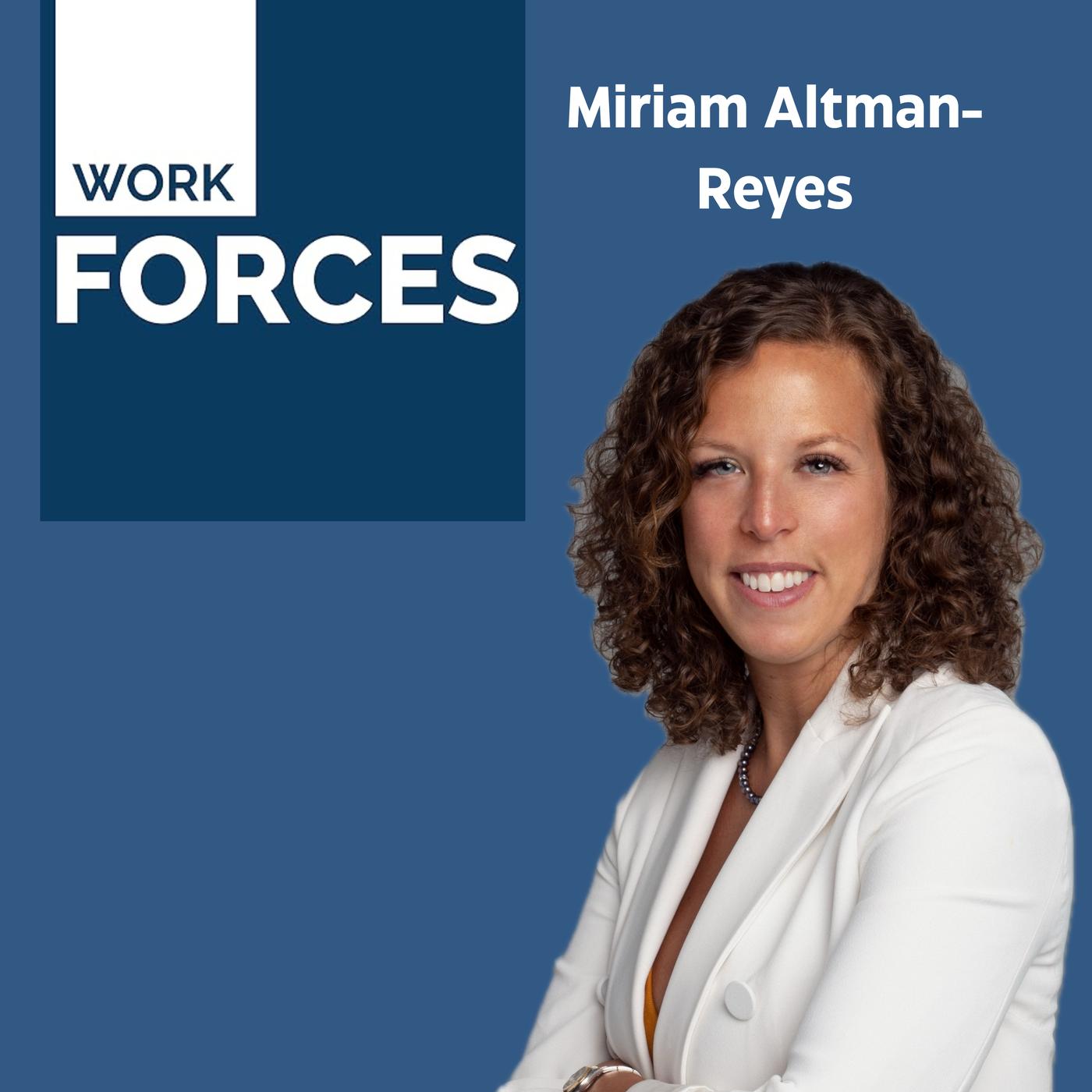
Mallory Dwinal-Palisch, President of Craft Education, a nonprofit division of Western Governors University, discusses what it takes to build the data infrastructure and policy conditions that make apprenticeship degrees possible, particularly in the care economy. Mallory traces her path from doctoral research on rural teacher shortages to founding a charter school, Reach University, and Craft, and explains how Craft helps institutions and employers manage the data needed for both academic credit and public funding. She makes the case that teaching, nursing, social work, and allied health are natural fits for apprenticeship because they already require clinical training, and that higher education needs to see itself as a supporting character rather than the center of the apprenticeship experience. The conversation explores why roles that require advanced credentials, like teaching, often do not pay a family-sustaining wage, why she expects care professions to remain in demand in an AI-driven economy, and what a new series of playbooks published through the Clayton Christensen Institute offers state leaders who have been asked to build apprenticeship-first systems and need practical starting points. Mallory also shares her advice for educators, employers, and policymakers who want to become forces in expanding access to career-connected learning, beginning with putting the employer at the center.
Transcript
Julian Alssid: Welcome to the Work Forces Podcast. I'm Julian Alssid.
Kaitlin LeMoine: And I'm Kaitlin LeMoine, and we speak with innovators who are shaping the future of work and learning.
Julian Alssid: Together, we unpack the complex elements of workforce and career preparation, and offer practical solutions that can be scaled and sustained.
Kaitlin LeMoine: This podcast is an outgrowth of our Work Forces consulting practice. Through weekly discussions, we seek to share the trends and themes we see in our work and amplify impactful efforts happening in higher education, industry, and workforce development all across the country. We are grateful to Lumina Foundation for its past support during the initial development and launch of this podcast, and invite future sponsors of this effort. Please check out our Work Forces podcast website to learn more. And so, with that, let's dive in.
Julian Alssid: Kaitlin, it wasn't long ago that the prevailing assumption was that work and learning were separate activities. Popular sentiment and the field have largely accepted that they don't have to be and that they shouldn't be. The harder question now is how you build the systems to actually make integrated education and work a reality across industry and contexts.
Kaitlin LeMoine: That's right, Julian. And the work of building those systems touches everything from state policy and regulatory frameworks to employer partnerships and data infrastructure, it takes collaboration across diverse stakeholders to bring these programs to life. And our guest today has been deep in the work of what it truly takes to make career-connected pathways work effectively across regions and sectors.
Julian Alssid: Mallory Dwinal-Palisch is president of Craft Education, a nonprofit division of Western Governors University, that's building the systems and infrastructure behind apprenticeship-based degrees. Mallory began her career as a Spanish teacher with Teach for America, went on to co-found a public charter school in the San Francisco Bay Area, and later co-founded Reach University, an apprenticeship-based institution that helps school districts develop teachers from people already working in their communities. Each step reflects the same conviction that too many talented people are locked out of opportunity by educational models that require them to stop working in order to learn. Mallory, we have been looking forward to this conversation. Welcome to Work Forces.
Mallory Dwinal-Palisch: Thank you so much. I am thrilled to be here.
Kaitlin LeMoine: Great. So as we get started today, Mallory, it's so great to see you. We would love to hear more about your background and the path that led you to your current role at Craft Education at Western Governors University.
Mallory Dwinal-Palisch: I am here very much by accident, as I think all life stories end up. But I started out. I grew up in a small rural town with my grandparents as sort of my anchor base as a kid, and my husband did the same thing in rural Kentucky. That becomes relevant in a minute. And I grew up fascinated. I would spend time on my grandparents' rural community and their farm, and my parents would sort of move around a lot, usually in non-rural areas, as my dad looked for work. And so I grew up in this split between rural and metropolitan areas, and was fascinated by the education reform conversation that was happening when I was in high school and college around the need for education reform at the K-12 level, and I totally agreed with what people were saying, but I was struck by how absent the conversation was around rural education. It was treated as this sort of small afterthought, but there are as many children in rural schools in the United States as there are in urban schools, and in many parts of the U.S. geographically, like the South and the West Coast, there are actually more children of color in rural communities than there are in their urban counterparts. And so it just seemed so conspicuous in its absence in that conversation. So I started out as a PhD. I did my PhD in rural teacher labor market modeling and thinking about teacher shortages, and the big conclusion that we came away with there was the problem with the traditional teacher training program is that it assumes that someone is able to go to a university, stay there, go do student teaching near that university, and do all of that not only for free but get paid while they do that. That's tough anywhere, but it's doable in urban communities where there's a university a few blocks away. In rural America, one of the biggest reasons they would have huge teacher shortages is you don't move to that community if you're not from there, and if you're from there, there's no university nearby to go get you educated and trained, and so you're asking people to leave, take on a bunch of debt, come back and get paid on rural pay scales, and never be able to pay that off. So all of my work since had been in response to that. Became a teacher with TFA, founded a charter school that was testing out this homegrown talent model. When it worked, turned it into its own accredited university. And what we saw there was what I think everyone. Now recognizes and knows, which is that there are talented people already in these communities, already working in these buildings for schools, working as classroom aides, paraprofessionals, tutors, whatever it might be, and those people would be phenomenal teachers if we gave them a way to become a teacher while apprenticing and working in the school instead of stepping away for years at a time. Now, the last thing I'll say in parallel, as I mentioned, my husband. My husband is an emergency room physician. Also, grew up in a rural community. As I was going through my startup journey, talking about teaching and teacher shortages, he was telling me, you know, I'm seeing the same thing in my emergency room all the time. And so the question became: Is this just a teacher problem, or is this the hallmark question of the care economy in general? Right, teaching, nursing, social work, allied health are all professions that require a college degree, that require a clinical component, and introduce the same problems over and over again of making people leave the community where they're doing the work to go prove that they are serious about doing the work, and that just makes no sense.
Julian Alssid: Yeah. Well, thanks so much for sharing your and your husband's origin stories. And yes, it definitely resonates this notion about the care economy. And so Craft Education has really been doing a lot of work in that area and building that ecosystem platform for enabling work-based pathways across higher education and the workforce. Tell us about that platform and its evolution, please.
Mallory Dwinal-Palisch: Our platform solves the most boring problem on earth, and if we do our job right, you'll be using Craft and you'll never even know it. So here was the challenge that we had when we started Reach University, and then Craft was built to address that, not just for Reach, but is now a nonprofit data tool that, through some very generous government and philanthropic support, is free for any higher ed partner and any employer to use. And the problem went like this: the day after Reach University got accredited, I got a heads up from someone who is looking out for us inside of the accreditation world, saying you're about to have a really big problem because in a year you're going to have to come back and you're going to have to go through a reaffirmation of accreditation cycle, right? You're going to have to go through a probationary review, and you're going to be held to all of the same data standards that traditional universities are held to, but that data infrastructure to collect the variables you need doesn't exist out in the field, right? So that's one thing that I was hearing is if we're going to go give people credit for this on-the-job learning, we know it's happening well under the supervision of a super qualified mentor teacher. But we have this problem of like, are we capturing that data in a way that we can prove that? The second thing is, you know, we were really committed to people shouldn't be taking on debt to do this work; they should be getting paid to do it, and the tuition and the training should be covered. And that requires that you braid together the funds. They exist, right? You have WIOA dollars. You have Pell dollars. You have CTE Perkins, state. I'm listing alphabet soup here, but the point is, there's billions of dollars that were already available in all of these communities and are evergreen every year, but trying to get the data together for that second problem of funding was also just proving to be really, really challenging. Of the actually managing, reporting to all these different workforce boards, all of these different state apprenticeship offices, all of these different LEAs for Perkins dollars, and so so Craft started as our solution in house to those two problems: data for credit and data for dollars. And we started out doing that internally, and that was in 2020. In 2022, the U.S. Department of Labor recognized Tennessee for the first state that's an OA state as having teaching apprentices as an apprenticeship occupation, and that sort of blew the doors open on this space where suddenly we went from people telling us there's no such thing as teaching apprenticeships to you know overnight all of these different groups trying to figure out how to turn their teaching programs into apprenticeships, and in fact this past summer we crossed a threshold where every single state in the country and D.C. now have at least one teaching apprenticeship, and but the problems we were encountering were the same problems everyone else started to encounter, and and so Craft is a tool that is meant to sit inside of the tech stack that a university and employer already have. It's not replacing anything; it just integrates with them, and it basically serves as a Rosetta Stone. It collects all the data, and then it speaks WIOA. It speaks higher ed accreditation. It speaks apprenticeship. So it takes all of that data, and then creates translated versions of it for all of the different compliance systems necessary for that data for credit and data for dollars, and today we're supporting about 40 institutions, about 700 employers in about 38 states.
Kaitlin LeMoine: I have so many questions just about the build of that, and like how to solve, I guess, for some of the different… I suppose where I could start is your working across a number of employers, a number of institutions, a number of regions as well. What common challenges have you found, and what have been some distinct challenges along the way?
Mallory Dwinal-Palisch: So the first challenge is higher ed understanding its role. Is the that's actually that precedes the data question, but there's no point in having the data until you've solved that. And you know higher ed. I say this as someone who is a university president and still works inside of a higher ed system today. We do not understand that we are not the center of the universe, and so we'll go work with employers. I'll use hospitals as an example because I think this is where it's the most illustrative, and we'll have higher ed systems say, "Look, I need these people to come train in my simulation lab, right? And that's going to cost us millions and millions of dollars. That's going to jack up tuition prices super high. It's going to require these people to leave their homes and come do this work and be away from their families. But I need them to come train on my simulation lab. And the question for me is: This is just one example, but is why, right? If this is a person who's already working in a hospital as a certified nursing assistant, and you're trying to upskill them into a registered nurse, why wouldn't you have them working on the equipment and the machinery in their hospital under the supervision of one of their preceptor nurses instead of one of yours? But there's evidence on this. This is something called in situ simulation. We're not making this up. There have been all sorts of studies on this. It gets better results for the trainee. It drives down costs dramatically for the cost of training, and it gets rid of all of those transaction costs that we know get in the way, particularly for rural learners, of having to go step away for months at a time to go get trained, so there's there's no good reason for this other than higher ed doesn't know how to understand this world that someone could get not even as good as but actually better training doing this not on the site of the university campus, right? And so that has been one of the hardest things is helping higher ed to understand that we are a supporting character. We are not the main character in this story, and that requires us to behave and to move differently. Once we've sorted that out, everything else is pretty easy. The data integrations they're boring, but they're a known factor. Reimagining the purpose of higher ed has been the hardest part of this work.
Julian Alssid: Well, and as we know, and I'm sure we'll talk further about this, it's not. This is not what it was built to do.
Mallory Dwinal-Palisch: Yeah, and and that's the challenge. Is we built, and again, for forgive me, I'm going to have to go on a little bit of a nerdy tangent here. But I focus on the care economy. The care economy is universally described by a few characteristics, whether it's social work, teaching, nursing, etc. Thing one is it was originally held down by women, right? So overwhelmingly, we saw women as being responsible for care work. So these were roles that we could underpay, we could make all of these demands on, but it was women's work, and that was fine. And then over time, we started to recognize that actually these are really hard jobs, and we want people to have formalized, specialized training to do them. And higher ed was the most logical choice at the time. Not the way we think about higher ed today, but there are actually things like teaching colleges that were specifically built to serve as an apprenticeship. But we have those two competing narratives, and we never reconcile the tension between them. Of this is women's work, and nope, actually this is really specialized training that needs to happen and be taken really seriously. And so what we've created is this worst of both worlds, where we underpay these roles and we put a ton of burdens on jumping through the hoops to be qualified to do them. And then we look around, surprised when we have record shortages in those professions, in teaching, in nursing, in social work. We can't get the people we need to do it. It's an inherently fulfilling, worthwhile profession. Humans are built to care for other humans. That is what we do as a species. And so the fact that we've made it so unattractive to people to go do this job for the people in their community. It's really an unforced error on our part as a society.
Julian Alssid: So you're focusing on the the care economy, and so so I guess I'd like to hear more about why this is a particularly promising area for apprenticeship degrees, and where where do you see these sectors headed and healthcare education and whoever else you consider care economy where do you see this going?
Mallory Dwinal-Palisch: So first I think care economy is going to be the future of work in an AI forward society right we're talking all the time about AI eliminating jobs. AI might someday replace my accountant. I have a three-year-old and a one-year-old. God help anyone who thinks that AI is going to replace a preschool teacher, right, or an early childhood educator. I would love to see a robot try. I would love that. Same with when my family gets sick. I don't want a robot at their bedside. I want a human there who understands the human components of this. So I think that's the first important thing to know: is that these are some of the jobs that are the least likely to go away in the age of AI. And actually, as we see a graying population that's going to need more and more healthcare, as we see states trying to get greater labor market participation rates by creating universal pre-K, universal early childhood. We're also requiring more educators on the front end, right? So these are stable jobs that are actually growing in the demand and are not going to be replaced by AI. So that's the first thing that defines all of them: is that this is the market, the only market currently adding jobs to the labor market right now. The second thing we need to know is they're all defined by requiring higher education with clinical components, right? If you're going to be a teacher, a nurse, or a social worker, you got to go get a college degree, and then you have to go do your clinical rotations. And the craziest thing about that is, again, kind of going back to that origin story: 43 states in America have some legislation that either outright prohibits or otherwise de facto prohibits us paying people for going through their clinical training. So, in most cases, the other feature of all of this work is that, by its very nature, as soon as you hear clinical, you should start thinking apprenticeship. And yet, the founding feature of apprenticeship is that you're getting paid to learn, and we've made it illegal in 43 states to do that. And so these are three sectors that have so much potential to create a win-win, right? To create good-paying jobs if we get smart about what these people deserve, but also build strong, flourishing communities. These are the jobs that are the backbone of these communities. But we got to get out of our own way. We got to start letting people be treated like apprentices who get paid to go do this, who aren't taking on student loan debt, who have a guaranteed job on the other side. We've got to actually start behaving like this is an apprenticeship that just happens to give a college degree at the end.
Kaitlin LeMoine: To your point about you know these being making these jobs within the care economy well paying jobs. I mean some of the jobs we're talking about historically have not been very well paying. And so how are you thinking about that as we think about building apprenticeships and increasing access to these opportunities?
Mallory Dwinal-Palisch: First of all, I don't think philosophically in this country you should have a job that requires a master's degree and then doesn't pay a family sustaining wage. That should just not even be legal in our country. And yet, that is the foundation, in particular, of early childhood and K-12 teaching. Right? My mother in law, retired after 40 years of teaching in rural Kentucky with her master's degree, making $40,000 a year. Doesn't make any sense. So I think, first of all, we need to fix that pay scale piece, and let's go back to like what makes that possible. Everyone is talking about these booms of AI and this increase in AI. I've been modeling again. I'm a data and numbers wonk, so I have been modeling for a couple of policymakers at state levels and at federal levels what it would take. A three to 4% enterprise tax on AI would not only cover apprenticeship degree training for all of these folks, but would also allow us to put a floor under these public sector jobs like early childhood, which are paid usually by the state, and to put pay minimums in there, and this, and to make those pay minimum family sustaining wages, right? If somewhere in the 60 to $70,000 a year category to start. Now, I'm not talking about urban; it's more expensive to live in urban areas, but that's a great job in a rural community, and we can afford as a nation to do it if we just start thinking about taxing some of these other programs like AI that will be eliminating jobs anyway, use that to subsidize the creation of really good-paying jobs in a profoundly human endeavor of caring for other humans.
Julian Alssid: I wonder too if, as AI eliminates other kinds of jobs that are currently well paying. If the market will also drive, you know, I have an early childhood educator daughter. It's criminal what we're paying her for what she's doing for our society. But if, and I also have a software engineering son who's very well paid for his work. You know, as things shift around, there just this may drive the salaries up on some of these positions.
Mallory Dwinal-Palisch: It should, and it ought to. And I'll say, you know, when there's a famous economist, Raj Chetty, who made some headlines a few years back for an article that got titled like "The Case for the $300,000 Kindergarten Teacher," and it was just showing from an economic perspective the return on investment of having a really good kindergarten teacher in terms of the economic productivity they produced for their students over the course of their lifetime. I'll tell you that does not capture the full picture, right? Again, what makes a great teacher for my daughter is yes. Fact that they are teaching her how to read and write, and that will gain economic productivity. Above and beyond that, the ways in which they're teaching her to be a happy, healthy human, the way in which she is excited every day when she gets out of the car and can't wait to go in and learn with Miss Annie, that that teacher should be getting paid at least $300,000, and we should still know that we're not capturing their full value, right? It's a social choice that we've made, and my hope, to your point, Julian, is if there's silver lining in the current turmoil today, of maybe it's a chance to step back and reevaluate professions that historically we've underpaid. Because again, it started out as women's work, and we didn't have to pay in the early 1900s. We didn't have to pay competitive salaries for women. Maybe now we can look around and say that like caring for humans is a super skilled, super challenging profession, and we should be compensating you the same way we compensate software engineers, the same way we compensate architects and engineers in general. And this is a chance to revisit that with the new dollars flowing around AI, if we get smart around taxing it appropriately.
Kaitlin LeMoine: Well, and to your other point about AI, just around the shifts that are happening around the the skills that are emerging as most critical in as as these technological advances proliferate, you know, I think that's that's the other piece of the puzzle here is is how can we use how how do we benefit from that and how can we drive like those human the development of those human skills forward and that does bring us I'd like to to bring us to acknowledge the the series of playbooks that you've recently written on breaking down silos and building integrated education to career systems that also mentions AI as a piece of this puzzle would love to to have a little bit of a conversation around you know what prompted the development of that series and please you know would love to hear a few key takeaways for states and institutional leaders who are looking to design education to career systems and programs in this challenging and complex landscape.
Mallory Dwinal-Palisch: Oh man, Kaitlin, thank you so much for bringing it up. Yes, so here's where it started. So we just published a series of white papers, and we is myself alongside three co-authors who are much smarter than myself. So Michael Horn, Angela Jackson, and Danny Curtis, and we published them through the Clayton Christensen Institute, and they were meant to solve a problem that I was experiencing in my seat on a regular basis, which is you know again I would be advising policymakers on the potential for care economy apprenticeship degrees, and then as they would go out and tell their teams, right? A governor is telling their state education agency and their state workforce agency, we're doing apprenticeships. We're going to be an apprenticeship first, apprenticeship degree. We're going to go do this. I would start getting all of these phone calls and inbounds, frantic from the people in those offices asking, "Okay, message received. What do I go do tomorrow?" And this isn't a political question, right? We were getting this from red states, blue states, purple states, urban and rural, but it was, "I've been told I need to go do this. What does that mean? Like, what are the waivers I need to put out? What's the legislation that needs to get produced in a really technical, technocratic implementation level? People were looking around saying, "There's, there's no roadmap for this. What am I supposed to do?" And what I was uncomfortable with was, by and large, I was just giving them anecdotes that were littered with the recency bias of, "Oh, I, I just talked to this state policymaker in this other state last week. Here's what they're doing, and so what we did was we did a scan of all of the different states, and when we found they were making progress in breaking down the silos between three different workforce training systems, which is K-12, higher education, and then workforce and apprenticeship, we would then go interview them and ask how they did that, and as they would start telling us about, well, I, you know, I did X, Y, or Z. The white papers do two different things. First, they group them thematically of at the high level. These were sort of the most important first things you can do, but then second, really getting into the weeds and asking them, okay, you're saying you put together this waiver. Waiver for what? Right. Oh, okay. So for braiding together your WIOA and your CTE state plans. Okay. Can you send us that legislation? And can you send us the actual documents you used? And so these playbooks give these conceptual recommendations, but then also have direct links in the case studies to the actual materials produced, because our hope is that as other state agencies want to go do that, we can lower the the hurdles and the thresholds for activation if we're giving them something that they'll have to go change and adapt to their own state systems. But it's already been reviewed by someone's state council. It's already been successfully deployed somewhere. Can this be a better starting place than just a blank page that they've got to start from scratch on?
Kaitlin LeMoine: Yeah, and I love like the breakdown into five key priorities, right? And starting to really unearth what are some of the common threads and themes across this work because I think that's where it can be hard even to get started. Is like. Anyone else having the same challenge? And it's like, yes, I feel like what the series unearths is yes, indeed. And here's some promising practices as to how to pursue, you know, or address these challenges. And and you know, from people who are in the middle of this work.
Mallory Dwinal-Palisch: Exactly. And Kaitlin is, I'm sure you both know, that is a static snapshot in time, right? Within a week of us publishing those white papers, they're going to become outdated because every day new policymakers are out there publishing new waivers, coming up with new innovative ways to solve these problems. And so I suspect this will need to be an ongoing living library. And what we've done is installed the first set of literature in it, but there's it's going to need to be something that is perennially maintained and updated, so that people can always see what the most current set of tools and resources available would include.
Julian Alssid: Yeah, it's funny as Kaitlin and I, you know, do the podcast, and we're now closing in on like 80 episodes. You know, we've been noticing and feeling deep in our bones that the news cycle, the information processing cycle is getting shorter and shorter and shorter, and so this is kind of partly our way of keeping up with the world by just having these every other week conversations. I mean, otherwise, you know, it's you miss the boat.
Mallory Dwinal-Palisch: Well, listen, be careful what you tell me. I might be back knocking on your door asking you to take this up because we need it. We need it to be that if a policymaker on a Monday morning says, "Okay, I've been told I need to figure out how to make healthcare apprenticeships work in my state," who's the first? Like, you know, what do I need to go say to my nursing board? What do I need to go say to my institutions of higher ed? There needs to be a place that they can go and see that and hear how other groups have done it, and then see the most up-to-date examples of what documents and materials and artifacts enabled that in a technical perspective. So, Julian, what are you guys doing next week? Right.
Julian Alssid: There you go. Well, which is a good segue to a question that we ask all of our guests, Mallory, which is in in this case, you know, apart from listening to to you and and the and what you're picking up out there in the field and and to us with our little podcast and our consulting work, what are steps that our listeners, who are educators, workforce people, policymakers, practitioners, employers, what are steps they can take to become forces in expanding access to career connected learning?
Mallory Dwinal-Palisch: The first thing that anyone needs to do is they need to, and I say this almost as a joke, but maybe not quite, is they need to go look in the mirror and say to themselves three times fast, the employer is at the center, the employer is at the center, the employer is at the center, right? And then maybe Beetlejuice arrives somewhere off in the corner, but it really needs to start with that mindset shift. Whoever you are, if you're what I'll find so frustrating is there are so many Pell dollars and Title IV, FSEOG, all of these other resources available to higher ed. There are all of these other tools and carve outs and federal grants that people can go apply to, and the problem with the way the dollars currently flow is it leads people to think that it is the job of the trainers, right? The higher ed, the K-12, the all of those other groups to go out and figure out what development looks like, and then it's the job of employers to mold themselves around that. It needs to be the reverse, right? We are entering the modern era where knowledge and training is changing so quickly that by the time higher ed produces a new training curriculum on how to do X job or Y job, it's already out of date. Right. I'll give just one quick technical example. Is I was talking to someone who leads a cancer research center, and they were saying one of their biggest challenges is imaging is the future of cancer treatment, right? They need to be able to go in and do I think they're called theranostics that includes a ton of imaging work. Well, the problem is it's cutting edge imaging research that they're figuring out every day in this cancer center, but then they have to go get the community college to train the imaging folks on cutting-edge research that the community college doesn't know, how could they? No one but that research center knows. Why do they not have the authority to train the people on the cutting-edge technology that only they know how to do, right? And then why are they not getting the dollars, not just the authority to give that credit, but the dollars to do that work? So whoever you are, wherever you are, the first thing you need to do, and and myself guiltiest amongst this, is step back on anything you're about to do and say, what would it look like different from how I'm currently doing it if the employer was the shot caller on this instead of me? And then from there, once you've answered that question for yourself, you're 90% of the way there. From there, I think going and finding specific vacancies that an employer is struggling to fill, and backwards planning with them of like, okay, if you need 30 new sonographers or you need 15 new special education teachers, tell me about the people already in your building or already in your community coming in every day. Who could do that work? What would it look like to get them upskilled? Right, and if you start with that at the center of what are the jobs you need, who are the people you already know could do it, and then you just get mission critical in whatever your job is as the policymaker on creating the policies around it, on the training provider in terms of building the curriculum around it, as the workforce development board in terms of providing the learner wraparound supports, whatever your seat is at the table, if you play your part in helping to get an employer's group A to group B, you're on the right path.
Kaitlin LeMoine: Yeah, that completely resonates. And just drawing from past experiences, working to align programs with employer needs, there is just so much interesting data and information that comes from those exchanges with employers, right? Like just hearing, like, what are the unique challenges you're facing, the use cases, what are the types of deliverables and documentation that you're looking for from your employees. I mean, that's where I think really the true magic lies in so much of this work.
Mallory Dwinal-Palisch: That's right. You should never be selling to an employer in our space. You should be listening, right? So don't try to sell them on, hey, you need more of this pathway. Just ask them, what are your biggest pain points, and then listen, and then build that. That's where we need to be going.
Kaitlin LeMoine: So, Mallory, it's been such a pleasure to speak with you today, as we wind down our conversation, can you tell us a little bit about how our listeners can learn more about your work and continue to follow what Craft Education is doing?
Mallory Dwinal-Palisch: So go to crafteducation.com. So C-R-A-F-T, like Arts and Crafts, and then or you can email me at mallory@crafteducation.com. And again, we are a nonprofit public data utility that runs on government grants and private philanthropy. We're not looking to sell anything to anybody. So if you're an employer, if you're a workforce board, if you're a policymaker, go to that website and check out. We've got a whole host of free resources and supports. If you don't see what you need there and you need something else, email me. And my number one job is to get the resources together to make it happen.
Julian Alssid: Mallory, thank you so much for taking the time to talk with us today. It's been a great, great conversation.
Mallory Dwinal-Palisch: Thank you for having me, and keep up the great work. Thank you. You too.
Kaitlin LeMoine: We hope you enjoyed today's conversation, and appreciate you tuning in to Work Forces. Thank you to our listeners and guests for their ongoing support, and a special thanks to our producer Dustin Ramsdell. If you're interested in sponsoring the podcast or want to check out more episodes, please visit workforces.info/podcast. You can also find Work Forces wherever you regularly listen to your favorite podcasts. If you enjoyed this episode, please subscribe, like, and share it with your colleagues and friends. And if you're interested in learning more about Work Forces Consulting, please visit workforces.info/consulting for more details about our multi-service practice.