


ABOUT THIS EPISODE

“Cars, Trains, and Trolleys: Infrastructures of the Urban Space in the Andes (1900-1952)”
Javier Velasco, PhD candidate, Romance Languages, and 2020-21 OHC Dissertation Fellow
In my dissertation on the discursive construction of the Andean urban space, I explore how literary writing and other cultural texts represented, decoded and re-imagined the physical infrastructure of the city of La Paz during the years of formation and consolidation of the hegemonic project of the “criollo” elites between 1900 and 1952. From the category of “infrastructure,” referred to physical networks that constitute the underlying framework of a social system, I analyze the way in which the city’s infrastructures (railways, trains, trolleys, telegraph wires, roads and more) were as important in the physical actuality of the city as they were in shaping the economic, cultural and aesthetic modernity at the base of the literary production of the criollo elites. I refer to this process as the infrastructural construction of the “seignorial” space.
Javier Velasco, PhD candidate, Romance Languages, and 2020-21 OHC Dissertation Fellow
In my dissertation on the discursive construction of the Andean urban space, I explore how literary writing and other cultural texts represented, decoded and re-imagined the physical infrastructure of the city of La Paz during the years of formation and consolidation of the hegemonic project of the “criollo” elites between 1900 and 1952. From the category of “infrastructure,” referred to physical networks that constitute the underlying framework of a social system, I analyze the way in which the city’s infrastructures (railways, trains, trolleys, telegraph wires, roads and more) were as important in the physical actuality of the city as they were in shaping the economic, cultural and aesthetic modernity at the base of the literary production of the criollo elites. I refer to this process as the infrastructural construction of the “seignorial” space.
English
United States
TRANSCRIPT 🔗
Are you the producer of this podcast?
Add a podcast transcript
Need Audio-to-Text?
Transcribe with Listen411 in Just 60 Seconds
OTHER EPISODES IN THIS PODCAST

Jazz musician Christopher Brown talks about his approach to music and education. He and his band will give a presentation/performance "Beyond the Buzz: Finding the Signal in a Noisy World" on January 29, 2026.
https://blogs.uoregon.edu/oregonhumanitiescenter/multimedia/news/christopher-brown-grabs-…
Colin Williamson is an Assistant Professor of Cinema Studies at the University of Oregon. He is a historian of animation, special effects, and nontheatrical film. He specializes in early cinema’s place in international histories of art, science, and technology. Colin is the author of "Hidden in Pla…
Patricia Caicedo is a soprano, musicologist, and physician. Her work redefines the canon of classical vocal music by centering Latin American and Iberian art song. She has authored sixteen books, including the landmark "The Latin American Art Song: Sounds of the Imagined Nations" and "We Are What W…
Fernando Gorab Leme is an assistant professor of Classics at the University of Oregon. He talks about his research on the significance and wedding songs in Greco-Roman antiquity and talks about the classes he teaches.
Research Notes:
Jessica Vasquez-Tokos, professor of Sociology and Indigenous, Ra…
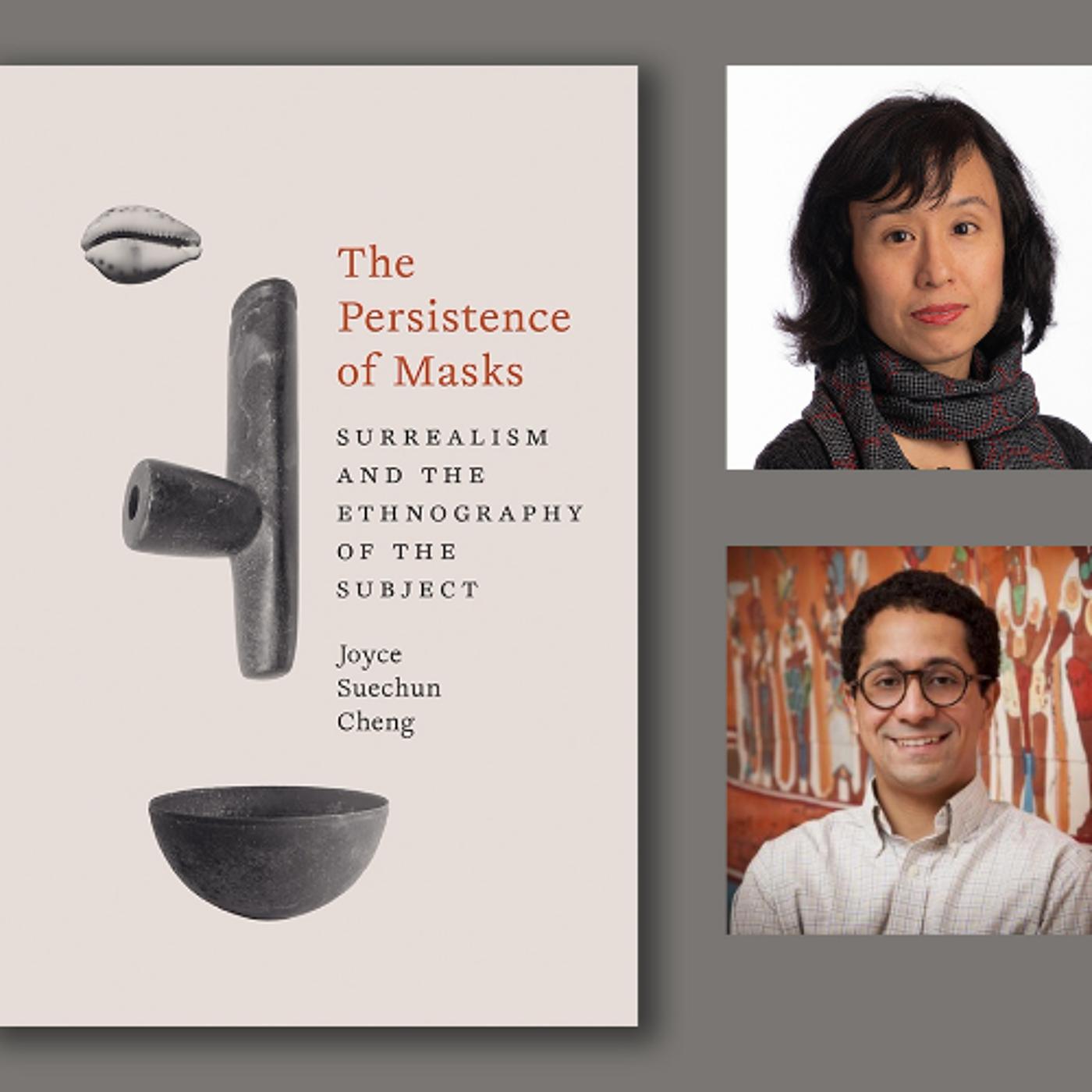
A Books-in-Print talk with author Joyce Suechun Cheng. In this talk, Cheng focuses on chapter 4 "The Surrealists as Ethnographers: Possession, Aesthetics, Subjectivity" which explores the idea of possession as a form of performative mask, utilizing Michel Leiris's ethnographic study of Ethiopian Za…
Disclaimer: The podcast and artwork embedded on this page are from Oregon Humanities Center, which is the property of its owner and not affiliated with or endorsed by Listen Notes, Inc.
EDIT
Thank you for helping to keep the podcast database up to date.
