


00:00:00
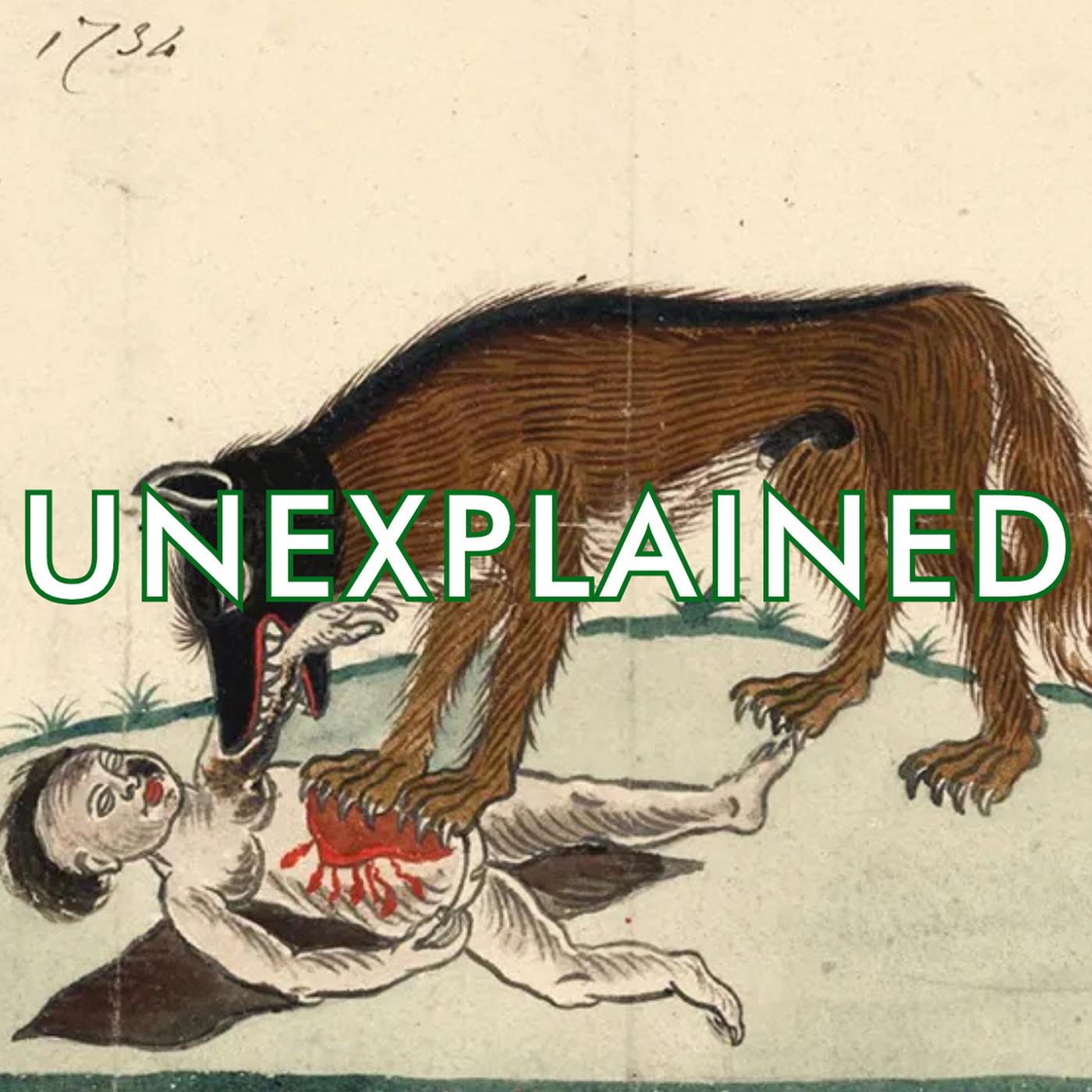
Speaker 1: Hello, and welcome to Unexplained, with me, your host, Richard McLean-Smith, where each week we explore another true tale of high strangeness. If you're new here, and you're a fan of expertly told, atmospheric stories about the strange and unexplained, then you've come to the right place. And please subscribe to the show if you haven't already done so. I'm very excited to be taking Unexplained to the Edinburgh Fringe Festival this year. I'll be performing at the Space's Surgeon's Hall venue at 10.05pm every night, from now until the 29th of August, except for Sunday 23rd. You can get tickets at thespaceuk.com forward slash shows forward slash 2026 forward slash unexplained hyphen live. For those watching on YouTube, you can find the link below. With all that out of the way, this is Unexplained, Season 9, Episode 31. Let's get wild. This episode contains intense scenes of gore. Parental discretion is advised. Dawn came hazy and a little chilly one morning in the early summer of 1764 as the sun rose across the Haute Loire area of southern central France. In the guided a small herd of cattle through the trees. The woman lived in the nearby town of Langogne, in the province of Gévaudan, an area of dense forests, jagged mountains and deep valley floors. The rugged terrain was ill-suited to growing crops, so most inhabitants in this sparsely populated area eked out a living raising sheep or cattle, or they tirelessly tilled small parcels of land for rye, barley, and the occasional root vegetable. But livestock, more than anything else, was vital here, especially through the long harsh winters, when they would wander freely between the stables and living quarters of their masters. Though the smell left a little to be desired, their body heat was essential to help combat the bitter chill that permeated the stone walls and slate roofs of the cramped and squat homes. As the summer warmth started to creep through the leafy canopy, The young maid shed her shawl and soaked up the gentle rays of sun as they hit her skin. Then the hair began to prickle on the back of her neck. The maid stopped suddenly, certain that she was being watched. Then she turned slowly and gasped at the sight of an enormous four-legged creature that was now emerging from the camouflage of dense undergrowth. Though it appeared to have some wolf-like characteristics, Its coat was unusually shaggy and coloured unlike any wolf she had ever seen before. But more than that, it was huge and it was getting closer and closer. The woman froze in terror, not sure whether to run or do what she could to save the herd. Then suddenly, one of her bulls broke free and thundered toward the fearsome creature, driving it back momentarily. but again it came, this time making a beeline for the terrified maid. And again the bull thundered forward, bearing its horns, and forcing the creature to beat a hasty retreat once and for all, until eventually it slunk back into the forest. Later, when the woman recounted her terrifying ordeal, she described the creature as being like a wolf, but not a wolf, and this was not the last time it would be seen. You're listening to Unexplained and I'm Richard McLean Smith. On the 30th of June 1764, a 14-year-old shepherd named Jeanne Boulet was watching over some sheep near the village of Les Houbacs in the lush hills of the Vivarais region in southern France. At some point later that day, Boulet was killed by something What we do know is that the girl was buried without the last rites, because she died without the chance to confess her sins, which suggests, if nothing else, that her death was sudden and unexpected. But if we were in any doubt as to why this was exactly, the language used by the curé in the burial certificate might give us a little more of a clue. It says she was killed by Labette Veross, the ferocious beast. Stating it in this manner, the ferocious beast, suggests that Boulay was not the first person to come across this creature. However, it seems this incident failed to stir much curiosity in the local region. After all, back then, wolf attacks were a frequent occurrence. In the 1690s, a number of especially violent wolf attacks were reported from the surrounding region's and had become fairly frequent again by the 1740s in the forests of the lower Limousin region. One wolf there is said to have claimed at least 20 victims, including many young girls, before it was finally killed. Then in 1754, wolves killed between 10 and 20 shepherds in the Lyonnais region, and only a decade later, near the city of Thiers, a wolf infected with rabies attacked 43 people. many of whom died agonising deaths. But perhaps the people of Javadan province, where our young maid had her lucky escape, had yet to hear of these horrifying stories. Either way, they would not be able to hide from it for long. Something was coming. On the 8th of August, just over a week after Jeanne Boulet's untimely and savage end, a second victim, this time from the hamlet of Mazméjean, in the northeast of the Gévaudan, was killed. Later that month, another girl, this time from nearby Puy-Laurent, was attacked by something ferocious, ambushing her from out of the forest near her home. The girl was seriously mauled, before her family, on hearing her throat-shredding screams, were able to intervene and send the creature running back into the undergrowth. Fortunately, the girl survived, but her face would never be the same again. A few weeks later, a 16-year-old boy was found in a forest between Langonia and the Murquois forest. Most of his throat had been ripped and then chewed out. Then one morning, a 36-year-old woman was only a few steps from her home when something leapt onto her back. She barely had time to scream before the creature ripped out her throat. splattering the floor with mucus and blood. With three more deaths that month, it was getting increasingly hard to ignore the fact that something of a crisis was unfolding across the region of Gévaudan. Clearly, some kind of wild creature was on the loose. But if it was a wolf, as most assumed, it certainly wasn't like any wolf that anyone had ever encountered before. Over the following months, the attacks increased in frequency and brutality, and those who had escaped to tell the tale began to paint a peculiar picture of just what exactly was stalking the people of Jevedan. On the mundane end of the spectrum were the reports of a creature that was clearly an ambush hunter that stealthily stalked its prey, while at the other end were the tales of something that walked on hind legs like a human. and had red blazing eyes that seemed to glow in the dark. Some described it as having incredible athletic abilities, reputedly able to leap across ravines, bound over fences, and dash through thick bushes at incredible speeds. Others questioned its motives. Just why was it so aggressive and bloodthirsty, and seeming to embody a degree of savagery that went far beyond mere hunger? The creature was said to be most active in the evenings and early mornings, preying on women and children and the occasional man as they tended livestock in the forest, worked in the fields or walked on quiet paths. They were often found mutilated and partially eaten. Villagers set up watch posts and every day became a test of endurance against the ever-present threat of attack. On one occasion, a large hunting party tracked the creature down, took aim and fired. The volley of musket shot seemingly at first felled the creature, but after a few seconds it is said to have stood up and limping slightly, bled into the cover of thick forest. The following day, the mutilated body of a 14-year-old girl was found without her head. In September 1764, As the death toll continued to rise, local officials and noblemen around the Margeride forest began to take note. Determined to put a stop to the mayhem, regional government official Etienne Lafont enlisted the help of the local government. of Jean-Baptiste Duhamel, the captain of a local band of horse-riding soldiers, to try and kill the fearsome creature. Duhamel believed the best way to capture it would be to flush it out, and so one morning before dawn, 25 of Duhamel's soldiers and gathered at the edge of the Mazarid forest, dressed in bear and lion heights that hung heavy and stiff over their shoulders. Under their hoods, each man had packed his headpiece with sharp blades, so that anything that might try and ambush them would get a nasty surprise should they try to bite down on their heads. All day long, the men crept stealthily through the trees, but the creature was nowhere to be found. So they tried again, Only this time, believing the creature was more drawn to young women than anyone else, the soldiers replaced their hides with skirts and shawls in an effort to try and mimic young women. Together they walked the quiet paths that the local maids and shepherds tended to walk alone, to the well and the fields or along the forest's edge, hoping to entice the creature. But again it stayed away. almost as if it knew exactly what the soldiers were trying to do. Convinced that all he needed was more people power to capture the creature, John Baptiste Duarmel began offering local farmers money to join him on the hunts. Before long, he is said to have had 30,000 men helping him stalk the creature. but still it refused to be flushed out. And throughout it all, it continued to feast. One day, one of Duhamel's team came across the stinking carcass of a local woman. At least they assumed it was a woman. The head was missing entirely, and the neck too, which appeared to have been eaten all the way down to the shoulders. All the blood was said to have been sucked out of the body too. Then one day, on one of his tireless excursions, Duarmel caught movement out of the corner of his eye. With no little excitement, he looked up to see finally the creature edging out from the tree line and into a distant field. It was enormous. Duarmel, his eyes wide in astonishment at the sight of it, immediately gave chase on horseback. As he thundered over the fields, he seemed to be gaining on it as it raced straight into a nearby river. Duarmel skilfully brought his pistol up and aimed it at the creature. The shot echoed down the valley, but zipped past the creature and straight into the water. With no time to reload, the creature soon emerged on the other side of the river and swiftly disappeared back into the trees. Duarmel later described the creature as being as wide as a horse and as long as a leopard with reddish fur and black stripes. Others described it as having formidable teeth and claws, and long hair, like that of a hyena, strangely. Duarmel's conclusion was that the creature was perhaps some sort of monstrous hybrid, somewhere between a lion and something else. After a while, Duarmel's patrol seemed to do the trick, and the creature, though not captured, at least appeared to have been driven from the region. In the meantime, tales of the so-called Beast of Gévaudan were beginning to reach far and wide, drawing commentary from such luminaries as Voltaire, Immanuel Kant, Frederick the Great and English novelist Horace Walpole. Then, one freezing cold January morning in 1765, eight children were out in a meadow near the hamlet of Villaret, watching over a herd of cattle. The breath of the children misted the air as they did their best to keep warm, cracking jokes at each other's expense, when suddenly one of the boys, Jacques Portouffet, went even whiter than the cold air had already turned him. Following his horrified gaze, the others, who had only a few rudimentary pikes to protect them, could only stare in horror at the vast, sharp-toothed creature that was steadily approaching them from across the meadow. Thinking fast, Jacques urged his friends to group together in front of the cows and hold their pikes steady and outward as best they could. Within seconds, the creature was upon them. It made a desperate lunge for the cattle, but the boys, despite their fear, held firm behind their pikes. After several more fruitless lunges, the creature eventually gave up and ran back into a cluster of trees. When news of the children's courage from Vila Rey reached King Louis XV, he was so impressed that he paid a reward to all the children. He also made arrangements for Jacques Portefeuille to be educated at the state's expense. Then he placed a 6,000 lever of bounty on the creature, equivalent to roughly 80,000 US dollars in today's money, and dispatched a pair of professional hunters from Normandy to the Gévaudan region to track it down and kill it. Captain Duhamel was in turn told to stand down. Jean-Charles von Eldenwall and his son, Jean-Francois, arrived in Gévaudan province in mid-February 1765. Alongside them were eight bloodhounds, specially trained for hunting wolves. But with most of their hunting experience coming from northern France, the Vom Eldenvalds simply weren't prepared for the steep mountain slopes and dense forests of the Gevaudan region, not to mention the many marshes and bogs scattered across the area. Over the next four months, the Vom Eldenvalds focused entirely on hunting wolves, which they believed to be the cause of the attacks, to no avail. And by the summer of 1765, their efforts had proved completely fruitless. And so, Frustrated by their lack of results, in June, the king replaced the pair with Francois Antoine, who led all the king's own hunts. Shortly after arriving in Gévaudan in early August, Antoine set out with a large hunting party to track down the creature. Elsewhere in the region, local farmer Marie-Jeanne Vallée was crossing a small stream on a footbridge when she was suddenly accosted by a vast, sharp-toothed creature, unlike anything she had ever seen before. Mary Jeanne just so happened to be holding a long bayonet at the time, so when the creature suddenly sprinted toward her, instinctively, Mary Jeanne held the weapon out in front of her. As the creature leapt at her, she courageously thrust the bayonet into his chest and somehow shouldered it off the bridge and into the stream below. She watched aghast as it hauled itself from the water and dragged itself back into the nearby woods. It was six weeks later when Francois Antoine chased down and killed a large grey wolf, measuring 5 foot 7 inches in length and weighing around 130 pounds. Several survivors from past attacks were were brought forward to try and identify the corpse. Among them was Marie-Jeanne Vallée. As she stared down at the stilled, furry carcass, she stroked back its fur around the chest and was certain she saw a mark, exactly where she'd thrust her bayonet into it. And so Antoine proudly announced that he had killed the beast of Chez Voudan, as it became known. Then he loaded it onto his horse and set off for Paris. With Francois Antoine heading to the capital, his son and two gamekeepers stayed behind, eventually chasing down the wolf's mate and her two grown pups, which were already larger than the mother by then. Examining the carcasses later, all were found to have strangely had dewclaws, a type of claw in which an extra toe grows higher up on the inside of a dog's leg. It's said to function a little like a human thumb. This type of claw was not known to exist in purebred wolves, but was found in Bousserons, a breed of large herding dogs originally from the plains of central France. This fuelled speculation that the so-called beast might be some kind of cross between this type of dog and a wolf. But others began to wonder if it was something else entirely. Back in the spring of 1603, in the countryside near La Roche-Chalet, in southwestern France, children began to vanish, including one that had been taken silently from her cradle. Then a 13-year-old shepherd named Marguerite Poirier claimed she'd been attacked in broad daylight by an enormous wolf, which she'd managed to beat off with a stick. Not long after, she named her attacker. It was Jean Grunier, she said, a boy who she claimed could turn himself into a wolf. and Grunier, it seems, as the story goes, didn't deny it. It was said he regularly boasted of being able to turn into a wolf, and that he had killed and eaten a number of children, as many as 50 in some accounts. It all supposedly began when he met a tall, cold-mouthed man on a black horse in a nearby forest, who gave him a wolfskin and an ointment, and warned him never to cut the nail of his left thumb. Grunier, who's thought to have been 13 or 14, was eventually brought before the Parliament of Bordeaux for his apparent crimes, who, recognising all was not quite right with the boy, had him immediately confined to a monastery in Bordeaux. It was sometime in 1610 that Jean Grunier received a visit from Pierre de Lancroux, a local magistrate famous for leading a brutal witch hunt throughout the French Basque region the year before, which led to the execution of dozens of so-called witches. His account of Grunier would appear a few years later in his book, A Portrait of the Inconstancy of Evil Angels and Demons. a sprawling part confessional case for the reality of witchcraft and the devil's presence in rural France. Delon Cru described the boy's sunken glowing eyes and strange sharp black nails. Its teeth, he said, were unusually large and yellow. Most peculiarly was the way that Grunier was said to be able to move more easily on all fours than on two legs and would eat only raw meat. All of this, de Longcru wrote, demonstrated clearly that he had been a werewolf and that he had used his hands for both running and grabbing children and dogs by the throat. Jean Grunier is thought to have died around the age of 20 after only seven years confined to the monastery, but by then his story had spread far and wide, and though many in France had moved on from belief in the possibility of werewolves, Those in the Gévaudan region might be forgiven for at least questioning whether there was some truth to it after all. Royal hunt leader François Antoine arrived with his catch at Versailles, the home of King Louis XV, on the 1st of October 1765, and was instantly hailed a hero. He received a reward of around 9,000 livres for his success. roughly 160,000 US dollars in today's money, as well as fame and titles for supposedly ridding the Javudan region of the Great Scourge. But then, in December, the so-called beast struck again, and the following year saw more attacks than any other, with 55 people reported to have been killed, which says nothing of all the countless livestock that were also taken. With the villagers of Chez Foudan once more in despair at the terror being brought on their community, it seemed that there might not be any escape from the horror. Thankfully, many seeking glory, or simply to put an end to the terror, had not yet quite given up hope. Then finally, an ending. In the summer of 1767, local farmer and hunter Jean Châtel was taking part in yet another hunt for the creature on the slopes of Montmouchet, in the heart of the Majeride forest, when he spotted it finally. And he had little doubt that the peculiar, ferocious animal that he was only then laying his eyes on for the first time, was the very same that had so haunted the region for the past few years. Some accounts portray the 60-year-old Châtel instinctively grabbing his rosary beads and hurriedly reciting the Lord's Prayer before lifting his musket toward the creature and firing a single shot that struck it in the chest and ended its life immediately. Some say the bullet had in fact been made from melted down silver medals of the Virgin Mary. Whatever the truth of it, Châtel' s fatal shot did seem to bring an end to the terrifying reign of the so-called Beast of Gévaudan. With that, its body was loaded onto a horse and brought to a local château where it was necropsied the next day by a surgeon named Dr Boulanger. Boulanger's post-mortem report was thought to have disappeared but was later discovered in the French National Archives in 1952. Known as the Maran Report, Named after the royal notary, Roche Etienne Maran, who transcribed it, Boulanger concluded that the animal was ultimately caned in nature and also noted its many wounds and scars, perhaps suffered in all the many attempts to kill it. The report also contained the testimonies of several people who claimed to recognise the corpse. After being on public view for 12 days, the remains were taken to Versailles, where King Louis ordered another examination, this time by famed naturalist, Comte de Buffon, Georges-Louis Leclerc. Having taken over a month of hot summer weather to reach Leclerc, the body was by then in a serious state of decay, riddled with worms and emitting a terrible stench. Leclerc did the best with what he had to work with and in the end declared that it was simply a very large wolf. Either way, it seemed the so-called Beast of Gévaudan was no more. Between 1764 and 1767, the creature is estimated to have attacked over 200 people, killing 113 and badly injuring another 49, along with slaughtering numerous cows, sheep and goats. But was the clerk right in his assessment? Did he even have the right creature to examine in the first place? One of the strangest theories to emerge from the mystery is that the creature was in fact a dog-wolf hybrid, reared by hunter Jean Châtel' s son, Antoine. After all, he certainly possessed the dark backstory to go along with it. It's rumoured that as a young man, Antoine joined the navy, only to later be abducted by Berber pirates and taken to Algiers, where he was first enslaved and castrated before being assigned to guard the local ruler's harem of women and his private menagerie. This, apparently, is where he learned to rear and tame wild beasts. Returning home a broken man, he was said to prefer the company of wolves and a large red dog of his to people, and possibly, according to one 1976 investigation, by a journalist named Gérard Monterrey, the company also of a bloodthirsty hyena that Antoine had brought home from Algiers. Another theory about the Beast of Gévaudan, proposed by biologist and author Karl-Hans Tarker, was that the creature was in fact an immature male lion that had possibly escaped from a private collection of exotic animals. belonging to a rich local dignitary. Much like descriptions of the so-called beast, young male lions don't have a fully developed mane, but have somewhat shaggy neck hair and are even known to have the occasional mohawk stripe running down their back, as do hyenas, it's worth noting too. Most recently in 2021, paleontologist Francois-Louis Pellier argued that the descriptions of the creature were were actually quite similar to a Eurasian wolf known as Canis lupus italicus. However, most wolf attacks in France on humans in the 17th and 18th century tended to involve rabid wolves, but none of the victims in Gervoudan were thought to have been afflicted with this disease. Of course, DNA analysis from the creature's remains would no doubt settle the question once and for all. But sadly, no such remains are said to exist. And so, the true identity of the so-called Beast of Jevudan seems destined to remain forever, unexplained. This episode was written by Diane Hope and Richard McLean-Smith. Please remember to like and subscribe if you've enjoyed the show. Unexplained is an AV Club Productions podcast created by me, Richard McLean-Smith. All other elements of the podcast, including the music, are also produced by me, unexplained the book and audiobook is now available to buy worldwide you can purchase from amazon barnes and noble waterstones and other bookstores be sure to follow us on instagram tiktok and facebook at unexplained podcast and on x and blue sky at unexplained pod until next time Stay strange and dissonant.
Speaker 1: Hello, and welcome to Unexplained, with me, your host, Richard McLean-Smith, where each week we explore another true tale of high strangeness. If you're new here, and you're a fan of expertly told, atmospheric stories about the strange and unexplained, then you've come to the right place. And please subscribe to the show if you haven't already done so. I'm very excited to be taking Unexplained to the Edinburgh Fringe Festival this year. I'll be performing at the Space's Surgeon's Hall venue at 10.05pm every night, from now until the 29th of August, except for Sunday 23rd. You can get tickets at thespaceuk.com forward slash shows forward slash 2026 forward slash unexplained hyphen live. For those watching on YouTube, you can find the link below. With all that out of the way, this is Unexplained, Season 9, Episode 31. Let's get wild. This episode contains intense scenes of gore. Parental discretion is advised. Dawn came hazy and a little chilly one morning in the early summer of 1764 as the sun rose across the Haute Loire area of southern central France. In the guided a small herd of cattle through the trees. The woman lived in the nearby town of Langogne, in the province of Gévaudan, an area of dense forests, jagged mountains and deep valley floors. The rugged terrain was ill-suited to growing crops, so most inhabitants in this sparsely populated area eked out a living raising sheep or cattle, or they tirelessly tilled small parcels of land for rye, barley, and the occasional root vegetable. But livestock, more than anything else, was vital here, especially through the long harsh winters, when they would wander freely between the stables and living quarters of their masters. Though the smell left a little to be desired, their body heat was essential to help combat the bitter chill that permeated the stone walls and slate roofs of the cramped and squat homes. As the summer warmth started to creep through the leafy canopy, The young maid shed her shawl and soaked up the gentle rays of sun as they hit her skin. Then the hair began to prickle on the back of her neck. The maid stopped suddenly, certain that she was being watched. Then she turned slowly and gasped at the sight of an enormous four-legged creature that was now emerging from the camouflage of dense undergrowth. Though it appeared to have some wolf-like characteristics, Its coat was unusually shaggy and coloured unlike any wolf she had ever seen before. But more than that, it was huge and it was getting closer and closer. The woman froze in terror, not sure whether to run or do what she could to save the herd. Then suddenly, one of her bulls broke free and thundered toward the fearsome creature, driving it back momentarily. but again it came, this time making a beeline for the terrified maid. And again the bull thundered forward, bearing its horns, and forcing the creature to beat a hasty retreat once and for all, until eventually it slunk back into the forest. Later, when the woman recounted her terrifying ordeal, she described the creature as being like a wolf, but not a wolf, and this was not the last time it would be seen. You're listening to Unexplained and I'm Richard McLean Smith. On the 30th of June 1764, a 14-year-old shepherd named Jeanne Boulet was watching over some sheep near the village of Les Houbacs in the lush hills of the Vivarais region in southern France. At some point later that day, Boulet was killed by something What we do know is that the girl was buried without the last rites, because she died without the chance to confess her sins, which suggests, if nothing else, that her death was sudden and unexpected. But if we were in any doubt as to why this was exactly, the language used by the curé in the burial certificate might give us a little more of a clue. It says she was killed by Labette Veross, the ferocious beast. Stating it in this manner, the ferocious beast, suggests that Boulay was not the first person to come across this creature. However, it seems this incident failed to stir much curiosity in the local region. After all, back then, wolf attacks were a frequent occurrence. In the 1690s, a number of especially violent wolf attacks were reported from the surrounding region's and had become fairly frequent again by the 1740s in the forests of the lower Limousin region. One wolf there is said to have claimed at least 20 victims, including many young girls, before it was finally killed. Then in 1754, wolves killed between 10 and 20 shepherds in the Lyonnais region, and only a decade later, near the city of Thiers, a wolf infected with rabies attacked 43 people. many of whom died agonising deaths. But perhaps the people of Javadan province, where our young maid had her lucky escape, had yet to hear of these horrifying stories. Either way, they would not be able to hide from it for long. Something was coming. On the 8th of August, just over a week after Jeanne Boulet's untimely and savage end, a second victim, this time from the hamlet of Mazméjean, in the northeast of the Gévaudan, was killed. Later that month, another girl, this time from nearby Puy-Laurent, was attacked by something ferocious, ambushing her from out of the forest near her home. The girl was seriously mauled, before her family, on hearing her throat-shredding screams, were able to intervene and send the creature running back into the undergrowth. Fortunately, the girl survived, but her face would never be the same again. A few weeks later, a 16-year-old boy was found in a forest between Langonia and the Murquois forest. Most of his throat had been ripped and then chewed out. Then one morning, a 36-year-old woman was only a few steps from her home when something leapt onto her back. She barely had time to scream before the creature ripped out her throat. splattering the floor with mucus and blood. With three more deaths that month, it was getting increasingly hard to ignore the fact that something of a crisis was unfolding across the region of Gévaudan. Clearly, some kind of wild creature was on the loose. But if it was a wolf, as most assumed, it certainly wasn't like any wolf that anyone had ever encountered before. Over the following months, the attacks increased in frequency and brutality, and those who had escaped to tell the tale began to paint a peculiar picture of just what exactly was stalking the people of Jevedan. On the mundane end of the spectrum were the reports of a creature that was clearly an ambush hunter that stealthily stalked its prey, while at the other end were the tales of something that walked on hind legs like a human. and had red blazing eyes that seemed to glow in the dark. Some described it as having incredible athletic abilities, reputedly able to leap across ravines, bound over fences, and dash through thick bushes at incredible speeds. Others questioned its motives. Just why was it so aggressive and bloodthirsty, and seeming to embody a degree of savagery that went far beyond mere hunger? The creature was said to be most active in the evenings and early mornings, preying on women and children and the occasional man as they tended livestock in the forest, worked in the fields or walked on quiet paths. They were often found mutilated and partially eaten. Villagers set up watch posts and every day became a test of endurance against the ever-present threat of attack. On one occasion, a large hunting party tracked the creature down, took aim and fired. The volley of musket shot seemingly at first felled the creature, but after a few seconds it is said to have stood up and limping slightly, bled into the cover of thick forest. The following day, the mutilated body of a 14-year-old girl was found without her head. In September 1764, As the death toll continued to rise, local officials and noblemen around the Margeride forest began to take note. Determined to put a stop to the mayhem, regional government official Etienne Lafont enlisted the help of the local government. of Jean-Baptiste Duhamel, the captain of a local band of horse-riding soldiers, to try and kill the fearsome creature. Duhamel believed the best way to capture it would be to flush it out, and so one morning before dawn, 25 of Duhamel's soldiers and gathered at the edge of the Mazarid forest, dressed in bear and lion heights that hung heavy and stiff over their shoulders. Under their hoods, each man had packed his headpiece with sharp blades, so that anything that might try and ambush them would get a nasty surprise should they try to bite down on their heads. All day long, the men crept stealthily through the trees, but the creature was nowhere to be found. So they tried again, Only this time, believing the creature was more drawn to young women than anyone else, the soldiers replaced their hides with skirts and shawls in an effort to try and mimic young women. Together they walked the quiet paths that the local maids and shepherds tended to walk alone, to the well and the fields or along the forest's edge, hoping to entice the creature. But again it stayed away. almost as if it knew exactly what the soldiers were trying to do. Convinced that all he needed was more people power to capture the creature, John Baptiste Duarmel began offering local farmers money to join him on the hunts. Before long, he is said to have had 30,000 men helping him stalk the creature. but still it refused to be flushed out. And throughout it all, it continued to feast. One day, one of Duhamel's team came across the stinking carcass of a local woman. At least they assumed it was a woman. The head was missing entirely, and the neck too, which appeared to have been eaten all the way down to the shoulders. All the blood was said to have been sucked out of the body too. Then one day, on one of his tireless excursions, Duarmel caught movement out of the corner of his eye. With no little excitement, he looked up to see finally the creature edging out from the tree line and into a distant field. It was enormous. Duarmel, his eyes wide in astonishment at the sight of it, immediately gave chase on horseback. As he thundered over the fields, he seemed to be gaining on it as it raced straight into a nearby river. Duarmel skilfully brought his pistol up and aimed it at the creature. The shot echoed down the valley, but zipped past the creature and straight into the water. With no time to reload, the creature soon emerged on the other side of the river and swiftly disappeared back into the trees. Duarmel later described the creature as being as wide as a horse and as long as a leopard with reddish fur and black stripes. Others described it as having formidable teeth and claws, and long hair, like that of a hyena, strangely. Duarmel's conclusion was that the creature was perhaps some sort of monstrous hybrid, somewhere between a lion and something else. After a while, Duarmel's patrol seemed to do the trick, and the creature, though not captured, at least appeared to have been driven from the region. In the meantime, tales of the so-called Beast of Gévaudan were beginning to reach far and wide, drawing commentary from such luminaries as Voltaire, Immanuel Kant, Frederick the Great and English novelist Horace Walpole. Then, one freezing cold January morning in 1765, eight children were out in a meadow near the hamlet of Villaret, watching over a herd of cattle. The breath of the children misted the air as they did their best to keep warm, cracking jokes at each other's expense, when suddenly one of the boys, Jacques Portouffet, went even whiter than the cold air had already turned him. Following his horrified gaze, the others, who had only a few rudimentary pikes to protect them, could only stare in horror at the vast, sharp-toothed creature that was steadily approaching them from across the meadow. Thinking fast, Jacques urged his friends to group together in front of the cows and hold their pikes steady and outward as best they could. Within seconds, the creature was upon them. It made a desperate lunge for the cattle, but the boys, despite their fear, held firm behind their pikes. After several more fruitless lunges, the creature eventually gave up and ran back into a cluster of trees. When news of the children's courage from Vila Rey reached King Louis XV, he was so impressed that he paid a reward to all the children. He also made arrangements for Jacques Portefeuille to be educated at the state's expense. Then he placed a 6,000 lever of bounty on the creature, equivalent to roughly 80,000 US dollars in today's money, and dispatched a pair of professional hunters from Normandy to the Gévaudan region to track it down and kill it. Captain Duhamel was in turn told to stand down. Jean-Charles von Eldenwall and his son, Jean-Francois, arrived in Gévaudan province in mid-February 1765. Alongside them were eight bloodhounds, specially trained for hunting wolves. But with most of their hunting experience coming from northern France, the Vom Eldenvalds simply weren't prepared for the steep mountain slopes and dense forests of the Gevaudan region, not to mention the many marshes and bogs scattered across the area. Over the next four months, the Vom Eldenvalds focused entirely on hunting wolves, which they believed to be the cause of the attacks, to no avail. And by the summer of 1765, their efforts had proved completely fruitless. And so, Frustrated by their lack of results, in June, the king replaced the pair with Francois Antoine, who led all the king's own hunts. Shortly after arriving in Gévaudan in early August, Antoine set out with a large hunting party to track down the creature. Elsewhere in the region, local farmer Marie-Jeanne Vallée was crossing a small stream on a footbridge when she was suddenly accosted by a vast, sharp-toothed creature, unlike anything she had ever seen before. Mary Jeanne just so happened to be holding a long bayonet at the time, so when the creature suddenly sprinted toward her, instinctively, Mary Jeanne held the weapon out in front of her. As the creature leapt at her, she courageously thrust the bayonet into his chest and somehow shouldered it off the bridge and into the stream below. She watched aghast as it hauled itself from the water and dragged itself back into the nearby woods. It was six weeks later when Francois Antoine chased down and killed a large grey wolf, measuring 5 foot 7 inches in length and weighing around 130 pounds. Several survivors from past attacks were were brought forward to try and identify the corpse. Among them was Marie-Jeanne Vallée. As she stared down at the stilled, furry carcass, she stroked back its fur around the chest and was certain she saw a mark, exactly where she'd thrust her bayonet into it. And so Antoine proudly announced that he had killed the beast of Chez Voudan, as it became known. Then he loaded it onto his horse and set off for Paris. With Francois Antoine heading to the capital, his son and two gamekeepers stayed behind, eventually chasing down the wolf's mate and her two grown pups, which were already larger than the mother by then. Examining the carcasses later, all were found to have strangely had dewclaws, a type of claw in which an extra toe grows higher up on the inside of a dog's leg. It's said to function a little like a human thumb. This type of claw was not known to exist in purebred wolves, but was found in Bousserons, a breed of large herding dogs originally from the plains of central France. This fuelled speculation that the so-called beast might be some kind of cross between this type of dog and a wolf. But others began to wonder if it was something else entirely. Back in the spring of 1603, in the countryside near La Roche-Chalet, in southwestern France, children began to vanish, including one that had been taken silently from her cradle. Then a 13-year-old shepherd named Marguerite Poirier claimed she'd been attacked in broad daylight by an enormous wolf, which she'd managed to beat off with a stick. Not long after, she named her attacker. It was Jean Grunier, she said, a boy who she claimed could turn himself into a wolf. and Grunier, it seems, as the story goes, didn't deny it. It was said he regularly boasted of being able to turn into a wolf, and that he had killed and eaten a number of children, as many as 50 in some accounts. It all supposedly began when he met a tall, cold-mouthed man on a black horse in a nearby forest, who gave him a wolfskin and an ointment, and warned him never to cut the nail of his left thumb. Grunier, who's thought to have been 13 or 14, was eventually brought before the Parliament of Bordeaux for his apparent crimes, who, recognising all was not quite right with the boy, had him immediately confined to a monastery in Bordeaux. It was sometime in 1610 that Jean Grunier received a visit from Pierre de Lancroux, a local magistrate famous for leading a brutal witch hunt throughout the French Basque region the year before, which led to the execution of dozens of so-called witches. His account of Grunier would appear a few years later in his book, A Portrait of the Inconstancy of Evil Angels and Demons. a sprawling part confessional case for the reality of witchcraft and the devil's presence in rural France. Delon Cru described the boy's sunken glowing eyes and strange sharp black nails. Its teeth, he said, were unusually large and yellow. Most peculiarly was the way that Grunier was said to be able to move more easily on all fours than on two legs and would eat only raw meat. All of this, de Longcru wrote, demonstrated clearly that he had been a werewolf and that he had used his hands for both running and grabbing children and dogs by the throat. Jean Grunier is thought to have died around the age of 20 after only seven years confined to the monastery, but by then his story had spread far and wide, and though many in France had moved on from belief in the possibility of werewolves, Those in the Gévaudan region might be forgiven for at least questioning whether there was some truth to it after all. Royal hunt leader François Antoine arrived with his catch at Versailles, the home of King Louis XV, on the 1st of October 1765, and was instantly hailed a hero. He received a reward of around 9,000 livres for his success. roughly 160,000 US dollars in today's money, as well as fame and titles for supposedly ridding the Javudan region of the Great Scourge. But then, in December, the so-called beast struck again, and the following year saw more attacks than any other, with 55 people reported to have been killed, which says nothing of all the countless livestock that were also taken. With the villagers of Chez Foudan once more in despair at the terror being brought on their community, it seemed that there might not be any escape from the horror. Thankfully, many seeking glory, or simply to put an end to the terror, had not yet quite given up hope. Then finally, an ending. In the summer of 1767, local farmer and hunter Jean Châtel was taking part in yet another hunt for the creature on the slopes of Montmouchet, in the heart of the Majeride forest, when he spotted it finally. And he had little doubt that the peculiar, ferocious animal that he was only then laying his eyes on for the first time, was the very same that had so haunted the region for the past few years. Some accounts portray the 60-year-old Châtel instinctively grabbing his rosary beads and hurriedly reciting the Lord's Prayer before lifting his musket toward the creature and firing a single shot that struck it in the chest and ended its life immediately. Some say the bullet had in fact been made from melted down silver medals of the Virgin Mary. Whatever the truth of it, Châtel' s fatal shot did seem to bring an end to the terrifying reign of the so-called Beast of Gévaudan. With that, its body was loaded onto a horse and brought to a local château where it was necropsied the next day by a surgeon named Dr Boulanger. Boulanger's post-mortem report was thought to have disappeared but was later discovered in the French National Archives in 1952. Known as the Maran Report, Named after the royal notary, Roche Etienne Maran, who transcribed it, Boulanger concluded that the animal was ultimately caned in nature and also noted its many wounds and scars, perhaps suffered in all the many attempts to kill it. The report also contained the testimonies of several people who claimed to recognise the corpse. After being on public view for 12 days, the remains were taken to Versailles, where King Louis ordered another examination, this time by famed naturalist, Comte de Buffon, Georges-Louis Leclerc. Having taken over a month of hot summer weather to reach Leclerc, the body was by then in a serious state of decay, riddled with worms and emitting a terrible stench. Leclerc did the best with what he had to work with and in the end declared that it was simply a very large wolf. Either way, it seemed the so-called Beast of Gévaudan was no more. Between 1764 and 1767, the creature is estimated to have attacked over 200 people, killing 113 and badly injuring another 49, along with slaughtering numerous cows, sheep and goats. But was the clerk right in his assessment? Did he even have the right creature to examine in the first place? One of the strangest theories to emerge from the mystery is that the creature was in fact a dog-wolf hybrid, reared by hunter Jean Châtel' s son, Antoine. After all, he certainly possessed the dark backstory to go along with it. It's rumoured that as a young man, Antoine joined the navy, only to later be abducted by Berber pirates and taken to Algiers, where he was first enslaved and castrated before being assigned to guard the local ruler's harem of women and his private menagerie. This, apparently, is where he learned to rear and tame wild beasts. Returning home a broken man, he was said to prefer the company of wolves and a large red dog of his to people, and possibly, according to one 1976 investigation, by a journalist named Gérard Monterrey, the company also of a bloodthirsty hyena that Antoine had brought home from Algiers. Another theory about the Beast of Gévaudan, proposed by biologist and author Karl-Hans Tarker, was that the creature was in fact an immature male lion that had possibly escaped from a private collection of exotic animals. belonging to a rich local dignitary. Much like descriptions of the so-called beast, young male lions don't have a fully developed mane, but have somewhat shaggy neck hair and are even known to have the occasional mohawk stripe running down their back, as do hyenas, it's worth noting too. Most recently in 2021, paleontologist Francois-Louis Pellier argued that the descriptions of the creature were were actually quite similar to a Eurasian wolf known as Canis lupus italicus. However, most wolf attacks in France on humans in the 17th and 18th century tended to involve rabid wolves, but none of the victims in Gervoudan were thought to have been afflicted with this disease. Of course, DNA analysis from the creature's remains would no doubt settle the question once and for all. But sadly, no such remains are said to exist. And so, the true identity of the so-called Beast of Jevudan seems destined to remain forever, unexplained. This episode was written by Diane Hope and Richard McLean-Smith. Please remember to like and subscribe if you've enjoyed the show. Unexplained is an AV Club Productions podcast created by me, Richard McLean-Smith. All other elements of the podcast, including the music, are also produced by me, unexplained the book and audiobook is now available to buy worldwide you can purchase from amazon barnes and noble waterstones and other bookstores be sure to follow us on instagram tiktok and facebook at unexplained podcast and on x and blue sky at unexplained pod until next time Stay strange and dissonant.
