Mark Shaw
00:00:08Welcome to underworlds from the global initiative against transnational organized crime.
Mark Shaw
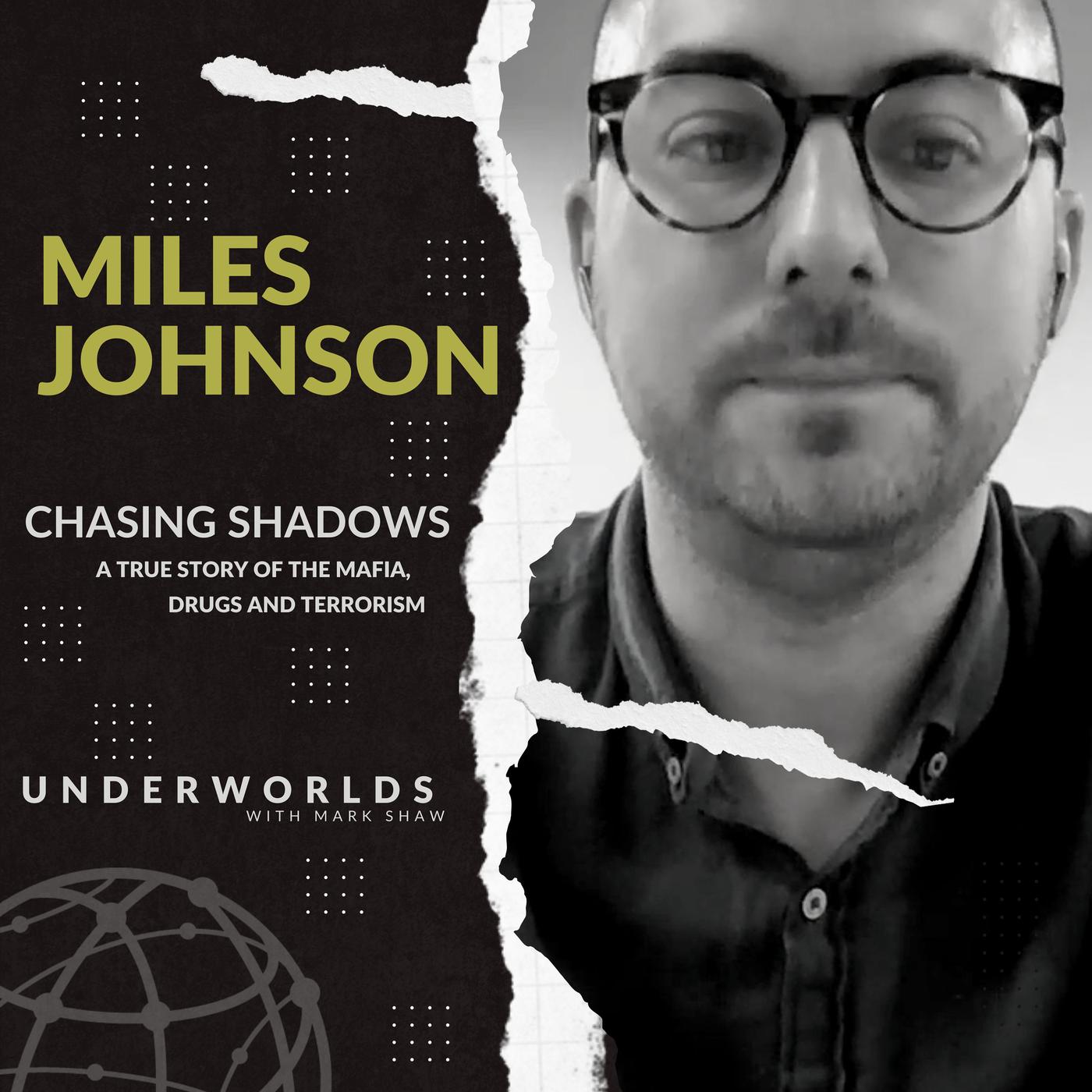
00:00:12My name is Mark Shaw, and in today's episode, I'm speaking to Miles Johnson, who's written a book called chasing shadows, which looks at the interlay, or overlays between organized crime, politics and terrorism and looking at the money flows and the individuals involved.
Mark Shaw
00:00:29It traces the story of three characters and uses those characters to shine a light on the intersections between these different areas.
Mark Shaw
00:00:37And now over to the conversation.
Mark Shaw
00:01:14Miles, welcome to Underworld.
Mark Shaw
00:01:16Here's a copy of Miles book, which I read while traveling.
Mark Shaw
00:01:22And I have to say it was just a real thriller.
Mark Shaw
00:01:25Keeps you on the edge of your seat as you move through all the different characters.
Mark Shaw
00:01:29Miles, so well done, and it's really a pleasure to be speaking to.
Miles Johnson
00:01:35Thank you.
Mark Shaw
00:01:37Perhaps a good way to start, Miles is just to ask you to sketch out the big themes of the book because there's a lot of people in the book and there's a lot of movement and there's a lot of action.
Mark Shaw
00:01:47But what would you say are the big themes that emerged for you?
Miles Johnson
00:01:52Well, firstly, Mark, thanks so much for having me.
Miles Johnson
00:01:55It's a real pleasure to be here and really thank you for reading and enjoying the book.
Miles Johnson
00:01:59It is a book which, as you say, there's a lot of characters in it, so to speak.
Miles Johnson
00:02:04I mean, these are real people, but, you know, they're people whose lives are presented in the book, but they all interact with each other in this sort of thematic way, in the sense of it's a very global book.
Miles Johnson
00:02:17It's a book where there are characters based in different locations.
Miles Johnson
00:02:21And unlike sort of a, I guess, classic kind of, you know, sort of cinematic, true crime thing where all the characters eventually sort of end up in a room.
Miles Johnson
00:02:30These are characters who, their lives are affected by one another, but through the sort of global criminal sort of economy.
Miles Johnson
00:02:39And it's really a story, thematically about the globalization of organized crime, but also how geopolitics shapes organized crime and criminal activity across borders.
Miles Johnson
00:02:52And so how unexpected events in one country will lead to unexpected events in another and how these are sort of these very powerful forces which can't really be controlled very easily by states or governments.
Miles Johnson
00:03:07And often they actually devour the protagonists in the book themselves.
Miles Johnson
00:03:12They're too powerful for the criminals themselves to deal with.
Mark Shaw
00:03:17I mean, it's really a fascinating story.
Mark Shaw
00:03:19I mean, you make the point.
Mark Shaw
00:03:20These three guys don't actually meet each other, but they are sort of intersecting in this broader political criminal economy.
Mark Shaw
00:03:28Just give us a quick sketch of the three because they're quite interesting set of men, I have to say.
Miles Johnson
00:03:37Yeah.
Miles Johnson
00:03:38So I would begin with Jack Kelly, who is a USDA agent, and he is drafted into a unit of the DEA called Special Operations Division.
Miles Johnson
00:03:52And it's a sort of part of the DEA, which is almost like a sort of processing house for a lot of the information that's coming in from sources around the world.
Miles Johnson
00:04:01And he's specifically put on looking at money laundering related to the middle east as Lebanon and Hezbollah, the sort of political party militant organization, designated terrorist organization.
Miles Johnson
00:04:19And so this is a guy who his experience is as a street level sort of drug agent.
Miles Johnson
00:04:25He's worked in places like New York and other places in the United States, and he's suddenly put into this world, which is completely different, where he has to sort of apply similar strategies to fighting sort of domestic or city level organized crime.
Miles Johnson
00:04:39He's applying it to a very, very different sort of target.
Miles Johnson
00:04:44He sort of follows money effectively, and then they sort of, with the DA, build.
Miles Johnson
00:04:49They pick targets and build up sort of operations against particularly important criminals he comes into.
Miles Johnson
00:04:57So basically, that's how he sort of comes into the story.
Miles Johnson
00:05:00But the next sort of character that I focus on is someone very, very far away.
Miles Johnson
00:05:05He's a mafia kind of captain, I guess, in Calabria.
Miles Johnson
00:05:10So the calabrian mafia, the Ndrangheta, are sort of a very, very powerful criminal organization and sort of largely sort of replaced the power of the sicilian mafia in the nineties and became very, very wealthy from cocaine trafficking.
Miles Johnson
00:05:25And my second character is a man called Salvatore Petito, who he is not a top, top boss.
Miles Johnson
00:05:32He is a sort of.
Miles Johnson
00:05:33Ndrangheta is organized around families, and he is a member of a sort of lower level family, not one of the top crime families in Calabria, but he is an aspirational criminal.
Miles Johnson
00:05:44He is someone who has watched the families around him become vastly rich and powerful and feared through cocaine trafficking.
Miles Johnson
00:05:52Because the Ndrangheta has proven extremely adept at forging close relationships with latin american cartels.
Miles Johnson
00:06:00He effectively, at the start of our story, he, Salvatore decides to risk everything to pull off a vast transatlantic cocaine deal.
Miles Johnson
00:06:10And to do that, he has to interact with money launderers who are based out of the Middle east, who Jack Kelly is investigating.
Miles Johnson
00:06:18And that brings us to our last character, so to speak, who is a man called Mustafa Bader Adin.
Miles Johnson
00:06:24And he is a sort of legendary and extremely deadly and violent master bomb maker who has worked in the orbit of Hezbollah.
Miles Johnson
00:06:36He's eventually recognized as a sort of Hezbollah figure, but who he always works for is unclear of his career, but he has an extremely long career, decades starting out from his early twenties, his teens, where he's pulled off a series of extremely violent and bloody terrorist attacks in Lebanon.
Miles Johnson
00:06:56And in 2016, he is now middle aged, almost at retirement, has been dispatched to Syria because Hezbollah has become involved in the syrian civil war, defending the Assad regime.
Miles Johnson
00:07:13And Mustafa is dispatched there as effectively as commander in Syria.
Miles Johnson
00:07:18Now, how does that interact with the other two characters?
Miles Johnson
00:07:20That's because there are these money laundering cells that Jack Kelly and the DEA is investigating, who he suspects are laundering cocaine money in Europe and sending it to the Middle east to fund hezbollahs extremely expensive incursion into Syria, where Mustafa is commanding.
Miles Johnson
00:07:42So the money is what sort of connects these characters together in that sense.
Mark Shaw
00:07:47Mozart is sort of this triangle of three characters.
Mark Shaw
00:07:51Can I ask, did you know them separately at different times?
Mark Shaw
00:07:57Did you come across one?
Mark Shaw
00:07:59When did you make the connection between the three?
Mark Shaw
00:08:03Give us some background, how you stumbled on the three, and then you sort of pulled together the story, which is very character driven, makes it very interesting.
Mark Shaw
00:08:15Just some background, I think would be really helpful.
Miles Johnson
00:08:18Yes.
Miles Johnson
00:08:19So I was working.
Miles Johnson
00:08:23I work for the Financial Times.
Miles Johnson
00:08:24I'm an investigative reporter, but I've also worked as a foreign correspondent.
Miles Johnson
00:08:29About three or four years ago, I was working as the Rome correspondent for the FT.
Miles Johnson
00:08:37I was covering a lot of stuff like politics and the economy and society, but I was also covering organized crime from a particular angle.
Miles Johnson
00:08:45So I was looking at the italian organized criminal groups had become quite financially sophisticated.
Miles Johnson
00:08:51They started to sort of intersect the world of high finance and sort of laundering their money through complicated financial products and various scams.
Miles Johnson
00:08:59And so that was sort of my way into it.
Miles Johnson
00:09:01I started reading a lot of indictments and speaking to a lot of prosecutors and financial police and stuff like that.
Miles Johnson
00:09:09And I started to come across various cases, and people were sort of telling me, what you've got to look at is not just where the cases end, because frequently the italian anti mafia police do amazing work, and they prosecute these huge, sprawling indictments involving hundreds of people sometimes.
Miles Johnson
00:09:29But there are sometimes elements of those cases when they leave the borders of Italy, where they stop because they just simply can't chase someone into Brazil frequently or figure out where all the money has gone around the whole world.
Miles Johnson
00:09:42It's just not really practical with their main focus, obviously, organized criminals in Italy.
Miles Johnson
00:09:47And so there was this one case where there was this very interesting figure involved where the money was sort of sent through a figure who was from Lebanon, who was connected into this network, which the DEA had sort of investigated, which was really present across Europe.
Miles Johnson
00:10:06So there was this quite important money laundering network in Europe, operating in France, in Spain, in Belgium, in Germany, in Italy.
Miles Johnson
00:10:16And I started to sort of look more at that network and sort of follow the trail of money and see get into the indictment in the United States, look at basically different elements of this case.
Miles Johnson
00:10:30And that's sort of how I started to got into contact with Jack Kelly.
Miles Johnson
00:10:37And then Jack Kelly is this extremely impressive investigator and had really very interesting conversations with him.
Miles Johnson
00:10:47And I started to see the whole broader context of why this money laundering operation was in existence in the first place, which was obviously very dependent on the geopolitical situation of the time and the extremely awful and bloody and complex conflict in Syria.
Mark Shaw
00:11:04Also, I mean, you started in Italy and sort of then completed the triangle through that route.
Mark Shaw
00:11:13Tell us something about Kelly.
Mark Shaw
00:11:17I mean, he was clearly open to being interviewed for talking.
Mark Shaw
00:11:24The description of his frustrations of the bureaucracy, the wider bureaucracy, the sort of turf battles in the us government.
Mark Shaw
00:11:33What kind of individual is he like?
Mark Shaw
00:11:37Was he eager to talk?
Mark Shaw
00:11:40Was he surprised to be approached?
Miles Johnson
00:11:42I think, you know, he is someone who's extremely passionate about his work.
Miles Johnson
00:11:47He's now retired, but he was really someone who is a bit of an obsessive.
Miles Johnson
00:11:52You know, he really would sometimes spend every waking hour on his work.
Miles Johnson
00:11:59And I was so passionate about it.
Miles Johnson
00:12:01I think, you know, he, he was, he, he could understand I was coming to him, you know, respectfully to try and better understand, really what happened in a situation which is very complex and hard to explain to a general audience.
Miles Johnson
00:12:15And I think.
Miles Johnson
00:12:16I think he was in.
Miles Johnson
00:12:19Wanted to engage on a.
Miles Johnson
00:12:20On a level where we would discuss it in a way which was intelligible to general.
Miles Johnson
00:12:27But that said, it's also, you know, it's a complicated story, and it also doesn't always have the elements of a story which you would see in a film.
Miles Johnson
00:12:35You know, part of.
Miles Johnson
00:12:35Part of really what I was trying to do with the book was trying to give a portrait of how chaotic and sprawling modern transnational criminal organizations and networks are.
Miles Johnson
00:12:47They don't neatly fit into.
Miles Johnson
00:12:50You know, there's not sort of frequently, there's not just sort of one guy at the top who sort of controls absolutely everything.
Miles Johnson
00:12:57And it's like a sort of scarface as character.
Miles Johnson
00:13:00There's often interacting networks and different power structures and things which cross borders and get quite messy.
Miles Johnson
00:13:08And what Jack's job really was to do was to sort of sit in his office at the DEA and receive this vast amount of information and so trying to make sense of it.
Miles Johnson
00:13:19So I thought he was a fantastically interesting character to show the difficulties and sometimes even the futility of trying to make sense of this ocean of illicit activity across borders.
Mark Shaw
00:13:33Martin what's so interesting is Kelly clearly has competition in the system.
Mark Shaw
00:13:40There are others who have different interpretations.
Mark Shaw
00:13:43The DEA has a particular place in the firmament of the security agencies of the US.
Mark Shaw
00:13:48So how does he operate?
Mark Shaw
00:13:50I mean, he showed clearly his frustrations to you of trying to sell his and their interpretation of what was going on.
Miles Johnson
00:13:59Yeah, I mean, I found that really fascinating in the sense that there's a sort of a philosophical.
Miles Johnson
00:14:03You know, the DEA is technically part is part of the us intelligence community, but it obviously is a law enforcement agency.
Miles Johnson
00:14:11You know, its job is to get convictions.
Miles Johnson
00:14:13That's what it does.
Miles Johnson
00:14:14Whereas an intelligence agency does not care about criminal convictions in the same way.
Miles Johnson
00:14:20So there's a philosophical difference.
Miles Johnson
00:14:22It was just really interesting to see where increasingly in the world there is this intersection between national security threats and transnational criminal threats.
Miles Johnson
00:14:35We had hybrid actors.
Miles Johnson
00:14:39Someone I was writing a lot about last year was Yevgeny Pragosin of the Wagner group, who was designated as a transnational criminal organization by the US, but is also obviously national security, a guy national security interest, you know, running a mass organization, et cetera, in Ukraine.
Miles Johnson
00:14:56So there's this sort of weird places where this stuff crosses over, especially in terrorist fundraising.
Miles Johnson
00:15:02But there is this big clash of philosophies where if you're an intelligence agency, you want to observe targets, you want to build information, you want to maintain good sources.
Miles Johnson
00:15:16You might find and frequently people did an agency like the DEA coming in and arresting people and staging sting operations abroad problematic or annoying?
Miles Johnson
00:15:28It can act contrary to your interests.
Miles Johnson
00:15:31And so it was very illuminating for me to sort of I spoke to a lot of people in a lot of different sort of organizations and in different countries and sort of tried to build up a pretty good picture of because a lot of these organized, these operations, you know, they would involve police from countries in Europe or, you know, other agencies from around the world.
Miles Johnson
00:15:51And there's a lot of sort of there's a lot of characters involved.
Miles Johnson
00:15:53Everyone has a slightly different perspective depending on where they sat.
Miles Johnson
00:15:57But they definitely agreed on one thing, that there were a lot of clashes.
Mark Shaw
00:16:00Well, you mentioned that you conducted a lot of interviews.
Mark Shaw
00:16:05You're reaching out to people.
Mark Shaw
00:16:07I mean, give us a sense of how you do it.
Mark Shaw
00:16:10These are people who don't necessarily want to speak.
Mark Shaw
00:16:13Either they're in state security organizations or they're in criminal organizations.
Mark Shaw
00:16:18Do you just call them up?
Mark Shaw
00:16:21What do you say if you do?
Mark Shaw
00:16:22Do you reach out through intermediaries?
Mark Shaw
00:16:24All of the above.
Mark Shaw
00:16:25I mean, do, are there any tricks you think, that you use to get people, people to talk and then do you build a relationship with them?
Mark Shaw
00:16:34Clearly, in the case of Kelly, it appears that you did just give us your.
Mark Shaw
00:16:40What did it take to get the sources to write the book?
Mark Shaw
00:16:42I know that's within your wider reporting as well, but just in terms of the building, this enormous number of interviews, which then pulls the story together, your approach and perhaps your frustrations around doing some of that.
Miles Johnson
00:16:57Yeah.
Miles Johnson
00:16:57No, I mean, it was a big challenge.
Miles Johnson
00:16:59And I think I'd say what I like as a reporter where I feel comfortable is we go with it's a foundational sort of document trail.
Miles Johnson
00:17:10So whatever I'm doing, which I can use as a sort of architecture to build, to identify who I should be approaching to talk to.
Miles Johnson
00:17:18So frequently in this book, there were a lot of different criminal cases, dating, overdose, you know, 30 years.
Miles Johnson
00:17:29There were also all sorts of other sorts of, you know, there was a un tribunal evidence, you know, and, you know, different documents from different agencies, you know, documents from colombian agencies or czech agencies.
Miles Johnson
00:17:43And, you know, there were so many.
Miles Johnson
00:17:46And it gives you, you know, that gives you a sort of firm footing to then think like, okay, well, who was working there at the time?
Miles Johnson
00:17:54Or, you know, in an indictment?
Miles Johnson
00:17:57You know, you know, these people were named.
Miles Johnson
00:18:00You know, frequently, you know, you begin by sort of in the case of criminals, often they're in prison in many, many instances or dead or fugitives.
Miles Johnson
00:18:11So they're difficult to contact, for sure.
Miles Johnson
00:18:14And, you know, we, we obviously have to be sort of, we want to give people the right, the most basic level, just the right to reply and to make an effort to contact them.
Miles Johnson
00:18:28And so that could be through their lawyers or that sometimes people do actually want to talk.
Miles Johnson
00:18:35Sometimes people surprisingly want to talk.
Miles Johnson
00:18:39And there's obviously a lot of, there are contentious issues, and sometimes people feel like they haven't been heard or portrayed fairly.
Miles Johnson
00:18:49But, yeah, so it's sort of, it was a process of exploration where you sort of map out your universe and you try and get in contact with people sometimes who are impossible to get in contact with, sometimes who you think are impossible, but actually somehow you find them and you are just trying to be straightforward and honest and explain what youre, what you're doing and what you want to talk about.
Mark Shaw
00:19:14Oswald in that process.
Mark Shaw
00:19:15Was there a moment of, like, extreme frustration for you?
Mark Shaw
00:19:19Somebody not replying, some sort of key part of the story not coming together?
Mark Shaw
00:19:25Was there that kind of time period in which you thought, you know, my goodness, I need to get this or this document or this person?
Mark Shaw
00:19:34Or was it sort of fitting together over time?
Miles Johnson
00:19:36There are some, always some complicated issues relating to the status of criminal cases.
Miles Johnson
00:19:43You know, when you're in different jurisdictions and when you're, it's a kind of quite technical thing, but just, you know, we, sometimes things can be under appeal for many, many years, and it can complicate the process of reporting on them.
Miles Johnson
00:19:57But, I mean, it's, you have to sort of get lucky as well.
Miles Johnson
00:20:03You know, sometimes there were, there were documents, and I didn't think I was going to be able to get hold of, which I, which I did.
Miles Johnson
00:20:11And then those led me to being able to contact people who I didn't think I was ever going to be able to reach.
Miles Johnson
00:20:17But, no, I mean, there was interesting elements to this because, especially, for example, in the mafia strand of the story.
Miles Johnson
00:20:25So in the Salvatore story, the Ndrangheta are quite, because they are family based units.
Miles Johnson
00:20:35It's not a sort of top down structure.
Miles Johnson
00:20:37It's different kind of families who operate in a sort of constellation of crime families, and they're very hard for law enforcement to penetrate because frequent, you know, organized crime groups are based on sort of blood and marriage are sort of less likely to betray each other, basically.
Miles Johnson
00:20:54And so historically, it's been hard to have, you know, what in Italy called pentiti, like sort of people who become state witnesses and stuff like that.
Miles Johnson
00:21:03But in the case of Salvatore's family, there are actually a relatively large number of people who had become state witnesses over time.
Miles Johnson
00:21:13And some of them.
Miles Johnson
00:21:14So there were sort of, I was using two, and that meant that they gave a vast amount of testimony.
Miles Johnson
00:21:20You know, they sit down with a prosecutor and they do interviews going on for hours and hours and hours, which I got hold of those interviews.
Miles Johnson
00:21:28And so that gives you sort of a very different way into understanding a world and personalities and motivations than an indictment, for example, because you have people sort of talking about often the sort of quite small details, the banalities of what they do, and it's.
Miles Johnson
00:21:50And in the case of Salvatore, he had a girlfriend.
Miles Johnson
00:21:54He was having an affair with a ukrainian woman called Ogthana, who is an important character in the book.
Miles Johnson
00:21:59And she became a state witness.
Miles Johnson
00:22:01And her perspective is extremely fascinating.
Miles Johnson
00:22:05Nothing, only because she's a woman in an extremely kind of chauvinistic and male dominated environment.
Miles Johnson
00:22:13But she was not directly involved in crime.
Miles Johnson
00:22:16She's someone who.
Miles Johnson
00:22:18She was aware of what was going on because Salvatore would come back home after a day's work, so to speak, and he would sort of sit in her kitchen and he would unload about his day about as maybe everyone would.
Miles Johnson
00:22:34You start talking about this guy who owes me money, hasn't paid me any money, he's an idiot.
Miles Johnson
00:22:40Or this person hasn't screwed up this deal with this guy.
Miles Johnson
00:22:45So he's just sort of telling all of his.
Miles Johnson
00:22:47Just frustrations of his life.
Miles Johnson
00:22:48But in the kitchen, the italian financial police had put a sort of ambient or listening device.
Miles Johnson
00:22:54So you're just getting all of this stuff where they're watching tv.
Miles Johnson
00:22:58They'll be watching a show with, you know, an action film with people running around with kalashnikovs.
Miles Johnson
00:23:05And he just turns around his girlfriend and says, oh, you know, I've got two kalashnikovs.
Miles Johnson
00:23:09And she goes, oh, that's really interesting.
Miles Johnson
00:23:11You know, it's just this sort of these strange moments which add a sort of texture to.
Miles Johnson
00:23:19They're not sort of legally important, but they paint the sort of universe that these people live in where, you know, the sort of the.
Miles Johnson
00:23:27The fact of the normality of that sort of thing, which would be quite shocking to anyone else.
Miles Johnson
00:23:34So, yeah, it was always been a process of sort of building this picture through a mixture of documents and human sources that luckily, over time, with a lot of effort, I got what I needed.
Mark Shaw
00:23:46Thanks, Miles.
Mark Shaw
00:23:46Fascinating stuff.
Mark Shaw
00:23:49The other area which, reading it, I was really taken by, and I sense this was quite difficult, is that you have these three characters who don't know each other, who are at different time phases, and you've got to integrate them for the reader and bring linkages between them.
Mark Shaw
00:24:09So the chapters are moving very to different parts of the world, to different incidents.
Mark Shaw
00:24:16I mean, tell us something about structuring that.
Mark Shaw
00:24:19And I say so in your acknowledgments.
Mark Shaw
00:24:20I think you don't say it directly, but some of the frustrations of writing that come out, and I can imagine what they are.
Mark Shaw
00:24:29It's really challenging.
Mark Shaw
00:24:31Tell us what you were doing and what you were thinking and how difficult was it?
Miles Johnson
00:24:36Yeah, I mean, it was.
Miles Johnson
00:24:37It was a real challenge.
Miles Johnson
00:24:39There were certainly times when I would sort of sit surrounded by massive amounts of post it notes and sort of scrawled notes and stuff and be rather intimidated by the task I'd taken on the.
Miles Johnson
00:24:53Yeah, I mean, I think it was this extremely delicate balance between telling, you know, this is a true story.
Miles Johnson
00:25:03No detail is invented.
Miles Johnson
00:25:05You know, every piece of dialogue, every detail, every.
Miles Johnson
00:25:08If there's any description if the, you know, the color of a car, if it's red, that is the color of the car.
Miles Johnson
00:25:13There is a.
Miles Johnson
00:25:14If you know, the time someone did something, it is.
Miles Johnson
00:25:17It is.
Miles Johnson
00:25:19That is a sort of an integral part of the work.
Miles Johnson
00:25:24But it means that you then also have a lot of details that you have to get rid of because there's almost a sort of, in certain instances, this sort of strange thing where you actually have too much material.
Miles Johnson
00:25:37Because if you have 5000 pages of wiretap transcripts or something a lot of what people do in their daily lives is quite tedious.
Miles Johnson
00:25:49It's just boring stuff.
Miles Johnson
00:25:50You know, you like, go downstairs and put on the kettle and make a cup of tea and, you know, say hello to somebody.
Miles Johnson
00:25:57This is not stuff.
Miles Johnson
00:25:58You have to be very selective in what you're including in each chapter but then you're also having to be very mindful of not distorting what has actually happened.
Miles Johnson
00:26:13But then also just trying to be sort of, you know, careful about how you present the information.
Miles Johnson
00:26:19But instructionally, you're sort of thinking it's a little bit.
Miles Johnson
00:26:25This is maybe a somewhat strange way to put it but it's a little bit like if you were sort of editing an episode of reality tv in certain instances in the book, they're different things.
Miles Johnson
00:26:34Each part has been put together in a different way.
Miles Johnson
00:26:35As you said, the Jack Kelly session is much more about interviews and with him and also other people and documents as well.
Miles Johnson
00:26:43But in the sort of the italian side of the story, you have this massive amount of material including sort of surveillance photographs phone like, sort of location data, text messages, everything.
Miles Johnson
00:27:02And so you're sort of editing this live stream of a day in a criminal's life.
Miles Johnson
00:27:08And so that was a real, a real challenge structurally.
Miles Johnson
00:27:13But it's also a sort of nature.
Miles Johnson
00:27:15I was very determined to not make this a story where, look, I have a vast amount of respect for law enforcement and the work they do but I think it's a complex job.
Miles Johnson
00:27:27And I didn't want to just make it a story about, you know, just goodies and baddies and just these great, you know, and it make it a sort of very sort of, you know, Hollywood style thing where, you know, the goodies triumph in the end.
Miles Johnson
00:27:39Like, this is a messy world where, you know, as Jack's story shows, you know, people are fighting.
Miles Johnson
00:27:45You know, they're doing something right.
Miles Johnson
00:27:46They're trying to fight for, but it's difficult.
Miles Johnson
00:27:49You come up against just bureaucratic obstacles or difficulties in your.
Miles Johnson
00:27:52It's not just this simple process of just heroes coming in and, yeah, kicking, kicking ass, as they say.
Miles Johnson
00:27:59So it was a.
Miles Johnson
00:28:01I was quite determined that I would show the complexity of that.
Miles Johnson
00:28:06And also in terms of the ending of the story, that's an important year because this is not a world where anyone really walks away happily.
Miles Johnson
00:28:13This is not a place where everything is just perfectly resolved and it's all over.
Miles Johnson
00:28:18Crime has been solved and the world is just a perfect place.
Miles Johnson
00:28:21This is a world where there's just this.
Miles Johnson
00:28:25People might be arrested, people will come and replace them.
Miles Johnson
00:28:29This is a world where the geopolitical forces which are encouraging or fueling this activity, it will remain in place or change into something else.
Miles Johnson
00:28:42So in terms of the structure, I wanted to make it book which was readable and relatable, but also something which accurately portrayed that world.
Miles Johnson
00:28:55And so that's why there's also a lot of focus on the, you know, the incompetence of some of the characters as well.
Mark Shaw
00:29:02It's amazing, actually, Maaz, you the degree to which geopolitics intervenes as a scene in the book.
Mark Shaw
00:29:09The US have been cooperating with the French, and then they're going to have a party to celebrate and then suddenly the party's called off because, of course, politics has intervened.
Mark Shaw
00:29:19And I don't know, it's a very real story that full of greys and real people.
Mark Shaw
00:29:28I think that comes across really, really well.
Miles Johnson
00:29:31Thank you.
Mark Shaw
00:29:32I mean, you've given this fascinating overview of the amount of work that goes into a book like this.
Mark Shaw
00:29:38I'm very interested in this idea of nonfiction, true crime.
Mark Shaw
00:29:42Actually, the term true crime is sometimes a little bit frustrating, actually, because it fits into a specific part of the library or the bookshop or whatever.
Mark Shaw
00:29:51And in fact, I, perhaps the.
Mark Shaw
00:29:54I at least would want to make the argument that these books are more important for another reason.
Mark Shaw
00:29:59They're about the wider political economy of how the world works, how politics is influenced.
Mark Shaw
00:30:05I mean, do you have those kinds of frustrations?
Mark Shaw
00:30:09Why do you work and write in this area?
Mark Shaw
00:30:11What do you want to achieve?
Miles Johnson
00:30:13Yeah, I think, you know, as you say, true crime can be a problematic label, and it can kind of encompass a vast amount of different things.
Miles Johnson
00:30:23And what I sort of always wanted to do as a journalist and an author is to try and illuminate a little bit the sort of strange elements of the world, how they work and things which often are very surprising.
Miles Johnson
00:30:36The world is a very strange place.
Miles Johnson
00:30:38It's a sort of huge cliche, but, you know, sometimes the truth can be stranger than fiction.
Miles Johnson
00:30:42You know, people are absolutely stunned by some of these stories in that space.
Miles Johnson
00:30:48But I think it really interacts more also with things that people would consider kind of traditional non fiction areas like sort of geopolitics and history.
Miles Johnson
00:31:01These are understanding the way events in the world shape.
Miles Johnson
00:31:08Shape our surroundings.
Miles Johnson
00:31:09And I think in the case of this book, I was also very, um, very focused on trying to give an accurate depiction of this phenomenon to the point where it confounds certain expectations.
Miles Johnson
00:31:25So, you know, in the sort of world of sort of narrativized crime, you know, there are these expectations, especially in organized crime, of, you know, these all seeing all powerful bosses overseeing sort of very tightly run, centralized organizations, you know, and everyone being actually really competent, you know, the police being really competent, the criminals being really competent.
Miles Johnson
00:31:47And it all sort of working really quite well.
Miles Johnson
00:31:49And actually, the reality is much more chaotic than that.
Miles Johnson
00:31:51And, you know, in the book, there's a lot of scenes of criminals being just quite, you know, incompetent and doing things for quite stupid reasons.
Miles Johnson
00:32:01And also just showing the sort of one thing which really unifies all of these characters is that they, you know, my editor made a joke which I think is very accurate.
Miles Johnson
00:32:13He was sort of joking that this is also a book about middle management.
Miles Johnson
00:32:17This is a book about people who are in institutions who are just dealing with the sort of bureaucratic difficulties of being an institution, being frustrated by the institution they're in, and people who've also devoted their lives in some way to the values and ideas of different institutions, be that, you know, us law enforcement or the italian mafia or Hezbollah, you know, and ultimately, those institutions portray them.
Miles Johnson
00:32:42This is not a book where everyone ends up super, you know, happily living their life and vindicated.
Miles Johnson
00:32:50You know, these are.
Miles Johnson
00:32:50These are people who are often frustrated by the world they're in, and that applies across those institutions.
Miles Johnson
00:32:56So you see, you know, a lot of the time, it's sort of the forces that these people are dealing with are bigger than them, and they're trying, like any human to sort of somehow try and shape their own destiny and faith, you know, in this sort of extremely sort of, like, chaotic world they live in, and they come up against things which are too big and too powerful for them to really control.
Miles Johnson
00:33:21So in the simplest sense, you're just trying to organize from scratch a very audacious transatlantic cocaine shipment of.
Miles Johnson
00:33:30You're trying to sort of rest control of your own destiny and eventually fail it.
Miles Johnson
00:33:34And so that was sort of what I was trying to capture rather than the expectations of sort of everything just being extremely slick and perfectly run and.
Mark Shaw
00:33:44Masterful, as you've alluded to this because I think what you're saying, some of this comes across in the conclusion because it can't end neatly because there are a lot of, I don't want to say loose ends, but in the greys of the world in which you are writing about, there aren't always happy stories or a clear resolution as you would have in a script written movie, so to speak.
Mark Shaw
00:34:10I mean, tell us something about this.
Mark Shaw
00:34:12Kelly doesn't go to his retirement party or he misses it or they hold it without him.
Mark Shaw
00:34:17Sort of a weird detail which I thought said a lot about how a bureaucracy thanks you for working.
Mark Shaw
00:34:25I mean, the other cases, it also has these very unsatisfying endings but illustrative of reality life, I suppose.
Miles Johnson
00:34:35Yeah, I mean no one really wins.
Miles Johnson
00:34:38I mean, I think Jack is ultimately vindicated by, I think consensus moves closer towards what he had been, been arguing.
Miles Johnson
00:34:51But it's.
Miles Johnson
00:34:53Yeah, it's a sort of situation where at the end maybe this is true of us all, you know, at the end when you, when you retire, you know, it's not sort of like, you know, the screen doesn't fade to black and you walk off triumphantly to sort of a soundtrack, you know, whether you're a criminal in law enforcement or anything.
Miles Johnson
00:35:11I think there are, you know, there's also just elements of age I think is another thing I find interesting in the book in comparison of the characters.
Miles Johnson
00:35:20You know, where we, the way we are as human beings when we're 20 is going to be different to when we're 50.
Miles Johnson
00:35:29And in the case of, for example, Mustafa Bader ad Din who has been operating in this sort of shadowy existence, this sort of ghost like figure since he was 1718 or something.
Miles Johnson
00:35:45He's in his fifties.
Miles Johnson
00:35:47And does he still believe the same things that he did when he was 20?
Miles Johnson
00:35:51Is he still doing it for the same reasons?
Miles Johnson
00:35:54Is he happy with the direction which his organization has gone in the same as the DEA agents who were doing these big international meaningful sting operations, generating a lot of attention and bringing in big targets?
Miles Johnson
00:36:11A lot of them were spoken to, a lot of them who were very disillusioned by the way the organization went sort of after sort of 20, 1617.
Miles Johnson
00:36:20And so, yeah, it's people who, they change over time.
Miles Johnson
00:36:25I think that was another sort of part of the book.
Miles Johnson
00:36:27Is just we tend to view people's motivations as quite static sometimes, especially in the sort of more ideological prisms of sort of like, you know, some things like terrorism and terrorist financing.
Miles Johnson
00:36:40Why someone does something, they might do the same thing, but their reasons for doing it might change over time and over their life.
Miles Johnson
00:36:49And so I found that quite interesting.
Miles Johnson
00:36:52But, yeah, really, these are people who, there is never going to be, as you say, it's never going to be a happy ending, a perfect ending.
Miles Johnson
00:37:03No one ever comes into the end and says, you were completely right.
Miles Johnson
00:37:07You're amazing.
Miles Johnson
00:37:07You know that maybe that happens once, once in a while, but for most people, that's not how it works.
Miles Johnson
00:37:12And that was certainly the case for these guys.
Mark Shaw
00:37:15Miles, what is the, what has been the reaction to the book?
Mark Shaw
00:37:18I mean, you've been presenting it and talking about it.
Mark Shaw
00:37:22What do people say?
Mark Shaw
00:37:23And has any of that surprised you?
Miles Johnson
00:37:26Yeah, I've been really encouraged by the reaction in the sense of I've had a lot of general readers.
Miles Johnson
00:37:33So basically I've had people contact me who are not people who are of a huge sort of interest in this area, who have related to the book on its own terms, which has been very encouraging.
Miles Johnson
00:37:47I mean, I've had some interesting people contact me.
Miles Johnson
00:37:50I had one person who was a relative of a quite well known organized crime figure who had left the family and contacted me to say that they related very strongly to the depiction of the family dynamics in the book, in the mafia side of the story.
Miles Johnson
00:38:19So that was very surprising and very interesting to hear.
Mark Shaw
00:38:23Interesting, miles, I think, you know, the global initiative, we're doing multiple research projects on organized crime, illicit economies, trying to push forward a discussion precisely on what you are doing to understand the underworld, if you like, or the illicit better.
Mark Shaw
00:38:44You know, what can we do better?
Mark Shaw
00:38:45You know, what does the book illustrate?
Mark Shaw
00:38:47Are there areas that deserve more attention, this connection, organized crime, terra financing that you've uncovered?
Mark Shaw
00:38:55You know, is there, is there areas in the broader research community from where you sit, where things could just be better, where much more work is required?
Miles Johnson
00:39:04I would say.
Miles Johnson
00:39:05I think the work you guys do is absolutely fantastic.
Miles Johnson
00:39:07And the people who collaborate with you, too, I mean, I think.
Miles Johnson
00:39:09I wouldn't say errors.
Miles Johnson
00:39:11I think it's just.
Miles Johnson
00:39:14I think it's just a challenge for anyone who's looking at this area.
Miles Johnson
00:39:18It becomes more and more complicated.
Miles Johnson
00:39:23It feels, especially the world is becoming an ever more complicated place, which sounds like a little bit of a trite thing to say, but in terms of the nature of the actors who we would be counting as of interest and who they're interacting with.
Miles Johnson
00:39:43I think one thing I've become really interested in, which is connected to this book, is the interaction between states and, you know, regimes, governments which are hostile to the west, and organized criminal groups.
Miles Johnson
00:39:56You know, you've had these fascinating sort of interactions between, you know, effectively kind of.
Miles Johnson
00:40:06Yeah, like rogue states, sanctioned regimes, whatever you want to call them, and organized crime groups and how.
Miles Johnson
00:40:13I think that will probably that will become a very interesting.
Miles Johnson
00:40:17People have done interesting research, and if, I think that will become a more interesting area of research in the context were in where you have these massive economies which have been sanctioned and cut off from the western financial system, and how sanctions effectively create a need for people to turn into the international black market.
Miles Johnson
00:40:38If you cant buy something on the open market anymore, you need to find someone to get it for you.
Miles Johnson
00:40:44I think the nature of these bizarre collaborations between unlikely characters.
Miles Johnson
00:40:50So there was this fascinating case in the United States recently, earlier this year, involving Canadian Hells angels being hired by the Iranian Foreign intelligence service to assassinate dissidents in the United States.
Miles Johnson
00:41:06Bizarre people you just never would think would be in the same room, so to speak, together.
Miles Johnson
00:41:10And I think that will be a really interesting continuing our soul.
Mark Shaw
00:41:15What you're saying is there's plenty more material for you, Miles, to bring together these interesting characters.
Mark Shaw
00:41:23Really, really a pleasure to speak with you, and thanks for taking the time.
Miles Johnson
00:41:28Oh, the pleasure is mine.
Miles Johnson
00:41:29Thank you so much for having me, really.