WEBVTT
00:00:14.001 -->
00:00:17.521Look at this. We are on episode one of eight of the Apollo series.
00:00:18.181 -->
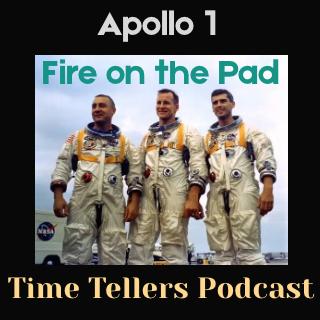
00:00:23.681This episode is called Fire on the Pad, which is the story of Apollo one.
00:00:24.281 -->
00:00:29.281And this is Time Tellers, by the way. Yes. I'm Renee. And that's Dan.
00:00:30.961 -->
00:00:34.461I did a whole intro and everything. That was not scripted. No,
00:00:34.561 -->
00:00:36.321it was unscripted. I off the cuff.
00:00:37.121 -->
00:00:39.961Just, you know. Does that mean we're going to have to do another corrections
00:00:39.961 -->
00:00:42.481episode? What? You're not Dan and I'm not Renee?
00:00:44.381 -->
00:00:47.701No, this is an AI episode. It is not.
00:00:48.081 -->
00:00:52.701We are real people. I promise. At least some days.
00:00:53.821 -->
00:00:57.701Some episodes, not. Willie, you forgot which ones those were.
00:00:58.121 -->
00:00:59.801We are always real people.
00:01:01.141 -->
00:01:06.301I have no idea what you are talking about. January 27th, 1967.
00:01:06.661 -->
00:01:10.421Cape Kennedy, Florida. It's late afternoon and the sun is going down over the Atlantic.
00:01:10.601 -->
00:01:14.201The air is warm. the kind of Florida evening where the light goes golden and
00:01:14.201 -->
00:01:16.321everything looks almost too beautiful to be real.
00:01:18.981 -->
00:01:21.841But is it real? I don't know.
00:01:22.361 -->
00:01:29.281On launch pad 34, sitting on top of a Saturn 1B rocket, is a spacecraft called Apollo 1.
00:01:29.461 -->
00:01:32.361Inside it, wearing full-pressure suits and hooked up to oxygen lines,
00:01:32.421 -->
00:01:37.941are three men, Gus Grissom, Ed White, and Roger Chafee. They've been in there for hours already.
00:01:41.017 -->
00:01:44.657They're not going anywhere today. This is a ground test, a simulated countdown,
00:01:45.037 -->
00:01:48.117what NASA called a plugs-out test. No rocket fuel, no ignition.
00:01:48.397 -->
00:01:51.177The goal is simply to run through every system, every checklist,
00:01:51.357 -->
00:01:54.397and make sure everything works before the real launch scheduled for February
00:01:54.397 -->
00:01:56.37721st, less than four weeks away.
00:01:58.077 -->
00:02:03.677Ooh, that's not very long away. Nope. Grissom had been annoyed all afternoon.
00:02:03.977 -->
00:02:07.457The comm system keeps cutting out to persistent static that makes communication
00:02:07.457 -->
00:02:09.617between the capsule and the ground almost impossible.
00:02:10.277 -->
00:02:13.257He's been snapping at the ground crew. At one point, he holds up a lemon,
00:02:13.437 -->
00:02:15.417an actual lemon brought exactly for
00:02:15.417 -->
00:02:19.237this purpose, and asks a technician to photograph it next to the capsule.
00:02:19.657 -->
00:02:25.177His way of saying, on the record, without saying it directly, this thing is a lemon.
00:02:27.597 -->
00:02:31.937Was that a term we used back then? Or is that a more modern term?
00:02:32.017 -->
00:02:35.177Obviously it was. Did he really actually? Yes.
00:02:35.817 -->
00:02:40.177Okay, I believe you. I just, I didn't think that. Yeah, that whole lemon thing
00:02:40.177 -->
00:02:42.977goes back to, like, when cars started being sold.
00:02:43.617 -->
00:02:46.257Okay. In every kind of, like, vehicle. Fair.
00:02:47.017 -->
00:02:50.617Privately, Grissom has been saying something more alarming. In the weeks before
00:02:50.617 -->
00:02:53.757this test, he told his wife, Betty, and several colleagues that he had serious
00:02:53.757 -->
00:02:55.577doubts about whether Apollo 1 was ready.
00:02:56.057 -->
00:03:00.317Not a feeling, not nerves, a specific informed professional judgment from the
00:03:00.317 -->
00:03:02.177most experienced astronaut in the program.
00:03:04.437 -->
00:03:07.597Oh no that is such a bad bad
00:03:07.597 -->
00:03:10.597very bad no good omen i don't like this story
00:03:10.597 -->
00:03:13.697already it doesn't get better renee of course
00:03:13.697 -->
00:03:16.837not i know i know i do
00:03:16.837 -->
00:03:23.297know this story and i know it doesn't get better at 6 31 p.m the count has stopped
00:03:23.297 -->
00:03:27.337the con problems have made the test essentially impossible to run properly grissom
00:03:27.337 -->
00:03:31.837is on the radio frustrated saying something about how they can't expect to fly
00:03:31.837 -->
00:03:33.697if they can't talk between two buildings,
00:03:33.717 -->
00:03:36.637let alone to the moon. Fair, fair point. Yeah.
00:03:37.417 -->
00:03:39.157And then one of the astronauts...
00:03:40.306 -->
00:03:43.726Investigation was never able to conclusively determine which one,
00:03:44.206 -->
00:03:48.406says something over the comm, the transcripts are garbled, but it sounds like the word, fire.
00:03:49.406 -->
00:03:53.646Not that. No. Eight seconds later, a second voice, also unidentified,
00:03:53.966 -->
00:03:55.646says, we've got a fire in the cockpit.
00:03:56.846 -->
00:04:01.746Oh, it's got a fire in the cockpit. Yes. Fourteen seconds after that,
00:04:01.926 -->
00:04:04.406the capsule ruptures from the internal pressure of the fire.
00:04:04.566 -->
00:04:08.546The hatch, which opens inward and requires 90 seconds and two people to open
00:04:08.546 -->
00:04:12.366under the best conditions, It is impossible to open against the force of a fire
00:04:12.366 -->
00:04:13.986burning at over 1,000 degrees Fahrenheit.
00:04:14.646 -->
00:04:18.666All three men are gone within seconds. The entire fire, from first report to
00:04:18.666 -->
00:04:21.246rupture, lasts less than 30 seconds. Jesus.
00:04:21.846 -->
00:04:25.806Pad technicians reach the hatch five minutes later. The scene inside is devastating.
00:04:25.806 -->
00:04:28.146They cannot identify the crew members by sight.
00:04:29.026 -->
00:04:33.566I mean, that is... Okay, fire is devastating.
00:04:33.886 -->
00:04:38.306And on the ground as well. They didn't even get the chance to launch.
00:04:38.826 -->
00:04:41.906On the ground on a Friday evening in front of the launch crew.
00:04:42.286 -->
00:04:44.846Who could hear it happen and couldn't do a single thing to help them?
00:04:54.116 -->
00:04:56.096Welcome to Time Tellers, I'm Renee.
00:04:58.296 -->
00:05:01.196And on Dan, today we're telling the whole story of Apollo 1.
00:05:01.396 -->
00:05:05.196Not just the fire, but who these men were, how it happened, why it should never
00:05:05.196 -->
00:05:08.856have happened, and why the worst day in NASA's history might also be the reason
00:05:08.856 -->
00:05:10.976Apollo 11 succeeded two and a half years later.
00:05:11.416 -->
00:05:13.816That is a heavy promise for a Friday.
00:05:14.336 -->
00:05:19.036It's a heavy story, but it's an important one, and I promise it doesn't end in despair.
00:05:19.236 -->
00:05:22.336These men deserve to be more than a tragedy. They deserve the whole story.
00:05:23.976 -->
00:05:27.596Okay let's go before we
00:05:27.596 -->
00:05:30.576talk about what happened i want to talk about who was in that capsule
00:05:30.576 -->
00:05:33.796good idea because i think there's a tendency especially 50
00:05:33.796 -->
00:05:37.516something years later for these names to become abstract symbols of sacrifice
00:05:37.516 -->
00:05:42.156rather than actual human beings with histories and families and peculiarities
00:05:42.156 -->
00:05:46.936and flaws so let's spend some time with them okay start with grissom because
00:05:46.936 -->
00:05:51.016i feel like a lot of people know that name but couldn't necessarily tell you
00:05:51.016 -->
00:05:52.596anything specific about him.
00:05:53.276 -->
00:05:57.856Virgil Ivan Grissom goes by Gus, born in Mitchell, Indiana in 1926.
00:05:58.136 -->
00:06:01.936Son of a railroad worker, the oldest of four kids, small town working class,
00:06:02.036 -->
00:06:04.736the kind of American background that never gets described as glamorous,
00:06:04.976 -->
00:06:08.856but produces a disproportionate number of people who end up doing extraordinary
00:06:08.856 -->
00:06:12.816things simply because they're used to working hard and don't know if they're
00:06:12.816 -->
00:06:13.796supposed to think small.
00:06:14.656 -->
00:06:19.856He flew 100 combat missions in Korea, came home and became a test pilot at Wright-Patterson
00:06:19.856 -->
00:06:21.736Air Force Base. Ooh, Dayton, Ohio.
00:06:22.416 -->
00:06:27.376And aliens, which at the time was basically the world capital of experimental aviation.
00:06:27.796 -->
00:06:32.796He was selected as one of the original Mercury 7 in 1959, the first class of
00:06:32.796 -->
00:06:36.476American astronauts chosen from over 500 military pilot candidates.
00:06:37.216 -->
00:06:39.376Grissom made the cut. Most people didn't.
00:06:40.156 -->
00:06:42.276That would be a hard cut to make.
00:06:43.133 -->
00:06:49.533Yeah. But in 1967, Gus Grissom was arguably the most experienced astronaut NASA hat.
00:06:50.053 -->
00:06:55.253He'd flown Liberty Bell 7 and the Mercury program in 1961, only the second American in space.
00:06:55.833 -->
00:07:01.093He'd commanded the first Gemini mission, Gemini 3, in 1965, alongside John Young.
00:07:01.433 -->
00:07:05.473He was a presumptive commander of the first moon landing, if you'd ask a NASA
00:07:05.473 -->
00:07:10.573insider in 1966, who was most likely to be the first human to walk on the moon.
00:07:10.733 -->
00:07:12.373A lot of them would have said Gus Grissom.
00:07:12.953 -->
00:07:18.153Wait, so he wasn't just important, he was the guy, the it guy.
00:07:18.913 -->
00:07:22.033He was the guy who was supposed to be first.
00:07:22.733 -->
00:07:27.493He was very much the guy. Short, about 5'7", stocky, from Mitchell,
00:07:27.633 -->
00:07:29.533Indiana, not flashy like some of the others.
00:07:29.873 -->
00:07:34.453John Glenn was the golden boy, Alan Shepard had the cool aristocratic thing going on.
00:07:35.113 -->
00:07:38.933Scott Carpenter was the poet-philosopher of the group, Grissom was just a worker.
00:07:39.813 -->
00:07:42.613Exceptionally competent, methodical, professionally unflappable,
00:07:42.733 -->
00:07:47.233the kind of person other pilots trusted with their lives, without having to think about it.
00:07:47.833 -->
00:07:50.673Privately, he was funny, he had a dry, sardonic sense of humor,
00:07:50.933 -->
00:07:55.153but publicly he was gruff and often impatient with anything he considered a waste of time.
00:07:56.961 -->
00:07:59.841He had one piece of baggage that followed him throughout his career.
00:08:00.201 -->
00:08:04.741On his Mercury flight in 1961, after splashdown, the hatch of his capsule blew
00:08:04.741 -->
00:08:07.621open prematurely and the capsule sank in the Atlantic.
00:08:08.381 -->
00:08:12.761Grissom barely made it out. He always insisted it wasn't his fault that something
00:08:12.761 -->
00:08:15.941had malfunctioned, that he hadn't touched the explosive hatch bolt.
00:08:16.361 -->
00:08:20.861The Navy divers, focused on saving the capsule, almost let him drown in the process.
00:08:21.541 -->
00:08:24.381NASA ultimately cleared him and put him back on flight status.
00:08:24.461 -->
00:08:28.081But for years, there was a whisper in certain corners, that he'd panicked,
00:08:28.361 -->
00:08:31.881that he'd blown the hatch himself, and that it had been pilot error.
00:08:32.421 -->
00:08:37.761It haunted him. He was obsessive about it in a way that the people closest to
00:08:37.761 -->
00:08:39.901him recognized as more than professional pride.
00:08:40.021 -->
00:08:42.301It was something he needed to have put right.
00:08:43.381 -->
00:08:47.861That is such a devastating irony. He spent his career being associated with
00:08:47.861 -->
00:08:53.081a hatch that opened when it shouldn't have, and then he died because a hatch
00:08:53.081 -->
00:08:55.101wouldn't open when it should have.
00:08:55.761 -->
00:09:00.041History doesn't do its cruelty subtly. Ed White was the second man in the capsule.
00:09:00.281 -->
00:09:01.961Edward Higgin White's the second.
00:09:02.381 -->
00:09:06.381Son of a general, grandson of a pilot, he was in many ways everything the American
00:09:06.381 -->
00:09:08.861space program wanted to put in front of a camera.
00:09:09.341 -->
00:09:13.521Handsome, physically extraordinary, genuinely warm. He became the first American
00:09:13.521 -->
00:09:16.621to walk in space on the Gemini 4 mission in June 1965.
00:09:17.221 -->
00:09:21.461He floated outside the capsule for 23 minutes with a small handheld jet gun
00:09:21.461 -->
00:09:22.521maneuvering through space.
00:09:23.061 -->
00:09:27.041When Mission Control told him it was time to come back in, he refused for a while.
00:09:27.221 -->
00:09:31.521He's like a dog in the backyard. He won't come back in when you call him.
00:09:31.761 -->
00:09:35.621He said on a hot mic that went to the garden. I cleared up my windshield,
00:09:35.921 -->
00:09:38.281my dirty dog. Yeah. Yeah.
00:09:41.045 -->
00:09:44.485See how it's all smeared up there? Yeah. It looks like there's a coating on
00:09:44.485 -->
00:09:46.265the outside, and you've rubbed it off. Yeah.
00:09:46.605 -->
00:09:50.125You have to tell me what you've got. Jiminy 4, Houston Capcom.
00:09:51.125 -->
00:09:54.765Jiminy 4, Houston Capcom. You know, the spacecraft rates are up about a one
00:09:54.765 -->
00:09:58.645degree per second. It's fixing you on about a half degree per second and roll.
00:09:59.385 -->
00:10:02.905I've got that. I don't know what the pictures that I've got yet. Okay.
00:10:05.005 -->
00:10:09.945I can't guess. Houston Capcom. No, and I don't even know exactly where we are,
00:10:10.005 -->
00:10:11.225but it looks like we're about over six.
00:10:12.205 -->
00:10:16.905Jiminy 4, Houston, Capcom. No, it looks like Houston down below us.
00:10:17.905 -->
00:10:22.685Jiminy 4, Houston, Capcom. Hey, guys, I'll be reading, but we're right over Houston.
00:10:24.385 -->
00:10:28.585Run out and look. Jiminy 4? Jiminy 4, Houston?
00:10:29.345 -->
00:10:33.085Yeah, that's Galveston Bay right there. Hey, Dad, can you see on your side of
00:10:33.085 -->
00:10:35.565the spacecraft? Can you see the camera here?
00:10:36.625 -->
00:10:40.445Yeah. Is it pointing at you? No, no, no, no. Which way?
00:10:41.005 -->
00:10:44.405Behind the picture. I can't get the picture. Now, don't get back there where
00:10:44.405 -->
00:10:46.105the... I'm not behind it.
00:10:46.245 -->
00:10:49.385I might have thought about this. Come on, release your... Jiminy 4, Houston.
00:10:49.925 -->
00:10:54.245Appreciate it, that. Jiminy 4, Houston. Jiminy 4, Houston.
00:10:55.365 -->
00:10:59.545Jiminy 4, Houston. But still, not that part of the picture card.
00:10:59.645 -->
00:11:02.185I've only got about three or four. Is that right?
00:11:02.565 -->
00:11:06.125Well, I've taken a lot, but they're not very good. You're in too close for most of them.
00:11:06.945 -->
00:11:11.065I finally put the focus down to about eight feet or so. Jiminy Poore, Houston.
00:11:12.105 -->
00:11:17.085Flight, would you tell the force to lose the water behind you when you're trying
00:11:17.085 -->
00:11:20.005to talk to him? I can't do that.
00:11:20.365 -->
00:11:23.125He's on the box. Roger. Jiminy Poore, Houston.
00:11:24.157 -->
00:11:28.337Jiminy 4, Houston? Yes, sir. Jiminy 4, Houston.
00:11:28.617 -->
00:11:31.057You know, Ed, this thing about the reference we were talking about,
00:11:31.157 -->
00:11:32.157it looks like it's sure right.
00:11:33.237 -->
00:11:39.117Jiminy 4, Houston? Jiminy 4, Houston? See what the flight director's got to say.
00:11:39.937 -->
00:11:44.297The flight director says get back in. Jim, what? You got any message for us?
00:11:44.797 -->
00:11:47.217Jiminy 4, get back in. Okay.
00:11:48.357 -->
00:11:53.917I don't know. We're coming over to the West Bay. We want you to come back in now. Roger.
00:12:03.817 -->
00:12:08.677That is such a beautiful detail. He just wanted to stay in space forever,
00:12:09.097 -->
00:12:11.517float out there, and never come back.
00:12:11.997 -->
00:12:13.517By all accounts, he was the most
00:12:13.517 -->
00:12:16.797physically fit person NASA had ever put through its selection process.
00:12:17.017 -->
00:12:21.377He ran, he played golf seriously, not casually. he did everything with the kind
00:12:21.377 -->
00:12:24.877of focused intensity that made people around him feel simultaneously inspired
00:12:24.877 -->
00:12:26.477and slightly exhausted.
00:12:26.977 -->
00:12:32.417His spacewalk photograph, this enormous grin floating above the earth with the
00:12:32.417 -->
00:12:36.317blackness spaced behind him, became one of the iconic images of the whole program.
00:12:36.857 -->
00:12:40.697It was also, according to virtually everyone who knew him, genuinely kind,
00:12:40.957 -->
00:12:44.797not performed kindness, not public relations kindness, the real kind.
00:12:45.197 -->
00:12:48.957People who worked with him talked about it specifically years later as though
00:12:48.957 -->
00:12:51.957it was the thing that he most wanted you to understand about him.
00:12:52.997 -->
00:12:57.757And Roger Chaffee. I feel like he gets the least attention out of the three.
00:12:58.417 -->
00:13:02.037Roger Bruce Chaffee, 31 years old on the day of the fire.
00:13:02.377 -->
00:13:07.337He was going to be 32 in February. He'd been selected as an astronaut in 1963
00:13:07.337 -->
00:13:11.257as part of the third group, the one the press called the 14th.
00:13:11.337 -->
00:13:15.117He was a rival aviator who graduated Purdue University, sharp and eager,
00:13:15.337 -->
00:13:18.237and by all accounts completely well-liked by everyone who worked with him.
00:13:19.685 -->
00:13:23.425Mr. Nice Guy. This was going to be his first spaceflight.
00:13:23.605 -->
00:13:28.125He'd spent four years since his selection doing the unglamorous work of the backup astronaut.
00:13:28.605 -->
00:13:33.745Communication support, technical liaison, the kind of work that's essential and invisible.
00:13:33.985 -->
00:13:37.085He'd been assigned to Apollo 1 and had been training for it,
00:13:37.245 -->
00:13:41.965with the kind of intensity that people who've been waiting a long time bring
00:13:41.965 -->
00:13:43.085the things they've finally been given.
00:13:43.385 -->
00:13:45.365He was ready. He was more than ready.
00:13:46.025 -->
00:13:51.305However, he never got to fly. His entire NASA career was preparation for a mission
00:13:51.305 -->
00:13:54.225that killed him before it launched. He was 31 years old.
00:13:55.404 -->
00:13:58.824I want to ask something that's been on my mind since you started the cold open.
00:13:59.424 -->
00:14:04.184Their families, where were they? Did they know what had happened and who called them?
00:14:04.744 -->
00:14:07.944Betty Grissom was home in Houston. She found out when a neighbor,
00:14:08.144 -->
00:14:11.964not NASA, a neighbor called her to ask if she'd heard the news on the radio.
00:14:12.464 -->
00:14:17.984NASA had yet to call her. That's horrible. And this is before the internet even. Right.
00:14:18.704 -->
00:14:22.144Pat White, Ed's wife, was actually at the Cape that day.
00:14:22.504 -->
00:14:26.284She'd come down for the test. She was waiting at a party for some of the NASA
00:14:26.284 -->
00:14:27.984staff when somebody came in with the news.
00:14:28.564 -->
00:14:33.064She was told by a friend before any official notification. At least it was a friend?
00:14:33.984 -->
00:14:36.984I mean, I'd assume a neighbor might be a friend, too.
00:14:37.224 -->
00:14:40.604That's fair. Fair point. I mean, they kind of all lived in the same...
00:14:40.604 -->
00:14:42.364They did. That is true. They did. Yeah.
00:14:44.144 -->
00:14:48.344Martha Chafee was also in Houston. She also learned from a neighbor who had heard it on the news.
00:14:48.844 -->
00:14:52.924None of them were called first. They all found out from other people before...
00:14:54.244 -->
00:14:57.424NASA, you know, called them and told them the news.
00:14:57.924 -->
00:15:01.064Or even, you know, sent somebody over as opposed to just calling them.
00:15:01.424 -->
00:15:07.264Yeah, even like the military, like, they respond quickly, like as quickly as they can.
00:15:07.764 -->
00:15:14.004You get notified from the military, not generally speaking your next door neighbor.
00:15:14.304 -->
00:15:17.684There was no protocol. NASA never had to make those calls before.
00:15:17.964 -->
00:15:21.304The program had never killed anyone. They were scrambling in every direction
00:15:21.304 -->
00:15:24.804at once, securing the site, dealing with the press, managing the investigation,
00:15:24.804 -->
00:15:28.084and the families got calls from neighbors listening to the radio before anyone
00:15:28.084 -->
00:15:29.924from NASA picked up a phone.
00:15:30.824 -->
00:15:36.764This, that is beyond enraging. These women's husbands just died in a government
00:15:36.764 -->
00:15:38.704facility on a government mission.
00:15:39.084 -->
00:15:41.444And they find out from neighbors?
00:15:41.944 -->
00:15:45.864The failure of communication that killed those men extended in a particularly
00:15:45.864 -->
00:15:48.244painful way to the people they loved most.
00:15:49.044 -->
00:15:50.924I'm furious on their behalf.
00:15:51.844 -->
00:15:55.044Okay, let's talk about how it happened.
00:15:56.412 -->
00:16:00.992So I want to try and explain the mechanics of this. Because you're the science person. Yeah.
00:16:02.012 -->
00:16:07.492No. Because I have been reading about it, and I think it's really important
00:16:07.492 -->
00:16:10.452to understand that this was not a random accident.
00:16:10.692 -->
00:16:16.292This was the result of specific decisions made by specific people under specific
00:16:16.292 -->
00:16:17.652pressures. Sounds specific.
00:16:17.932 -->
00:16:23.132Yes, it does. That's a lot of specifics. And I'd like to lay that out before
00:16:23.132 -->
00:16:25.912Dan does it, because when Dan explains things,
00:16:26.172 -->
00:16:30.812there's a risk they may become very technical very quickly, and I'd like everyone
00:16:30.812 -->
00:16:33.592at home to follow along. That's fair.
00:16:34.452 -->
00:16:39.952So, the capsule. It used a pure oxygen atmosphere,
00:16:40.472 -->
00:16:47.432100% oxygen at slightly higher than sea level pressure, about 16.7 pounds per
00:16:47.432 -->
00:16:51.232square inch, where sea level is about 14.7.
00:16:51.652 -->
00:16:56.632They use this because it massively simplifies the life support system.
00:16:56.852 -->
00:17:03.292You don't have to mix gases. You don't have to worry about nitrogen narcosis at altitude.
00:17:03.592 -->
00:17:05.912The whole thing becomes much more manageable.
00:17:06.392 -->
00:17:10.712Mercury had used it. Gemini had used it. Nobody had died.
00:17:11.272 -->
00:17:16.812In the vacuum of space, pure oxygen at low pressure, about 5 pounds per square inch, is manageable.
00:17:17.232 -->
00:17:22.172The risk goes up dramatically at ground level pressure, which is what the plugs out test was running.
00:17:22.892 -->
00:17:27.472Right. And here's the thing I want to linger on, because I think this is where
00:17:27.472 -->
00:17:34.332the real horror lives. In pure oxygen at elevated pressure, almost everything becomes fuel.
00:17:34.652 -->
00:17:37.872Things that don't normally burn, burn.
00:17:38.172 -->
00:17:44.432Velcro burns, foam burns, nylon burns. Even some metals will ignite and burn
00:17:44.432 -->
00:17:46.132in pure oxygen at pressure.
00:17:46.912 -->
00:17:52.152In the interior of Apollo 1 was absolutely packed with all of those things.
00:17:53.235 -->
00:17:57.115A post-fire investigation found approximately 70 pounds of combustible material
00:17:57.115 -->
00:18:02.115in the cabin, including roughly 34 miles of wire. That's a lot of mileage.
00:18:02.875 -->
00:18:07.89534 miles of wire inside a spacecraft that is smaller than a modern SUV.
00:18:08.295 -->
00:18:15.415And in pure oxygen at pressure, any single spark from any single piece of that
00:18:15.415 -->
00:18:17.675wire is a potential catastrophe.
00:18:18.335 -->
00:18:22.635And there had been sparks. There had been reports.
00:18:23.235 -->
00:18:27.855For months before the fire, engineers working on the spacecraft had flagged
00:18:27.855 -->
00:18:34.795wiring problems, chafed insulation, poor routing, connections that didn't need spec.
00:18:35.235 -->
00:18:39.875These were logged, officially logged, and the program kept moving on.
00:18:40.115 -->
00:18:43.055The most likely ignition point, according to the investigation,
00:18:43.315 -->
00:18:46.675was a bundle of wiring routed underneath and behind Grissom's seat,
00:18:47.375 -->
00:18:49.635in an area near the environmental control unit.
00:18:50.275 -->
00:18:53.195The wiring passed through a small gap at the edge of the hatch,
00:18:53.415 -->
00:18:58.555a spot where the hatch opening and closing over many months had repeatedly abraded the insulation.
00:18:59.075 -->
00:19:05.115At some point, a spark jumped in pure oxygen at 16 plus pounds per square inch. That spark was enough.
00:19:06.095 -->
00:19:10.295And once it started, it was over almost instantly.
00:19:10.795 -->
00:19:15.235Fourteen seconds from first report to rupture. The fire grew so fast that the
00:19:15.235 -->
00:19:17.835internal pressure exceeded the structural strength of the hull.
00:19:18.395 -->
00:19:22.695The cabin essentially exploded outward. The hatch, even if someone had been
00:19:22.695 -->
00:19:27.015standing by to open it, couldn't have been opened in 14 seconds under any circumstances.
00:19:28.344 -->
00:19:32.084So why did they keep going? That's what I keep coming back to.
00:19:32.444 -->
00:19:37.764Grissom had been complaining for months. Reports were being filed and ignored.
00:19:38.104 -->
00:19:42.824People knew there were problems. And the program just kept going.
00:19:43.244 -->
00:19:47.604The pressure, and I mean this both literally and figuratively, was immense.
00:19:48.164 -->
00:19:52.344Kennedy had made his promise in 1961 before this decade is out.
00:19:52.764 -->
00:19:57.104That was the mandate. In 1967, the decade had three years left,
00:19:57.104 -->
00:19:59.064and the program was already behind schedule.
00:19:59.544 -->
00:20:03.024North American Aviation, the prime contractor building the spacecraft,
00:20:03.344 -->
00:20:07.164had its own scheduled pressures and financial incentives tied to delivery dates.
00:20:07.864 -->
00:20:12.504So nobody wanted to be the person who said, stop. Wait a minute.
00:20:13.184 -->
00:20:17.664The culture at the time was not one that rewarded caution.
00:20:18.184 -->
00:20:22.024Thomas Barron, a quality control inspector at North American Aviation,
00:20:22.024 -->
00:20:26.484and filed a comprehensive report before the fire documenting hundreds of problems
00:20:26.484 -->
00:20:28.344he'd seen during the manufacturing process.
00:20:28.644 -->
00:20:31.724The report was hundreds of pages long. He was fired.
00:20:31.964 -->
00:20:34.484He died in a car accident a few
00:20:34.484 -->
00:20:38.864months after the fire before he could just testify fully to Congress. Hmm.
00:20:39.684 -->
00:20:45.904He filed the report, got fired, and then died before he could testify.
00:20:47.492 -->
00:20:52.892That sentence should make everyone uncomfortable. It should. And there were others.
00:20:53.532 -->
00:20:57.032Engineers inside NASA and at North American who had concerns,
00:20:57.032 -->
00:20:59.272they felt unable to escalate.
00:20:59.652 -->
00:21:02.872Not because the concerns weren't valid, because the culture said,
00:21:03.052 -->
00:21:05.012keep moving, we're behind, we'll fix it later.
00:21:05.212 -->
00:21:08.772And later never came for Grissom, White, and Chaffee.
00:21:09.112 -->
00:21:13.352The congressional investigation was scathing. Post-fire review board was scathing.
00:21:13.352 -->
00:21:18.132The phrase they used repeatedly was a failure of communication between contractors
00:21:18.132 -->
00:21:22.172and NASA, between engineers and management, between the people who knew there
00:21:22.172 -->
00:21:25.052were problems, and the people who needed to decide what to do about that.
00:21:25.432 -->
00:21:28.952This is the part where I want to say something that might be uncomfortable.
00:21:29.472 -->
00:21:34.192This wasn't an accident. An accident is something that happens despite everyone
00:21:34.192 -->
00:21:35.412doing everything right.
00:21:36.112 -->
00:21:41.552This was a system failure. People made choices. Choices made under pressure.
00:21:42.132 -->
00:21:46.432Choices made with incomplete information, choices made because the alternative
00:21:46.432 -->
00:21:50.352was slowing down, and three men died because of those choices.
00:21:50.692 -->
00:21:55.112That's exactly right. And the distinction matters, because calling it an accident
00:21:55.112 -->
00:21:58.152implies it couldn't have been prevented. It could have been.
00:21:58.532 -->
00:22:02.952Multiple points in the chain of events leading to January 27th could have been interrupted.
00:22:03.292 -->
00:22:07.332That doesn't mean any individual person is a murderer, but it means the system
00:22:07.332 -->
00:22:09.612failed and systems are made of choices.
00:22:10.532 -->
00:22:15.332Disasters happen to you. Tragedies are made. Where do you come up with these?
00:22:15.512 -->
00:22:17.672English teacher. I've been workshopping that one.
00:22:18.838 -->
00:22:20.358That's what I was doing.
00:22:22.538 -->
00:22:26.098My delivery or the line? The line I wrote for you to say?
00:22:29.058 -->
00:22:33.078I want to spend a few minutes on what we actually know about those final 14
00:22:33.078 -->
00:22:36.958seconds, because I think it's important and because the crew deserves to have
00:22:36.958 -->
00:22:40.218the record reflect what actually happened in there. Okay.
00:22:41.218 -->
00:22:46.358First, they knew immediately. The first transmission, fire, came within moments
00:22:46.358 -->
00:22:50.318of ignition. They were aware they were not caught unaware in their sleep or
00:22:50.318 -->
00:22:52.398distracted by something else. They knew.
00:22:53.018 -->
00:22:57.098Second, they tried to get out. The investigation found evidence that at least
00:22:57.098 -->
00:22:59.418one crew member had attempted to open the hatch.
00:22:59.878 -->
00:23:03.938The inner hatch mechanism had been partially operated. They tried.
00:23:03.938 -->
00:23:07.518They did everything they could do in the time they had, which was not enough time.
00:23:07.738 -->
00:23:09.938They tried. They tried.
00:23:10.338 -->
00:23:14.138Third, the medical examiner's report, which is deeply unpleasant to read,
00:23:14.818 -->
00:23:18.458concluded that the men died of cardiac arrest caused by smoke inhalation,
00:23:18.918 -->
00:23:23.558meaning they lost consciousness before the worst of the fire had reached them.
00:23:23.798 -->
00:23:27.198They did not burn to death. I want to be clear about that because it matters
00:23:27.198 -->
00:23:28.778for their dignity and for their families.
00:23:29.298 -->
00:23:33.118Okay, thank you for saying that. We try to be informative.
00:23:34.511 -->
00:23:39.011Investigation took months. The review board examined over 3,000 pounds of hardware.
00:23:39.291 -->
00:23:42.451They interviewed hundreds of witnesses. They ran tests and simulations,
00:23:42.451 -->
00:23:46.911and their conclusions were was essentially that the fire was a result of an
00:23:46.911 -->
00:23:49.471acclimation of deficiencies in design,
00:23:50.171 -->
00:23:54.051manufacturing, and management and testing philosophy that they had built up
00:23:54.051 -->
00:23:57.951over the years, and it finally became lethal. And NASA took responsibility.
00:23:58.811 -->
00:24:03.991NASA took responsibility. Flight Director Gene Kranz, who was not on duty that
00:24:03.991 -->
00:24:07.031day, but who became one of the most important figures in what came next,
00:24:07.311 -->
00:24:10.691went to his team two days after the fire and delivered a speech that has since
00:24:10.691 -->
00:24:13.331become one of the defined documents of mission control culture.
00:24:13.871 -->
00:24:20.811He said, from this day forward, flight control will be known by two words, tough and competent.
00:24:21.311 -->
00:24:25.131Tough means we are forever accountable for what we do or what we fail to do.
00:24:25.751 -->
00:24:30.411Competent means we will never take anything for granted. He then said spaceflight
00:24:30.411 -->
00:24:33.131will never tolerate carelessness, incapacity, and neglect.
00:24:33.591 -->
00:24:36.831Somewhere, somehow, we screwed up. It could have been in design,
00:24:36.951 -->
00:24:39.231build, or test. Whatever it was, we should have caught it.
00:24:39.811 -->
00:24:44.611We were too gung-ho about the schedule, and we looked at all the problems we
00:24:44.611 -->
00:24:47.051saw each day in our work. Every one of us is guilty.
00:24:47.511 -->
00:24:52.131He said that to his own team, two days after three astronauts died.
00:24:52.871 -->
00:24:56.491Gene Kranz did not go looking for someone else to blame. He stood up in front
00:24:56.491 -->
00:24:58.951of his team and said, we failed, and we will not fail again.
00:24:59.571 -->
00:25:02.811Whether or not you think NASA were the ultimate responsibility for the fire,
00:25:03.131 -->
00:25:06.711and I think you can make a strong argument that the contractor culture and political
00:25:06.711 -->
00:25:10.111pressure deserves more of the blame than NASA's internal culture,
00:25:10.811 -->
00:25:14.071Krantz's response in those days afterwards was one of the most important things
00:25:14.071 -->
00:25:16.251that happened in the whole Apollo program.
00:25:16.611 -->
00:25:20.871Because it set the turn for how the program was going to function going forward.
00:25:21.891 -->
00:25:26.871Exactly. Not just grief to blame and finger pointing, accountability, and then worth.
00:25:28.435 -->
00:25:32.915After the fire, NASA grounded all crewed missions. No one flew for 20 months.
00:25:33.135 -->
00:25:38.515And in that time, they did something remarkable. They rebuilt the program. Not just the capsule.
00:25:38.915 -->
00:25:43.135Not just the capsule. The capsule was redesigned from essentially the ground up.
00:25:43.455 -->
00:25:47.375New hatch, new materials, new atmosphere protocols, new wiring standards.
00:25:47.675 -->
00:25:49.655But the culture was also being rebuilt.
00:25:50.115 -->
00:25:52.695The way problems were reported, the way concerns were escalated.
00:25:53.435 -->
00:25:56.195The relationship between NASA management and the contractors.
00:25:56.695 -->
00:25:58.235All of it went under examination.
00:25:58.835 -->
00:26:02.675Tell me about the physical changes, the capsule specifically.
00:26:03.195 -->
00:26:07.315Three main categories. First, the atmosphere. For ground testing,
00:26:07.455 -->
00:26:11.275they switched from pure oxygen to a mixed nitrogen-oxygen atmosphere at normal pressure.
00:26:11.535 -->
00:26:14.195Much harder to ignite, much safer if something sparks.
00:26:14.655 -->
00:26:18.075In space, they maintained the pure oxygen system at low pressure,
00:26:18.255 -->
00:26:20.895where it's significantly less dangerous.
00:26:21.315 -->
00:26:25.115It was a compromise. Some engineers wanted to switch to mixed gas entirely,
00:26:25.335 -->
00:26:27.775but it dramatically reduced the risk of a ground fire.
00:26:28.435 -->
00:26:33.635Second, the hatch. The original hatch required two people in roughly 90 seconds
00:26:33.635 -->
00:26:37.775to open, and it opened inward, meaning internal pressure held it shut.
00:26:38.055 -->
00:26:42.755The new hatch was a unified quick-opening design that one person could open
00:26:42.755 -->
00:26:45.455in under 10 seconds, and it opened outward.
00:26:45.755 -->
00:26:48.235So internal pressure didn't work against it.
00:26:48.555 -->
00:26:51.115The new hatch went through hundreds of tests.
00:26:51.595 -->
00:26:54.895One person, 10 seconds alone, in the dark, in a pressure suit.
00:26:55.635 -->
00:27:00.655Hmm. That's... Honestly, I can't believe the original design was approved.
00:27:00.975 -->
00:27:02.815What was the thinking behind that?
00:27:04.219 -->
00:27:08.099The inward-opening hatch was itself an overcorrection. After Grissom's Mercury
00:27:08.099 -->
00:27:12.319capsule sank in 1961, the incident with the hatch blowing open,
00:27:12.579 -->
00:27:16.339NASA became very worried about explosive hatches opening accidentally in space.
00:27:16.599 -->
00:27:19.999So they designed one that was much harder to open unintentionally.
00:27:20.179 -->
00:27:23.819In doing so, they created one that was impossible to open in an emergency.
00:27:24.119 -->
00:27:28.399They solved the problem of hatches that open when they shouldn't by creating
00:27:28.399 -->
00:27:31.939hatches that don't open when they should. Great.
00:27:32.579 -->
00:27:35.299That is precisely the engineering tragedy at the heart of it.
00:27:35.499 -->
00:27:37.039And the third category, materials.
00:27:38.039 -->
00:27:41.239Investigation found approximately 70 pounds of combustible material in the original
00:27:41.239 -->
00:27:45.419cabin. The redesigned cabin used fire-resistant materials whenever possible.
00:27:45.859 -->
00:27:50.079Velcro was replaced or significantly reduced. Wiring was rerouted,
00:27:50.279 -->
00:27:55.199insulated, inspected with a new level of rigor, and the new capsule had roughly
00:27:55.199 -->
00:27:57.239a third of the flammable content of the original.
00:27:57.479 -->
00:27:59.999And it worked. The redesigned worked.
00:28:00.599 -->
00:28:05.979It worked. The hatch redesign in particular proved its value in a way nobody wanted to have proved.
00:28:06.259 -->
00:28:10.839When Apollo 13 had his accident in 1970 and the crew needed to move quickly
00:28:10.839 -->
00:28:14.739between the command module and the lunar module in an emergency in a crippled
00:28:14.739 -->
00:28:18.259spacecraft, they could do it. The hatch is open in seconds.
00:28:18.699 -->
00:28:23.459That's a direct line from the deaths of Grissom, White, and Chafee to the survival
00:28:23.459 -->
00:28:25.359of Lover, Swaggart, and Hayes. It's terrible.
00:28:25.519 -->
00:28:31.579It's true. The fire that killed three men led directly to a design that saved three others.
00:28:31.939 -->
00:28:36.379Which you'll be hearing about in four episodes from now, maybe. Maybe five. Right.
00:28:38.499 -->
00:28:41.819That's the thing that makes this story so hard to carry. Something real and
00:28:41.819 -->
00:28:44.039good came from something terrible and preventable.
00:28:44.299 -->
00:28:47.759Which so often that's how it happens.
00:28:48.299 -->
00:28:52.679The fact that good came after doesn't justify the terrible. But it happened
00:28:52.679 -->
00:28:53.979and you have to hold both sinks.
00:28:54.759 -->
00:28:58.279I want to talk about the families because I keep coming back to them.
00:28:58.539 -->
00:29:02.139Betty Grissom, Pat White, Martha Chaffee. What happened to them?
00:29:02.259 -->
00:29:05.299How did they navigate? What came after? How could you ever?
00:29:06.259 -->
00:29:10.299Betty Grissom was remarkably direct in her response. She sued North American
00:29:10.299 -->
00:29:13.539Aviation, the prime contractor, for negligence, settled out of court.
00:29:14.099 -->
00:29:18.819The amount was reportedly around $350,000, which in 1969 dollars was meaningful,
00:29:19.199 -->
00:29:22.219but not enormous for the death of the most experienced astronaut in the program.
00:29:22.679 -->
00:29:25.919She was one of the first astronaut widows to take legal action,
00:29:26.179 -->
00:29:29.859and NASA's institutional culture at the time found it deeply uncomfortable.
00:29:30.559 -->
00:29:35.319The unspoken expectation was that astronaut families would grieve quietly and
00:29:35.319 -->
00:29:36.599publicly support the program.
00:29:36.959 -->
00:29:39.379Betty Crissom did not do that. Good for her.
00:29:40.615 -->
00:29:45.275Pat White, Ed's wife, had a much harder path. She struggled enormously in the
00:29:45.275 -->
00:29:47.875years after the fire. She remarried. She died in 1983.
00:29:48.375 -->
00:29:52.955The official cause was listed as suicide, though her family has questioned the
00:29:52.955 -->
00:29:54.195circumstances over the years.
00:29:54.395 -->
00:29:59.215Her son, Ed White III, graduated from West Point like his father and has spent
00:29:59.215 -->
00:30:05.275much of his adult life working to honor his father's memory and legacy. What about Martha?
00:30:06.035 -->
00:30:10.695Martha Chafee raised her two children and largely stayed out of the public side.
00:30:10.895 -->
00:30:14.995Roger's son, Stephen, later said that his father was the forgotten one of the
00:30:14.995 -->
00:30:16.835three, that Grisham was the senior figure.
00:30:17.375 -->
00:30:20.995White was the photogenic spacewalker, and Roger was the young one who hadn't
00:30:20.995 -->
00:30:23.215yet done anything famous enough to be remembered.
00:30:23.615 -->
00:30:26.195Stephen spent years trying to remember, trying to change that.
00:30:26.715 -->
00:30:30.795These families, the people left behind by history-making events,
00:30:30.955 -->
00:30:37.155who then just have to live their regular lives. I find that so heavy to think about.
00:30:37.775 -->
00:30:41.695It's one of those things that gets overlooked when we talk about the cost of the space program.
00:30:42.035 -->
00:30:47.955The direct cost is 12 lives. Three on Apollo 1, seven on Challengers, seven on Columbia.
00:30:48.435 -->
00:30:52.975The indirect cost is all the people who love them. I want to talk about legacy.
00:30:53.335 -->
00:30:56.535Not just the engineering legacy, which Dan has covered thoroughly,
00:30:56.735 -->
00:31:01.095but what Apollo 1 meant for how America understood the space program.
00:31:01.095 -->
00:31:02.995Because I think something shifted
00:31:02.995 -->
00:31:08.495on January 27th, 1967 that doesn't get talked enough about. Go ahead.
00:31:08.915 -->
00:31:14.375Before Apollo 1, the astronauts had been presented to the public and had been
00:31:14.375 -->
00:31:18.275to a large extent received as kind of a secular mythology.
00:31:18.615 -->
00:31:23.515These perfect specimens, prude cuts, white teeth, firm handshakes,
00:31:23.675 -->
00:31:25.275beautiful wives, wholesome families.
00:31:25.615 -->
00:31:30.255These men were not just test pilots. They were symbols. They represented American
00:31:30.255 -->
00:31:36.935greatness and technological supremacy and the inevitability of our winning the
00:31:36.935 -->
00:31:38.415Cold War. Keep going. Yeah.
00:31:39.310 -->
00:31:43.810Astronaut as American hero was one of the defining cultural constructions of the early 1960s.
00:31:44.190 -->
00:31:50.330And then on a Friday afternoon in January 1967, three of them died in a routine
00:31:50.330 -->
00:31:56.510ground test, not in space, not heroically, and erratically maybe,
00:31:57.210 -->
00:32:02.650hurtling towards the moon at 17,000 miles per hour, on a launch pad,
00:32:02.950 -->
00:32:06.350in front of the support crew, in less than 30 seconds.
00:32:06.630 -->
00:32:11.430And I think that broke something in the public understanding of what was actually happening here.
00:32:11.690 -->
00:32:15.570The polls showed a significant drop in public support for the space program
00:32:15.570 -->
00:32:17.030in the months after the fire.
00:32:17.270 -->
00:32:20.510The congressional investigation was uncomfortable and pointed.
00:32:21.702 -->
00:32:23.922Were serious questions about whether it should continue at all.
00:32:24.202 -->
00:32:28.802And here where I want to be careful, because I think there's a narrative that
00:32:28.802 -->
00:32:32.742gets told about Apollo 1 that I find slightly dishonest.
00:32:32.902 -->
00:32:38.642The narrative is, the fire was a terrible tragedy, but it made Apollo 11 possible.
00:32:39.242 -->
00:32:44.442Grissom, White, and Chaffee didn't die in vain. And that narrative is not wrong, exactly.
00:32:44.722 -->
00:32:49.762The redesign was real, the culture change was real, and the new hatch saved lives.
00:32:49.902 -->
00:32:54.562All of that is true. But I don't want it to become a way of tidying up the grief
00:32:54.562 -->
00:32:59.062into something useful, of converting loss into lessen and moving on.
00:32:59.462 -->
00:33:03.082Because Grissom, White, and Chaffee didn't choose to die for the program,
00:33:03.202 -->
00:33:05.842they were killed by a preventable failure.
00:33:06.082 -->
00:33:11.862The fact that something good came afterward is not the same as saying it had to happen this way.
00:33:12.282 -->
00:33:16.362It didn't have to happen this way. It should not have happened this way.
00:33:16.362 -->
00:33:21.282I think that's exactly right. And I think it's a more honest way to honor them
00:33:21.282 -->
00:33:25.922than the they didn't die in vain formulation, which can slip into something
00:33:25.922 -->
00:33:27.622almost comfortable if you're not careful.
00:33:27.982 -->
00:33:32.562Okay, I have one last question before we close. It's been on my mind since the beginning.
00:33:32.722 -->
00:33:36.562Did Grissom know he was openly unhappy with this spacecraft?
00:33:37.002 -->
00:33:40.922He was filing complaints. He was carrying around literal lemons.
00:33:41.222 -->
00:33:45.842Do you think on some level he understood that something might go catastrophically wrong?
00:33:46.362 -->
00:33:50.422There's a quote from him. He gave an interview a few months before he died,
00:33:50.422 -->
00:33:56.882not specifically about Apollo 1, just a general interview about the space program and its risks.
00:33:56.922 -->
00:34:00.502He said, if we die, we want people to accept it. We are in a risky business.
00:34:00.922 -->
00:34:04.122And we hope that if anything happens to us, it will not delay the program.
00:34:04.322 -->
00:34:06.802The conquest of space is worth the risk of life.
00:34:08.199 -->
00:34:13.859Said that. He said that, whether it was for a specific premonition or just the
00:34:13.859 -->
00:34:19.499pragmatism of a man who'd spent his career in experimental aircraft where people died regularly.
00:34:20.039 -->
00:34:22.879And you had to make peace with that. I genuinely don't know.
00:34:23.259 -->
00:34:26.879But Gus Grissom understood what he'd signed up for. He understood it with a
00:34:26.879 -->
00:34:29.439clarity that's almost unbearable to read now.
00:34:29.819 -->
00:34:31.879That doesn't make it any less tragic.
00:34:33.299 -->
00:34:36.219No, it doesn't make it less tragic. It doesn't make it okay.
00:34:36.219 -->
00:34:41.879It doesn't justify the shortcuts or the schedule pressure or the wiring that should have been fixed.
00:34:42.239 -->
00:34:46.119It just means he was a man who went in with his eyes open and the program owed
00:34:46.119 -->
00:34:47.219him better than it gave him.
00:34:48.979 -->
00:34:53.579Gus Grissom, Ed White, Roger Chaffee, January 27, 1967.
00:34:54.379 -->
00:34:58.759They were 37 years old, 36 years old, and 31 years old.
00:34:58.859 -->
00:35:03.439They went to work on a Friday afternoon to run a routine test on a spacecraft
00:35:03.439 -->
00:35:05.219that they were going to take to the moon.
00:35:05.379 -->
00:35:07.519They were not supposed to die that day.
00:35:08.139 -->
00:35:12.859In some ways, in the redesigned hatch, in the new atmosphere protocols,
00:35:13.159 -->
00:35:18.299in the culture that Gene Krantz built from the ashes of what went wrong, they got something.
00:35:18.979 -->
00:35:22.939Something real and lasting came from what happened to them. But they deserve
00:35:22.939 -->
00:35:25.539better first. The program owed them better.
00:35:25.799 -->
00:35:29.979And I think the least we can do 50-some years later is say that clearly.
00:35:30.659 -->
00:35:35.799There's a memorial at Cape Canaveral at Launch Pad 34. The pad is decommissioned.
00:35:35.899 -->
00:35:39.459The gantry is gone. It's just a concrete expanse now with a small plaque.
00:35:39.739 -->
00:35:43.899The plaque reads, They gave their lives in service to their country in the ongoing
00:35:43.899 -->
00:35:46.059exploration of humankind's final frontier.
00:35:46.619 -->
00:35:50.259Remember them not for how they died, but for those ideals for which they lived.
00:35:50.739 -->
00:35:54.499I'm not crying. You're a little crying. Okay, I'm a little crying.
00:35:54.679 -->
00:35:56.559Okay, next episode, Apollo 8.
00:35:57.504 -->
00:36:03.304And promises it's an uplifting story, which I need more now than I can express after this one.
00:36:03.644 -->
00:36:08.224It's uplifting. It happens on Christmas Eve 1968, and it involves a photograph
00:36:08.224 -->
00:36:13.564that might be the most consequential single image in the history of the environmental movement.
00:36:13.804 -->
00:36:16.724It's a genuinely beautiful story. I'll be there.
00:36:17.344 -->
00:36:20.244Thanks for listening to Time Tellers, everyone.
00:36:20.564 -->
00:36:22.524If this episode moved you, leave
00:36:22.524 -->
00:36:27.064us a review. Tell somebody about Roger Chaffee, the youngest of three.
00:36:27.504 -->
00:36:31.944The one people often forget. He was 31 years old and he never got to fly.
00:36:32.304 -->
00:36:37.484He deserves to be remembered. Keep asking questions. And keep looking up. Bye.