

Sean Ender: If you want to support a company that supported the efforts to defeat Proposition 127, then you need to support Davis Tent. Davis Tent has provided quality canvas goods for outdoorsmen for the last 50 plus years. For more information, go to davisentent.com. We always talk about supporting businesses that support our efforts to be able to save the hunt in Colorado. Well, the Colorado Shed Company in Pembroke, Colorado, just outside Canyon City, is one of those partners. Colorado Shed has been building sheds in the state of Colorado for the last 10 years and is actually owned by sportsmen and women. They support the efforts of what the Coloradans for Responsible Wildlife Management has done, and they also support all the organizations that you're probably a member of. Whether you're looking for small modular type buildings, If you're looking to explore your opportunities to hunt out West, maybe try Colorado. If you're trying to get information about bighorn sheep, elk, deer, private land, public land, maybe it's everything that you want to do as far as pack-in trips. Maybe it's just having a pack trip decided for you. And then when you get there, you just hunt out of a drop camp. Make sure you check out the Colorado Outfitters Association. Colorado Outfitters Association here in the state of Colorado has got a numerous amount of outfitters that are members. Through the Gates is produced under the support of the Coloradans for Responsible Wildlife Management to enhance, promote, and defend the North American model of wildlife conservation and responsible wildlife management. That's our mission. We're engaged in fighting at every level so that wildlife management remains science-based and conservation continues to work for our wildlife. To learn more and join the movement, visit SaveTheHuntColorado.com.
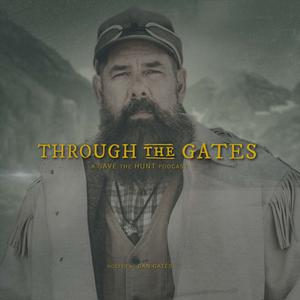
Daniel Gates: Well, we are here for another episode of Through the Gates, Through the Gates to Save the Hunt, and I'm sitting in the studio again mid-afternoon, and I was fortunate enough to be able to connect with Mr. Ryan Callahan. Cal from the Backcountry Hunters and Anglers. A lot of people know him from the meat eater side of things, which he's still involved in in some capacity. But Mr. Callahan has been a passionate and influential voice in the outdoor community for decades. Raised in the American West, he built his life around guiding, hunting, fishing, and exploring wild landscapes.
Sean Ender: Thanks for joining us for this episode of 3Dgates. For more content like this, make sure that you like, follow, and subscribe on all of our channels. The North American model of wildlife conservation is the greatest conservation model in the world. It's a success story that should be shared and celebrated because everybody is a part of it. and they can supply you with whatever you're looking to try to acquire and what you want to do for the hunt of a lifetime. For more information, check out the coloradooutfitters.org and make sure that you let them know that you heard about them through the gates and let them know that you're trying to continue to save the hunt in the state of Colorado. sheds for your property to store the extra hunting equipment, or maybe just to turn around and put that freezer in for all the meat that you've got, check out Colorado Sheds. They also do pole barns and can do custom manufacturing to whatever your heart desires. She sheds, man caves, it doesn't matter. Check out coloradosheds.com.
Daniel Gates: experiences that shaped his deep commitment to public lands, waters, and wildlife. Ryan, you and I know each other a little bit. We've dealt with each other on different levels, but give us a little bit of background and introduction to you for the people that don't know who you are. And if they don't, they haven't paid attention to who I am. So ⁓ the floor is yours, sir.
Ryan Callaghan: ⁓ sure. I boy, yeah. ⁓ born and raised Montana kid, big big family, been here for you know, since before Montana was a state. and we're we're spread all over the place, about half the the fam's in agriculture and the other half is ⁓ you know, they're on I guess you'd say the professional side of things. So a lot of diversity in of perspectives growing up. Which ⁓ means I'm I'm probably not good at a lot of things, but I have a little bit of experience, a little more experience than a lot of people in a lot of things. ⁓ from you know, ⁓ pulling calves to legal arguments and all sorts of things in between. But I ⁓ got really just so crazy drawn to the outdoors as ⁓ a little kid catching grasshoppers and and putting them underneath a bobber and watching them drift down down a stream. ⁓ that ⁓ I got into bird dogs and and big game and ⁓ spent a lot of years not getting anything and learning things on my own and and had a few great mentors on the way and and then got into guiting, ⁓ fishing and whitewater and big game and ⁓ and then filling in the the seasonal employment g gaps with anything. You know, never never said no to a job. So consequently I'd always had two or three different jobs and and then ⁓ ended up through that that guiding world working for the clothing company First Light and I was the first employee over there. ⁓ we were a three man team and ⁓ helped build the the conservation kind of component of of that business. So I think still to this day, if folks think about that First Light brand, they know that like public lands and First Light go together because you know that was the origin story for that whole brand was was bow hunting elk on public ground. And when ⁓ we were first kind of launching that ⁓ the presence of that brand that's coincided with a big public land sell-off attempt. And we were it was an interesting time because it was just way different than it is now, where ⁓ it seems like, and this is a really good thing, most hunting brands feel compelled to publicly weigh in and say what their stance is on, you know, public land issues. Things that affect our our customer base. And it's it's wild to think that just 10-15 years ago that was not the case. And there were all sorts of brands that were really involved in conservation and giving tons of money, but they weren't putting it out there For all the world to see across social media and taking a a public stance from a business perspective. And that's what ⁓ I was able to do with the First Light brand. And it really catapulted that that whole brand up into ⁓ into the the the spot that we always wanted to be, which is up there with with the other big technical apparel brands in the space. And then About seven years ago I went over to Meat Eater full time when they were just ⁓ coming over here to to Bozeman to establish themselves as as more than just a podcast and and TV show and ⁓ you know the meat eater brand now like ⁓ owns First Light and FHF and Dave Smith Decoys and Phelps Game Calls and ⁓ produces tons of podcasts and media and ⁓ keeps that news tempo going about our our natural resources. ⁓ and then most recently, back in January, I went over as the new president and CEO at Backcountry Hunters and Anglers. And I had been involved with BHA ⁓ for a long time as a volunteer and then as a board member. And you know, was drawn to that organization because they were so ⁓ upfront about public land and recreation on public land, and you know, lots of young members and just kind of a a different approach, not like the banquet model to conservation, but really getting ⁓ whoever wanted to sign up as a member to be you know, like a hands on part of conservation from the the advocacy point of view for for the most part. So showing up to fish and game meetings, showing up at the state to ⁓ represent hunting and fishing in front of your representatives and then up at the federal level as well. And I was just kind of blown away by that. And ⁓ kind of putting putting the power back in the people's hands, so so to speak. And and now that organization, we just got the Bureau of Land Management's Conservation Partner of the Year Award for our ⁓ stewardship work. So like the hands on side of BHA, where we primarily clear derelict fence on Bureau of Land Management land in migration corridors. So this is where It's human powered. Most of our contracts are where you're not gonna be driving heavy equipment or trucks. So it's coming out on people's backs ⁓ or on horses, and we're clearing fence and modifying fence in big game migration corridors. ⁓ so you know, very physical work, but has big impacts on the you know, the health of our big game critters and and you know, derelict fence out there is rough on everything, including our birds too. So ⁓ that's really cool to see like that side of of BHA taking off. So I like To see, like we have this advocacy side where we're getting people involved, ⁓ educating on issues in a non-partisan fashion. And then you can hit the button and weigh in, or ⁓ you can come do more, like I said, and and show up and testify in person in front of a committee. ⁓ and then on the stewardship side, there's you know, easy. low barrier to entry events like ⁓ public land cleanups, picking up trash, ⁓ at your shooting ranges, boat launches, stuff like that, WMAs, ⁓ on up through ⁓ juniper removal and ⁓ that fence modification and fence removal. So ⁓ lots lots going on and you know forty four chapters across North America. over thirty thousand members and ⁓ that number's ⁓ on the rise, which is awesome to see. And yeah, I mean it's it's a lot, damn. You know. You're out there doing this stuff too, so
Daniel Gates: ⁓ Yeah, but you but and you ⁓ you made a comment early on in your statement, Ryan, that you know, y you can pull calves and you can also, you know, like do political briefs and presentations. So you've been dealing with bullshit on both sides of the spectrum for your life, ⁓ to be able to turn around and and and deal deal with that. And and I gotta mention too, that that ⁓ not that it's bullshit, but it's might be kids shit that you've you've recently just added a an addition to your family.
Ryan Callaghan: Ha ha ha. ⁓ yeah. I we got a ⁓ as of Friday a month old baby boy and ⁓ and we got a a nine week old yellow lab in the house too, so
Daniel Gates: So so you just you just take it all at once, don't you?
Ryan Callaghan: As as as I tell my partner Sam, ⁓ if life were easy I'd find a way to make it hard. It's it's the comfortable times that make me uneasy. So
Daniel Gates: Yeah. I've I've said this many, many times. If if I'm gonna screw it up, I'm gonna really screw it up and and ⁓ I'm gonna take ownership of it. So hopefully if I if I make it good, I can really make it good, but sometimes those the screw ups and good ⁓ they they don't intersect at the same time. So it'd be like a big accident most of the time. So so so let me ask you, you you got involved on the meat eater side because what?
Ryan Callaghan: Exactly. ⁓ so you know, ⁓ First Light was a r a little tiny there's a lot of parallels between First Light and and BHA. First Light was a little tiny company that ⁓ all of a sudden everybody knew. And they assumed that we were way, way larger than we were. ⁓ BHA to this day, people Are shocked that we're as small as we are. ⁓ because I think we we punch above our weight class in in a lot of different areas. and we it was ha a lot of things happen at the same time. ⁓ a good buddy, two out of the three of us in the company didn't own a TV. ⁓ a friend of ours. Is like, hey, we're watching this show as a family. It's called The Wild Within, this guy, Steven Ranella. and the whole family loves it. You guys should reach out to this guy. And unbeknownst to me, my my boss, Kenton, had started doing that. And then a friend of mine who worked for National Wildlife Federation. ⁓ buddy of mine went I went to high school with, he called me and he's like, hey, I'm working on buffalo stuff with this guy who just wrote this book, American Buffalo, and he's got some sort of a TV show. I think you should talk to him. I think he has to get along. And they're they're the same dude, Steven Ronella. And ⁓ so
Daniel Gates: Mm-hmm.
Ryan Callaghan: My buddy got me hold got a hold of ⁓ Steve. I talked to him. He was super confused. He's like, well, there's this other guy talking to me. You know, I'm like, there's only three people in the company, right? It's like, how can you have miscommunication with three people? ⁓ but I was dating a gal back in Missoula at the same time. Steve was doing a book tour ⁓ for the launch of Meat Eater. And I
Daniel Gates: It's like Uhhuh.
Ryan Callaghan: ran up to Missoula really so I could take this gal on a date. ⁓ swung in there, met Steve. And Steve's like, well we're we're launching this new TV series. We've already been filming. And here's the things that I want to do. I was like, ⁓ okay, all that stuff sounds cool. And this was the first year that I hadn't guided. And I was really excited, right, to not guide and and use all the free time I could get to hunt for myself, which is not something you get to do when you're guiding, you know. ⁓ you gotta be like, man, do I pay all the bills that I've been that have been stacking up in my mailbox while I've been gone? Do all the laundry that's been stacking up.
Daniel Gates: Right.
Ryan Callaghan: ⁓ all the red adult things or do I go hunt in my day and a half in between clients coming in, right? That's guide life. And most of the time you're like, well, I'm gonna go hunt. ⁓ had several bench warrants for my arrest when I w would return home to Missoula for unpaid things. And then I'd I'd show up in front of the judge and be like, I've been in the woods. And they'd be like, We can see that. Are you gonna pay these today? And I'd be like, Yep. And that'd be the end of it. ⁓
Daniel Gates: Mm-hmm.
Ryan Callaghan: I'm sure some folks can relate to that one, but ⁓ maybe you can't. I don't know. But and so I took off and and took this gal ⁓ out to dinner, and and Steve kept out asking all these people that he's like, Well, who would be a good person to go do this with or do that with? ⁓ this hunt or that hunt or this, and they all were like, Well, you should talk to cow, you should talk to cow, you should talk to cow. And eventually he called.
Daniel Gates: So
Ryan Callaghan: And said, Apparently you're the guy to talk to. He's like, Would you be willing?
Daniel Gates: Did did you wash your clothes and are you in jail?
Ryan Callaghan: Right. Yeah. He's like, Would you be willing to, you know, come do this show with some first time hunters? And I was like, nope, I'm not. I'm really excited not to be guiding. ⁓ I got some guys that'd be interested, you know, I want to go do my my thing. And he's like, Okay, well, listen, there's they're not just any people, they're these comedians out of LA. And I was like, absolutely not. This is not something I want to be a part of. ⁓ but I have some friends that would and they'd be way better than me. And Steve was persistent, he was kind of getting pissed. It was like he's like, Well, one guy's Joe Rogan. And I was like, just this is not doing it for me. Like I Yep. And eventually we hit this point of impasse and
Daniel Gates: I don't care who he is.
Ryan Callaghan: Steve ended the phone call with I can he's like, Well I can find some other people too and I was like, Great and I turned to my friend and I said, Can you believe this guy won't take no for an answer? Wants me to go do this hunt, br Joe Rogan and Brian Callan and and doesn't it sound like a big pain in the ass? And and my buddy's like You know, you should re you should really do that. You need to make that happen.
Daniel Gates: So you're you're you're you're doing this clothing company, this ⁓ this accessory company here and y there's three of us and and ⁓ you want a guide and yeah, I could see where that would probably come in.
Ryan Callaghan: Right? Yeah, yeah. So so that's how that whole deal started. We went and did the Missouri Breaks episode, ⁓ with Joe Rogan and Brian Callan and and that was the most time I've ever ever spent with Steve ⁓ up there on on the Missouri and and yeah, when that thing wrapped up, everybody was super excited about it and and said, Well what else do you want to go do? And and I was guiding up in British Columbia ⁓ for really would just go up there for some spring black bear and then ⁓ but we had this area that was awesome for high mountain grizzly bears but you really had to hike to get up and do it and nobody everybody was so intimidated by this high country that ⁓ and you know, to get into the high country you gotta go through this BC jungle to get up into that alpine terrain. ⁓ and so folks would be like But you can kinda like drive around and see bears too, right? It's like, well yeah, but that's not what I was interested in. So having Ranella and the crew come up, that was really what ⁓ officially got us into that area because that was a crew that could really hike. ⁓
Daniel Gates: Mm-hmm.
Ryan Callaghan: And it was yeah, that I that whole high country up there just w forever have a spot in my heart 'cause it's just gorgeous and so wild and ⁓ the bears just behave like no place I've ever seen, you know. 'Cause even all the locals and hard hunting ⁓ truly backwoods folks, they'd they're like, Why the hell would you ever go up there?
Daniel Gates: Mm-hmm. Mm-hmm.
Ryan Callaghan: So it was just just a neat neat spot set aside up there, so
Daniel Gates: So when you when you were when you were going through all of this, did you I mean, since you had Bench warrants out for you and stuff and you were having to go somewhere to date a gal and and you you d didn't didn't want to deal anything with Joe Rogan or anybody, did you think that it would turn into where you sit right now? And how you got to where you're at and now you're, you know, the the lead guy, ⁓ for backcountry hunters and anglers. I mean, did you have aspirations to turn around and try to do political stuff or conservation type stuff or
Ryan Callaghan: No, I mean the reality is, right, I'm I'm a forty-three year old first time dad. ⁓ and and I've never had a plan, right? And and all I wanted to do, the only plan I had was to try to be outside, right? And and I wanted to have jobs that allowed me to be outside. So I I worked I framed and and ⁓
Daniel Gates: Mm-hmm. So
Ryan Callaghan: you know, picked up some some little jobs with like USGS and and, you know, dropped out of college 'cause my bird dog was super awesome and I was way more enamored with guiding. and the first light job didn't pay anything, but I did, you know, through not being social anywhere else and sacrificing on a lot of other things. I gotta spend a lot of time outside, ⁓ and call it work a lot of times. And, you know, when this that public land sell off attempt came around th the first time for me, That was just like a very clear, like, ⁓ my god, well we gotta do something. How do we how do we do this? And ⁓ I was in control of all the social media for the brand and wasn't was in charge of doing PR ⁓ in in addition to kind of running most of our sales at that point too. And ⁓ you know, the that got the brand so much traction as we already covered. ⁓ we knew it was making an impact.
Daniel Gates: Mm-hmm.
Ryan Callaghan: And then when we went over to the or when I went over to the meat eater side of things and and really the the the job was more about I guess being an an influencer, right? Like that's what they really wanted. That's kind of what pays the bills is making the podcasts and and making the shows. but Like I'm just not happy at all. Like I'm like, man, if I have this platform and the only thing I have to show for it is a bunch of dead critters on the wall at the end of this. Like I'm I'm just kinda like wasting my time here. And you know, y you gotta use that platform for to make the biggest change you can. And so I was always weighing in on
Daniel Gates: Mm-hmm.
Ryan Callaghan: issues like we'll like we'll talk about ⁓ today and and like the mountain lion ban or ⁓ public land sell off or access issues or ⁓ you know all the all the the threats to all the amazing things that just kinda got me to where I am, right? Like all I wanted to do was be outside and and just by consistently being that person, ⁓ I found my way into I've never had a bad job, but I found my way into a a better paying stable job that provided me some outside time. And ⁓ I d you know, I just wanted other people to have that opportunity. ⁓ they didn't need they don't need to take it, but I want ⁓ to have that access opportunity out to our public lands, waters, and wildlife and and maybe it'll do something good for them too. And eventually ⁓ you know, there are all these changes in in leadership and some slight changes in direction at BHA and and trying to influence that from a board position was hit or miss. And then we saw this huge public alliance sell-off and and budget reconciliation ⁓ over the summer and You know, I was just like eating and living and breathing this stuff. And when the board of BHA f came to me and and said, Hey, would you have an interest in throwing your hat in the ring for this CEO job? ⁓ you know, it was kind of caught me off guard 'cause I was I was trying to find somebody a lot better than I am and I have all these, you know, again, like I'm not ⁓ you know, professionally trained in this. ⁓ you know, do you want to see a guy just like curl up into a ball, try to have me build a Excel spreadsheet? You know, it just like doesn't some things just do not work, right? I got a lot of ⁓ gaps in the coverage, but ⁓ it just dawned on me like, ⁓ my God, this is exactly what I really want to do. Like this is my now I do have a plan. Right. And and a lot of the topics that you and I have talked about in the past, ⁓ the need for coalition building, the need for ⁓ representing hunting and fishing in a way that is educational, like shows people really who we are.
Daniel Gates: Mm-hmm.
Ryan Callaghan: And explains how the system of hunting and fishing really has provided for all these other recreational activities ⁓ and means of enjoyment of our public lands and natural resources. ⁓ the need to grow the the knowledge base of how. natural resources work in the United States and and remind people that it wasn't all that long ago that ⁓ people were like, you know, all this stuff is is basically gone and it's gonna be gone. So we need to pet we need to just plan for that. ⁓ but it was this system of self imposed and then a demand for federal and state regulations that is the only reason that we're having these fights on whether or not we get a hunt today. ⁓ all that stuff I have just such a passion for. And ⁓ I I say this tongue in cheek, but guys like you and I, Dan, we ⁓ it's a tough job, but we get to relax on the fact that we're right. And it's it's ⁓ hard to watch other folks try to come up with these crazy convoluted arguments as to why we shouldn't have these things, the ability to hunt and fish or go out on public lands, or that public lands shouldn't exist, or wilderness areas shouldn't exist. ⁓
Daniel Gates: Mm-hmm.
Ryan Callaghan: It's crazy to hear those arguments because they have to work so hard to make them make sense. Whereas on on our side of things, one of the biggest things we have going for us is just the fact that we're right. And it's a simple, simple argument on our side of things, but we gotta round up a bunch of people and and re-explain how we got here in order to ⁓ secure our ability to be right.
Daniel Gates: I think w I think that we're I mean, classifying us and the people that are trying to create a movement and cr trying to create traction and momentum are an an integral part of this process, but it's also incumbent on us to make sure I say us, like we're we're not in we're not on some pedestal or anything. I'm in about the same deal as you are. I can't I can't do an Excel spreadsheet. I mean hell, you know, until I until I got on the and onto the the Meat Eater podcast live in Denver ⁓ during 127 campaign, I'd never listened to a damn podcast. And now I'm now I'm doing the things and trying to run computers and do all the stuff. And that there's there's there's something that where you become institutionally knowledgeable About some subject matter that you have passion and and drive and a stewardship capability of. And I think, you know, you mentioned a lot when you were talking about trying to build coalitions and try to figure out who your allies and advocates are and not worry about the differences of opinions, so to speak, because I've been around people all my life, ranchers, and I've used this as an example in the past. And because you come from a ranching background, you could probably agree with this. A lot of ranchers that I know They know of their neighbors, but they don't necessarily get along with or they don't engage with. But if there's a fire or if there's a flood or if there's a snowstorm or if there's some sort of catastrophe, they all turn around and come together to be able to help the other one. They might not turn around and and talk to each other at weddings and funerals, or maybe they do. ⁓ but there's this coalition effort to where when you're screwing with one agriculture producer, typically you're screwing with all of ⁓ in that specific area. ⁓ same with sportsmen and women. And we just need to continually recognize that and make sure that people understand that, you know, ⁓ the the the cliche term that I built, and it's not that I made it up, I just turned around and try to coin it, but I'm a sportsman. ⁓ and I'm a sportsman that bow hunts and I'm a sportsman that muzzlow and hunts and I'm a sportsman that hikes and backpacks and does whatever. We have to have something to hang our hat on. And I think what BHA does and what you're exhibiting from what your perceptions are of being able to to say what you're doing and where you're coming from go along with that mentality and how that actually plays into what maybe what your life has got you to get to the point where you're forty-three years old.
Ryan Callaghan: Yeah, I ⁓ I think that that's a a great analogy really. ⁓ you know, we used to do like ⁓ rancher appreciation day for one of our antelope hunts every year because ⁓ inevitably we'd have clients out when it was time to gather, sort and ship and brand brand a couple of strays and ⁓ We would always make a point to bring our our group of clients out and a lot of them didn't like it at first. They thought we were kind of wasting some time ⁓ on their paid hunt. But they gotta see that first hand of like all of these people are are largely individuals throughout the whole rest of the year. But now they're coming together.
Daniel Gates: Mm-hmm. Mm-hmm. Mm-hmm. We done that. Yeah.
Ryan Callaghan: And bringing everybody in at the same time, ⁓ joining forces, the potluck component, the hot you know, hot coffee, lunch coming out, ⁓ the dirty job, the dangerous job of these, you know, wild ass rangeland cattle, real protective moms. And
Daniel Gates: Mm-hmm.
Ryan Callaghan: you know, the noise and the the shit and how old the people are that are really still busting their butt and putting themselves in in dangerous spots and and it was so eye-opening for you know every group that we ever got out there to do that. ⁓ and you know we'd we'd we would break off and be like, okay, now we gotta get these guys on some antelope. But they were just so blown away. And the old outfitter would always say, is like, now when you see that price tag on that ribeye at the at the store, ⁓ you know, you know why that is the way it is.
Daniel Gates: They start to understand pretty quick when they see it.
Ryan Callaghan: Yeah, yeah. but more specifically to your point, right, like you still can't pretend that all those people out there voted the exact same way or think the same thing or say the same thing at the dinner table every night. many of them didn't. And you know, you're talking about some some real rural parts of America where people end up in those places for a lot of different reasons, right? ⁓ and some of them have literally never left. One of the ranchers that that we worked with all the time, ⁓ you know, he left the the ranch. got on a plane for the first time when he was 70, because he had joined the electric co-op and it was negative 30 some degrees and whoever was on the co-op board was like, we're gonna have our annual meeting in Florida. Right? So at 70 whatever years old was the first time he got on a plane and and left the state. So yeah. ⁓
Daniel Gates: Been around those guys before.
Ryan Callaghan: And it is interesting, right? Because the pick your pick your issue, pick your your battle. ⁓ the job, it's almost like the job, right? Is to be like, okay, everybody who looks like Dan Gates acts this way, thinks this way, does these things. There's the nice tidy little box, right? And That way they can be like, okay, well, the bald-headed people, the cow characters, they do this. And if we can keep them separated and talk about them in separate terms enough, those two guys are gonna look at each other and be like, we're too different to work work together too. Right? And so ⁓ yeah, like won't
Daniel Gates: Yeah. Mm-hmm. Just like just like what the just like what they say, Cal, when when they turn around and try to put houndsmen against bird hunters that use dogs or or spin casting fishermen against fly fishermen.
Ryan Callaghan: Yep.
Daniel Gates: or whatever it is, it's like these separate segments of the population that are supposed to immediately hate each other like we're we're Denver Broncos fans and Raiders fans. ⁓ you know, you might hate each other at the football game, but but ⁓ when when it really comes down to it, you just both like football.
Ryan Callaghan: Right, right. Or do you hate each other so much that you just get rid of football altogether? Right? Because that's that is like the the clean the that's the question on the table, right? And ⁓ some of these things like we're working really hard on ⁓ so th the last Trump executive order on ⁓ OHBs.
Daniel Gates: Exactly.
Ryan Callaghan: That was, you know, like a lot of these orders that we've seen, ⁓ they're big statements, they're addressing ⁓ a big topic, but th the practical on the ground change may come in the future. It's it's not like right now. And this executive order ⁓ came out rescinding ⁓ a previous Nixon era and I want to say Carter era, OHB executive orders, unless there's a current travel management plan in place. And you know, it's I I I can't think of an area that doesn't have a current travel travel management plan. ⁓ but we saw some pretty immediate ⁓ poor use of ⁓ ⁓ the motor you know from from knuckleheads r trying to tear down gates or or all of a sudden try to get into places where motorized ⁓ are restricted in some form. And there's a a segment of, you know, the human-powered community, let's call it, that just wants to like throw stones at the entire Dirt bike riding world, that we're side by side riding world over this. And you know, I'm I'm screaming like you guys gotta pump the brakes yourselves. Because what is happening is is a couple of knuckleheads. You cannot let that those two people, those handful of people, represent the entire community. Because what that entire community brings to the table.
Daniel Gates: Mm-hmm.
Ryan Callaghan: is a part of our multi-use landscape. And through OHV stickers, they're paying for trails and campgrounds. And and at the end of the day, these are their public lands as well. And we need them fighting for these public lands, not feeling like ⁓ they don't have a seat at the table.
Daniel Gates: Well, and a lot of those might be consumptive use in the sense to where they buy a tag to be able to try to take something off the landscape, whether it's hunting or fishing or whatever. It's it's there's so much cross-pollination between these activities on public lands that you oughta think about in my mind, you know, I might disagree with somebody in California, I might disagree with somebody in New Hampshire, ⁓ I might I might adamantly oppose somebody in Georgia over something. But if a foreign country turns around and plants their flag and wants to turn around and come on the United States of America, I'm going to turn around and join forces with every one of them, unless they're all on that side. And I think that that's where this public land issue, this consumptive issue, the the ⁓ constitutional right to hunt and fish, ⁓ all the stuff that we talk about with IP twenty eight in Oregon, there's things that are attacking every single sector. But we often turn around and look and go, it's attacking me, but we don't acknowledge that that's the same thing as attacking that guy or that guy. gal over there. And if we're really gonna talk about the the assaults and the attacks on ways of life, on avocational pursuits, on livelihoods, on the ability to be able to make a living or be able to turn around and and utilize the resources that are available to us from a public land perspective that are appropriately managed or whatever. We we have to make sure that we don't divide and conquer ourselves unintentionally. And I think that you know what you're exhibiting and what I've seen you do Is try to bring some of that common sense and that levity and civility to the conversation to the point where it's not me against you. It's us against them. And there's a hell of a lot more of us on our side of the deal. It's just oftentimes we don't stand up appropriately or we don't turn around and recognize who our allies are and who our adversaries are.
Ryan Callaghan: Yeah, yeah, well said, right? We gotta push back on the politics and and focus on what the policy is gonna do. The policy's gonna affect us. And ⁓ you know, if if we saw that so much ⁓ during public lands reconciliation, right? Like the the disaffected ⁓ wanted to throw stones ⁓
Daniel Gates: Mm-hmm. Tremendously.
Ryan Callaghan: so badly at the conservative crowd because like, well, ⁓ it's the Republican side of the aisle that's doing this to us. You if you voted for Republican, you this is exactly what you want. And like you gotta throw that crap aside and focus on what that goal is. And it's like, do you want to win some trivial argument so badly
Daniel Gates: Mm-hmm.
Ryan Callaghan: That you're willing to let, you know, 200 million acres of public land go away and be privatized? Even though you just said that you're pro-public lands? It's like you know, we're so willing to cut our off our nose to spite our face. ⁓ and and I think it's partially like a sign of the times, like the the political situation has gotten so divided and divisive that unfortunately like all of us constituents kind of fall into that and it's very it's a very easy trap to get into. ⁓ which, you know, again, like as simple as I can say it, you just gotta focus on the policy, not the politics, and keep that goal in mind, right? Like if you want your hunting and your fishing Do you really w want to only fight that battle with the hunting and fishing crowd that voted the way that you voted? Or do you want to just win hunting and fishing? Right? Or or win that public lands battle. It's like and then once you're all talking together You know, it's like Well okay, maybe I'm I am gonna vote this way the next time. Or I'm you know, we're gonna ⁓ not see people make it through the primary that are crazy divisive. Maybe we can get this pendulum to start getting back towards center instead of feeling like it's whipping so hard it's gonna fly off the clock.
Daniel Gates: Ryan, let me let me ask you, d do you think from your perspective and and what you've played at, and you know, you've dealt with some fairly influential and affluent people, and you've you've testified in front of Congress and you've been been at different levels and different positions and and and become an influencer, ⁓ so to speak. I d I don't like the word, but I mean we o we we are if we're talking and trying to get people to understand perspectives and ⁓ and ideologies. But do you see where We we even are s as ourselves, may maybe members of BHA as an example, sometimes we segregate ourselves away from the things that are closest to us that we don't actually understand, that we don't really realize. I mean, it's not like every single BHA member is is a PhD in environmental science and nor is it an REF or NWTF or any other group, but we all got p personal perspectives and opinions. Do you see like the the oil and gas industry or the agriculture industry Do you see them having a wedge driven between them from the recreation side and from the public land side? And that maybe there's a chance that we have passed by and we haven't taken advantage of to have those people sit at the table and have these conversations.
Ryan Callaghan: ⁓ my god, Dan. Yeah. I think ⁓ you know, you all you have to do is look outside of America and and see like the path we're headed down is there's a lot of examples out there that that we can just point to right now. and the history is just like eerily similar if if we are l allow ourselves to go that way. So ⁓ within any membership organization in hook and bullet, I would say by and large, there's people who work in the extractive industry, right? And they're at those banquets for a reason. ⁓ they're showing up to do stewardship work for a reason. This is the stuff that they love to do when they're not on that oil rig or, you know, working up on the slope or whatever. ⁓ you can be a conservationist and work in in extractive use. Like we have many, many members within BHA that that will prove that over and over and over again. ⁓ I think the if you look right now at diesel fuel prices, ⁓ you know crazy inflation due to restricted goods and agriculture ⁓ such as ⁓ nitrogen and fertilizer as well as like the demands on the the private side of the fence ⁓ for ⁓ development of you pick it right data centers wind solar housing ⁓ even Recreational development for non-agriculture uses, I would put that as a threat too. ⁓ you know, we're losing two million acres of grasslands a year on the agricultural, the private agricultural side of things. That's one of the largest threats to conservation ⁓ in our lifetime, and it is happening at a crazy rapid rate. ⁓ if you put If you firmly put the agricultural community and the recreational community together as one lobbying group, there is just not a thing that we that we couldn't stop or promote. It would be an unstoppable force and there's so much overlap there.
Daniel Gates: Mm.
Ryan Callaghan: existing right and just very similar people people who like to be outside people who ⁓ appreciate and see themselves as stewards of the the landscape and the resources ⁓ you know tall grass makes fat cattle it also happens to be great habitat for mulley bucks and greater sage grouse right so ⁓ yeah I th I think we're we're not being proactive enough. ⁓ there's some times in conservation history where like ⁓ we did have some like unions at the table ⁓ and and things like that. And I think that would be part of it. But yeah, we need we need a a bigger coalition of just outside folks. And that would include ⁓ the agricultural community for sure. As well as ⁓ like I said, like making sure that advertising, right, in this day and age, people decide really fast and you need the buziest headline you can get if you want to be effective and get those clicks. And a lot of this stuff is cutting off your nose to spite the face as as far as like, let's be pragmatic and talk about responsible use of our ⁓ on the extractive side of the the aisle, right? Like ⁓ we do need oil and gas and ⁓ copper and you know the list goes on, right? We're all consumers of this stuff. And There's gonna be some places that are absolutely not because what we stand to lose we just cannot regenerate. Would not be renewable or responsible to develop there. But other areas, ⁓ you know, it's gonna be a hard decision there too, because you can't go chase a big bull on an active ⁓ coal mine. ⁓
Daniel Gates: Mm-hmm.
Ryan Callaghan: And that that little kid I keep thinking about isn't gonna be able to draw that tag. ⁓ there's gonna be other areas and eventually ⁓ we'll we'll have to rehab that that spot and a hundred years later that that little kid's offspring might have a bull tag in that spot. ⁓ but we have to look at this as like whole system from a holistic point of view.
Daniel Gates: Mm.
Ryan Callaghan: What that word renewable means and and keep it attached to responsible to, right? So from our perspective, when we were ⁓ and we're still talking about it, it's not over by a long shot, ⁓ but ⁓ the use of the Congressional Review Act to rescind the bound the mining moratorium in the Boundary Waters canoe area. ⁓ that's a touchy subject. Because it you know it brings jobs to an area that is rich with mining history. It's just not copper mining, it's iron mining, iron tachinite mining. and you're talking about you know, cutting a hole through water and it's gonna fill up with water, and there's just never been, ever been a copper sulfide mine ⁓ in this type of environment that doesn't leak. And what It leaks out is sulfuric acid. And we're talking about one of the largest freshwater reserves for this entire country, right? And if you look at private industry across the world, what is it investing in? Fresh water. And for America to be the biggest, strongest, proud nation that we all want it to be,
Daniel Gates: Mm-hmm.
Ryan Callaghan: we need to look at those things as strategic resources. And ⁓ boy, I'll I'll still stand up and tell anybody that ⁓ that that is a good example of a mind that should not be allowed to operate in that place because the benefit is not worth the gain. The return on investment for the American people is just not there for that specific spot. But if we can't do it there and we need copper, We're gonna need to make some sacrifices in other areas, right? Where that ROI is a little more balanced. And it's it's a tough gig. Sorry, I'm kinda on a soapbox there there, Dan.
Daniel Gates: Mm-hmm. No, you're no, it's good because I think it all transcends into a lot of the other stuff that we talked about and what we're what we're and w we have a limited amount of time. You you got a family life and can take care of and and and I told you I wouldn't take too much of your time and we can always circle back, you know, later in the summer when some of this stuff weeds out. Let's let's jump to IP twenty eight ⁓ in Oregon because what you're talking about what might not be good in the boundary waters, ⁓ this is not good for the state of Oregon. This isn't good for anybody if if it was to actually pass. Give us a little bit of perspective of what you and BAJ think about the animal sanctuary state of Oregon with the Peace Act of IP twenty eight.
Ryan Callaghan: ⁓ well, you know, firmly against. it's funny too, 'cause and maybe you set it up this way down, but right, it's it's also an attack on agriculture, ⁓ animal husbandry. ⁓ you're you're not gonna be able to do any sort of ⁓ meat.
Daniel Gates: Ha ha.
Ryan Callaghan: production, animal protein production in the state of of Oregon, if that were to were to pass on the agricultural side of things. And then on the hunting and fishing side of things, you know, there's n there's no way to hunt fish trap. ⁓ if that were to pass. So ⁓ There should be some some plenty of room for strategic alignment there. ⁓ this is a crazy one because it it's another ⁓ citizen-led initiative, which I think we should all agree that those at face value are a good tool to have for the citizenry in this country. however I I I think there's no way to look at this and think that the s signature gathering is being done ⁓ in a fair black and white, straightforward, ⁓ willing buyer, willing seller, so to speak, manner. Meaning that that signature gathering system is is being manipulated to achieve ⁓ An end that was predetermined. It's not being determined by the citizenry. Does that make sense?
Daniel Gates: Mm-hmm. ⁓ yeah. Yeah. And I th and I think when when they came up with that originally at IP three and then I think it was IP thirteen and then became I t I P twenty eight, ⁓ the majority of people thought that there was no way, shape, or form it was going to gain any traction. Well now they've they've met the threshold to get it on the ballot if all those signatures were certified. They're still trying to gather signatures as we speak. But If that was if that was to come to fruition, is that something in itself in a state like Oregon where you've got multiple organizations that are doing just what we do in every other state, is that enough to create that coalition that we started the conversation with to where they all could get on the same page because just like that rancher deal that well, we don't really socialize with each other until we're all under attack. Is that something that you see there could be a advocacy coalition that would come together and say enough is enough and you're not gonna do this?
Ryan Callaghan: Yeah, I mean I I I feel like ⁓ some of that is in in the works right now. ⁓ you know, certainly Certainly what ⁓ you're working on in Colorado for a constitutional right to hunt and fish is is part of that movement. But yeah, I don't know of like a specific there's gotta be many groups out there doing you know, putting on as many letter heads on the on one letter as possible right now. I know we've we've certainly signed on to a lot of letters on that too. ⁓ I mean there's there's so many issues right now that there is a lot of fragmentation versus focusing on one specific thing. and as you are well aware, for anybody involved in hunting and fishing, you it there's such an advantage to these groups attacking us this way because you can never take this stuff seriously, right? Like if you're involved in hunting and fishing, when when something like this pops up, you don't ever there's no part of you that would ever rationally think it would have a chance. And and that's like the the golden ticket for these groups right now in certain areas is like we we are way back on our heels versus being on our toes.
Daniel Gates: I think that they they also use these things as a fundraising mechanism to accomplish other things that maybe they want to do in incremental steps. ⁓ I mentioned before that what has happened in Oregon over the over the last multiple election cycles, Colorado's attempted do to to do under the the current gubernatorial administration. Only we've done it in incremental steps. Might be beaver harvest, might be mountain lions, might be bringing wolves in, might be pest control, might be prairie dogs, maybe it's lead ammunition. In Oregon they just said we're gonna d anything that has to do with anything, we're gonna turn around and put it in one big basket and I think they're gonna try to see how much they can get and then see what resonates with the general public, the target audience, and then how much money they raise off of it, and then they me might be able to go back to the Oregon Game Commission. Maybe they go back to the General Assembly, maybe they turn around and say, We just want this. The people we saw the people of Oregon didn't want all of this, but the polls indicated that they would accept this and they would accept that. And I think it It helps them build funding, it helps them build messaging and maybe they come back again with, you know, IP forty seven or whatever the hell it is the next go around. ⁓ but You know, the the statement of what we've done for the Colorado right to hunt and fish constitution, ⁓ constitutional amendment, is something to where, you know, the International Order of T. Roosevelt started this process under the the state of Florida, and there's the the Colorado would be the twenty fifth state that actually does this. It started in Vermont in seventeen seventy seven. It's about half of the country that agrees with this. Well, it's kind of like about half of everything that we deal with. Is some somebody's four and somebody's Against, do you see an opportunity with what we're dealing with with the constitutional right to hunt and fish to utilize that as a call to action or a sounding board for things that are coming down the pike at multiple levels with IP twenty-eight or maybe what's going on in Washington, or maybe with the Center for Biological Diversity in Arizona or whatever other states are having to deal with? Do you see it as a call to action to where states can say We might not be within the boundaries of the centennial state, but we need to support Colorado on the constitutional right. But at the same time we need to support defeating IP twenty eight. Because going back to that analogy, I know the ranch are down the road and we don't really socialize, but if there's a fire or a branding or a flood or something, we'll come to everybody else's everybody else's benefit. Do you see that happening?
Ryan Callaghan: ⁓ I mean unfortunately, like I don't see it happening other outside of like, you know, sharing social media posts. So I think the the benefit of of doing a big campaign on the right to hunt and fish, right, is making it huge and making it so overwhelmingly a win in the state of Colorado that it just ⁓ sets a ⁓ precedent or ⁓ a tone in the state where it's like, ⁓ my god, there is such a high mountain to climb in order to tear down any of this here, we should go look somewhere else. and you know that's that's the the biggest win. should other people be
Daniel Gates: Yes.
Ryan Callaghan: ⁓ invested in these fights outside of the state state issue, right? And that's like when we were talking mountain lions, right? That was that is a state issue, and it's hard for folks out of state to weigh in on certain things, with the exception of hunting and fishing, right? Because I tell people all the time: I'm like, you call and you say I got a conservation license. in Colorado, I apply for tags. I want to come spend my money there. ⁓ you do have a seat at the table because that's how those those ⁓ state agencies make their cash and and you have every right in the world to call a state representative and let them know your thoughts on this. ⁓ exact same thing in the state of Oregon, right? Like
Daniel Gates: Mm-hmm.
Ryan Callaghan: ⁓ i the fishery side of things alone would would cripple the state economy if this citizens initiative were to run all the way through, right? ⁓ the recreational fishing economy in Oregon is I I assume in in the billions of dollars. ⁓ and then yeah so there's
Daniel Gates: ⁓ yeah. Yeah.
Ryan Callaghan: Yeah, I there's there's so many reasons t to be involved in these things and paying attention. and you know, the way that we rallied around public land sell-off over the summer was so monumental that we were literally getting calls at BHA saying, please quit sending out action alerts. Like we get the message. But there's nothing our office can do right now outside of addressing this one thing. And we're in a state that doesn't even have public land, right? Like we were getting calls from all over. ⁓
Daniel Gates: Yeah. Yeah. It's like what are you telling us to do this for in New Hampshire or whatever, you know, maybe Rhode Island, I don't know. Yeah.
Ryan Callaghan: Yeah. Yeah, Iowa. So ⁓ you know, it it is effective and and you know, while we'd we push hard and do things like a constitutional right to hunt and fish, we also need to be thinking of of ways to move the needle in in other means, right? Which is like winning that significant chunk of the undecided middle of society of like, hey, this is what hunting and angling dollars do for your state. This is you know, who these people are. This is the whole how the whole system's set up. This is responsible use. And you're the benefit of it every single day. Every time you look out that window, ⁓ it's here because people who love to do this stuff.
Daniel Gates: Mm-hmm.
Ryan Callaghan: the stuff that you don't do, ⁓ demanded that it be here. And if it weren't for them, we wouldn't be having this conversation. Like that stuff would have been privatized and gone a a decade or a hundred years ago.
Daniel Gates: Do you so s Well we r we recognize all of us recognize, most of us recognize, I won't say all, 'cause of the when I say all, everybody says, You didn't ask everybody. Most of us recognize the need for messaging to the non hunting general audience. ⁓ but but in today's environment, a lot of our own side, I mean a lot of the BHA members, RMEF members, this SCI members, they need to be messaged to as well because they got into the hunting side of it. But they don't understand that honey now has become political and they got into the the hunting side of it, ⁓ the conservation side. But they didn't understand that it was controversial. And and trying to get people to understand the logistics of what it takes to be able to run a conservation advocacy organization in today's environment. With so many attacks from from so many different sectors, including different forms of government or or government agencies or animal rights extremist organizations or whatever. It doesn't matter who's who's the enemy. If somebody came to you, being the position that you're in with BHA, and I'm gonna ask this two-part question: they're a non-BHA member. And they say, I was considering joining your organization, but can you tell me, I'm a sportsman, why I should join BHA to be able to turn around and help the cause of what I think BHA is? ⁓ d mist Mr. Callahan, why should I join BHA?
Ryan Callaghan: cause we're working when you're not, essentially it right. That's that's like the easiest answer for a membership organization, right? When when I go to DC or we have a full-time government affairs person, Jack Palenis in DC, for federal issues. ⁓ we have members or staff that are at at the state house for the whole the whole session ⁓ while you're out working your job. And then we will also give you the tools, should you choose to use them, to go represent your local chapter or just hunting angling public lands at at the state or federal level too for ⁓ fly-in or a lobbying day at at the state capitol for on the advocacy side of things, right? and then yeah, we have a a long list of state and federal issues that that we've worked on on on your behalf that I guarantee you're not aware of and that's fine but sign up for the newsletter see what we're doing if you like what what's going on ⁓ become a member and then I can say we have you know thirty two thousand and one members that I'm working on behalf of today Sir or Madam. ⁓ and this is why I I'd appreciate ⁓ your your vote in this direction on this particular issue. That's kinda kinda how the membership program works.
Daniel Gates: Do you think it's pretty much the same, Ryan, with with Most of the other organizations, I mean there's a competitive nature to this because they're membership organizations and they become a machine themselves. And they've got their own individual sector wheelhouse that they deal in. But there's there's opportunities and you and I saw each other at the North American Conference in Columbus, Ohio in early April. I mean, you you sat around you sit you sit around and I know that you were there, sit around the AWCP meeting and that whole room is is filled with ⁓ suit and ties. Mm, I didn't wear one. You didn't wear one at that point in time, but a lot of suit and ties and Do you see a value in people wanting to get engaged in these capacities, either from an affiliate or a chapter or some sort of leadership position to where they can actually be partnered with organizations that are trying to do similar but different work to make sure that we're all lockstep in each other? Because you see the AWCP on the on the national level, but there's not a lot of coalitions on a state level or a regional level. There's a lot of people that work together at different things. Is there something that you
Ryan Callaghan: Yeah.
Daniel Gates: y you would like to tell potential BHA members or just sportsmen and and women in general about what is necessary if we're gonna continue this fight collectively and and collaboratively in perpetuity?
Ryan Callaghan: Yeah, so you need so right now there there's several states where we have a really good example of of either building the first ever or rebuilding, reinvigorating a sportsman's caucus. ⁓ right now we're we're ⁓ rebuilding a a kind of a long defunct one in the state of California and making a lot of really good good headway there. And ⁓ you know, if you think of states where there's a lot of threats to doing what we do, that's a good example in a lot of ways. And it has an incredible amount of opportunity for ⁓ hunting and angling. ⁓ and a lot of a lot of public land and public access to to public wildlife in that state. So we should we choose to keep it. so so that's an an example of of where we're like building one of these coalitions, right? Now ⁓ the the beauty of a of a coalition is when you slap that letter down on somebody's desk, they go, ⁓ god. Here's the one letter that represents all these different groups. And within that coalition, you want, kind of like you were talking about, like there's the suit and tie people, and there's the not suit and tie people, and any ⁓ commission or or ⁓ politician, they kind of do that categorization thing that we talked about, where it's like, okay. I heard from the hunters. That's checked off the list. I don't need to hear from any of those. ⁓ okay, now I heard from the anglers and now I heard from the houndsmen and I but for something like these citizens' initiatives too, like you need to hear from the plumbers and the teachers union and the cops and you know, you f find as many you kind of do the opposite of what we were talking about. You get as many slices of the pie, as granular as you can get, and you get them to be a part of the coalition and you're like, ⁓ no no, this has everybody on it. Right, and and it's vetted and valid and and here you go. And and that's a a huge huge deal. And putting those unlikely partners together is solid gold. Cause I've been in many rooms where And and I've I've heard this ⁓ directly after it after the fact, right? And I was like, Okay, yeah, I just heard from the BHA guy, and of course they're like this and and the ⁓ you know, quote unquote green group is like, ⁓ yeah, we're working on that with them. We we solidly behind that effort too. Right? And then all of a sudden They wanna go like, ⁓ okay, well, I'm gonna put you two in this little box and they go over and find somebody else to be like, ⁓ yeah, well they're working together on this and then they go they go, ⁓ well, you know, the teachers union's working on that too. Right? And all of a sudden they're like, They're the odd man out. And that's that's the it's funny, it's like schoolyard type you know, stuff that we're talking about here, but I I
Daniel Gates: Yeah.
Ryan Callaghan: I've had a lot of funny c ⁓ conversations ever since taking this job, a lot of which ⁓ have been from some of the farm and ranch community and and folks that I've I've known for a long time saying like, Well, okay, how you gonna screw us and how you gonna help us? And ⁓ it's it's it's always pretty interesting how on these individual bases you always have So much in common. And so much of what folks are riled up about is really way out on the periphery, or you know, just flat out ⁓ not accurate, right? It's like the meat and potato stuff, like the center of the Venn diagram. ⁓ we all typically want.
Daniel Gates: Mm-hmm. You you've got you've got forty-four chapters. Those are state chapters, correct? And and you do probably hundreds of events throughout the course of the year between those forty-four chapters. And do you ever partner with other entities or organizations with those or are they primarily just BHA type events?
Ryan Callaghan: Yeah, yeah. No, we will have and and you know that's something that we're pushing to spread a little bit further out this year, but nothing that we do is like truly exclusive. If if other groups are are interested in a in attending in in a variety of capacities, the door's pretty much always open. ⁓ we have there's always the ability to, you know, come table and and get in front of our audience and and let ⁓ know who you are and then some of our bigger projects always have ⁓ two or three other other groups driving ⁓ as well. So ⁓ lots of you know, there's only so much we can do with with limited staff. And so there's we we're always working with other groups, Dan.
Daniel Gates: And you and you rely on volunteerism and you rely on ⁓ dedication and enthusiasm from the people that are that are, you know, willing to turn around and dedicate whatever time it is, whether it's in the field or it's a pint night or it's some sort of other you know, I'm just looking here, rally ⁓ rally for the Rio Grande, Del Norte and Boon Embudo, New Mexico, ⁓ Oregon Partners and Conservation Expo and the three D archery chute. I mean you got th there's there's dozens and dozens of things that you guys are doing and that helps build that I think that coalition building mentality because a lot of the time people don't have anything in their general area or an REF banquet comes and goes and then they're doing their own thing. It's good to see that that coalescing of different organizations put different things together that people can engage in and maybe find their own little niche of what they want to do. Because I would I would venture to say, and I think it's worth saying, and and you probably are, I know that you're just not a member of BHA, but most sportsmen are probably members and get magazines for probably somewhere. Between five and thirteen different organizations on a monthly basis. And because we all support each other, but it's funny that we all don't necessarily turn around and go testify or write a letter on behalf of whatever we do. We already identify ourselves as I'm a bow hunter or I'm a BHA member or I'm a trapper or I'm a houndsman. It's because that's what really draws our attention to that specific that middle of the road deal. But we're we're all a bunch of everything. And I think that that's one of the interesting.
Ryan Callaghan: Yeah. Yeah.
Daniel Gates: Interesting things is an animal rights activist is an animal rights activist. They that's what they do. They want all of those other things that we're talking about to be gone.
Ryan Callaghan: Coalition and and just community, right? Like a lot of what we do is is try to have low barrier to entry events. ⁓ you know, the the not banquet model is it because we want to make sure that people aren't falling through the cracks. And you know, you make something family fr friendly. ⁓ you have a space for for beer at the end of a long day, ⁓ and you make sure it's it's
Daniel Gates: Mm-hmm.
Ryan Callaghan: open to everybody and our like our stewardship events the way that they're run is is like magical right so we cast a really wide net you're gonna see sign up sheets at you know REIs sportsman's warehouse you name it and we will get a mix of people out there who want to go do a good thing on our public lands for public wildlife and a lot of those folks don't hunt And what we do, right, is we'll we'll do a little education. We typically have some sort of wild game food for either the the night before or the the closing day of the stewardship work. And ⁓ Britt Parker there in Colorado, she'll tell you that they have a lot of recurring stewardship volunteers that Are non-hunters, they donate to BHA, and they are just enamored with the really good people that they find at these stewardship events. And you know, and like those aren't people that are gonna be voting against the right to hunt and fish, right? But they're also not participating in hunting and fishing. It's like what could be better than that?
Daniel Gates: Mm-hmm. Right. Well and and I think that that's a that's a prime example of of how all these organizations can work together to talk to the masses that are not hunters and anglers and they're not animal rights extremists. It's that middle of the road, it's probably somewhere in the neighborhood of 75 to 80% of the entire general population, that that they don't want it to be degraded and eroded. They don't want it to be abused, but they really don't have skin in the game unless somebody tells them this is a tragedy or this is something that needs to be propped up and supported, and then they can make their own decision on that. And I often say what we deal with in Colorado and I think it's nationwide, if there's ten percent on each side of the spectrum and there's eighty percent in the middle, I don't need the eighty percent. I need fifth forty one of the eighty percent to get to fifty one, because I've already got my ten. And but I think it's far more reaching than that because if you look at the statistics, ninety four percent of all people in the state of Colorado, I imagine it's similar in Montana and stuff, engage in some sort of outdoor recreation. It might be mountain biking, hang gliding, dog walking, geocaching, hunting, fishing, whatever. But 93 or 94% of people also are consumptive users when they eat meat. They are eating, they are carnivores, herbivores, something. They're not animal rights vegans. And there's there's this there's this component there. There's a lot of people that do things for a lot of different reasons, but when you're trying to change policy and you're trying to change the stewardship opportunities or natural resources and our public lands, I think it's a travesty just to be able to turn around and leave a box on the side of a ballot. and say check yes or no on this and that's how we're gonna g govern and manage our wildlife and natural resources.
Ryan Callaghan: Yeah, and and that's part of that proactive piece that we need to figure out, right? Is is I think it it's very, very obvious that there needs to be some sort of guardrails on what a citizens initiative can can affect. And I mean it's wild to me that you can have non participants dictate how other people live their lives, right? So, you know, I I know there's there's some folks working on that in the state of Colorado and elsewhere. ⁓ I haven't seen any any current text on you know amendments to the citizens initiative process, but that that is that is work to be done out there.
Daniel Gates: Ryan, I'll go ahead and s get ready to start wrapping it up. You got things to do. ⁓ I would like to continue this conversation as we get through this process and maybe see how IP actually plays out with the signatures and what Colorado does to when we get our signatures and we start actually doing the campaign. And ⁓ I know this is something that's gonna you know, probably get underneath your saddle as well with the constitutional right to hunt and fish. We're gonna all be watching IP twenty eight. And ⁓ is there any any parting shots you'd like to say about how we Need to engage or what people need to do to be able to turn around and make sure that we hold on to what we have land-wise, wildlife-wise, and habitat-wise?
Ryan Callaghan: Yeah, I d you know, the time is right now. Like it's very, very obviously right now. ⁓ any any way you slice it, ⁓ there's a lot of moving pieces and it it's going to take populist participation. So ⁓ don't don't go thinking I'm gonna wait until things get more serious. ⁓ if it's not in your backyard right now, it could be in your backyard tomorrow. So when these things pop up in Colorado, Montana, Oregon, wherever, ⁓ you you have the ability to write in, call in, make, you know, write an ob ed op ed and submit it. Sign up for these newsletters, be educated, hit those action alerts, and you know, grab grab memberships where you can. They're not expensive. And it really is an investment in your habitat, your public lands, public waters, public wildlife, access to those things. ⁓ and what you get in return, your return on investment for your membership dollars is you get people working on your behalf. A lot of times though, we need you to step back in and send that email, ⁓ make that phone call, hit that action alert, ⁓ to back up what we're saying in those in those offices. So participate right now. Don't don't wait. ⁓ there there's gonna be somebody lobbying out there, and they may you may not like what they have to say.
Daniel Gates: Ryan, I I really appreciate your taking the time and getting away from your your newborn or the mo one month old and and dealing with your nine week old puppy. I don't know how the hell you would do either one of them at the same time. ⁓ but
Ryan Callaghan: Consistently, Dan.
Daniel Gates: I appreciate your friendship. Yeah, yeah. Yeah. It's a it's it's intensity and endurance all wrapped up in one, isn't it? So well and and and I look forward to having further conversations and figure out a a way to continue to build on these coalition efforts because I think ⁓ whether somebody's in a leadership position or a mentorship position, ⁓ we need to turn around and build those bridges and make sure that people that are at least
Ryan Callaghan: It is. It really is. Yep.
Daniel Gates: similar on our ideologies of what we're trying to do from a conservation and advocacy perspective, have a roadmap and a playbook to be able to follow to make sure that we all, you know, hold the line for future generations because we can't get that if we don't turn around and save or at least hold the line on what we have right now. So appreciate the opportunity to talk to you and look forward to getting together again. So thank you, sir.
Ryan Callaghan: Thanks a bunch, Dan.
Daniel Gates: Another episode of Through the Gates, Through the Gates to save the hunt. Ryan Callahan with Backcountry Hunters and Anglers, and make sure you check out what they are doing on their end and keep apprised of what we're doing with CRWM and all of our partnerships and coalitions that we're doing on the constitutional right to hunt and fish. And keep the people in Oregon in mind too on IP twenty-eight. And just pay attention to your particular state or region when it comes to stewardship, conservation, and hunting and fishing issues. Until next time, aim small, miss small, and stay the course. Thanks, Ryan.
Daniel Gates: Well, we are here for another episode of Through the Gates, Through the Gates to Save the Hunt, and I'm sitting in the studio again mid-afternoon, and I was fortunate enough to be able to connect with Mr. Ryan Callahan. Cal from the Backcountry Hunters and Anglers. A lot of people know him from the meat eater side of things, which he's still involved in in some capacity. But Mr. Callahan has been a passionate and influential voice in the outdoor community for decades. Raised in the American West, he built his life around guiding, hunting, fishing, and exploring wild landscapes.
Sean Ender: Thanks for joining us for this episode of 3Dgates. For more content like this, make sure that you like, follow, and subscribe on all of our channels. The North American model of wildlife conservation is the greatest conservation model in the world. It's a success story that should be shared and celebrated because everybody is a part of it. and they can supply you with whatever you're looking to try to acquire and what you want to do for the hunt of a lifetime. For more information, check out the coloradooutfitters.org and make sure that you let them know that you heard about them through the gates and let them know that you're trying to continue to save the hunt in the state of Colorado. sheds for your property to store the extra hunting equipment, or maybe just to turn around and put that freezer in for all the meat that you've got, check out Colorado Sheds. They also do pole barns and can do custom manufacturing to whatever your heart desires. She sheds, man caves, it doesn't matter. Check out coloradosheds.com.
Daniel Gates: experiences that shaped his deep commitment to public lands, waters, and wildlife. Ryan, you and I know each other a little bit. We've dealt with each other on different levels, but give us a little bit of background and introduction to you for the people that don't know who you are. And if they don't, they haven't paid attention to who I am. So ⁓ the floor is yours, sir.
Ryan Callaghan: ⁓ sure. I boy, yeah. ⁓ born and raised Montana kid, big big family, been here for you know, since before Montana was a state. and we're we're spread all over the place, about half the the fam's in agriculture and the other half is ⁓ you know, they're on I guess you'd say the professional side of things. So a lot of diversity in of perspectives growing up. Which ⁓ means I'm I'm probably not good at a lot of things, but I have a little bit of experience, a little more experience than a lot of people in a lot of things. ⁓ from you know, ⁓ pulling calves to legal arguments and all sorts of things in between. But I ⁓ got really just so crazy drawn to the outdoors as ⁓ a little kid catching grasshoppers and and putting them underneath a bobber and watching them drift down down a stream. ⁓ that ⁓ I got into bird dogs and and big game and ⁓ spent a lot of years not getting anything and learning things on my own and and had a few great mentors on the way and and then got into guiting, ⁓ fishing and whitewater and big game and ⁓ and then filling in the the seasonal employment g gaps with anything. You know, never never said no to a job. So consequently I'd always had two or three different jobs and and then ⁓ ended up through that that guiding world working for the clothing company First Light and I was the first employee over there. ⁓ we were a three man team and ⁓ helped build the the conservation kind of component of of that business. So I think still to this day, if folks think about that First Light brand, they know that like public lands and First Light go together because you know that was the origin story for that whole brand was was bow hunting elk on public ground. And when ⁓ we were first kind of launching that ⁓ the presence of that brand that's coincided with a big public land sell-off attempt. And we were it was an interesting time because it was just way different than it is now, where ⁓ it seems like, and this is a really good thing, most hunting brands feel compelled to publicly weigh in and say what their stance is on, you know, public land issues. Things that affect our our customer base. And it's it's wild to think that just 10-15 years ago that was not the case. And there were all sorts of brands that were really involved in conservation and giving tons of money, but they weren't putting it out there For all the world to see across social media and taking a a public stance from a business perspective. And that's what ⁓ I was able to do with the First Light brand. And it really catapulted that that whole brand up into ⁓ into the the the spot that we always wanted to be, which is up there with with the other big technical apparel brands in the space. And then About seven years ago I went over to Meat Eater full time when they were just ⁓ coming over here to to Bozeman to establish themselves as as more than just a podcast and and TV show and ⁓ you know the meat eater brand now like ⁓ owns First Light and FHF and Dave Smith Decoys and Phelps Game Calls and ⁓ produces tons of podcasts and media and ⁓ keeps that news tempo going about our our natural resources. ⁓ and then most recently, back in January, I went over as the new president and CEO at Backcountry Hunters and Anglers. And I had been involved with BHA ⁓ for a long time as a volunteer and then as a board member. And you know, was drawn to that organization because they were so ⁓ upfront about public land and recreation on public land, and you know, lots of young members and just kind of a a different approach, not like the banquet model to conservation, but really getting ⁓ whoever wanted to sign up as a member to be you know, like a hands on part of conservation from the the advocacy point of view for for the most part. So showing up to fish and game meetings, showing up at the state to ⁓ represent hunting and fishing in front of your representatives and then up at the federal level as well. And I was just kind of blown away by that. And ⁓ kind of putting putting the power back in the people's hands, so so to speak. And and now that organization, we just got the Bureau of Land Management's Conservation Partner of the Year Award for our ⁓ stewardship work. So like the hands on side of BHA, where we primarily clear derelict fence on Bureau of Land Management land in migration corridors. So this is where It's human powered. Most of our contracts are where you're not gonna be driving heavy equipment or trucks. So it's coming out on people's backs ⁓ or on horses, and we're clearing fence and modifying fence in big game migration corridors. ⁓ so you know, very physical work, but has big impacts on the you know, the health of our big game critters and and you know, derelict fence out there is rough on everything, including our birds too. So ⁓ that's really cool to see like that side of of BHA taking off. So I like To see, like we have this advocacy side where we're getting people involved, ⁓ educating on issues in a non-partisan fashion. And then you can hit the button and weigh in, or ⁓ you can come do more, like I said, and and show up and testify in person in front of a committee. ⁓ and then on the stewardship side, there's you know, easy. low barrier to entry events like ⁓ public land cleanups, picking up trash, ⁓ at your shooting ranges, boat launches, stuff like that, WMAs, ⁓ on up through ⁓ juniper removal and ⁓ that fence modification and fence removal. So ⁓ lots lots going on and you know forty four chapters across North America. over thirty thousand members and ⁓ that number's ⁓ on the rise, which is awesome to see. And yeah, I mean it's it's a lot, damn. You know. You're out there doing this stuff too, so
Daniel Gates: ⁓ Yeah, but you but and you ⁓ you made a comment early on in your statement, Ryan, that you know, y you can pull calves and you can also, you know, like do political briefs and presentations. So you've been dealing with bullshit on both sides of the spectrum for your life, ⁓ to be able to turn around and and and deal deal with that. And and I gotta mention too, that that ⁓ not that it's bullshit, but it's might be kids shit that you've you've recently just added a an addition to your family.
Ryan Callaghan: Ha ha ha. ⁓ yeah. I we got a ⁓ as of Friday a month old baby boy and ⁓ and we got a a nine week old yellow lab in the house too, so
Daniel Gates: So so you just you just take it all at once, don't you?
Ryan Callaghan: As as as I tell my partner Sam, ⁓ if life were easy I'd find a way to make it hard. It's it's the comfortable times that make me uneasy. So
Daniel Gates: Yeah. I've I've said this many, many times. If if I'm gonna screw it up, I'm gonna really screw it up and and ⁓ I'm gonna take ownership of it. So hopefully if I if I make it good, I can really make it good, but sometimes those the screw ups and good ⁓ they they don't intersect at the same time. So it'd be like a big accident most of the time. So so so let me ask you, you you got involved on the meat eater side because what?
Ryan Callaghan: Exactly. ⁓ so you know, ⁓ First Light was a r a little tiny there's a lot of parallels between First Light and and BHA. First Light was a little tiny company that ⁓ all of a sudden everybody knew. And they assumed that we were way, way larger than we were. ⁓ BHA to this day, people Are shocked that we're as small as we are. ⁓ because I think we we punch above our weight class in in a lot of different areas. and we it was ha a lot of things happen at the same time. ⁓ a good buddy, two out of the three of us in the company didn't own a TV. ⁓ a friend of ours. Is like, hey, we're watching this show as a family. It's called The Wild Within, this guy, Steven Ranella. and the whole family loves it. You guys should reach out to this guy. And unbeknownst to me, my my boss, Kenton, had started doing that. And then a friend of mine who worked for National Wildlife Federation. ⁓ buddy of mine went I went to high school with, he called me and he's like, hey, I'm working on buffalo stuff with this guy who just wrote this book, American Buffalo, and he's got some sort of a TV show. I think you should talk to him. I think he has to get along. And they're they're the same dude, Steven Ronella. And ⁓ so
Daniel Gates: Mm-hmm.
Ryan Callaghan: My buddy got me hold got a hold of ⁓ Steve. I talked to him. He was super confused. He's like, well, there's this other guy talking to me. You know, I'm like, there's only three people in the company, right? It's like, how can you have miscommunication with three people? ⁓ but I was dating a gal back in Missoula at the same time. Steve was doing a book tour ⁓ for the launch of Meat Eater. And I
Daniel Gates: It's like Uhhuh.
Ryan Callaghan: ran up to Missoula really so I could take this gal on a date. ⁓ swung in there, met Steve. And Steve's like, well we're we're launching this new TV series. We've already been filming. And here's the things that I want to do. I was like, ⁓ okay, all that stuff sounds cool. And this was the first year that I hadn't guided. And I was really excited, right, to not guide and and use all the free time I could get to hunt for myself, which is not something you get to do when you're guiding, you know. ⁓ you gotta be like, man, do I pay all the bills that I've been that have been stacking up in my mailbox while I've been gone? Do all the laundry that's been stacking up.
Daniel Gates: Right.
Ryan Callaghan: ⁓ all the red adult things or do I go hunt in my day and a half in between clients coming in, right? That's guide life. And most of the time you're like, well, I'm gonna go hunt. ⁓ had several bench warrants for my arrest when I w would return home to Missoula for unpaid things. And then I'd I'd show up in front of the judge and be like, I've been in the woods. And they'd be like, We can see that. Are you gonna pay these today? And I'd be like, Yep. And that'd be the end of it. ⁓
Daniel Gates: Mm-hmm.
Ryan Callaghan: I'm sure some folks can relate to that one, but ⁓ maybe you can't. I don't know. But and so I took off and and took this gal ⁓ out to dinner, and and Steve kept out asking all these people that he's like, Well, who would be a good person to go do this with or do that with? ⁓ this hunt or that hunt or this, and they all were like, Well, you should talk to cow, you should talk to cow, you should talk to cow. And eventually he called.
Daniel Gates: So
Ryan Callaghan: And said, Apparently you're the guy to talk to. He's like, Would you be willing?
Daniel Gates: Did did you wash your clothes and are you in jail?
Ryan Callaghan: Right. Yeah. He's like, Would you be willing to, you know, come do this show with some first time hunters? And I was like, nope, I'm not. I'm really excited not to be guiding. ⁓ I got some guys that'd be interested, you know, I want to go do my my thing. And he's like, Okay, well, listen, there's they're not just any people, they're these comedians out of LA. And I was like, absolutely not. This is not something I want to be a part of. ⁓ but I have some friends that would and they'd be way better than me. And Steve was persistent, he was kind of getting pissed. It was like he's like, Well, one guy's Joe Rogan. And I was like, just this is not doing it for me. Like I Yep. And eventually we hit this point of impasse and
Daniel Gates: I don't care who he is.
Ryan Callaghan: Steve ended the phone call with I can he's like, Well I can find some other people too and I was like, Great and I turned to my friend and I said, Can you believe this guy won't take no for an answer? Wants me to go do this hunt, br Joe Rogan and Brian Callan and and doesn't it sound like a big pain in the ass? And and my buddy's like You know, you should re you should really do that. You need to make that happen.
Daniel Gates: So you're you're you're you're doing this clothing company, this ⁓ this accessory company here and y there's three of us and and ⁓ you want a guide and yeah, I could see where that would probably come in.
Ryan Callaghan: Right? Yeah, yeah. So so that's how that whole deal started. We went and did the Missouri Breaks episode, ⁓ with Joe Rogan and Brian Callan and and that was the most time I've ever ever spent with Steve ⁓ up there on on the Missouri and and yeah, when that thing wrapped up, everybody was super excited about it and and said, Well what else do you want to go do? And and I was guiding up in British Columbia ⁓ for really would just go up there for some spring black bear and then ⁓ but we had this area that was awesome for high mountain grizzly bears but you really had to hike to get up and do it and nobody everybody was so intimidated by this high country that ⁓ and you know, to get into the high country you gotta go through this BC jungle to get up into that alpine terrain. ⁓ and so folks would be like But you can kinda like drive around and see bears too, right? It's like, well yeah, but that's not what I was interested in. So having Ranella and the crew come up, that was really what ⁓ officially got us into that area because that was a crew that could really hike. ⁓
Daniel Gates: Mm-hmm.
Ryan Callaghan: And it was yeah, that I that whole high country up there just w forever have a spot in my heart 'cause it's just gorgeous and so wild and ⁓ the bears just behave like no place I've ever seen, you know. 'Cause even all the locals and hard hunting ⁓ truly backwoods folks, they'd they're like, Why the hell would you ever go up there?
Daniel Gates: Mm-hmm. Mm-hmm.
Ryan Callaghan: So it was just just a neat neat spot set aside up there, so
Daniel Gates: So when you when you were when you were going through all of this, did you I mean, since you had Bench warrants out for you and stuff and you were having to go somewhere to date a gal and and you you d didn't didn't want to deal anything with Joe Rogan or anybody, did you think that it would turn into where you sit right now? And how you got to where you're at and now you're, you know, the the lead guy, ⁓ for backcountry hunters and anglers. I mean, did you have aspirations to turn around and try to do political stuff or conservation type stuff or
Ryan Callaghan: No, I mean the reality is, right, I'm I'm a forty-three year old first time dad. ⁓ and and I've never had a plan, right? And and all I wanted to do, the only plan I had was to try to be outside, right? And and I wanted to have jobs that allowed me to be outside. So I I worked I framed and and ⁓
Daniel Gates: Mm-hmm. So
Ryan Callaghan: you know, picked up some some little jobs with like USGS and and, you know, dropped out of college 'cause my bird dog was super awesome and I was way more enamored with guiding. and the first light job didn't pay anything, but I did, you know, through not being social anywhere else and sacrificing on a lot of other things. I gotta spend a lot of time outside, ⁓ and call it work a lot of times. And, you know, when this that public land sell off attempt came around th the first time for me, That was just like a very clear, like, ⁓ my god, well we gotta do something. How do we how do we do this? And ⁓ I was in control of all the social media for the brand and wasn't was in charge of doing PR ⁓ in in addition to kind of running most of our sales at that point too. And ⁓ you know, the that got the brand so much traction as we already covered. ⁓ we knew it was making an impact.
Daniel Gates: Mm-hmm.
Ryan Callaghan: And then when we went over to the or when I went over to the meat eater side of things and and really the the the job was more about I guess being an an influencer, right? Like that's what they really wanted. That's kind of what pays the bills is making the podcasts and and making the shows. but Like I'm just not happy at all. Like I'm like, man, if I have this platform and the only thing I have to show for it is a bunch of dead critters on the wall at the end of this. Like I'm I'm just kinda like wasting my time here. And you know, y you gotta use that platform for to make the biggest change you can. And so I was always weighing in on
Daniel Gates: Mm-hmm.
Ryan Callaghan: issues like we'll like we'll talk about ⁓ today and and like the mountain lion ban or ⁓ public land sell off or access issues or ⁓ you know all the all the the threats to all the amazing things that just kinda got me to where I am, right? Like all I wanted to do was be outside and and just by consistently being that person, ⁓ I found my way into I've never had a bad job, but I found my way into a a better paying stable job that provided me some outside time. And ⁓ I d you know, I just wanted other people to have that opportunity. ⁓ they didn't need they don't need to take it, but I want ⁓ to have that access opportunity out to our public lands, waters, and wildlife and and maybe it'll do something good for them too. And eventually ⁓ you know, there are all these changes in in leadership and some slight changes in direction at BHA and and trying to influence that from a board position was hit or miss. And then we saw this huge public alliance sell-off and and budget reconciliation ⁓ over the summer and You know, I was just like eating and living and breathing this stuff. And when the board of BHA f came to me and and said, Hey, would you have an interest in throwing your hat in the ring for this CEO job? ⁓ you know, it was kind of caught me off guard 'cause I was I was trying to find somebody a lot better than I am and I have all these, you know, again, like I'm not ⁓ you know, professionally trained in this. ⁓ you know, do you want to see a guy just like curl up into a ball, try to have me build a Excel spreadsheet? You know, it just like doesn't some things just do not work, right? I got a lot of ⁓ gaps in the coverage, but ⁓ it just dawned on me like, ⁓ my God, this is exactly what I really want to do. Like this is my now I do have a plan. Right. And and a lot of the topics that you and I have talked about in the past, ⁓ the need for coalition building, the need for ⁓ representing hunting and fishing in a way that is educational, like shows people really who we are.
Daniel Gates: Mm-hmm.
Ryan Callaghan: And explains how the system of hunting and fishing really has provided for all these other recreational activities ⁓ and means of enjoyment of our public lands and natural resources. ⁓ the need to grow the the knowledge base of how. natural resources work in the United States and and remind people that it wasn't all that long ago that ⁓ people were like, you know, all this stuff is is basically gone and it's gonna be gone. So we need to pet we need to just plan for that. ⁓ but it was this system of self imposed and then a demand for federal and state regulations that is the only reason that we're having these fights on whether or not we get a hunt today. ⁓ all that stuff I have just such a passion for. And ⁓ I I say this tongue in cheek, but guys like you and I, Dan, we ⁓ it's a tough job, but we get to relax on the fact that we're right. And it's it's ⁓ hard to watch other folks try to come up with these crazy convoluted arguments as to why we shouldn't have these things, the ability to hunt and fish or go out on public lands, or that public lands shouldn't exist, or wilderness areas shouldn't exist. ⁓
Daniel Gates: Mm-hmm.
Ryan Callaghan: It's crazy to hear those arguments because they have to work so hard to make them make sense. Whereas on on our side of things, one of the biggest things we have going for us is just the fact that we're right. And it's a simple, simple argument on our side of things, but we gotta round up a bunch of people and and re-explain how we got here in order to ⁓ secure our ability to be right.
Daniel Gates: I think w I think that we're I mean, classifying us and the people that are trying to create a movement and cr trying to create traction and momentum are an an integral part of this process, but it's also incumbent on us to make sure I say us, like we're we're not in we're not on some pedestal or anything. I'm in about the same deal as you are. I can't I can't do an Excel spreadsheet. I mean hell, you know, until I until I got on the and onto the the Meat Eater podcast live in Denver ⁓ during 127 campaign, I'd never listened to a damn podcast. And now I'm now I'm doing the things and trying to run computers and do all the stuff. And that there's there's there's something that where you become institutionally knowledgeable About some subject matter that you have passion and and drive and a stewardship capability of. And I think, you know, you mentioned a lot when you were talking about trying to build coalitions and try to figure out who your allies and advocates are and not worry about the differences of opinions, so to speak, because I've been around people all my life, ranchers, and I've used this as an example in the past. And because you come from a ranching background, you could probably agree with this. A lot of ranchers that I know They know of their neighbors, but they don't necessarily get along with or they don't engage with. But if there's a fire or if there's a flood or if there's a snowstorm or if there's some sort of catastrophe, they all turn around and come together to be able to help the other one. They might not turn around and and talk to each other at weddings and funerals, or maybe they do. ⁓ but there's this coalition effort to where when you're screwing with one agriculture producer, typically you're screwing with all of ⁓ in that specific area. ⁓ same with sportsmen and women. And we just need to continually recognize that and make sure that people understand that, you know, ⁓ the the the cliche term that I built, and it's not that I made it up, I just turned around and try to coin it, but I'm a sportsman. ⁓ and I'm a sportsman that bow hunts and I'm a sportsman that muzzlow and hunts and I'm a sportsman that hikes and backpacks and does whatever. We have to have something to hang our hat on. And I think what BHA does and what you're exhibiting from what your perceptions are of being able to to say what you're doing and where you're coming from go along with that mentality and how that actually plays into what maybe what your life has got you to get to the point where you're forty-three years old.
Ryan Callaghan: Yeah, I ⁓ I think that that's a a great analogy really. ⁓ you know, we used to do like ⁓ rancher appreciation day for one of our antelope hunts every year because ⁓ inevitably we'd have clients out when it was time to gather, sort and ship and brand brand a couple of strays and ⁓ We would always make a point to bring our our group of clients out and a lot of them didn't like it at first. They thought we were kind of wasting some time ⁓ on their paid hunt. But they gotta see that first hand of like all of these people are are largely individuals throughout the whole rest of the year. But now they're coming together.
Daniel Gates: Mm-hmm. Mm-hmm. Mm-hmm. We done that. Yeah.
Ryan Callaghan: And bringing everybody in at the same time, ⁓ joining forces, the potluck component, the hot you know, hot coffee, lunch coming out, ⁓ the dirty job, the dangerous job of these, you know, wild ass rangeland cattle, real protective moms. And
Daniel Gates: Mm-hmm.
Ryan Callaghan: you know, the noise and the the shit and how old the people are that are really still busting their butt and putting themselves in in dangerous spots and and it was so eye-opening for you know every group that we ever got out there to do that. ⁓ and you know we'd we'd we would break off and be like, okay, now we gotta get these guys on some antelope. But they were just so blown away. And the old outfitter would always say, is like, now when you see that price tag on that ribeye at the at the store, ⁓ you know, you know why that is the way it is.
Daniel Gates: They start to understand pretty quick when they see it.
Ryan Callaghan: Yeah, yeah. but more specifically to your point, right, like you still can't pretend that all those people out there voted the exact same way or think the same thing or say the same thing at the dinner table every night. many of them didn't. And you know, you're talking about some some real rural parts of America where people end up in those places for a lot of different reasons, right? ⁓ and some of them have literally never left. One of the ranchers that that we worked with all the time, ⁓ you know, he left the the ranch. got on a plane for the first time when he was 70, because he had joined the electric co-op and it was negative 30 some degrees and whoever was on the co-op board was like, we're gonna have our annual meeting in Florida. Right? So at 70 whatever years old was the first time he got on a plane and and left the state. So yeah. ⁓
Daniel Gates: Been around those guys before.
Ryan Callaghan: And it is interesting, right? Because the pick your pick your issue, pick your your battle. ⁓ the job, it's almost like the job, right? Is to be like, okay, everybody who looks like Dan Gates acts this way, thinks this way, does these things. There's the nice tidy little box, right? And That way they can be like, okay, well, the bald-headed people, the cow characters, they do this. And if we can keep them separated and talk about them in separate terms enough, those two guys are gonna look at each other and be like, we're too different to work work together too. Right? And so ⁓ yeah, like won't
Daniel Gates: Yeah. Mm-hmm. Just like just like what the just like what they say, Cal, when when they turn around and try to put houndsmen against bird hunters that use dogs or or spin casting fishermen against fly fishermen.
Ryan Callaghan: Yep.
Daniel Gates: or whatever it is, it's like these separate segments of the population that are supposed to immediately hate each other like we're we're Denver Broncos fans and Raiders fans. ⁓ you know, you might hate each other at the football game, but but ⁓ when when it really comes down to it, you just both like football.
Ryan Callaghan: Right, right. Or do you hate each other so much that you just get rid of football altogether? Right? Because that's that is like the the clean the that's the question on the table, right? And ⁓ some of these things like we're working really hard on ⁓ so th the last Trump executive order on ⁓ OHBs.
Daniel Gates: Exactly.
Ryan Callaghan: That was, you know, like a lot of these orders that we've seen, ⁓ they're big statements, they're addressing ⁓ a big topic, but th the practical on the ground change may come in the future. It's it's not like right now. And this executive order ⁓ came out rescinding ⁓ a previous Nixon era and I want to say Carter era, OHB executive orders, unless there's a current travel management plan in place. And you know, it's I I I can't think of an area that doesn't have a current travel travel management plan. ⁓ but we saw some pretty immediate ⁓ poor use of ⁓ ⁓ the motor you know from from knuckleheads r trying to tear down gates or or all of a sudden try to get into places where motorized ⁓ are restricted in some form. And there's a a segment of, you know, the human-powered community, let's call it, that just wants to like throw stones at the entire Dirt bike riding world, that we're side by side riding world over this. And you know, I'm I'm screaming like you guys gotta pump the brakes yourselves. Because what is happening is is a couple of knuckleheads. You cannot let that those two people, those handful of people, represent the entire community. Because what that entire community brings to the table.
Daniel Gates: Mm-hmm.
Ryan Callaghan: is a part of our multi-use landscape. And through OHV stickers, they're paying for trails and campgrounds. And and at the end of the day, these are their public lands as well. And we need them fighting for these public lands, not feeling like ⁓ they don't have a seat at the table.
Daniel Gates: Well, and a lot of those might be consumptive use in the sense to where they buy a tag to be able to try to take something off the landscape, whether it's hunting or fishing or whatever. It's it's there's so much cross-pollination between these activities on public lands that you oughta think about in my mind, you know, I might disagree with somebody in California, I might disagree with somebody in New Hampshire, ⁓ I might I might adamantly oppose somebody in Georgia over something. But if a foreign country turns around and plants their flag and wants to turn around and come on the United States of America, I'm going to turn around and join forces with every one of them, unless they're all on that side. And I think that that's where this public land issue, this consumptive issue, the the ⁓ constitutional right to hunt and fish, ⁓ all the stuff that we talk about with IP twenty eight in Oregon, there's things that are attacking every single sector. But we often turn around and look and go, it's attacking me, but we don't acknowledge that that's the same thing as attacking that guy or that guy. gal over there. And if we're really gonna talk about the the assaults and the attacks on ways of life, on avocational pursuits, on livelihoods, on the ability to be able to make a living or be able to turn around and and utilize the resources that are available to us from a public land perspective that are appropriately managed or whatever. We we have to make sure that we don't divide and conquer ourselves unintentionally. And I think that you know what you're exhibiting and what I've seen you do Is try to bring some of that common sense and that levity and civility to the conversation to the point where it's not me against you. It's us against them. And there's a hell of a lot more of us on our side of the deal. It's just oftentimes we don't stand up appropriately or we don't turn around and recognize who our allies are and who our adversaries are.
Ryan Callaghan: Yeah, yeah, well said, right? We gotta push back on the politics and and focus on what the policy is gonna do. The policy's gonna affect us. And ⁓ you know, if if we saw that so much ⁓ during public lands reconciliation, right? Like the the disaffected ⁓ wanted to throw stones ⁓
Daniel Gates: Mm-hmm. Tremendously.
Ryan Callaghan: so badly at the conservative crowd because like, well, ⁓ it's the Republican side of the aisle that's doing this to us. You if you voted for Republican, you this is exactly what you want. And like you gotta throw that crap aside and focus on what that goal is. And it's like, do you want to win some trivial argument so badly
Daniel Gates: Mm-hmm.
Ryan Callaghan: That you're willing to let, you know, 200 million acres of public land go away and be privatized? Even though you just said that you're pro-public lands? It's like you know, we're so willing to cut our off our nose to spite our face. ⁓ and and I think it's partially like a sign of the times, like the the political situation has gotten so divided and divisive that unfortunately like all of us constituents kind of fall into that and it's very it's a very easy trap to get into. ⁓ which, you know, again, like as simple as I can say it, you just gotta focus on the policy, not the politics, and keep that goal in mind, right? Like if you want your hunting and your fishing Do you really w want to only fight that battle with the hunting and fishing crowd that voted the way that you voted? Or do you want to just win hunting and fishing? Right? Or or win that public lands battle. It's like and then once you're all talking together You know, it's like Well okay, maybe I'm I am gonna vote this way the next time. Or I'm you know, we're gonna ⁓ not see people make it through the primary that are crazy divisive. Maybe we can get this pendulum to start getting back towards center instead of feeling like it's whipping so hard it's gonna fly off the clock.
Daniel Gates: Ryan, let me let me ask you, d do you think from your perspective and and what you've played at, and you know, you've dealt with some fairly influential and affluent people, and you've you've testified in front of Congress and you've been been at different levels and different positions and and and become an influencer, ⁓ so to speak. I d I don't like the word, but I mean we o we we are if we're talking and trying to get people to understand perspectives and ⁓ and ideologies. But do you see where We we even are s as ourselves, may maybe members of BHA as an example, sometimes we segregate ourselves away from the things that are closest to us that we don't actually understand, that we don't really realize. I mean, it's not like every single BHA member is is a PhD in environmental science and nor is it an REF or NWTF or any other group, but we all got p personal perspectives and opinions. Do you see like the the oil and gas industry or the agriculture industry Do you see them having a wedge driven between them from the recreation side and from the public land side? And that maybe there's a chance that we have passed by and we haven't taken advantage of to have those people sit at the table and have these conversations.
Ryan Callaghan: ⁓ my god, Dan. Yeah. I think ⁓ you know, you all you have to do is look outside of America and and see like the path we're headed down is there's a lot of examples out there that that we can just point to right now. and the history is just like eerily similar if if we are l allow ourselves to go that way. So ⁓ within any membership organization in hook and bullet, I would say by and large, there's people who work in the extractive industry, right? And they're at those banquets for a reason. ⁓ they're showing up to do stewardship work for a reason. This is the stuff that they love to do when they're not on that oil rig or, you know, working up on the slope or whatever. ⁓ you can be a conservationist and work in in extractive use. Like we have many, many members within BHA that that will prove that over and over and over again. ⁓ I think the if you look right now at diesel fuel prices, ⁓ you know crazy inflation due to restricted goods and agriculture ⁓ such as ⁓ nitrogen and fertilizer as well as like the demands on the the private side of the fence ⁓ for ⁓ development of you pick it right data centers wind solar housing ⁓ even Recreational development for non-agriculture uses, I would put that as a threat too. ⁓ you know, we're losing two million acres of grasslands a year on the agricultural, the private agricultural side of things. That's one of the largest threats to conservation ⁓ in our lifetime, and it is happening at a crazy rapid rate. ⁓ if you put If you firmly put the agricultural community and the recreational community together as one lobbying group, there is just not a thing that we that we couldn't stop or promote. It would be an unstoppable force and there's so much overlap there.
Daniel Gates: Mm.
Ryan Callaghan: existing right and just very similar people people who like to be outside people who ⁓ appreciate and see themselves as stewards of the the landscape and the resources ⁓ you know tall grass makes fat cattle it also happens to be great habitat for mulley bucks and greater sage grouse right so ⁓ yeah I th I think we're we're not being proactive enough. ⁓ there's some times in conservation history where like ⁓ we did have some like unions at the table ⁓ and and things like that. And I think that would be part of it. But yeah, we need we need a a bigger coalition of just outside folks. And that would include ⁓ the agricultural community for sure. As well as ⁓ like I said, like making sure that advertising, right, in this day and age, people decide really fast and you need the buziest headline you can get if you want to be effective and get those clicks. And a lot of this stuff is cutting off your nose to spite the face as as far as like, let's be pragmatic and talk about responsible use of our ⁓ on the extractive side of the the aisle, right? Like ⁓ we do need oil and gas and ⁓ copper and you know the list goes on, right? We're all consumers of this stuff. And There's gonna be some places that are absolutely not because what we stand to lose we just cannot regenerate. Would not be renewable or responsible to develop there. But other areas, ⁓ you know, it's gonna be a hard decision there too, because you can't go chase a big bull on an active ⁓ coal mine. ⁓
Daniel Gates: Mm-hmm.
Ryan Callaghan: And that that little kid I keep thinking about isn't gonna be able to draw that tag. ⁓ there's gonna be other areas and eventually ⁓ we'll we'll have to rehab that that spot and a hundred years later that that little kid's offspring might have a bull tag in that spot. ⁓ but we have to look at this as like whole system from a holistic point of view.
Daniel Gates: Mm.
Ryan Callaghan: What that word renewable means and and keep it attached to responsible to, right? So from our perspective, when we were ⁓ and we're still talking about it, it's not over by a long shot, ⁓ but ⁓ the use of the Congressional Review Act to rescind the bound the mining moratorium in the Boundary Waters canoe area. ⁓ that's a touchy subject. Because it you know it brings jobs to an area that is rich with mining history. It's just not copper mining, it's iron mining, iron tachinite mining. and you're talking about you know, cutting a hole through water and it's gonna fill up with water, and there's just never been, ever been a copper sulfide mine ⁓ in this type of environment that doesn't leak. And what It leaks out is sulfuric acid. And we're talking about one of the largest freshwater reserves for this entire country, right? And if you look at private industry across the world, what is it investing in? Fresh water. And for America to be the biggest, strongest, proud nation that we all want it to be,
Daniel Gates: Mm-hmm.
Ryan Callaghan: we need to look at those things as strategic resources. And ⁓ boy, I'll I'll still stand up and tell anybody that ⁓ that that is a good example of a mind that should not be allowed to operate in that place because the benefit is not worth the gain. The return on investment for the American people is just not there for that specific spot. But if we can't do it there and we need copper, We're gonna need to make some sacrifices in other areas, right? Where that ROI is a little more balanced. And it's it's a tough gig. Sorry, I'm kinda on a soapbox there there, Dan.
Daniel Gates: Mm-hmm. No, you're no, it's good because I think it all transcends into a lot of the other stuff that we talked about and what we're what we're and w we have a limited amount of time. You you got a family life and can take care of and and and I told you I wouldn't take too much of your time and we can always circle back, you know, later in the summer when some of this stuff weeds out. Let's let's jump to IP twenty eight ⁓ in Oregon because what you're talking about what might not be good in the boundary waters, ⁓ this is not good for the state of Oregon. This isn't good for anybody if if it was to actually pass. Give us a little bit of perspective of what you and BAJ think about the animal sanctuary state of Oregon with the Peace Act of IP twenty eight.
Ryan Callaghan: ⁓ well, you know, firmly against. it's funny too, 'cause and maybe you set it up this way down, but right, it's it's also an attack on agriculture, ⁓ animal husbandry. ⁓ you're you're not gonna be able to do any sort of ⁓ meat.
Daniel Gates: Ha ha.
Ryan Callaghan: production, animal protein production in the state of of Oregon, if that were to were to pass on the agricultural side of things. And then on the hunting and fishing side of things, you know, there's n there's no way to hunt fish trap. ⁓ if that were to pass. So ⁓ There should be some some plenty of room for strategic alignment there. ⁓ this is a crazy one because it it's another ⁓ citizen-led initiative, which I think we should all agree that those at face value are a good tool to have for the citizenry in this country. however I I I think there's no way to look at this and think that the s signature gathering is being done ⁓ in a fair black and white, straightforward, ⁓ willing buyer, willing seller, so to speak, manner. Meaning that that signature gathering system is is being manipulated to achieve ⁓ An end that was predetermined. It's not being determined by the citizenry. Does that make sense?
Daniel Gates: Mm-hmm. ⁓ yeah. Yeah. And I th and I think when when they came up with that originally at IP three and then I think it was IP thirteen and then became I t I P twenty eight, ⁓ the majority of people thought that there was no way, shape, or form it was going to gain any traction. Well now they've they've met the threshold to get it on the ballot if all those signatures were certified. They're still trying to gather signatures as we speak. But If that was if that was to come to fruition, is that something in itself in a state like Oregon where you've got multiple organizations that are doing just what we do in every other state, is that enough to create that coalition that we started the conversation with to where they all could get on the same page because just like that rancher deal that well, we don't really socialize with each other until we're all under attack. Is that something that you see there could be a advocacy coalition that would come together and say enough is enough and you're not gonna do this?
Ryan Callaghan: Yeah, I mean I I I feel like ⁓ some of that is in in the works right now. ⁓ you know, certainly Certainly what ⁓ you're working on in Colorado for a constitutional right to hunt and fish is is part of that movement. But yeah, I don't know of like a specific there's gotta be many groups out there doing you know, putting on as many letter heads on the on one letter as possible right now. I know we've we've certainly signed on to a lot of letters on that too. ⁓ I mean there's there's so many issues right now that there is a lot of fragmentation versus focusing on one specific thing. and as you are well aware, for anybody involved in hunting and fishing, you it there's such an advantage to these groups attacking us this way because you can never take this stuff seriously, right? Like if you're involved in hunting and fishing, when when something like this pops up, you don't ever there's no part of you that would ever rationally think it would have a chance. And and that's like the the golden ticket for these groups right now in certain areas is like we we are way back on our heels versus being on our toes.
Daniel Gates: I think that they they also use these things as a fundraising mechanism to accomplish other things that maybe they want to do in incremental steps. ⁓ I mentioned before that what has happened in Oregon over the over the last multiple election cycles, Colorado's attempted do to to do under the the current gubernatorial administration. Only we've done it in incremental steps. Might be beaver harvest, might be mountain lions, might be bringing wolves in, might be pest control, might be prairie dogs, maybe it's lead ammunition. In Oregon they just said we're gonna d anything that has to do with anything, we're gonna turn around and put it in one big basket and I think they're gonna try to see how much they can get and then see what resonates with the general public, the target audience, and then how much money they raise off of it, and then they me might be able to go back to the Oregon Game Commission. Maybe they go back to the General Assembly, maybe they turn around and say, We just want this. The people we saw the people of Oregon didn't want all of this, but the polls indicated that they would accept this and they would accept that. And I think it It helps them build funding, it helps them build messaging and maybe they come back again with, you know, IP forty seven or whatever the hell it is the next go around. ⁓ but You know, the the statement of what we've done for the Colorado right to hunt and fish constitution, ⁓ constitutional amendment, is something to where, you know, the International Order of T. Roosevelt started this process under the the state of Florida, and there's the the Colorado would be the twenty fifth state that actually does this. It started in Vermont in seventeen seventy seven. It's about half of the country that agrees with this. Well, it's kind of like about half of everything that we deal with. Is some somebody's four and somebody's Against, do you see an opportunity with what we're dealing with with the constitutional right to hunt and fish to utilize that as a call to action or a sounding board for things that are coming down the pike at multiple levels with IP twenty-eight or maybe what's going on in Washington, or maybe with the Center for Biological Diversity in Arizona or whatever other states are having to deal with? Do you see it as a call to action to where states can say We might not be within the boundaries of the centennial state, but we need to support Colorado on the constitutional right. But at the same time we need to support defeating IP twenty eight. Because going back to that analogy, I know the ranch are down the road and we don't really socialize, but if there's a fire or a branding or a flood or something, we'll come to everybody else's everybody else's benefit. Do you see that happening?
Ryan Callaghan: ⁓ I mean unfortunately, like I don't see it happening other outside of like, you know, sharing social media posts. So I think the the benefit of of doing a big campaign on the right to hunt and fish, right, is making it huge and making it so overwhelmingly a win in the state of Colorado that it just ⁓ sets a ⁓ precedent or ⁓ a tone in the state where it's like, ⁓ my god, there is such a high mountain to climb in order to tear down any of this here, we should go look somewhere else. and you know that's that's the the biggest win. should other people be
Daniel Gates: Yes.
Ryan Callaghan: ⁓ invested in these fights outside of the state state issue, right? And that's like when we were talking mountain lions, right? That was that is a state issue, and it's hard for folks out of state to weigh in on certain things, with the exception of hunting and fishing, right? Because I tell people all the time: I'm like, you call and you say I got a conservation license. in Colorado, I apply for tags. I want to come spend my money there. ⁓ you do have a seat at the table because that's how those those ⁓ state agencies make their cash and and you have every right in the world to call a state representative and let them know your thoughts on this. ⁓ exact same thing in the state of Oregon, right? Like
Daniel Gates: Mm-hmm.
Ryan Callaghan: ⁓ i the fishery side of things alone would would cripple the state economy if this citizens initiative were to run all the way through, right? ⁓ the recreational fishing economy in Oregon is I I assume in in the billions of dollars. ⁓ and then yeah so there's
Daniel Gates: ⁓ yeah. Yeah.
Ryan Callaghan: Yeah, I there's there's so many reasons t to be involved in these things and paying attention. and you know, the way that we rallied around public land sell-off over the summer was so monumental that we were literally getting calls at BHA saying, please quit sending out action alerts. Like we get the message. But there's nothing our office can do right now outside of addressing this one thing. And we're in a state that doesn't even have public land, right? Like we were getting calls from all over. ⁓
Daniel Gates: Yeah. Yeah. It's like what are you telling us to do this for in New Hampshire or whatever, you know, maybe Rhode Island, I don't know. Yeah.
Ryan Callaghan: Yeah. Yeah, Iowa. So ⁓ you know, it it is effective and and you know, while we'd we push hard and do things like a constitutional right to hunt and fish, we also need to be thinking of of ways to move the needle in in other means, right? Which is like winning that significant chunk of the undecided middle of society of like, hey, this is what hunting and angling dollars do for your state. This is you know, who these people are. This is the whole how the whole system's set up. This is responsible use. And you're the benefit of it every single day. Every time you look out that window, ⁓ it's here because people who love to do this stuff.
Daniel Gates: Mm-hmm.
Ryan Callaghan: the stuff that you don't do, ⁓ demanded that it be here. And if it weren't for them, we wouldn't be having this conversation. Like that stuff would have been privatized and gone a a decade or a hundred years ago.
Daniel Gates: Do you so s Well we r we recognize all of us recognize, most of us recognize, I won't say all, 'cause of the when I say all, everybody says, You didn't ask everybody. Most of us recognize the need for messaging to the non hunting general audience. ⁓ but but in today's environment, a lot of our own side, I mean a lot of the BHA members, RMEF members, this SCI members, they need to be messaged to as well because they got into the hunting side of it. But they don't understand that honey now has become political and they got into the the hunting side of it, ⁓ the conservation side. But they didn't understand that it was controversial. And and trying to get people to understand the logistics of what it takes to be able to run a conservation advocacy organization in today's environment. With so many attacks from from so many different sectors, including different forms of government or or government agencies or animal rights extremist organizations or whatever. It doesn't matter who's who's the enemy. If somebody came to you, being the position that you're in with BHA, and I'm gonna ask this two-part question: they're a non-BHA member. And they say, I was considering joining your organization, but can you tell me, I'm a sportsman, why I should join BHA to be able to turn around and help the cause of what I think BHA is? ⁓ d mist Mr. Callahan, why should I join BHA?
Ryan Callaghan: cause we're working when you're not, essentially it right. That's that's like the easiest answer for a membership organization, right? When when I go to DC or we have a full-time government affairs person, Jack Palenis in DC, for federal issues. ⁓ we have members or staff that are at at the state house for the whole the whole session ⁓ while you're out working your job. And then we will also give you the tools, should you choose to use them, to go represent your local chapter or just hunting angling public lands at at the state or federal level too for ⁓ fly-in or a lobbying day at at the state capitol for on the advocacy side of things, right? and then yeah, we have a a long list of state and federal issues that that we've worked on on on your behalf that I guarantee you're not aware of and that's fine but sign up for the newsletter see what we're doing if you like what what's going on ⁓ become a member and then I can say we have you know thirty two thousand and one members that I'm working on behalf of today Sir or Madam. ⁓ and this is why I I'd appreciate ⁓ your your vote in this direction on this particular issue. That's kinda kinda how the membership program works.
Daniel Gates: Do you think it's pretty much the same, Ryan, with with Most of the other organizations, I mean there's a competitive nature to this because they're membership organizations and they become a machine themselves. And they've got their own individual sector wheelhouse that they deal in. But there's there's opportunities and you and I saw each other at the North American Conference in Columbus, Ohio in early April. I mean, you you sat around you sit you sit around and I know that you were there, sit around the AWCP meeting and that whole room is is filled with ⁓ suit and ties. Mm, I didn't wear one. You didn't wear one at that point in time, but a lot of suit and ties and Do you see a value in people wanting to get engaged in these capacities, either from an affiliate or a chapter or some sort of leadership position to where they can actually be partnered with organizations that are trying to do similar but different work to make sure that we're all lockstep in each other? Because you see the AWCP on the on the national level, but there's not a lot of coalitions on a state level or a regional level. There's a lot of people that work together at different things. Is there something that you
Ryan Callaghan: Yeah.
Daniel Gates: y you would like to tell potential BHA members or just sportsmen and and women in general about what is necessary if we're gonna continue this fight collectively and and collaboratively in perpetuity?
Ryan Callaghan: Yeah, so you need so right now there there's several states where we have a really good example of of either building the first ever or rebuilding, reinvigorating a sportsman's caucus. ⁓ right now we're we're ⁓ rebuilding a a kind of a long defunct one in the state of California and making a lot of really good good headway there. And ⁓ you know, if you think of states where there's a lot of threats to doing what we do, that's a good example in a lot of ways. And it has an incredible amount of opportunity for ⁓ hunting and angling. ⁓ and a lot of a lot of public land and public access to to public wildlife in that state. So we should we choose to keep it. so so that's an an example of of where we're like building one of these coalitions, right? Now ⁓ the the beauty of a of a coalition is when you slap that letter down on somebody's desk, they go, ⁓ god. Here's the one letter that represents all these different groups. And within that coalition, you want, kind of like you were talking about, like there's the suit and tie people, and there's the not suit and tie people, and any ⁓ commission or or ⁓ politician, they kind of do that categorization thing that we talked about, where it's like, okay. I heard from the hunters. That's checked off the list. I don't need to hear from any of those. ⁓ okay, now I heard from the anglers and now I heard from the houndsmen and I but for something like these citizens' initiatives too, like you need to hear from the plumbers and the teachers union and the cops and you know, you f find as many you kind of do the opposite of what we were talking about. You get as many slices of the pie, as granular as you can get, and you get them to be a part of the coalition and you're like, ⁓ no no, this has everybody on it. Right, and and it's vetted and valid and and here you go. And and that's a a huge huge deal. And putting those unlikely partners together is solid gold. Cause I've been in many rooms where And and I've I've heard this ⁓ directly after it after the fact, right? And I was like, Okay, yeah, I just heard from the BHA guy, and of course they're like this and and the ⁓ you know, quote unquote green group is like, ⁓ yeah, we're working on that with them. We we solidly behind that effort too. Right? And then all of a sudden They wanna go like, ⁓ okay, well, I'm gonna put you two in this little box and they go over and find somebody else to be like, ⁓ yeah, well they're working together on this and then they go they go, ⁓ well, you know, the teachers union's working on that too. Right? And all of a sudden they're like, They're the odd man out. And that's that's the it's funny, it's like schoolyard type you know, stuff that we're talking about here, but I I
Daniel Gates: Yeah.
Ryan Callaghan: I've had a lot of funny c ⁓ conversations ever since taking this job, a lot of which ⁓ have been from some of the farm and ranch community and and folks that I've I've known for a long time saying like, Well, okay, how you gonna screw us and how you gonna help us? And ⁓ it's it's it's always pretty interesting how on these individual bases you always have So much in common. And so much of what folks are riled up about is really way out on the periphery, or you know, just flat out ⁓ not accurate, right? It's like the meat and potato stuff, like the center of the Venn diagram. ⁓ we all typically want.
Daniel Gates: Mm-hmm. You you've got you've got forty-four chapters. Those are state chapters, correct? And and you do probably hundreds of events throughout the course of the year between those forty-four chapters. And do you ever partner with other entities or organizations with those or are they primarily just BHA type events?
Ryan Callaghan: Yeah, yeah. No, we will have and and you know that's something that we're pushing to spread a little bit further out this year, but nothing that we do is like truly exclusive. If if other groups are are interested in a in attending in in a variety of capacities, the door's pretty much always open. ⁓ we have there's always the ability to, you know, come table and and get in front of our audience and and let ⁓ know who you are and then some of our bigger projects always have ⁓ two or three other other groups driving ⁓ as well. So ⁓ lots of you know, there's only so much we can do with with limited staff. And so there's we we're always working with other groups, Dan.
Daniel Gates: And you and you rely on volunteerism and you rely on ⁓ dedication and enthusiasm from the people that are that are, you know, willing to turn around and dedicate whatever time it is, whether it's in the field or it's a pint night or it's some sort of other you know, I'm just looking here, rally ⁓ rally for the Rio Grande, Del Norte and Boon Embudo, New Mexico, ⁓ Oregon Partners and Conservation Expo and the three D archery chute. I mean you got th there's there's dozens and dozens of things that you guys are doing and that helps build that I think that coalition building mentality because a lot of the time people don't have anything in their general area or an REF banquet comes and goes and then they're doing their own thing. It's good to see that that coalescing of different organizations put different things together that people can engage in and maybe find their own little niche of what they want to do. Because I would I would venture to say, and I think it's worth saying, and and you probably are, I know that you're just not a member of BHA, but most sportsmen are probably members and get magazines for probably somewhere. Between five and thirteen different organizations on a monthly basis. And because we all support each other, but it's funny that we all don't necessarily turn around and go testify or write a letter on behalf of whatever we do. We already identify ourselves as I'm a bow hunter or I'm a BHA member or I'm a trapper or I'm a houndsman. It's because that's what really draws our attention to that specific that middle of the road deal. But we're we're all a bunch of everything. And I think that that's one of the interesting.
Ryan Callaghan: Yeah. Yeah.
Daniel Gates: Interesting things is an animal rights activist is an animal rights activist. They that's what they do. They want all of those other things that we're talking about to be gone.
Ryan Callaghan: Coalition and and just community, right? Like a lot of what we do is is try to have low barrier to entry events. ⁓ you know, the the not banquet model is it because we want to make sure that people aren't falling through the cracks. And you know, you make something family fr friendly. ⁓ you have a space for for beer at the end of a long day, ⁓ and you make sure it's it's
Daniel Gates: Mm-hmm.
Ryan Callaghan: open to everybody and our like our stewardship events the way that they're run is is like magical right so we cast a really wide net you're gonna see sign up sheets at you know REIs sportsman's warehouse you name it and we will get a mix of people out there who want to go do a good thing on our public lands for public wildlife and a lot of those folks don't hunt And what we do, right, is we'll we'll do a little education. We typically have some sort of wild game food for either the the night before or the the closing day of the stewardship work. And ⁓ Britt Parker there in Colorado, she'll tell you that they have a lot of recurring stewardship volunteers that Are non-hunters, they donate to BHA, and they are just enamored with the really good people that they find at these stewardship events. And you know, and like those aren't people that are gonna be voting against the right to hunt and fish, right? But they're also not participating in hunting and fishing. It's like what could be better than that?
Daniel Gates: Mm-hmm. Right. Well and and I think that that's a that's a prime example of of how all these organizations can work together to talk to the masses that are not hunters and anglers and they're not animal rights extremists. It's that middle of the road, it's probably somewhere in the neighborhood of 75 to 80% of the entire general population, that that they don't want it to be degraded and eroded. They don't want it to be abused, but they really don't have skin in the game unless somebody tells them this is a tragedy or this is something that needs to be propped up and supported, and then they can make their own decision on that. And I often say what we deal with in Colorado and I think it's nationwide, if there's ten percent on each side of the spectrum and there's eighty percent in the middle, I don't need the eighty percent. I need fifth forty one of the eighty percent to get to fifty one, because I've already got my ten. And but I think it's far more reaching than that because if you look at the statistics, ninety four percent of all people in the state of Colorado, I imagine it's similar in Montana and stuff, engage in some sort of outdoor recreation. It might be mountain biking, hang gliding, dog walking, geocaching, hunting, fishing, whatever. But 93 or 94% of people also are consumptive users when they eat meat. They are eating, they are carnivores, herbivores, something. They're not animal rights vegans. And there's there's this there's this component there. There's a lot of people that do things for a lot of different reasons, but when you're trying to change policy and you're trying to change the stewardship opportunities or natural resources and our public lands, I think it's a travesty just to be able to turn around and leave a box on the side of a ballot. and say check yes or no on this and that's how we're gonna g govern and manage our wildlife and natural resources.
Ryan Callaghan: Yeah, and and that's part of that proactive piece that we need to figure out, right? Is is I think it it's very, very obvious that there needs to be some sort of guardrails on what a citizens initiative can can affect. And I mean it's wild to me that you can have non participants dictate how other people live their lives, right? So, you know, I I know there's there's some folks working on that in the state of Colorado and elsewhere. ⁓ I haven't seen any any current text on you know amendments to the citizens initiative process, but that that is that is work to be done out there.
Daniel Gates: Ryan, I'll go ahead and s get ready to start wrapping it up. You got things to do. ⁓ I would like to continue this conversation as we get through this process and maybe see how IP actually plays out with the signatures and what Colorado does to when we get our signatures and we start actually doing the campaign. And ⁓ I know this is something that's gonna you know, probably get underneath your saddle as well with the constitutional right to hunt and fish. We're gonna all be watching IP twenty eight. And ⁓ is there any any parting shots you'd like to say about how we Need to engage or what people need to do to be able to turn around and make sure that we hold on to what we have land-wise, wildlife-wise, and habitat-wise?
Ryan Callaghan: Yeah, I d you know, the time is right now. Like it's very, very obviously right now. ⁓ any any way you slice it, ⁓ there's a lot of moving pieces and it it's going to take populist participation. So ⁓ don't don't go thinking I'm gonna wait until things get more serious. ⁓ if it's not in your backyard right now, it could be in your backyard tomorrow. So when these things pop up in Colorado, Montana, Oregon, wherever, ⁓ you you have the ability to write in, call in, make, you know, write an ob ed op ed and submit it. Sign up for these newsletters, be educated, hit those action alerts, and you know, grab grab memberships where you can. They're not expensive. And it really is an investment in your habitat, your public lands, public waters, public wildlife, access to those things. ⁓ and what you get in return, your return on investment for your membership dollars is you get people working on your behalf. A lot of times though, we need you to step back in and send that email, ⁓ make that phone call, hit that action alert, ⁓ to back up what we're saying in those in those offices. So participate right now. Don't don't wait. ⁓ there there's gonna be somebody lobbying out there, and they may you may not like what they have to say.
Daniel Gates: Ryan, I I really appreciate your taking the time and getting away from your your newborn or the mo one month old and and dealing with your nine week old puppy. I don't know how the hell you would do either one of them at the same time. ⁓ but
Ryan Callaghan: Consistently, Dan.
Daniel Gates: I appreciate your friendship. Yeah, yeah. Yeah. It's a it's it's intensity and endurance all wrapped up in one, isn't it? So well and and and I look forward to having further conversations and figure out a a way to continue to build on these coalition efforts because I think ⁓ whether somebody's in a leadership position or a mentorship position, ⁓ we need to turn around and build those bridges and make sure that people that are at least
Ryan Callaghan: It is. It really is. Yep.
Daniel Gates: similar on our ideologies of what we're trying to do from a conservation and advocacy perspective, have a roadmap and a playbook to be able to follow to make sure that we all, you know, hold the line for future generations because we can't get that if we don't turn around and save or at least hold the line on what we have right now. So appreciate the opportunity to talk to you and look forward to getting together again. So thank you, sir.
Ryan Callaghan: Thanks a bunch, Dan.
Daniel Gates: Another episode of Through the Gates, Through the Gates to save the hunt. Ryan Callahan with Backcountry Hunters and Anglers, and make sure you check out what they are doing on their end and keep apprised of what we're doing with CRWM and all of our partnerships and coalitions that we're doing on the constitutional right to hunt and fish. And keep the people in Oregon in mind too on IP twenty-eight. And just pay attention to your particular state or region when it comes to stewardship, conservation, and hunting and fishing issues. Until next time, aim small, miss small, and stay the course. Thanks, Ryan.
