

WEBVTT
00:00:00.160 --> 00:00:06.959
Welcome to the Thriving with Addiction podcast, where we explore how recovery is not just about surviving, but about truly living.
00:00:07.280 --> 00:00:15.679
Each week we'll dive into the styles, stories, and strategies that help people and families heal from addiction and build healthier, more resilient lives.
00:00:15.839 --> 00:00:16.800
I'm your host, Dr.
00:00:16.879 --> 00:00:17.760
John Avery.
00:00:18.000 --> 00:00:19.359
Let's get started.
00:00:25.440 --> 00:00:28.800
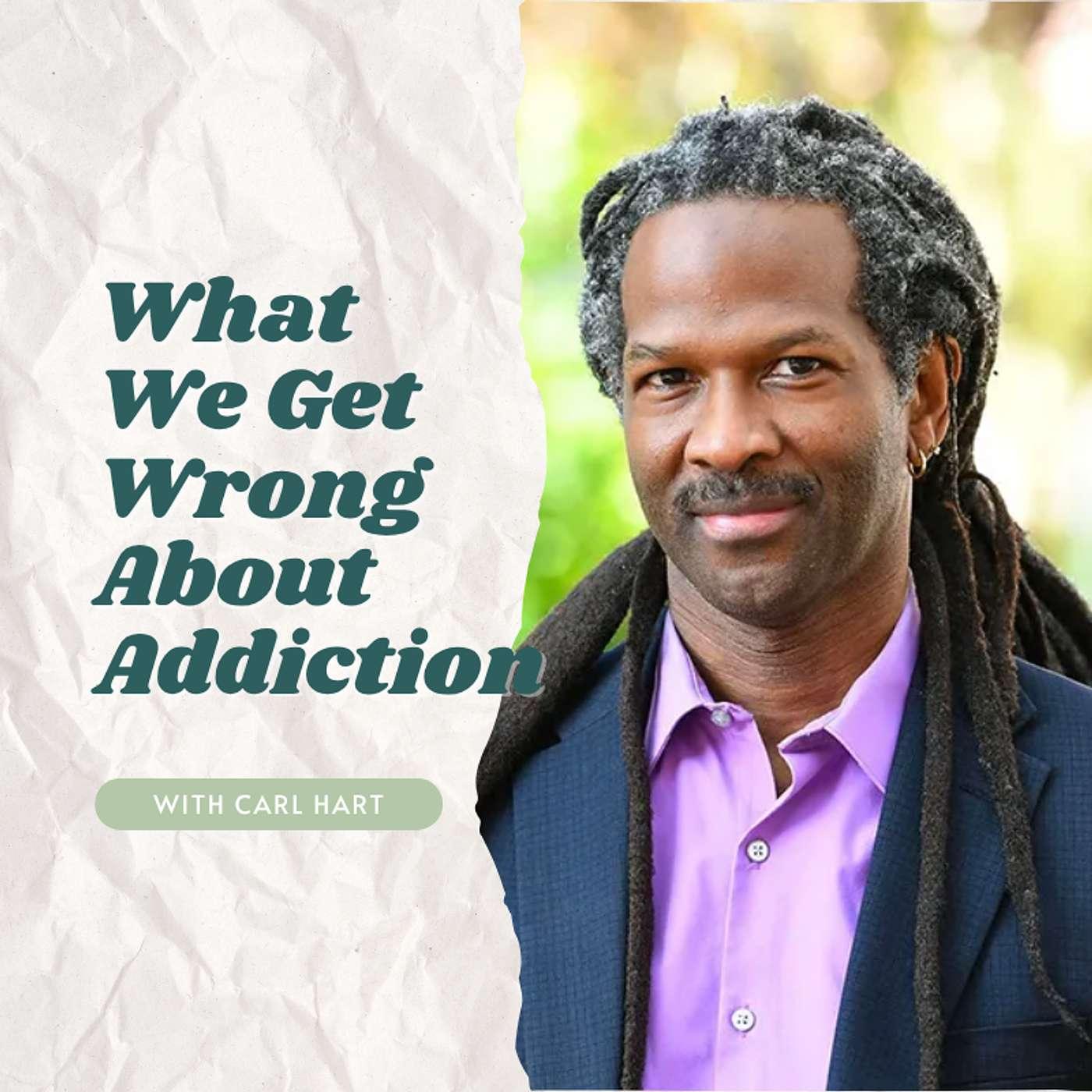
I'm John Avery and welcome back to Thriving with Addiction.
00:00:28.960 --> 00:00:30.239
Today I'm joined by Dr.
00:00:30.320 --> 00:00:31.280
Carl Hart.
00:00:31.519 --> 00:00:37.600
Carl is the Mammy Phipps Clark Professor of Psychology in Psychiatry at Columbia University.
00:00:38.000 --> 00:00:41.920
An internationally recognized neuroscientist and psychologist, Dr.
00:00:42.000 --> 00:00:51.359
Hart's research focuses on the complex interactions between psychoactive drugs, human behavior, neurobiology, and environmental factors.
00:00:51.679 --> 00:01:02.159
His research has helped bridge the gap between preclinical neuroscience and the lived human experience of addiction, informing both public policy and scientific understanding of drug use.
00:01:02.640 --> 00:01:02.960
Dr.
00:01:03.039 --> 00:01:14.400
Hart is also the author of two wonderful and acclaimed books, High Price and Drug Use for Grown Ups, which challenge conventional narratives about drugs, addiction, and public health.
00:01:14.640 --> 00:01:15.760
Carl, welcome.
00:01:16.400 --> 00:01:16.879
Thank you.
00:01:17.120 --> 00:01:28.319
I'm also the author of a textbook, you know, the um uh the leading mark the market leading uh undergraduate book on drugs and behavior called Drug Society and Human Behavior.
00:01:28.480 --> 00:01:31.519
Uh I'm more proud of that book than the rest of those books.
00:01:31.840 --> 00:01:32.319
Is that right?
00:01:32.400 --> 00:01:32.879
Why is that?
00:01:33.120 --> 00:01:42.799
Uh because it reaches a broader audience and it's uh it's uh targeted towards undergraduate students who are first getting into the study of drugs.
00:01:43.040 --> 00:01:49.200
And um we try to dispel a lot of the myths around drugs.
00:01:49.359 --> 00:02:25.199
Um not only uh the myths that exaggerate the harmful effects of drugs, but uh the mainly nowadays the neurobiology myths, you know, people think that they if they understand serotonin or dopamine, they understand something about behavior, not understanding that that theory of mood is so old um that it was um uh I guess uh elaborated uh well in 1967 when we only knew about six neurotransmitters and it hasn't been appreciably updated.
00:02:25.360 --> 00:02:35.039
So I'm more proud of that book, helping students to understand that uh neurotransmission is a lot more complex than we make it out to be.
00:02:35.759 --> 00:02:36.240
Mm-hmm.
00:02:36.560 --> 00:02:38.879
And that's one thing I've always really admired about you.
00:02:38.960 --> 00:02:45.280
Uh as your bio says and you described there, you've sort of challenged the conventional narratives around drug, addiction, public health.
00:02:45.439 --> 00:02:50.240
I think you're the only addiction professional I know who's received death threats for for speaking out.
00:02:50.400 --> 00:02:52.240
Tell me how you got into all of this.
00:02:53.120 --> 00:02:58.479
Uh, you know, uh 1984 to 1988, um, I was in the U.S.
00:02:58.639 --> 00:02:59.280
Air Force.
00:02:59.360 --> 00:03:13.039
Um then uh while in the Air Force, I went to college um because in the Air Force I was allowed to go to school while also being in the Air Force, and I nearly completed an undergraduate degree.
00:03:13.199 --> 00:03:18.080
And then when it was time for me to get out, I had to decide what I wanted to do.
00:03:18.479 --> 00:03:23.919
And 1988, the big issue in the United States was cry cocaine.
00:03:24.080 --> 00:03:27.919
I come from a black community, uh, almost exclusive black community.
00:03:28.000 --> 00:03:30.080
Well, it was exclusively black.
00:03:30.319 --> 00:03:33.199
Um, they call that the hood or what have you.
00:03:33.280 --> 00:03:37.439
And we were told that cry cocaine was destroying our community.
00:03:37.599 --> 00:03:39.360
Um, so I wanted to help.
00:03:39.599 --> 00:03:51.520
And one way I could help is to better understand drug addiction because I thought if I helped to cure drug addiction, I could help solve some of the problems in our uh neighborhood, our community.
00:03:51.680 --> 00:03:54.879
And so that's why I started studying this area.
00:03:54.960 --> 00:04:00.400
And then between 1990 and 2000, it was the decade of the brain.
00:04:00.479 --> 00:04:03.280
So I went to graduate school in 1992.
00:04:03.759 --> 00:04:09.840
Um, and the decade of the brain meant we pumped a lot of money into the study of the brain.
00:04:09.919 --> 00:04:20.800
So I studied neuroscience, and uh the the thing that I studied in neuroscience was the underlying neuronal mechanisms that we thought were responsible for drug addiction.
00:04:20.959 --> 00:04:23.120
Although that's not what we were studying.
00:04:23.199 --> 00:04:34.399
Um I was studying really neurochemistry and rats, but just happened to be given drugs and looking at the nucleus of commons and dopamine activity, dopamine metabolism.
00:04:34.480 --> 00:04:41.360
I learned a whole lot about catecholamine uh metabolism uh from a guy called Herb Copin.
00:04:41.519 --> 00:04:51.839
Herb Copen, um uh his lab uh Julia Zaxelrod won the Nobel Prize for um catecholamine uh metabolism.
00:04:51.920 --> 00:04:55.920
So I learned a lot about uh catecholamine uh metabolism.
00:04:56.079 --> 00:05:12.720
Uh so when I see what people are saying today about catecholamines um uh and monoamines as well, uh, I think back to the lessons learned from Herb Copin and the people who came through that lab.
00:05:13.120 --> 00:05:20.079
Um they would be horrified in the simplistic sort of way we talk about uh neurotransmitters.
00:05:20.240 --> 00:05:30.959
Um and so I try to remember the lessons that I learned in that lab and apply them uh in this thing we call addiction addiction science, which is a joke.
00:05:31.040 --> 00:05:40.319
I mean, uh like a whole science called addiction, like addiction is such an important human behavior that we have a whole field called that.
00:05:40.480 --> 00:05:46.240
That's really so funny in terms of the evolution of human behavior.
00:05:46.480 --> 00:06:07.279
Um and so um it's kind of it's been kind of easy um uh dispelling the much of the mythology that we have in a field that is so um uh that is led or um uh about such simple thinkers.
00:06:07.600 --> 00:06:16.319
Um and so I'm just trying to make sure we increase the intellectual tone around the discussion around around these complex behaviors.
00:06:16.399 --> 00:06:17.759
That that's all I'm trying to do.
00:06:18.079 --> 00:06:20.560
Why do you think it feels like you're the only one doing it?
00:06:20.720 --> 00:06:26.879
And number one, and and two, uh what gives you sort of the the courage to to be this way, to really speak out?
00:06:27.199 --> 00:06:34.800
Well, I I don't think I'm the only one that's doing it because there are a lot of cats who say what I'm saying, but not in public.
00:06:35.120 --> 00:06:43.279
Uh but and then there are some who say it in public, um, but the ones who say it in public aren't necessarily in the United States.
00:06:43.519 --> 00:06:49.439
Um so I think of David Nutt in the UK, um, he says this stuff in public.
00:06:49.600 --> 00:06:53.600
He understands that uh the this oversimplification.
00:06:53.920 --> 00:06:57.439
Uh uh David is a friend.
00:06:57.600 --> 00:07:05.439
Um in fact, he was fired uh from a major committee in the UK for saying these kind of things.
00:07:05.600 --> 00:07:18.720
Um, but there are American uh researchers who know this, but the thing is um their funding is tied to this um simplistic view, this nonsense, if you will.
00:07:19.040 --> 00:07:22.560
And people's priorities are different than mine.
00:07:22.720 --> 00:07:26.079
Um their main priority is to keep their labs funded.
00:07:26.160 --> 00:07:35.519
Um and when that becomes your main priority, um it shapes your behavior in a way that is sometimes less than honorable.
00:07:35.600 --> 00:07:38.560
Um and and I think a lot of that is what's going on.
00:07:38.959 --> 00:07:40.800
Well, let's dive into some of it.
00:07:40.959 --> 00:07:41.920
Let's let's start with.
00:07:42.000 --> 00:07:46.399
I mean, you frequently challenge the idea that certain drugs are uniquely addictive.
00:07:46.560 --> 00:07:54.319
You know, what does the science actually show about uh some of these substances and and and how does it differ from commonly held beliefs?
00:07:54.879 --> 00:08:08.079
Yeah, uh so when we think about addiction, you and I are talking about the DSM uh uh definition, about the international classification definition, in which there are 11 symptoms.
00:08:08.160 --> 00:08:20.319
And in order for people to um uh be diagnosed with that uh diagnosis of substance use disorder, which we call addiction, um they have to endorse a certain number of symptoms.
00:08:20.560 --> 00:08:26.800
One, and two, they have to either be impaired by those symptoms or distressed by those symptoms.
00:08:26.959 --> 00:08:30.319
That's what you and I mean when we say addiction.
00:08:30.480 --> 00:08:39.840
Uh now, this idea that some drugs are uniquely uh addictive uh uh is is nonsense based on the evidence.
00:08:40.159 --> 00:09:08.080
Now, it's true some drugs, um, for example, what uh upon abrupt discontinuation, um you see uh uh a physical uh um withdrawal uh syndrome that is uh sometimes um very unpleasant and sometimes even life-threatening, like with alcohol uh withdrawal that or benzo nazepine withdrawal or uh barbiturate withdrawal.
00:09:08.159 --> 00:09:11.679
Um the the withdrawal from those uh could be life-threatening.
00:09:11.840 --> 00:09:19.039
But the withdrawal from opioid, uh opioids um uh in otherwise healthy people is not life-threatening.
00:09:19.279 --> 00:09:26.480
But the public seems to think this because it's oftentimes overly dramatized in movies.
00:09:26.879 --> 00:09:50.240
Um and so uh, and right now the the enemy or the the the devil drugs are opioids, and so uh people think that uh uh they are uniquely addictive in large part because of this uh of withdrawal syndrome, uh, or because people say they're so good that you just have to continue to try it.
00:09:50.480 --> 00:09:52.080
And there's nothing like that.
00:09:52.240 --> 00:10:01.759
We said that about crack cocaine, which you don't see this uh sort of outward withdrawal syndrome upon abrupt discontinuation.
00:10:02.240 --> 00:10:14.080
Um uh and so when you start to look at what's actually happening and and the data, um it just does not fit oftentimes the public narrative.
00:10:14.240 --> 00:10:19.360
That doesn't mean that people don't struggle with these drugs.
00:10:19.519 --> 00:10:25.120
Like some people do meet criteria for drug addiction and they are struggling, and that's true.
00:10:25.279 --> 00:10:28.799
That's that's a fact, but the vast majority are not.
00:10:28.960 --> 00:10:38.559
And when that's the case, it tells us that we have to look beyond the drug itself uh for those people who are struggling.
00:10:38.720 --> 00:10:46.399
What else is going on in those people's world um in in order to better serve those people who are struggling?
00:10:46.559 --> 00:11:00.639
Um but my concern is that uh uh one of the things that the National Institute of Drug Abuse has been pushing, and science as a result, because the National Institute of Drug Abuse is the primary funder.
00:11:00.879 --> 00:11:14.879
The thing that uh we've been pushing is that uh the this biological role in drug addiction, um, that drug addiction is a brain disease, or you have some biological deficit.
00:11:15.120 --> 00:11:20.320
Um there is no evidence in humans to support that nonsense.
00:11:20.559 --> 00:11:37.360
Um now we can look at other biological uh illnesses, uh brain disorders, if you will, Parkinson's disease, Alzheimer's disease, Huntington's disease, and you can see in the brain, you can see neuropathology there.
00:11:37.600 --> 00:11:51.600
Uh then you another thing with these disorders, uh they are progressive, meaning that they uh ultimate they just continue to get worse and ultimately the person will die from those symptoms.
00:11:51.759 --> 00:11:55.039
Uh there is nothing like that in substance use disorder.
00:11:55.120 --> 00:12:01.279
Uh in fact, people with substance use disorder, uh the majority of them, uh get better without any treatment.
00:12:01.360 --> 00:12:09.360
And so this notion, this comparing a drug addiction to uh these other brain diseases, um, it's just not appropriate.
00:12:09.440 --> 00:12:26.559
But I know um it really is um advantageous for increasing the budget of the National Institute on Drug Abuse because I've been before Congress with Norvokal, in fact, uh testifying about these some of these issues.
00:12:26.720 --> 00:12:34.159
Um and when you were before Congress, it's just easier to say that the brain is involved, it's a brain disease.
00:12:34.399 --> 00:12:41.440
And that is that kind of language helps to make sure uh that the field stays funded.
00:12:41.600 --> 00:12:48.480
Um and the problem with that is that researchers then start to believe that hype.
00:12:48.559 --> 00:12:58.000
Um so when we start to be dishonest with Congress just to get the budget increased, researchers start to believe that, uh believe the hype.
00:12:58.080 --> 00:12:59.440
Uh that's just hype.
00:12:59.600 --> 00:13:04.000
That's not reality, that's not man, reality is always data.
00:13:04.159 --> 00:13:08.080
Um, and so um I try to remind the feel of these things.
00:13:08.399 --> 00:13:10.399
So to clarify what you're saying, two important points.
00:13:10.559 --> 00:13:16.080
One is that addiction isn't just about the substances, and two, that it's not just about the brain.
00:13:16.240 --> 00:13:23.840
Although to clarify that second point, you you do feel that that substances do impact the brain, and there's certain brains that are more vulnerable to addiction.
00:13:24.159 --> 00:13:27.120
Anything related to behavior impacts the brain.
00:13:27.279 --> 00:13:32.240
Of course, uh these drugs uh bind to neuro to receptors in the brain.
00:13:32.320 --> 00:13:34.399
So, of course, the brain is impacted.
00:13:34.559 --> 00:13:37.120
Uh, you and I are having this conversation.
00:13:37.279 --> 00:13:42.240
The brain is impacted, but nobody is saying that somehow we're having this disorder.
00:13:42.399 --> 00:13:43.919
Yes, the brain is impacted.
00:13:44.080 --> 00:13:48.480
In fact, you if you want to have a drug effect, you you want to get the drug in the brain.
00:13:48.559 --> 00:13:52.480
Uh, and we talk a lot in my classes about how to get drugs in the brain.
00:13:52.559 --> 00:13:54.320
So, yes, the brain is impacted.
00:13:54.480 --> 00:14:09.600
What I'm saying is that the brain is not pathological as a result of having drug addiction, or um because your brain is uh pathological, uh somehow you have you are going to have drug addiction.
00:14:09.679 --> 00:14:10.879
That's what I'm saying.
00:14:11.039 --> 00:14:18.720
Um drug addiction, if you look at those symptoms, is largely a behavioral disorder.
00:14:18.879 --> 00:14:34.240
Um, and in order to help people, you have to deal with these behavioral, uh, these uh these these troublem, these problematic behaviors, and you have to also deal with the context in which drug use take place.
00:14:34.399 --> 00:14:39.120
Um and oftentimes people forget about the context.
00:14:39.279 --> 00:14:43.759
And the context is oftentimes is far more important than the drug itself.
00:14:44.080 --> 00:14:50.639
And you've written about how social social isolation, poverty, hopelessness, racial biases impact all this.
00:14:50.879 --> 00:14:54.480
Describe some of those other factors that go into why people form addiction.
00:14:54.879 --> 00:15:02.399
Yeah, we think about uh uh one of the main reasons is that like um these drugs are uh are illegal.
00:15:02.559 --> 00:15:05.919
We never talk about uh the availability of drugs.
00:15:06.000 --> 00:15:18.559
You know, one of the criteria that we have for uh uh drug addiction is that you spend a great deal of time seeking um uh uh uh the drug that you are uh seeking.
00:15:18.720 --> 00:15:24.080
Uh spending a great deal of time uh trying to procure the drug, the recovering from the drug.
00:15:24.320 --> 00:15:28.000
I mean, uh with something like alcohol, for example, that's legal.
00:15:28.159 --> 00:15:33.600
You don't have to spend a great deal of time procuring that drug because it's legal.
00:15:33.759 --> 00:15:50.559
Um and then when we think about the uneven quality of drug, um uh the unpredictability in terms of quality, that also increases your time and increases the likelihood that you will meet some of these symptoms.
00:15:50.639 --> 00:15:58.080
Um, just simply by having the drug be illegal uh increases the likelihood of drug addiction.
00:15:58.320 --> 00:16:11.360
Um then more importantly, uh, if you don't know the quality uh or you have this uneven quality of drug, it increases the likelihood that people will have negative effects.
00:16:11.600 --> 00:16:17.679
You don't know uh the concentration of the drug in the substance that you purchased uh illegally.
00:16:17.919 --> 00:16:22.240
Um sometimes those substances are more dangerous than the drug itself.
00:16:22.399 --> 00:16:24.960
In fact, oftentimes that's the case.
00:16:25.120 --> 00:16:30.320
Um and and so, yeah, people will have major problems when that happens.
00:16:30.399 --> 00:16:48.000
And we rarely talk about the role that our policies are playing in um uh making sure that people are drug addicted or um have making sure that people have negative outcomes uh uh in uh with certain drug experiences.
00:16:48.159 --> 00:16:56.240
And I try to make sure that people understand the context, the reality in which people are using uh these substances.
00:16:57.759 --> 00:16:58.240
Right.
00:16:58.480 --> 00:17:05.759
And I guess if we focus so much on the substances themselves or on the brain, then we miss policy that could really help people.
00:17:05.839 --> 00:17:06.400
Is that right?
00:17:06.799 --> 00:17:07.279
That's right.
00:17:07.359 --> 00:17:12.319
We we well, not only policy, we miss uh the context.
00:17:12.480 --> 00:17:21.839
And then as like psychiatrists, psychologists, social workers, people who are trying to help folks, if you don't understand context, then why are you here?
00:17:22.000 --> 00:17:29.119
Um you know, like uh sometimes in our experiments, like I did rat experiments for many years.
00:17:29.279 --> 00:17:50.960
Uh um in my rad experiments, it was almost well, it was always devoid of human context, but yet we would draw these broad, far-reaching conclusions based on uh these experiments that just um um negated uh the uh context.
00:17:51.119 --> 00:18:10.480
Uh I think that happens not only in rat work or uh works with laboratory animals, it also works with human laboratory studies, where we just um uh negate the the the environment uh in which uh uh drug use takes place in the natural ecology.
00:18:10.640 --> 00:18:23.839
And when you do that, uh that's a major uh uh faux pas, and you have to you have to uh at least interpret your findings within those limit those limitations.
00:18:24.240 --> 00:18:33.200
The other side of the conversation about drugs that is often missed is that they are pleasurable and then people can use them in their life in in thoughtful, informed ways.
00:18:33.279 --> 00:18:35.759
You've talked about the way you've used them in your own life.
00:18:35.920 --> 00:18:42.480
You know, why is that such an important omission that we don't talk enough about how people can use safely and and and for pleasure?
00:18:42.960 --> 00:18:52.720
Yeah, just imagine talking about uh trying to help somebody who is uh I don't know, they have uh what they would call sex addiction addiction.
00:18:52.960 --> 00:19:00.240
And then you're not talking about uh the orgasm that these people have uh when they engage in this behavior.
00:19:00.480 --> 00:19:02.079
Just imagine doing that.
00:19:02.240 --> 00:19:13.839
That would be uh such uh uh uh uh uh an abdication of your responsibility, or that would be uh malpractice.
00:19:13.920 --> 00:19:15.519
Uh that's what we do with drugs.
00:19:15.599 --> 00:19:21.839
Uh we we fail to talk about why people do drugs in the first place, take drugs in the first place.
00:19:22.000 --> 00:19:30.559
Uh people take drugs to, you know, in many cases work longer, work harder, work better, they try to be more efficient.
00:19:30.799 --> 00:19:46.880
Um people take drugs to uh enhance their relationships with their loved ones, uh people take drugs to um celebrate, to have a good time, all of these kind of normal human activities.
00:19:47.039 --> 00:19:54.240
And if you're not talking about drug use within that context, then you're not understanding the reason for the behavior.
00:19:54.400 --> 00:20:14.000
Um, and then when the behavior gets to be pathological, uh uh of a concern to the individual, uh that means you're not trying to help replace uh the drug with something uh that also achieves the goals that they are seeking to achieve with the drug itself.
00:20:14.240 --> 00:20:25.680
Um and so uh it just helps to inform your treatment for people who are coming to your help, coming to you for help with uh the thing that they they see as a problem.
00:20:28.079 --> 00:20:29.920
And so, how can we change things around this?
00:20:30.000 --> 00:20:35.119
How can we change the narrative, change our treatments, change our policy, given all this, do you think?
00:20:35.920 --> 00:20:40.480
Well, um policy is a thing that it's really difficult to change.
00:20:40.640 --> 00:20:45.119
In order to change policy, you really have to go to the American public.
00:20:45.440 --> 00:20:49.680
You have to help the American public understand what's going on.
00:20:49.839 --> 00:20:55.200
Because the American public, for example, uh think that we have this opioid crisis.
00:20:55.359 --> 00:21:00.079
Um and so you have to help them to understand that that's not true.
00:21:00.160 --> 00:21:08.559
Uh, well, first you have to help them help them to understand like, what do you mean when you say we're having an opioid crisis?
00:21:08.720 --> 00:21:16.240
Are you saying that we have more people being addicted, or are you saying we're having more people die from opioids?
00:21:16.640 --> 00:21:30.880
Uh so then once you understand what they mean, now you can actually uh present the data to help them see like uh the percentage of people who are addicted to opioids haven't changed.
00:21:31.039 --> 00:21:47.599
Um uh then you see uh when they say, well, deaths, overdose death, then you help them to see that uh the way we collect death certificates in the United States um uh varies from jurisdiction to jurisdiction.
00:21:47.839 --> 00:22:05.039
What one jurisdiction calls an overdose, uh another jurisdiction does not call the drug overdose, or um you they they get to see that most of the these Data didn't determine that the drug actually killed the people.
00:22:05.200 --> 00:22:20.240
It's just that the drug might have been in the person's system at the time of death, along with other drugs, or some with some other factor that uh contributed to the person's uh death uh more immediately.
00:22:20.400 --> 00:22:23.839
Like, for example, George Floyd in 2020.
00:22:24.000 --> 00:22:29.519
Um George Floyd died because Derek Chauvin choked him to death.
00:22:29.599 --> 00:22:38.400
Uh but George Floyd is listed um uh in the 2020 data as having overdose from methamphetamine and fentanyl.
00:22:39.039 --> 00:22:42.880
Everybody knows he didn't die from a fentanyl overdose death.
00:22:43.039 --> 00:23:12.799
Everybody knows he didn't die from a methamphetamine death, but he's listed in the data that says drug involved overdose death, the CDC data, uh, because those data are collected from um uh the states and then passed on to the CDC, and they put the data together uh in these nice uh line graphs that are inappropriate uh because they violate the assumptions of line graphs.
00:23:12.960 --> 00:23:23.839
Um but the public thinks that um those are all the people that died because of the drug itself, um, and that's just simply not true.
00:23:24.160 --> 00:23:34.720
So uh we try and help the public to understand the reality of what those data are actually saying versus what people are saying about those data.
00:23:34.880 --> 00:23:38.079
Um uh that's how you change public policy.
00:23:38.160 --> 00:23:45.839
Uh do a better job of public education because politicians uh follow the people, not the other way around.
00:23:46.000 --> 00:23:47.519
Um, uh number one.
00:23:47.759 --> 00:24:02.960
But uh number two, one of the things that we can do is um in science, ourselves, um, in our journals, uh, do a better job of um making sure that people don't overinterpret their findings.
00:24:03.200 --> 00:24:08.160
This happens all the time in science, over-interpreting findings.
00:24:08.319 --> 00:24:19.359
Uh a study that is cross-sectional, for example, two groups are compared or one group is compared uh over um at one moment in time.
00:24:19.839 --> 00:24:26.640
Um, and then with cross-sectional studies, you can't draw causal conclusions.
00:24:27.039 --> 00:24:47.359
But by the end of that study, what people have done is that they have started out using correlational language, but by the end of the study, they now come to causal conclusions by saying things like uh this factor predicted drug use here.
00:24:47.599 --> 00:24:52.079
It didn't predict drug use, it just correlated with drug use.
00:24:52.319 --> 00:24:58.799
And correlation is not a prediction, it is because predicted is a causal claim.
00:24:59.039 --> 00:25:12.000
Um, or if somebody compares two groups and they one group has a smaller nucleus of commons, for example, uh the and they only took a snapshot of their brains at one moment.
00:25:12.240 --> 00:25:18.640
Um by the end of the study, they're saying things like, We saw atrophy in this region of the brain.
00:25:18.799 --> 00:25:30.960
You didn't see atrophy, atrophy is a causal term, and it that means that you saw a reduction in that group, and you only took a snapshot at one moment at a time.
00:25:31.039 --> 00:25:38.400
So that's not atrophy, or that's not a reduction, um, um, or that's not even an aberration.
00:25:38.799 --> 00:25:40.799
Uh that's just a difference.
00:25:41.039 --> 00:25:49.599
Um, and so uh uh in the scientific literature it it is replete with inappropriate language itself.
00:25:49.839 --> 00:26:16.799
And when it when the scientific literature is riddled with these uh overreaches, um then the public has even less of a chance of getting it right when the scientists are getting it wrong, and in many cases intentionally wrong, to enhance the impact of their studies, the impact of their submitted grants, um all of these sort of things.
00:26:16.960 --> 00:26:29.519
I I chaired a study section um uh um well for the NIH uh uh uh for some time, and um so we saw this sort of thing uh on study section quite a lot.
00:26:29.680 --> 00:26:38.720
I also sat on uh NIDA's um uh council, which is their board uh that made decisions about their priorities and so forth.
00:26:38.880 --> 00:27:03.359
So um I've done all of this sort of stuff uh from the lowest level to the highest level and um try to make sure that we were uh doing a better job in science, trying to increase the intellectual tone of our activities, um uh but uh there's just too much incentive uh not to do not to do what I'm suggesting.
00:27:03.759 --> 00:27:04.240
Mm-hmm.
00:27:05.039 --> 00:27:19.359
And and that's probably explained some of the pushback against some of the things you say, but all I hear you doing is arguing to be precise, to not overstate some of the claims that are made about addiction or the brain disease or about sort of why it develops.
00:27:19.599 --> 00:27:22.079
Is it fear or what other factors are involved?
00:27:22.160 --> 00:27:25.599
Do you think that that uh doesn't allow us all to sit with this more?
00:27:26.240 --> 00:27:35.519
Yeah, um, I think what one is that um um the motivations for scientists first is keeping their labs flooded, right?
00:27:35.759 --> 00:27:40.799
And so you want to increase the impact of your findings of what you're doing or saying.
00:27:40.960 --> 00:27:42.079
That's number one.
00:27:42.160 --> 00:27:48.880
Uh, and it's just easier to increase the impact by exaggerating um um the these findings.
00:27:49.039 --> 00:27:49.839
That's number one.
00:27:50.000 --> 00:27:59.839
Number two, um, it's just easier to what what scientists like to say is erroring on the side of caution.
00:28:00.160 --> 00:28:20.960
Um so if you error on the side of caution and you just discourage people from using these substances at all, uh then you are not gonna have any sort of uh harmful effects happening if you just encourage uh or increase the sort of uh uh statements about harm.
00:28:21.119 --> 00:28:24.319
So they call that erring on the side of caution.
00:28:24.480 --> 00:28:32.480
Now, what that does is that it pretends that there are no negative consequences to that behavior.
00:28:32.640 --> 00:28:46.240
When in fact there are plenty of negative consequences, but those negative consequences just aren't experienced by the people for whom the scientists uh relate to or care about.
00:28:46.720 --> 00:28:52.160
That is, uh scient scientists come from a certain class in our society.
00:28:52.400 --> 00:28:55.519
Middle to upper class people become scientists.
00:28:55.680 --> 00:28:59.599
Uh uh people of lower classes usually don't.
00:28:59.759 --> 00:29:15.599
And that's where the consequences are had, because the consequences are had in the policies, in the people who are being arrested uh for these policies, for this error on the side of concept uh on the side of caution.
00:29:15.759 --> 00:29:23.599
Uh and so the scientists don't have to deal with the consequences of erroring on the side of caution.
00:29:23.759 --> 00:29:31.440
Um and so I think those are the two driving forces uh for why uh scientists behave the way they behave.
00:29:31.519 --> 00:29:47.839
Uh but but I don't like to call it like pushback from what I'm saying, because that implies that there is some sort of um legitimate reason, or there is they uh uh they have some um uh evidence on their side for this.
00:29:47.920 --> 00:29:57.920
Uh that it's not pushback, uh it's people not showing fidelity to the evidence, and that's what we're supposed to do in science.
00:29:58.079 --> 00:30:08.799
Um and so when people, whenever people argue in science, uh science is beautiful because uh you uh the you can be adjudicated with your data.
00:30:08.880 --> 00:30:09.359
That's it.
00:30:09.440 --> 00:30:13.279
The the the adjudicating factor of force are the data.
00:30:13.440 --> 00:30:17.680
Just show me the data, like this notion that drug addiction is a brain disease.
00:30:17.839 --> 00:30:19.039
Show me the data.
00:30:19.200 --> 00:30:20.880
Uh I've been looking for the data.
00:30:20.960 --> 00:30:31.200
I've been, like I said, on the council, on study section, and I still have not seen the data for this idea of drug addiction being a brain disease.
00:30:32.319 --> 00:30:32.720
Right.
00:30:32.880 --> 00:30:38.640
And and so, given that, what what should we message to our children or the public more generally about substances?
00:30:38.799 --> 00:30:40.880
That would really shift how we talk about drugs, then.
00:30:41.200 --> 00:30:41.680
Yeah.
00:30:42.000 --> 00:30:51.119
So uh one of the things that we do in order to shut down the conversation that I have, or shut down people like me, is that we say, What about the children?
00:30:51.279 --> 00:30:52.240
What about the children?
00:30:52.400 --> 00:31:06.720
As if uh, I mean, there are there are grown grown-up behaviors uh that uh adults uh engage in, like sex, they have children, and they're not sharing their sexual behaviors with their children, of course.
00:31:06.799 --> 00:31:14.960
And so um, so you have this bifurcation and you have uh these uh clear sort of lines of behavior.
00:31:15.039 --> 00:31:22.960
And so you don't want to encourage your children to come watch you have sex as a married adult uh couple, of course.
00:31:23.119 --> 00:31:38.160
Uh and so um uh uh you you uh teach your children about these behaviors uh at appropriate times, uh, when it's time for those children to be uh engaged in that behavior.
00:31:38.319 --> 00:31:40.000
The same is true with drugs.
00:31:40.160 --> 00:31:52.319
Um if you if we look at the uh what is it, the national, the the we we used to call it the high school survey, uh the the senior survey, the monitoring the future studies?
00:31:52.720 --> 00:31:56.319
The monitoring the future survey is all at the University of Michigan.
00:31:56.400 --> 00:32:01.839
We've done that since 1975, and more than 40 years now, uh we've done that survey.
00:32:02.000 --> 00:32:11.839
And so you look at that survey, the three drugs that that children engage in are uh tobacco, alcohol, and cannabis.
00:32:12.079 --> 00:32:14.880
That's where your education should focus at.
00:32:15.039 --> 00:32:19.680
I mean, that's uh following the data and uh is data informed.
00:32:19.839 --> 00:32:38.559
And you want to make sure that children understand how to identify things like uh uh alcohol, uh over overexposure to alcohol, alcohol overdose, that uh because sometimes uh kids overdo it, uh, particularly in the winter or in cold seasons.
00:32:38.720 --> 00:32:56.559
You want to make sure that uh people understand that hypothermia is a real concern uh because alcohol makes people feel uh like they are having these warm feelings when in fact the heat is escaping and people might become susceptible to hypothermia.
00:32:56.640 --> 00:32:57.920
Uh so that's one thing.
00:32:58.000 --> 00:33:03.839
Um and we think about nicotine and cannabis, usually those things are smoked.
00:33:04.000 --> 00:33:19.039
Uh, you want to make sure that children who has asthma understand the risk, and you want to make sure that people, uh adolescents know how to identify uh if those drugs uh precipitate so something like an asthma attack.
00:33:19.200 --> 00:33:26.079
Um those are the real concerns, and those are the things that you want uh children to understand.
00:33:26.400 --> 00:33:38.000
Um and um if you look at those data, uh the the children are typically just experimenting, they're not overdoing it, they're not using these drugs every day.
00:33:38.160 --> 00:33:51.359
Uh and for the kids who are overdoing it, the uh three or four or the limited number of kids who are overdoing it, um their parents have bigger problems than drugs.
00:33:51.680 --> 00:34:00.319
Um, there are some real supervision issues going on uh with those children, and that's what that should be telling you.
00:34:00.400 --> 00:34:07.119
And you should not be focused on drug use, you should be focused on uh better supervision of those kids.
00:34:07.279 --> 00:34:10.559
Um other issues are going on with those kids.
00:34:10.800 --> 00:34:16.159
And then wrapping up, what else should we know, uh Carl, as we as we make our way forward?
00:34:16.239 --> 00:34:17.199
What are you hopeful for?
00:34:17.280 --> 00:34:19.920
What what do you hope for for change going forward?
00:34:20.159 --> 00:34:23.039
Um what what direction should we all head in from here?
00:34:24.079 --> 00:34:37.599
You know, science, um, since we can talk about science here, um, science saved my life uh because um and it it it we see science all around us in our health care.
00:34:38.000 --> 00:34:45.519
Uh we have um uh in in uh these uh inoculations from illnesses.
00:34:45.679 --> 00:34:49.280
Uh we have all of the benefits of science.
00:34:49.440 --> 00:34:55.519
We don't have to worry about things like polio in our environment these days because of science.
00:34:55.679 --> 00:35:11.599
Uh so um I hope for me, I hope that people who study uh drugs um uh understand that they're not only study drug add they're not only studying drug addiction, they're studying drugs and drugs.
00:35:12.159 --> 00:35:16.000
There's so much to be discovered with drugs.
00:35:16.159 --> 00:35:20.480
Um like I started out thinking that I was studying drug addiction.
00:35:20.719 --> 00:35:22.639
That is so limiting.
00:35:22.719 --> 00:35:27.119
Uh that's such a small thing in terms of what these drugs do.
00:35:27.280 --> 00:35:35.119
Uh, without something like cocaine, we don't understand um neurons as well as we do.
00:35:35.199 --> 00:35:42.559
Uh, for example, we understand that cocaine blocks sodium channels, um, and so it prevents the cell from firing.
00:35:43.039 --> 00:35:46.000
That's one way to prevent a cell from firing.
00:35:46.159 --> 00:35:51.119
Um and then therapeutically what that means is that it can be used as a local anaesthetic.
00:35:51.280 --> 00:35:58.159
I mean, there are so many other things to be discovered by these tools, these drugs.
00:35:58.320 --> 00:36:09.519
And so I hope science um broaden, at least of science with these compounds, broaden their search so they can discover uh these things.
00:36:09.599 --> 00:36:16.239
And I hope they stop putting stupid labels on these substances like psychedelics.
00:36:16.320 --> 00:36:30.239
Uh, when we start to put those stupid labels on these substances, what we're really doing is uh drawing a circle around certain substances, labeling them as good and these others as bad.
00:36:30.480 --> 00:36:33.199
These are all are just psychoactive substances.
00:36:33.360 --> 00:36:34.480
That's what they are.
00:36:34.639 --> 00:36:56.400
Uh and when we start to think about it from that perspective, uh it broadens our minds uh and opens us up to more uh discovery as opposed to uh excluding some substances uh versus others uh because there's so much more to be discovered with these compounds.
00:36:56.559 --> 00:37:04.639
We're discovering, for example, all the all the time different receptor subtypes, and largely because of these substances.
00:37:04.800 --> 00:37:14.480
We're discovering uh these different receptor subtypes, we're discovering different neurochemicals that the brain uses to uh communicate with.
00:37:14.559 --> 00:37:23.280
Uh and so I hope science get uh in this area gets back to discovery and get away from moralism.
00:37:23.760 --> 00:37:26.239
I think that's a good note to end on today, Carl.
00:37:26.400 --> 00:37:28.480
I really appreciate you spending the time with me today.
00:37:28.800 --> 00:37:38.480
Thank you very much for having me, and I hope uh your audience uh really takes uh this to heart and requires us to do a better job.
00:37:38.880 --> 00:37:41.440
Thanks for listening to the Thriving with Addiction podcast.
00:37:41.599 --> 00:37:48.559
If you found today's episode helpful, please follow and subscribe wherever you listen to your podcast and share it with someone who might benefit.
00:37:48.719 --> 00:37:54.880
You can also connect with me on Instagram, LinkedIn, and YouTube, or visit thrivingwithaddiction.com to learn more.
00:37:55.119 --> 00:37:58.960
Stay tuned for next week's episode, and remember, Thriving is possible.
