
ABOUT THIS EPISODE

Now, I’m not saying that your internist should be asking you about your intimate relationships, necessarily, but the relationships and the meaning and the identity, and even more practical things like “I can’t afford this anymore. Who’s going to pay my rent?” Even those things need to be, not addressed by the doctor, but understood, or at least recognized, yes? Otherwise, the person is alone in their illness, and they will die.
— Dr. Rita Charon, co-founder of narrative medicine
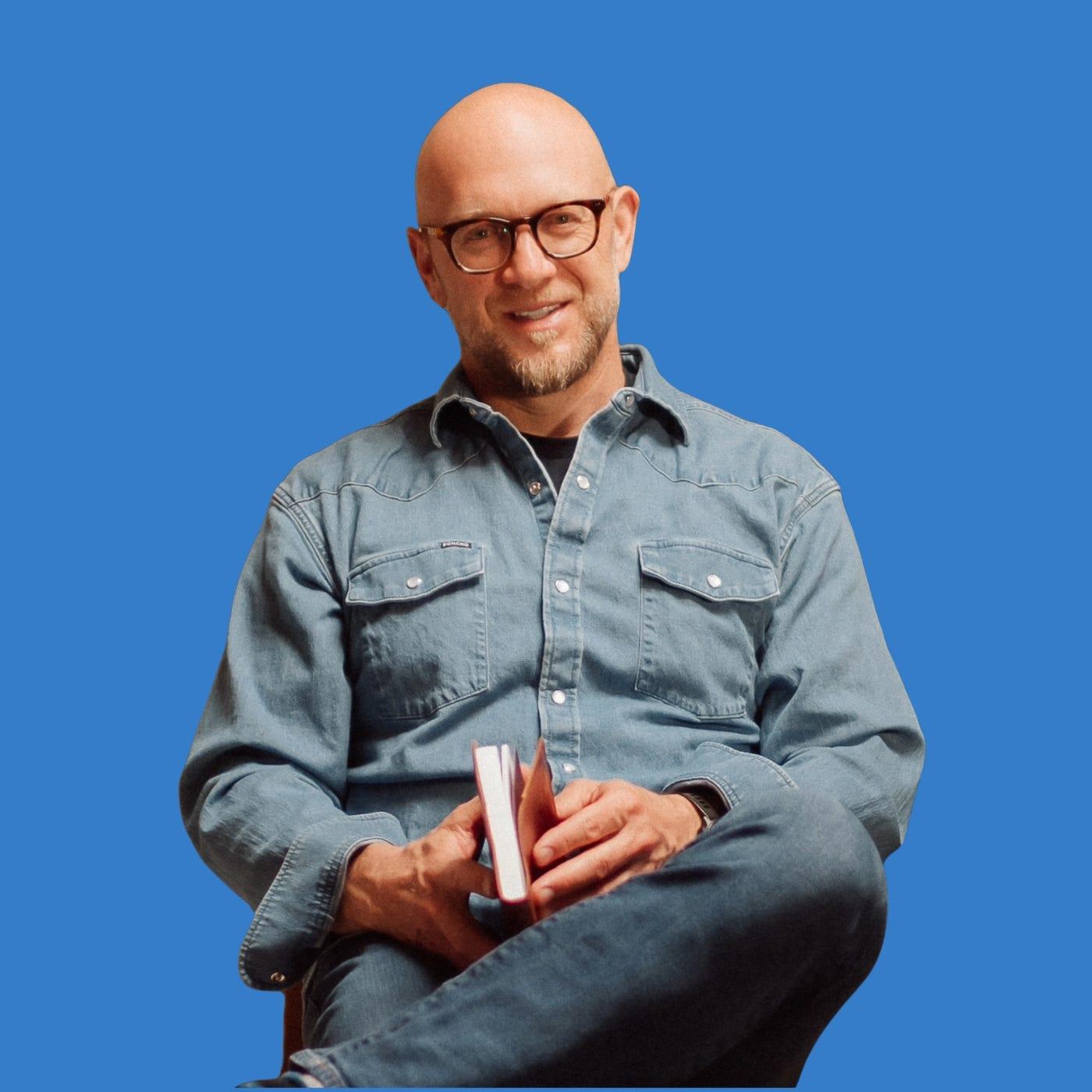
Today, on “The Things Not Named,” I speak with Dr. Rita Charon, general internist, literary scholar, and founding chair of the Department of Medical Humanities and Ethics at Columbia University, where she helped launch the field of narrative medicine.
Below is an edited transcript of our conversation on Substack Live.
Transcript
Joshua Dolezal:
Welcome back to The Things Not Named. I’m Joshua Dolezal.
Willa Cather said that the presence of the thing not named gives high quality to literature. This year, I’m applying that idea to medicine, asking how we might be more attentive to what goes unsaid in the clinic, in popular culture, and in the experience of illness from the patient’s side.
My guest today is Dr. Rita Charon. Dr. Charon is a general internist and literary scholar who helped found the field of narrative medicine at Columbia University. She’s Professor of Medicine and Founding Chair in the Department of Medical Humanities and Ethics at Columbia, where she launched the Master of Science in Narrative Medicine, and directs training programs across ten health professions.
Dr. Charon earned her MD at Harvard, and later a PhD in English at Columbia, where she studied narrative theory and the works of Henry James. Her research is funded by the NIH, the NEH, and many other organizations, and it examines what narrative practice changes in clinical care, including its contributions to equity in healthcare.
She’s published in the New England Journal of Medicine, The Lancet, and JAMA, as well as in literary journals, and in 2018, she delivered the National Endowment for the Humanities Jefferson Lecture, the federal government’s highest honor for achievement in the humanities.
So welcome, Dr. Charon. So nice to talk with you.
Rita Charon:
Thank you, and thank you for introducing me to this audience of people who want to learn something about it.
Wendell Berry and Narrative Medicine
Joshua Dolezal:
Dr. Charon, I wanted to start with the Jefferson Lecture, because I’ve often taught and written about Wendell Berry’s lecture, “It All Turns on Affection,” where he goes through the history of James B. Duke and this kind of predatory capitalism, which really works against a loyalty to home places and the care that goes with that.
And you told me you’re reading one of his early novels, Hannah Coulter. You share this honor with Wendell Berry. What’s your opinion of him as a writer?
Rita Charon:
So I recently met Wendell Berry, I mean, in print. One of my reading groups has been reading his poetry, which is so exquisitely plain and intimate.
And so I needed to start reading his novels also. I don’t know how many of you know these works. Hannah Coulter is an unvarnished outpouring of self from the protagonist, and she speaks so directly to the reader, as if we’re sitting across from her in her living room, or even better, in her kitchen.
And Joshua, I don’t know if you thought about Wendell Berry as an icon for us in narrative medicine, but that exact intimacy, informality, and being at home that we get from Hannah Coulter is what narrative medicine tries to help patients get when they are with their doctor, nurse, social worker, chaplain.
That sense of, you’re sitting here at my kitchen table, and I can tell you things that are on my mind, which is what Hannah does in the novel. So anyone who thinks that it’s a leap from medicine to literature, go read Wendell Berry.
Joshua Dolezal:
Oh, that’s a lovely connection. And I know that you’ve done some creative writing yourself, although I’m less familiar with that than I am with your research, which is how I discovered your work. What have you written that’s been published in literary journals?
Rita Charon:
No, I write essays. I’m not a creative writer. I teach creative writing. I mentor lots of creative writers, but I’m not a fiction writer. I’m not a poetry writer. I write essays.
They tend to be not necessarily factual essays. They tend to have humor and fantasy, as I’m talking about Henry James or as I’m writing about what doctors write about their patients. So I certainly am committed to style, to form. This is why any of us write, is to find out what we know.
So I’m very committed to form and style in my own writing as well as in the writing of my students or learners. But I would be misleading you if I told you I was a creative writer.
Joshua Dolezal:
Well, I’m a memoirist and also came of age during the burgeoning field of creative nonfiction. So my sense of the essay is that it has many creative possibilities, and part of what narrative medicine is trying to do is break down those binaries between the fine arts over here and science writing over there. So I see your work as a kind of hybrid of the two. I don’t know if you would accept that.
Rita Charon:
Well, of course. I mean, even if I’m writing about the cellular membrane and how the calcium ion enters the cell, I’m still writing, and I’m still using all the affordances of language, which is the metaphors and the temporal shifts, and the ways in which you can help people visualize things that they can’t see.
I just don’t characterize that as creative writing. But maybe you do. I was recently at a conference for autoethnographers. Do you know that field, the autoethnographers? They certainly have a hybrid approach, where they’re essentially talking about themselves or writing about themselves in a memoir-ish way, at the same time being very attuned to the culture in which they’re writing, to the social powers that be that may be impinging on even what it is they’re allowed to write about. So there’s a hybrid form maybe along the lines of what you’re talking about.
Joshua Dolezal:
Absolutely. Well, I don’t want to talk about me so much, but I do work with clients as a book coach and editor now, and many of them are trained to write trade books about how to be a better public speaker or a better executive. And in a lot of cases, what I’m trying to help them do is incorporate literary elements into the trade format. So that would be characters that have contradictions, and case studies that feel colorful and real and not like cardboard cutouts.
Rita Charon:
Right on.
How Narrative Medicine Got Its Name
Joshua Dolezal:
But that’s enough about me. When I was talking with some friends about our conversation, one of my earlier guests this year, an internist in Wisconsin, a younger physician, learned of you as the founder of narrative medicine. I don’t know if you accept that title. Do you consider yourself to have founded this discipline, or are you part of a larger movement?
Rita Charon:
Well, I started it only because I finally finished my PhD in English, and I already had my MD for decades before that. And I said, “Okay, Rita, what are you going to do now?” I had already been writing about the contributions that a literary capacity will give to the physician. I’d been writing about that for years. What happened in the year 2000 or thereabouts is that I found a name for it.
And I was going to call it the narrative hemisphere of medicine. I was writing a piece for, I don’t remember what journal it was. It could’ve been Academic Medicine or general internal medicine. And I said, “No, Rita, you can’t do that, because that’s giving away fully half of it, and that’s not fair.” And that’s how I found my way to just calling it narrative medicine. And that, in my mind, rang true. Although if you ask my colleagues in nursing or social work, they’ll say, “Rita, why did you call it narrative medicine? Why couldn’t you call it narrative…
This is a public episode. If you'd like to discuss this with other subscribers or get access to bonus episodes, visit joshuadolezal.substack.com/subscribe