
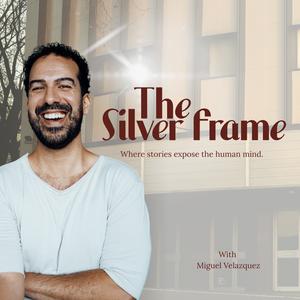

Miguel A. Velazquez: Most people think Goodwill hunting is about a genius. It's not. It's about something that lives in millions of people who will never solve a single math problem, including me. I grew up outside of Boston. I came from a relatively tough neighborhood, and I watched people around me choose the life they knew over the life they could have had, not because they weren't capable, because possibility felt dangerous when you'd been billed for something else entirely. The misery you know versus the possibilities you don't. Psychologists have a name for what Will Hunting was doing. And once you hear it, you won't just understand Will, you'll understand the last time you talked to yourself out of something you wanted. Welcome to the Silver Frame, where stories expose the human mind. I'm your host, Miguel Velasquez. Each episode we use psychology to look at the films we love, not to analyze movies, but to understand ourselves through them. Let me show you something about this film that most people miss. Will hunting solves a math problem in secret. At night, in an empty hallway, when no one's watching. He doesn't want credit. He wants to prove he can and then disappear. Think about that for a second. A person who wants recognition for their genius doesn't hide it on a chalkboard at midnight. He is not chasing the prize. He's testing himself in private. Where failure has no witness and success has no consequences. That's not ambition. That is self-protection. And every time the film offers Will a way out, the government job, Skylar, the math career, he destroys it every single time. Most people watch that and think, why would he do that? The genius isn't the point. The genius is the disguise. So what is this film actually about? Psychologists have been studying this exact behavior for 60 years, and they gave it a name. In the 1960s, psychologist James Marsha built on the work of Eric Erickson to describe something he called identity foreclosure. Identity foreclosure is what happens when a person stops exploring who they could become and locks into an identity that feels safe. Even when that identity is causing them pain. Will Hunting's identity is set from scene one. South Boston kid, loyal friend, tough guy. Nobody's project, right? That identity kept him alive. But it's also the prison. Here's what Marsha found that makes this so important. People in identity foreclosure aren't confused about who they are. They are certain. That certainty is the trap. Because the identity they locked into was built for survival. Not chosen, inherited. And here's what makes this so hard to see from the inside. It doesn't feel like fear, it feels like loyalty. It feels like knowing who you are. Will hunting is a textbook case. But so is the person who stays in a career they've outgrown because leaving feels like betrayal. So is the person who turns down the opportunity because it came from the wrong part of town. So is anyone who has ever said that's not for someone like me. So are millions of people who have never touched a math proof. So are you. So was I. But there's a second layer underneath identity foreclosure, a mechanism. The thing we'll use is to make staying feel rational. In 1978, psychologists Stephen Barglis and Edward Jones identified something they called self handicapping. It's when a person creates obstacles to their own success, so that failure has an excuse, and success feels safe to walk away from. Watch the NSA interview scene. Will is brilliant enough to completely dismantle that interviewer. He knows more than them, he sees further than them, and he uses that to disqualify himself. He weaponizes his own intelligence against his own future. Five therapists dismissed before Sean. Each dismissal is self handicapping. I'm the one who can't be helped. If he never truly tries, he never truly fails. And if he never truly fails, The identity he's built stays intact. Now here's what makes self-handicapping so hard to catch. It doesn't feel like giving up. It feels like being realistic. It feels like protecting yourself. It feels like wisdom. Burgless and Jones found that people self handicap most when they've already succeeded at something they don't believe they deserve to succeed at. Think about will solving that chalkboard problem. He proved something to himself he wasn't ready to believe. And so the self handicapping begins. Now, here's what I want you to do. Think about the last time you were close to something you wanted. A job, a relationship, a version of yourself you've been working toward. And then think about what you told yourself right before you stepped back. I'm not ready. The timing isn't right. I don't want it that badly anyway. That wasn't clarity. That was self handicap. Handicapping. That was identity foreclosure doing what it does best, making the retreat feel like a choice. Here's where this film does something most films do not. It shows you what self-sabotage actually looks like from the inside. It doesn't look like weakness, it looks like winning. But here's the question the film hasn't answered yet. Why build the armor in the first place? The armor exists because something needed protecting. Psychologist John Boldbled spent decades studying what he called attachment theory. The idea is this. The earliest relationship in our lives teach us what to expect from every relationship after. If the people who were supposed to protect us left us or hurt us, we don't just grieve that. We build a system to make sure it never happens again. If people leave, get them before they can. If love is dangerous, Let anyone close enough to use it. Will doesn't push people away because he doesn't care. He pushes them away because he cares so much that the risk of losing them is unbearable. Skylar isn't a threat because she's wrong for him. She's a threat because she might be right. And if he lets her in and she leaves, he loses the one thing that's kept him safe. The belief that he doesn't need anyone. And then there's the scene. The park bench. Sean doesn't say you're talented. He doesn't say you deserve better. He says it's not your fault. It's not your fault. Again, it's not your fault. Because the deepest wound isn't I was abandoned. The deepest wound is I deserved to be. Will builds an entire identity around being someone who doesn't need anything because needing things and not getting them was too painful to survive twice. And that is why that scene breaks people. Not because it's well acted, it is. Because it's speaking to something the viewer has never had words for. Most of us have a version of that wound. Not the same wound, but the same architecture built around it. Psychologist Dan McAdams at Northwestern University calls this narrative identity theory. The idea that we don't just watch stories, we absorb them into our sense of self. The films that find us at the right moment don't just entertain us and give us language for experiences we couldn't yet articulate. They show us that what we feel is real, that someone else has been there, that we're not the only ones. Goodwill Hunting found me because it was telling a story I already knew. I grew up outside of Boston from a relatively tough neighborhood. And in that world there is a gravitational pull, the familiar, the people you love, the streets you know, the version of yourself, everyone around you already recognizes. That pool is real. It's not weakness. It's not fear. It's love. Love for the people who would be left behind. Love for the version of yourself that already belongs somewhere. And the terror that leaving means abandoning both. And then there's something else. Something that feels like it belongs to someone else's life. A future. Possibility. And possibility when you've been built for survival. Doesn't feel like freedom. It feels like a threat. Because the misery you know is at least yours. The joy you don't know could disappear, and you'd lose both the neighborhood and the future. I watched people that I grew up with make that calculation. Some stayed, some left and came back, some left and never looked back. None of them chose wrong, but some of them chose without knowing they were choosing. That's what this film is about. The difference between a choice you make and a choice that gets made for you by everything you were taught to believe about yourself. Will Hunting isn't a genius who needs permission to succeed. He's a person who needed permission to believe that leaving wasn't betrayal, that wanting more didn't make you less, that the people you love don't need you to stay small to prove you love them back. And I think that's what this film gives to everyone who watched it from inside that gravity. Not answers. Permission. I want to stay with Sean for one more moment, because what he does in that park bench scene isn't just therapy. It's something more precise than that. Sean had identity foreclosure too. He had a life he didn't choose entirely, a wife he lost, a city he never left, and he could have used will to live out that version of himself he never became. Every other therapist did. They saw the genius and wanted to unlock it. Sean saw the person and wanted to free him. That's the difference. When Sean says it's not your fault, he's not talking about the abuse. He's talking about the armor. He's saying The identity you built to survive was the right response to an impossible situation. You didn't choose it. It chose you. And that means you can choose something else now. That is what narrative identity theory tells us stories can do at their best. They show us a version of ourselves making a different choice, not a better choice, a freer one. The film doesn't tell you to leave your neighborhood. It doesn't tell you to abandon the people you love. It tells you that the choice is yours to make, and that the part of you that has been talking you out of it was trying to protect you. Not punish you, protect you. And now you know its name. And now you can decide what to do with it. Goodwill hunting is not a film about a genius who finally gets his chance. It's a film about the cost of staying in an identity that was built for survival rather than life. Identity foreclosure, self handicapping, attachment avoidance. These aren't clinical terms for broken people. Their descriptions of something millions of people navigate every single day in every neighborhood at every level of talent. The film's actual genius is that it makes you feel all of that without ever naming it. At the end, Will drives to California toward the girl, towards the future, and audiences cheer. But what moves me is not that he went, it's how close he came to not going. It's every moment in the film where he almost didn't. The misery you know versus the possibilities you don't. The question this film has been asking the whole time is not whether Will can make it. It's whether you will. Thank you for watching the Silver Frame. I want to know what film found you, the one that gave you language for something you were already living. Leave it in the comments. I read every single one. See you next time. And until then, keep watching, keep feeling, and remember, stories expose the human mind.
ABOUT THIS EPISODE
Most people think Good Will Hunting is about a genius. It's not. It's about something that lives in millions of people who will never solve a single math problem — including me.
I grew up outside Boston, and I watched people around me choose the life they knew over the life they could have had — not because they weren't capable, but because possibility feels dangerous when you were built for something else entirely. This episode is the most personal one I've made. It breaks down why Will sabotages every opportunity handed to him, using four decades of psychological research — identity foreclosure, self-handicapping, attachment theory, and narrative identity — and the park bench scene that breaks nearly everyone who watches it.
This isn't a case study of Will Hunting from the outside looking in. It's about why so many of us choose the misery we know over the possibility we don't. The question this film has been asking the whole time isn't whether Will can make it. It's whether you will.
📌 Chapters below ⬇️
0:00 Why This Isn't Really About a Genius
0:57 The Chalkboard Nobody Was Supposed to See
1:57 The Psychology Term for Why Will Stays Stuck
3:30 How He Sabotages Himself Before Anyone Else Can
5:49 The Armor He Built to Survive
6:43 The Park Bench Scene, Deconstructed
7:45 Why This Film Feels Like It's About You
8:17 What Growing Up Outside Boston Taught Me
10:09 Sean's Own Identity Foreclosure
11:36 The Question This Film Has Been Asking All Along
12:40 What Film Found You?
Research Referenced:
Marcia, J.E. (1966). Development and validation of ego-identity status. Journal of Personality and Social Psychology, 3(5), 551–558.
Berglas, S., & Jones, E.E. (1978). Drug choice as a self-handicapping strategy. Journal of Personality and Social Psychology, 36(4), 405–417.
Bowlby, J. (1969). Attachment and Loss, Vol. 1: Attachment. Basic Books.
McAdams, D.P. (1993). The Stories We Live By. William Morrow.
🎙️ Subscribe & Follow The Silver Frame Podcast:
YouTube: https://www.youtube.com/@TheSilverFramePodcast
Instagram: https://www.instagram.com/thesilverframepodcast/
Spotify: https://open.spotify.com/show/4ccKhN41vsDBanFbvFw9UX
Apple Podcasts: https://podcasts.apple.com/us/podcast/the-silver-frame/id1860743453
📬 Free newsletter — one issue per episode: https://thesilverframepodcast.riverside.com/newsletter
#GoodWillHunting #FilmPsychology #TheSilverFrame #MattDamon #RobinWilliams
English
United States
TRANSCRIPT 🔗
SEARCH PAST EPISODES
Search past episodes of The Silver Frame.
Disclaimer: The podcast and artwork embedded on this page are from Miguel A. Velazquez, which is the property of its owner and not affiliated with or endorsed by Listen Notes, Inc.
EDIT
Thank you for helping to keep the podcast database up to date.
