

ABOUT THIS EPISODE
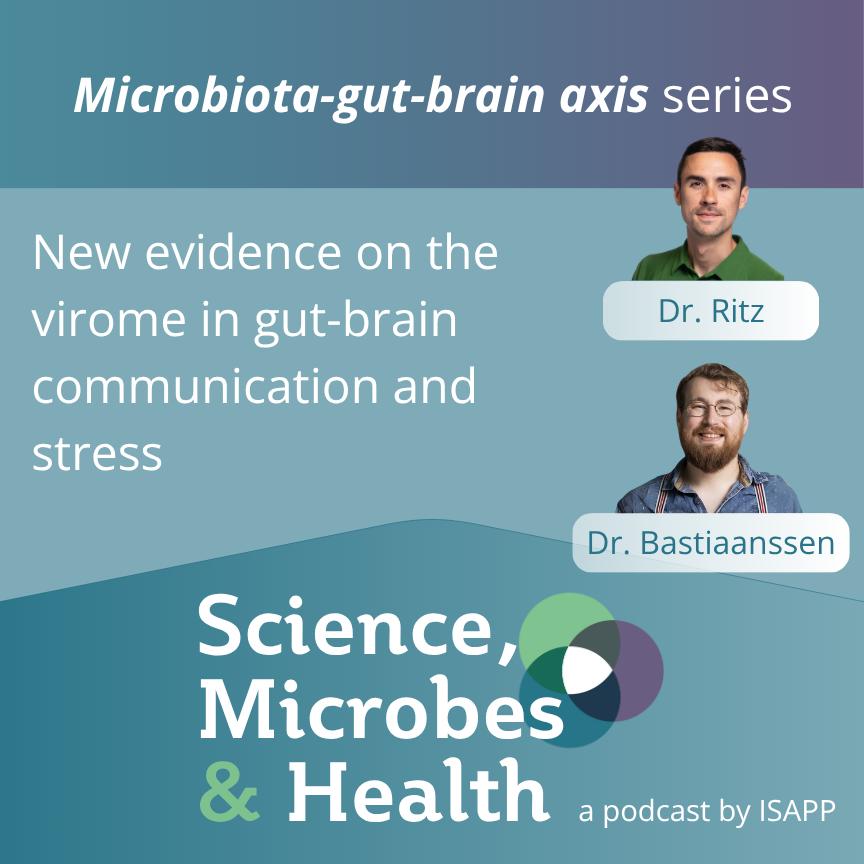
Continuing our series on the microbiota-gut-brain axis, we are highlighting Episode 34 from our archives. In this episode, the ISAPP hosts discuss a new study on how the gut virome affects the host during stress, with Nathaniel (Nate) Ritz from the Institute for Systems Biology in Seattle, USA and Thomaz Bastiaanssen from APC Microbiome Ireland. The guests give an overview of the microbiota-gut-brain axis, then delve into a new study they led on the virome and its effects on stress responses in mice.
Key topics from this episode:
The gut and the brain communicate in various ways, and the microbiota play a role in some of these modes of communication. Various studies use animal models to look at mechanisms that might be applicable to humans.
Why would the microbiota affect the human brain? Because we evolved with a ‘background’ of microbes and have relied on them as we evolved. For example, gut microbes produce metabolites the human body is unable to produce by itself.
The newly published paper is titled “The gut virome is associated with stress-induced changes in behaviour and immune responses in mice”.
Most microbiota-gut-brain axis research to date has looked at the bacterial component of the microbiome, but this misses the bigger context. The virome is the collection of viruses in the gut, mostly consisting of bacteriophages (which infect bacteria in the gut). This study focused on the virome and how it influenced the gut bacteriome as well as host behavior.
Bioinformatics challenges exist when working with the virome for several reasons. For one, distinguishing the biology of a bacteriophage from its host can be challenging.
The study used a fecal virome transplant: taking a fecal sample, removing the cellular organisms and small particulates so that the bacteriophages were left over, and then concentrating them and administering them. The researchers took this entire virome from a mouse, then transferred it back to the same individual mouse while it was undergoing stress.
After stress, differences were seen in the mouse gut bacteriome and virome. The mice had higher anxiety- and depression-like behaviour, plus changes in their immune systems. But after the fecal virome transplant, some of their behaviours were improved.
Do the viruses impact the host nervous system directly, or do they only affect the host by way of the bacteriome? This is not fully known, but there appears to be very little interaction of the bacteriophages with the host.
Analysis of the gut bacteriome or virome must respect the compositional nature of the data. The types of measurements used to analyze the microbiome and virome are confounded by compositional effects, and in the field this is not respected as much as it should be.
The next step after this study is to explore the changes in microbiome function in the mice, perhaps pinpointing which bacterial groups need to be changed to normalize the mouse behaviours.
Episode links:
Study showing how bacteriophages in the gut are associated with inflammation: Expansion of Bacteriophages Is Linked to Aggravated Intestinal Inflammation and Colitis
The idea of gut microbiota volatility: Volatility as a Concept to Understand the Impact of Stress on the Microbiome
Two-part microbiome bioinformatics analysis guidebook by Thomaz Bastiaanssen (See supplementary data for an in-depth, reproducible tutorial in R): Part 1, Part 2
Information on John Aitchison’s work on compositional analysis: Aitchison’s Compositional Data Analysis 40 Years on: A Reappraisal
About Nathaniel Ritz:
Dr. Nathaniel Ritz completed his PhD in Prof. John Cryan’s lab at APC Microbiome Ireland where he studied the role of the bacteriome and the virome in social and stress-related disorders. His interests lie in elucidating microbiota-host interactions and establishing microbiota causality within the microbiota-gut-brain axis. Nathaniel has recently moved to Seattle, Washington, USA, to join the lab of Dr. Sid Venkatesh as a postdoctoral fellow at the Institute for Systems Biology to further unravel the mechanisms underpinning microbe-host interaction. Outside of the lab, Nathaniel is an avid rock climber, dog walker, and partner to fellow scientist Dr. Minke Nota. More details and current position can be found at https://venkatesh.isbscience.org/
About Thomaz Bastiaanssen:
Dr. Thomaz Bastiaanssen is the lead bioinformatician in Prof. John F. Cryan’s microbiota-gut-brain axis group in Cork, Ireland. He is interested in the ecological dynamics governing host-microbe communication and how this complex interplay can impact human well-being. He will soon transition to a new role at Amsterdam UMC, the Netherlands, where he will continue to study the microbiome gut-brain axis. Besides working on multi-omics analyses, he enjoys horror stories, tabletop games and spending time with his wife, son, and corgi. His website can be found at: https://thomazbastiaanssen.github.io/
English
United States
IN THIS EPISODE
TRANSCRIPT 🔗
Are you the producer of this podcast?
Add a podcast transcript
Need Audio-to-Text?
Transcribe with Listen411 in Just 60 Seconds
SEARCH PAST EPISODES
Search past episodes of The Science, Microbes & Health Podcast.
OTHER EPISODES IN THIS PODCAST

This episode features Dr. Marie-Claire Arrieta PhD from the University of Calgary (Canada), speaking about development of the early life gut microbiome, both in preterm and non-preterm infants. Across the field, it has been established that the early days and months of an infant’s life are very det…
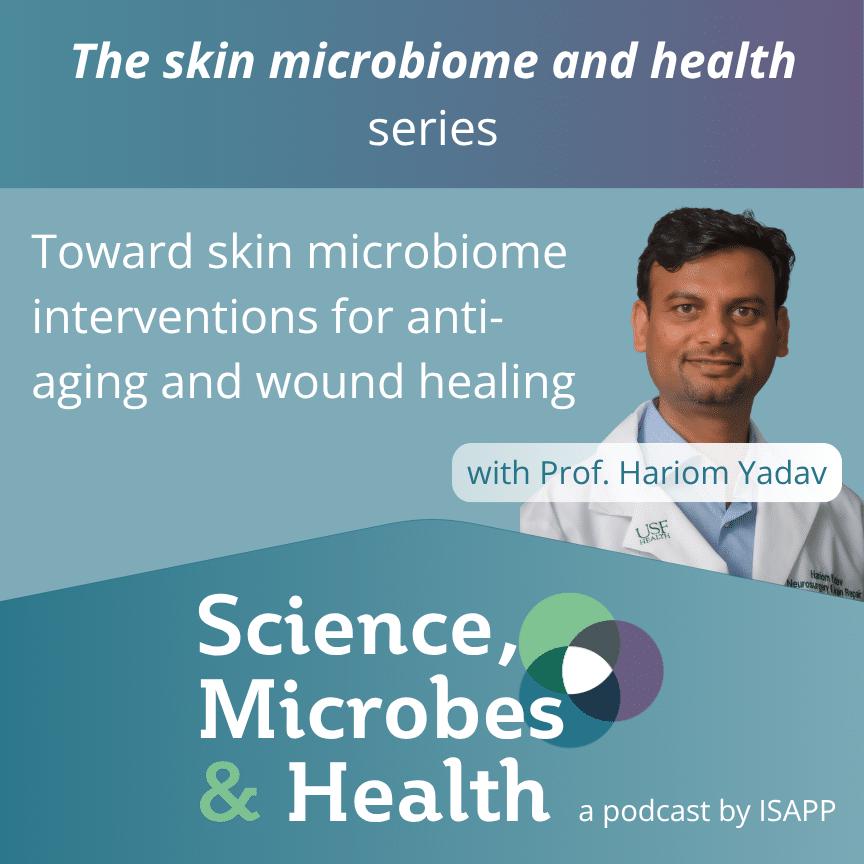
This episode features Prof. Hariom Yadav PhD, from the University of South Florida (USA), speaking about the skin microbiome and potential interventions for anti-aging and wound healing. Prof. Yadav noted that humans have a stable (core) microbiome on the surface of skin cells, plus a transient mic…
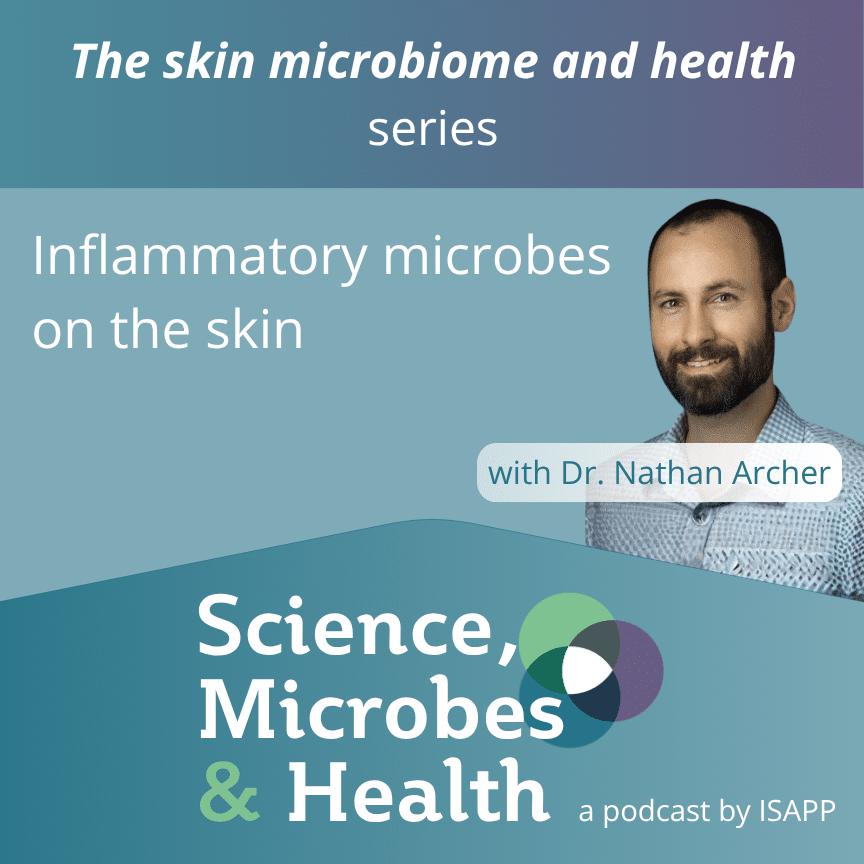
This episode features Dr. Nathan Archer PhD from Johns Hopkins Medicine (USA), speaking about the skin microbiome and particular microorganisms that cause inflammation. The skin is a dynamic organ with the main functions of keeping moisture in and keeping the environment out. Overall, the skin envi…
This episode features Dr. Aayushi Uberoi PhD from Washington University in St. Louis (USA), speaking about the skin microbiome and various techniques for studying it. The skin is a reactive interface that protects the body, with the skin on various parts of the body looking very different because o…
This episode features Dr. Maria Teresa García-Romero, MD MPH from the National Institute of Pediatrics in Mexico City, talking about the skin microbiome and how it relates to atopic dermatitis. The skin microbiome varies widely at different sites on the body, but in general, increased diversity is …
Disclaimer: The podcast and artwork embedded on this page are from International Scientific Association for Probiotics and Prebiotics (ISAPP), which is the property of its owner and not affiliated with or endorsed by Listen Notes, Inc.
EDIT
Thank you for helping to keep the podcast database up to date.
