

00:00:00
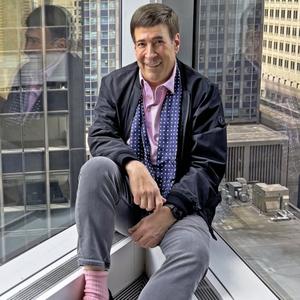
Speaker 1: Live from the wr Life Back Studios, Mark Simon, Well, Steve Cuzo, the great columnist New York Post, nobody better on restaurants, on real estate, on what's going on in New York. You can read his column at the New York Post and all his columns are up on the New York Post website. Steve Cuzo, how you doing?
00:00:22
Speaker 2: I'm great? Mark, thanks better?
00:00:24
Speaker 1: Question how's New York doing? If you watch or talk to people in Florida and everybody's leaving, everybody's leaving it.
00:00:30
Speaker 2: Well, first of all, let me preface my remarks by saying that I want to know a lot more about this guy who jumped off the top of the tower of the Brooklyn Bridge and is a wive. Okay, his name is a guy on our front page today, a bombarie or something like that, and he's being jumped almost three hundred feet into the East River and he survived. So maybe that's a metaphor for the city's resilting.
00:00:57
Speaker 1: Good point, But you know, the guy was say that's your failure. He decided to commit suicide, and then he failed at that too, so.
00:01:04
Speaker 2: Flopped at that. So I'm reading here. He was charged with reckless endangerment, making graffiti, public lewdness, criminal trespass, and disorderly conduct. And I'm thinking the guy should be giving us, the guys a miracle guy. He's like Visen from the day. They should put him in Saint Patrick's Cathedral. You cannot two hundred and seventy eight feet when you jump from that height. The water is steel. So I don't know how this guy survived, or frankly, what how he's surviving. Is he like a human being with arms and legs and everything, or is he like just a piece of general buddy, But.
00:01:42
Speaker 1: You're right, he's a real metaphor for New York. You're right.
00:01:45
Speaker 2: I saw who did this guy credit, and you know Mamdani should point him as a deputy mayor or something.
00:01:52
Speaker 1: Haha. So, but New York's doing well, right, I mean, every you walk along Park Avenue, Messing Avenue, I see skyscrap going up everywhere New Ones.
00:02:02
Speaker 2: Yeah, and it's amazing. And then the rejuvenation, a lot of it, of course started before this current mayor took offus. But I remember last week you and I happened to bump into each other Friday about five o'clock fifth Avenue and I walked past Grand Army Plaza. This is right in front of the Plaza hotel, and it was closed for two years, three years because it needed you know, the usual environmental issues. It was crumbling underneath, and I thought it would never reopen. It reopened. It's magnificent. It's absolutely beautiful. It was full of people sunning themselves, sitting on benches taking pictures of the statue and all that stuff. And you know, that's a great thing. It shows that, you know, believe it or not, despite all the you know, whatever the mayor would wish on us in terms of failure and you know, bankruptcy and crime and everything, that the city still has an energy and a life force that survives just about everything. We'll see if that continues.
00:03:07
Speaker 1: Well, you got these skyscrapers, as I say, going up everywhere in Ken Griffin. He's continuing with that big Park Avenue building, isn't he.
00:03:14
Speaker 2: Well it's funny you should bring that up, because in fact, this is a crucial day that built three fifty Park Avenue, which will be developed by Ken Griffin himself and by Bornado Realty Trust, which is one of the largest commercial landlords, and the Moroon family. Bornado is a publicly traded company and so they have to make quarterly earnings reports as required by the SEC. This happens to be that day after the market's closed. This afternoon, Bornado will release its second quarter earnings report, and then there will be a conference call tomorrow morning for investors about nine ten am, at which the heads of the company will speak. Now, guaranteed, people are not that interested in you know, how many square feet did Bornado leased this last quarter. They want to hear about three fifty Park Avenue, and so we all expect that that will be the definitive final word in all likelihood. I I hope I'm right about this. Ken Griffin is still in the project, despite the disgusting way he was treated by Mayor Mamdani, and everything will go forward and it will be fine. Obviously, if there's been a change of mind or heart, that's another kind of story altogether, but we'll get we'll finally get the answer. Right now, they're demolishing. They've begun demolishing three different buildings on Park Avenue and East fifty second Street to start making way for this new skyscraper where two of Ken Griffin's companies, both Citadel companies for which he's known, will be the anchor tenant. Without them, this project can't go forward. You don't put up a million and a half square foot skyscraper without an anchor tenant. So Bornado has been proceeding with demolition in the apparently in the expectation that, uh, it's going to happen. And although Ken Griffin has made some pointed remarks about expanding his operations in South Florida, Uh, he was very cagy. He never said that he's changed his mind about this project. But we'll just have to see.
00:05:36
Speaker 1: Yeah, hey, still keys of that office building. They were converting it to apartments. Residential started to collapse, and now there was another one. They have to hold it.
00:05:47
Speaker 2: There's a couple of them now.
00:05:48
Speaker 1: Yeah, So what does that mean. Is this going to stop this trends?
00:05:51
Speaker 2: I don't think. I don't think it's going to have the least effect on the conversion phenomenon. Generally, if somebody owns an office building and they want to or a hotel or whatever, and they want to turn into turn it into apartments, they're going to go ahead and do that and not be deterred by this. What it should mean is better inspection by the buildings departments. You know, the DLB, which can absolutely give fits to small business people. You know, your door is like too many inches above the whatever.
00:06:25
Speaker 1: Is.
00:06:27
Speaker 2: Remarkably lacks when it comes to major projects. And so one reason is that they tend to rely on I'm not an expert on this, I shouldn't really be talking about it, but in some sense they allow building owners to use outside inspectors to you know, say that everything here is fine, and then the buildings department will rely on that. That seems to be what happened in the case of the former pfisor buildings on East the forty second Street, and it's unfortunate, bad news for the obviously for the owners of these properties, Thank goodness, no one seems to have been hurt.
00:07:11
Speaker 1: Uh.
00:07:12
Speaker 2: And it'll flow those particular projects down a little bit, but it's not going to make a change in the overall phenomenon. The momentum to convert mostly antiquated, crummy old office buildings and a few other kinds of buildings as well, hotels, two apartments. Nobody's slowing that down.
00:07:36
Speaker 1: Okay, Well, hey, Steve, because every time I read these lists the highest ranked restaurants. It's all Japanese and now all a lot of Indian restaurants. What's that all about, Well.
00:07:47
Speaker 2: You know the Indian restaurants, which I wrote about last week week before. They're an amazing phenomenon because New York has always had Indian food, We've had some very good Indian food. The option was that the Indian food in New York was not as good as the Indian food in London, for example, mainly because London has a much larger Indian born population than New York City does. But this has changed. In the last six seven years. There are not merely one or two, but probably eight or nine or ten new Indian restaurants that are worthy of Micheline Stars Micheline consideration, and they have become remarkably some of the hottest places in town, the way it used to be impossible to get into some of the Japanese O Makasi restaurants. Now that's two of the Indian restaurants, and they're very large places like Ambassador's Clubhouse Exciting, which is sort of an odd name for an Indian restaurant. That's a big place, over two hundred seats and luxurious and beautiful. Try getting in there. It's very difficult. It's like getting a reservation at you know, the eighty six or one of those real small, sort of boldface oriented restaurants. And New York we've always had, for my money, Tameron in Tribeca has long been New York City's best Indian restaurant overall my wide margin. Sorry, what's it called. Tamaran Tamaron camraon Tamaron Tamaron Tribeca. It's on the Hudson Street. It's a great restaurant. It's been there fifteen years or more, and now it has company. The interesting thing about the Indian restaurants who were seeing now is that some of them reflect Northern Indian styles, which is what New Yorkers are more familiar with. Involves a lot of Candori grilling. But now we're getting restaurants that are based on the cuisine of South and Southern India and the coast, and they include Semma and Ada. These are great restaurants. They're they're not as luxurious as some of the old ones, but they are a whole new set of flavors. Food tends to be very spicy and uh, you know this reflects the extent to the New York restaurant scene. Like the city itself, regenerates. Just when you never expect, you know, something new to come, it comes.
00:10:20
Speaker 1: Hey, well only only a minute left. But we're talking about diners before, good old fashioned diners. They're disappearing from New Jersey, Long Island everywhere. Yeah, what will they ever make a comeback to that good old fashioned diner?
00:10:33
Speaker 2: I think some of them have a lot of favorite old diners have disappeared. I lost the bunch.
00:10:39
Speaker 1: You know.
00:10:39
Speaker 2: There was the Amite on Madison Avenue. I think it was called Neptune in Jackson Hights. You see it from the number seven trail and training. I can't remember what trying. I used to eat there a lot. So some of the favorites have gone. There was one on First Avenue called Tramway, like sixtieth Street has been closed for two years. I don't know why. But there are also a lot of new ones which somehow don't get quite as much attention. So, for example, there's a new Carnegie Diner right across from my office Avenue at forty seven.
00:11:13
Speaker 1: It's great, it's great, but it looks more like a It looks like a restaurant doesn't look like a diner.
00:11:17
Speaker 2: Well yeah, I mean, you know, the economics have changed, so I think a new diner needs more room of the kind that you get with, you know, with a more of a restaurant kind of layout than an old diner. I love. Nothing makes me happier than old fashioned diners that have boots. And you walk in and you know it's a diner. So the one nearest to me that I go, where I go all the time, it's called Red Flame, and it's on West forty fourth, I think. And you go in there, you got the boots. There's something about boots, boots, sorry, that make people happy and comfortable, and I love them, and I wish there are more of them. And I don't mean the big round no fancy you get in trendy restaurants. Boots. You and me face each other.
00:12:07
Speaker 1: The booths with the little jukebox in them, the perfect.
00:12:09
Speaker 2: Yeah, there's not a lot of little jukeboxes.
00:12:13
Speaker 1: We're out of time. But if you want to read more, just go read Steve Cuzo's great columns. They're all up on the New York Post website. You just go to New York Post, go to Opinion go to Steve Cuzo. All his columns in there. You can read them there. Steve Cuzo, thanks for being with us.
00:12:28
Speaker 2: Thank you Mark always fun.
00:12:29
Speaker 1: Take care. Hey, don't forget we're on three hours now. This show is now three hours. We start at nine am every day. If you didn't know that we're starting tomorrow, you can start listening at nine am. This show is now nine to noon every day, right after Curtis Leiwa, Larry Minty, they're on six to nine right here on seven to ten WR
Speaker 1: Live from the wr Life Back Studios, Mark Simon, Well, Steve Cuzo, the great columnist New York Post, nobody better on restaurants, on real estate, on what's going on in New York. You can read his column at the New York Post and all his columns are up on the New York Post website. Steve Cuzo, how you doing?
00:00:22
Speaker 2: I'm great? Mark, thanks better?
00:00:24
Speaker 1: Question how's New York doing? If you watch or talk to people in Florida and everybody's leaving, everybody's leaving it.
00:00:30
Speaker 2: Well, first of all, let me preface my remarks by saying that I want to know a lot more about this guy who jumped off the top of the tower of the Brooklyn Bridge and is a wive. Okay, his name is a guy on our front page today, a bombarie or something like that, and he's being jumped almost three hundred feet into the East River and he survived. So maybe that's a metaphor for the city's resilting.
00:00:57
Speaker 1: Good point, But you know, the guy was say that's your failure. He decided to commit suicide, and then he failed at that too, so.
00:01:04
Speaker 2: Flopped at that. So I'm reading here. He was charged with reckless endangerment, making graffiti, public lewdness, criminal trespass, and disorderly conduct. And I'm thinking the guy should be giving us, the guys a miracle guy. He's like Visen from the day. They should put him in Saint Patrick's Cathedral. You cannot two hundred and seventy eight feet when you jump from that height. The water is steel. So I don't know how this guy survived, or frankly, what how he's surviving. Is he like a human being with arms and legs and everything, or is he like just a piece of general buddy, But.
00:01:42
Speaker 1: You're right, he's a real metaphor for New York. You're right.
00:01:45
Speaker 2: I saw who did this guy credit, and you know Mamdani should point him as a deputy mayor or something.
00:01:52
Speaker 1: Haha. So, but New York's doing well, right, I mean, every you walk along Park Avenue, Messing Avenue, I see skyscrap going up everywhere New Ones.
00:02:02
Speaker 2: Yeah, and it's amazing. And then the rejuvenation, a lot of it, of course started before this current mayor took offus. But I remember last week you and I happened to bump into each other Friday about five o'clock fifth Avenue and I walked past Grand Army Plaza. This is right in front of the Plaza hotel, and it was closed for two years, three years because it needed you know, the usual environmental issues. It was crumbling underneath, and I thought it would never reopen. It reopened. It's magnificent. It's absolutely beautiful. It was full of people sunning themselves, sitting on benches taking pictures of the statue and all that stuff. And you know, that's a great thing. It shows that, you know, believe it or not, despite all the you know, whatever the mayor would wish on us in terms of failure and you know, bankruptcy and crime and everything, that the city still has an energy and a life force that survives just about everything. We'll see if that continues.
00:03:07
Speaker 1: Well, you got these skyscrapers, as I say, going up everywhere in Ken Griffin. He's continuing with that big Park Avenue building, isn't he.
00:03:14
Speaker 2: Well it's funny you should bring that up, because in fact, this is a crucial day that built three fifty Park Avenue, which will be developed by Ken Griffin himself and by Bornado Realty Trust, which is one of the largest commercial landlords, and the Moroon family. Bornado is a publicly traded company and so they have to make quarterly earnings reports as required by the SEC. This happens to be that day after the market's closed. This afternoon, Bornado will release its second quarter earnings report, and then there will be a conference call tomorrow morning for investors about nine ten am, at which the heads of the company will speak. Now, guaranteed, people are not that interested in you know, how many square feet did Bornado leased this last quarter. They want to hear about three fifty Park Avenue, and so we all expect that that will be the definitive final word in all likelihood. I I hope I'm right about this. Ken Griffin is still in the project, despite the disgusting way he was treated by Mayor Mamdani, and everything will go forward and it will be fine. Obviously, if there's been a change of mind or heart, that's another kind of story altogether, but we'll get we'll finally get the answer. Right now, they're demolishing. They've begun demolishing three different buildings on Park Avenue and East fifty second Street to start making way for this new skyscraper where two of Ken Griffin's companies, both Citadel companies for which he's known, will be the anchor tenant. Without them, this project can't go forward. You don't put up a million and a half square foot skyscraper without an anchor tenant. So Bornado has been proceeding with demolition in the apparently in the expectation that, uh, it's going to happen. And although Ken Griffin has made some pointed remarks about expanding his operations in South Florida, Uh, he was very cagy. He never said that he's changed his mind about this project. But we'll just have to see.
00:05:36
Speaker 1: Yeah, hey, still keys of that office building. They were converting it to apartments. Residential started to collapse, and now there was another one. They have to hold it.
00:05:47
Speaker 2: There's a couple of them now.
00:05:48
Speaker 1: Yeah, So what does that mean. Is this going to stop this trends?
00:05:51
Speaker 2: I don't think. I don't think it's going to have the least effect on the conversion phenomenon. Generally, if somebody owns an office building and they want to or a hotel or whatever, and they want to turn into turn it into apartments, they're going to go ahead and do that and not be deterred by this. What it should mean is better inspection by the buildings departments. You know, the DLB, which can absolutely give fits to small business people. You know, your door is like too many inches above the whatever.
00:06:25
Speaker 1: Is.
00:06:27
Speaker 2: Remarkably lacks when it comes to major projects. And so one reason is that they tend to rely on I'm not an expert on this, I shouldn't really be talking about it, but in some sense they allow building owners to use outside inspectors to you know, say that everything here is fine, and then the buildings department will rely on that. That seems to be what happened in the case of the former pfisor buildings on East the forty second Street, and it's unfortunate, bad news for the obviously for the owners of these properties, Thank goodness, no one seems to have been hurt.
00:07:11
Speaker 1: Uh.
00:07:12
Speaker 2: And it'll flow those particular projects down a little bit, but it's not going to make a change in the overall phenomenon. The momentum to convert mostly antiquated, crummy old office buildings and a few other kinds of buildings as well, hotels, two apartments. Nobody's slowing that down.
00:07:36
Speaker 1: Okay, Well, hey, Steve, because every time I read these lists the highest ranked restaurants. It's all Japanese and now all a lot of Indian restaurants. What's that all about, Well.
00:07:47
Speaker 2: You know the Indian restaurants, which I wrote about last week week before. They're an amazing phenomenon because New York has always had Indian food, We've had some very good Indian food. The option was that the Indian food in New York was not as good as the Indian food in London, for example, mainly because London has a much larger Indian born population than New York City does. But this has changed. In the last six seven years. There are not merely one or two, but probably eight or nine or ten new Indian restaurants that are worthy of Micheline Stars Micheline consideration, and they have become remarkably some of the hottest places in town, the way it used to be impossible to get into some of the Japanese O Makasi restaurants. Now that's two of the Indian restaurants, and they're very large places like Ambassador's Clubhouse Exciting, which is sort of an odd name for an Indian restaurant. That's a big place, over two hundred seats and luxurious and beautiful. Try getting in there. It's very difficult. It's like getting a reservation at you know, the eighty six or one of those real small, sort of boldface oriented restaurants. And New York we've always had, for my money, Tameron in Tribeca has long been New York City's best Indian restaurant overall my wide margin. Sorry, what's it called. Tamaran Tamaron camraon Tamaron Tamaron Tribeca. It's on the Hudson Street. It's a great restaurant. It's been there fifteen years or more, and now it has company. The interesting thing about the Indian restaurants who were seeing now is that some of them reflect Northern Indian styles, which is what New Yorkers are more familiar with. Involves a lot of Candori grilling. But now we're getting restaurants that are based on the cuisine of South and Southern India and the coast, and they include Semma and Ada. These are great restaurants. They're they're not as luxurious as some of the old ones, but they are a whole new set of flavors. Food tends to be very spicy and uh, you know this reflects the extent to the New York restaurant scene. Like the city itself, regenerates. Just when you never expect, you know, something new to come, it comes.
00:10:20
Speaker 1: Hey, well only only a minute left. But we're talking about diners before, good old fashioned diners. They're disappearing from New Jersey, Long Island everywhere. Yeah, what will they ever make a comeback to that good old fashioned diner?
00:10:33
Speaker 2: I think some of them have a lot of favorite old diners have disappeared. I lost the bunch.
00:10:39
Speaker 1: You know.
00:10:39
Speaker 2: There was the Amite on Madison Avenue. I think it was called Neptune in Jackson Hights. You see it from the number seven trail and training. I can't remember what trying. I used to eat there a lot. So some of the favorites have gone. There was one on First Avenue called Tramway, like sixtieth Street has been closed for two years. I don't know why. But there are also a lot of new ones which somehow don't get quite as much attention. So, for example, there's a new Carnegie Diner right across from my office Avenue at forty seven.
00:11:13
Speaker 1: It's great, it's great, but it looks more like a It looks like a restaurant doesn't look like a diner.
00:11:17
Speaker 2: Well yeah, I mean, you know, the economics have changed, so I think a new diner needs more room of the kind that you get with, you know, with a more of a restaurant kind of layout than an old diner. I love. Nothing makes me happier than old fashioned diners that have boots. And you walk in and you know it's a diner. So the one nearest to me that I go, where I go all the time, it's called Red Flame, and it's on West forty fourth, I think. And you go in there, you got the boots. There's something about boots, boots, sorry, that make people happy and comfortable, and I love them, and I wish there are more of them. And I don't mean the big round no fancy you get in trendy restaurants. Boots. You and me face each other.
00:12:07
Speaker 1: The booths with the little jukebox in them, the perfect.
00:12:09
Speaker 2: Yeah, there's not a lot of little jukeboxes.
00:12:13
Speaker 1: We're out of time. But if you want to read more, just go read Steve Cuzo's great columns. They're all up on the New York Post website. You just go to New York Post, go to Opinion go to Steve Cuzo. All his columns in there. You can read them there. Steve Cuzo, thanks for being with us.
00:12:28
Speaker 2: Thank you Mark always fun.
00:12:29
Speaker 1: Take care. Hey, don't forget we're on three hours now. This show is now three hours. We start at nine am every day. If you didn't know that we're starting tomorrow, you can start listening at nine am. This show is now nine to noon every day, right after Curtis Leiwa, Larry Minty, they're on six to nine right here on seven to ten WR
