

WEBVTT
00:00:02.240 --> 00:00:10.240
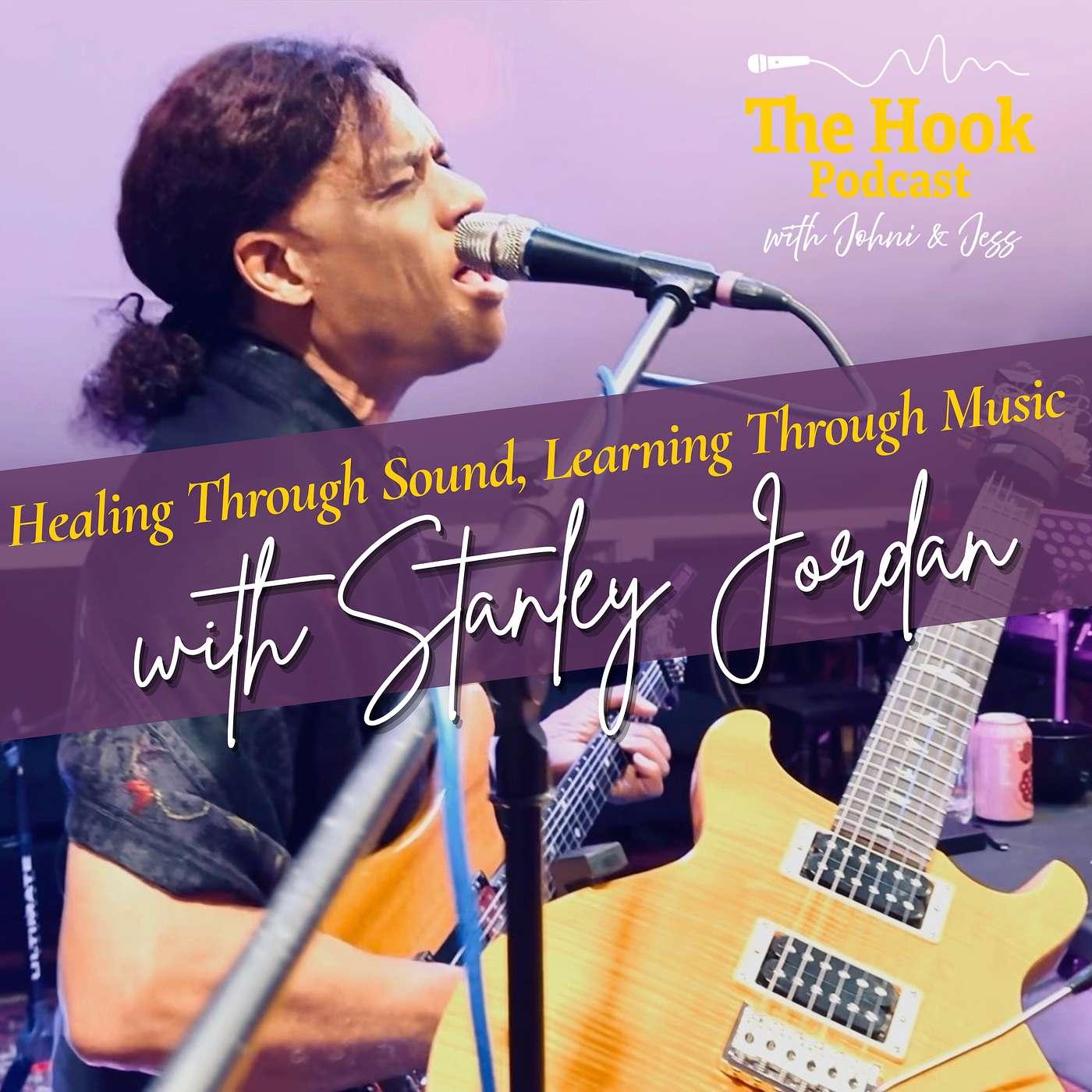
Today on The Hook, we're talking to a musician who didn't just master his instrument, he reimagined what it could be.
00:00:10.480 --> 00:00:16.879
Stanley Jordan is a world-renowned guitarist known for his groundbreaking two-handed touch technique.
00:00:16.960 --> 00:00:25.280
It allows him to play melody, harmony, and rhythm all at once, sometimes even across multiple instruments.
00:00:25.519 --> 00:00:28.800
Stanley Jordan, you're on the hook.
00:01:33.439 --> 00:01:37.200
Do you find that when people listen to you, that's a normal reaction?
00:01:37.519 --> 00:01:40.159
Yeah, I mean, sometimes I have that reaction too.
00:01:40.319 --> 00:01:48.319
I mean, sometimes I go for the note that's just so achingly beautiful that it makes you want to cry.
00:01:48.560 --> 00:01:53.200
And I do feel it's not crying in a bad way, but just opening our hearts.
00:01:53.359 --> 00:01:55.200
Like music can open our hearts.
00:01:55.359 --> 00:01:58.319
And that's not always the purpose of all music.
00:01:58.480 --> 00:02:00.079
Music can have different functions.
00:02:00.400 --> 00:02:04.159
But I go for very often the music without purpose.
00:02:04.480 --> 00:02:07.519
It's from your heart down to your toes for me.
00:02:07.920 --> 00:02:15.439
I do feel that it's something that's needed today, too, because we have so much external stimuli coming at us all the time.
00:02:15.759 --> 00:02:20.159
And it encourages us to be in more of an external mode of thinking.
00:02:20.319 --> 00:02:23.199
We're always looking around, dealing with the external world.
00:02:23.280 --> 00:02:26.479
And even in music, we tend to be very external.
00:02:26.719 --> 00:02:30.319
Like when we're practicing, what is it that we're practicing for?
00:02:30.719 --> 00:02:41.199
We're practicing in order to be able to execute a certain thing or to get a certain result, like passing the audition or getting a standing ovation or whatever.
00:02:41.280 --> 00:02:42.800
It's always this external thing.
00:02:43.039 --> 00:02:49.199
But what we musicians need to think about more is what is the experience that we're practicing for?
00:02:49.360 --> 00:02:53.680
What is it going to be like when I'm on the stage or in the studio or whatever?
00:02:53.840 --> 00:02:56.000
And when I practice, that's the goal that I set.
00:02:56.159 --> 00:02:58.319
I set the goal to have that experience.
00:02:58.479 --> 00:03:04.240
Because if I'm having that deep, profound experience, then I figure the audience can feel that too.
00:03:04.479 --> 00:03:05.199
It will convey.
00:03:05.599 --> 00:03:10.159
And you know, you were just talking about that the the world is kind of in a turmoil right now.
00:03:10.319 --> 00:03:16.560
I was thinking one of my favorite quotes from Rumi, and if you don't mind, I have to read this because I want to get it right now.
00:03:18.960 --> 00:03:19.439
Okay, okay.
00:03:19.919 --> 00:03:33.759
Blessed are the gypsies, the makers of music, the artists, writers, dreamers of dreams, wanderers and vagabonds, children and misfits, for they teach us to see the world through beautiful eyes.
00:03:34.080 --> 00:03:47.039
You and I were actually discussing this in the kitchen where we feel like so much now is so two-dimensional and it's it's so immediate, like immediate gratification and not as much heart that's truly in it.
00:03:47.199 --> 00:03:56.000
We were talking about the fact that maybe it's time for the music and the artists and the wanderers and the dreamers of dreams to step up.
00:03:56.400 --> 00:04:06.400
Yeah, I do think that artists, creative people need to take more of a role, need to be a little bit more bold and a little more courageous.
00:04:06.800 --> 00:04:10.560
To one thing that you were saying before, you were talking about the turmoil.
00:04:10.879 --> 00:04:13.599
And I agree that there's a lot of turmoil in the world.
00:04:13.680 --> 00:04:14.400
That's true.
00:04:14.639 --> 00:04:19.839
But at the same time, I have this feeling that something new is coming in, something new.
00:04:20.000 --> 00:04:22.240
I feel the emergence of something.
00:04:22.399 --> 00:04:26.079
And it's not just, I'd love to imagine, we have to imagine.
00:04:26.480 --> 00:04:28.560
No, I feel it, I believe it.
00:04:28.800 --> 00:04:31.199
I think Marianne Williamson said it really well.
00:04:31.360 --> 00:04:36.879
She said, there's a world that's dying around us, but there's another world that's struggling to be born.
00:04:37.040 --> 00:04:42.639
And she says we have to be death duelist to the old and at the same time birth duelist to the new.
00:04:42.959 --> 00:04:43.920
We can't forget that.
00:04:44.000 --> 00:04:50.240
It's almost like the chaos and the turmoil is a sign that the old energy is clearing out.
00:04:50.399 --> 00:04:52.000
And so here's the important point.
00:04:52.160 --> 00:04:53.279
What is this new thing?
00:04:53.439 --> 00:04:55.600
It's not about sitting back and waiting.
00:04:55.759 --> 00:04:57.279
It is about us creating it.
00:04:57.360 --> 00:05:01.040
That is the whole point, is that we need to exercise our creative powers.
00:05:01.120 --> 00:05:04.639
And that's why you're talking about the artists and the and the creative people.
00:05:04.800 --> 00:05:11.120
Because not only do we need to play a role, but really there's other people who are more like builders.
00:05:11.360 --> 00:05:13.120
You know, I'm more of an inside person.
00:05:13.199 --> 00:05:17.600
I talk about feelings and I create internal states and moves.
00:05:17.680 --> 00:05:18.319
That's my thing.
00:05:18.480 --> 00:05:24.800
But there's other people who are more like physical builders and stuff, but we artists can still inspire them as well.
00:05:24.959 --> 00:05:37.040
So the point is, all of us, regardless of what our orientation or our calling is, we can collectively build the sustainable future as a creative work of art.
00:05:37.199 --> 00:05:48.639
If we think of ourselves as artists, because all the great things in civilization, whether it's the pyramids or the sphinx or Machu Picchu or whatever, all of that started in somebody's mind.
00:05:48.800 --> 00:05:51.040
People imagined that and then they did it.
00:05:51.199 --> 00:05:54.879
And so the wisdom of the artist is that creation comes from within.
00:05:55.120 --> 00:05:59.759
So we all need to be encouraged to grow that inside part of us.
00:05:59.839 --> 00:06:03.600
Then we need to really nurture that and honor it and believe in it.
00:06:03.839 --> 00:06:09.680
Because that's the power that we're going to draw from to collectively build the future as a work of art.
00:06:10.160 --> 00:06:16.079
If you were the leader of this, let's call it initiative in literal terms, where do we start?
00:06:16.480 --> 00:06:16.959
I don't know.
00:06:17.120 --> 00:06:22.319
I mean, you're challenging me here because you know that seems too, you know, egotistical to even think about.
00:06:23.920 --> 00:06:38.160
I want to put it into I think so many people are in such turmoil right now and scared and really curious what your thoughts are on how to go from leaning into that inside creatively and building on that love and that messaging.
00:06:38.319 --> 00:06:40.720
You know, I keep thinking of we are the world for some reason.
00:06:41.040 --> 00:06:48.240
And the magic of what happened when all those people collectively came together and put the took ego out and put their voices all together.
00:06:48.319 --> 00:06:50.000
It was so magical and it did so much.
00:06:50.079 --> 00:06:52.800
And that's been a while since we've had something like that.
00:06:53.199 --> 00:06:58.240
Well, it is a great idea that people in the arts can organize something else.
00:06:58.319 --> 00:07:00.160
It doesn't have to even be one thing.
00:07:00.319 --> 00:07:02.160
There should be a lot of things like that.
00:07:02.399 --> 00:07:11.199
One of my favorite things last year at the Grammys, they had the Israeli and Palestinian musicians playing together on a string quartet.
00:07:11.279 --> 00:07:13.040
That was just like goosebumps.
00:07:13.120 --> 00:07:14.399
That was, I mean, that's what we need.
00:07:14.480 --> 00:07:15.279
It was wonderful.
00:07:15.519 --> 00:07:18.319
The words that were said before, the whole thing was just perfect.
00:07:18.399 --> 00:07:19.360
So that was one thing.
00:07:19.519 --> 00:07:21.839
We need a thousand things like that.
00:07:22.079 --> 00:07:26.879
And everybody has their own area that they have influence over.
00:07:27.040 --> 00:07:30.160
Maybe it's just their friends or family or whatever.
00:07:30.399 --> 00:07:34.639
We all can cultivate more of an artistic expression.
00:07:34.959 --> 00:07:36.879
There's this old philosophy.
00:07:36.959 --> 00:07:39.439
Well, Kant kind of crystallized it.
00:07:39.600 --> 00:07:42.720
The idea that you have the good, the true, and the beautiful.
00:07:42.879 --> 00:07:48.000
I know maybe overgeneralizing it a little bit, but in the arts, our jurisdiction is the beautiful.
00:07:48.160 --> 00:07:52.560
I realize that sometimes art can be ugly or can be, you know, that can still be art.
00:07:52.720 --> 00:08:05.120
But in a sense, even if you create something that's deliberately showing the shadow or the dark side or the ugly side, you're still viewing it through the through a lens and putting a frame and seeing the beauty in the ugly.
00:08:05.279 --> 00:08:06.560
I don't know if that makes sense.
00:08:06.720 --> 00:08:09.439
But our domain in the arts is the beautiful.
00:08:09.600 --> 00:08:13.600
So you got all these people talking about, oh, it's all about the true.
00:08:13.759 --> 00:08:27.519
But now it's hard to even know what's true anymore because you got all the deep fakes and all the competing narratives, and you know, money determines what's going to get shown to us, not necessarily actual real truth.
00:08:27.680 --> 00:08:35.919
And then you got the good, the people who are focused on the good, but so often they've got these old, antiquated, outdated notions of what is good.
00:08:36.000 --> 00:08:41.360
You know, we're gonna bring everyone back to morality, our 14th century morality or whatever.
00:08:41.519 --> 00:08:48.240
And so what I love about the beautiful is that the beautiful understands, like you know, they say, beauty's in the eye of the beholder.
00:08:48.320 --> 00:08:49.519
That's a common thing, right?
00:08:49.759 --> 00:08:54.960
So people have a kind of innate understanding that beauty is not a fixed thing.
00:08:55.120 --> 00:08:59.440
I mean, you might have the fashion world says that, you know, red is in the season.
00:09:00.080 --> 00:09:02.480
There's things like that, there's collective things like that.
00:09:02.639 --> 00:09:10.000
But on the whole, we get that beauty is more really a way of seeing things than a thing in itself.
00:09:10.159 --> 00:09:12.799
And that's how it gets back to that internal thing.
00:09:12.960 --> 00:09:15.360
We have to recultivate the inside.
00:09:15.759 --> 00:09:18.080
Putting the positive out in the universe.
00:09:18.320 --> 00:09:20.399
Jess and I will say something negative.
00:09:20.559 --> 00:09:23.679
Jess will correct me and go, no, don't put that out there.
00:09:23.840 --> 00:09:25.120
Put the positive out there.
00:09:25.279 --> 00:09:28.159
And I feel like so much news is putting out so much negative.
00:09:28.720 --> 00:09:30.159
And there's the good, getting back to the good.
00:09:30.799 --> 00:09:33.759
Yes, getting back to the good and start telling good stories.
00:09:33.919 --> 00:09:37.840
I mean, I love when the news will tell a really happy good story about somebody saving a dog.
00:09:38.080 --> 00:09:40.480
Yeah, there's that whole thing, you know, if it bleeds, it leaves.
00:09:40.559 --> 00:09:43.039
But that's one of those self-fulfilling prophecies.
00:09:43.200 --> 00:09:46.320
I think people do want to hear good stories because people want to be inspired.
00:09:46.399 --> 00:09:48.320
And I think, especially like young people.
00:09:48.559 --> 00:09:55.279
For me, I'm old enough to remember when most of the shows that we saw were actually teaching a lesson.
00:09:55.440 --> 00:09:57.120
There was a moral to the story.
00:09:57.279 --> 00:09:58.080
You know, Mr.
00:09:58.159 --> 00:09:59.759
Rogers, the after school series.
00:10:00.000 --> 00:10:02.000
Remember that reason for those?
00:10:02.080 --> 00:10:03.440
What is the after school special?
00:10:03.600 --> 00:10:03.840
Yeah.
00:10:04.080 --> 00:10:04.399
Yeah.
00:10:04.639 --> 00:10:06.159
Imagine if they had Mr.
00:10:06.240 --> 00:10:09.200
Rogers when there was that conflict in Abraham's family.
00:10:09.279 --> 00:10:11.679
You know, we wouldn't have a lot of these issues today.
00:10:13.600 --> 00:10:17.840
Stanley, you've worked across so many different musical worlds.
00:10:18.000 --> 00:10:20.399
I want to dive into some of those experiences.
00:10:20.720 --> 00:10:26.399
But first, I want to know how you tend to approach stepping into someone else's creative space.
00:10:26.720 --> 00:10:27.200
I love that.
00:10:27.360 --> 00:10:30.080
I really love that because I've got my thing.
00:10:30.240 --> 00:10:32.720
I love being pulled out of my zone.
00:10:32.879 --> 00:10:35.279
It's not necessarily out of my comfort zone.
00:10:35.440 --> 00:10:40.720
I mean, sometimes you got to get out of your comfort zone, but for the most part, it's about expanding your comfort zone.
00:10:40.879 --> 00:10:46.320
And so I like getting comfortable in someone else's living room and saying, how can I contribute?
00:10:46.480 --> 00:10:50.480
So, like so many people, they do their own thing and they have the thing that works for them.
00:10:50.559 --> 00:10:54.559
And it's an interesting challenge for me to try to figure out how I can enhance that.
00:10:54.720 --> 00:10:59.279
So, to give you an example, I was a guest sometimes with the Dave Matthews band.
00:10:59.679 --> 00:11:06.639
And it was a really amazing challenge for me because he's such an amazing storyteller and lyricist.
00:11:06.799 --> 00:11:10.639
So I would go in with the idea, there's a story here that's being told.
00:11:10.799 --> 00:11:16.639
And so, whatever I do, my purpose is to enhance the telling of that story.
00:11:16.960 --> 00:11:20.000
And so my choice of notes is all about that.
00:11:20.080 --> 00:11:26.559
So if I'm not listening, like a lot of people who are like serious, they're listening to the notes and the chords, and what scale am I gonna use here, you know?
00:11:26.720 --> 00:11:28.320
But I'm all about the story.
00:11:28.480 --> 00:11:32.720
I want to do something that's gonna help that artist, that's gonna support that artist.
00:11:32.879 --> 00:11:37.360
What's gonna enhance people's experience of going to the Dave Matthews show?
00:11:37.519 --> 00:11:39.039
Or like with Kenny Rogers.
00:11:39.200 --> 00:11:42.320
So Kenny Rogers had written this song, Morning Desire.
00:11:42.559 --> 00:11:45.519
There was this Bruce Bringsteen song, I'm on fire.
00:11:45.759 --> 00:11:48.320
And there is some similarity there between the two songs.
00:11:48.399 --> 00:11:52.480
And Kenny didn't want people to think that he copied Bruce Springsteen.
00:11:52.639 --> 00:11:57.120
So he was looking for some element to add to the song, to take it in a different direction.
00:11:57.279 --> 00:12:00.799
So he saw me on the Johnny Carson show, and he's like, That's it, that's the element.
00:12:00.960 --> 00:12:09.600
And so when they brought me in, they told me part of your purpose here is to do something different with the song that's gonna make it not sound like the Bruce Springsteen song.
00:12:09.679 --> 00:12:12.639
And so it's like, okay, you know, Roger, you know, I'll do my best.
00:12:12.720 --> 00:12:15.120
So it's fun to figure out, you know, how to do that.
00:12:15.200 --> 00:12:23.360
And so what the song is about is he doesn't want to go to work, he wants to stay home with his lover and listen to the rain.
00:12:23.440 --> 00:12:24.639
And so I was the rain.
00:12:24.799 --> 00:12:24.960
Wow.
00:12:25.679 --> 00:12:27.759
That was my that's how I thought about it.
00:12:28.320 --> 00:12:28.960
I love that.
00:12:29.120 --> 00:12:33.919
I would listen when I was a teenager to Coward of the County and just cry.
00:12:34.080 --> 00:12:35.279
I guess I'm just a crier.
00:12:35.759 --> 00:12:37.519
Well, he's another storyteller, too.
00:12:38.080 --> 00:12:39.679
What was he like as a person?
00:12:40.159 --> 00:12:42.240
Such a sweet guy, such a really nice guy.
00:12:42.480 --> 00:12:44.240
George Martin was the producer on that.
00:12:44.320 --> 00:12:48.000
So George Martin, the Beatles producer, he was the producer on that album.
00:12:48.159 --> 00:12:54.240
And it was interesting watching him work too because he was very all about the genre of the music.
00:12:54.320 --> 00:12:58.000
And yet he wanted to enhance it, but not bring anything that didn't fit.
00:12:58.159 --> 00:13:04.159
And so, you know, coming from being a composer who can write for orchestra, he could do big major scores and all that.
00:13:04.320 --> 00:13:10.080
So, how could he draw from all of that knowledge and expertise to enhance this song?
00:13:10.240 --> 00:13:15.279
You know, I mean, you hear that in the Beatles and all this grandiose stuff that comes in with the Beatles.
00:13:15.440 --> 00:13:18.480
A lot of that stuff was George Martin bringing his expertise in.
00:13:18.720 --> 00:13:21.279
So here he is with Kenny Rogers.
00:13:21.440 --> 00:13:27.840
And when I came into the studio, he really wanted me to be myself and to sound like me.
00:13:28.080 --> 00:13:31.440
And so he's sitting across from me and I'm kind of warming up.
00:13:31.519 --> 00:13:34.240
And he was like, give me more of that Stanley Jordan stuff.
00:13:34.320 --> 00:13:34.720
Give me more.
00:13:34.799 --> 00:13:39.440
And he's like literally like energetically pulling the Stanley stuff out of me.
00:13:39.600 --> 00:13:42.320
And it's like, the more I sounded like me, the more he liked it.
00:13:42.399 --> 00:13:43.679
Like, yeah, yeah, yeah, yeah.
00:13:43.840 --> 00:13:46.240
And that's so I was like, well, what is my sound anyway?
00:13:46.480 --> 00:13:52.000
It's sort of like in that moment, it kind of helped me to understand what it is that I do and how it hits people.
00:13:52.240 --> 00:13:52.720
You know what I mean?
00:13:52.879 --> 00:13:54.320
Right, it's like when somebody else's to you.
00:13:54.399 --> 00:13:56.320
It's when somebody else reflects back to you.
00:13:56.399 --> 00:13:59.039
You know, this is what your essence is, that's so meaningful to me.
00:13:59.200 --> 00:14:01.600
You're like, oh, okay, got it, you know.
00:14:01.840 --> 00:14:05.519
And he said, When you're playing, don't worry about Kenny, don't worry about anything else.
00:14:05.679 --> 00:14:07.440
Pretend that this is your record.
00:14:07.679 --> 00:14:10.480
So I played, I didn't hold back, basically.
00:14:10.639 --> 00:14:19.519
I mean, I always want to fit the song and the lyrics, but I really feel that the solo that I played on that song holds up to any of the stuff on any of my records.
00:14:19.679 --> 00:14:24.000
And there's a there's a version that's where they cut it off, like right when the solo is really getting good.
00:14:24.080 --> 00:14:28.799
So you got to find the version that has the whole solo where the ring really starts to fall.
00:14:29.120 --> 00:14:35.919
So that was a big moment for you, from what I understand here, uh when you really realize who you were as an artist.
00:14:36.320 --> 00:14:45.840
I mean, we all have moments that enhance our understanding, you know, and like I have this whole thing, but when I talk to my students, I have this concept of seven levels.
00:14:46.000 --> 00:14:54.000
And you want to make sure it doesn't matter if it's seven or eight or whatever, but the point is that you want to cover the whole spectrum of existence, basically.
00:14:54.159 --> 00:14:58.240
So I've got a convenient seven levels that I think works for musicians.
00:14:58.399 --> 00:15:06.879
So level six is what I'm calling the level of soul, and it has to do with your identity too, like your individual self.
00:15:07.039 --> 00:15:10.399
It's the spiritual sense, but it's your kind of individual spirit.
00:15:10.559 --> 00:15:12.240
And so that has to do with your identity.
00:15:12.320 --> 00:15:19.200
And the point is, is that the music, whatever choices you make, should be in harmony with who you are.
00:15:19.360 --> 00:15:24.480
And maybe it should even enhance who you are, and maybe it can help you to understand who you are.
00:15:24.559 --> 00:15:27.440
And that's part of the therapeutic value of music as well.
00:15:27.679 --> 00:15:38.639
Even if you're not a professional musician, but you play music for your own enjoyment, and you play the music that really is part of your own evolving sense of self.
00:15:38.799 --> 00:15:40.480
That's going to be your best music.
00:15:40.639 --> 00:15:45.679
And so when you have somebody, and he's one of the top people in the industry, George Martin.
00:15:45.840 --> 00:15:51.360
And instead of trying to squash you down, he's like wanting you to bring out more of who you are.
00:15:51.600 --> 00:15:58.559
That's when I realized no wonder this guy is so good and so successful and made such an impact in music.
00:15:58.799 --> 00:15:59.919
That little session.
00:16:00.000 --> 00:16:09.679
And then I imagine all the different sessions with the Beatles and whatever he did in the studio to bring out more and more of what they had to offer.
00:16:09.759 --> 00:16:11.200
It just gives me goosebumps.
00:16:11.759 --> 00:16:21.039
Well, speaking of that and goosebumps, I was fortunate enough to go to it's a venue in Richmond called the Forum, the Richmond Forum, and see Quincy Jones.
00:16:21.360 --> 00:16:22.240
So it's a big venue?
00:16:22.480 --> 00:16:22.720
It is.
00:16:23.039 --> 00:16:24.240
The name sounds like a big venue.
00:16:24.559 --> 00:16:26.639
It's fairly, I mean, it's fairly intimate.
00:16:26.799 --> 00:16:32.799
They have concerts there, but for the sake of the forum, which happens once a quarter, they bring in somebody.
00:16:32.879 --> 00:16:44.879
They brought they brought in Obama, they brought in Michelle Obama, they've had really, really big names come in, but you kind of get to sit and have this intimate experience where they're talking about their life in a way that is very different and unique.
00:16:44.960 --> 00:16:48.399
And Quincy Jones came to Richmond and I was able to go and listen to him.
00:16:48.559 --> 00:17:00.639
And he was describing kind of what you're saying of hearing somebody and then kind of pulling more out and the goosebumps that he'd get when he would hear a new artist and know that there was that magic there.
00:17:00.960 --> 00:17:03.600
But you had some interaction with Quincy, I feel like, too.
00:17:03.919 --> 00:17:07.680
Yeah, well, the first time was when I was growing up in the Bay Area.
00:17:07.839 --> 00:17:12.480
They put together an all-star band of high school musicians from the peninsula.
00:17:12.559 --> 00:17:18.720
And I auditioned and I got into the All-Star Band, and we did a concert with Quincy Jones in San Jose.
00:17:18.799 --> 00:17:22.480
And so the theme, one of the songs that we did was Do You Know the Way to San Jose?
00:17:22.720 --> 00:17:29.680
You know, that was really cool because he was so supportive and he he he liked my play.
00:17:29.759 --> 00:17:30.720
I'll just be honest.
00:17:30.799 --> 00:17:31.839
He he didn't like my playing.
00:17:32.400 --> 00:17:32.799
No way.
00:17:33.039 --> 00:17:36.079
And I and I and I was like 16 at the time.
00:17:36.160 --> 00:17:39.440
So that was amazing to be seen by somebody.
00:17:39.519 --> 00:17:43.759
You know, it's always wonderful when anybody, you know, I see you, I see you.
00:17:43.920 --> 00:17:46.079
Like from the Avatar movie, I see you.
00:17:46.240 --> 00:17:47.599
We we want to be seen.
00:17:47.759 --> 00:17:50.880
Well, to be seen by someone like Quincy is really special.
00:17:50.960 --> 00:17:57.119
And and then I ran into him years later, and I said, Yeah, I don't know, you probably don't remember me, but he's I remember you, Stanley.
00:17:57.440 --> 00:17:58.400
Like, wow, okay.
00:17:58.559 --> 00:18:09.759
And he actually, when when I did my Magic Touch album, and Bruce Lundball, who definitely needs to be known more, the legendary music exec, and he was president of Revived Blue Note.
00:18:09.839 --> 00:18:13.119
And I was the first artist that Bruce signed when he reopened Blue Note.
00:18:13.279 --> 00:18:16.799
And it was his idea to get some quotes from people for my record.
00:18:16.960 --> 00:18:20.799
And so he was the one who called Quincy, and Quincy mate gave his quote on the record.
00:18:21.039 --> 00:18:21.519
What'd he say?
00:18:21.599 --> 00:18:22.319
What'd he say?
00:18:22.960 --> 00:18:28.960
He said some things that he liked about my playing, and then he said, Stanley, you and Winton have made my last five years.
00:18:29.279 --> 00:18:30.480
Wow, that's amazing.
00:18:31.039 --> 00:18:32.240
And you were six.
00:18:32.480 --> 00:18:33.440
That was wealthy.
00:18:33.680 --> 00:18:34.240
That was a good thing.
00:18:35.519 --> 00:18:36.720
Yeah, yeah, we were doing magic time.
00:18:36.880 --> 00:18:37.440
Oh my gosh.
00:18:37.680 --> 00:18:43.519
And it's wonderful now because I'm the the elder, I'm the music elder, you know.
00:18:43.680 --> 00:18:49.599
And so now part of my role is to appreciate some of the younger musicians coming up.
00:18:49.759 --> 00:18:51.039
And so that's what we do.
00:18:51.200 --> 00:18:54.799
It's a wonderful thing because we have to keep the lineage going.
00:18:55.119 --> 00:19:01.119
In today's media culture, there's a lot of information out there that's filtered through different channels.
00:19:01.200 --> 00:19:03.839
You know, everything is electronically filtered.
00:19:04.000 --> 00:19:15.279
But there's something about face-to-face interaction and that direct interaction, that direct transmission that I think can get lost in this media-driven culture.
00:19:15.519 --> 00:19:17.359
So we have to make sure to do that.
00:19:17.599 --> 00:19:24.640
And by the way, because we're talking about people in the sort of jazz and rock and country worlds and all this.
00:19:24.880 --> 00:19:29.920
Somebody from the modern classical world who was really influential for me, it was Milton Babbitt.
00:19:30.079 --> 00:19:32.559
And I studied with Milton when I was at Princeton.
00:19:32.720 --> 00:19:35.359
And anybody who was around, it was a legendary period.
00:19:35.599 --> 00:19:39.359
Anybody who was around will tell you what a guru Milton was.
00:19:39.519 --> 00:19:47.680
And not only was he an amazing composer and a brilliant music theorist, but just being in his presence, I mean, they talk about the guru effect.
00:19:47.920 --> 00:19:58.559
And my understanding of the guru effect is that the guru is someone who basically confers enlightenment just by their presence.
00:19:58.960 --> 00:20:01.759
And people evolved just by being around the guru.
00:20:02.079 --> 00:20:04.400
And that was a good description of Milton.
00:20:04.559 --> 00:20:10.720
Everybody, we were all so smart when we were around Milton because he was just so brilliant that he made all of us smarter.
00:20:10.960 --> 00:20:16.240
And so in my mind, I can just I can hear his voice and I hear his musicality of his cadence.
00:20:16.480 --> 00:20:20.640
And again, going back to what I was saying, face-to-face interaction is what we need.
00:20:20.799 --> 00:20:37.759
So I would say, just to kind of close up this episode, I would say to a lot of the young musicians, get out there in the world, go to jam sessions, make jam sessions, create events where you're actually in the world, in the IRL, real life, making music together.
00:20:38.000 --> 00:20:38.799
It's important.
00:20:39.200 --> 00:20:42.720
You've crossed so many different platforms.
00:20:42.880 --> 00:20:46.480
One of my favorites, of course, is Stanley Plays the Dead.
00:20:46.640 --> 00:20:49.759
You've worked with Miles Davis, Ezekiel Lesby.
00:20:50.240 --> 00:20:51.039
A lot of great people.
00:20:51.119 --> 00:20:51.839
I'm so blessed.
00:20:52.240 --> 00:20:54.880
So many wonderful artists played with me on the Triends album.
00:20:55.200 --> 00:20:57.039
And the album was really about them.
00:20:57.279 --> 00:21:04.000
I was sort of the hood ornament of the album, but really it's their album as I see it.
00:21:04.240 --> 00:21:11.359
People like Kenny Garrett, Regina Carter, Nicholas Payton, Charnette Moffat, Kenwood Dinard.
00:21:12.000 --> 00:21:13.680
I mean, so many wonderful people.
00:21:13.920 --> 00:21:17.359
Charlie Hunter and I had a nice chemistry together.
00:21:17.519 --> 00:21:19.279
It was always great to play with other guitars.
00:21:19.440 --> 00:21:23.920
We did a thing, there was so it was Russell Malone and Bucky Pizzarelli and me.
00:21:24.079 --> 00:21:29.599
And when I got together with Bucky and he he said, Well, what ideas did you have for music?
00:21:29.839 --> 00:21:34.640
And I said, Well, one song that I was thinking, if you're up for it, Seven Come Eleven.
00:21:34.799 --> 00:21:40.079
And I just that moment, the way he just lit, the way his face just lit up when I suggested that song.
00:21:40.319 --> 00:21:41.359
Oh yeah, I would love to.
00:21:41.519 --> 00:21:44.480
You know, that's a famous song Charlie Christian used to do.
00:21:44.559 --> 00:21:47.839
So he's like one of our original heroes of jazz guitar.
00:21:48.079 --> 00:21:49.599
So it's just such a classic song.
00:21:49.680 --> 00:21:54.319
And when we did it together, Russell Malone, he's he was a wonderful musician.
00:21:54.400 --> 00:21:59.200
And he comes in and he does his thing, he's just smooth, and I got my thing, so I do my thing.
00:21:59.359 --> 00:22:06.160
And then Bucky's like just waiting, waiting, and then when his sister's like, all right, let me show you what Bruce Now Bruce Howard's done.
00:22:06.559 --> 00:22:08.559
He played the most amazing solo.
00:22:09.119 --> 00:22:11.839
Like it was wonderful.
00:22:12.559 --> 00:22:16.559
How did that album even, how did that collaboration even get started?
00:22:16.960 --> 00:22:20.799
Well, the idea came up to do something with a lot of collaborations.
00:22:20.960 --> 00:22:25.039
I kind of wanted to get back to my jazz roots, so my straight-ahead jazz roots.
00:22:25.200 --> 00:22:28.319
So there's one song, for example, that I wrote called Capital J.
00:22:28.720 --> 00:22:34.720
So Capital J is kind of a play on words because people say, like, I want to play some jazz with a capital J.
00:22:34.880 --> 00:22:35.519
You know what I mean?
00:22:35.680 --> 00:22:38.160
And so there's that attitude, but also my last name.
00:22:38.319 --> 00:22:39.839
So it's kind of a play on words, right?
00:22:40.640 --> 00:22:42.240
Or a premonition of meeting us.
00:22:42.559 --> 00:22:43.119
Double J.
00:22:45.759 --> 00:22:49.279
Some have said that the album could have been called Capital J, for example.
00:22:49.440 --> 00:22:52.240
So that was a composition with a strong horn line.
00:22:52.480 --> 00:22:54.480
So many of the things I was brought up on.
00:22:54.720 --> 00:23:01.039
A lot of the art Blakey tracks, band leading drummer, but so much of the music has a strong horn line in the front.
00:23:01.279 --> 00:23:03.359
Lee Morgan, that strong horn line.
00:23:03.440 --> 00:23:03.920
So we did that.
00:23:04.000 --> 00:23:06.319
So we had Kenny Garrett and Nicholas Payton.
00:23:06.480 --> 00:23:12.480
And I remember that when I was flying out to New York to make the album, and I realized I needed one more song.
00:23:12.640 --> 00:23:15.440
So I'm sitting on the plane and I had some sheet music.
00:23:15.599 --> 00:23:21.839
And I was thinking I better compose a song that's like a real straight-ahead Capital J type of jazz song.
00:23:22.000 --> 00:23:24.960
And so I wrote that out and I wrote out all the parts.
00:23:25.200 --> 00:23:34.640
It was a pretty noisy flight, but even in the midst of all the noise, I was so just inspired by this project that I heard the music inside.
00:23:34.880 --> 00:23:37.039
The noise wasn't enough to cover it up.
00:23:37.200 --> 00:23:43.680
So when we actually did the song and I actually heard the horns playing, it sounded exactly like I had heard in my head.
00:23:43.920 --> 00:23:51.920
It goes back to again what I was talking about coming from the inside, valuing what we have on the inside and believing in that and cultivating that.
00:23:52.079 --> 00:23:54.240
A lot of my best stuff comes from deep within.
00:23:54.319 --> 00:23:56.319
So I would say that's an example of it.
00:23:56.640 --> 00:24:09.680
Part of that too is being able to crawl inside yourself and sit down, like you said, when you have all the noise in the atmosphere and being able to pull it all in, because I see you sometimes when you're playing.
00:24:09.920 --> 00:24:14.000
And you have your eyes shut, and I can see you almost go into a whole new world.
00:24:14.160 --> 00:24:23.359
Being able to do that on a noisy plane or in a noisy house, or what is it that you do specifically when you go into that space?
00:24:23.519 --> 00:24:28.799
Like when I watch you and you go into that space, I'm gonna crawl inside you and just feel what you're thinking.
00:24:28.960 --> 00:24:30.559
So, how do you get into that space?
00:24:30.640 --> 00:24:32.799
Or where is it, you know, that you go?
00:24:33.119 --> 00:24:39.440
I just know that I'm really fortunate to have been exposed to yoga and meditation from a young age.
00:24:39.680 --> 00:24:42.880
Because that stuff is so universal, and of course it helps music.
00:24:43.039 --> 00:24:50.720
Actually, Keith Jarrett was an influence for me, the idea of bringing a meditation practice into your preparation for music.
00:24:51.039 --> 00:24:54.559
Let's say if you're doing a mantra meditation, so what is that?
00:24:54.720 --> 00:24:56.640
It's repeating a sound over and over again.
00:24:56.880 --> 00:25:00.160
Well, we musicians already do that, we call it rehearsal, right?
00:25:00.640 --> 00:25:10.559
And so it really is about taking our rehearsal and bringing into it that sense of reverence and that understanding that what we're doing is something deep.
00:25:10.640 --> 00:25:11.759
It's there's a power there.
00:25:12.000 --> 00:25:14.880
The most subtle energies can make a change.
00:25:15.119 --> 00:25:17.440
There's so many things that illustrate that.
00:25:17.599 --> 00:25:25.920
So, like, for example, the power of homeopathy, where they take the substance and they dilute it to the point where there's like the original thing isn't even there anymore.
00:25:26.079 --> 00:25:29.279
But there's something about the vibrational signature of it or something.
00:25:29.440 --> 00:25:37.599
I don't really understand how that works, but the body recognizes the patterning of that and it helps the body to come back to health and wholeness.
00:25:37.839 --> 00:25:42.880
I just recently learned that even though light doesn't have mass, it has momentum.
00:25:43.039 --> 00:25:44.559
That's like blowing my mind.
00:25:44.799 --> 00:25:49.920
So you could actually like shine a light on an asteroid and change the motion of that asteroid.
00:25:50.000 --> 00:25:50.960
It's like mind-blowing.
00:25:51.119 --> 00:26:03.119
And I think it's important for people to realize that because that inner state and that those the thoughts that we have and the subtle energy that we have within us can make a difference, maybe more than we think.
00:26:03.279 --> 00:26:09.759
And again, the power of the arts, we may not be physically moving a mountain unless it's part of a sculpture or something.
00:26:10.079 --> 00:26:12.480
I need that mountain over there, you know.
00:26:12.880 --> 00:26:14.960
Just throwing on the subtle energy.
00:26:15.279 --> 00:26:18.160
You describe breathing almost like a bath.
00:26:18.480 --> 00:26:22.480
So, how do you experience that when you're using it to reset?
00:26:22.799 --> 00:26:32.720
Yeah, the breath is kind of a bath in a way, because it gets your circulation going, the oxygen and the circulation, I can feel it coursing through my veins down to the capillaries.
00:26:32.880 --> 00:26:37.839
It's interesting how, like in the old days of recording, we recorded on tape, right?
00:26:38.559 --> 00:26:40.400
And you could erase the tape.
00:26:40.559 --> 00:26:43.039
So, how does that work when you erase the tape?
00:26:43.279 --> 00:26:54.319
Well, the erasing of the tape, what it actually does is it actually records onto the tape, but it records this random thing that resets whatever was on there before.
00:26:54.559 --> 00:26:59.680
So erasing actually is recording, it's just recording something neutral.
00:27:00.000 --> 00:27:05.119
And so I got all this tension, all this stress, and all this stuff, and I want to erase that.
00:27:05.359 --> 00:27:08.160
Well, the way to erase that is to bring in something else.
00:27:08.400 --> 00:27:11.839
It's just gonna whoosh, just wash that away.
00:27:12.160 --> 00:27:12.559
Nice.
00:27:12.720 --> 00:27:13.519
Now I get it.
00:27:13.759 --> 00:27:14.559
Yeah, now you get it.
00:27:14.880 --> 00:27:16.000
Right, do you know?
00:27:16.160 --> 00:27:16.400
Okay.
00:27:17.039 --> 00:27:18.960
We take a bath on the outside.
00:27:19.519 --> 00:27:22.960
This is one aspect of the inside bath.
00:27:25.279 --> 00:27:30.720
It was so funny last night you were talking about math in such a simplistic way to you.
00:27:30.880 --> 00:27:33.839
I mean, you were like, it's this, it's just this, this, and this.
00:27:34.079 --> 00:27:39.519
And everybody giggled in the audience because for you it was so simple, but they were like, we don't get it.
00:27:41.599 --> 00:27:54.960
Well, I mean, I think I was talking about how I had some experiences in school where I didn't like the math class, and I realized that the class itself, the structuring of the class, was turning me off from math.
00:27:55.119 --> 00:29:30.910
And when I related it to something I already like, which is music, then all of a sudden I started to love it.
00:29:31.150 --> 00:29:38.670
And I think that we have a whole legacy of subjects that aren't necessarily taught in a way for all learners.
00:29:38.910 --> 00:29:42.910
There's this word, it's kind of a long word, ocular centrism.
00:29:43.390 --> 00:29:49.150
And I was actually talking to someone about this idea, and he introduced me to this word.
00:29:49.309 --> 00:29:54.430
And it's the idea that people get too focused on the eye, and the eye tends to predominate.
00:29:54.589 --> 00:29:58.509
And sometimes you gotta close your eyes and get off this visual thing.
00:29:58.670 --> 00:30:03.470
And I think that a lot of our problems in the modern world come from this ocular centrism.
00:30:03.630 --> 00:30:06.670
And I actually think I kind of know when that started.
00:30:06.829 --> 00:30:12.670
I think it had to do with the invention of the printing press, what they called the Gutenberg Revolution, right?
00:30:12.910 --> 00:30:15.150
The printing press was a groundbreaking thing.
00:30:15.390 --> 00:30:21.549
Suddenly people could duplicate information and disseminate it over long and wide areas, right?
00:30:21.710 --> 00:30:30.910
And also things like science progressed because you could take your ideas and you could fix it, and all these people could read it and share notes and develop the science together.
00:30:31.069 --> 00:30:32.509
So it was all great stuff.
00:30:32.670 --> 00:30:38.029
But here's the problem, or the limitational state, is that all that information was visual.
00:30:38.190 --> 00:30:42.029
The printing press could only handle visual information.
00:30:42.269 --> 00:30:44.349
And so it created this split.
00:30:44.670 --> 00:30:48.589
I don't think people were trying to do this, but it unwittingly created this split.
00:30:48.670 --> 00:30:54.110
And it created this unspoken belief that visual information is somehow better or superior.
00:30:54.670 --> 00:31:02.110
The smart people are the visual people because it's the visual people that can deal with that information coming off of that printing press.
00:31:02.269 --> 00:31:07.710
So the more auditory people and the more kinesthetic people, let's say, kind of got left behind.
00:31:07.870 --> 00:31:13.309
And so, like we're talking about math, for example, you got all the notation, the charts and graphs.
00:31:13.470 --> 00:31:14.349
It's all visual.
00:31:14.430 --> 00:31:17.390
Like the charts and graphs would be like visual analog.
00:31:17.870 --> 00:31:20.190
The formulas would be like visual digital.
00:31:20.349 --> 00:31:21.309
It's all symbols.
00:31:21.470 --> 00:31:23.230
But it's all visual either way.
00:31:23.390 --> 00:31:32.750
So, like if your teacher wanted to demonstrate that this is a mathematical function and it's monotonically increasing, then she's gonna draw a graph that slopes upward.
00:31:32.910 --> 00:31:40.829
Well, what if she went that everybody in the class would understand that, even including the auditory people would get that.
00:31:41.069 --> 00:31:46.430
And that's an example of what I think we need to do, bring the sound and the feeling back in.
00:31:46.670 --> 00:31:57.470
And so a lot of what my work is these days is taking some of this information, including the information in the science worlds, that's heavily, heavily visual, because that's the legacy that came to us.
00:31:57.630 --> 00:32:05.470
And going back and re-representing it and translating it into auditory terms, it's a whole other part of your brain.
00:32:05.630 --> 00:32:09.309
Our brains are actually wired for sound more than for sight.
00:32:09.549 --> 00:32:11.470
And you've done that in so many instances.
00:32:13.230 --> 00:32:17.470
Yeah, so there's a there's a video on my channel called Stanley Jordan Plays the Periodic Table.
00:32:17.710 --> 00:32:20.750
And that's one of the offshoots of this project.
00:32:21.309 --> 00:32:27.309
And one thing I learned from my studies of music therapy, the optic nerve goes into the visual cortex.
00:32:27.470 --> 00:32:29.630
That's the only place where it goes into your brain.
00:32:29.789 --> 00:32:32.750
And then it splits from there and it goes here and there.
00:32:32.910 --> 00:32:43.630
Whereas the auditory nerve from your ear, before it even hits the brain, it splits and it goes directly into every major center of the brain.
00:32:43.870 --> 00:32:46.110
And so we are wired for sound.
00:32:46.190 --> 00:32:47.950
We are like comprehensively.
00:32:48.269 --> 00:32:50.110
I love that wired for sound.
00:32:50.349 --> 00:32:52.750
We are wired for sound on a whole other level.
00:32:52.910 --> 00:33:03.470
So, like when I'm doing some of my music healing work, I'll work in areas where people, it could be like relaxation, but it could also be music for surgical operations.
00:33:03.710 --> 00:33:06.269
So I'll play live in the operating room.
00:33:06.430 --> 00:33:08.829
I'm very careful in how I do it because I want to help.
00:33:08.910 --> 00:33:10.029
I don't want to interfere.
00:33:10.190 --> 00:33:14.029
The number one thing, Hippocratic go, number one, do no harm, right?
00:33:14.430 --> 00:33:21.549
I assume that the patient, even when they're completely under, I'm assuming that they're hearing the music.
00:33:21.710 --> 00:33:26.990
Like in the induction, when they're going to sleep, I'm focusing mostly on them because I want to help them to relax.
00:33:27.069 --> 00:33:29.150
I don't want to play any recognizable songs.
00:33:29.309 --> 00:33:36.990
If I can talk to them beforehand, that is really important because I want to know if they have like what I call musical allergies.
00:33:37.230 --> 00:33:42.110
Like we did a laparoscopic myomectomy, it was for a patient with fibroid tumors.
00:33:42.430 --> 00:33:48.190
And it's good that we were able to talk because I found out she had a musical allergy to Peter and the Wolf.
00:33:48.269 --> 00:33:50.509
Because when she was really little, she got really scared.
00:33:50.589 --> 00:33:52.029
And so, okay, note yourself.
00:33:52.269 --> 00:33:54.029
Do not blame Peter and the Wolf.
00:33:54.190 --> 00:33:57.549
But there also might be some song that just triggers a memory.
00:33:57.710 --> 00:33:59.710
It could be pleasant or it could be unpleasant.
00:33:59.870 --> 00:34:00.509
Doesn't matter.
00:34:00.670 --> 00:34:04.430
I don't want the person to go into storyland.
00:34:04.589 --> 00:34:06.110
I don't want a voice in their head.
00:34:06.190 --> 00:34:09.069
I don't want them to remember any narrative or anything.
00:34:09.309 --> 00:34:12.190
We want the person to go to sleep, basically.
00:34:12.429 --> 00:34:16.269
And so I'm gonna play more abstract, sort of new age-y stuff.
00:34:16.429 --> 00:34:20.670
Steve Halpern was one of the two people who coined that term, New Age music.
00:34:20.909 --> 00:34:32.909
And they specifically wanted this idea, instead of the music like going from A to B to C and being like a narrative, they specifically wanted the music to just take you to a place and just hang out in that space.
00:34:33.069 --> 00:34:34.110
There's like a stability.
00:34:34.190 --> 00:34:36.670
There's just being here now.
00:34:36.909 --> 00:34:38.670
We're not going anywhere.
00:34:38.989 --> 00:34:40.509
We have all the time in the world.
00:34:40.589 --> 00:34:43.389
So they specifically crafted that music for that purpose.
00:34:43.549 --> 00:34:48.829
So I'm gonna play more kind of new agey stuff to help the patient to relax and go to sleep.
00:34:48.989 --> 00:34:58.829
But then once they're asleep, my attention focuses more on the staff, the doctors, the nurses, and stuff, helping to support what they're doing.
00:34:58.989 --> 00:35:03.150
So, like let's say something unexpected happens and they have to move quickly now.
00:35:03.230 --> 00:35:04.589
And so I'm gonna pick up the tempo.
00:35:04.750 --> 00:35:06.110
I'm with you, I got you, you know.
00:35:06.589 --> 00:35:11.069
But I don't want to I don't want to overdo it to where they start noticing the music.
00:35:11.230 --> 00:35:12.909
It's a very delicate balance.
00:35:13.230 --> 00:35:17.230
And how did you get the chance, the opportunity, this fantastic opportunity?
00:35:19.630 --> 00:35:23.389
I mean, there's no there's no degree in that, there's no certification.
00:35:23.469 --> 00:35:27.309
I'm a certified operation, assistant musician.
00:35:27.389 --> 00:35:28.750
There's no, it's not a thing, really.
00:35:28.989 --> 00:35:47.230
But I feel like it would help you as a musician too, because it's such a emotional and a thickness in the air and trying to determine all these people's, not to mention you have somebody playing there, you want them peaceful, or that is just so you're kind of kind of supporting the team that's working on this patient.
00:35:47.389 --> 00:35:51.550
It's almost like you're supporting them with the right amount of energy that they need.
00:35:51.869 --> 00:35:52.110
Yes.
00:35:52.510 --> 00:35:55.469
To help them stay relaxed and focused.
00:35:56.190 --> 00:35:59.230
Like I'm very conscious of the sound environment.
00:35:59.389 --> 00:36:09.789
And a lot of people in the medical world, especially working in hospitals, they don't really have that background in music or music therapy to really necessarily think about that.
00:36:09.869 --> 00:36:11.389
It doesn't necessarily occur to them.
00:36:11.550 --> 00:36:18.990
But if you're in this room where you get all these boops and beeps and everything's all technical and it's all machines, that's gonna get you into a certain head.
00:36:19.150 --> 00:36:25.550
But if there's music involved, you remember how I said sound activates every area of the brain.
00:36:25.630 --> 00:36:28.829
And in doing so, it integrates the brain.
00:36:29.070 --> 00:36:33.070
And so, like Gene Houston says, we gotta be cooking on all burners.
00:36:33.230 --> 00:36:46.030
So I want those people cooking on all burners, you know, and so I want the music to give them that activation and that integration to where their whole self is able to come to bear, not just the left brain.
00:36:46.190 --> 00:36:47.710
Okay, now we're going to do this.
00:36:47.789 --> 00:36:48.670
It's like, no.
00:36:48.909 --> 00:36:52.030
But then there's a point where the operation is a success.
00:36:52.190 --> 00:36:57.469
Now they're just sort of closing up and they're finishing things up, and now the patient's going to be waking up soon.
00:36:57.630 --> 00:37:00.590
So that's a good time to play a recognizable song.
00:37:00.829 --> 00:37:06.990
Like when we did the laparoscopic myomectomy when the patient was coming to, I played Here Comes the Sun.
00:37:07.230 --> 00:37:07.630
Aww.
00:37:07.869 --> 00:37:13.550
Because I remember how I felt when I was listening to that album with my sister, and that song came on.
00:37:13.630 --> 00:37:14.829
I remember that feeling.
00:37:14.909 --> 00:37:19.309
So I I tapped into that feeling, and everyone loved it because it was their generation, too, you know.
00:37:19.550 --> 00:37:23.309
And so that's another thing is picking the songs that are meaningful to the people who are there.
00:37:23.389 --> 00:37:24.590
That's why I love this stuff.
00:37:24.670 --> 00:37:36.750
I don't call myself a music therapist because I'm not licensed and all that, but I do do work in that field, and I love it because it gives me a chance to go beyond the entertainment value of music.
00:37:36.990 --> 00:37:40.670
You know, music can be a positive energy on so many levels.
00:37:40.750 --> 00:37:46.590
And so I would say to musicians who are looking for a path, considering music therapy.
00:37:46.750 --> 00:38:01.150
I remember one time when I was in high school, and this was back in the 70s, so they didn't have the software that they have now, but in the guidance counselor's office, they had this thing where you could sit at the computer, and it was this program that would help you decide on your career path.
00:38:01.469 --> 00:38:02.510
Oh, that sounds interesting.
00:38:02.670 --> 00:38:03.230
I'll try it.
00:38:03.389 --> 00:38:07.550
It takes you down this road, it asks you this question, then it asks you that question.
00:38:07.710 --> 00:38:14.429
And so I finally answered all the questions, and the thing came out, brrrrrr, and it came out occupational therapist.
00:38:14.510 --> 00:38:15.550
I was like, what the hell?
00:38:15.630 --> 00:38:16.829
I didn't even know what that is.
00:38:16.990 --> 00:38:19.949
I thought that was so interesting and so unexpected.
00:38:20.190 --> 00:38:25.710
But that program correctly figured out that I like to help people, and I have this calling.
00:38:25.949 --> 00:38:30.590
We all have a different calling, and I didn't really get that about myself, you know?
00:38:30.670 --> 00:38:31.869
So that was really wonderful.
00:38:31.949 --> 00:38:37.869
And so going into the music therapy field allows me to activate that part of my calling.
00:38:38.349 --> 00:38:39.869
Mark thinking.
00:38:40.269 --> 00:38:41.150
Yeah, yeah.
00:38:41.630 --> 00:38:54.030
I was thinking about the surgery and the music, and I got an image in my mind I want you to know in case it's helpful when you're doing that in the future for the patient as they're asleep.
00:38:54.269 --> 00:38:58.510
One of the fears is, of course, you know, going to sleep and not waking up.
00:38:59.070 --> 00:39:05.869
And so to me, I just I got this visual of your music for them as being almost like a handrail for somebody that's blind.
00:39:06.510 --> 00:39:13.469
And so they still have that kind of handrail to stay in there, even on that deep of an unconscious level.
00:39:13.869 --> 00:39:14.429
You're there.
00:39:14.510 --> 00:39:17.869
Yeah, giving them that to come back maybe a little easier.
00:39:18.269 --> 00:39:23.469
Well, I can think of uh a specific thing that happened not super long ago.
00:39:23.630 --> 00:39:29.869
I was performing in this venue, I think it was uh, I believe it was Ludlow Garage in Cincinnati.
00:39:30.429 --> 00:39:34.269
And one of the people in the audience passed out during the performance.
00:39:34.429 --> 00:39:38.190
So it was kind of a scary thing because what's gonna happen?
00:39:38.349 --> 00:39:39.630
Well, how serious is this?
00:39:39.789 --> 00:39:40.909
And I kept playing.
00:39:41.070 --> 00:39:43.949
Now, some people might think, you know, how dare you play?
00:39:44.110 --> 00:39:45.630
This isn't a time for entertainment.
00:39:45.710 --> 00:39:47.389
This is a medical emergency.
00:39:47.550 --> 00:39:51.869
And so I thought that some people might question my choice.
00:39:52.110 --> 00:39:54.829
I changed what I played, but I didn't stop playing.
00:39:55.070 --> 00:39:59.309
And I I didn't even change the song, but I changed my vibe of the song.
00:39:59.469 --> 00:40:03.949
And then I explained to the people and I said, I want to keep the music going.
00:40:04.190 --> 00:40:08.429
I forgot how I said it, but because I want to help him to have a path to come back.
00:40:08.670 --> 00:40:14.990
What was happening before he passed out is that we were in this room and there was a performer playing this particular song.
00:40:15.150 --> 00:40:21.150
So I wanted that situation to remain constant so that he'd have a stable thing to come back to.
00:40:21.309 --> 00:40:26.349
And that's the kind of thing that we think about when we're cultivating the music therapy.
00:40:26.590 --> 00:40:37.150
Also, another modality that is under development, and I absolutely love it, and it's related to the surgical thing too, is music for therapeutic massage.
00:40:37.309 --> 00:40:40.670
And I remember this one time, I tell you how I got onto the idea.
00:40:40.909 --> 00:40:48.670
I was getting this massage one time, and there was this moment when the music perfectly fit what was going on in the massage.
00:40:48.750 --> 00:40:55.230
Something was going on, and this energy was releasing in a certain part of my body or something, and it was like finally like releasing.
00:40:55.389 --> 00:40:58.990
I'm just, oh, finally, I'm feeling that release.
00:40:59.070 --> 00:41:01.150
And the music is expanding and growing.
00:41:01.230 --> 00:41:05.309
It's like a crescendo of the music, and the music perfectly fit that moment.
00:41:05.389 --> 00:41:07.469
And I thought, wow, that was amazing.
00:41:07.550 --> 00:41:17.070
Like, wouldn't it be cool if you could have a massage and right from the beginning, the music always exactly fit what was going on with the massage.
00:41:17.230 --> 00:41:20.269
And so we don't want to constrain the massage therapist.
00:41:20.349 --> 00:41:30.670
So the best way to do that would be to have a musician playing live in the room, following what the music therapist, I mean, what the massage therapist is doing and supporting that.
00:41:30.829 --> 00:41:32.990
And that's when this modality started to grow.
00:41:33.070 --> 00:41:34.269
And I've done a bunch of these.
00:41:34.429 --> 00:41:39.710
There's a clinic at Bothville Integrated Health in Seattle, where I've done it the most there.
00:41:39.789 --> 00:41:49.389
And sometimes when I played at Demetrios Jazz Alley, what like this one time I came a week early and we did a whole bunch of these, like for the whole week leading up to the gig.
00:41:49.550 --> 00:41:56.510
And man, by the time we got to the gig, I couldn't believe how well I was playing and how comfortable I was with the guitars.
00:41:56.670 --> 00:42:00.030
Like these massage sessions were helping me as a guitarist.
00:42:00.190 --> 00:42:02.110
Because I'm never gonna play anything.
00:42:02.269 --> 00:42:06.429
Like as a musician, we we sometimes strain ourselves without realizing it.
00:42:06.590 --> 00:42:11.389
We push ourselves to achieve beyond what's really comfortable at that moment.
00:42:11.550 --> 00:42:16.590
But if you're playing for someone getting a massage, you can't do that because you know you're gonna make them nervous.
00:42:16.829 --> 00:42:21.710
And so I'd sit there for an hour at a time, playing without stopping and playing for this massage.
00:42:21.789 --> 00:42:24.349
And then we go in and we do another one and we do another one.
00:42:24.590 --> 00:42:31.309
And so I know from that experience, there's a zone that we can go to with music that has a profound effect.
00:42:31.550 --> 00:42:32.829
I could tell you so many stories.
00:42:32.990 --> 00:42:37.710
Like actually, the very first, and this is how it kind of connected with the surgical thing, too.
00:42:37.869 --> 00:42:50.510
The very first session that we did with the music and massage was a surgeon who had very lucrative surgical practice and walked away from it at the peak of his career as a surgeon.
00:42:50.670 --> 00:42:57.230
Because he said, I don't believe in that because I'm doing a lot of surgeries that I know this patient doesn't need, but I'm doing it because that's the gig.
00:42:57.309 --> 00:43:00.670
And he's making like a million dollars a year, but he doesn't believe in it.
00:43:00.750 --> 00:43:01.630
He's like, you know what?
00:43:01.710 --> 00:43:02.510
I'm moving on.
00:43:02.590 --> 00:43:04.190
I'm gonna do something else with my life.
00:43:04.349 --> 00:43:09.389
And I'm not quite sure what I want to do, but I want to move toward more integrative health.
00:43:09.550 --> 00:43:14.110
And so the first thing he did on that journey was he signed up for a massage.
00:43:14.429 --> 00:43:20.429
And it just happened to be the very first music and massage session that I did with the massage therapist.
00:43:20.829 --> 00:43:21.710
That was meant to happen.
00:43:21.949 --> 00:43:22.590
I know, right?
00:43:22.829 --> 00:43:24.750
Some things are just meant to be, right?
00:43:24.990 --> 00:43:41.469
This was really amazing because after the session, he said, you know, this was life-changing for me because whenever I did surgeries, the music that I put on was the music that my friends and I listened to in in college, in medical school, you know, ACDC.
00:43:41.869 --> 00:43:46.110
I never really thought about the effect that the music might be having on the patient.
00:43:46.349 --> 00:43:52.829
And from now on, when I do a surgery, I'm never gonna use that music because that music doesn't fit doing surgery.
00:43:52.990 --> 00:43:55.389
And I I get it, I understand the power of music.
00:43:55.550 --> 00:43:59.070
So it was a really wonderful connection and an epiphany there.
00:43:59.230 --> 00:44:00.829
And there were certain things that he wanted.
00:44:00.909 --> 00:44:04.670
Like he liked, like a lot of the music that you hear was just a solo flute.
00:44:04.829 --> 00:44:06.030
He liked a lot of that music.
00:44:06.190 --> 00:44:13.309
A lot of the Eastern music, like the Asian music was just a flute, and a lot of the Native American music too, just nothing but a flute.
00:44:13.389 --> 00:44:17.309
So he kept asking me just to play one note at a time and play like the flute.
00:44:17.469 --> 00:44:24.429
And when you're in that zone, I'm not the artiste, you know, how dare you, you know, tell me what the you know it's like it's a whole different mindset.
00:44:24.590 --> 00:44:26.510
And I'm really there to help this person.
00:44:26.670 --> 00:44:28.349
So, oh, you want to hear one note at a time?
00:44:28.429 --> 00:44:28.670
Okay.
00:44:28.829 --> 00:44:38.190
And that relates to what I was saying before about I love being in a situation where it requires me to do something that's not necessarily what I would have thought of.
00:44:38.349 --> 00:44:43.869
I have to reach into my bag and pull out something different, but something that fits this moment.
00:44:44.269 --> 00:44:45.389
Pushes you to grow.
00:44:46.269 --> 00:44:50.349
I keep picturing when you go into a massage and you have like the extras.
00:44:50.429 --> 00:44:52.190
So it's like, do you want scents?
00:44:52.670 --> 00:44:53.949
Do you want stones?
00:44:54.110 --> 00:44:56.269
Do you want Stanley Jordan?
00:44:58.030 --> 00:44:58.670
Yes.
00:44:59.869 --> 00:45:05.630
If you think about like even this conversation that we've had just now, we've talked about you doing the periodic table.
00:45:05.710 --> 00:45:08.990
We didn't even touch the fact that you do astrological, the music.
00:45:09.389 --> 00:45:10.110
Well, astronomical.
00:45:12.030 --> 00:45:14.670
You find ways to put music to life.
00:45:14.990 --> 00:45:17.789
Yeah, there's an overall frame of all of this.
00:45:17.949 --> 00:45:28.990
And I would say it would be going beyond the conventional uses of music and bringing music into more of an integral part of life in general.
00:45:29.550 --> 00:45:41.789
And part of that came because we were talking about math and how when I started relating the math to music, that allowed me to develop another approach to music theory that made it easier for me to find those connections.
00:45:41.949 --> 00:45:45.949
Because so math can be the common substrate between music and science.
00:45:46.110 --> 00:45:48.510
There's a thing, I'm pretty sure that it's available.
00:45:48.590 --> 00:46:00.670
I don't think it's behind a subscription wall or paywall or anything, but there's a thing on my site where it goes through like the last something like 600 years of history of the Anglo-American world.
00:46:00.829 --> 00:46:02.990
I mean the Anglo-European world.
00:46:03.230 --> 00:46:08.429
And it basically explicates this theory, the Strauss and Howe generations theory.
00:46:08.829 --> 00:46:10.190
Some believe in it, some don't.
00:46:10.269 --> 00:46:11.309
I think it's really cool.
00:46:11.550 --> 00:46:16.269
And they have this theory of these cycles of four generational archetypes.
00:46:16.670 --> 00:46:18.429
And so I put music to each one.
00:46:18.510 --> 00:46:20.030
And it takes about an hour and a half.
00:46:20.349 --> 00:46:24.510
The full version takes about an hour and a half to go through all the generations up until today.
00:46:24.750 --> 00:46:31.309
And so there's like a different when it switches to the next generation, when they take over, then the music shifts.
00:46:31.469 --> 00:46:34.349
And there's a certain type of music for that archetype.
00:46:34.510 --> 00:46:39.869
And while that's going on, you see this timeline of all these different timelines lined up.
00:46:39.949 --> 00:46:47.469
Like you see the lifespans of different composers being born and dying in different wars, beginning and ending.
00:46:47.550 --> 00:47:00.990
And it lines up to the four quadrants of Ken Wilbur's integral theory because I had this insight that the four generational archetypes of the Strauss and Howe generations theory correlate to the four quadrants of Ken Wilbur's integral theory.
00:47:01.070 --> 00:47:03.150
And I was like, oh my God, it makes total sense.
00:47:03.309 --> 00:47:07.710
And then I found someone else who had the same idea and actually kind of worked it out.
00:47:07.789 --> 00:47:09.150
So I drew on that.
00:47:09.389 --> 00:47:12.110
And also you see the planets going around.
00:47:12.349 --> 00:47:16.990
And so for every year, you see where the planets were as of that year.
00:47:17.230 --> 00:47:21.869
So the whole thing is like this integrated way of going through history.
00:47:22.030 --> 00:47:26.670
And I want to see more things like that, especially with music at the center of it.
00:47:26.909 --> 00:47:30.909
I was actually on the road with my tour manager, and we were listening to this.
00:47:31.230 --> 00:47:33.070
It was an hour and a half drive.
00:47:33.230 --> 00:47:34.349
So I put that on.
00:47:34.429 --> 00:47:39.150
And there's this one point where she goes, wait a minute, the music sounded weird right then.
00:47:39.389 --> 00:47:40.349
It didn't sound right.
00:47:40.510 --> 00:47:48.909
And I said, Well, that's interesting that you mentioned that, because according to Strauss and Howe, there was one time when the pattern didn't follow.
00:47:49.070 --> 00:47:58.269
And basically, they say that the Civil War did not produce what they call a hero generation, which is unusual for a war war time.
00:47:58.510 --> 00:48:05.309
But anyway, she noticed right away there was a certain pattern in the music, and she heard right away that the music didn't fit that pattern.
00:48:05.469 --> 00:48:09.469
And so this gives an example of what I'm saying is that you're understanding the information.
00:48:09.550 --> 00:48:12.510
That was a perfect, it's like it worked, right?
00:48:12.750 --> 00:48:16.590
Because it's another layer of understanding the information.
00:48:16.750 --> 00:48:18.349
The music helped us support that.
00:48:18.510 --> 00:48:39.869
So I want to do more things like that, where the music lifts out of its narrow box of just being for entertainment purposes, but can actually be, in the words of Barbara Crow, who was my instructor in music therapy at Arizona State, that music could be used as a kind of an applied philosophy that can actually help us to have a deeper understanding of the world.
00:48:40.110 --> 00:48:40.590
Mm-hmm.
00:48:40.909 --> 00:48:47.230
Everything you've said, everything that you've done in your past and in your life, you have integrated music in it.
00:48:47.389 --> 00:48:51.389
And they say music heals, music brings together.
00:48:51.869 --> 00:48:54.829
No, be careful too, because music can also do harm.
00:48:55.070 --> 00:48:57.630
So we have to be really careful about that too.
00:48:57.869 --> 00:49:06.990
So for example, Hope Young, who's working in the area of biomedical music therapy, everything she does is supported by science.
00:49:07.070 --> 00:49:08.829
And it has to be supported by science.
00:49:08.909 --> 00:49:11.389
Because in her world, there's a lot of liability.
00:49:11.630 --> 00:49:16.190
I mean, it would be just as if somebody prescribes a drug, for example, and the patient dies.
00:49:16.510 --> 00:49:22.990
As long as that drug is supported by research, then it's within the realm of medical science.
00:49:23.309 --> 00:49:27.630
Because when they do stuff that's not supported by research, then the patient dies, then they're in big trouble.
00:49:27.869 --> 00:49:30.110
So in her world, well, how do you relate that to music?
00:49:30.269 --> 00:49:33.150
Well, there's some serious science around music as well.
00:49:33.309 --> 00:49:41.230
So she's doing things like where it's helping people walk, like people who maybe have having a difficult gait because they had a stroke or whatever.
00:49:41.389 --> 00:49:52.349
And her software is like an AI software where they're listening to music while they're walking, and they're the AI is changing the music in real time to change how that person walks.
00:49:52.510 --> 00:49:58.990
And all those tracks were created by actual real human musicians, but the AI does a real-time mix.
00:49:59.150 --> 00:50:00.429
So that's another dimension of it.
00:50:00.510 --> 00:50:03.550
Yeah, we could go on and on, but this hopefully opens that door.
00:50:03.630 --> 00:50:06.030
And I encourage people to look deeper.
00:50:06.349 --> 00:50:11.070
Well, let's talk about your recent work that you're about to do.
00:50:11.230 --> 00:50:12.349
Can we talk about that?
00:50:12.510 --> 00:50:16.110
Like what why you're here at Crossmill Arts?
00:50:16.349 --> 00:50:19.949
Yeah, so the Crossmill Arts is just such a wonderful place.
00:50:20.030 --> 00:50:23.469
And John Beckner is just an amazing friend and amazing.
00:50:23.789 --> 00:50:24.750
Oh, there it is.
00:50:26.590 --> 00:50:28.590
And John, you know, Kyle, whole family.
00:50:28.750 --> 00:50:31.230
Okay, so we all have a calling in life.
00:50:31.309 --> 00:50:42.269
And so this mill is a part of a calling to create a sanctuary where musicians can develop our art to the fullest and be immersed in a world that's supportive for us.
00:50:42.429 --> 00:50:50.429
And what that's gonna do, it helps us, which is also gonna translate to our music and it's gonna translate to our audiences as well.
00:50:50.670 --> 00:50:58.190
So what we're here to do this week is the launch of my new band, Stanley Jordan's Big Party Super Band.
00:51:00.349 --> 00:51:03.869
And we're gonna play big parties and we're gonna have so much fun.
00:51:04.030 --> 00:51:10.510
And there's actually the stuff I've been talking about with music therapy and all this, there is a kind of a healing element to it.
00:51:10.670 --> 00:51:13.550
We're gonna be doing a lot of like oldies.
00:51:13.869 --> 00:51:17.150
The basic repertory of the music is oldies but goodies.
00:51:17.550 --> 00:51:33.070
What that does is it not only creates like a the healing effect of the endorphins from the nostalgia and all that, but there's another level where people start to recover resources and skills that they had even when they were younger.
00:51:33.230 --> 00:51:37.230
And so there is like this kind of implicit idea of that effect.
00:51:37.389 --> 00:51:42.030
But then we also want to take it to another level as well, because we're not the same.
00:51:42.190 --> 00:51:46.829
Well, we are the same people, but we're today's version of those people.
00:51:47.150 --> 00:51:51.869
And so we're not gonna do all those songs exactly how they were originally done.
00:51:52.030 --> 00:51:53.230
We're gonna bring it up today.
00:51:53.389 --> 00:51:54.349
We're gonna do creative.
00:51:54.990 --> 00:51:57.150
Like you do with Phil Edge from Stanley Does the Dead.
00:51:57.550 --> 00:51:59.550
Yeah, we're doing family.
00:52:00.030 --> 00:52:03.630
Something to it that makes sense for the music that enhances the music.
00:52:04.269 --> 00:52:07.550
And so that speaks to the evolution that people have had.
00:52:07.789 --> 00:52:12.429
So our first gig is gonna be the 45th reunion of my Princeton class.
00:52:12.670 --> 00:52:12.990
Nice.
00:52:13.150 --> 00:52:13.550
I love it.
00:52:13.949 --> 00:52:18.590
So it's gonna be so much of the music because I know the music that people are gonna love.
00:52:18.750 --> 00:52:21.469
And so it's gonna be such an amazing celebration.
00:52:22.030 --> 00:52:23.309
Are you gonna get an album out of this?
00:52:23.630 --> 00:52:26.110
This is gonna be maybe, but I'm not even thinking about that.
00:52:26.190 --> 00:52:28.510
This was out to this was a party day.
00:52:28.909 --> 00:52:29.710
Enjoy, yeah.
00:52:29.949 --> 00:52:34.990
If the if the people have a have a fun party and they're like, no, but this wasn't just any old party.
00:52:35.070 --> 00:52:36.590
This was an awesome party.
00:52:36.829 --> 00:52:40.750
This was one of the best parties I've ever had, and the music played a role.
00:52:40.909 --> 00:52:43.469
If that's the reaction, then we've we've done our job.
00:52:43.710 --> 00:52:47.309
And do you want to discuss who you're collaborating with to do this?
00:52:47.710 --> 00:52:48.750
Because you have quite a few people coming.
00:52:49.070 --> 00:52:51.230
So Ken would denard, the legendary drummer.
00:52:51.309 --> 00:52:58.110
He's played with so many people, including Sting, and he was a huge collaborator of Jocko Pastorius.
00:52:58.190 --> 00:53:02.829
In fact, that's when I first saw Ken would play, was with Jocko back in the 80s.
00:53:02.990 --> 00:53:06.909
And we've got Jesse Hyatt on keys and guitar and vocals.
00:53:06.990 --> 00:53:20.429
We've got two amazing vocalists, Kristen Ha and Gary Cummins, lead vocalists, and Wes Worth on bass, and my friend Fred Ryder, who I played with for many years in bands in college.
00:53:20.670 --> 00:53:23.389
So Fred and I are gonna get to play together again.
00:53:23.469 --> 00:53:29.230
And Fred is leading the horn section, so he plays Saxon flute, and he's bringing in trumpet and trombone.
00:53:29.309 --> 00:53:31.630
So we're gonna have like a full horn section.
00:53:31.789 --> 00:53:32.909
It's gonna be amazing.
00:53:32.990 --> 00:53:40.590
And so we're gonna rehearse the whole thing here at the mill, and the vibe of the mill, the energy of the mill is gonna permeate the whole project.
00:53:40.909 --> 00:53:45.789
So this project you're creating here at the mill, the Cost Mill Arts.
00:53:45.869 --> 00:53:51.869
You can write, you can perform, they have a beautiful stage, they have beautiful grounds, you can fish if you want to.
00:53:52.030 --> 00:53:57.710
You can you mentioned to me, you're like, I think Tuesday we're all gonna take a hike and just clear our brain.
00:53:58.510 --> 00:54:04.269
24 acres, just two lakes, just forest, everything, there's cottages, so there's plenty of rooms.
00:54:04.590 --> 00:54:05.869
I mean, you have lots of people coming.
00:54:06.269 --> 00:54:09.389
There's a space for tour buses with shore power and everything.
00:54:09.550 --> 00:54:12.349
And we're only like six hours from Nashville.
00:54:12.510 --> 00:54:14.429
And so I think that this is gonna be a hub.
00:54:14.510 --> 00:54:18.990
Yeah because when the word gets out in the music community, everybody's gonna want to come here.
00:54:19.070 --> 00:54:24.429
There's legendary places like the Liditz, I mean Pennsylvania, something or there.
00:54:24.590 --> 00:54:30.030
All these big name people like Madonna and stuff will come and they'll do their rehearsals there and build their shows.
00:54:30.190 --> 00:54:33.230
It's gonna be legendary like that kind of place.
00:54:34.030 --> 00:54:36.030
So it's got an artificial.
00:54:41.469 --> 00:54:44.510
So we want to make sure all the musicians know about it.
00:54:45.230 --> 00:54:50.590
We've talked about a lot of incredibly deep things, very important things.
00:54:51.070 --> 00:54:54.510
But I think we should jump into a speed round.
00:54:54.990 --> 00:55:00.349
I'm not sure I want to grant unfiltered access to my to my subconscious.
00:55:00.750 --> 00:55:01.789
Let me give you an example.
00:55:01.949 --> 00:55:02.429
First thing.
00:55:02.670 --> 00:55:03.789
Easy peasy, I promise.
00:55:04.990 --> 00:55:07.389
You've got to pass through my conscious filter.
00:55:08.190 --> 00:55:14.750
The first one, just to give you an idea, is what would be the thing that you typically always order if you see it on the menu.
00:55:15.070 --> 00:55:16.030
Greek salad.
00:55:16.190 --> 00:55:16.349
Yeah.
00:55:16.750 --> 00:55:18.110
Unavi danburi.
00:55:18.349 --> 00:55:19.710
Those are two of my favorites.
00:55:19.949 --> 00:55:28.030
If we're courting and you want me to know that it's serious, you would make me a key lime pie and and and some peach cobbler.
00:55:28.349 --> 00:55:30.110
See, you didn't share that with me.
00:55:30.750 --> 00:55:31.789
You're not courting.
00:55:31.869 --> 00:55:33.710
I'm not cutting out.
00:55:34.590 --> 00:55:36.750
Where do you feel most relaxed?
00:55:37.150 --> 00:55:37.789
In bed.
00:55:38.030 --> 00:55:39.630
I do these deep relaxations.
00:55:39.789 --> 00:55:43.469
I have to lie on my back and I just get totally relaxed when I go into a zone.
00:55:43.789 --> 00:55:44.349
Me too.
00:55:44.590 --> 00:55:45.949
That the ocean.
00:55:46.190 --> 00:55:46.510
Okay.
00:55:46.750 --> 00:55:49.230
One word your friends would use to describe you.
00:55:49.550 --> 00:55:50.110
One word?
00:55:50.829 --> 00:55:52.429
Okay, I can think of five words.
00:55:52.750 --> 00:55:52.990
Do it.
00:55:53.230 --> 00:55:54.110
Aye, aye, aye.
00:55:56.110 --> 00:55:57.550
That's better than one word.
00:55:57.789 --> 00:55:59.230
That is better than one word.
00:56:00.510 --> 00:56:00.750
Okay.
00:56:01.150 --> 00:56:05.630
What is something simple in your day that you really enjoy?
00:56:06.110 --> 00:56:06.990
Just breathing.
00:56:11.789 --> 00:56:14.429
I always take the time to take that little breath bath.
00:56:16.349 --> 00:56:18.349
That was just a breath wash off.
00:56:19.550 --> 00:56:22.670
Not a full like turn.
00:56:22.909 --> 00:56:23.469
It was a splash.
00:56:23.630 --> 00:56:24.349
It was a rinse.
00:56:25.389 --> 00:56:28.269
When you don't have your toothbrush, but you use the mouthwash.
00:56:29.150 --> 00:56:29.389
Okay.
00:56:29.550 --> 00:56:32.750
What kind of music do you listen to when you're not working?
00:56:32.990 --> 00:56:34.750
Or do you prefer silence?
00:56:35.230 --> 00:56:38.990
I usually prefer silence because, in a sense, I'm always working.
00:56:39.070 --> 00:56:40.909
I mean, I'm always developing the music.
00:56:40.990 --> 00:56:46.510
So I put something on because I want to hear that as part of my cultivation of music.
00:56:46.750 --> 00:56:48.990
If it's not work, it's it's silence.
00:56:49.309 --> 00:56:51.230
And then I can hear the music inside my head.
00:56:51.710 --> 00:56:55.789
There is a lot of intellectual thinking going on with you.
00:56:56.590 --> 00:56:59.389
Is there a silly goofy side?
00:56:59.869 --> 00:57:02.030
Yeah, definitely a silly, goofy side.
00:57:02.110 --> 00:57:14.590
You might might have seen a little bit of it come through in this conversation, but I kind of hold back because sometimes I'll say stuff that's just so stupid.
00:57:15.469 --> 00:57:17.150
I'm just so glad that nobody heard this.
00:57:18.269 --> 00:57:20.110
See, I embrace that side of myself.
00:57:20.750 --> 00:57:21.550
Yes, you do.
00:57:21.869 --> 00:57:23.710
And it just comes naturally for me.
00:57:23.789 --> 00:57:28.030
I mean, I just spit out stuff and I even wonder, what did I just say?
00:57:28.269 --> 00:57:28.590
All right.
00:57:28.670 --> 00:57:31.869
So is there a place you haven't gone to yet that you'd like to perform?
00:57:32.269 --> 00:57:36.110
Yeah, I would like to perform in orbit.
00:57:36.349 --> 00:57:36.909
Wow.
00:57:37.309 --> 00:57:41.309
Because it's not just the challenge of playing the instrument in zero G.
00:57:41.469 --> 00:57:43.710
Because you can have that, they can send me like that on Earth.
00:57:43.869 --> 00:57:45.230
And I'm curious about that.
00:57:45.389 --> 00:57:49.150
But also, the astronauts have a spiritual experience.
00:57:49.309 --> 00:57:52.670
And so, how would that experience affect my music?
00:57:52.829 --> 00:57:54.110
I'd love to find out.
00:57:54.349 --> 00:57:57.150
And you just brought me to ground control tomato Tom.
00:57:57.550 --> 00:57:59.070
That's another one that made me cry.
00:57:59.309 --> 00:58:01.070
That's one of the songs we're gonna do at the reunion.
00:58:01.389 --> 00:58:04.590
Nice! So we're gonna be playing that here in a few days.
00:58:05.469 --> 00:58:06.110
Wow.
00:58:06.590 --> 00:58:06.909
Okay.
00:58:07.070 --> 00:58:11.550
Is there a smell or a sound that immediately brings you back to your childhood?
00:58:11.869 --> 00:58:20.190
I would say like Coca-Cola, which is funny because I don't really drink that anymore because I've got really high standards for health.
00:58:20.349 --> 00:58:25.309
Now I drink these new, the poppy and the old poppy, these new sodas that kind of taste like the old ones.
00:58:25.469 --> 00:58:30.909
I remember that my Aunt Grace, we would go visit Aunt Grace in Chicago, my sister Phyllis tonight.
00:58:31.309 --> 00:58:33.949
And she would give us watermelon and Coca-Cola.
00:58:34.269 --> 00:58:37.630
Do you have any nicknames that you can share?
00:58:38.590 --> 00:58:46.030
So Jumpin' Jack was the nickname that I had in elementary school because we played this, it's like a variation on dodge a ball.
00:58:46.190 --> 00:58:47.389
We called it zone ball.
00:58:47.469 --> 00:58:52.670
And I had the reputation that if you threw the ball at me, I could jump over the ball to dodge it.
00:58:52.829 --> 00:58:54.670
So they called me Jumpin' Jack Jordan.
00:58:55.150 --> 00:59:00.110
And in fact, when I did one of my first recordings, I did a song called Jumpin' Jack.
00:59:00.269 --> 00:59:01.469
So that's that's me.
00:59:01.550 --> 00:59:02.429
I'm Jumpin' Jordan.
00:59:02.829 --> 00:59:03.630
That's cool.
00:59:03.869 --> 00:59:08.750
I think a lot of people need music therapy that experience dodgeball as a child.
00:59:09.630 --> 00:59:11.070
Okay, one more.
00:59:11.389 --> 00:59:14.269
You do lots of different interviews.
00:59:14.429 --> 00:59:16.510
We've seen quite a few wonderful interviews.
00:59:16.750 --> 00:59:20.909
Is there something you wish people asked you, but they never do?
00:59:21.710 --> 00:59:24.429
There is something that I got asked once.
00:59:25.309 --> 00:59:28.349
And it was the best question ever.
00:59:28.670 --> 00:59:34.750
So I was talking about about Hope Young, who does the biomedical music therapy, and she has an amazing podcast.
00:59:34.829 --> 00:59:37.469
And she asked me, What is music?
00:59:37.789 --> 00:59:38.030
Wow.
00:59:38.429 --> 00:59:39.230
How do you describe that?
00:59:39.630 --> 00:59:41.949
Such an elementary, you know.
00:59:42.190 --> 00:59:48.429
My favorite answer to that is music is praying in God's language.
00:59:49.070 --> 00:59:53.070
Well, then I would want to know your answer to what is love?
00:59:53.789 --> 00:59:54.429
Ooh.
00:59:55.550 --> 01:00:03.070
The first word that popped into my head was glue, and it doesn't do justice to it, I know, but it's the it's the yoke, it's the unifying connection.
01:00:03.630 --> 01:00:06.750
It's the thing that takes us beyond ourselves and makes us connected.
01:00:07.389 --> 01:00:11.150
You managed to take something very complex and make it very simple and perfect.
01:00:11.469 --> 01:00:12.909
Yeah, that was really good.
01:00:13.710 --> 01:00:16.429
Is there anything that you would like to tell us about?
01:00:17.309 --> 01:00:22.590
So as of today, so we're having this conversation in kind of late-ish April.
01:00:22.829 --> 01:00:26.590
And next month in May, the first single of my new album's coming out.
01:00:27.230 --> 01:00:29.230
So the album's called Feather in the Wind.
01:00:29.469 --> 01:00:32.030
And the first single is Meditation.
01:00:32.269 --> 01:00:35.070
It's by Antonio Carlos Jobin.
01:00:35.469 --> 01:00:42.590
And we had Milton Nassi Manto, the wonderful Brazilian singer, play with us and we re recorded the track in Brazil.
01:00:42.990 --> 01:00:46.670
It's been sitting, as we say, in the can for far too long.
01:00:46.990 --> 01:00:47.710
It took a lot.
01:00:47.789 --> 01:00:49.630
This album went through a whole adventure.
01:00:49.789 --> 01:00:54.829
And for a while I thought it might have been lost to history, but coming out finally.
01:00:55.070 --> 01:00:55.309
Yay!
01:00:55.710 --> 01:00:59.309
And it was an important album for me because it's my favorite to listen to.
01:00:59.389 --> 01:01:00.510
Of mine, I mean.
01:01:00.590 --> 01:01:04.829
I listen to it and when it gets to the end, I have to start at the beginning again.
01:01:04.909 --> 01:01:05.710
It's like a loop.
01:01:06.030 --> 01:01:07.630
There's a lot of heart in this album.
01:01:07.710 --> 01:01:08.909
It's really all about heart.
01:01:08.990 --> 01:01:19.309
And it's all about the things that we do to maintain a sense of constancy in the face of loss and death and change and all the stuff that the world throws at us.
01:01:19.550 --> 01:01:22.349
How do we manage to keep our center?
01:01:22.590 --> 01:01:23.869
The album is about that.
01:01:24.190 --> 01:01:25.869
What beautiful timing, right?
01:01:26.110 --> 01:01:31.630
Well, in a way, it probably speaks to why it took so long to get to this point with releasing the album.
01:01:31.789 --> 01:01:35.070
Because I feel like the album is needed more than ever right now.
01:01:35.309 --> 01:01:45.550
And there's a thing in music theory called the Pickerty Third, where when a song is in minor and then it goes to major, it's like the clouds lifted and the sun came out.
01:01:45.630 --> 01:01:47.150
There's this feeling of upliftment.
01:01:47.469 --> 01:01:49.789
We use the Pickerty third in a lot of places.
01:01:50.110 --> 01:01:50.750
Intentionally.
01:01:50.990 --> 01:01:51.469
Very cool.
01:01:51.869 --> 01:01:54.030
Well, be sure and let us know when you release that.
01:01:54.190 --> 01:01:57.630
We'll we'll put on a website and feather in the wind, right?
01:01:57.869 --> 01:01:58.670
That's the album.
01:01:58.990 --> 01:01:59.309
Okay.
01:01:59.789 --> 01:02:00.590
We look forward to that.
01:02:00.750 --> 01:02:01.389
Stanley Jordan.
01:02:01.869 --> 01:02:04.670
And I'm so honored and so excited about your podcast.
01:02:05.070 --> 01:02:07.789
To be an early guest on your podcast.
01:02:08.030 --> 01:02:09.150
I just think it's wonderful.
01:02:09.230 --> 01:02:19.710
Uh the way that I feel talking with both of you, it just shows me that this podcast is going to continue to grow and that it's going to do wonderful things and that it's going to make a really positive contribution.
01:02:19.949 --> 01:02:20.909
So thank you for that.
01:02:21.230 --> 01:02:21.789
Thank you, Stanley.
01:02:22.030 --> 01:02:22.590
Thank you for having me.
01:02:22.750 --> 01:02:24.190
Well, maybe you could play us out.
01:02:24.429 --> 01:02:24.750
Yeah.
01:02:24.990 --> 01:02:25.469
Is that cool?
01:02:25.710 --> 01:02:26.190
I will play.
01:02:26.429 --> 01:02:28.349
He's really relaxed into the castle.
01:02:29.550 --> 01:02:30.590
That's exactly what I want.
01:02:31.230 --> 01:02:32.269
Thanks, Stanley.
01:02:33.309 --> 01:02:39.070
This is a song that I played in the movie Blind Date, and it's with Bruce Willis and Kim Basinger.
01:02:39.550 --> 01:02:49.550
And we did this live in the scene where they go on the blind date, and this is the scene where you first start to really the chemistry really starts to click between those two.
01:02:49.710 --> 01:02:53.309
And so I'm playing live, and we didn't have to cut the scene live, but I insisted.
01:02:53.389 --> 01:02:54.269
I said, no, no, no.
01:02:54.429 --> 01:03:00.030
I want to do the scene live because I want to actually hear the dialogue as I'm playing.
01:03:00.110 --> 01:03:03.230
Because I think I have kind of a knack for playing to dialogue.
01:03:03.309 --> 01:03:07.469
And uh Blake Edwards was the director, he wrote the screenplay, and he and he was the director.
01:03:07.630 --> 01:03:08.750
And so here's the song.
01:03:08.829 --> 01:03:10.349
It's called Treasures.
00:00:02.240 --> 00:00:10.240
Today on The Hook, we're talking to a musician who didn't just master his instrument, he reimagined what it could be.
00:00:10.480 --> 00:00:16.879
Stanley Jordan is a world-renowned guitarist known for his groundbreaking two-handed touch technique.
00:00:16.960 --> 00:00:25.280
It allows him to play melody, harmony, and rhythm all at once, sometimes even across multiple instruments.
00:00:25.519 --> 00:00:28.800
Stanley Jordan, you're on the hook.
00:01:33.439 --> 00:01:37.200
Do you find that when people listen to you, that's a normal reaction?
00:01:37.519 --> 00:01:40.159
Yeah, I mean, sometimes I have that reaction too.
00:01:40.319 --> 00:01:48.319
I mean, sometimes I go for the note that's just so achingly beautiful that it makes you want to cry.
00:01:48.560 --> 00:01:53.200
And I do feel it's not crying in a bad way, but just opening our hearts.
00:01:53.359 --> 00:01:55.200
Like music can open our hearts.
00:01:55.359 --> 00:01:58.319
And that's not always the purpose of all music.
00:01:58.480 --> 00:02:00.079
Music can have different functions.
00:02:00.400 --> 00:02:04.159
But I go for very often the music without purpose.
00:02:04.480 --> 00:02:07.519
It's from your heart down to your toes for me.
00:02:07.920 --> 00:02:15.439
I do feel that it's something that's needed today, too, because we have so much external stimuli coming at us all the time.
00:02:15.759 --> 00:02:20.159
And it encourages us to be in more of an external mode of thinking.
00:02:20.319 --> 00:02:23.199
We're always looking around, dealing with the external world.
00:02:23.280 --> 00:02:26.479
And even in music, we tend to be very external.
00:02:26.719 --> 00:02:30.319
Like when we're practicing, what is it that we're practicing for?
00:02:30.719 --> 00:02:41.199
We're practicing in order to be able to execute a certain thing or to get a certain result, like passing the audition or getting a standing ovation or whatever.
00:02:41.280 --> 00:02:42.800
It's always this external thing.
00:02:43.039 --> 00:02:49.199
But what we musicians need to think about more is what is the experience that we're practicing for?
00:02:49.360 --> 00:02:53.680
What is it going to be like when I'm on the stage or in the studio or whatever?
00:02:53.840 --> 00:02:56.000
And when I practice, that's the goal that I set.
00:02:56.159 --> 00:02:58.319
I set the goal to have that experience.
00:02:58.479 --> 00:03:04.240
Because if I'm having that deep, profound experience, then I figure the audience can feel that too.
00:03:04.479 --> 00:03:05.199
It will convey.
00:03:05.599 --> 00:03:10.159
And you know, you were just talking about that the the world is kind of in a turmoil right now.
00:03:10.319 --> 00:03:16.560
I was thinking one of my favorite quotes from Rumi, and if you don't mind, I have to read this because I want to get it right now.
00:03:18.960 --> 00:03:19.439
Okay, okay.
00:03:19.919 --> 00:03:33.759
Blessed are the gypsies, the makers of music, the artists, writers, dreamers of dreams, wanderers and vagabonds, children and misfits, for they teach us to see the world through beautiful eyes.
00:03:34.080 --> 00:03:47.039
You and I were actually discussing this in the kitchen where we feel like so much now is so two-dimensional and it's it's so immediate, like immediate gratification and not as much heart that's truly in it.
00:03:47.199 --> 00:03:56.000
We were talking about the fact that maybe it's time for the music and the artists and the wanderers and the dreamers of dreams to step up.
00:03:56.400 --> 00:04:06.400
Yeah, I do think that artists, creative people need to take more of a role, need to be a little bit more bold and a little more courageous.
00:04:06.800 --> 00:04:10.560
To one thing that you were saying before, you were talking about the turmoil.
00:04:10.879 --> 00:04:13.599
And I agree that there's a lot of turmoil in the world.
00:04:13.680 --> 00:04:14.400
That's true.
00:04:14.639 --> 00:04:19.839
But at the same time, I have this feeling that something new is coming in, something new.
00:04:20.000 --> 00:04:22.240
I feel the emergence of something.
00:04:22.399 --> 00:04:26.079
And it's not just, I'd love to imagine, we have to imagine.
00:04:26.480 --> 00:04:28.560
No, I feel it, I believe it.
00:04:28.800 --> 00:04:31.199
I think Marianne Williamson said it really well.
00:04:31.360 --> 00:04:36.879
She said, there's a world that's dying around us, but there's another world that's struggling to be born.
00:04:37.040 --> 00:04:42.639
And she says we have to be death duelist to the old and at the same time birth duelist to the new.
00:04:42.959 --> 00:04:43.920
We can't forget that.
00:04:44.000 --> 00:04:50.240
It's almost like the chaos and the turmoil is a sign that the old energy is clearing out.
00:04:50.399 --> 00:04:52.000
And so here's the important point.
00:04:52.160 --> 00:04:53.279
What is this new thing?
00:04:53.439 --> 00:04:55.600
It's not about sitting back and waiting.
00:04:55.759 --> 00:04:57.279
It is about us creating it.
00:04:57.360 --> 00:05:01.040
That is the whole point, is that we need to exercise our creative powers.
00:05:01.120 --> 00:05:04.639
And that's why you're talking about the artists and the and the creative people.
00:05:04.800 --> 00:05:11.120
Because not only do we need to play a role, but really there's other people who are more like builders.
00:05:11.360 --> 00:05:13.120
You know, I'm more of an inside person.
00:05:13.199 --> 00:05:17.600
I talk about feelings and I create internal states and moves.
00:05:17.680 --> 00:05:18.319
That's my thing.
00:05:18.480 --> 00:05:24.800
But there's other people who are more like physical builders and stuff, but we artists can still inspire them as well.
00:05:24.959 --> 00:05:37.040
So the point is, all of us, regardless of what our orientation or our calling is, we can collectively build the sustainable future as a creative work of art.
00:05:37.199 --> 00:05:48.639
If we think of ourselves as artists, because all the great things in civilization, whether it's the pyramids or the sphinx or Machu Picchu or whatever, all of that started in somebody's mind.
00:05:48.800 --> 00:05:51.040
People imagined that and then they did it.
00:05:51.199 --> 00:05:54.879
And so the wisdom of the artist is that creation comes from within.
00:05:55.120 --> 00:05:59.759
So we all need to be encouraged to grow that inside part of us.
00:05:59.839 --> 00:06:03.600
Then we need to really nurture that and honor it and believe in it.
00:06:03.839 --> 00:06:09.680
Because that's the power that we're going to draw from to collectively build the future as a work of art.
00:06:10.160 --> 00:06:16.079
If you were the leader of this, let's call it initiative in literal terms, where do we start?
00:06:16.480 --> 00:06:16.959
I don't know.
00:06:17.120 --> 00:06:22.319
I mean, you're challenging me here because you know that seems too, you know, egotistical to even think about.
00:06:23.920 --> 00:06:38.160
I want to put it into I think so many people are in such turmoil right now and scared and really curious what your thoughts are on how to go from leaning into that inside creatively and building on that love and that messaging.
00:06:38.319 --> 00:06:40.720
You know, I keep thinking of we are the world for some reason.
00:06:41.040 --> 00:06:48.240
And the magic of what happened when all those people collectively came together and put the took ego out and put their voices all together.
00:06:48.319 --> 00:06:50.000
It was so magical and it did so much.
00:06:50.079 --> 00:06:52.800
And that's been a while since we've had something like that.
00:06:53.199 --> 00:06:58.240
Well, it is a great idea that people in the arts can organize something else.
00:06:58.319 --> 00:07:00.160
It doesn't have to even be one thing.
00:07:00.319 --> 00:07:02.160
There should be a lot of things like that.
00:07:02.399 --> 00:07:11.199
One of my favorite things last year at the Grammys, they had the Israeli and Palestinian musicians playing together on a string quartet.
00:07:11.279 --> 00:07:13.040
That was just like goosebumps.
00:07:13.120 --> 00:07:14.399
That was, I mean, that's what we need.
00:07:14.480 --> 00:07:15.279
It was wonderful.
00:07:15.519 --> 00:07:18.319
The words that were said before, the whole thing was just perfect.
00:07:18.399 --> 00:07:19.360
So that was one thing.
00:07:19.519 --> 00:07:21.839
We need a thousand things like that.
00:07:22.079 --> 00:07:26.879
And everybody has their own area that they have influence over.
00:07:27.040 --> 00:07:30.160
Maybe it's just their friends or family or whatever.
00:07:30.399 --> 00:07:34.639
We all can cultivate more of an artistic expression.
00:07:34.959 --> 00:07:36.879
There's this old philosophy.
00:07:36.959 --> 00:07:39.439
Well, Kant kind of crystallized it.
00:07:39.600 --> 00:07:42.720
The idea that you have the good, the true, and the beautiful.
00:07:42.879 --> 00:07:48.000
I know maybe overgeneralizing it a little bit, but in the arts, our jurisdiction is the beautiful.
00:07:48.160 --> 00:07:52.560
I realize that sometimes art can be ugly or can be, you know, that can still be art.
00:07:52.720 --> 00:08:05.120
But in a sense, even if you create something that's deliberately showing the shadow or the dark side or the ugly side, you're still viewing it through the through a lens and putting a frame and seeing the beauty in the ugly.
00:08:05.279 --> 00:08:06.560
I don't know if that makes sense.
00:08:06.720 --> 00:08:09.439
But our domain in the arts is the beautiful.
00:08:09.600 --> 00:08:13.600
So you got all these people talking about, oh, it's all about the true.
00:08:13.759 --> 00:08:27.519
But now it's hard to even know what's true anymore because you got all the deep fakes and all the competing narratives, and you know, money determines what's going to get shown to us, not necessarily actual real truth.
00:08:27.680 --> 00:08:35.919
And then you got the good, the people who are focused on the good, but so often they've got these old, antiquated, outdated notions of what is good.
00:08:36.000 --> 00:08:41.360
You know, we're gonna bring everyone back to morality, our 14th century morality or whatever.
00:08:41.519 --> 00:08:48.240
And so what I love about the beautiful is that the beautiful understands, like you know, they say, beauty's in the eye of the beholder.
00:08:48.320 --> 00:08:49.519
That's a common thing, right?
00:08:49.759 --> 00:08:54.960
So people have a kind of innate understanding that beauty is not a fixed thing.
00:08:55.120 --> 00:08:59.440
I mean, you might have the fashion world says that, you know, red is in the season.
00:09:00.080 --> 00:09:02.480
There's things like that, there's collective things like that.
00:09:02.639 --> 00:09:10.000
But on the whole, we get that beauty is more really a way of seeing things than a thing in itself.
00:09:10.159 --> 00:09:12.799
And that's how it gets back to that internal thing.
00:09:12.960 --> 00:09:15.360
We have to recultivate the inside.
00:09:15.759 --> 00:09:18.080
Putting the positive out in the universe.
00:09:18.320 --> 00:09:20.399
Jess and I will say something negative.
00:09:20.559 --> 00:09:23.679
Jess will correct me and go, no, don't put that out there.
00:09:23.840 --> 00:09:25.120
Put the positive out there.
00:09:25.279 --> 00:09:28.159
And I feel like so much news is putting out so much negative.
00:09:28.720 --> 00:09:30.159
And there's the good, getting back to the good.
00:09:30.799 --> 00:09:33.759
Yes, getting back to the good and start telling good stories.
00:09:33.919 --> 00:09:37.840
I mean, I love when the news will tell a really happy good story about somebody saving a dog.
00:09:38.080 --> 00:09:40.480
Yeah, there's that whole thing, you know, if it bleeds, it leaves.
00:09:40.559 --> 00:09:43.039
But that's one of those self-fulfilling prophecies.
00:09:43.200 --> 00:09:46.320
I think people do want to hear good stories because people want to be inspired.
00:09:46.399 --> 00:09:48.320
And I think, especially like young people.
00:09:48.559 --> 00:09:55.279
For me, I'm old enough to remember when most of the shows that we saw were actually teaching a lesson.
00:09:55.440 --> 00:09:57.120
There was a moral to the story.
00:09:57.279 --> 00:09:58.080
You know, Mr.
00:09:58.159 --> 00:09:59.759
Rogers, the after school series.
00:10:00.000 --> 00:10:02.000
Remember that reason for those?
00:10:02.080 --> 00:10:03.440
What is the after school special?
00:10:03.600 --> 00:10:03.840
Yeah.
00:10:04.080 --> 00:10:04.399
Yeah.
00:10:04.639 --> 00:10:06.159
Imagine if they had Mr.
00:10:06.240 --> 00:10:09.200
Rogers when there was that conflict in Abraham's family.
00:10:09.279 --> 00:10:11.679
You know, we wouldn't have a lot of these issues today.
00:10:13.600 --> 00:10:17.840
Stanley, you've worked across so many different musical worlds.
00:10:18.000 --> 00:10:20.399
I want to dive into some of those experiences.
00:10:20.720 --> 00:10:26.399
But first, I want to know how you tend to approach stepping into someone else's creative space.
00:10:26.720 --> 00:10:27.200
I love that.
00:10:27.360 --> 00:10:30.080
I really love that because I've got my thing.
00:10:30.240 --> 00:10:32.720
I love being pulled out of my zone.
00:10:32.879 --> 00:10:35.279
It's not necessarily out of my comfort zone.
00:10:35.440 --> 00:10:40.720
I mean, sometimes you got to get out of your comfort zone, but for the most part, it's about expanding your comfort zone.
00:10:40.879 --> 00:10:46.320
And so I like getting comfortable in someone else's living room and saying, how can I contribute?
00:10:46.480 --> 00:10:50.480
So, like so many people, they do their own thing and they have the thing that works for them.
00:10:50.559 --> 00:10:54.559
And it's an interesting challenge for me to try to figure out how I can enhance that.
00:10:54.720 --> 00:10:59.279
So, to give you an example, I was a guest sometimes with the Dave Matthews band.
00:10:59.679 --> 00:11:06.639
And it was a really amazing challenge for me because he's such an amazing storyteller and lyricist.
00:11:06.799 --> 00:11:10.639
So I would go in with the idea, there's a story here that's being told.
00:11:10.799 --> 00:11:16.639
And so, whatever I do, my purpose is to enhance the telling of that story.
00:11:16.960 --> 00:11:20.000
And so my choice of notes is all about that.
00:11:20.080 --> 00:11:26.559
So if I'm not listening, like a lot of people who are like serious, they're listening to the notes and the chords, and what scale am I gonna use here, you know?
00:11:26.720 --> 00:11:28.320
But I'm all about the story.
00:11:28.480 --> 00:11:32.720
I want to do something that's gonna help that artist, that's gonna support that artist.
00:11:32.879 --> 00:11:37.360
What's gonna enhance people's experience of going to the Dave Matthews show?
00:11:37.519 --> 00:11:39.039
Or like with Kenny Rogers.
00:11:39.200 --> 00:11:42.320
So Kenny Rogers had written this song, Morning Desire.
00:11:42.559 --> 00:11:45.519
There was this Bruce Bringsteen song, I'm on fire.
00:11:45.759 --> 00:11:48.320
And there is some similarity there between the two songs.
00:11:48.399 --> 00:11:52.480
And Kenny didn't want people to think that he copied Bruce Springsteen.
00:11:52.639 --> 00:11:57.120
So he was looking for some element to add to the song, to take it in a different direction.
00:11:57.279 --> 00:12:00.799
So he saw me on the Johnny Carson show, and he's like, That's it, that's the element.
00:12:00.960 --> 00:12:09.600
And so when they brought me in, they told me part of your purpose here is to do something different with the song that's gonna make it not sound like the Bruce Springsteen song.
00:12:09.679 --> 00:12:12.639
And so it's like, okay, you know, Roger, you know, I'll do my best.
00:12:12.720 --> 00:12:15.120
So it's fun to figure out, you know, how to do that.
00:12:15.200 --> 00:12:23.360
And so what the song is about is he doesn't want to go to work, he wants to stay home with his lover and listen to the rain.
00:12:23.440 --> 00:12:24.639
And so I was the rain.
00:12:24.799 --> 00:12:24.960
Wow.
00:12:25.679 --> 00:12:27.759
That was my that's how I thought about it.
00:12:28.320 --> 00:12:28.960
I love that.
00:12:29.120 --> 00:12:33.919
I would listen when I was a teenager to Coward of the County and just cry.
00:12:34.080 --> 00:12:35.279
I guess I'm just a crier.
00:12:35.759 --> 00:12:37.519
Well, he's another storyteller, too.
00:12:38.080 --> 00:12:39.679
What was he like as a person?
00:12:40.159 --> 00:12:42.240
Such a sweet guy, such a really nice guy.
00:12:42.480 --> 00:12:44.240
George Martin was the producer on that.
00:12:44.320 --> 00:12:48.000
So George Martin, the Beatles producer, he was the producer on that album.
00:12:48.159 --> 00:12:54.240
And it was interesting watching him work too because he was very all about the genre of the music.
00:12:54.320 --> 00:12:58.000
And yet he wanted to enhance it, but not bring anything that didn't fit.
00:12:58.159 --> 00:13:04.159
And so, you know, coming from being a composer who can write for orchestra, he could do big major scores and all that.
00:13:04.320 --> 00:13:10.080
So, how could he draw from all of that knowledge and expertise to enhance this song?
00:13:10.240 --> 00:13:15.279
You know, I mean, you hear that in the Beatles and all this grandiose stuff that comes in with the Beatles.
00:13:15.440 --> 00:13:18.480
A lot of that stuff was George Martin bringing his expertise in.
00:13:18.720 --> 00:13:21.279
So here he is with Kenny Rogers.
00:13:21.440 --> 00:13:27.840
And when I came into the studio, he really wanted me to be myself and to sound like me.
00:13:28.080 --> 00:13:31.440
And so he's sitting across from me and I'm kind of warming up.
00:13:31.519 --> 00:13:34.240
And he was like, give me more of that Stanley Jordan stuff.
00:13:34.320 --> 00:13:34.720
Give me more.
00:13:34.799 --> 00:13:39.440
And he's like literally like energetically pulling the Stanley stuff out of me.
00:13:39.600 --> 00:13:42.320
And it's like, the more I sounded like me, the more he liked it.
00:13:42.399 --> 00:13:43.679
Like, yeah, yeah, yeah, yeah.
00:13:43.840 --> 00:13:46.240
And that's so I was like, well, what is my sound anyway?
00:13:46.480 --> 00:13:52.000
It's sort of like in that moment, it kind of helped me to understand what it is that I do and how it hits people.
00:13:52.240 --> 00:13:52.720
You know what I mean?
00:13:52.879 --> 00:13:54.320
Right, it's like when somebody else's to you.
00:13:54.399 --> 00:13:56.320
It's when somebody else reflects back to you.
00:13:56.399 --> 00:13:59.039
You know, this is what your essence is, that's so meaningful to me.
00:13:59.200 --> 00:14:01.600
You're like, oh, okay, got it, you know.
00:14:01.840 --> 00:14:05.519
And he said, When you're playing, don't worry about Kenny, don't worry about anything else.
00:14:05.679 --> 00:14:07.440
Pretend that this is your record.
00:14:07.679 --> 00:14:10.480
So I played, I didn't hold back, basically.
00:14:10.639 --> 00:14:19.519
I mean, I always want to fit the song and the lyrics, but I really feel that the solo that I played on that song holds up to any of the stuff on any of my records.
00:14:19.679 --> 00:14:24.000
And there's a there's a version that's where they cut it off, like right when the solo is really getting good.
00:14:24.080 --> 00:14:28.799
So you got to find the version that has the whole solo where the ring really starts to fall.
00:14:29.120 --> 00:14:35.919
So that was a big moment for you, from what I understand here, uh when you really realize who you were as an artist.
00:14:36.320 --> 00:14:45.840
I mean, we all have moments that enhance our understanding, you know, and like I have this whole thing, but when I talk to my students, I have this concept of seven levels.
00:14:46.000 --> 00:14:54.000
And you want to make sure it doesn't matter if it's seven or eight or whatever, but the point is that you want to cover the whole spectrum of existence, basically.
00:14:54.159 --> 00:14:58.240
So I've got a convenient seven levels that I think works for musicians.
00:14:58.399 --> 00:15:06.879
So level six is what I'm calling the level of soul, and it has to do with your identity too, like your individual self.
00:15:07.039 --> 00:15:10.399
It's the spiritual sense, but it's your kind of individual spirit.
00:15:10.559 --> 00:15:12.240
And so that has to do with your identity.
00:15:12.320 --> 00:15:19.200
And the point is, is that the music, whatever choices you make, should be in harmony with who you are.
00:15:19.360 --> 00:15:24.480
And maybe it should even enhance who you are, and maybe it can help you to understand who you are.
00:15:24.559 --> 00:15:27.440
And that's part of the therapeutic value of music as well.
00:15:27.679 --> 00:15:38.639
Even if you're not a professional musician, but you play music for your own enjoyment, and you play the music that really is part of your own evolving sense of self.
00:15:38.799 --> 00:15:40.480
That's going to be your best music.
00:15:40.639 --> 00:15:45.679
And so when you have somebody, and he's one of the top people in the industry, George Martin.
00:15:45.840 --> 00:15:51.360
And instead of trying to squash you down, he's like wanting you to bring out more of who you are.
00:15:51.600 --> 00:15:58.559
That's when I realized no wonder this guy is so good and so successful and made such an impact in music.
00:15:58.799 --> 00:15:59.919
That little session.
00:16:00.000 --> 00:16:09.679
And then I imagine all the different sessions with the Beatles and whatever he did in the studio to bring out more and more of what they had to offer.
00:16:09.759 --> 00:16:11.200
It just gives me goosebumps.
00:16:11.759 --> 00:16:21.039
Well, speaking of that and goosebumps, I was fortunate enough to go to it's a venue in Richmond called the Forum, the Richmond Forum, and see Quincy Jones.
00:16:21.360 --> 00:16:22.240
So it's a big venue?
00:16:22.480 --> 00:16:22.720
It is.
00:16:23.039 --> 00:16:24.240
The name sounds like a big venue.
00:16:24.559 --> 00:16:26.639
It's fairly, I mean, it's fairly intimate.
00:16:26.799 --> 00:16:32.799
They have concerts there, but for the sake of the forum, which happens once a quarter, they bring in somebody.
00:16:32.879 --> 00:16:44.879
They brought they brought in Obama, they brought in Michelle Obama, they've had really, really big names come in, but you kind of get to sit and have this intimate experience where they're talking about their life in a way that is very different and unique.
00:16:44.960 --> 00:16:48.399
And Quincy Jones came to Richmond and I was able to go and listen to him.
00:16:48.559 --> 00:17:00.639
And he was describing kind of what you're saying of hearing somebody and then kind of pulling more out and the goosebumps that he'd get when he would hear a new artist and know that there was that magic there.
00:17:00.960 --> 00:17:03.600
But you had some interaction with Quincy, I feel like, too.
00:17:03.919 --> 00:17:07.680
Yeah, well, the first time was when I was growing up in the Bay Area.
00:17:07.839 --> 00:17:12.480
They put together an all-star band of high school musicians from the peninsula.
00:17:12.559 --> 00:17:18.720
And I auditioned and I got into the All-Star Band, and we did a concert with Quincy Jones in San Jose.
00:17:18.799 --> 00:17:22.480
And so the theme, one of the songs that we did was Do You Know the Way to San Jose?
00:17:22.720 --> 00:17:29.680
You know, that was really cool because he was so supportive and he he he liked my play.
00:17:29.759 --> 00:17:30.720
I'll just be honest.
00:17:30.799 --> 00:17:31.839
He he didn't like my playing.
00:17:32.400 --> 00:17:32.799
No way.
00:17:33.039 --> 00:17:36.079
And I and I and I was like 16 at the time.
00:17:36.160 --> 00:17:39.440
So that was amazing to be seen by somebody.
00:17:39.519 --> 00:17:43.759
You know, it's always wonderful when anybody, you know, I see you, I see you.
00:17:43.920 --> 00:17:46.079
Like from the Avatar movie, I see you.
00:17:46.240 --> 00:17:47.599
We we want to be seen.
00:17:47.759 --> 00:17:50.880
Well, to be seen by someone like Quincy is really special.
00:17:50.960 --> 00:17:57.119
And and then I ran into him years later, and I said, Yeah, I don't know, you probably don't remember me, but he's I remember you, Stanley.
00:17:57.440 --> 00:17:58.400
Like, wow, okay.
00:17:58.559 --> 00:18:09.759
And he actually, when when I did my Magic Touch album, and Bruce Lundball, who definitely needs to be known more, the legendary music exec, and he was president of Revived Blue Note.
00:18:09.839 --> 00:18:13.119
And I was the first artist that Bruce signed when he reopened Blue Note.
00:18:13.279 --> 00:18:16.799
And it was his idea to get some quotes from people for my record.
00:18:16.960 --> 00:18:20.799
And so he was the one who called Quincy, and Quincy mate gave his quote on the record.
00:18:21.039 --> 00:18:21.519
What'd he say?
00:18:21.599 --> 00:18:22.319
What'd he say?
00:18:22.960 --> 00:18:28.960
He said some things that he liked about my playing, and then he said, Stanley, you and Winton have made my last five years.
00:18:29.279 --> 00:18:30.480
Wow, that's amazing.
00:18:31.039 --> 00:18:32.240
And you were six.
00:18:32.480 --> 00:18:33.440
That was wealthy.
00:18:33.680 --> 00:18:34.240
That was a good thing.
00:18:35.519 --> 00:18:36.720
Yeah, yeah, we were doing magic time.
00:18:36.880 --> 00:18:37.440
Oh my gosh.
00:18:37.680 --> 00:18:43.519
And it's wonderful now because I'm the the elder, I'm the music elder, you know.
00:18:43.680 --> 00:18:49.599
And so now part of my role is to appreciate some of the younger musicians coming up.
00:18:49.759 --> 00:18:51.039
And so that's what we do.
00:18:51.200 --> 00:18:54.799
It's a wonderful thing because we have to keep the lineage going.
00:18:55.119 --> 00:19:01.119
In today's media culture, there's a lot of information out there that's filtered through different channels.
00:19:01.200 --> 00:19:03.839
You know, everything is electronically filtered.
00:19:04.000 --> 00:19:15.279
But there's something about face-to-face interaction and that direct interaction, that direct transmission that I think can get lost in this media-driven culture.
00:19:15.519 --> 00:19:17.359
So we have to make sure to do that.
00:19:17.599 --> 00:19:24.640
And by the way, because we're talking about people in the sort of jazz and rock and country worlds and all this.
00:19:24.880 --> 00:19:29.920
Somebody from the modern classical world who was really influential for me, it was Milton Babbitt.
00:19:30.079 --> 00:19:32.559
And I studied with Milton when I was at Princeton.
00:19:32.720 --> 00:19:35.359
And anybody who was around, it was a legendary period.
00:19:35.599 --> 00:19:39.359
Anybody who was around will tell you what a guru Milton was.
00:19:39.519 --> 00:19:47.680
And not only was he an amazing composer and a brilliant music theorist, but just being in his presence, I mean, they talk about the guru effect.
00:19:47.920 --> 00:19:58.559
And my understanding of the guru effect is that the guru is someone who basically confers enlightenment just by their presence.
00:19:58.960 --> 00:20:01.759
And people evolved just by being around the guru.
00:20:02.079 --> 00:20:04.400
And that was a good description of Milton.
00:20:04.559 --> 00:20:10.720
Everybody, we were all so smart when we were around Milton because he was just so brilliant that he made all of us smarter.
00:20:10.960 --> 00:20:16.240
And so in my mind, I can just I can hear his voice and I hear his musicality of his cadence.
00:20:16.480 --> 00:20:20.640
And again, going back to what I was saying, face-to-face interaction is what we need.
00:20:20.799 --> 00:20:37.759
So I would say, just to kind of close up this episode, I would say to a lot of the young musicians, get out there in the world, go to jam sessions, make jam sessions, create events where you're actually in the world, in the IRL, real life, making music together.
00:20:38.000 --> 00:20:38.799
It's important.
00:20:39.200 --> 00:20:42.720
You've crossed so many different platforms.
00:20:42.880 --> 00:20:46.480
One of my favorites, of course, is Stanley Plays the Dead.
00:20:46.640 --> 00:20:49.759
You've worked with Miles Davis, Ezekiel Lesby.
00:20:50.240 --> 00:20:51.039
A lot of great people.
00:20:51.119 --> 00:20:51.839
I'm so blessed.
00:20:52.240 --> 00:20:54.880
So many wonderful artists played with me on the Triends album.
00:20:55.200 --> 00:20:57.039
And the album was really about them.
00:20:57.279 --> 00:21:04.000
I was sort of the hood ornament of the album, but really it's their album as I see it.
00:21:04.240 --> 00:21:11.359
People like Kenny Garrett, Regina Carter, Nicholas Payton, Charnette Moffat, Kenwood Dinard.
00:21:12.000 --> 00:21:13.680
I mean, so many wonderful people.
00:21:13.920 --> 00:21:17.359
Charlie Hunter and I had a nice chemistry together.
00:21:17.519 --> 00:21:19.279
It was always great to play with other guitars.
00:21:19.440 --> 00:21:23.920
We did a thing, there was so it was Russell Malone and Bucky Pizzarelli and me.
00:21:24.079 --> 00:21:29.599
And when I got together with Bucky and he he said, Well, what ideas did you have for music?
00:21:29.839 --> 00:21:34.640
And I said, Well, one song that I was thinking, if you're up for it, Seven Come Eleven.
00:21:34.799 --> 00:21:40.079
And I just that moment, the way he just lit, the way his face just lit up when I suggested that song.
00:21:40.319 --> 00:21:41.359
Oh yeah, I would love to.
00:21:41.519 --> 00:21:44.480
You know, that's a famous song Charlie Christian used to do.
00:21:44.559 --> 00:21:47.839
So he's like one of our original heroes of jazz guitar.
00:21:48.079 --> 00:21:49.599
So it's just such a classic song.
00:21:49.680 --> 00:21:54.319
And when we did it together, Russell Malone, he's he was a wonderful musician.
00:21:54.400 --> 00:21:59.200
And he comes in and he does his thing, he's just smooth, and I got my thing, so I do my thing.
00:21:59.359 --> 00:22:06.160
And then Bucky's like just waiting, waiting, and then when his sister's like, all right, let me show you what Bruce Now Bruce Howard's done.
00:22:06.559 --> 00:22:08.559
He played the most amazing solo.
00:22:09.119 --> 00:22:11.839
Like it was wonderful.
00:22:12.559 --> 00:22:16.559
How did that album even, how did that collaboration even get started?
00:22:16.960 --> 00:22:20.799
Well, the idea came up to do something with a lot of collaborations.
00:22:20.960 --> 00:22:25.039
I kind of wanted to get back to my jazz roots, so my straight-ahead jazz roots.
00:22:25.200 --> 00:22:28.319
So there's one song, for example, that I wrote called Capital J.
00:22:28.720 --> 00:22:34.720
So Capital J is kind of a play on words because people say, like, I want to play some jazz with a capital J.
00:22:34.880 --> 00:22:35.519
You know what I mean?
00:22:35.680 --> 00:22:38.160
And so there's that attitude, but also my last name.
00:22:38.319 --> 00:22:39.839
So it's kind of a play on words, right?
00:22:40.640 --> 00:22:42.240
Or a premonition of meeting us.
00:22:42.559 --> 00:22:43.119
Double J.
00:22:45.759 --> 00:22:49.279
Some have said that the album could have been called Capital J, for example.
00:22:49.440 --> 00:22:52.240
So that was a composition with a strong horn line.
00:22:52.480 --> 00:22:54.480
So many of the things I was brought up on.
00:22:54.720 --> 00:23:01.039
A lot of the art Blakey tracks, band leading drummer, but so much of the music has a strong horn line in the front.
00:23:01.279 --> 00:23:03.359
Lee Morgan, that strong horn line.
00:23:03.440 --> 00:23:03.920
So we did that.
00:23:04.000 --> 00:23:06.319
So we had Kenny Garrett and Nicholas Payton.
00:23:06.480 --> 00:23:12.480
And I remember that when I was flying out to New York to make the album, and I realized I needed one more song.
00:23:12.640 --> 00:23:15.440
So I'm sitting on the plane and I had some sheet music.
00:23:15.599 --> 00:23:21.839
And I was thinking I better compose a song that's like a real straight-ahead Capital J type of jazz song.
00:23:22.000 --> 00:23:24.960
And so I wrote that out and I wrote out all the parts.
00:23:25.200 --> 00:23:34.640
It was a pretty noisy flight, but even in the midst of all the noise, I was so just inspired by this project that I heard the music inside.
00:23:34.880 --> 00:23:37.039
The noise wasn't enough to cover it up.
00:23:37.200 --> 00:23:43.680
So when we actually did the song and I actually heard the horns playing, it sounded exactly like I had heard in my head.
00:23:43.920 --> 00:23:51.920
It goes back to again what I was talking about coming from the inside, valuing what we have on the inside and believing in that and cultivating that.
00:23:52.079 --> 00:23:54.240
A lot of my best stuff comes from deep within.
00:23:54.319 --> 00:23:56.319
So I would say that's an example of it.
00:23:56.640 --> 00:24:09.680
Part of that too is being able to crawl inside yourself and sit down, like you said, when you have all the noise in the atmosphere and being able to pull it all in, because I see you sometimes when you're playing.
00:24:09.920 --> 00:24:14.000
And you have your eyes shut, and I can see you almost go into a whole new world.
00:24:14.160 --> 00:24:23.359
Being able to do that on a noisy plane or in a noisy house, or what is it that you do specifically when you go into that space?
00:24:23.519 --> 00:24:28.799
Like when I watch you and you go into that space, I'm gonna crawl inside you and just feel what you're thinking.
00:24:28.960 --> 00:24:30.559
So, how do you get into that space?
00:24:30.640 --> 00:24:32.799
Or where is it, you know, that you go?
00:24:33.119 --> 00:24:39.440
I just know that I'm really fortunate to have been exposed to yoga and meditation from a young age.
00:24:39.680 --> 00:24:42.880
Because that stuff is so universal, and of course it helps music.
00:24:43.039 --> 00:24:50.720
Actually, Keith Jarrett was an influence for me, the idea of bringing a meditation practice into your preparation for music.
00:24:51.039 --> 00:24:54.559
Let's say if you're doing a mantra meditation, so what is that?
00:24:54.720 --> 00:24:56.640
It's repeating a sound over and over again.
00:24:56.880 --> 00:25:00.160
Well, we musicians already do that, we call it rehearsal, right?
00:25:00.640 --> 00:25:10.559
And so it really is about taking our rehearsal and bringing into it that sense of reverence and that understanding that what we're doing is something deep.
00:25:10.640 --> 00:25:11.759
It's there's a power there.
00:25:12.000 --> 00:25:14.880
The most subtle energies can make a change.
00:25:15.119 --> 00:25:17.440
There's so many things that illustrate that.
00:25:17.599 --> 00:25:25.920
So, like, for example, the power of homeopathy, where they take the substance and they dilute it to the point where there's like the original thing isn't even there anymore.
00:25:26.079 --> 00:25:29.279
But there's something about the vibrational signature of it or something.
00:25:29.440 --> 00:25:37.599
I don't really understand how that works, but the body recognizes the patterning of that and it helps the body to come back to health and wholeness.
00:25:37.839 --> 00:25:42.880
I just recently learned that even though light doesn't have mass, it has momentum.
00:25:43.039 --> 00:25:44.559
That's like blowing my mind.
00:25:44.799 --> 00:25:49.920
So you could actually like shine a light on an asteroid and change the motion of that asteroid.
00:25:50.000 --> 00:25:50.960
It's like mind-blowing.
00:25:51.119 --> 00:26:03.119
And I think it's important for people to realize that because that inner state and that those the thoughts that we have and the subtle energy that we have within us can make a difference, maybe more than we think.
00:26:03.279 --> 00:26:09.759
And again, the power of the arts, we may not be physically moving a mountain unless it's part of a sculpture or something.
00:26:10.079 --> 00:26:12.480
I need that mountain over there, you know.
00:26:12.880 --> 00:26:14.960
Just throwing on the subtle energy.
00:26:15.279 --> 00:26:18.160
You describe breathing almost like a bath.
00:26:18.480 --> 00:26:22.480
So, how do you experience that when you're using it to reset?
00:26:22.799 --> 00:26:32.720
Yeah, the breath is kind of a bath in a way, because it gets your circulation going, the oxygen and the circulation, I can feel it coursing through my veins down to the capillaries.
00:26:32.880 --> 00:26:37.839
It's interesting how, like in the old days of recording, we recorded on tape, right?
00:26:38.559 --> 00:26:40.400
And you could erase the tape.
00:26:40.559 --> 00:26:43.039
So, how does that work when you erase the tape?
00:26:43.279 --> 00:26:54.319
Well, the erasing of the tape, what it actually does is it actually records onto the tape, but it records this random thing that resets whatever was on there before.
00:26:54.559 --> 00:26:59.680
So erasing actually is recording, it's just recording something neutral.
00:27:00.000 --> 00:27:05.119
And so I got all this tension, all this stress, and all this stuff, and I want to erase that.
00:27:05.359 --> 00:27:08.160
Well, the way to erase that is to bring in something else.
00:27:08.400 --> 00:27:11.839
It's just gonna whoosh, just wash that away.
00:27:12.160 --> 00:27:12.559
Nice.
00:27:12.720 --> 00:27:13.519
Now I get it.
00:27:13.759 --> 00:27:14.559
Yeah, now you get it.
00:27:14.880 --> 00:27:16.000
Right, do you know?
00:27:16.160 --> 00:27:16.400
Okay.
00:27:17.039 --> 00:27:18.960
We take a bath on the outside.
00:27:19.519 --> 00:27:22.960
This is one aspect of the inside bath.
00:27:25.279 --> 00:27:30.720
It was so funny last night you were talking about math in such a simplistic way to you.
00:27:30.880 --> 00:27:33.839
I mean, you were like, it's this, it's just this, this, and this.
00:27:34.079 --> 00:27:39.519
And everybody giggled in the audience because for you it was so simple, but they were like, we don't get it.
00:27:41.599 --> 00:27:54.960
Well, I mean, I think I was talking about how I had some experiences in school where I didn't like the math class, and I realized that the class itself, the structuring of the class, was turning me off from math.
00:27:55.119 --> 00:29:30.910
And when I related it to something I already like, which is music, then all of a sudden I started to love it.
00:29:31.150 --> 00:29:38.670
And I think that we have a whole legacy of subjects that aren't necessarily taught in a way for all learners.
00:29:38.910 --> 00:29:42.910
There's this word, it's kind of a long word, ocular centrism.
00:29:43.390 --> 00:29:49.150
And I was actually talking to someone about this idea, and he introduced me to this word.
00:29:49.309 --> 00:29:54.430
And it's the idea that people get too focused on the eye, and the eye tends to predominate.
00:29:54.589 --> 00:29:58.509
And sometimes you gotta close your eyes and get off this visual thing.
00:29:58.670 --> 00:30:03.470
And I think that a lot of our problems in the modern world come from this ocular centrism.
00:30:03.630 --> 00:30:06.670
And I actually think I kind of know when that started.
00:30:06.829 --> 00:30:12.670
I think it had to do with the invention of the printing press, what they called the Gutenberg Revolution, right?
00:30:12.910 --> 00:30:15.150
The printing press was a groundbreaking thing.
00:30:15.390 --> 00:30:21.549
Suddenly people could duplicate information and disseminate it over long and wide areas, right?
00:30:21.710 --> 00:30:30.910
And also things like science progressed because you could take your ideas and you could fix it, and all these people could read it and share notes and develop the science together.
00:30:31.069 --> 00:30:32.509
So it was all great stuff.
00:30:32.670 --> 00:30:38.029
But here's the problem, or the limitational state, is that all that information was visual.
00:30:38.190 --> 00:30:42.029
The printing press could only handle visual information.
00:30:42.269 --> 00:30:44.349
And so it created this split.
00:30:44.670 --> 00:30:48.589
I don't think people were trying to do this, but it unwittingly created this split.
00:30:48.670 --> 00:30:54.110
And it created this unspoken belief that visual information is somehow better or superior.
00:30:54.670 --> 00:31:02.110
The smart people are the visual people because it's the visual people that can deal with that information coming off of that printing press.
00:31:02.269 --> 00:31:07.710
So the more auditory people and the more kinesthetic people, let's say, kind of got left behind.
00:31:07.870 --> 00:31:13.309
And so, like we're talking about math, for example, you got all the notation, the charts and graphs.
00:31:13.470 --> 00:31:14.349
It's all visual.
00:31:14.430 --> 00:31:17.390
Like the charts and graphs would be like visual analog.
00:31:17.870 --> 00:31:20.190
The formulas would be like visual digital.
00:31:20.349 --> 00:31:21.309
It's all symbols.
00:31:21.470 --> 00:31:23.230
But it's all visual either way.
00:31:23.390 --> 00:31:32.750
So, like if your teacher wanted to demonstrate that this is a mathematical function and it's monotonically increasing, then she's gonna draw a graph that slopes upward.
00:31:32.910 --> 00:31:40.829
Well, what if she went that everybody in the class would understand that, even including the auditory people would get that.
00:31:41.069 --> 00:31:46.430
And that's an example of what I think we need to do, bring the sound and the feeling back in.
00:31:46.670 --> 00:31:57.470
And so a lot of what my work is these days is taking some of this information, including the information in the science worlds, that's heavily, heavily visual, because that's the legacy that came to us.
00:31:57.630 --> 00:32:05.470
And going back and re-representing it and translating it into auditory terms, it's a whole other part of your brain.
00:32:05.630 --> 00:32:09.309
Our brains are actually wired for sound more than for sight.
00:32:09.549 --> 00:32:11.470
And you've done that in so many instances.
00:32:13.230 --> 00:32:17.470
Yeah, so there's a there's a video on my channel called Stanley Jordan Plays the Periodic Table.
00:32:17.710 --> 00:32:20.750
And that's one of the offshoots of this project.
00:32:21.309 --> 00:32:27.309
And one thing I learned from my studies of music therapy, the optic nerve goes into the visual cortex.
00:32:27.470 --> 00:32:29.630
That's the only place where it goes into your brain.
00:32:29.789 --> 00:32:32.750
And then it splits from there and it goes here and there.
00:32:32.910 --> 00:32:43.630
Whereas the auditory nerve from your ear, before it even hits the brain, it splits and it goes directly into every major center of the brain.
00:32:43.870 --> 00:32:46.110
And so we are wired for sound.
00:32:46.190 --> 00:32:47.950
We are like comprehensively.
00:32:48.269 --> 00:32:50.110
I love that wired for sound.
00:32:50.349 --> 00:32:52.750
We are wired for sound on a whole other level.
00:32:52.910 --> 00:33:03.470
So, like when I'm doing some of my music healing work, I'll work in areas where people, it could be like relaxation, but it could also be music for surgical operations.
00:33:03.710 --> 00:33:06.269
So I'll play live in the operating room.
00:33:06.430 --> 00:33:08.829
I'm very careful in how I do it because I want to help.
00:33:08.910 --> 00:33:10.029
I don't want to interfere.
00:33:10.190 --> 00:33:14.029
The number one thing, Hippocratic go, number one, do no harm, right?
00:33:14.430 --> 00:33:21.549
I assume that the patient, even when they're completely under, I'm assuming that they're hearing the music.
00:33:21.710 --> 00:33:26.990
Like in the induction, when they're going to sleep, I'm focusing mostly on them because I want to help them to relax.
00:33:27.069 --> 00:33:29.150
I don't want to play any recognizable songs.
00:33:29.309 --> 00:33:36.990
If I can talk to them beforehand, that is really important because I want to know if they have like what I call musical allergies.
00:33:37.230 --> 00:33:42.110
Like we did a laparoscopic myomectomy, it was for a patient with fibroid tumors.
00:33:42.430 --> 00:33:48.190
And it's good that we were able to talk because I found out she had a musical allergy to Peter and the Wolf.
00:33:48.269 --> 00:33:50.509
Because when she was really little, she got really scared.
00:33:50.589 --> 00:33:52.029
And so, okay, note yourself.
00:33:52.269 --> 00:33:54.029
Do not blame Peter and the Wolf.
00:33:54.190 --> 00:33:57.549
But there also might be some song that just triggers a memory.
00:33:57.710 --> 00:33:59.710
It could be pleasant or it could be unpleasant.
00:33:59.870 --> 00:34:00.509
Doesn't matter.
00:34:00.670 --> 00:34:04.430
I don't want the person to go into storyland.
00:34:04.589 --> 00:34:06.110
I don't want a voice in their head.
00:34:06.190 --> 00:34:09.069
I don't want them to remember any narrative or anything.
00:34:09.309 --> 00:34:12.190
We want the person to go to sleep, basically.
00:34:12.429 --> 00:34:16.269
And so I'm gonna play more abstract, sort of new age-y stuff.
00:34:16.429 --> 00:34:20.670
Steve Halpern was one of the two people who coined that term, New Age music.
00:34:20.909 --> 00:34:32.909
And they specifically wanted this idea, instead of the music like going from A to B to C and being like a narrative, they specifically wanted the music to just take you to a place and just hang out in that space.
00:34:33.069 --> 00:34:34.110
There's like a stability.
00:34:34.190 --> 00:34:36.670
There's just being here now.
00:34:36.909 --> 00:34:38.670
We're not going anywhere.
00:34:38.989 --> 00:34:40.509
We have all the time in the world.
00:34:40.589 --> 00:34:43.389
So they specifically crafted that music for that purpose.
00:34:43.549 --> 00:34:48.829
So I'm gonna play more kind of new agey stuff to help the patient to relax and go to sleep.
00:34:48.989 --> 00:34:58.829
But then once they're asleep, my attention focuses more on the staff, the doctors, the nurses, and stuff, helping to support what they're doing.
00:34:58.989 --> 00:35:03.150
So, like let's say something unexpected happens and they have to move quickly now.
00:35:03.230 --> 00:35:04.589
And so I'm gonna pick up the tempo.
00:35:04.750 --> 00:35:06.110
I'm with you, I got you, you know.
00:35:06.589 --> 00:35:11.069
But I don't want to I don't want to overdo it to where they start noticing the music.
00:35:11.230 --> 00:35:12.909
It's a very delicate balance.
00:35:13.230 --> 00:35:17.230
And how did you get the chance, the opportunity, this fantastic opportunity?
00:35:19.630 --> 00:35:23.389
I mean, there's no there's no degree in that, there's no certification.
00:35:23.469 --> 00:35:27.309
I'm a certified operation, assistant musician.
00:35:27.389 --> 00:35:28.750
There's no, it's not a thing, really.
00:35:28.989 --> 00:35:47.230
But I feel like it would help you as a musician too, because it's such a emotional and a thickness in the air and trying to determine all these people's, not to mention you have somebody playing there, you want them peaceful, or that is just so you're kind of kind of supporting the team that's working on this patient.
00:35:47.389 --> 00:35:51.550
It's almost like you're supporting them with the right amount of energy that they need.
00:35:51.869 --> 00:35:52.110
Yes.
00:35:52.510 --> 00:35:55.469
To help them stay relaxed and focused.
00:35:56.190 --> 00:35:59.230
Like I'm very conscious of the sound environment.
00:35:59.389 --> 00:36:09.789
And a lot of people in the medical world, especially working in hospitals, they don't really have that background in music or music therapy to really necessarily think about that.
00:36:09.869 --> 00:36:11.389
It doesn't necessarily occur to them.
00:36:11.550 --> 00:36:18.990
But if you're in this room where you get all these boops and beeps and everything's all technical and it's all machines, that's gonna get you into a certain head.
00:36:19.150 --> 00:36:25.550
But if there's music involved, you remember how I said sound activates every area of the brain.
00:36:25.630 --> 00:36:28.829
And in doing so, it integrates the brain.
00:36:29.070 --> 00:36:33.070
And so, like Gene Houston says, we gotta be cooking on all burners.
00:36:33.230 --> 00:36:46.030
So I want those people cooking on all burners, you know, and so I want the music to give them that activation and that integration to where their whole self is able to come to bear, not just the left brain.
00:36:46.190 --> 00:36:47.710
Okay, now we're going to do this.
00:36:47.789 --> 00:36:48.670
It's like, no.
00:36:48.909 --> 00:36:52.030
But then there's a point where the operation is a success.
00:36:52.190 --> 00:36:57.469
Now they're just sort of closing up and they're finishing things up, and now the patient's going to be waking up soon.
00:36:57.630 --> 00:37:00.590
So that's a good time to play a recognizable song.
00:37:00.829 --> 00:37:06.990
Like when we did the laparoscopic myomectomy when the patient was coming to, I played Here Comes the Sun.
00:37:07.230 --> 00:37:07.630
Aww.
00:37:07.869 --> 00:37:13.550
Because I remember how I felt when I was listening to that album with my sister, and that song came on.
00:37:13.630 --> 00:37:14.829
I remember that feeling.
00:37:14.909 --> 00:37:19.309
So I I tapped into that feeling, and everyone loved it because it was their generation, too, you know.
00:37:19.550 --> 00:37:23.309
And so that's another thing is picking the songs that are meaningful to the people who are there.
00:37:23.389 --> 00:37:24.590
That's why I love this stuff.
00:37:24.670 --> 00:37:36.750
I don't call myself a music therapist because I'm not licensed and all that, but I do do work in that field, and I love it because it gives me a chance to go beyond the entertainment value of music.
00:37:36.990 --> 00:37:40.670
You know, music can be a positive energy on so many levels.
00:37:40.750 --> 00:37:46.590
And so I would say to musicians who are looking for a path, considering music therapy.
00:37:46.750 --> 00:38:01.150
I remember one time when I was in high school, and this was back in the 70s, so they didn't have the software that they have now, but in the guidance counselor's office, they had this thing where you could sit at the computer, and it was this program that would help you decide on your career path.
00:38:01.469 --> 00:38:02.510
Oh, that sounds interesting.
00:38:02.670 --> 00:38:03.230
I'll try it.
00:38:03.389 --> 00:38:07.550
It takes you down this road, it asks you this question, then it asks you that question.
00:38:07.710 --> 00:38:14.429
And so I finally answered all the questions, and the thing came out, brrrrrr, and it came out occupational therapist.
00:38:14.510 --> 00:38:15.550
I was like, what the hell?
00:38:15.630 --> 00:38:16.829
I didn't even know what that is.
00:38:16.990 --> 00:38:19.949
I thought that was so interesting and so unexpected.
00:38:20.190 --> 00:38:25.710
But that program correctly figured out that I like to help people, and I have this calling.
00:38:25.949 --> 00:38:30.590
We all have a different calling, and I didn't really get that about myself, you know?
00:38:30.670 --> 00:38:31.869
So that was really wonderful.
00:38:31.949 --> 00:38:37.869
And so going into the music therapy field allows me to activate that part of my calling.
00:38:38.349 --> 00:38:39.869
Mark thinking.
00:38:40.269 --> 00:38:41.150
Yeah, yeah.
00:38:41.630 --> 00:38:54.030
I was thinking about the surgery and the music, and I got an image in my mind I want you to know in case it's helpful when you're doing that in the future for the patient as they're asleep.
00:38:54.269 --> 00:38:58.510
One of the fears is, of course, you know, going to sleep and not waking up.
00:38:59.070 --> 00:39:05.869
And so to me, I just I got this visual of your music for them as being almost like a handrail for somebody that's blind.
00:39:06.510 --> 00:39:13.469
And so they still have that kind of handrail to stay in there, even on that deep of an unconscious level.
00:39:13.869 --> 00:39:14.429
You're there.
00:39:14.510 --> 00:39:17.869
Yeah, giving them that to come back maybe a little easier.
00:39:18.269 --> 00:39:23.469
Well, I can think of uh a specific thing that happened not super long ago.
00:39:23.630 --> 00:39:29.869
I was performing in this venue, I think it was uh, I believe it was Ludlow Garage in Cincinnati.
00:39:30.429 --> 00:39:34.269
And one of the people in the audience passed out during the performance.
00:39:34.429 --> 00:39:38.190
So it was kind of a scary thing because what's gonna happen?
00:39:38.349 --> 00:39:39.630
Well, how serious is this?
00:39:39.789 --> 00:39:40.909
And I kept playing.
00:39:41.070 --> 00:39:43.949
Now, some people might think, you know, how dare you play?
00:39:44.110 --> 00:39:45.630
This isn't a time for entertainment.
00:39:45.710 --> 00:39:47.389
This is a medical emergency.
00:39:47.550 --> 00:39:51.869
And so I thought that some people might question my choice.
00:39:52.110 --> 00:39:54.829
I changed what I played, but I didn't stop playing.
00:39:55.070 --> 00:39:59.309
And I I didn't even change the song, but I changed my vibe of the song.
00:39:59.469 --> 00:40:03.949
And then I explained to the people and I said, I want to keep the music going.
00:40:04.190 --> 00:40:08.429
I forgot how I said it, but because I want to help him to have a path to come back.
00:40:08.670 --> 00:40:14.990
What was happening before he passed out is that we were in this room and there was a performer playing this particular song.
00:40:15.150 --> 00:40:21.150
So I wanted that situation to remain constant so that he'd have a stable thing to come back to.
00:40:21.309 --> 00:40:26.349
And that's the kind of thing that we think about when we're cultivating the music therapy.
00:40:26.590 --> 00:40:37.150
Also, another modality that is under development, and I absolutely love it, and it's related to the surgical thing too, is music for therapeutic massage.
00:40:37.309 --> 00:40:40.670
And I remember this one time, I tell you how I got onto the idea.
00:40:40.909 --> 00:40:48.670
I was getting this massage one time, and there was this moment when the music perfectly fit what was going on in the massage.
00:40:48.750 --> 00:40:55.230
Something was going on, and this energy was releasing in a certain part of my body or something, and it was like finally like releasing.
00:40:55.389 --> 00:40:58.990
I'm just, oh, finally, I'm feeling that release.
00:40:59.070 --> 00:41:01.150
And the music is expanding and growing.
00:41:01.230 --> 00:41:05.309
It's like a crescendo of the music, and the music perfectly fit that moment.
00:41:05.389 --> 00:41:07.469
And I thought, wow, that was amazing.
00:41:07.550 --> 00:41:17.070
Like, wouldn't it be cool if you could have a massage and right from the beginning, the music always exactly fit what was going on with the massage.
00:41:17.230 --> 00:41:20.269
And so we don't want to constrain the massage therapist.
00:41:20.349 --> 00:41:30.670
So the best way to do that would be to have a musician playing live in the room, following what the music therapist, I mean, what the massage therapist is doing and supporting that.
00:41:30.829 --> 00:41:32.990
And that's when this modality started to grow.
00:41:33.070 --> 00:41:34.269
And I've done a bunch of these.
00:41:34.429 --> 00:41:39.710
There's a clinic at Bothville Integrated Health in Seattle, where I've done it the most there.
00:41:39.789 --> 00:41:49.389
And sometimes when I played at Demetrios Jazz Alley, what like this one time I came a week early and we did a whole bunch of these, like for the whole week leading up to the gig.
00:41:49.550 --> 00:41:56.510
And man, by the time we got to the gig, I couldn't believe how well I was playing and how comfortable I was with the guitars.
00:41:56.670 --> 00:42:00.030
Like these massage sessions were helping me as a guitarist.
00:42:00.190 --> 00:42:02.110
Because I'm never gonna play anything.
00:42:02.269 --> 00:42:06.429
Like as a musician, we we sometimes strain ourselves without realizing it.
00:42:06.590 --> 00:42:11.389
We push ourselves to achieve beyond what's really comfortable at that moment.
00:42:11.550 --> 00:42:16.590
But if you're playing for someone getting a massage, you can't do that because you know you're gonna make them nervous.
00:42:16.829 --> 00:42:21.710
And so I'd sit there for an hour at a time, playing without stopping and playing for this massage.
00:42:21.789 --> 00:42:24.349
And then we go in and we do another one and we do another one.
00:42:24.590 --> 00:42:31.309
And so I know from that experience, there's a zone that we can go to with music that has a profound effect.
00:42:31.550 --> 00:42:32.829
I could tell you so many stories.
00:42:32.990 --> 00:42:37.710
Like actually, the very first, and this is how it kind of connected with the surgical thing, too.
00:42:37.869 --> 00:42:50.510
The very first session that we did with the music and massage was a surgeon who had very lucrative surgical practice and walked away from it at the peak of his career as a surgeon.
00:42:50.670 --> 00:42:57.230
Because he said, I don't believe in that because I'm doing a lot of surgeries that I know this patient doesn't need, but I'm doing it because that's the gig.
00:42:57.309 --> 00:43:00.670
And he's making like a million dollars a year, but he doesn't believe in it.
00:43:00.750 --> 00:43:01.630
He's like, you know what?
00:43:01.710 --> 00:43:02.510
I'm moving on.
00:43:02.590 --> 00:43:04.190
I'm gonna do something else with my life.
00:43:04.349 --> 00:43:09.389
And I'm not quite sure what I want to do, but I want to move toward more integrative health.
00:43:09.550 --> 00:43:14.110
And so the first thing he did on that journey was he signed up for a massage.
00:43:14.429 --> 00:43:20.429
And it just happened to be the very first music and massage session that I did with the massage therapist.
00:43:20.829 --> 00:43:21.710
That was meant to happen.
00:43:21.949 --> 00:43:22.590
I know, right?
00:43:22.829 --> 00:43:24.750
Some things are just meant to be, right?
00:43:24.990 --> 00:43:41.469
This was really amazing because after the session, he said, you know, this was life-changing for me because whenever I did surgeries, the music that I put on was the music that my friends and I listened to in in college, in medical school, you know, ACDC.
00:43:41.869 --> 00:43:46.110
I never really thought about the effect that the music might be having on the patient.
00:43:46.349 --> 00:43:52.829
And from now on, when I do a surgery, I'm never gonna use that music because that music doesn't fit doing surgery.
00:43:52.990 --> 00:43:55.389
And I I get it, I understand the power of music.
00:43:55.550 --> 00:43:59.070
So it was a really wonderful connection and an epiphany there.
00:43:59.230 --> 00:44:00.829
And there were certain things that he wanted.
00:44:00.909 --> 00:44:04.670
Like he liked, like a lot of the music that you hear was just a solo flute.
00:44:04.829 --> 00:44:06.030
He liked a lot of that music.
00:44:06.190 --> 00:44:13.309
A lot of the Eastern music, like the Asian music was just a flute, and a lot of the Native American music too, just nothing but a flute.
00:44:13.389 --> 00:44:17.309
So he kept asking me just to play one note at a time and play like the flute.
00:44:17.469 --> 00:44:24.429
And when you're in that zone, I'm not the artiste, you know, how dare you, you know, tell me what the you know it's like it's a whole different mindset.
00:44:24.590 --> 00:44:26.510
And I'm really there to help this person.
00:44:26.670 --> 00:44:28.349
So, oh, you want to hear one note at a time?
00:44:28.429 --> 00:44:28.670
Okay.
00:44:28.829 --> 00:44:38.190
And that relates to what I was saying before about I love being in a situation where it requires me to do something that's not necessarily what I would have thought of.
00:44:38.349 --> 00:44:43.869
I have to reach into my bag and pull out something different, but something that fits this moment.
00:44:44.269 --> 00:44:45.389
Pushes you to grow.
00:44:46.269 --> 00:44:50.349
I keep picturing when you go into a massage and you have like the extras.
00:44:50.429 --> 00:44:52.190
So it's like, do you want scents?
00:44:52.670 --> 00:44:53.949
Do you want stones?
00:44:54.110 --> 00:44:56.269
Do you want Stanley Jordan?
00:44:58.030 --> 00:44:58.670
Yes.
00:44:59.869 --> 00:45:05.630
If you think about like even this conversation that we've had just now, we've talked about you doing the periodic table.
00:45:05.710 --> 00:45:08.990
We didn't even touch the fact that you do astrological, the music.
00:45:09.389 --> 00:45:10.110
Well, astronomical.
00:45:12.030 --> 00:45:14.670
You find ways to put music to life.
00:45:14.990 --> 00:45:17.789
Yeah, there's an overall frame of all of this.
00:45:17.949 --> 00:45:28.990
And I would say it would be going beyond the conventional uses of music and bringing music into more of an integral part of life in general.
00:45:29.550 --> 00:45:41.789
And part of that came because we were talking about math and how when I started relating the math to music, that allowed me to develop another approach to music theory that made it easier for me to find those connections.
00:45:41.949 --> 00:45:45.949
Because so math can be the common substrate between music and science.
00:45:46.110 --> 00:45:48.510
There's a thing, I'm pretty sure that it's available.
00:45:48.590 --> 00:46:00.670
I don't think it's behind a subscription wall or paywall or anything, but there's a thing on my site where it goes through like the last something like 600 years of history of the Anglo-American world.
00:46:00.829 --> 00:46:02.990
I mean the Anglo-European world.
00:46:03.230 --> 00:46:08.429
And it basically explicates this theory, the Strauss and Howe generations theory.
00:46:08.829 --> 00:46:10.190
Some believe in it, some don't.
00:46:10.269 --> 00:46:11.309
I think it's really cool.
00:46:11.550 --> 00:46:16.269
And they have this theory of these cycles of four generational archetypes.
00:46:16.670 --> 00:46:18.429
And so I put music to each one.
00:46:18.510 --> 00:46:20.030
And it takes about an hour and a half.
00:46:20.349 --> 00:46:24.510
The full version takes about an hour and a half to go through all the generations up until today.
00:46:24.750 --> 00:46:31.309
And so there's like a different when it switches to the next generation, when they take over, then the music shifts.
00:46:31.469 --> 00:46:34.349
And there's a certain type of music for that archetype.
00:46:34.510 --> 00:46:39.869
And while that's going on, you see this timeline of all these different timelines lined up.
00:46:39.949 --> 00:46:47.469
Like you see the lifespans of different composers being born and dying in different wars, beginning and ending.
00:46:47.550 --> 00:47:00.990
And it lines up to the four quadrants of Ken Wilbur's integral theory because I had this insight that the four generational archetypes of the Strauss and Howe generations theory correlate to the four quadrants of Ken Wilbur's integral theory.
00:47:01.070 --> 00:47:03.150
And I was like, oh my God, it makes total sense.
00:47:03.309 --> 00:47:07.710
And then I found someone else who had the same idea and actually kind of worked it out.
00:47:07.789 --> 00:47:09.150
So I drew on that.
00:47:09.389 --> 00:47:12.110
And also you see the planets going around.
00:47:12.349 --> 00:47:16.990
And so for every year, you see where the planets were as of that year.
00:47:17.230 --> 00:47:21.869
So the whole thing is like this integrated way of going through history.
00:47:22.030 --> 00:47:26.670
And I want to see more things like that, especially with music at the center of it.
00:47:26.909 --> 00:47:30.909
I was actually on the road with my tour manager, and we were listening to this.
00:47:31.230 --> 00:47:33.070
It was an hour and a half drive.
00:47:33.230 --> 00:47:34.349
So I put that on.
00:47:34.429 --> 00:47:39.150
And there's this one point where she goes, wait a minute, the music sounded weird right then.
00:47:39.389 --> 00:47:40.349
It didn't sound right.
00:47:40.510 --> 00:47:48.909
And I said, Well, that's interesting that you mentioned that, because according to Strauss and Howe, there was one time when the pattern didn't follow.
00:47:49.070 --> 00:47:58.269
And basically, they say that the Civil War did not produce what they call a hero generation, which is unusual for a war war time.
00:47:58.510 --> 00:48:05.309
But anyway, she noticed right away there was a certain pattern in the music, and she heard right away that the music didn't fit that pattern.
00:48:05.469 --> 00:48:09.469
And so this gives an example of what I'm saying is that you're understanding the information.
00:48:09.550 --> 00:48:12.510
That was a perfect, it's like it worked, right?
00:48:12.750 --> 00:48:16.590
Because it's another layer of understanding the information.
00:48:16.750 --> 00:48:18.349
The music helped us support that.
00:48:18.510 --> 00:48:39.869
So I want to do more things like that, where the music lifts out of its narrow box of just being for entertainment purposes, but can actually be, in the words of Barbara Crow, who was my instructor in music therapy at Arizona State, that music could be used as a kind of an applied philosophy that can actually help us to have a deeper understanding of the world.
00:48:40.110 --> 00:48:40.590
Mm-hmm.
00:48:40.909 --> 00:48:47.230
Everything you've said, everything that you've done in your past and in your life, you have integrated music in it.
00:48:47.389 --> 00:48:51.389
And they say music heals, music brings together.
00:48:51.869 --> 00:48:54.829
No, be careful too, because music can also do harm.
00:48:55.070 --> 00:48:57.630
So we have to be really careful about that too.
00:48:57.869 --> 00:49:06.990
So for example, Hope Young, who's working in the area of biomedical music therapy, everything she does is supported by science.
00:49:07.070 --> 00:49:08.829
And it has to be supported by science.
00:49:08.909 --> 00:49:11.389
Because in her world, there's a lot of liability.
00:49:11.630 --> 00:49:16.190
I mean, it would be just as if somebody prescribes a drug, for example, and the patient dies.
00:49:16.510 --> 00:49:22.990
As long as that drug is supported by research, then it's within the realm of medical science.
00:49:23.309 --> 00:49:27.630
Because when they do stuff that's not supported by research, then the patient dies, then they're in big trouble.
00:49:27.869 --> 00:49:30.110
So in her world, well, how do you relate that to music?
00:49:30.269 --> 00:49:33.150
Well, there's some serious science around music as well.
00:49:33.309 --> 00:49:41.230
So she's doing things like where it's helping people walk, like people who maybe have having a difficult gait because they had a stroke or whatever.
00:49:41.389 --> 00:49:52.349
And her software is like an AI software where they're listening to music while they're walking, and they're the AI is changing the music in real time to change how that person walks.
00:49:52.510 --> 00:49:58.990
And all those tracks were created by actual real human musicians, but the AI does a real-time mix.
00:49:59.150 --> 00:50:00.429
So that's another dimension of it.
00:50:00.510 --> 00:50:03.550
Yeah, we could go on and on, but this hopefully opens that door.
00:50:03.630 --> 00:50:06.030
And I encourage people to look deeper.
00:50:06.349 --> 00:50:11.070
Well, let's talk about your recent work that you're about to do.
00:50:11.230 --> 00:50:12.349
Can we talk about that?
00:50:12.510 --> 00:50:16.110
Like what why you're here at Crossmill Arts?
00:50:16.349 --> 00:50:19.949
Yeah, so the Crossmill Arts is just such a wonderful place.
00:50:20.030 --> 00:50:23.469
And John Beckner is just an amazing friend and amazing.
00:50:23.789 --> 00:50:24.750
Oh, there it is.
00:50:26.590 --> 00:50:28.590
And John, you know, Kyle, whole family.
00:50:28.750 --> 00:50:31.230
Okay, so we all have a calling in life.
00:50:31.309 --> 00:50:42.269
And so this mill is a part of a calling to create a sanctuary where musicians can develop our art to the fullest and be immersed in a world that's supportive for us.
00:50:42.429 --> 00:50:50.429
And what that's gonna do, it helps us, which is also gonna translate to our music and it's gonna translate to our audiences as well.
00:50:50.670 --> 00:50:58.190
So what we're here to do this week is the launch of my new band, Stanley Jordan's Big Party Super Band.
00:51:00.349 --> 00:51:03.869
And we're gonna play big parties and we're gonna have so much fun.
00:51:04.030 --> 00:51:10.510
And there's actually the stuff I've been talking about with music therapy and all this, there is a kind of a healing element to it.
00:51:10.670 --> 00:51:13.550
We're gonna be doing a lot of like oldies.
00:51:13.869 --> 00:51:17.150
The basic repertory of the music is oldies but goodies.
00:51:17.550 --> 00:51:33.070
What that does is it not only creates like a the healing effect of the endorphins from the nostalgia and all that, but there's another level where people start to recover resources and skills that they had even when they were younger.
00:51:33.230 --> 00:51:37.230
And so there is like this kind of implicit idea of that effect.
00:51:37.389 --> 00:51:42.030
But then we also want to take it to another level as well, because we're not the same.
00:51:42.190 --> 00:51:46.829
Well, we are the same people, but we're today's version of those people.
00:51:47.150 --> 00:51:51.869
And so we're not gonna do all those songs exactly how they were originally done.
00:51:52.030 --> 00:51:53.230
We're gonna bring it up today.
00:51:53.389 --> 00:51:54.349
We're gonna do creative.
00:51:54.990 --> 00:51:57.150
Like you do with Phil Edge from Stanley Does the Dead.
00:51:57.550 --> 00:51:59.550
Yeah, we're doing family.
00:52:00.030 --> 00:52:03.630
Something to it that makes sense for the music that enhances the music.
00:52:04.269 --> 00:52:07.550
And so that speaks to the evolution that people have had.
00:52:07.789 --> 00:52:12.429
So our first gig is gonna be the 45th reunion of my Princeton class.
00:52:12.670 --> 00:52:12.990
Nice.
00:52:13.150 --> 00:52:13.550
I love it.
00:52:13.949 --> 00:52:18.590
So it's gonna be so much of the music because I know the music that people are gonna love.
00:52:18.750 --> 00:52:21.469
And so it's gonna be such an amazing celebration.
00:52:22.030 --> 00:52:23.309
Are you gonna get an album out of this?
00:52:23.630 --> 00:52:26.110
This is gonna be maybe, but I'm not even thinking about that.
00:52:26.190 --> 00:52:28.510
This was out to this was a party day.
00:52:28.909 --> 00:52:29.710
Enjoy, yeah.
00:52:29.949 --> 00:52:34.990
If the if the people have a have a fun party and they're like, no, but this wasn't just any old party.
00:52:35.070 --> 00:52:36.590
This was an awesome party.
00:52:36.829 --> 00:52:40.750
This was one of the best parties I've ever had, and the music played a role.
00:52:40.909 --> 00:52:43.469
If that's the reaction, then we've we've done our job.
00:52:43.710 --> 00:52:47.309
And do you want to discuss who you're collaborating with to do this?
00:52:47.710 --> 00:52:48.750
Because you have quite a few people coming.
00:52:49.070 --> 00:52:51.230
So Ken would denard, the legendary drummer.
00:52:51.309 --> 00:52:58.110
He's played with so many people, including Sting, and he was a huge collaborator of Jocko Pastorius.
00:52:58.190 --> 00:53:02.829
In fact, that's when I first saw Ken would play, was with Jocko back in the 80s.
00:53:02.990 --> 00:53:06.909
And we've got Jesse Hyatt on keys and guitar and vocals.
00:53:06.990 --> 00:53:20.429
We've got two amazing vocalists, Kristen Ha and Gary Cummins, lead vocalists, and Wes Worth on bass, and my friend Fred Ryder, who I played with for many years in bands in college.
00:53:20.670 --> 00:53:23.389
So Fred and I are gonna get to play together again.
00:53:23.469 --> 00:53:29.230
And Fred is leading the horn section, so he plays Saxon flute, and he's bringing in trumpet and trombone.
00:53:29.309 --> 00:53:31.630
So we're gonna have like a full horn section.
00:53:31.789 --> 00:53:32.909
It's gonna be amazing.
00:53:32.990 --> 00:53:40.590
And so we're gonna rehearse the whole thing here at the mill, and the vibe of the mill, the energy of the mill is gonna permeate the whole project.
00:53:40.909 --> 00:53:45.789
So this project you're creating here at the mill, the Cost Mill Arts.
00:53:45.869 --> 00:53:51.869
You can write, you can perform, they have a beautiful stage, they have beautiful grounds, you can fish if you want to.
00:53:52.030 --> 00:53:57.710
You can you mentioned to me, you're like, I think Tuesday we're all gonna take a hike and just clear our brain.
00:53:58.510 --> 00:54:04.269
24 acres, just two lakes, just forest, everything, there's cottages, so there's plenty of rooms.
00:54:04.590 --> 00:54:05.869
I mean, you have lots of people coming.
00:54:06.269 --> 00:54:09.389
There's a space for tour buses with shore power and everything.
00:54:09.550 --> 00:54:12.349
And we're only like six hours from Nashville.
00:54:12.510 --> 00:54:14.429
And so I think that this is gonna be a hub.
00:54:14.510 --> 00:54:18.990
Yeah because when the word gets out in the music community, everybody's gonna want to come here.
00:54:19.070 --> 00:54:24.429
There's legendary places like the Liditz, I mean Pennsylvania, something or there.
00:54:24.590 --> 00:54:30.030
All these big name people like Madonna and stuff will come and they'll do their rehearsals there and build their shows.
00:54:30.190 --> 00:54:33.230
It's gonna be legendary like that kind of place.
00:54:34.030 --> 00:54:36.030
So it's got an artificial.
00:54:41.469 --> 00:54:44.510
So we want to make sure all the musicians know about it.
00:54:45.230 --> 00:54:50.590
We've talked about a lot of incredibly deep things, very important things.
00:54:51.070 --> 00:54:54.510
But I think we should jump into a speed round.
00:54:54.990 --> 00:55:00.349
I'm not sure I want to grant unfiltered access to my to my subconscious.
00:55:00.750 --> 00:55:01.789
Let me give you an example.
00:55:01.949 --> 00:55:02.429
First thing.
00:55:02.670 --> 00:55:03.789
Easy peasy, I promise.
00:55:04.990 --> 00:55:07.389
You've got to pass through my conscious filter.
00:55:08.190 --> 00:55:14.750
The first one, just to give you an idea, is what would be the thing that you typically always order if you see it on the menu.
00:55:15.070 --> 00:55:16.030
Greek salad.
00:55:16.190 --> 00:55:16.349
Yeah.
00:55:16.750 --> 00:55:18.110
Unavi danburi.
00:55:18.349 --> 00:55:19.710
Those are two of my favorites.
00:55:19.949 --> 00:55:28.030
If we're courting and you want me to know that it's serious, you would make me a key lime pie and and and some peach cobbler.
00:55:28.349 --> 00:55:30.110
See, you didn't share that with me.
00:55:30.750 --> 00:55:31.789
You're not courting.
00:55:31.869 --> 00:55:33.710
I'm not cutting out.
00:55:34.590 --> 00:55:36.750
Where do you feel most relaxed?
00:55:37.150 --> 00:55:37.789
In bed.
00:55:38.030 --> 00:55:39.630
I do these deep relaxations.
00:55:39.789 --> 00:55:43.469
I have to lie on my back and I just get totally relaxed when I go into a zone.
00:55:43.789 --> 00:55:44.349
Me too.
00:55:44.590 --> 00:55:45.949
That the ocean.
00:55:46.190 --> 00:55:46.510
Okay.
00:55:46.750 --> 00:55:49.230
One word your friends would use to describe you.
00:55:49.550 --> 00:55:50.110
One word?
00:55:50.829 --> 00:55:52.429
Okay, I can think of five words.
00:55:52.750 --> 00:55:52.990
Do it.
00:55:53.230 --> 00:55:54.110
Aye, aye, aye.
00:55:56.110 --> 00:55:57.550
That's better than one word.
00:55:57.789 --> 00:55:59.230
That is better than one word.
00:56:00.510 --> 00:56:00.750
Okay.
00:56:01.150 --> 00:56:05.630
What is something simple in your day that you really enjoy?
00:56:06.110 --> 00:56:06.990
Just breathing.
00:56:11.789 --> 00:56:14.429
I always take the time to take that little breath bath.
00:56:16.349 --> 00:56:18.349
That was just a breath wash off.
00:56:19.550 --> 00:56:22.670
Not a full like turn.
00:56:22.909 --> 00:56:23.469
It was a splash.
00:56:23.630 --> 00:56:24.349
It was a rinse.
00:56:25.389 --> 00:56:28.269
When you don't have your toothbrush, but you use the mouthwash.
00:56:29.150 --> 00:56:29.389
Okay.
00:56:29.550 --> 00:56:32.750
What kind of music do you listen to when you're not working?
00:56:32.990 --> 00:56:34.750
Or do you prefer silence?
00:56:35.230 --> 00:56:38.990
I usually prefer silence because, in a sense, I'm always working.
00:56:39.070 --> 00:56:40.909
I mean, I'm always developing the music.
00:56:40.990 --> 00:56:46.510
So I put something on because I want to hear that as part of my cultivation of music.
00:56:46.750 --> 00:56:48.990
If it's not work, it's it's silence.
00:56:49.309 --> 00:56:51.230
And then I can hear the music inside my head.
00:56:51.710 --> 00:56:55.789
There is a lot of intellectual thinking going on with you.
00:56:56.590 --> 00:56:59.389
Is there a silly goofy side?
00:56:59.869 --> 00:57:02.030
Yeah, definitely a silly, goofy side.
00:57:02.110 --> 00:57:14.590
You might might have seen a little bit of it come through in this conversation, but I kind of hold back because sometimes I'll say stuff that's just so stupid.
00:57:15.469 --> 00:57:17.150
I'm just so glad that nobody heard this.
00:57:18.269 --> 00:57:20.110
See, I embrace that side of myself.
00:57:20.750 --> 00:57:21.550
Yes, you do.
00:57:21.869 --> 00:57:23.710
And it just comes naturally for me.
00:57:23.789 --> 00:57:28.030
I mean, I just spit out stuff and I even wonder, what did I just say?
00:57:28.269 --> 00:57:28.590
All right.
00:57:28.670 --> 00:57:31.869
So is there a place you haven't gone to yet that you'd like to perform?
00:57:32.269 --> 00:57:36.110
Yeah, I would like to perform in orbit.
00:57:36.349 --> 00:57:36.909
Wow.
00:57:37.309 --> 00:57:41.309
Because it's not just the challenge of playing the instrument in zero G.
00:57:41.469 --> 00:57:43.710
Because you can have that, they can send me like that on Earth.
00:57:43.869 --> 00:57:45.230
And I'm curious about that.
00:57:45.389 --> 00:57:49.150
But also, the astronauts have a spiritual experience.
00:57:49.309 --> 00:57:52.670
And so, how would that experience affect my music?
00:57:52.829 --> 00:57:54.110
I'd love to find out.
00:57:54.349 --> 00:57:57.150
And you just brought me to ground control tomato Tom.
00:57:57.550 --> 00:57:59.070
That's another one that made me cry.
00:57:59.309 --> 00:58:01.070
That's one of the songs we're gonna do at the reunion.
00:58:01.389 --> 00:58:04.590
Nice! So we're gonna be playing that here in a few days.
00:58:05.469 --> 00:58:06.110
Wow.
00:58:06.590 --> 00:58:06.909
Okay.
00:58:07.070 --> 00:58:11.550
Is there a smell or a sound that immediately brings you back to your childhood?
00:58:11.869 --> 00:58:20.190
I would say like Coca-Cola, which is funny because I don't really drink that anymore because I've got really high standards for health.
00:58:20.349 --> 00:58:25.309
Now I drink these new, the poppy and the old poppy, these new sodas that kind of taste like the old ones.
00:58:25.469 --> 00:58:30.909
I remember that my Aunt Grace, we would go visit Aunt Grace in Chicago, my sister Phyllis tonight.
00:58:31.309 --> 00:58:33.949
And she would give us watermelon and Coca-Cola.
00:58:34.269 --> 00:58:37.630
Do you have any nicknames that you can share?
00:58:38.590 --> 00:58:46.030
So Jumpin' Jack was the nickname that I had in elementary school because we played this, it's like a variation on dodge a ball.
00:58:46.190 --> 00:58:47.389
We called it zone ball.
00:58:47.469 --> 00:58:52.670
And I had the reputation that if you threw the ball at me, I could jump over the ball to dodge it.
00:58:52.829 --> 00:58:54.670
So they called me Jumpin' Jack Jordan.
00:58:55.150 --> 00:59:00.110
And in fact, when I did one of my first recordings, I did a song called Jumpin' Jack.
00:59:00.269 --> 00:59:01.469
So that's that's me.
00:59:01.550 --> 00:59:02.429
I'm Jumpin' Jordan.
00:59:02.829 --> 00:59:03.630
That's cool.
00:59:03.869 --> 00:59:08.750
I think a lot of people need music therapy that experience dodgeball as a child.
00:59:09.630 --> 00:59:11.070
Okay, one more.
00:59:11.389 --> 00:59:14.269
You do lots of different interviews.
00:59:14.429 --> 00:59:16.510
We've seen quite a few wonderful interviews.
00:59:16.750 --> 00:59:20.909
Is there something you wish people asked you, but they never do?
00:59:21.710 --> 00:59:24.429
There is something that I got asked once.
00:59:25.309 --> 00:59:28.349
And it was the best question ever.
00:59:28.670 --> 00:59:34.750
So I was talking about about Hope Young, who does the biomedical music therapy, and she has an amazing podcast.
00:59:34.829 --> 00:59:37.469
And she asked me, What is music?
00:59:37.789 --> 00:59:38.030
Wow.
00:59:38.429 --> 00:59:39.230
How do you describe that?
00:59:39.630 --> 00:59:41.949
Such an elementary, you know.
00:59:42.190 --> 00:59:48.429
My favorite answer to that is music is praying in God's language.
00:59:49.070 --> 00:59:53.070
Well, then I would want to know your answer to what is love?
00:59:53.789 --> 00:59:54.429
Ooh.
00:59:55.550 --> 01:00:03.070
The first word that popped into my head was glue, and it doesn't do justice to it, I know, but it's the it's the yoke, it's the unifying connection.
01:00:03.630 --> 01:00:06.750
It's the thing that takes us beyond ourselves and makes us connected.
01:00:07.389 --> 01:00:11.150
You managed to take something very complex and make it very simple and perfect.
01:00:11.469 --> 01:00:12.909
Yeah, that was really good.
01:00:13.710 --> 01:00:16.429
Is there anything that you would like to tell us about?
01:00:17.309 --> 01:00:22.590
So as of today, so we're having this conversation in kind of late-ish April.
01:00:22.829 --> 01:00:26.590
And next month in May, the first single of my new album's coming out.
01:00:27.230 --> 01:00:29.230
So the album's called Feather in the Wind.
01:00:29.469 --> 01:00:32.030
And the first single is Meditation.
01:00:32.269 --> 01:00:35.070
It's by Antonio Carlos Jobin.
01:00:35.469 --> 01:00:42.590
And we had Milton Nassi Manto, the wonderful Brazilian singer, play with us and we re recorded the track in Brazil.
01:00:42.990 --> 01:00:46.670
It's been sitting, as we say, in the can for far too long.
01:00:46.990 --> 01:00:47.710
It took a lot.
01:00:47.789 --> 01:00:49.630
This album went through a whole adventure.
01:00:49.789 --> 01:00:54.829
And for a while I thought it might have been lost to history, but coming out finally.
01:00:55.070 --> 01:00:55.309
Yay!
01:00:55.710 --> 01:00:59.309
And it was an important album for me because it's my favorite to listen to.
01:00:59.389 --> 01:01:00.510
Of mine, I mean.
01:01:00.590 --> 01:01:04.829
I listen to it and when it gets to the end, I have to start at the beginning again.
01:01:04.909 --> 01:01:05.710
It's like a loop.
01:01:06.030 --> 01:01:07.630
There's a lot of heart in this album.
01:01:07.710 --> 01:01:08.909
It's really all about heart.
01:01:08.990 --> 01:01:19.309
And it's all about the things that we do to maintain a sense of constancy in the face of loss and death and change and all the stuff that the world throws at us.
01:01:19.550 --> 01:01:22.349
How do we manage to keep our center?
01:01:22.590 --> 01:01:23.869
The album is about that.
01:01:24.190 --> 01:01:25.869
What beautiful timing, right?
01:01:26.110 --> 01:01:31.630
Well, in a way, it probably speaks to why it took so long to get to this point with releasing the album.
01:01:31.789 --> 01:01:35.070
Because I feel like the album is needed more than ever right now.
01:01:35.309 --> 01:01:45.550
And there's a thing in music theory called the Pickerty Third, where when a song is in minor and then it goes to major, it's like the clouds lifted and the sun came out.
01:01:45.630 --> 01:01:47.150
There's this feeling of upliftment.
01:01:47.469 --> 01:01:49.789
We use the Pickerty third in a lot of places.
01:01:50.110 --> 01:01:50.750
Intentionally.
01:01:50.990 --> 01:01:51.469
Very cool.
01:01:51.869 --> 01:01:54.030
Well, be sure and let us know when you release that.
01:01:54.190 --> 01:01:57.630
We'll we'll put on a website and feather in the wind, right?
01:01:57.869 --> 01:01:58.670
That's the album.
01:01:58.990 --> 01:01:59.309
Okay.
01:01:59.789 --> 01:02:00.590
We look forward to that.
01:02:00.750 --> 01:02:01.389
Stanley Jordan.
01:02:01.869 --> 01:02:04.670
And I'm so honored and so excited about your podcast.
01:02:05.070 --> 01:02:07.789
To be an early guest on your podcast.
01:02:08.030 --> 01:02:09.150
I just think it's wonderful.
01:02:09.230 --> 01:02:19.710
Uh the way that I feel talking with both of you, it just shows me that this podcast is going to continue to grow and that it's going to do wonderful things and that it's going to make a really positive contribution.
01:02:19.949 --> 01:02:20.909
So thank you for that.
01:02:21.230 --> 01:02:21.789
Thank you, Stanley.
01:02:22.030 --> 01:02:22.590
Thank you for having me.
01:02:22.750 --> 01:02:24.190
Well, maybe you could play us out.
01:02:24.429 --> 01:02:24.750
Yeah.
01:02:24.990 --> 01:02:25.469
Is that cool?
01:02:25.710 --> 01:02:26.190
I will play.
01:02:26.429 --> 01:02:28.349
He's really relaxed into the castle.
01:02:29.550 --> 01:02:30.590
That's exactly what I want.
01:02:31.230 --> 01:02:32.269
Thanks, Stanley.
01:02:33.309 --> 01:02:39.070
This is a song that I played in the movie Blind Date, and it's with Bruce Willis and Kim Basinger.
01:02:39.550 --> 01:02:49.550
And we did this live in the scene where they go on the blind date, and this is the scene where you first start to really the chemistry really starts to click between those two.
01:02:49.710 --> 01:02:53.309
And so I'm playing live, and we didn't have to cut the scene live, but I insisted.
01:02:53.389 --> 01:02:54.269
I said, no, no, no.
01:02:54.429 --> 01:03:00.030
I want to do the scene live because I want to actually hear the dialogue as I'm playing.
01:03:00.110 --> 01:03:03.230
Because I think I have kind of a knack for playing to dialogue.
01:03:03.309 --> 01:03:07.469
And uh Blake Edwards was the director, he wrote the screenplay, and he and he was the director.
01:03:07.630 --> 01:03:08.750
And so here's the song.
01:03:08.829 --> 01:03:10.349
It's called Treasures.
