
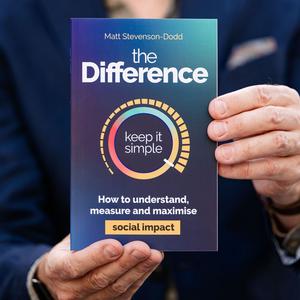

Matt: Welcome to The Difference, the podcast. I'm Matt Stevenson Todd.
Andrea: .
Helen: and I'm Helen Gregg.
Matt: This podcast is all about taking a deeper dive into the stories and case studies contained in my book, The Difference, How to Understand, Measure and Maximize Social Impact. We want to get behind each of the case studies in the book, meet the people involved and find out about how these amazing organizations set out to understand, measure and maximize the difference they make in the world.
Helen: I should just say that The Difference by Matt Stevenson Dodd is of course available to order in all good bookshops now.
Andrea: .
Matt: Thank you, Helen. Today, we're delighted to be joined by Andrea and Federico from the Ferdinandu and Luigi Innocenti Foundation. Federico is the foundation's deputy director and co-founder. He moved from an early career spanning Italy and the UK into philanthropy, helping carry forward the Innocenti family legacy of invention and social good. And Andrea is the chief executive officer of the foundation. And before this role, Andrea held senior leadership positions. across the charity sector, including CEO of Hurt Rising and head of foundation at Liverpool FC Foundation. And Andrea actually appointed me to the CEO of Street League role in 2010 when she was on the board there. You
Andrea: you
Matt: remember that? Well, I remember it very,
Andrea: I do, yeah. Yeah.
Matt: very well. Thank you for giving me a job.
Helen: So welcome to Andrea and Federico. We always start by asking our guests to give us two truths and a lie about themselves. So Federico, we're going to start with you. We'll ask you to introduce yourself properly and more formally in a moment. only person not wearing the branded hoodie for Ferdinando and Luigi in a Gentie Foundation today. Would you like to just tell us what your two truths and a lie are, please?
Federico Calafuri: god, you really make me look terrible now. I'm a really positive person. The second one, and maybe you're gonna laugh about it, I'm a really good swimmer. And the third one is when I was young, I really, really loved to play tennis.
Helen: Andrea, over to you.
Andrea: Okay, right, my first is once in Rome, I was stuck in a revolving door with Mikhail Gorbachev. Okay.
Matt: I so want that to be true.
Helen: I read.
Federico Calafuri: Nnhehehehe
Andrea: Second is that I feature in the Guinness World Book of Records three times.
Helen: Okay.
Andrea: And my third is that I failed my driving test on two consecutive days.
Matt: I love those, I love those.
Helen: Yeah.
Federico Calafuri: Thanks
Matt: So just to give our listeners and viewers a little bit of a hint here, maybe a little bit they can gain from your background. Can you give us your sort of, who you are in sort of 30 seconds? Should we start with Federico?
Federico Calafuri: Yeah, easy.
Andrea: you
Federico Calafuri: was working in hospitality for a real long time. I come from a little island in Tuscany, so tourism was the most part of the work was coming from tourism. So I had the opportunity to work in hospitality. I traveled a little bit around Italy and also this is how I ended up in London for the first time. But sometimes I have a really interesting conversation with my cousin and we start to talk about the foundation, about the legacy and how the name of Innocenti, so important in Italy and UK, So we decided to start the foundation.
Andrea: So I've been working with Federico as Chief Executive of this foundation. In June it will be three years. I suppose I would describe myself, the vast majority of my career would be senior roles or chief exec roles in the non-profit sector, focused primarily on young people, so chief exec of uprising and as you said the Liverpool Football Club Foundation also stretches before that at Common Purpose and the BBC and I started my career. on the Procter and Gamble graduate training scheme and various trusty roles, including the one that Matt mentioned many moons ago. I don't know how many years ago, about 15 plus years ago when I
Matt: Yeah.
Andrea: was on the board of Street League. And that's how first then I first got to know Matt. And since then, we've done all kinds of things together.
Helen: let's get started with a question around that pivotal moment, I think, when you realized that you weren't focused enough on the impact of the foundation. So let's start with Federico to kind of really try and understand when did impact start coming up for you and then we can pick up a different perspective Andrea from you if that's okay.
Andrea: Mm-hmm. Mm-hmm.
Federico Calafuri: Well, I can say really from the beginning, when we have brainstorming with Lorenzo and always been... He's a man who works in finance. He's really focused on numbers. And we always say that impact, the opportunity to measure the impact was really important for our foundation. So it's been from really the beginning So the impact for us is important to understanding how our money and how our effort are spending and is spending in the right way.
Helen: Andrea, what about you?
Andrea: Well, so I turned 50 last September and the good
Helen: Congratulations.
Andrea: I made it the good thing about when you get to the kind of the stage in life or the stage in your career, not to say that I'm not saying I've seen everything, but most things I've seen by now and I've seen organizations who are trying very hard to sustain legacy programs, which is like a real effort, like pushing water up a hill. I've seen grant giving, which is based on vested interests I've seen corporate foundations whose primary motivation is reputation building rather than impact. So I feel like not that I'm jaded, but I've seen it and I've actually been a part of it when impact is not the primary motive. and it's not somewhere that I want to be. And so when I then was interviewing with Federico and Lorenzo, and I was asking them how do they approach the question of impact. And straight away, I could see these people are my people. You know, it's a very sincere and genuine commitment to impact, for Lorenzo and the board. And I thought, I'd like to work with these people.
Matt: I think that really came across to me as well, meeting you all when we did in those early days. And I think there's a certain humility around the whole family actually, just that accepts that they want to do something really good for the future. Federico, I wonder if you could sort of tell us a bit about the background of the family because... you're sitting there with a very fine scooter behind you, a picture of a scooter, but I think this sort of has a bearing on what came next really, what the foundation became. So I wonder if you can just tell us about the family and some of the values of the family.
Federico Calafuri: Well, the family was a really successful family in Italy, especially after the Second World War. But the story became more before, even before, just after the First World War. So Ferdinando was the son of a blacksmith. He moved to Rome. He started to be a really good and successful entrepreneur. He worked with the Vatican. and then decided to move to Milan and open a factory in Milan. Then after World War II, he started to take a look around and started thinking how we can start moving again this country. And the answer was, the Lambretta scooters. But the lambretta was the most successful and also more recognizable and especially now I can see in the uk What I really love it's how the family and lambretta can really still see around What's more? gives you more freedom, what gives you more fun of going around with the
Andrea: you
Federico Calafuri: sunny days, with the fresh air on your face, driving a Lambretta? If you're passionate, it's something that really...
Andrea: Yeah.
Federico Calafuri: I can't really see it, I can see it around.
Andrea: Mm-hmm. Mm-hmm.
Federico Calafuri: Everybody's so happy. And the people were stopping, looking at the Lamberta. And they say, oh, God, I remembered. Some people say, I remember when I was young, I had one. And also for young people that, I need to be honest, Innocenti is not a name that now young Gen Z can know if you're not passionate about scooters. That's also one of the reasons now we have the foundation. So this spirit of joy and fun is something that always worked and always been really important for the family. And now we can see it that is in the foundation. That's something that really is important for us.
Andrea: Mm.
Helen: And every time you tell us a little bit more about the family in the background, Federico or Lorenzo, when he does it, I learn something new. So I love, I love hearing that. And of course, everyone knows that Lambretta, you know, you just mentioned Lambretta and everyone
Federico Calafuri: Mm.
Helen: knows that. They don't need to be Italian.
Federico Calafuri: Yeah
Andrea: It looks like a very happy times, doesn't it? If you look at these guys, you
Matt: Yeah.
Helen: I mean,
Andrea: know, post-war
Federico Calafuri: Mm.
Andrea: and they have fun, freedom, adventure together, friendship. It's like a golden age.
Helen: It really is. this theme of joy is so prevalent throughout everything we've done with you. how soon did you pick up on that? How soon did you realize that needed to resonate throughout the work you were bringing in as chief exec?
Andrea: Well, actually the journey to get to where we are in terms of Ostra Playa and Sparking Joy and our theory of change, which is centered around helping young people to find passion, purpose and joy. was emergent. So it kind of emerged very, very collectively across lots of different conversations and points of view we want to be contemporary in terms of need, but it needs to fit with the why in terms of the Inuchante family. So we took all of these options to the board and we ended up with a kind of draft of what could be our way forward. And we were kind of happy with that. And then we shared it with Matt, who said,
Federico Calafuri: you
Andrea: it's better than, you know, you're coming down the funnel, but you need to keep coming down the funnel. It's still too broad. It's still too general. And so we thought that's good. And also we want to kind of sharpen it with listening to more, we had already spoken to them, but listening to more young people. So we got young people involved in then the conversations that we had facilitated by Matt and Helen and the rest of the team at Trust Impact. And it was young people really who started to share with us a view which which led to this outcome around joy that the young people saying something that we'd already heard, but it was so much more powerful to hear it from young people, which is there's already a lot for them, which relates to helping them with their educational attainment, particularly GCSEs and helping them to think about how do they become more employable to develop skills that employers want. But that all of that it is orientated around not participating, but preparing. So all of it is about preparing for the future. And I suppose underpinning that would be a sense that the future is scary. But they said what is missing for them is protecting that space where they get to have fun, enjoy themselves and also where they're in the driving seat of choosing the activity, not an activity that's mandated for them, And then through those discussions, think, we'll never remember exactly who or when, but we just came upon the word joy. And ever since then, that is the word that brings a smile to everybody's face. And it really resonates with people.
Matt: Yeah, I remember those conversations really well because you were right, you were so close to having a good proposition for the new foundation, but equally, you could have just been another drop in the ocean of funding for...
Andrea: Yeah. you
Matt: for youth services. And I think my concern was that you wouldn't understand the impact of your work and the money that you were putting in if you were just adding to everybody else's funding and not doing something quite unique to you and in line with the family's values. And the pivotal moment for me was the young people sort of saying that exactly as you said, that this was about something different to what they're experiencing elsewhere and that finding joy.
Andrea: Yeah. Mm-hmm.
Matt: it becomes so, so important. And it is really unique actually. And it does make people smile. You when we talk about it, it makes people smile because it is so different. But can you just talk us through how the board felt about that? You what was the reaction once that was put forward? Because that is quite a different thing to do, you know, than traditional, we would like to see outcomes around education or we would like to see people getting jobs or, you know, that's sort of where you were originally. is quite a shift.
Andrea: Yeah, well, I think the beauty of being a family foundation. is that we can work to a different kind of clock speed that we're not tied as some organizations might be tied to very short cycles of approval thinking about certainly government or election cycles or organizations with different pressures from their stakeholders. They may need to also do that cost benefit around school attendance or school attainment or GDP or economic growth. But as a family foundation, we could step aside from that and take the long view. And we're very lucky that in all of our discussions with the board, their approach is very spacious, you know, to think using would refer to language like having a fulfilled life. You know, it was more this kind of language that gave us the space. to creative and I suppose another word that came through very strongly from the board and the family is around invention. So it's clear that the Innocenti family were really, really inventive. And so we wanted to do something that is contemporary that captures these like guys that feels inventive. And so I think that we're lucky in that sense. We're very lucky that the board take that long view.
Federico Calafuri: Yeah, we've been super lucky and honestly, also we have the opportunity and I say. to really have all the options available possible. we started really with a blank piece of paper.
Andrea: Mm-hmm.
Federico Calafuri: I always when I present to someone else after a change I say this is 90 % coming from young people And this is I think it's something really really important You
Andrea: Yeah. .
Federico Calafuri: let this something that we really care about it, it's something that we really, really want to be. And it's, like I said, the board was really important on that because they give us the opportunity. They could have been put more like blocks on what we do it. They didn't. They followed the process because there was a horse on the workshop with us when we developed the theory change.
Andrea: Mm hmm.
Federico Calafuri: smart people and people that are really listening and not imposing and this is something that is not you can see often especially because we have a really high professional board and I can also I want to thanks trustee impact For getting us on during the workshop because I need to be honest for me was the first time
Andrea: Yeah. you
Federico Calafuri: And I couldn't really completely have a perfect view of what we're going to drive through. So there's a couple of times I say, okay, I trust the process. And to be honest, I'm super happy that I did it. Because what we then thought
Helen: Yeah.
Andrea: No. .
Federico Calafuri: that the theory change that we have now, it's not perfect because it's not perfect because we are in a journey to... I say we want to end it up in 2027 and start thinking about it. Okay, now what's happened, how it's been, the project that we did that was okay, what we can be more specific on something. But it's something that I'm really proud to show around and
Andrea: Yeah.
Federico Calafuri: people when they say it's like, wow.
Helen: Yeah.
Andrea: Yeah, I think I was going to say, responding to Federico, I think it's very precious to have had the conditions where this originality can emerge. It's very precious. think that Lorenzo and the board would say there was no time frame to say that's your listening, go into your landscape mapping and then end and come back with recommendations. It just listen as long as you need to listen, have as many conversations as you need to have. There was no time pressure for us to be too reductionist, early. So it felt very expansive. We were able to be very expansive. and also to build in those views from young people without feeling like there was ever going to be a right and wrong answer. So I think we were all stepping together, not knowing. So that's what I mean about emergent and for me, I'd say it's the best example of creativity. that I've ever been a part of because it just, our way forward just emerged because the conditions were so perfect.
Helen: I would fully back that. Like Matt, I remember the workshops so well. And it's one of the examples I give to future clients now about why the importance of trusting the process, of coming in with an open mind, not getting too anxious about what the end result might look like are so important, but also crucially.
Andrea: Mm-hmm. Mm-hmm.
Helen: the value of lived experience. can 100 %
Andrea: Mm-hmm.
Helen: say that the best theories of change that I've been involved with are the ones that have also involved people with that lived experience because they bring an understanding and a knowledge to the process. That means you can cut off going down those wrong avenues very, very quickly. So
Andrea: Mm-hmm. Mm-hmm.
Helen: we've talked quite a lot about the positives of it. but I also remember quite a lot of head scratching moments through that process as well. And you've both referenced the fact this is innovative and therefore it's different and different isn't always well accepted in the sector. So what's proven the trickiest parts of the impact journey so far for you both?
Andrea: you
Federico Calafuri: So like I said, was trust in the process in the beginning and understanding that really we don't have all the answers altogether. it's always when we always have, we start in partnership, we start to talk with other organization, it's never easy to really be on the same ideas on everything. So we try to build it up on that and... we need to be sure that the people we talk with, can really understand us. So that's one of the most important things. And especially that we have our values and we have our, like I said, ideas. And get that impact, especially, is one of the most important thing for us. We're looking for, we always, when we're with other organization, we're starting with... talk about partnership and everything that we always say okay impact is part of us if you want to work with us impact need to part of yours because otherwise for us it's not could be a really big problem and it's something that you can see sometimes with others with some organization that is not easy because they have this method because there's ideas they have a way to do things
Andrea: Yeah.
Federico Calafuri: And understanding, absolutely, but this is how we try to work. But like I said, it's something that we try to be more clear as possible from the beginning and how it's important for us. like I said, it could be tricky.
Helen: Andrea, what about from your end?
Andrea: I think that what a few things that seemed tricky. One. So we said we wanted outcome measures to measure back against and we it's in a way quite technical question. You know, so we ended up with three outcome measures agency, self-efficacy, sense of fulfillment. So that was quite technical working that through with Ryan and Beth and you guys. What are those three? What are the questions to ask? And are there any kind of national data sets that we can measure back against? So I'd say that on that section, that did definitely require some expert guidance to get that right. It needed a real competency around impact measurements to get the measures right. Because what we've said to our partners is that we only want to measure those three. And at the end of our initial learning phase, we'll have lots of activity and train. And at the end of the first three years, we'll assess which of all of those different types of interventions was most effective. in delivering our outcomes, different types of programs, different demographic groups, different lenses, as we call it. So that was tricky in a good way. You know, it was good, rigorous thinking for all of us. I think one of the observation about what's tricky is when we say that we're in our learning phase. So for our first few years, we're in our learning phase. then that I think demonstrates an open mind and an open heart and a humility to say we don't have all the answers and possibly we'll do a version two theory of change that builds on what we learn in our initial learning period. But I think that you have to be quite brave to say that. So that was what makes it tricky because, you know, some people were we're asking what do you mean, what do want to learn? Are you not confident that it's right? know, so that it's just, you know, for us, it's just kind of trying to say, we're starting with an initial sense of what we think is needed and what's going to work, but we are open to learning. So it's tricky in a sense of managing confidence in that process, but I think people are responding to it. what we're saying is that we'll share that learning, the learning is not just for us, know, we're going to share that learning across all of our partners and across the youth sector. So I think our motive is to help the whole sector to learn and grow along with us. But tricky, I'm not sure it's the right word, but perhaps a bit unexpected, I think, maybe for some people to hear us talking that way.
Matt: Yeah, yeah, this point about learning is really, really important. I always say to people, it's a theory of change for a reason, there's a theory, and you've got to then go out and try that theory and it might not be right, but that's the beauty of it, you've got to go and test it on the ground. And I think your experience there is interesting that people react to that in a strange way, that you haven't got all the answers, it's not all set in stone, but you really want to be clear about it.
Andrea: Mm-hmm. Mm-hmm. Mm-hmm. Mm-hmm. Mm-hmm.
Matt: The chapter in the book is about the impact fundamentals, that the chapter that features your case study, the need, vision and purpose statements. And they're the sort of cornerstone of the theory of change. I just wanted to wonder if you both could just reflect on sort of how you got to those statements in particular, because they're really quite punchy and clear, I think. Really good examples of how you would do that and just what effect they've had on your thinking and the partners you've chosen
Andrea: I would say on the needs, you know, in our opening needs statement, we're saying, you know, there's already a lot for young people on education and employment. There's not enough for them on passion, purpose and joy. And particularly for those young people who are experiencing some kind of disadvantage. That's our kind of opening statement. And that has been a really helpful scene setter because it's a filter really for selecting organizations and partners who share that same assessment if this is where we are at the moment. So it helps us to make sure that we're starting from the right, from the same place in terms of worldview understanding. And also, I don't want to say market shaping in a sense, but we can, to some extent, orientate organizations to say, don't you think that this is the case? And does that resonate with you? So we can kind of almost steer a little bit. But I think that the need statement has been particularly helpful.
Federico Calafuri: And plus, like I said, it's what young people are asking for. So where we come from. I have it here in front of me. And I can really hear every single word come out from young people. So the need and the vision for us, it's important. It's our North Star. So it's something where we believe, it's something where we are.
Andrea: So
Federico Calafuri: And it's something that also is reflected a lot about the family. Like I said before, it's
Andrea: Hmm.
Federico Calafuri: a fun, invention because we have, Andrea talked a little bit about it and it's something that we really care about, it's an invention. it's everything here. Every time I see it, our theory of change is a really good one.
Helen: And I think one of the other things that's mentioned in the book is this, let perfection be the enemy of good. I do remember quite a lot of conversations about the wording and the need, the vision and the purpose statements and how it was at times quite a lot of wrangling over certain words. And in the
Andrea: Mm-hmm. Mm-hmm.
Helen: end, everyone was quite happy to just accept them as they were and let them sit for a little bit. And then they did settle. We got there. but it wasn't
Andrea: you
Helen: an immediate thing. So was quite interesting to sort of observe that process and how comfortable or uncomfortable people were with the process of just almost everything being up in the air for a little bit.
Andrea: Yeah, you're right. was going to say
Helen: I wanted to, I also wanted to...
Andrea: on that, Helen, I remember it's very semantic. Every word is very, very carefully selected. So it's not waffle in the sense that we're going around,
Helen: Yeah.
Andrea: you know, it's like it's it's it's passion and its purpose and its growth and its joy. And there's like a certain sequencing to it. So we did work, didn't we, to get it like semantically, you're like really
Helen: Yeah.
Andrea: working for us.
Helen: And of course, most of the board are Italian. So a huge kudos to everyone who was involved with that group who English was not their first language because I think that's doubly hard. Frankly,
Federico Calafuri: Thanks.
Helen: I mean, we work with enough fully English speaking groups who were struggling with that side. I think I wanted to come a little bit to what gives you both. your purpose in life. So Federico, it playing tennis when you were young that gives you your purpose
Andrea: You
Helen: in life? Andrea, was it your Guinness records?
Federico Calafuri: Well, it's a really good question, It's always something that gives you something back. It could be joy, it could be fun. So it was the purpose of life. That's the question! That's something that everybody would know. That is the right question. I don't know. I can see. From my side, I
Andrea: Mm hmm.
Federico Calafuri: always like to have a purpose in life, something that gives me something back. Joy, fun. I think, to be honest, I...
Andrea: Mm.
Federico Calafuri: Started working on charities on third sector really not long times ago and I'm so lucky to say that it's a really nice environment I found a lot of really nice people that really make me love these jobs. couldn't I I could live say I was sure from the beginning about this job because it's It was a project that for me was something new and I couldn't know how it was going to be handled and how it was going to be the people that I could have met and everything. I feel like we start running a little bit. It's my baby at the moment, I would say. So it's true that we are one years old, but there was more work behind that here. I can really see now, I can touch it, how the team was going after one year after the launch. And it's something that give me a lot of talks, a lot of... good vibes and I really like it. I'm not going to say that my purpose of life is my work because it's not, I don't think it's the right thing to do it, having something that you like to do it and it gives you something back, that's what I really like, that's something important.
Helen: and well avoided on the question, but thank you.
Andrea: So
Federico Calafuri: Hahaha
Matt: Every time, every time Helen tries to weedle out people.
Helen: Sometimes people fall for it. Go on, Andrea.
Andrea: Well, I think it's very difficult to be a young person now. And we know this, you we look in our board meetings at the data about young people's happiness declining and the more million young people not working, many of whom because they have mental health problems.
Federico Calafuri: Mm-hmm.
Andrea: So we know that it's difficult to be a young person. And so to have the opportunity to respond to that. without directly needing to face off into the issues and the problems, but instead looking a different way, which is looking towards space and growth and joy and purpose and passion. I think it's something that it's a great privilege to be a part of it and to be shaping it and also to kind of give permission and license to other people to talk about it. So when we talk to other organisations, somehow we're bringing validation to them and across the sector that this is a space that needs attention. So it's great to be a part of that. But also with when we talk to not just young people, but also established leaders and friends and family about these themes about passion, purpose, joy. then in a way there's nothing more important in life than that. And I think that we get great responses from people and I think it just reminds people perhaps, you know, we only live once and, you know, to kind of bring some of these questions back into focus. So for me, sometimes I think if I wouldn't millions, I would still want to do this job, you know, and also probably give millions to this foundation to do more of this work. That's how much I really believe in it.
Matt: That's brilliant. I love that.
Federico Calafuri: You should start play lottery, Andrei.
Andrea: I am. I know. Yeah, I don't do it, but I should start.
Matt: Yeah,
Federico Calafuri: You
Matt: One of the other themes in the book is about taking risks and encouraging organisations to try things that they might not think will succeed. And really, you know, the argument in the book is that that is the only way that we're going to really make change in the world is if we try new things. Now, this is a really interesting thing from a funders perspective, because traditionally funders like to fund things that are successful and then they can say, this is really successful and, you know, and off we go and everybody's happy. I just wonder what your take was on that, you know, funding things that might not work out or where organizations or young people might want to take a risk. How do you feel about that?
Andrea: you know, this phrase people talk about sugar cubes, it would be like a sugar cube. If we gave money for revenue for an existing project, it would be sweet while it lasted and then it would be gone. And so I think for that reason, it is more effective for us to work at the front end, which is innovation, invention. Also thinking about the legacy of the family. you know, everything that they invented in their appetite for invention and creativity, it just fits. And so we can say to organizations, we want to bring resources to give you breathing space to think about some of those things that maybe you've always wanted to do, but you don't have enough body of evidence that you have the answers yet to secure big money from some of the big national funders. And that means that one of our values around respect to the expertise of our partners is that we can work alongside them in a way that sometimes they say, this feels like the best experience of co-creation or co-design. This isn't usual that a funder would work with us in this way because I think now that we have our theory of change and we can do it sift around, do we share the same values? Do we have the same vision? Do we have a similar understanding of young people and what they need? And then once we've done that kind of rigorous front end, then we can sit with potential partners and co-create ideas with them and give them permission to know that it doesn't have to be perfect. If we mean what we say about invention, then we also have to have a tolerance that things may not always go to plan. Part of it is experimenting. So we can just, in a way, vocalize some of these ideas and you can see that then they can relax and think, okay, now we have a trust and we can create something that's new. So I think it's creating something new where... We hope that we can help and bring resources to help organizations to do that.
Federico Calafuri: I'd like to say it's not easy. Absolutely, can understand it, especially for small organizations that try to survive day by day, try something innovative, because if you already know something that it's work, it's complicated to move from that, it's important, like I said, for foundation or big philanthropists to give them the opportunity to be brave. And it's something that sometimes is not really... It's something that's not really in the ideas and the mental of a foundation because, like I said, they want to have results, okay, it's important to have results, but you have to give them the opportunity to be brave.
Andrea: So it's a nice day for you to be here. I think it's a really good day for you to here. I'm you'll be for So I'm you a break. I'm to up the presentation. I'm
Federico Calafuri: try a different way. Because we see that sometimes not everything is good, not everything is work. We spend the same days at entropy
Andrea: you with I'm going to leave with a little a break. a I'm going to I'm bit with bit
Federico Calafuri: listening about problems that are in the sector. There's everywhere around the country. Maybe things need to be changed, but you need to have the resource and you need to be brave for try different things. But this is what has come for us and it's to come from other foundations.
Helen: Yeah, that makes so much sense. it's quite an interesting one to try and balance the need for you to demonstrate your impact with the fact that they haven't got very many resources to... give you the responses to them. So one of the things we hear a lot from small charities, especially is, we don't want to spend hours and hours of our working week sorting out impact outcomes for you, sending you measurements and data and so on and so forth. And quite rightly, know, obviously that time
Federico Calafuri: Mm-hmm.
Helen: would be better spent delivering services. But when you're small and you've got multiple funders, that can be a tricky issue. So how do you manage that
Andrea: you know what I think part of it is that we've got our impact measurement framework. Part of them partnering with us is, as Federico said earlier, they have to demonstrate a commitment to measuring our three outcomes. But truthfully, if we can work with them on the invention end and support them and encourage them to gather data, then that enables them then to go hunting for the big revenue funding. So if we said, try anything and we're not going to rigorously measure the impact, then it does a disservice to them because they don't then have the evidence to go and secure the big millions that they need to start to scale and expand. So I think I would like to hope that if, you know, in the terms of that ecosystem approach, at some point, we're going to have to hand off to a bigger funder and having the evidence of impact is a part of that.
Matt: Yeah.
Federico Calafuri: The thing about impact is every minute, every second that you spend on impact is an investment that you can do for your future.
Matt: Yep,
Andrea: Yeah.
Matt: totally not.
Federico Calafuri: That's something really important that organizations need to understand because every data that you have that can prove that what you do could be good or could be also not good and you can move in another direction so you can save money from going that direction and move to another direction. But at the same time, if I have proof that I'm working good, that all the data is fine, that I can reach my goal. then I can attract more philanthropies
Andrea: Yeah.
Federico Calafuri: and more organizations.
Matt: Have you got a really good example of this working in practice? Somebody who you've worked with so far that you think is really in line with the theory of change and your values and just epitomises how the foundation works.
Andrea: Let's take an example BBC Children in Need. they work with two and a half thousand grassroots organizations across the country and they're very good at selecting organizations who have a track record in areas of disadvantage. So we know that they have the two thousand five hundred organizations across the country who are doing great work and they've done due diligence on them. And we were working with Fosia and the team there, John and the others. around how far can we go with the idea about youth led. So if we could choose, let's say 15 groups across the country and give the young people the money. So in those 15 organizations, the young people get 10 K and they can decide how to spend the 10 K for the young people who are a part of their group in pursuit of joy and passion and purpose. So that's something that they haven't done and it's not that commonly done across the youth sector to give the budget directly to the young people. So this is this was a great partnership because they can bring what they can bring scale, they can bring organisations in Scotland, Wales, Northern Ireland, Sunderland. So they can bring that and we can bring some funding and we can. encourage them and nudge them to go a bit further than they already believe in what it means to be youth led, but we can take it a bit further with them is one example. Another that comes to mind that we just announced with Duke of Edinburgh is a different model of delivering the Duke of Edinburgh awards, a different licensing model through sports clubs rather than schools, through national governing bodies. So it's something that's like structural. structural invention and they had a model that was kind of developed with funding from DCMS but they wanted to get lift off with selecting the national governing bodies and starting to roll it out so we can say yeah we can help you with that stage of invention. So there's I think two examples of bringing invention to large organizations but that's just one way then we can also give funding directly to young people. So we did that with Big Change Spark Awards. So that's when they do the scouting and find very, very talented young people. And they found six Spark Award winners who get 50K investment, 40K for their idea and 10K personal development. So that's another way of doing it. So we've got directly to individual with big organizations. We're also working with some smaller organizations and there's different examples there.
Helen: So when is your work done? As the foundation, when do you get to lock the door and hang up your coat and say, yep, we've achieved everything?
Federico Calafuri: Never, because you always learn. The moment we have this project until 2027, and then we're going to review our theory of change, and then we're going to be something else. it's a level my cousin, Howard Cherus, always say this is the most important project of his life, because it is something different. And it's something that is going to be continuous from next in Oceania T-Generation. So the view is not about 10 years, it's about 50, 60, 70, as long as we go. So when the work is complete, there's always been something there. When there's gonna be more problems in the world, Yeah, it's in this eutopic place. yeah, so I hope soon.
Andrea: Mm. Mm.
Helen: Oh, that's so cute!
Matt: Yeah.
Helen: Hahaha!
Federico Calafuri: But no, the view that we have at the foundation is really on the real long term. it's always been something to do it and always going to be something to say and it's always going something that we're going to stand for.
Andrea: You
Matt: You'd like to think you can inspire joy forevermore, wouldn't you? Really, it's a lovely thing to do.
Andrea: easy easy
Federico Calafuri: It's good thinking. It's something that makes you smile when you think. What is more beautiful than a place where everybody is fun and you can experience joy?
Matt: Yeah, I love that. And what a great way to draw a close to this podcast. But we won't leave without trying to work out what your two truths are and
Federico Calafuri: Mwahahahaha
Matt: what my were.
Andrea: Yeah.
Matt: So let's start with Federico. And just a reminder. So the first one is
Federico Calafuri: Mm-hmm.
Matt: that you're a really positive person. The second one is you're a really good swimmer. And your third one is that you loved to play tennis when you were young. So I'm going to start with Andrea and see which one you think is the lie.
Andrea: Hmm. The tennis is an interesting one because he's never never mentioned that before. He's had plenty of opportunity to talk with me about tennis and he's
Federico Calafuri: you
Andrea: never mentioned it, but I think that that is possibly the truth. but it's just something that he's been modest about. So I'd say maybe when he was younger, he didn't enjoy playing tennis. And to truth, he's very positive, He's always singing to himself, positive. Good swimmer. Well, I think that he would, he's being self-critical. So I'd say he probably is a good swimmer, but he would say he's not. So that would be the lie.
Helen: That's exactly where I was going. I,
Matt: Me too.
Helen: I think you're being very modest here and going to tell us that the lie is the good swimmer that you think you're a bad swimmer, even though we're all going to disagree with you.
Matt: Is that right, Henry?
Federico Calafuri: Yeah, I did. Yeah, you catch me. I try
Helen: Really?
Federico Calafuri: I try to trick you but it's yeah, I'm a terrible swimmer I love
Helen: Good work.
Andrea: to tennis.
Federico Calafuri: I love because that's also really important I love to it because I really like to be in the pool with the water, but I'm really I'm really really really really terrible
Helen: So tennis when you were young then, but you've never mentioned it to Andrea, who also loves tennis. This is interesting.
Federico Calafuri: Yeah, it's well we talked really a lot of time ago. Yeah, and I spent like five six years playing tennis and yeah I stopped it because it's well ukraopi started to do different things and tennis stopped it
Matt: Let's move on to Andrea's two truths and a lie. So just to recap, this is probably my favorite out of everyone that we've
Andrea: you
Matt: heard so far, that in Rome, you were trapped in a revolving door with Mikhail Gorbachev. Please want this to be so true. The second one is that you hold three Guinness World Records, or you're in the Guinness World Records book three times, is how you said it.
Andrea: So Okay.
Helen: I want this to be true.
Matt: And the third one is that you failed your driving test on two consecutive days. I think this is quite tough. So I'm going to start with Federico and see how well do you know Andrea.
Andrea: Good.
Matt: Okay, Go on Helen.
Helen: Okay.
Andrea: Yes.
Helen: is where I was going. think Andrea's tried to pull a blinder here and I think she'll either be in the Guinness Book of Records four times or two times, but not three times. So I think it's based on truth. But I have to believe that you got stuck in a revolving door with Gorbachev because that is just incredible. So yeah, I'm going to go for Guinness
Andrea: Mmm.
Helen: Records as the lie. Matt, where were you at?
Matt: Well, I'm going to do slightly different because I can believe that Andrew is in the Guinness World Records like three times.
Andrea: ha ha ha
Matt: So I'm going to go with that you failed your driving test on two consecutive days is the lie because it was three consecutive days or four.
Andrea: okay. So Matt, go on. Yeah.
Federico Calafuri: You're not... Before you say, Andrea, I think that is true, but I don't think you're a terrible driver. just to be sure...
Matt: You
Andrea: You
Helen: has just driven you to the train station.
Andrea: Yeah, well, yes, you've got it. So I failed my driving test twice in one day. So that was like a spin on the lie. So Mike, you got it. And
Helen: Hello.
Andrea: I, but the rest is true.
Helen: you tell us about Gorbachev, what
Matt: Yeah.
Helen: on happened?
Andrea: Yeah. wow. He got in my segment of the revolving door behind me. So I was already in it and he got in behind me and then the door stopped and we were stuck in the revolving door together.
Helen: does he not have like three minders with him?
Andrea: Well, this was at the in Rome, was at the Nobel Peace annual ceremony event and I was there with a friend and with other great people like the Dalai Lama and Gorbachev and we were all there together for days and then that happened coming back from dinner one night.
Federico Calafuri: There was everybody in the revolving door, was the DELAMA and...
Andrea: hahahahah hahahahah
Helen: Mother Theresa was in the next room.
Matt: This is how you sort out world problems, right? You get stuck in a revolving door.
Federico Calafuri: you
Helen: you at the Nobel
Matt: Yeah.
Helen: Awards? That's incredible!
Andrea: Yeah, it was an incredible experience. That was when I was at Procter & Gamble. Yeah, my friend Dan, he wrote a paper. It was like a competition. He wrote this submission around sustainability. And me and him, we used to have these conversations about these topics all the time. And that was the prize to go. So we went together.
Helen: Wow,
Matt: How amazing.
Helen: that is immense. and tell us about your Guinness records.
Andrea: You know what, when you said three, might be four, then I thought maybe it is four,
Helen: You
Andrea: but
Federico Calafuri: Hahaha!
Andrea: it could even be, yeah, so I could have had two lies and the truth.
Helen: I want that to be true so that I can maintain my win streak over Matt at this stage.
Federico Calafuri: You
Andrea: Well, this is again when I was at P &G and they used to bring, know, annually would get everyone together and then somebody had the idea to give us the experience of how does it feel when you're really achieving and you're really like smashing goals and you're really winning, you know, so this is something that you can do. It's not that hard actually with the Guinness World Book of Records. I think they're just like how many people have you got? What records could you break? So this is what we did so we had. Most people doing the Haka, you know, the New Zealand dance.
Matt: Yeah.
Andrea: Most people doing the leapfrog. So we did that. Most people playing Chinese whispers. And then I remembered when you said four, I'm like, yeah, there was a fourth. It was something to do with, you know, those tubes that you like swing around and it makes music.
Helen: Yes!
Andrea: I think it was like we also did that. Yeah. So maybe, yeah.
Matt: That's not valid world record. So unfortunately, Helen, no.
Andrea: Hahaha!
Helen: I think we won that one Federico, along with Matt, it was a tie.
Federico Calafuri: You
Matt: for
Helen: incredible!
Matt: I'm in the world records, but again, nothing for anything I did on my own. was taking part in the most people doing a virtual marathon when they canceled the London marathon in 2020.
Helen: Yes.
Federico Calafuri: you
Matt: So yeah, I joined the world records for that, but yeah. I love those mass participation ones.
Andrea: Yeah.
Helen: wow. That's incredible though. Cool.
Andrea: Yeah, it's a bit of a... But the Chinese whispers was hilarious because it got passed around, passed around, passed around, passed around. And then it got to the front and the lady with the clipboard and the microphone, she said to the guy, OK, so what did you hear? And he said, I don't know. And she said, no, mean, what did what did they whisper in your ear? And he said, yeah, she said, I don't know. It's just like, like such an anticlimax, because what's what it started at the beginning was constantly breaking records together. And at the end, was I don't know.
Helen: I know.
Federico Calafuri: I don't know.
Helen: Excellent. I love it. That's fabulous. Well, Andrea Federico, thank you so much for your time today. And huge congratulations on the Ferdinando and Luigi in Accenti Foundation. I know it's an incredible mission that you've undertaken and I know how well things are going. And just to pass on our thanks to you and the rest of the board for having the courage to do something different and try and change the environment in which we're operating. Thank you.
Andrea: thank you. And thanks to all at Trist
Matt: Yeah, brilliant.
Federico Calafuri: Thank you.
Andrea: Impact. We couldn't have, we wouldn't be where we are without you. We wouldn't be.
Helen: Thank you.
Matt: Thank you. Thanks very much.
Andrea: .
Helen: and I'm Helen Gregg.
Matt: This podcast is all about taking a deeper dive into the stories and case studies contained in my book, The Difference, How to Understand, Measure and Maximize Social Impact. We want to get behind each of the case studies in the book, meet the people involved and find out about how these amazing organizations set out to understand, measure and maximize the difference they make in the world.
Helen: I should just say that The Difference by Matt Stevenson Dodd is of course available to order in all good bookshops now.
Andrea: .
Matt: Thank you, Helen. Today, we're delighted to be joined by Andrea and Federico from the Ferdinandu and Luigi Innocenti Foundation. Federico is the foundation's deputy director and co-founder. He moved from an early career spanning Italy and the UK into philanthropy, helping carry forward the Innocenti family legacy of invention and social good. And Andrea is the chief executive officer of the foundation. And before this role, Andrea held senior leadership positions. across the charity sector, including CEO of Hurt Rising and head of foundation at Liverpool FC Foundation. And Andrea actually appointed me to the CEO of Street League role in 2010 when she was on the board there. You
Andrea: you
Matt: remember that? Well, I remember it very,
Andrea: I do, yeah. Yeah.
Matt: very well. Thank you for giving me a job.
Helen: So welcome to Andrea and Federico. We always start by asking our guests to give us two truths and a lie about themselves. So Federico, we're going to start with you. We'll ask you to introduce yourself properly and more formally in a moment. only person not wearing the branded hoodie for Ferdinando and Luigi in a Gentie Foundation today. Would you like to just tell us what your two truths and a lie are, please?
Federico Calafuri: god, you really make me look terrible now. I'm a really positive person. The second one, and maybe you're gonna laugh about it, I'm a really good swimmer. And the third one is when I was young, I really, really loved to play tennis.
Helen: Andrea, over to you.
Andrea: Okay, right, my first is once in Rome, I was stuck in a revolving door with Mikhail Gorbachev. Okay.
Matt: I so want that to be true.
Helen: I read.
Federico Calafuri: Nnhehehehe
Andrea: Second is that I feature in the Guinness World Book of Records three times.
Helen: Okay.
Andrea: And my third is that I failed my driving test on two consecutive days.
Matt: I love those, I love those.
Helen: Yeah.
Federico Calafuri: Thanks
Matt: So just to give our listeners and viewers a little bit of a hint here, maybe a little bit they can gain from your background. Can you give us your sort of, who you are in sort of 30 seconds? Should we start with Federico?
Federico Calafuri: Yeah, easy.
Andrea: you
Federico Calafuri: was working in hospitality for a real long time. I come from a little island in Tuscany, so tourism was the most part of the work was coming from tourism. So I had the opportunity to work in hospitality. I traveled a little bit around Italy and also this is how I ended up in London for the first time. But sometimes I have a really interesting conversation with my cousin and we start to talk about the foundation, about the legacy and how the name of Innocenti, so important in Italy and UK, So we decided to start the foundation.
Andrea: So I've been working with Federico as Chief Executive of this foundation. In June it will be three years. I suppose I would describe myself, the vast majority of my career would be senior roles or chief exec roles in the non-profit sector, focused primarily on young people, so chief exec of uprising and as you said the Liverpool Football Club Foundation also stretches before that at Common Purpose and the BBC and I started my career. on the Procter and Gamble graduate training scheme and various trusty roles, including the one that Matt mentioned many moons ago. I don't know how many years ago, about 15 plus years ago when I
Matt: Yeah.
Andrea: was on the board of Street League. And that's how first then I first got to know Matt. And since then, we've done all kinds of things together.
Helen: let's get started with a question around that pivotal moment, I think, when you realized that you weren't focused enough on the impact of the foundation. So let's start with Federico to kind of really try and understand when did impact start coming up for you and then we can pick up a different perspective Andrea from you if that's okay.
Andrea: Mm-hmm. Mm-hmm.
Federico Calafuri: Well, I can say really from the beginning, when we have brainstorming with Lorenzo and always been... He's a man who works in finance. He's really focused on numbers. And we always say that impact, the opportunity to measure the impact was really important for our foundation. So it's been from really the beginning So the impact for us is important to understanding how our money and how our effort are spending and is spending in the right way.
Helen: Andrea, what about you?
Andrea: Well, so I turned 50 last September and the good
Helen: Congratulations.
Andrea: I made it the good thing about when you get to the kind of the stage in life or the stage in your career, not to say that I'm not saying I've seen everything, but most things I've seen by now and I've seen organizations who are trying very hard to sustain legacy programs, which is like a real effort, like pushing water up a hill. I've seen grant giving, which is based on vested interests I've seen corporate foundations whose primary motivation is reputation building rather than impact. So I feel like not that I'm jaded, but I've seen it and I've actually been a part of it when impact is not the primary motive. and it's not somewhere that I want to be. And so when I then was interviewing with Federico and Lorenzo, and I was asking them how do they approach the question of impact. And straight away, I could see these people are my people. You know, it's a very sincere and genuine commitment to impact, for Lorenzo and the board. And I thought, I'd like to work with these people.
Matt: I think that really came across to me as well, meeting you all when we did in those early days. And I think there's a certain humility around the whole family actually, just that accepts that they want to do something really good for the future. Federico, I wonder if you could sort of tell us a bit about the background of the family because... you're sitting there with a very fine scooter behind you, a picture of a scooter, but I think this sort of has a bearing on what came next really, what the foundation became. So I wonder if you can just tell us about the family and some of the values of the family.
Federico Calafuri: Well, the family was a really successful family in Italy, especially after the Second World War. But the story became more before, even before, just after the First World War. So Ferdinando was the son of a blacksmith. He moved to Rome. He started to be a really good and successful entrepreneur. He worked with the Vatican. and then decided to move to Milan and open a factory in Milan. Then after World War II, he started to take a look around and started thinking how we can start moving again this country. And the answer was, the Lambretta scooters. But the lambretta was the most successful and also more recognizable and especially now I can see in the uk What I really love it's how the family and lambretta can really still see around What's more? gives you more freedom, what gives you more fun of going around with the
Andrea: you
Federico Calafuri: sunny days, with the fresh air on your face, driving a Lambretta? If you're passionate, it's something that really...
Andrea: Yeah.
Federico Calafuri: I can't really see it, I can see it around.
Andrea: Mm-hmm. Mm-hmm.
Federico Calafuri: Everybody's so happy. And the people were stopping, looking at the Lamberta. And they say, oh, God, I remembered. Some people say, I remember when I was young, I had one. And also for young people that, I need to be honest, Innocenti is not a name that now young Gen Z can know if you're not passionate about scooters. That's also one of the reasons now we have the foundation. So this spirit of joy and fun is something that always worked and always been really important for the family. And now we can see it that is in the foundation. That's something that really is important for us.
Andrea: Mm.
Helen: And every time you tell us a little bit more about the family in the background, Federico or Lorenzo, when he does it, I learn something new. So I love, I love hearing that. And of course, everyone knows that Lambretta, you know, you just mentioned Lambretta and everyone
Federico Calafuri: Mm.
Helen: knows that. They don't need to be Italian.
Federico Calafuri: Yeah
Andrea: It looks like a very happy times, doesn't it? If you look at these guys, you
Matt: Yeah.
Helen: I mean,
Andrea: know, post-war
Federico Calafuri: Mm.
Andrea: and they have fun, freedom, adventure together, friendship. It's like a golden age.
Helen: It really is. this theme of joy is so prevalent throughout everything we've done with you. how soon did you pick up on that? How soon did you realize that needed to resonate throughout the work you were bringing in as chief exec?
Andrea: Well, actually the journey to get to where we are in terms of Ostra Playa and Sparking Joy and our theory of change, which is centered around helping young people to find passion, purpose and joy. was emergent. So it kind of emerged very, very collectively across lots of different conversations and points of view we want to be contemporary in terms of need, but it needs to fit with the why in terms of the Inuchante family. So we took all of these options to the board and we ended up with a kind of draft of what could be our way forward. And we were kind of happy with that. And then we shared it with Matt, who said,
Federico Calafuri: you
Andrea: it's better than, you know, you're coming down the funnel, but you need to keep coming down the funnel. It's still too broad. It's still too general. And so we thought that's good. And also we want to kind of sharpen it with listening to more, we had already spoken to them, but listening to more young people. So we got young people involved in then the conversations that we had facilitated by Matt and Helen and the rest of the team at Trust Impact. And it was young people really who started to share with us a view which which led to this outcome around joy that the young people saying something that we'd already heard, but it was so much more powerful to hear it from young people, which is there's already a lot for them, which relates to helping them with their educational attainment, particularly GCSEs and helping them to think about how do they become more employable to develop skills that employers want. But that all of that it is orientated around not participating, but preparing. So all of it is about preparing for the future. And I suppose underpinning that would be a sense that the future is scary. But they said what is missing for them is protecting that space where they get to have fun, enjoy themselves and also where they're in the driving seat of choosing the activity, not an activity that's mandated for them, And then through those discussions, think, we'll never remember exactly who or when, but we just came upon the word joy. And ever since then, that is the word that brings a smile to everybody's face. And it really resonates with people.
Matt: Yeah, I remember those conversations really well because you were right, you were so close to having a good proposition for the new foundation, but equally, you could have just been another drop in the ocean of funding for...
Andrea: Yeah. you
Matt: for youth services. And I think my concern was that you wouldn't understand the impact of your work and the money that you were putting in if you were just adding to everybody else's funding and not doing something quite unique to you and in line with the family's values. And the pivotal moment for me was the young people sort of saying that exactly as you said, that this was about something different to what they're experiencing elsewhere and that finding joy.
Andrea: Yeah. Mm-hmm.
Matt: it becomes so, so important. And it is really unique actually. And it does make people smile. You when we talk about it, it makes people smile because it is so different. But can you just talk us through how the board felt about that? You what was the reaction once that was put forward? Because that is quite a different thing to do, you know, than traditional, we would like to see outcomes around education or we would like to see people getting jobs or, you know, that's sort of where you were originally. is quite a shift.
Andrea: Yeah, well, I think the beauty of being a family foundation. is that we can work to a different kind of clock speed that we're not tied as some organizations might be tied to very short cycles of approval thinking about certainly government or election cycles or organizations with different pressures from their stakeholders. They may need to also do that cost benefit around school attendance or school attainment or GDP or economic growth. But as a family foundation, we could step aside from that and take the long view. And we're very lucky that in all of our discussions with the board, their approach is very spacious, you know, to think using would refer to language like having a fulfilled life. You know, it was more this kind of language that gave us the space. to creative and I suppose another word that came through very strongly from the board and the family is around invention. So it's clear that the Innocenti family were really, really inventive. And so we wanted to do something that is contemporary that captures these like guys that feels inventive. And so I think that we're lucky in that sense. We're very lucky that the board take that long view.
Federico Calafuri: Yeah, we've been super lucky and honestly, also we have the opportunity and I say. to really have all the options available possible. we started really with a blank piece of paper.
Andrea: Mm-hmm.
Federico Calafuri: I always when I present to someone else after a change I say this is 90 % coming from young people And this is I think it's something really really important You
Andrea: Yeah. .
Federico Calafuri: let this something that we really care about it, it's something that we really, really want to be. And it's, like I said, the board was really important on that because they give us the opportunity. They could have been put more like blocks on what we do it. They didn't. They followed the process because there was a horse on the workshop with us when we developed the theory change.
Andrea: Mm hmm.
Federico Calafuri: smart people and people that are really listening and not imposing and this is something that is not you can see often especially because we have a really high professional board and I can also I want to thanks trustee impact For getting us on during the workshop because I need to be honest for me was the first time
Andrea: Yeah. you
Federico Calafuri: And I couldn't really completely have a perfect view of what we're going to drive through. So there's a couple of times I say, okay, I trust the process. And to be honest, I'm super happy that I did it. Because what we then thought
Helen: Yeah.
Andrea: No. .
Federico Calafuri: that the theory change that we have now, it's not perfect because it's not perfect because we are in a journey to... I say we want to end it up in 2027 and start thinking about it. Okay, now what's happened, how it's been, the project that we did that was okay, what we can be more specific on something. But it's something that I'm really proud to show around and
Andrea: Yeah.
Federico Calafuri: people when they say it's like, wow.
Helen: Yeah.
Andrea: Yeah, I think I was going to say, responding to Federico, I think it's very precious to have had the conditions where this originality can emerge. It's very precious. think that Lorenzo and the board would say there was no time frame to say that's your listening, go into your landscape mapping and then end and come back with recommendations. It just listen as long as you need to listen, have as many conversations as you need to have. There was no time pressure for us to be too reductionist, early. So it felt very expansive. We were able to be very expansive. and also to build in those views from young people without feeling like there was ever going to be a right and wrong answer. So I think we were all stepping together, not knowing. So that's what I mean about emergent and for me, I'd say it's the best example of creativity. that I've ever been a part of because it just, our way forward just emerged because the conditions were so perfect.
Helen: I would fully back that. Like Matt, I remember the workshops so well. And it's one of the examples I give to future clients now about why the importance of trusting the process, of coming in with an open mind, not getting too anxious about what the end result might look like are so important, but also crucially.
Andrea: Mm-hmm. Mm-hmm.
Helen: the value of lived experience. can 100 %
Andrea: Mm-hmm.
Helen: say that the best theories of change that I've been involved with are the ones that have also involved people with that lived experience because they bring an understanding and a knowledge to the process. That means you can cut off going down those wrong avenues very, very quickly. So
Andrea: Mm-hmm. Mm-hmm.
Helen: we've talked quite a lot about the positives of it. but I also remember quite a lot of head scratching moments through that process as well. And you've both referenced the fact this is innovative and therefore it's different and different isn't always well accepted in the sector. So what's proven the trickiest parts of the impact journey so far for you both?
Andrea: you
Federico Calafuri: So like I said, was trust in the process in the beginning and understanding that really we don't have all the answers altogether. it's always when we always have, we start in partnership, we start to talk with other organization, it's never easy to really be on the same ideas on everything. So we try to build it up on that and... we need to be sure that the people we talk with, can really understand us. So that's one of the most important things. And especially that we have our values and we have our, like I said, ideas. And get that impact, especially, is one of the most important thing for us. We're looking for, we always, when we're with other organization, we're starting with... talk about partnership and everything that we always say okay impact is part of us if you want to work with us impact need to part of yours because otherwise for us it's not could be a really big problem and it's something that you can see sometimes with others with some organization that is not easy because they have this method because there's ideas they have a way to do things
Andrea: Yeah.
Federico Calafuri: And understanding, absolutely, but this is how we try to work. But like I said, it's something that we try to be more clear as possible from the beginning and how it's important for us. like I said, it could be tricky.
Helen: Andrea, what about from your end?
Andrea: I think that what a few things that seemed tricky. One. So we said we wanted outcome measures to measure back against and we it's in a way quite technical question. You know, so we ended up with three outcome measures agency, self-efficacy, sense of fulfillment. So that was quite technical working that through with Ryan and Beth and you guys. What are those three? What are the questions to ask? And are there any kind of national data sets that we can measure back against? So I'd say that on that section, that did definitely require some expert guidance to get that right. It needed a real competency around impact measurements to get the measures right. Because what we've said to our partners is that we only want to measure those three. And at the end of our initial learning phase, we'll have lots of activity and train. And at the end of the first three years, we'll assess which of all of those different types of interventions was most effective. in delivering our outcomes, different types of programs, different demographic groups, different lenses, as we call it. So that was tricky in a good way. You know, it was good, rigorous thinking for all of us. I think one of the observation about what's tricky is when we say that we're in our learning phase. So for our first few years, we're in our learning phase. then that I think demonstrates an open mind and an open heart and a humility to say we don't have all the answers and possibly we'll do a version two theory of change that builds on what we learn in our initial learning period. But I think that you have to be quite brave to say that. So that was what makes it tricky because, you know, some people were we're asking what do you mean, what do want to learn? Are you not confident that it's right? know, so that it's just, you know, for us, it's just kind of trying to say, we're starting with an initial sense of what we think is needed and what's going to work, but we are open to learning. So it's tricky in a sense of managing confidence in that process, but I think people are responding to it. what we're saying is that we'll share that learning, the learning is not just for us, know, we're going to share that learning across all of our partners and across the youth sector. So I think our motive is to help the whole sector to learn and grow along with us. But tricky, I'm not sure it's the right word, but perhaps a bit unexpected, I think, maybe for some people to hear us talking that way.
Matt: Yeah, yeah, this point about learning is really, really important. I always say to people, it's a theory of change for a reason, there's a theory, and you've got to then go out and try that theory and it might not be right, but that's the beauty of it, you've got to go and test it on the ground. And I think your experience there is interesting that people react to that in a strange way, that you haven't got all the answers, it's not all set in stone, but you really want to be clear about it.
Andrea: Mm-hmm. Mm-hmm. Mm-hmm. Mm-hmm. Mm-hmm.
Matt: The chapter in the book is about the impact fundamentals, that the chapter that features your case study, the need, vision and purpose statements. And they're the sort of cornerstone of the theory of change. I just wanted to wonder if you both could just reflect on sort of how you got to those statements in particular, because they're really quite punchy and clear, I think. Really good examples of how you would do that and just what effect they've had on your thinking and the partners you've chosen
Andrea: I would say on the needs, you know, in our opening needs statement, we're saying, you know, there's already a lot for young people on education and employment. There's not enough for them on passion, purpose and joy. And particularly for those young people who are experiencing some kind of disadvantage. That's our kind of opening statement. And that has been a really helpful scene setter because it's a filter really for selecting organizations and partners who share that same assessment if this is where we are at the moment. So it helps us to make sure that we're starting from the right, from the same place in terms of worldview understanding. And also, I don't want to say market shaping in a sense, but we can, to some extent, orientate organizations to say, don't you think that this is the case? And does that resonate with you? So we can kind of almost steer a little bit. But I think that the need statement has been particularly helpful.
Federico Calafuri: And plus, like I said, it's what young people are asking for. So where we come from. I have it here in front of me. And I can really hear every single word come out from young people. So the need and the vision for us, it's important. It's our North Star. So it's something where we believe, it's something where we are.
Andrea: So
Federico Calafuri: And it's something that also is reflected a lot about the family. Like I said before, it's
Andrea: Hmm.
Federico Calafuri: a fun, invention because we have, Andrea talked a little bit about it and it's something that we really care about, it's an invention. it's everything here. Every time I see it, our theory of change is a really good one.
Helen: And I think one of the other things that's mentioned in the book is this, let perfection be the enemy of good. I do remember quite a lot of conversations about the wording and the need, the vision and the purpose statements and how it was at times quite a lot of wrangling over certain words. And in the
Andrea: Mm-hmm. Mm-hmm.
Helen: end, everyone was quite happy to just accept them as they were and let them sit for a little bit. And then they did settle. We got there. but it wasn't
Andrea: you
Helen: an immediate thing. So was quite interesting to sort of observe that process and how comfortable or uncomfortable people were with the process of just almost everything being up in the air for a little bit.
Andrea: Yeah, you're right. was going to say
Helen: I wanted to, I also wanted to...
Andrea: on that, Helen, I remember it's very semantic. Every word is very, very carefully selected. So it's not waffle in the sense that we're going around,
Helen: Yeah.
Andrea: you know, it's like it's it's it's passion and its purpose and its growth and its joy. And there's like a certain sequencing to it. So we did work, didn't we, to get it like semantically, you're like really
Helen: Yeah.
Andrea: working for us.
Helen: And of course, most of the board are Italian. So a huge kudos to everyone who was involved with that group who English was not their first language because I think that's doubly hard. Frankly,
Federico Calafuri: Thanks.
Helen: I mean, we work with enough fully English speaking groups who were struggling with that side. I think I wanted to come a little bit to what gives you both. your purpose in life. So Federico, it playing tennis when you were young that gives you your purpose
Andrea: You
Helen: in life? Andrea, was it your Guinness records?
Federico Calafuri: Well, it's a really good question, It's always something that gives you something back. It could be joy, it could be fun. So it was the purpose of life. That's the question! That's something that everybody would know. That is the right question. I don't know. I can see. From my side, I
Andrea: Mm hmm.
Federico Calafuri: always like to have a purpose in life, something that gives me something back. Joy, fun. I think, to be honest, I...
Andrea: Mm.
Federico Calafuri: Started working on charities on third sector really not long times ago and I'm so lucky to say that it's a really nice environment I found a lot of really nice people that really make me love these jobs. couldn't I I could live say I was sure from the beginning about this job because it's It was a project that for me was something new and I couldn't know how it was going to be handled and how it was going to be the people that I could have met and everything. I feel like we start running a little bit. It's my baby at the moment, I would say. So it's true that we are one years old, but there was more work behind that here. I can really see now, I can touch it, how the team was going after one year after the launch. And it's something that give me a lot of talks, a lot of... good vibes and I really like it. I'm not going to say that my purpose of life is my work because it's not, I don't think it's the right thing to do it, having something that you like to do it and it gives you something back, that's what I really like, that's something important.
Helen: and well avoided on the question, but thank you.
Andrea: So
Federico Calafuri: Hahaha
Matt: Every time, every time Helen tries to weedle out people.
Helen: Sometimes people fall for it. Go on, Andrea.
Andrea: Well, I think it's very difficult to be a young person now. And we know this, you we look in our board meetings at the data about young people's happiness declining and the more million young people not working, many of whom because they have mental health problems.
Federico Calafuri: Mm-hmm.
Andrea: So we know that it's difficult to be a young person. And so to have the opportunity to respond to that. without directly needing to face off into the issues and the problems, but instead looking a different way, which is looking towards space and growth and joy and purpose and passion. I think it's something that it's a great privilege to be a part of it and to be shaping it and also to kind of give permission and license to other people to talk about it. So when we talk to other organisations, somehow we're bringing validation to them and across the sector that this is a space that needs attention. So it's great to be a part of that. But also with when we talk to not just young people, but also established leaders and friends and family about these themes about passion, purpose, joy. then in a way there's nothing more important in life than that. And I think that we get great responses from people and I think it just reminds people perhaps, you know, we only live once and, you know, to kind of bring some of these questions back into focus. So for me, sometimes I think if I wouldn't millions, I would still want to do this job, you know, and also probably give millions to this foundation to do more of this work. That's how much I really believe in it.
Matt: That's brilliant. I love that.
Federico Calafuri: You should start play lottery, Andrei.
Andrea: I am. I know. Yeah, I don't do it, but I should start.
Matt: Yeah,
Federico Calafuri: You
Matt: One of the other themes in the book is about taking risks and encouraging organisations to try things that they might not think will succeed. And really, you know, the argument in the book is that that is the only way that we're going to really make change in the world is if we try new things. Now, this is a really interesting thing from a funders perspective, because traditionally funders like to fund things that are successful and then they can say, this is really successful and, you know, and off we go and everybody's happy. I just wonder what your take was on that, you know, funding things that might not work out or where organizations or young people might want to take a risk. How do you feel about that?
Andrea: you know, this phrase people talk about sugar cubes, it would be like a sugar cube. If we gave money for revenue for an existing project, it would be sweet while it lasted and then it would be gone. And so I think for that reason, it is more effective for us to work at the front end, which is innovation, invention. Also thinking about the legacy of the family. you know, everything that they invented in their appetite for invention and creativity, it just fits. And so we can say to organizations, we want to bring resources to give you breathing space to think about some of those things that maybe you've always wanted to do, but you don't have enough body of evidence that you have the answers yet to secure big money from some of the big national funders. And that means that one of our values around respect to the expertise of our partners is that we can work alongside them in a way that sometimes they say, this feels like the best experience of co-creation or co-design. This isn't usual that a funder would work with us in this way because I think now that we have our theory of change and we can do it sift around, do we share the same values? Do we have the same vision? Do we have a similar understanding of young people and what they need? And then once we've done that kind of rigorous front end, then we can sit with potential partners and co-create ideas with them and give them permission to know that it doesn't have to be perfect. If we mean what we say about invention, then we also have to have a tolerance that things may not always go to plan. Part of it is experimenting. So we can just, in a way, vocalize some of these ideas and you can see that then they can relax and think, okay, now we have a trust and we can create something that's new. So I think it's creating something new where... We hope that we can help and bring resources to help organizations to do that.
Federico Calafuri: I'd like to say it's not easy. Absolutely, can understand it, especially for small organizations that try to survive day by day, try something innovative, because if you already know something that it's work, it's complicated to move from that, it's important, like I said, for foundation or big philanthropists to give them the opportunity to be brave. And it's something that sometimes is not really... It's something that's not really in the ideas and the mental of a foundation because, like I said, they want to have results, okay, it's important to have results, but you have to give them the opportunity to be brave.
Andrea: So it's a nice day for you to be here. I think it's a really good day for you to here. I'm you'll be for So I'm you a break. I'm to up the presentation. I'm
Federico Calafuri: try a different way. Because we see that sometimes not everything is good, not everything is work. We spend the same days at entropy
Andrea: you with I'm going to leave with a little a break. a I'm going to I'm bit with bit
Federico Calafuri: listening about problems that are in the sector. There's everywhere around the country. Maybe things need to be changed, but you need to have the resource and you need to be brave for try different things. But this is what has come for us and it's to come from other foundations.
Helen: Yeah, that makes so much sense. it's quite an interesting one to try and balance the need for you to demonstrate your impact with the fact that they haven't got very many resources to... give you the responses to them. So one of the things we hear a lot from small charities, especially is, we don't want to spend hours and hours of our working week sorting out impact outcomes for you, sending you measurements and data and so on and so forth. And quite rightly, know, obviously that time
Federico Calafuri: Mm-hmm.
Helen: would be better spent delivering services. But when you're small and you've got multiple funders, that can be a tricky issue. So how do you manage that
Andrea: you know what I think part of it is that we've got our impact measurement framework. Part of them partnering with us is, as Federico said earlier, they have to demonstrate a commitment to measuring our three outcomes. But truthfully, if we can work with them on the invention end and support them and encourage them to gather data, then that enables them then to go hunting for the big revenue funding. So if we said, try anything and we're not going to rigorously measure the impact, then it does a disservice to them because they don't then have the evidence to go and secure the big millions that they need to start to scale and expand. So I think I would like to hope that if, you know, in the terms of that ecosystem approach, at some point, we're going to have to hand off to a bigger funder and having the evidence of impact is a part of that.
Matt: Yeah.
Federico Calafuri: The thing about impact is every minute, every second that you spend on impact is an investment that you can do for your future.
Matt: Yep,
Andrea: Yeah.
Matt: totally not.
Federico Calafuri: That's something really important that organizations need to understand because every data that you have that can prove that what you do could be good or could be also not good and you can move in another direction so you can save money from going that direction and move to another direction. But at the same time, if I have proof that I'm working good, that all the data is fine, that I can reach my goal. then I can attract more philanthropies
Andrea: Yeah.
Federico Calafuri: and more organizations.
Matt: Have you got a really good example of this working in practice? Somebody who you've worked with so far that you think is really in line with the theory of change and your values and just epitomises how the foundation works.
Andrea: Let's take an example BBC Children in Need. they work with two and a half thousand grassroots organizations across the country and they're very good at selecting organizations who have a track record in areas of disadvantage. So we know that they have the two thousand five hundred organizations across the country who are doing great work and they've done due diligence on them. And we were working with Fosia and the team there, John and the others. around how far can we go with the idea about youth led. So if we could choose, let's say 15 groups across the country and give the young people the money. So in those 15 organizations, the young people get 10 K and they can decide how to spend the 10 K for the young people who are a part of their group in pursuit of joy and passion and purpose. So that's something that they haven't done and it's not that commonly done across the youth sector to give the budget directly to the young people. So this is this was a great partnership because they can bring what they can bring scale, they can bring organisations in Scotland, Wales, Northern Ireland, Sunderland. So they can bring that and we can bring some funding and we can. encourage them and nudge them to go a bit further than they already believe in what it means to be youth led, but we can take it a bit further with them is one example. Another that comes to mind that we just announced with Duke of Edinburgh is a different model of delivering the Duke of Edinburgh awards, a different licensing model through sports clubs rather than schools, through national governing bodies. So it's something that's like structural. structural invention and they had a model that was kind of developed with funding from DCMS but they wanted to get lift off with selecting the national governing bodies and starting to roll it out so we can say yeah we can help you with that stage of invention. So there's I think two examples of bringing invention to large organizations but that's just one way then we can also give funding directly to young people. So we did that with Big Change Spark Awards. So that's when they do the scouting and find very, very talented young people. And they found six Spark Award winners who get 50K investment, 40K for their idea and 10K personal development. So that's another way of doing it. So we've got directly to individual with big organizations. We're also working with some smaller organizations and there's different examples there.
Helen: So when is your work done? As the foundation, when do you get to lock the door and hang up your coat and say, yep, we've achieved everything?
Federico Calafuri: Never, because you always learn. The moment we have this project until 2027, and then we're going to review our theory of change, and then we're going to be something else. it's a level my cousin, Howard Cherus, always say this is the most important project of his life, because it is something different. And it's something that is going to be continuous from next in Oceania T-Generation. So the view is not about 10 years, it's about 50, 60, 70, as long as we go. So when the work is complete, there's always been something there. When there's gonna be more problems in the world, Yeah, it's in this eutopic place. yeah, so I hope soon.
Andrea: Mm. Mm.
Helen: Oh, that's so cute!
Matt: Yeah.
Helen: Hahaha!
Federico Calafuri: But no, the view that we have at the foundation is really on the real long term. it's always been something to do it and always going to be something to say and it's always going something that we're going to stand for.
Andrea: You
Matt: You'd like to think you can inspire joy forevermore, wouldn't you? Really, it's a lovely thing to do.
Andrea: easy easy
Federico Calafuri: It's good thinking. It's something that makes you smile when you think. What is more beautiful than a place where everybody is fun and you can experience joy?
Matt: Yeah, I love that. And what a great way to draw a close to this podcast. But we won't leave without trying to work out what your two truths are and
Federico Calafuri: Mwahahahaha
Matt: what my were.
Andrea: Yeah.
Matt: So let's start with Federico. And just a reminder. So the first one is
Federico Calafuri: Mm-hmm.
Matt: that you're a really positive person. The second one is you're a really good swimmer. And your third one is that you loved to play tennis when you were young. So I'm going to start with Andrea and see which one you think is the lie.
Andrea: Hmm. The tennis is an interesting one because he's never never mentioned that before. He's had plenty of opportunity to talk with me about tennis and he's
Federico Calafuri: you
Andrea: never mentioned it, but I think that that is possibly the truth. but it's just something that he's been modest about. So I'd say maybe when he was younger, he didn't enjoy playing tennis. And to truth, he's very positive, He's always singing to himself, positive. Good swimmer. Well, I think that he would, he's being self-critical. So I'd say he probably is a good swimmer, but he would say he's not. So that would be the lie.
Helen: That's exactly where I was going. I,
Matt: Me too.
Helen: I think you're being very modest here and going to tell us that the lie is the good swimmer that you think you're a bad swimmer, even though we're all going to disagree with you.
Matt: Is that right, Henry?
Federico Calafuri: Yeah, I did. Yeah, you catch me. I try
Helen: Really?
Federico Calafuri: I try to trick you but it's yeah, I'm a terrible swimmer I love
Helen: Good work.
Andrea: to tennis.
Federico Calafuri: I love because that's also really important I love to it because I really like to be in the pool with the water, but I'm really I'm really really really really terrible
Helen: So tennis when you were young then, but you've never mentioned it to Andrea, who also loves tennis. This is interesting.
Federico Calafuri: Yeah, it's well we talked really a lot of time ago. Yeah, and I spent like five six years playing tennis and yeah I stopped it because it's well ukraopi started to do different things and tennis stopped it
Matt: Let's move on to Andrea's two truths and a lie. So just to recap, this is probably my favorite out of everyone that we've
Andrea: you
Matt: heard so far, that in Rome, you were trapped in a revolving door with Mikhail Gorbachev. Please want this to be so true. The second one is that you hold three Guinness World Records, or you're in the Guinness World Records book three times, is how you said it.
Andrea: So Okay.
Helen: I want this to be true.
Matt: And the third one is that you failed your driving test on two consecutive days. I think this is quite tough. So I'm going to start with Federico and see how well do you know Andrea.
Andrea: Good.
Matt: Okay, Go on Helen.
Helen: Okay.
Andrea: Yes.
Helen: is where I was going. think Andrea's tried to pull a blinder here and I think she'll either be in the Guinness Book of Records four times or two times, but not three times. So I think it's based on truth. But I have to believe that you got stuck in a revolving door with Gorbachev because that is just incredible. So yeah, I'm going to go for Guinness
Andrea: Mmm.
Helen: Records as the lie. Matt, where were you at?
Matt: Well, I'm going to do slightly different because I can believe that Andrew is in the Guinness World Records like three times.
Andrea: ha ha ha
Matt: So I'm going to go with that you failed your driving test on two consecutive days is the lie because it was three consecutive days or four.
Andrea: okay. So Matt, go on. Yeah.
Federico Calafuri: You're not... Before you say, Andrea, I think that is true, but I don't think you're a terrible driver. just to be sure...
Matt: You
Andrea: You
Helen: has just driven you to the train station.
Andrea: Yeah, well, yes, you've got it. So I failed my driving test twice in one day. So that was like a spin on the lie. So Mike, you got it. And
Helen: Hello.
Andrea: I, but the rest is true.
Helen: you tell us about Gorbachev, what
Matt: Yeah.
Helen: on happened?
Andrea: Yeah. wow. He got in my segment of the revolving door behind me. So I was already in it and he got in behind me and then the door stopped and we were stuck in the revolving door together.
Helen: does he not have like three minders with him?
Andrea: Well, this was at the in Rome, was at the Nobel Peace annual ceremony event and I was there with a friend and with other great people like the Dalai Lama and Gorbachev and we were all there together for days and then that happened coming back from dinner one night.
Federico Calafuri: There was everybody in the revolving door, was the DELAMA and...
Andrea: hahahahah hahahahah
Helen: Mother Theresa was in the next room.
Matt: This is how you sort out world problems, right? You get stuck in a revolving door.
Federico Calafuri: you
Helen: you at the Nobel
Matt: Yeah.
Helen: Awards? That's incredible!
Andrea: Yeah, it was an incredible experience. That was when I was at Procter & Gamble. Yeah, my friend Dan, he wrote a paper. It was like a competition. He wrote this submission around sustainability. And me and him, we used to have these conversations about these topics all the time. And that was the prize to go. So we went together.
Helen: Wow,
Matt: How amazing.
Helen: that is immense. and tell us about your Guinness records.
Andrea: You know what, when you said three, might be four, then I thought maybe it is four,
Helen: You
Andrea: but
Federico Calafuri: Hahaha!
Andrea: it could even be, yeah, so I could have had two lies and the truth.
Helen: I want that to be true so that I can maintain my win streak over Matt at this stage.
Federico Calafuri: You
Andrea: Well, this is again when I was at P &G and they used to bring, know, annually would get everyone together and then somebody had the idea to give us the experience of how does it feel when you're really achieving and you're really like smashing goals and you're really winning, you know, so this is something that you can do. It's not that hard actually with the Guinness World Book of Records. I think they're just like how many people have you got? What records could you break? So this is what we did so we had. Most people doing the Haka, you know, the New Zealand dance.
Matt: Yeah.
Andrea: Most people doing the leapfrog. So we did that. Most people playing Chinese whispers. And then I remembered when you said four, I'm like, yeah, there was a fourth. It was something to do with, you know, those tubes that you like swing around and it makes music.
Helen: Yes!
Andrea: I think it was like we also did that. Yeah. So maybe, yeah.
Matt: That's not valid world record. So unfortunately, Helen, no.
Andrea: Hahaha!
Helen: I think we won that one Federico, along with Matt, it was a tie.
Federico Calafuri: You
Matt: for
Helen: incredible!
Matt: I'm in the world records, but again, nothing for anything I did on my own. was taking part in the most people doing a virtual marathon when they canceled the London marathon in 2020.
Helen: Yes.
Federico Calafuri: you
Matt: So yeah, I joined the world records for that, but yeah. I love those mass participation ones.
Andrea: Yeah.
Helen: wow. That's incredible though. Cool.
Andrea: Yeah, it's a bit of a... But the Chinese whispers was hilarious because it got passed around, passed around, passed around, passed around. And then it got to the front and the lady with the clipboard and the microphone, she said to the guy, OK, so what did you hear? And he said, I don't know. And she said, no, mean, what did what did they whisper in your ear? And he said, yeah, she said, I don't know. It's just like, like such an anticlimax, because what's what it started at the beginning was constantly breaking records together. And at the end, was I don't know.
Helen: I know.
Federico Calafuri: I don't know.
Helen: Excellent. I love it. That's fabulous. Well, Andrea Federico, thank you so much for your time today. And huge congratulations on the Ferdinando and Luigi in Accenti Foundation. I know it's an incredible mission that you've undertaken and I know how well things are going. And just to pass on our thanks to you and the rest of the board for having the courage to do something different and try and change the environment in which we're operating. Thank you.
Andrea: thank you. And thanks to all at Trist
Matt: Yeah, brilliant.
Federico Calafuri: Thank you.
Andrea: Impact. We couldn't have, we wouldn't be where we are without you. We wouldn't be.
Helen: Thank you.
Matt: Thank you. Thanks very much.
