


ABOUT THIS EPISODE
What happened
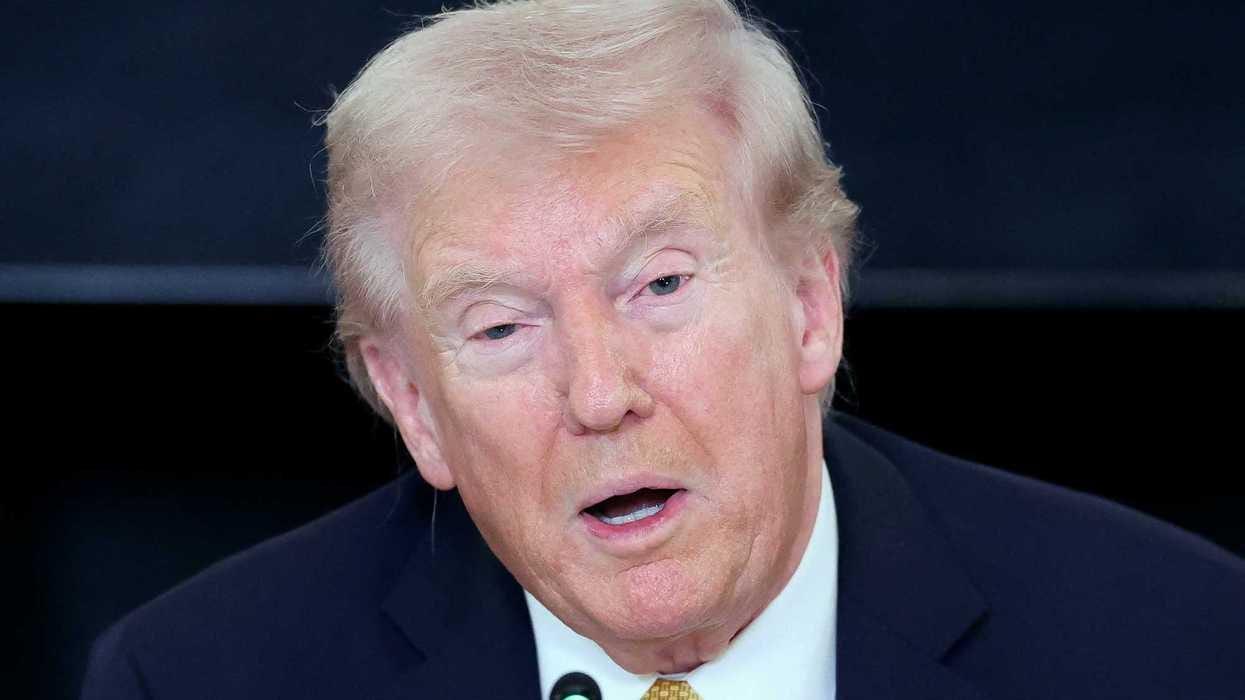
AlterNet reports that psychologist John Garrison interpreted videos of President Donald Trump at a Texas Peterbilt factory, an Oval Office signing and an exchange with reporters as possible evidence of neurological impairment. Garrison said apparent spasms had spread from one side of Trump’s body to the other—what he described as dysfunctional pathways “crossing the brain”—and suggested stroke, brain injury or another neurological condition as possible explanations.
His assessment rested on observed gestures, facial movements, posture and apparent lapses in attention. AlterNet supplied no examination, diagnosis, medical records or response from Trump’s physicians, and Garrison acknowledged that several conditions could explain some of the behavior. The reporting therefore establishes that a psychologist made a grave medical claim from video footage—not that Trump suffered a stroke or has neurological damage.
A diagnosis the evidence cannot carry
The article’s headline converts speculation into apparent revelation. “Stroke pathways” sounds clinical and conclusive; the body offers one psychologist narrating clips. Even Garrison’s language moves among possibilities: stroke, neurodegenerative disease, lesion, brain injury or some other neurological illness. That is not a diagnosis. It is a broad field of conjecture.
AlterNet compounds the problem by presenting interpretations as a sequence of discoveries. A clenched hand becomes involuntary. A facial expression becomes loss of muscular control. A stiff gait becomes possible evidence of a hidden brace. Each observation may justify a question, but the article repeatedly allows the question to borrow the authority of an answer.
The presidency is the relevant institution
Trump holds the institutional power here. If a president cannot reliably perform the office’s duties, the consequences are not private: executive authority, military command and federal administration concentrate enormous discretion in one person. That makes credible evidence about presidential capacity legitimate public business.
But institutional seriousness requires more than remote interpretation. The officials positioned to establish incapacity are the president’s medical team, senior executive officials and, under constitutional procedures, the vice president and Cabinet. The article does not report that any of them made such a finding. Their absence from the evidentiary chain is not a minor omission; it is the central limit on what readers can responsibly conclude.
Spectacle displaces accountability
The weakest actor in this story is not Trump but the audience, asked to inspect gestures frame by frame while the institutions possessing information and authority remain largely outside the frame. That is misdirection through spectacle. It substitutes amateur observation for records, formal evaluation and accountable testimony.
It also offers Trump’s political allies an easy escape hatch. A sensational medical claim can be dismissed without addressing whether the administration provides adequate health disclosures or whether officials would act if a president became impaired. Inflated certainty does not strengthen scrutiny. It gives secrecy a convenient foil.
The systemic error
Presidential systems invite a recurring failure: officials conceal, loyalists reassure, media outlets speculate and the public receives performance analysis instead of verifiable evidence. Power remains protected while uncertainty becomes content.
The political question is not whether one provocative gesture proves brain damage. It does not. The question is why presidential fitness depends so heavily on selective disclosure from the president’s own circle—and why coverage so often replaces scrutiny of that arrangement with diagnosis-by-video. When institutions refuse transparency, speculation rushes into the vacuum. Publishing the speculation as if it closed the case only deepens the failure.
Thanks to Alter Net
Source: Trump’s ‘stroke’ pathways are now ‘crossing the brain’: psychologist
This is a public episode. If you would like to discuss this with other subscribers or get access to bonus episodes, visit paulstsmith.substack.com


