


ABOUT THIS EPISODE
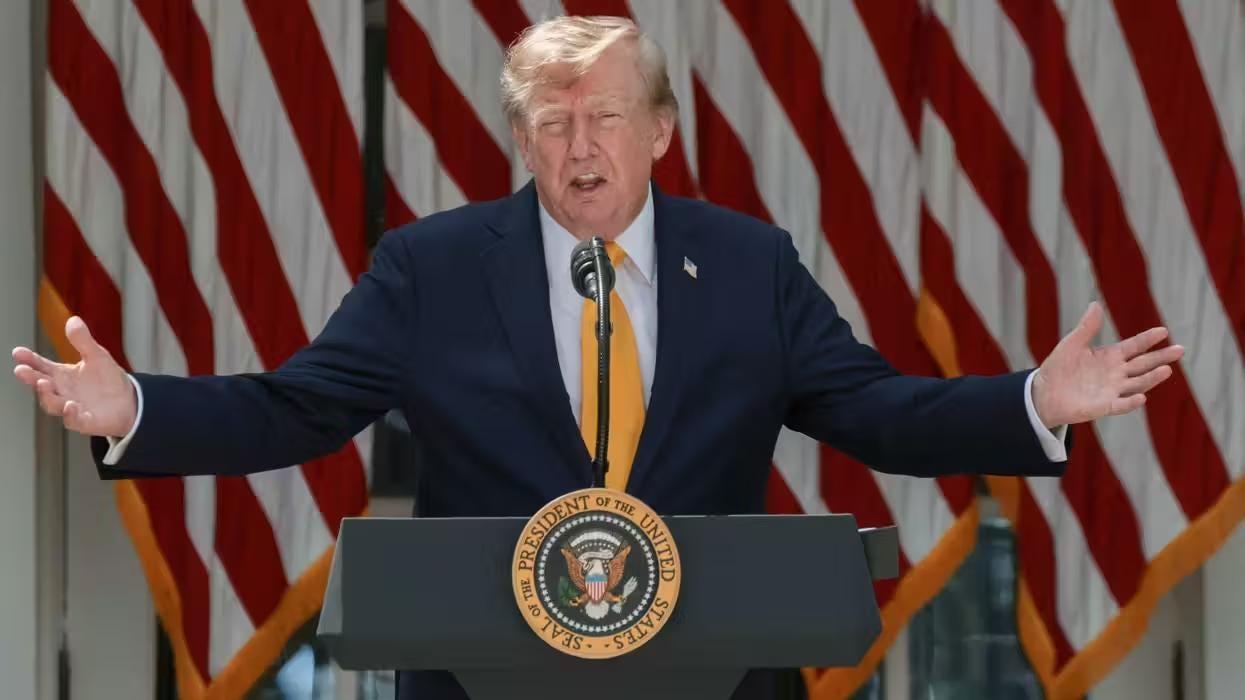
U.S. President Donald Trump in the Rose Garden at the White House in Washington, D.C., U.S., August 24, 2026. REUTERS/Jonathan Ernst
The Deal Was Never Done. Washington Just Expected Canada to Surrender.
A Trade War With an Author
Donald Trump’s trade war is not an impersonal dispute that simply “happened” between neighboring countries. His administration imposed the tariffs, Trump supplied the annexation taunts, and American negotiators tried to dictate which Canadian vehicles deserved relief.
The immediate dispute concerned medium- and heavy-duty trucks. Canadian negotiator Janice Charette says her team repeatedly insisted that tariff relief cover all Canadian-made automobiles and parts. Yet U.S. officials later accused Canada of introducing the truck demand at the last minute. Canada walked away when the proposed deal’s fine print produced new red flags.
Help fuel the work. Independent analysis doesn’t fund itself:☕ Buy us a coffee
That is the context. The political substance is simpler: Washington tried to convert unequal power into presumed consent.
Repetition Is Not Confusion
Charette’s account makes the American explanation difficult to treat as an innocent misunderstanding. She says “every note and every document” included Canada’s demand, and that she repeatedly added medium and heavy vehicles whenever the U.S. side tried to narrow the language.
If that account is accurate, the dispute was not caused by Canadian negotiators failing to communicate. It was caused by American officials declining to accept what Canada communicated—and then behaving as though the rejected demand had ceased to exist.
That distinction matters. Powerful institutions often describe resistance as a procedural surprise. The maneuver shifts scrutiny away from the actor imposing the terms and toward the weaker party refusing them. Canada becomes the obstinate negotiator; the United States disappears into the neutral scenery of “talks.”
Ninety Percent Agreement Is Not Consent
The claim that the parties had resolved 90 percent of their problems sounds impressive only if the unresolved portion is treated as disposable. It was not. Ford’s Oakville plant and GM’s Oshawa plant gave the truck provisions direct consequences for Canadian production, investment, and workers.
Trade agreements are not scored by averaging paragraphs. A government can accept dozens of minor provisions and still reject a deal that exposes a strategically important industry. “Nothing’s done until everything’s done” is not Canadian trickery. It is the basic reality of negotiation.
Presenting Canada’s withdrawal as a last-minute disruption smuggles in the assumption that Washington was entitled to closure. It was not. Prime Minister Mark Carney had the authority to reject terms his government considered unacceptable, and he used it.
The Insults Were Part of the Pressure
Trump’s references to Canada as a “51st state,” alongside his attempt to rename Lake Ontario “Lake America,” were not separate from the economic conflict. They expressed the same hierarchy: Canada was expected to accept American dominance as both policy and punchline.
That strategy misread humiliation as leverage. Richard Wolff’s interpretation—that Canadian resistance reflects popular anger rather than merely Carney’s personal posture—is plausible given the conduct described. Carney gains political room to resist when the pressure is visibly imposed from Washington.
The administration appears to have expected a smaller ally to absorb tariffs, insults, and narrowed concessions without converting any of them into domestic political resolve. Its surprise reveals the arrogance of the policy more clearly than its aggression does.
Coercion, Then Blame
The institutional power here sits overwhelmingly with the United States. Trump initiated the trade confrontation. His administration controlled the American tariff regime. Its negotiators attempted to restrict relief, while Canadian officials could only bargain, retaliate, or leave.
Yet the framing drifts toward whether Canada “pulled a fast one.” That accusation reverses agency. The government wielding tariffs becomes the aggrieved participant; the government resisting exclusion becomes the saboteur.
This is propaganda in its routine bureaucratic form: coercive policy is presented as the natural baseline, while refusal is cast as misconduct. No elaborate conspiracy is required. Officials need only treat American preferences as the definition of a completed deal.
Empire Hates the Fine Print
The larger pattern is not merely that Trump underestimated Canada. It is that domination repeatedly mistakes dependence for obedience.
A larger state can impose real costs on a smaller one. It cannot guarantee that those costs will produce submission rather than resistance, industrial protection, or political solidarity. When coercion fails, the dominant power often invents a story about deception, irrationality, or bad negotiating etiquette.
The fine print exposed what the swagger concealed. Washington did not have Canada’s agreement. It had an expectation that Canada’s objections would eventually stop mattering. Carney’s government refused that premise, and American officials called the refusal a surprise.
Thanks to Alter Net
Source: Canada calls out Trump’s ‘almost funny’ gaslighting
Systemic Error is a reader-supported publication. To receive new posts and support my work, consider becoming a free or paid subscriber.
We warned them.We told them.We shouted from the rooftops.We plead.We begged.They didn’t listen.Now, we all will suffer.Y’all know what to do, right?VOTE BLUE! 💙Vote as if your life — nay, our country — depend on it.Because, this time, and every time, it does.
This is a public episode. If you'd like to discuss this with other subscribers or get access to bonus episodes, visit paulstsmith.substack.com/subscribe


