

ABOUT THIS EPISODE

Explore how the latest advancements in AI are shifting from traditional training to inference-focused efficiencies, and how companies like Adaptation Labs are pioneering adaptive, full-stack AI solutions that democratize control across industries.
Key topics:
- The evolution from compute-heavy training models to efficient inference layers
- How inference costs are changing despite increasing AI demand
- The role of adaptive, gradient-free learning in democratizing AI customization
- Challenges with the last 5% reliability gap and continuous learning
- The importance of full-stack optimization—from data to interfaces in AI systems
- Future trends: decentralized AI, edge computing, and ongoing innovation
Timestamps:
- 00:00 - Introduction to AI trends: scaling vs inference efficiencies
- 01:01 - Sudip’s background: Google Brain, DeepMind, and inference infrastructure
- 01:34 - The rapid growth of foundation and large language models
- 02:36 - Comparing traditional ML project timelines to large foundation models
- 04:20 - The transformative potential of foundation models in enterprise and underserved communities
- 05:33 - The shift from task-specific models to general-purpose foundation models
- 07:07 - How inference costs have evolved: the rising demand vs falling per-token costs
- 08:37 - The challenge of inference in trillion-parameter models and the move towards smaller, verticalized models
- 10:14 - Factors driving high inference costs: model size, reasoning, agentic workloads
- 12:13 - The probabilistic nature of inference and API pricing complexities
- 13:07 - Variability in inference costs and demand in real-world scenarios
- 14:14 - The autoregressive, sequential nature of LLM inference and system challenges
- 16:45 - Cost implications of autoregressive inference and the move to more efficient, localized models
- 18:18 - The motivation behind Adaptation Labs: democratizing AI control and customization
- 19:47 - Adaptive, gradient-free continual learning and environment interaction
- 21:26 - Co-optimizing full-stack AI: systems, interfaces, and models
- 22:34 - How interface design impacts AI adoption and continuous learning
- 23:55 - The evolution of techniques: from foundational training to open-source innovations
- 26:18 - Handling the ‘last 5%’ reliability challenge in enterprise AI deployments
- 28:02 - The importance of system feedback and adaptive learning in coding and decision-making
- 31:12 - Adaptive Data and AutoScientist: seamless data transformation and model co-optimization
- 32:55 - Use cases: finance, low-resource languages, long context data
- 34:13 - The role of inference techniques and creating high-quality data for customization
- 36:10 - Future of adaptive, task-specific interfaces and continuous, real-time learning
- 38:49 - Full-stack AI: data, models, interfaces, and their iterative feedback loops
- 41:18 - The competition between fine-tuning and adaptive inference techniques
- 43:29 - The origin of new inference techniques: industry labs, open source, and innovation hubs
- 45:27 - The “last 5%” reliability gap: why it’s critical and how dynamic learning can help
- 48:27 - Hardware vs software optimization in AI systems and the future of systemic efficiency
- 51:25 - Growing AI demand, hardware constraints, and the opportunity for systemic innovation
- 52:48 - The shift from training to inference and decentralized AI models at the edge
- 54:12 - Final thoughts: the evolving landscape and long-term AI innovation
Connect with Sudip:
Connect with Nataraj:
English
United States
TRANSCRIPT 🔗
Are you the producer of this podcast?
Add a podcast transcript
Need Audio-to-Text?
Transcribe with Listen411 in Just 60 Seconds
SEARCH PAST EPISODES
Search past episodes of Startup Project: Build the future.
OTHER EPISODES IN THIS PODCAST

In this episode of Startup Project, host Nataraj speaks with Ilya Levtov, Founder and CEO of CraftCo, an AI-powered platform designed to help organizations better understand and organize supplier information.
The conversation focuses on how enterprises and public-sector organizations manage large …
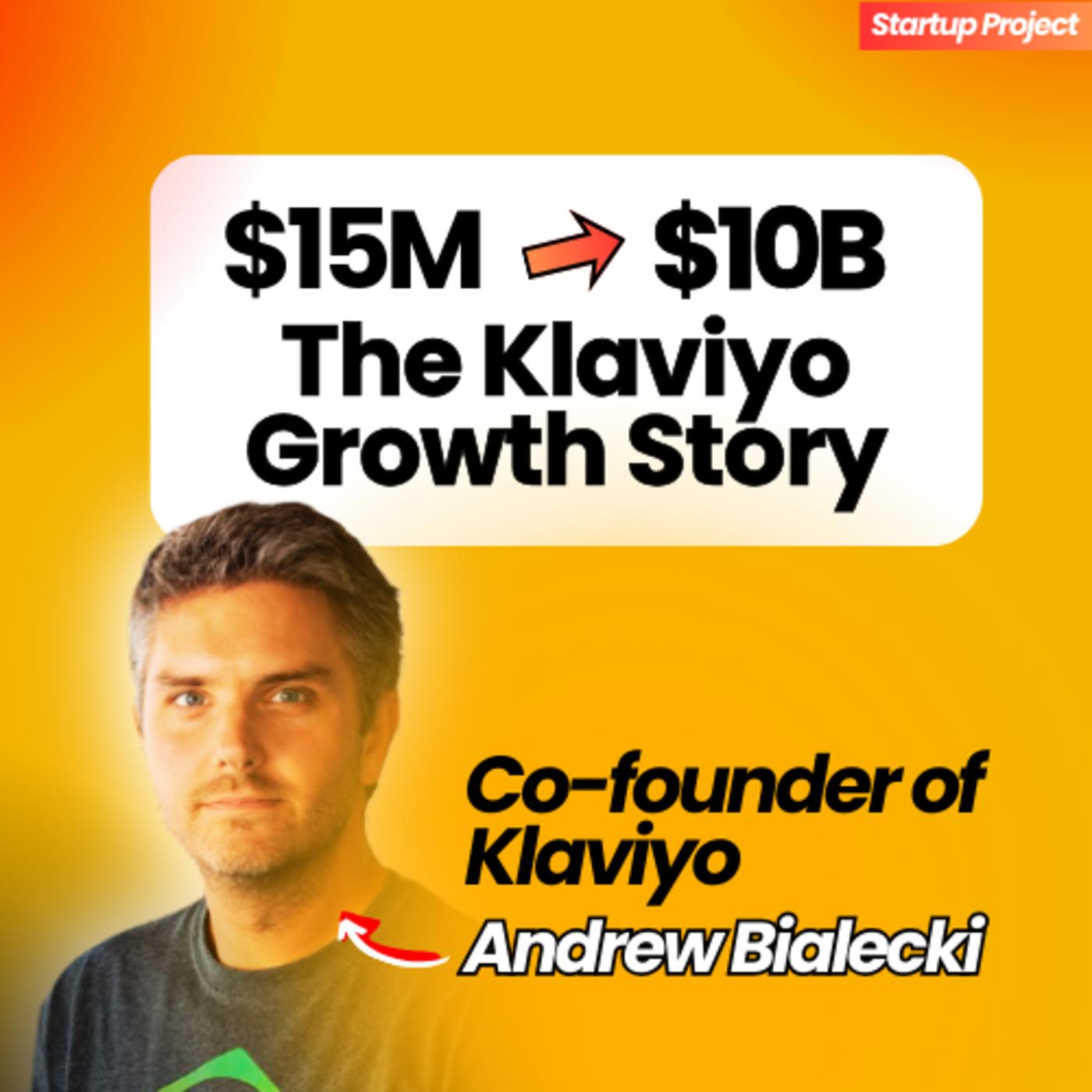
In this episode of Startup Project, host Nataraj sits down with Andrew Bialecki, Co-founder and CEO of Klaviyo, to unpack one of the most capital-efficient growth stories in modern SaaS history.
Klaviyo grew into a $7B+ public company while raising just $15M in total funding—a sharp contrast to tod…

In this episode, Varun, co-founder of Yoodli, shares insights into how his startup leverages AI to enhance communication skills, from public speaking to enterprise sales training. Tune in to understand how AI can empower humans rather than replace them, and the strategic evolution from consumer to …

Rethinking AI Compute Infrastructure: The TensorWave ApproachIn this episode, Jeff Tatarchuk, co-founder of TensorWave, shares how his deep industry experience and innovative mindset are transforming AI compute infrastructure. We explore how building specialized data centers, focusing on AMD GPUs, …

How Gong Built a $7B AI Category: From "Conversation Intelligence" to the Revenue Operating System
Most sales teams fly blind. They rely on "gut feel" and "art" rather than data and science. Eilon Reshef (Co-founder & CPO of Gong) realized this in 2015 and built a …
Disclaimer: The podcast and artwork embedded on this page are from Nataraj, which is the property of its owner and not affiliated with or endorsed by Listen Notes, Inc.
EDIT
Thank you for helping to keep the podcast database up to date.
