

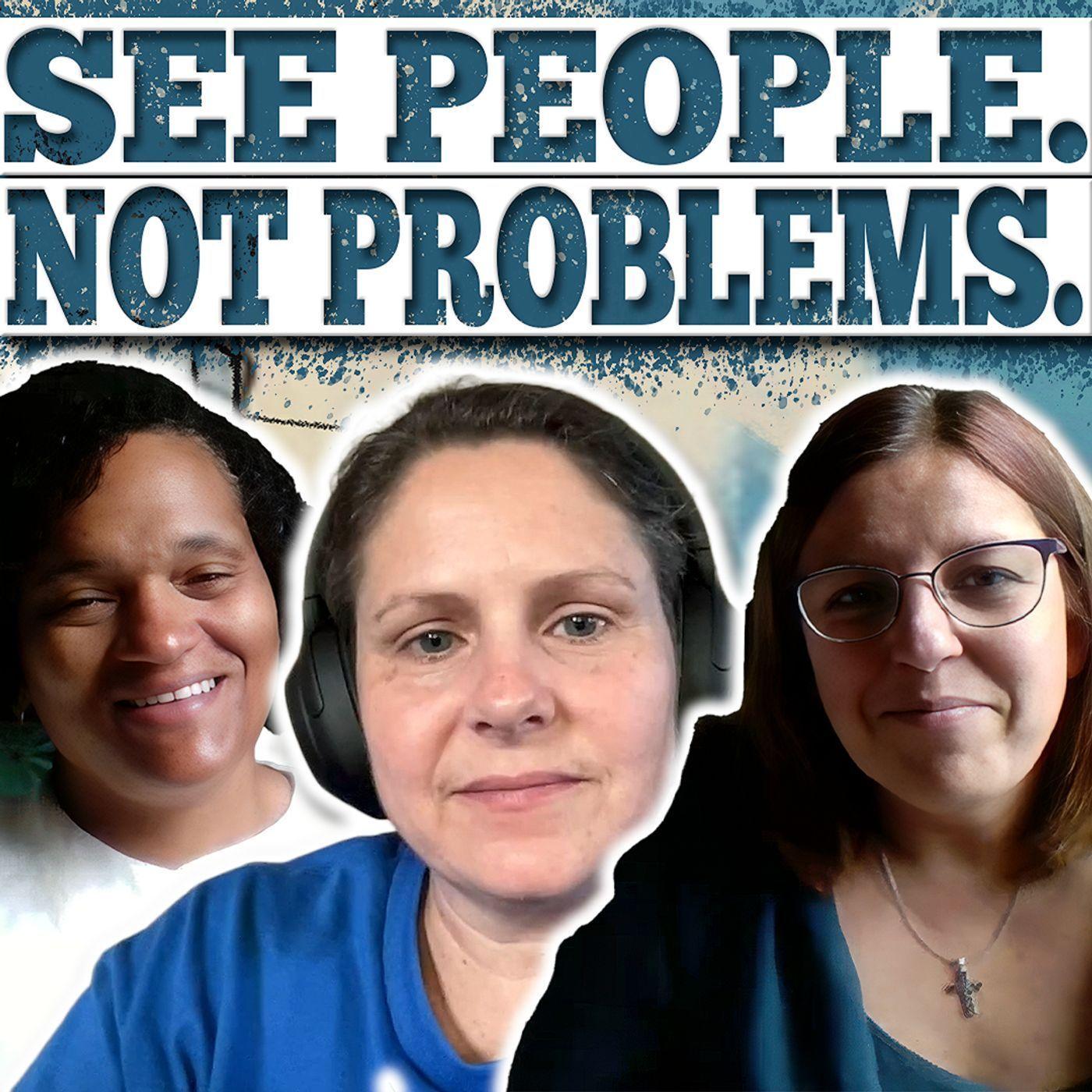
Tabitha Zeigler: All right, everybody, welcome to the show. ⁓ let's just get into it. I'll let you guys introduce yourselves. Go ahead.
Erica or Melissa: My name is Erica Pearson, and I am one of the co-owners at New Wave Wellness. And I'm also a marketing and admissions person at my child my kids school, Lutheran South Unity. Woo-woo. And that's kind of what I do. I have four kids and I'm married. I'm Melissa Fisher. I co-own New Wave Wellness. I am an associate pastor at Aldersgate United Methodist Church, ordained United Methodist pastor, also the president of the Mayor's Mental Health Commission in the city of Fort Wayne, and also currently running for county council, ⁓ but focused on New Wave Wellness and the service to adults and children with developmental disabilities. Yep.
Tabitha Zeigler: Very good. So let's get into ⁓ your origin stories a little bit because I find that most people, they don't just step into ⁓ either autism or disability advocacy. So maybe there's something in your past that led you along this path.
Erica or Melissa: Go first. You go first. ⁓ well, my past was I was in college when I was a freshman at age 18, and I was just working a basic job, and somebody offered this different job at AWS, and I received probably one of the toughest clients I ever had. Really, really ⁓ kind of insane story with a client and ended up falling in and then didn't end up working with that client because that client ended up being in. Institutionalized because of how insane that story was. And then ended up with ⁓ two clients that I worked with for like six years and got me through college and just wonderful clients, ⁓ and so elderly. and I just loved working with them, and then I basically kind of got a heart for people with disabilities from working with them for so long. So, growing up, my best friend, ⁓ her brother.
Tabitha Zeigler: Oof.
Erica or Melissa: had severe developmental disabilities and ⁓ he was just the coolest person his name scooter still around ⁓ he was just a really cool guy and ⁓ that was a major impact on my life but growing up you know I got a little older and started working kind of customer service jobs during school and almost everywhere I went I kept getting robbed and my dad was like can you please find a job
Tabitha Zeigler: Mm.
Erica or Melissa: Where you'll be safe. And I kind of looked around and I saw an ad for developmental disabilities, like ⁓ direct support professional. And I thought about it, I go, I can do this, you know, I I love Scooter, like that was cool, we can do this. And I started there as a direct support professional and moved from pretty much any job you can have in the field, ⁓ house manager, office assistant, secretary, billing secretary, HR. ⁓ program director Q as site director, applied for and got a regional director job but took it a you know stepped back from it. starting helping people start their own businesses to then become a behavior consultant to running into Melissa because of Cubs. No. Yeah. The cut the cut the Kansas City Royals won the won the So I have a journey after the a when I started there, did the six years of direct care support and then worked at rest care and did supervision and then from rest care ended up at K IPMG and did case management and ended up I was part of the forty-seven person online layoff when they laid off all the forty-seven case managers from IPMG. And then they decided to open it up to the six case management companies. So been through a lot of the redesigns ⁓ throughout the years and then did case management and then did case management supervision for ⁓ advocacy links. So was a supervisor for case manager, a case management company, and then from there ended up we basically had a taco. ⁓ so we were meeting. She was the director of a residential company. I was working as a supervisor of a case management company. We said, you know what? Let's we've been doing this. We got almost 40 years of experience together. Let's do this together and let's try to help people in a different way. So like she's very experienced on the case management end and I have a lot of experience on the residential ⁓ like business growth type end. ⁓ as far as program management and it kind of melded well together. ⁓ we knew each other.
Tabitha Zeigler: Mm-hmm, mm-hmm.
Erica or Melissa: ⁓ but we weren't friends when we started this company. Business, business was all our focus. We did business together and so and it just has blossomed. ⁓ and so we serve around three hundred and seventy-five clients, three fifty, three seventy-five clients, ⁓ as it's fluctuating right now. Yeah. And significantly right now, I don't know if you've noticed this or if ⁓ you've heard from other providers, but right now with the transitions of I think it went from twenty-one case management companies down to five, it's really
Tabitha Zeigler: Mm-hmm, mm-hmm.
Erica or Melissa: really hard to connect with clients the clients to the services. We've hired some new BCs, we've hired some new music therapists, different places in the state, and people don't even know we're available because we can't get the connections. Or we'll talk to the manager and they'll say, Well, this is my last week. I'll be starting somewhere else. So they're leaving the field. Or they're leaving the field. So hopefully in the next, you know, month or so this kind of
Tabitha Zeigler: Mm-hmm.
Erica or Melissa: shakes down better and peop we can begin to connect. But yeah, the we we've from a ground up game, we've built to a place of just serving people and trying to see each individual for the gifts that they have. And right now we're kind of blossoming into other fields and seeing where we can help elsewhere. because we're a unique type of duo. So kind of
Tabitha Zeigler: Well, it sounds like you guys have a lot of advocacy cooking up in Fort Wayne area. I ⁓ had seen that you had I and I'll let you guys speak on this because you're from there. But ⁓ I follow someone, a content creator up from the Fort Wayne area, and they were speaking about the unhoused community. And I commented on it because I have a friend of mine down in the indie area that works with the unhoused community. And we were talking about that off con off camera a little bit. So maybe you guys might wanna also talk about your connection to the in house community.
Erica or Melissa: ⁓ I mean, it affects our clientele. So with regard to ⁓ our disabilities community, there are a lot of disabilities community that are under the Medicaid waiver and have services but are unhoused. Yes. ⁓ and so this would with the new criminalization of homelessness bill, it's not positive that we do not have a homeless resource center. We are advocating, ⁓ our church is advocating, ⁓ our ⁓
Tabitha Zeigler: Mm-hmm. Mm-hmm. Mm-hmm.
Erica or Melissa: Our churches, the United Methodist Church is ha advocating, ⁓ we don't believe any human being just because they're unhoused are criminals. And so the mayor is attempting to ⁓ provide a resource center that is not within the distance that it not within a thousand feet of residential areas and then while
Tabitha Zeigler: Mm-hmm.
Erica or Melissa: like half a mile close as well. So they're they're the residential area right now the place that's the fight of where the location is, how to run it, how to function it. Mm-hmm. The community. So yes, there's a lot of ⁓ religious groups, a lot of social service groups, a lot of groups of non for profits non profits that are advocating that we do need this homeless resource center. ⁓ because it's it is affecting growth and it's affecting business and it's affecting the ⁓ you know, the overall
Tabitha Zeigler: Mm.
Erica or Melissa: ⁓ life and culture of the community as well. Yeah, and then too people assume the homeless people walking around are choosing that lifestyle or they're addicted to something, but they don't know that there are clients. They're people that just lost a paycheck, you know, were sick for a week and they couldn't make it. And I just think that when we look at others we need to look at them with more humanity rather than judging them first. We need to know that they're a person first. Forty percent of Americans are one paycheck away from homelessness. Yeah. And so forty percent of Americans are, you know, one paycheck. And Indiana, you know, the inflation is getting higher. I mean, people want to move here because of affordability, but it's just getting higher and higher and higher. I mean, so there's just a there's a lot of things that are making it tough for us to serve families who need the supports. Mm-hmm. There's families that cannot work.
Tabitha Zeigler: Mm. I was just gonna say that most of us are.
Erica or Melissa: without having the supports for family members. ⁓ and they've been cut. And they've been cut. We have a lot of clients that work in the workforce and they need the services with the beh we've had, you know, the behavior cuts, the music therapy cuts, the rec therapy. It is affect clients have lost jobs. Client, you know, they they've ⁓ lost some clients don't even go outside anymore. That was their ⁓ one day a week that they got them out of the house and it was their motivating purpose and factor
Tabitha Zeigler: Mm.
Erica or Melissa: ⁓ you know, I wanna live in a society where we're all thriving. Yes. Where we all ⁓ can have access to the services that we need to live as independently as possible. And I wanna live in a society. I wanna live in the society right now where we don't have to fight so hard to help.
Tabitha Zeigler: Mm-hmm. Mm-hmm. Mm-hmm.
Erica or Melissa: 'Cause ⁓ if you are in the field where you're trying to ⁓ advocate, you know it's a fight right now and it's it's getting hard to keep fighting so hard to help.
Tabitha Zeigler: Mm-hmm. Well, I had the benefit of speaking to a few people on the show early on that were involved with the state whenever they de-institutionalized en masse. And I find it really interesting the conversations that are coming up right now and the type of pressure that is being put on the community. Because everybody that knows anything about how this system is structured, just the basics of it. It is more expensive to institutionalize people rather than give the people, give the families, give ⁓ these smaller organizations like yourselves what they need to serve the public. And I think that's a conversation that needs to be had right now. ⁓ we we were not that far away, really. Like the disability community was the last one to get any sort of legal protections. Like we didn't even have the ADA until 1991. Olmstead decision was 1999. Like that's in my lifetime. Yeah, I was born in 1983. So, and also having autism myself, having three kids that have autism. I've been following what's going on in the state and nationally pretty closely. And quite frankly, I'm disturbed to see our lack of humanity. So I would agree with you guys, you know, ⁓ in order to serve people and to serve people's humanity. You need to have a baseline. You need to care about these people. And being that a large portion of the people that are moving into Indiana, they're not Hoosiers, right? But the Hoosiers are having a difficult time maintaining residents, the ones that are from here. And I find that really disturbing. So what are you saying up in the Fort Wayne area as far as people losing their housing? I mean people li living in their cars and things of that nature.
Erica or Melissa: that's why the homeless resource center is so n necessary for the community because this resource center will allow a parking lot for people who have cars and it'll be a safe parking space, there'll be security, things like that. I mean Across the board, I mean, we are attempting to provide positive services across the board, no matter the income bracket that you have. We provide to the family and no matter what political side you're on, no matter where you sit, no matter you know ⁓
Tabitha Zeigler: Mm-hmm.
Erica or Melissa: Bottom line is we want to provide you good services from a developmental disabilities perspective. And they're all interconnected. Everything's interconnected. If you don't have people that have set housing or that can afford housing or there's affordable or the we've had inflation on how on renters, disabilities, elderly, and young people.
Tabitha Zeigler: Mm.
Erica or Melissa: 37% in the state of Indiana since 2020 since COVID. And we have nothing regulatory to to watch over that. So our people are being exploited. They're being exploited because now their costs are more on everything else. And now they still have the same amount of money that they were and now they have more restrictions or more ⁓ you know ⁓ requirements.
Tabitha Zeigler: Mm-hmm. Mm-hmm. Mm-hmm.
Erica or Melissa: to get that money. ⁓ you know, so there's just the bottom line is ⁓ we need to come back to the center. Yes. We're too far on each end and we're not looking at the people.
Tabitha Zeigler: Mm-hmm. Mm-hmm. So would you say your organization is probably humanist led?
Erica or Melissa: Yes. Very human focused, very individual focused, very need based. ⁓ very seeing the person where they're at. People first, no matter who you are. Yeah. We want to see the person that's in front of us. It is just very intentional. We're very intentional with our decisions. and we're also very intentional with our when we make
Tabitha Zeigler: Mm-hmm.
Erica or Melissa: We're very intentional how we correct things as well. So, ⁓ if we make a mistake, we we want to make sure that every aspect of it is getting addressed because it's important to realize it's a full circle. And that's just everybody needs to see that everybody is a full circle, not just, you know, there's a lot going on, you know. And if you ha you have to be willing to jump into other people's circles to see what's going on, you know, that's it. So you can help.
Tabitha Zeigler: Mm-hmm. Well, a lot of people don't know this, but we've been trying to schedule this interview forever. And part of the reason why it's taken so long is because I have kids with disabilities. And, you know, I was in that group because all three of my children have autism. All three of them were in ABA services. So ⁓ when they made some restructuring decisions, because my children were ⁓ going to ABA through Medicaid. My family was directly affected. And I have seen that firsthand, how that works. I've been the recipient of the the parent meetings that are forced by the state ⁓ just to make sure that your children have services, and yet the services are continuously cut. So I find it really interesting. Like, how do you suppose?
Erica or Melissa: Okay.
Tabitha Zeigler: That these families are supposed to reintegrate into the workforce, get the care that they need, care for their loved ones while all of the costs are going up, while they're not receiving resources or the programming is being cut. What do you think that's gonna look like in the next year or two, the next five years in Indiana, if we don't do something about this?
Erica or Melissa: It's not gonna look good. ⁓ people are gonna have to start relying on their immediate resources around them and some people live in communities where that's not an option. So I don't know how that's gonna look and ⁓
Tabitha Zeigler: Mm-hmm.
Erica or Melissa: It is important that we keep advocating. It's important that we keep fighting, even though it's hard to do. we need to advocate for the families that we serve and that the state has deemed that they deserve ⁓ our support. And we shouldn't be looking to cut services for families because that to me cuts families at work.
Tabitha Zeigler: Mm-hmm. Mm-hmm.
Erica or Melissa: There it affects it cuts jobs, it affects our workforce, ⁓ spending, it affects our spending, yeah. It's multiple they're all interconnected. And so we don't have the power to make decisions, we have the power to serve our people and we have the power to advocate for our people when we're able.
Tabitha Zeigler: Mm-hmm, mm-hmm.
Erica or Melissa: ⁓ but outside of that, I mean we we we have the power to serve from a behavior perspective, a music therapy perspective, an erect therapy perspective, and a pack perspective. Outside of that, we can't really do much ⁓ other than help our our our individuals advocate and help give them voice to be their own advocates as well.
Tabitha Zeigler: Well, I brought that up on purpose because I think a lot of people right now, it's one of these situations where if you're not living it, you don't understand it. So it's very easy for people to hear something ⁓ through the news that's maybe being structured in a certain way. And I find oftentimes in Indiana everything is about cost saving. So if we can put more faces behind the services to explain. Here's this person, here's this family, here's their situation, this is why they need services. And to make it multifaceted to where it's harder for people to just say, ⁓ right, here's this person over here. Clearly they're lazy or whatever, and that's why they don't deserve services. But to really show them, ⁓ hey, here's this person that maybe all of their family is now gone. and they're using what they have at their disposal. But if you take this person and you take away their humanity and you take away their independence and force them into an institution or something of that nature, that would actually cost the taxpayer more. So it actually behooves you to cultivate your humanity because if you don't care about anything else besides, you know, the money portion of it, that's actually going to cost you more.
Erica or Melissa: Agree with you a thousand percent.
Tabitha Zeigler: So that's why I think it's it's great that you guys are taking the humanist perspective that you're serving your clients in like truly like because I was raised in Indiana too, right? So I I've heard all the things about what it's like to be a you know a good Christian, to serve others, to be, you know, a good steward for your community. And it seems like you guys are exemplifying that. So I just wanted to, you know, kind of. Give people a insight into organizations that are truly led from a humanistic perspective, what that structure looks like, and maybe there's a way that they can get involved with your organization.
Erica or Melissa: Absolutely.
Tabitha Zeigler: What would that look like for people if they wanted to get involved with your organization?
Erica or Melissa: Well, ⁓ New Wave is one of those organizations where we try to listen to what people are asking, what they're wanting, what they're needing. we try very hard to have connections with our case managers, to have connections with our clients. ⁓ it's important that we think outside of the box. It's important that we keep the hope going, hope in motion. It's important to know that there is something and we're working towards it and we're growing and we're learning and we're connecting and we're networking. ⁓ we are Melissa's always looking for opportunities for us and ways to assist and connect organizations. Oftentimes we'll start off with organizations and we end up reconnecting them other places because that's where the fit would be better. ⁓ We're pushing for grants and things like that so we can expand outside of the way waiver services because we can help our clients in different ways, but we can also reach more people. And we want to expand. We're connected with Fort Wayne Housing Authority.
Tabitha Zeigler: Mm-hmm.
Erica or Melissa: And we're trying to expand that pro program where we can provide our services to a family unit, not just an individual. ⁓ because the family unit we often know is most important when it comes to that structural baseline. If your family unit is one or two people, then that's your family and that's okay. But in order for us to really be effective, I think that if we can get with the whole unit, it'll be better because you start with a unit and that
Tabitha Zeigler: Mm-hmm.
Erica or Melissa: grows that that is contagious, it grows. It grows around you. Your community starts to feel that change. And we just want to be that seed. We want to continue to plant and water that seed of growth and community connection.
Tabitha Zeigler: Are you guys hiring right now?
Erica or Melissa: Yes, so we're high we can hire anywhere across the entire state. So if you're in the count in the state of Indiana, we can hire you if you are a registered rec therapist or a licensed rec therapist or a licensed music therapist. If you pass those two licensures, we can contract you. If you are in school, we can take interns anywhere in the state. ⁓ depending on if we have people there for you to have clients with. ⁓ we have behavior, we have across the
Tabitha Zeigler: Mm-hmm.
Erica or Melissa: The entire state. You have to have a master's in ⁓ psychology, psychology, human services, social worker related field, counseling. ⁓ and then we have PAC services that we're hiring for as well, that you have to have a high school diploma ⁓ as well. So we're also accepting clients. We're also accepting if we have them in the area, if we have them in the area, and then we're working on building out a potential therapy department that would be private pay ⁓ and we would be credentialed. with insurances, but that's in the works. So ⁓ just that we're creative. We like to partner with different people. ⁓ really do. So ⁓ you know we like to throw events.
Tabitha Zeigler: Well, the reason I'm asking the reason I'm asking is because I would imagine there are a good portion of people getting ready to graduate from college that would be looking for experience. And your organization seems like one that might actually be interested in helping them, even if it was getting some sort of job experience. Am I off on that?
Erica or Melissa: ⁓ yes. Yep. We take no, and we'll take interns, we take interns and different things like that in different areas. If you're a person that wants to learn HR, if you're a person that wants to learn social media or marketing or whatever, I mean there's a lot of experience from a business perspective that we can give people as well. And that I mean we have a team, admin team of six six. So Yep.
Tabitha Zeigler: Mm-hmm. Mm-hmm. Okay. So where can they find you then?
Erica or Melissa: We are online, Newwave Wellness dot org. And ⁓ we are also on Facebook and Instagram, New Wave Wellness.
Tabitha Zeigler: Okay. ⁓ is there an email where they can reach you at?
Erica or Melissa: Yes, you can email us at info I-N-F-O at new N E W Wave W-A-V-E Wellness W-E-L-L-N-E-S-S dot O-R-G.
Tabitha Zeigler: Awesome. Well, is there anything else you guys want to mention today?
Erica or Melissa: No, I think it's just like all about being kind, loving people, seeing the people where they're at, no matter who they are, they're a human being and they ⁓ are here for a reason. And so just to that get to a space and place where everybody has purpose and reason and ⁓ we want to just help people be their best self and be independent and be, you know, positive people that give back to their community, not people that are taking from their community. We won't
Tabitha Zeigler: Right. Mm-hmm.
Erica or Melissa: people we want a community that wants to give back and and uplift our community no matter what the ability the person has. Yeah and I would I just want to just remind people that ⁓ to just show love, you know, there's just a lack of it. You know it's important. Love is important and just remember to show it to others even when you don't feel it yourself at times. That's it.
Tabitha Zeigler: Mm. Well, hey, I very much appreciated having you guys come on. If I can do anything to help you, you let me know. ⁓ certainly I'll be passing this information along to people that are interested in looking for jobs. I'm positive I'm gonna run across some students that might be interested. So, right now your base is in Fort Wayne, but you are employing people throughout the state. Okay. Awesome. Well.
Erica or Melissa: Nice. Correct. Yes, ma'am.
Tabitha Zeigler: Thank guys so much for coming on. Very much appreciate it. Keep me in the loop. Like I said, if there's any way that I can help you in the future, you let me know.
Erica or Melissa: Awesome. Thanks, Tabitha. Have a great weekend. Have a good one. Peace and blessings.
Tabitha Zeigler: You too. Thank you very much.
Erica or Melissa: My name is Erica Pearson, and I am one of the co-owners at New Wave Wellness. And I'm also a marketing and admissions person at my child my kids school, Lutheran South Unity. Woo-woo. And that's kind of what I do. I have four kids and I'm married. I'm Melissa Fisher. I co-own New Wave Wellness. I am an associate pastor at Aldersgate United Methodist Church, ordained United Methodist pastor, also the president of the Mayor's Mental Health Commission in the city of Fort Wayne, and also currently running for county council, ⁓ but focused on New Wave Wellness and the service to adults and children with developmental disabilities. Yep.
Tabitha Zeigler: Very good. So let's get into ⁓ your origin stories a little bit because I find that most people, they don't just step into ⁓ either autism or disability advocacy. So maybe there's something in your past that led you along this path.
Erica or Melissa: Go first. You go first. ⁓ well, my past was I was in college when I was a freshman at age 18, and I was just working a basic job, and somebody offered this different job at AWS, and I received probably one of the toughest clients I ever had. Really, really ⁓ kind of insane story with a client and ended up falling in and then didn't end up working with that client because that client ended up being in. Institutionalized because of how insane that story was. And then ended up with ⁓ two clients that I worked with for like six years and got me through college and just wonderful clients, ⁓ and so elderly. and I just loved working with them, and then I basically kind of got a heart for people with disabilities from working with them for so long. So, growing up, my best friend, ⁓ her brother.
Tabitha Zeigler: Oof.
Erica or Melissa: had severe developmental disabilities and ⁓ he was just the coolest person his name scooter still around ⁓ he was just a really cool guy and ⁓ that was a major impact on my life but growing up you know I got a little older and started working kind of customer service jobs during school and almost everywhere I went I kept getting robbed and my dad was like can you please find a job
Tabitha Zeigler: Mm.
Erica or Melissa: Where you'll be safe. And I kind of looked around and I saw an ad for developmental disabilities, like ⁓ direct support professional. And I thought about it, I go, I can do this, you know, I I love Scooter, like that was cool, we can do this. And I started there as a direct support professional and moved from pretty much any job you can have in the field, ⁓ house manager, office assistant, secretary, billing secretary, HR. ⁓ program director Q as site director, applied for and got a regional director job but took it a you know stepped back from it. starting helping people start their own businesses to then become a behavior consultant to running into Melissa because of Cubs. No. Yeah. The cut the cut the Kansas City Royals won the won the So I have a journey after the a when I started there, did the six years of direct care support and then worked at rest care and did supervision and then from rest care ended up at K IPMG and did case management and ended up I was part of the forty-seven person online layoff when they laid off all the forty-seven case managers from IPMG. And then they decided to open it up to the six case management companies. So been through a lot of the redesigns ⁓ throughout the years and then did case management and then did case management supervision for ⁓ advocacy links. So was a supervisor for case manager, a case management company, and then from there ended up we basically had a taco. ⁓ so we were meeting. She was the director of a residential company. I was working as a supervisor of a case management company. We said, you know what? Let's we've been doing this. We got almost 40 years of experience together. Let's do this together and let's try to help people in a different way. So like she's very experienced on the case management end and I have a lot of experience on the residential ⁓ like business growth type end. ⁓ as far as program management and it kind of melded well together. ⁓ we knew each other.
Tabitha Zeigler: Mm-hmm, mm-hmm.
Erica or Melissa: ⁓ but we weren't friends when we started this company. Business, business was all our focus. We did business together and so and it just has blossomed. ⁓ and so we serve around three hundred and seventy-five clients, three fifty, three seventy-five clients, ⁓ as it's fluctuating right now. Yeah. And significantly right now, I don't know if you've noticed this or if ⁓ you've heard from other providers, but right now with the transitions of I think it went from twenty-one case management companies down to five, it's really
Tabitha Zeigler: Mm-hmm, mm-hmm.
Erica or Melissa: really hard to connect with clients the clients to the services. We've hired some new BCs, we've hired some new music therapists, different places in the state, and people don't even know we're available because we can't get the connections. Or we'll talk to the manager and they'll say, Well, this is my last week. I'll be starting somewhere else. So they're leaving the field. Or they're leaving the field. So hopefully in the next, you know, month or so this kind of
Tabitha Zeigler: Mm-hmm.
Erica or Melissa: shakes down better and peop we can begin to connect. But yeah, the we we've from a ground up game, we've built to a place of just serving people and trying to see each individual for the gifts that they have. And right now we're kind of blossoming into other fields and seeing where we can help elsewhere. because we're a unique type of duo. So kind of
Tabitha Zeigler: Well, it sounds like you guys have a lot of advocacy cooking up in Fort Wayne area. I ⁓ had seen that you had I and I'll let you guys speak on this because you're from there. But ⁓ I follow someone, a content creator up from the Fort Wayne area, and they were speaking about the unhoused community. And I commented on it because I have a friend of mine down in the indie area that works with the unhoused community. And we were talking about that off con off camera a little bit. So maybe you guys might wanna also talk about your connection to the in house community.
Erica or Melissa: ⁓ I mean, it affects our clientele. So with regard to ⁓ our disabilities community, there are a lot of disabilities community that are under the Medicaid waiver and have services but are unhoused. Yes. ⁓ and so this would with the new criminalization of homelessness bill, it's not positive that we do not have a homeless resource center. We are advocating, ⁓ our church is advocating, ⁓ our ⁓
Tabitha Zeigler: Mm-hmm. Mm-hmm. Mm-hmm.
Erica or Melissa: Our churches, the United Methodist Church is ha advocating, ⁓ we don't believe any human being just because they're unhoused are criminals. And so the mayor is attempting to ⁓ provide a resource center that is not within the distance that it not within a thousand feet of residential areas and then while
Tabitha Zeigler: Mm-hmm.
Erica or Melissa: like half a mile close as well. So they're they're the residential area right now the place that's the fight of where the location is, how to run it, how to function it. Mm-hmm. The community. So yes, there's a lot of ⁓ religious groups, a lot of social service groups, a lot of groups of non for profits non profits that are advocating that we do need this homeless resource center. ⁓ because it's it is affecting growth and it's affecting business and it's affecting the ⁓ you know, the overall
Tabitha Zeigler: Mm.
Erica or Melissa: ⁓ life and culture of the community as well. Yeah, and then too people assume the homeless people walking around are choosing that lifestyle or they're addicted to something, but they don't know that there are clients. They're people that just lost a paycheck, you know, were sick for a week and they couldn't make it. And I just think that when we look at others we need to look at them with more humanity rather than judging them first. We need to know that they're a person first. Forty percent of Americans are one paycheck away from homelessness. Yeah. And so forty percent of Americans are, you know, one paycheck. And Indiana, you know, the inflation is getting higher. I mean, people want to move here because of affordability, but it's just getting higher and higher and higher. I mean, so there's just a there's a lot of things that are making it tough for us to serve families who need the supports. Mm-hmm. There's families that cannot work.
Tabitha Zeigler: Mm. I was just gonna say that most of us are.
Erica or Melissa: without having the supports for family members. ⁓ and they've been cut. And they've been cut. We have a lot of clients that work in the workforce and they need the services with the beh we've had, you know, the behavior cuts, the music therapy cuts, the rec therapy. It is affect clients have lost jobs. Client, you know, they they've ⁓ lost some clients don't even go outside anymore. That was their ⁓ one day a week that they got them out of the house and it was their motivating purpose and factor
Tabitha Zeigler: Mm.
Erica or Melissa: ⁓ you know, I wanna live in a society where we're all thriving. Yes. Where we all ⁓ can have access to the services that we need to live as independently as possible. And I wanna live in a society. I wanna live in the society right now where we don't have to fight so hard to help.
Tabitha Zeigler: Mm-hmm. Mm-hmm. Mm-hmm.
Erica or Melissa: 'Cause ⁓ if you are in the field where you're trying to ⁓ advocate, you know it's a fight right now and it's it's getting hard to keep fighting so hard to help.
Tabitha Zeigler: Mm-hmm. Well, I had the benefit of speaking to a few people on the show early on that were involved with the state whenever they de-institutionalized en masse. And I find it really interesting the conversations that are coming up right now and the type of pressure that is being put on the community. Because everybody that knows anything about how this system is structured, just the basics of it. It is more expensive to institutionalize people rather than give the people, give the families, give ⁓ these smaller organizations like yourselves what they need to serve the public. And I think that's a conversation that needs to be had right now. ⁓ we we were not that far away, really. Like the disability community was the last one to get any sort of legal protections. Like we didn't even have the ADA until 1991. Olmstead decision was 1999. Like that's in my lifetime. Yeah, I was born in 1983. So, and also having autism myself, having three kids that have autism. I've been following what's going on in the state and nationally pretty closely. And quite frankly, I'm disturbed to see our lack of humanity. So I would agree with you guys, you know, ⁓ in order to serve people and to serve people's humanity. You need to have a baseline. You need to care about these people. And being that a large portion of the people that are moving into Indiana, they're not Hoosiers, right? But the Hoosiers are having a difficult time maintaining residents, the ones that are from here. And I find that really disturbing. So what are you saying up in the Fort Wayne area as far as people losing their housing? I mean people li living in their cars and things of that nature.
Erica or Melissa: that's why the homeless resource center is so n necessary for the community because this resource center will allow a parking lot for people who have cars and it'll be a safe parking space, there'll be security, things like that. I mean Across the board, I mean, we are attempting to provide positive services across the board, no matter the income bracket that you have. We provide to the family and no matter what political side you're on, no matter where you sit, no matter you know ⁓
Tabitha Zeigler: Mm-hmm.
Erica or Melissa: Bottom line is we want to provide you good services from a developmental disabilities perspective. And they're all interconnected. Everything's interconnected. If you don't have people that have set housing or that can afford housing or there's affordable or the we've had inflation on how on renters, disabilities, elderly, and young people.
Tabitha Zeigler: Mm.
Erica or Melissa: 37% in the state of Indiana since 2020 since COVID. And we have nothing regulatory to to watch over that. So our people are being exploited. They're being exploited because now their costs are more on everything else. And now they still have the same amount of money that they were and now they have more restrictions or more ⁓ you know ⁓ requirements.
Tabitha Zeigler: Mm-hmm. Mm-hmm. Mm-hmm.
Erica or Melissa: to get that money. ⁓ you know, so there's just the bottom line is ⁓ we need to come back to the center. Yes. We're too far on each end and we're not looking at the people.
Tabitha Zeigler: Mm-hmm. Mm-hmm. So would you say your organization is probably humanist led?
Erica or Melissa: Yes. Very human focused, very individual focused, very need based. ⁓ very seeing the person where they're at. People first, no matter who you are. Yeah. We want to see the person that's in front of us. It is just very intentional. We're very intentional with our decisions. and we're also very intentional with our when we make
Tabitha Zeigler: Mm-hmm.
Erica or Melissa: We're very intentional how we correct things as well. So, ⁓ if we make a mistake, we we want to make sure that every aspect of it is getting addressed because it's important to realize it's a full circle. And that's just everybody needs to see that everybody is a full circle, not just, you know, there's a lot going on, you know. And if you ha you have to be willing to jump into other people's circles to see what's going on, you know, that's it. So you can help.
Tabitha Zeigler: Mm-hmm. Well, a lot of people don't know this, but we've been trying to schedule this interview forever. And part of the reason why it's taken so long is because I have kids with disabilities. And, you know, I was in that group because all three of my children have autism. All three of them were in ABA services. So ⁓ when they made some restructuring decisions, because my children were ⁓ going to ABA through Medicaid. My family was directly affected. And I have seen that firsthand, how that works. I've been the recipient of the the parent meetings that are forced by the state ⁓ just to make sure that your children have services, and yet the services are continuously cut. So I find it really interesting. Like, how do you suppose?
Erica or Melissa: Okay.
Tabitha Zeigler: That these families are supposed to reintegrate into the workforce, get the care that they need, care for their loved ones while all of the costs are going up, while they're not receiving resources or the programming is being cut. What do you think that's gonna look like in the next year or two, the next five years in Indiana, if we don't do something about this?
Erica or Melissa: It's not gonna look good. ⁓ people are gonna have to start relying on their immediate resources around them and some people live in communities where that's not an option. So I don't know how that's gonna look and ⁓
Tabitha Zeigler: Mm-hmm.
Erica or Melissa: It is important that we keep advocating. It's important that we keep fighting, even though it's hard to do. we need to advocate for the families that we serve and that the state has deemed that they deserve ⁓ our support. And we shouldn't be looking to cut services for families because that to me cuts families at work.
Tabitha Zeigler: Mm-hmm. Mm-hmm.
Erica or Melissa: There it affects it cuts jobs, it affects our workforce, ⁓ spending, it affects our spending, yeah. It's multiple they're all interconnected. And so we don't have the power to make decisions, we have the power to serve our people and we have the power to advocate for our people when we're able.
Tabitha Zeigler: Mm-hmm, mm-hmm.
Erica or Melissa: ⁓ but outside of that, I mean we we we have the power to serve from a behavior perspective, a music therapy perspective, an erect therapy perspective, and a pack perspective. Outside of that, we can't really do much ⁓ other than help our our our individuals advocate and help give them voice to be their own advocates as well.
Tabitha Zeigler: Well, I brought that up on purpose because I think a lot of people right now, it's one of these situations where if you're not living it, you don't understand it. So it's very easy for people to hear something ⁓ through the news that's maybe being structured in a certain way. And I find oftentimes in Indiana everything is about cost saving. So if we can put more faces behind the services to explain. Here's this person, here's this family, here's their situation, this is why they need services. And to make it multifaceted to where it's harder for people to just say, ⁓ right, here's this person over here. Clearly they're lazy or whatever, and that's why they don't deserve services. But to really show them, ⁓ hey, here's this person that maybe all of their family is now gone. and they're using what they have at their disposal. But if you take this person and you take away their humanity and you take away their independence and force them into an institution or something of that nature, that would actually cost the taxpayer more. So it actually behooves you to cultivate your humanity because if you don't care about anything else besides, you know, the money portion of it, that's actually going to cost you more.
Erica or Melissa: Agree with you a thousand percent.
Tabitha Zeigler: So that's why I think it's it's great that you guys are taking the humanist perspective that you're serving your clients in like truly like because I was raised in Indiana too, right? So I I've heard all the things about what it's like to be a you know a good Christian, to serve others, to be, you know, a good steward for your community. And it seems like you guys are exemplifying that. So I just wanted to, you know, kind of. Give people a insight into organizations that are truly led from a humanistic perspective, what that structure looks like, and maybe there's a way that they can get involved with your organization.
Erica or Melissa: Absolutely.
Tabitha Zeigler: What would that look like for people if they wanted to get involved with your organization?
Erica or Melissa: Well, ⁓ New Wave is one of those organizations where we try to listen to what people are asking, what they're wanting, what they're needing. we try very hard to have connections with our case managers, to have connections with our clients. ⁓ it's important that we think outside of the box. It's important that we keep the hope going, hope in motion. It's important to know that there is something and we're working towards it and we're growing and we're learning and we're connecting and we're networking. ⁓ we are Melissa's always looking for opportunities for us and ways to assist and connect organizations. Oftentimes we'll start off with organizations and we end up reconnecting them other places because that's where the fit would be better. ⁓ We're pushing for grants and things like that so we can expand outside of the way waiver services because we can help our clients in different ways, but we can also reach more people. And we want to expand. We're connected with Fort Wayne Housing Authority.
Tabitha Zeigler: Mm-hmm.
Erica or Melissa: And we're trying to expand that pro program where we can provide our services to a family unit, not just an individual. ⁓ because the family unit we often know is most important when it comes to that structural baseline. If your family unit is one or two people, then that's your family and that's okay. But in order for us to really be effective, I think that if we can get with the whole unit, it'll be better because you start with a unit and that
Tabitha Zeigler: Mm-hmm.
Erica or Melissa: grows that that is contagious, it grows. It grows around you. Your community starts to feel that change. And we just want to be that seed. We want to continue to plant and water that seed of growth and community connection.
Tabitha Zeigler: Are you guys hiring right now?
Erica or Melissa: Yes, so we're high we can hire anywhere across the entire state. So if you're in the count in the state of Indiana, we can hire you if you are a registered rec therapist or a licensed rec therapist or a licensed music therapist. If you pass those two licensures, we can contract you. If you are in school, we can take interns anywhere in the state. ⁓ depending on if we have people there for you to have clients with. ⁓ we have behavior, we have across the
Tabitha Zeigler: Mm-hmm.
Erica or Melissa: The entire state. You have to have a master's in ⁓ psychology, psychology, human services, social worker related field, counseling. ⁓ and then we have PAC services that we're hiring for as well, that you have to have a high school diploma ⁓ as well. So we're also accepting clients. We're also accepting if we have them in the area, if we have them in the area, and then we're working on building out a potential therapy department that would be private pay ⁓ and we would be credentialed. with insurances, but that's in the works. So ⁓ just that we're creative. We like to partner with different people. ⁓ really do. So ⁓ you know we like to throw events.
Tabitha Zeigler: Well, the reason I'm asking the reason I'm asking is because I would imagine there are a good portion of people getting ready to graduate from college that would be looking for experience. And your organization seems like one that might actually be interested in helping them, even if it was getting some sort of job experience. Am I off on that?
Erica or Melissa: ⁓ yes. Yep. We take no, and we'll take interns, we take interns and different things like that in different areas. If you're a person that wants to learn HR, if you're a person that wants to learn social media or marketing or whatever, I mean there's a lot of experience from a business perspective that we can give people as well. And that I mean we have a team, admin team of six six. So Yep.
Tabitha Zeigler: Mm-hmm. Mm-hmm. Okay. So where can they find you then?
Erica or Melissa: We are online, Newwave Wellness dot org. And ⁓ we are also on Facebook and Instagram, New Wave Wellness.
Tabitha Zeigler: Okay. ⁓ is there an email where they can reach you at?
Erica or Melissa: Yes, you can email us at info I-N-F-O at new N E W Wave W-A-V-E Wellness W-E-L-L-N-E-S-S dot O-R-G.
Tabitha Zeigler: Awesome. Well, is there anything else you guys want to mention today?
Erica or Melissa: No, I think it's just like all about being kind, loving people, seeing the people where they're at, no matter who they are, they're a human being and they ⁓ are here for a reason. And so just to that get to a space and place where everybody has purpose and reason and ⁓ we want to just help people be their best self and be independent and be, you know, positive people that give back to their community, not people that are taking from their community. We won't
Tabitha Zeigler: Right. Mm-hmm.
Erica or Melissa: people we want a community that wants to give back and and uplift our community no matter what the ability the person has. Yeah and I would I just want to just remind people that ⁓ to just show love, you know, there's just a lack of it. You know it's important. Love is important and just remember to show it to others even when you don't feel it yourself at times. That's it.
Tabitha Zeigler: Mm. Well, hey, I very much appreciated having you guys come on. If I can do anything to help you, you let me know. ⁓ certainly I'll be passing this information along to people that are interested in looking for jobs. I'm positive I'm gonna run across some students that might be interested. So, right now your base is in Fort Wayne, but you are employing people throughout the state. Okay. Awesome. Well.
Erica or Melissa: Nice. Correct. Yes, ma'am.
Tabitha Zeigler: Thank guys so much for coming on. Very much appreciate it. Keep me in the loop. Like I said, if there's any way that I can help you in the future, you let me know.
Erica or Melissa: Awesome. Thanks, Tabitha. Have a great weekend. Have a good one. Peace and blessings.
Tabitha Zeigler: You too. Thank you very much.
