
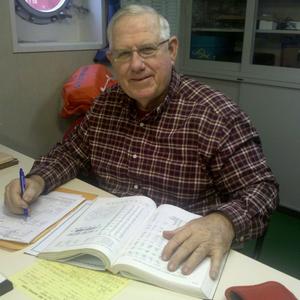

ABOUT THIS EPISODE
In my years of investigating maritime casualties, I have found that the most dangerous distance on a ship is the gap between the "assumed" stability on the screen and the "actual" physical reality at the waterline. This conflict defines the difference between a successful voyage and a total loss.
The Golden Ray casualty is a textbook case of initial stability failure. Due to a total lack of company oversight and the Chief Officer's improper calculation of vessel stability, the ship departed with an unstable initial equilibrium. It didn't stand a chance; it capsized during a routine turn in St. Simons Sound.
Contrast this with the Edmund Fitzgerald. While the Fitzgerald eventually succumbed to a dynamic loss of stability due to massive flooding, the crew at the pier attempted to verify the "actual" condition. They distributed cargo to reach specific "desired drafts"—27 feet 2 inches forward and 27 feet 6 inches aft—rather than relying solely on theoretical projections. However, as an investigator, I look at the narrowing safety margins: the 1973 amendments to the Great Lakes Load Line Regulations allowed the Fitzgerald to load deeper than ever before, reducing its reserve buoyancy long before the first wave hit the deck.
The following Podcast was produce by William George and powered by Google's NotebookLM. This Podcast's sources are STABILITY AND tRIM FOR THE SHIP'S OFFICER, 4th Edition and NTSB Casualty Reports.
Become a supporter of this podcast: https://www.spreaker.com/podcast/stability-trim-for-the-ship-s-officer--4180737/support.
The Golden Ray casualty is a textbook case of initial stability failure. Due to a total lack of company oversight and the Chief Officer's improper calculation of vessel stability, the ship departed with an unstable initial equilibrium. It didn't stand a chance; it capsized during a routine turn in St. Simons Sound.
Contrast this with the Edmund Fitzgerald. While the Fitzgerald eventually succumbed to a dynamic loss of stability due to massive flooding, the crew at the pier attempted to verify the "actual" condition. They distributed cargo to reach specific "desired drafts"—27 feet 2 inches forward and 27 feet 6 inches aft—rather than relying solely on theoretical projections. However, as an investigator, I look at the narrowing safety margins: the 1973 amendments to the Great Lakes Load Line Regulations allowed the Fitzgerald to load deeper than ever before, reducing its reserve buoyancy long before the first wave hit the deck.
The following Podcast was produce by William George and powered by Google's NotebookLM. This Podcast's sources are STABILITY AND tRIM FOR THE SHIP'S OFFICER, 4th Edition and NTSB Casualty Reports.
Become a supporter of this podcast: https://www.spreaker.com/podcast/stability-trim-for-the-ship-s-officer--4180737/support.
English
United States
IN THIS EPISODE
TRANSCRIPT 🔗
Are you the producer of this podcast?
Add a podcast transcript
Need Audio-to-Text?
Transcribe with Listen411 in Just 60 Seconds
SEARCH PAST EPISODES
Search past episodes of Stability & Trim for the Ship's Officer.
OTHER EPISODES IN THIS PODCAST
This Podcast focuses on the Center of Gravity (G), which is the point through which the toal weight of the vessell is considered to act downward.
The 3D Coordinate System: KG,, LCG and TCG
The Weighted Average
Calculating Changes in G using the GG' Formula
The Light Ship Displacement and Center of…
Stability and Trim for the Ship’s Officer, authored by William E. George. The text explores fundamental maritime principles, including the calculation of gravity centers, the impact of liquid surfaces on balance, and the physics of vessels in damaged conditions. Beyond theoretical physics, the sour…
Whether you’re a student preparing for license questions or a seasoned officer reviewing the bedrock of stability, this episode explains why a ship rights itself In this episode, we dive into the fundamental "prerequisites" of maritime safety by examining the two critical points that determine a …
Ship's General Arrangement (GA) Plan The GA plan is essentially the "blueprint" or "floor plan" of the ship. It provides a detailed, top-down and profile view of every deck and compartment.
What it Includes:
Purpose:
Key Focus: Ship's Capacity Plan The Capacity Plan is a technical drawing p…
The episode breaks down the complex world of naval architecture into a relatable conversation, focusing on why massive cargo ships stay upright in rough seas. The hosts demystify the Transverse Metacenter (M), explaining it not as a complex math problem, but as the ship's "theoretical pivot point."…
Disclaimer: The podcast and artwork embedded on this page are from William E. George, which is the property of its owner and not affiliated with or endorsed by Listen Notes, Inc.
EDIT
Thank you for helping to keep the podcast database up to date.
